
Image by mikezwei from Pixabay
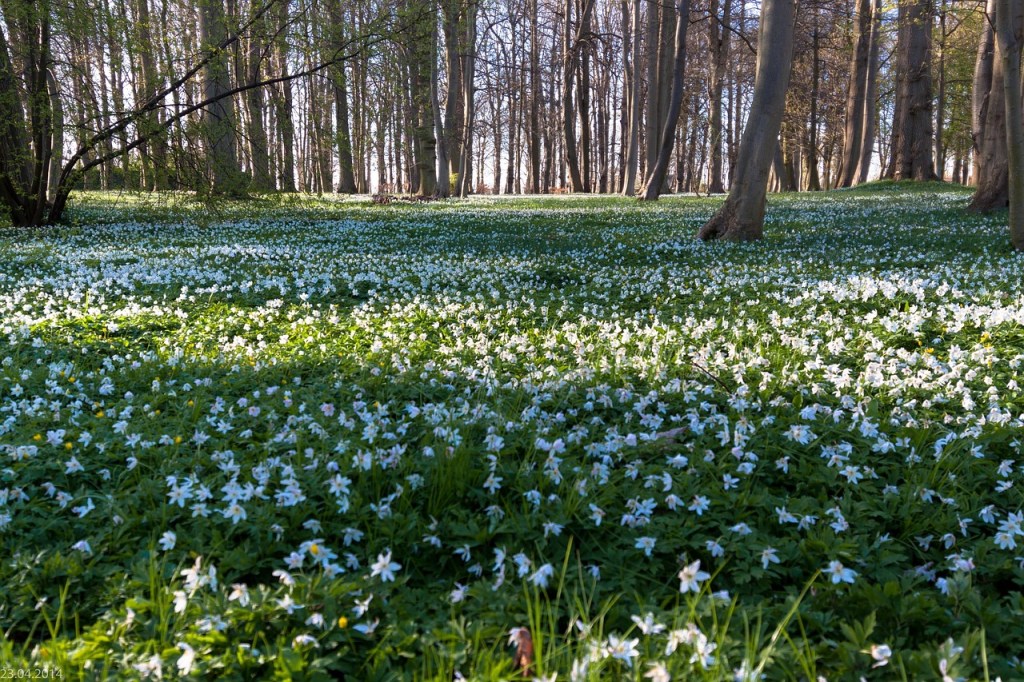
One of the prettiest sights in spring is the carpets of white that cover the ground beneath woodland trees.
This is not a late scattering of snow, but thousands of wood anemones.
The Woodland Trust says:
A sign of ancient woodland.
Wood anemone is an ancient-woodland-indicator plant. If you spot it while you’re out exploring, it could be a sign you’re standing in a rare and special habitat.
I am lucky enough to have woodlands with these flowers within walking distance of my house. Ancient woodland that has been there since time immemorial.
The wood anemone is a delicate-looking plant with white star-shaped flowers.
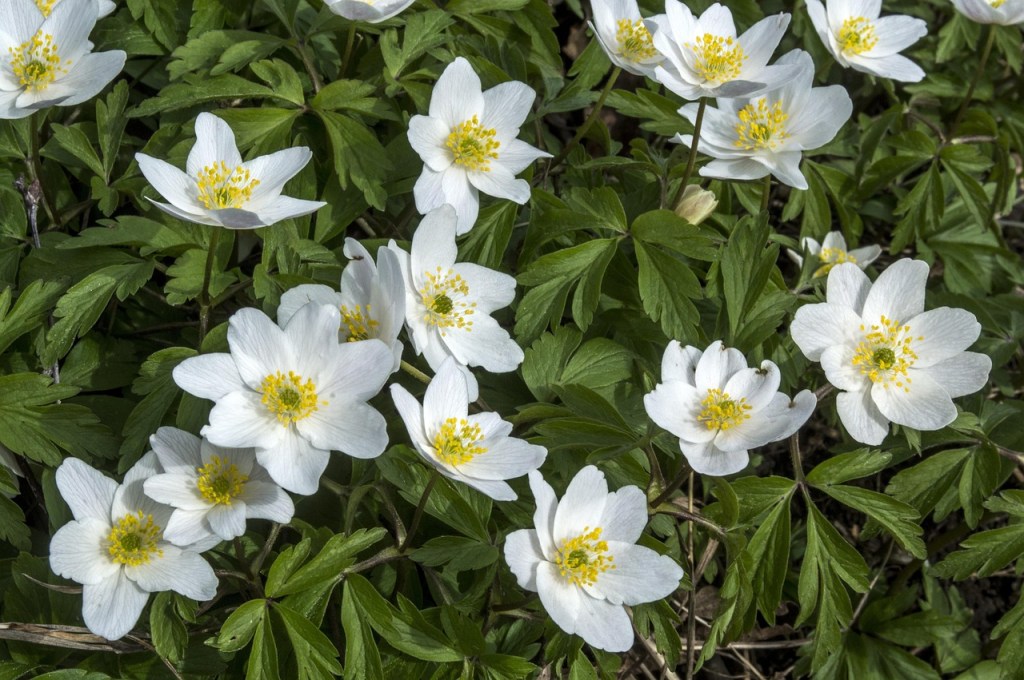
Image by Pirkko Valtonen from Pixabay
The Wood anemone found in the UK is Anemonoides nemorosa, while in the US there are two species–Anemonoides quinquefolia, which has white stamens as well as white flowers, and the western wood anemone Anemonoides oregana, which is blue.
I am going to talk about ours, though, since this is one my British Wild Flowers posts.
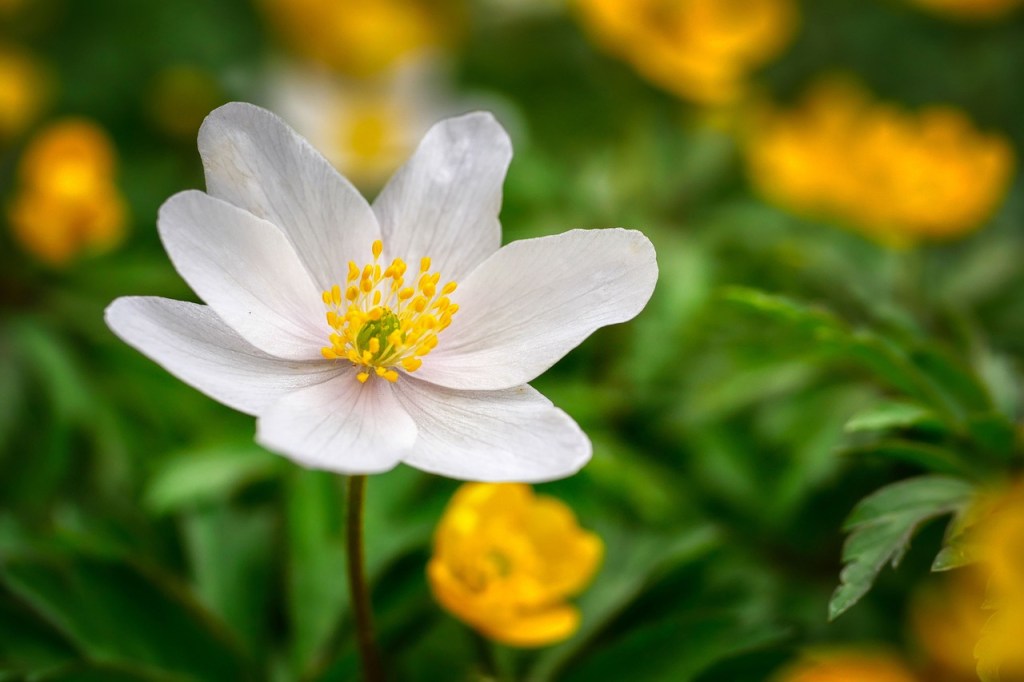
Image by Albrecht Fietz from Pixabay
These plants are very small. Wikipedia says seldom reaching a height of more than 30cm, but I’ve yet to see one anywhere near that height. Most of those I’ve seen are around half that. They have delicate leaf-like bracts beneath the flowers that are divided into three lobes.
We find these little beauties in bloom from May until about April, so they are one of the earliest to appear, flowering before the trees come into leaf and block the sunlight. The flowers are around 2cm across with six or seven petals surrounding a large number of stamens.
It spreads by rhizome, but only extremely slowly. One estimate I read was that it was only 6 feet per 100 years! This is why it can be used as an identifier of ancient woodland. If the ground is covered, then the woodland is several hundred years old.
How useful is it?
Deer and many other herbivores such as rabbits, hares, mice and voles will eat wood anemones. Many insects also feed on it, including small wasps and flies.
The wood anemone is also a host plant for larvae of some butterfly species .
Human uses.
It has been traditionally used to treat some illnesses (although I don’t suggest trying it unless you know exactly what you are doing!)
According to Glenlivet Wildlife “it has been reported to have several medicinal properties, including sedative and cardiovascular benefits, amongst others.
“Wood anemone root extracts have been used to treat a wide range of liver diseases, including chronic hepatitis and liver cirrhosis.”
“In traditional medicine, it is also believed that they can induce menstruation if eaten in large amounts.
“Used by many European countries, they help prevent soil erosion due to their extensive root system, which binds the soil together with their numerous fibrous roots.”
Picking wild flowers wasn’t illegal when I was growing up, and I used to pick many of our wild flowers. The local church had an annual flower show, and one of the classes was for a wild flower arrangement. Wood anemones would not have been good for this as I discovered. They fade and die very quickly when picked.
White heads dancing
In the gentle breeze
Carpet the ground
Beneath the trees
Bees buzz eager
For this new supply
Of nectar from
A flower so shy.
Fill your eyes with
Ethereal sight.
They’ll soon be gone
These flowers so white.
 Dragons Rule OK. V.M.Sang (author)