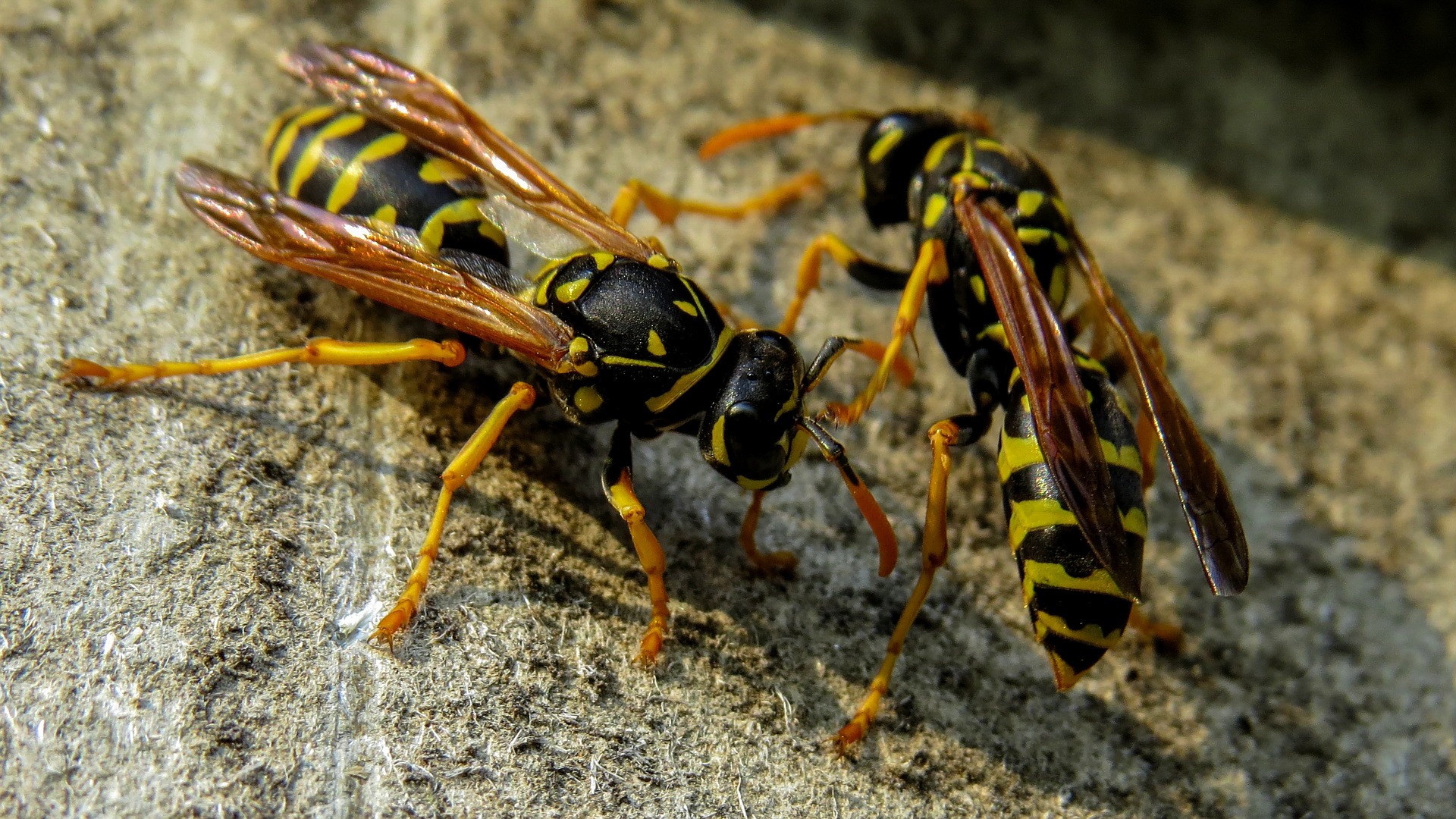
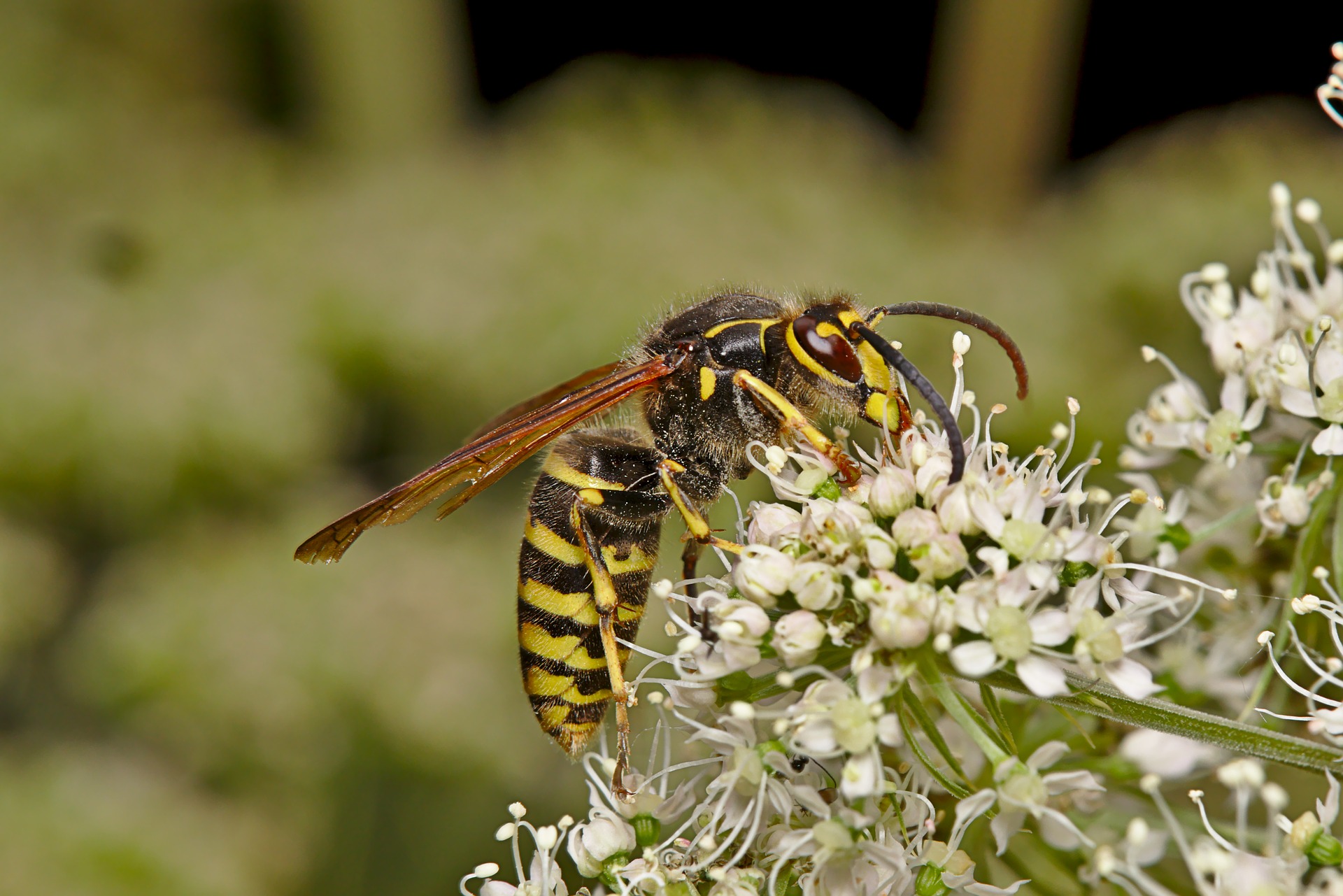
This morning I was watching a wasp flying around the flowers in my garden. It wasn’t bothering me, just going about its business, gathering nectar.
I remembered that I’d posted about wasps at an earlier date, and so decided it was time to repost it. So here it is!
I’ve decided to do a post about a much maligned insect. The Wasp.
We all know the nuisance black and yellow striped creature that buzzes round us when we want to eat outside, and I’ve heard it said, ‘What is the purpose of wasps?’
Well, here it is. Something that I hope will help to mollify your thoughts on the creatures.
I was brought to thinking of them last September when I got stung. In all fairness, it wasn’t the wasp’s fault. Well, not entirely, anyway. I saw one in my daughter’s bathroom and decided to let it out of the window. I failed to get it out, and it must have ended up on my clothes, just under my arm. When I put my arm down, it stung in self defence. Still, it didn’t half hurt, and continued to do so for days!
What we think of as wasps (and hornets), those black and yellow terrors of picnics, are not the only insects to be classified as wasps. Wasps belong to the order of insects called Hymenoptera and there are over a hundred thousand species.
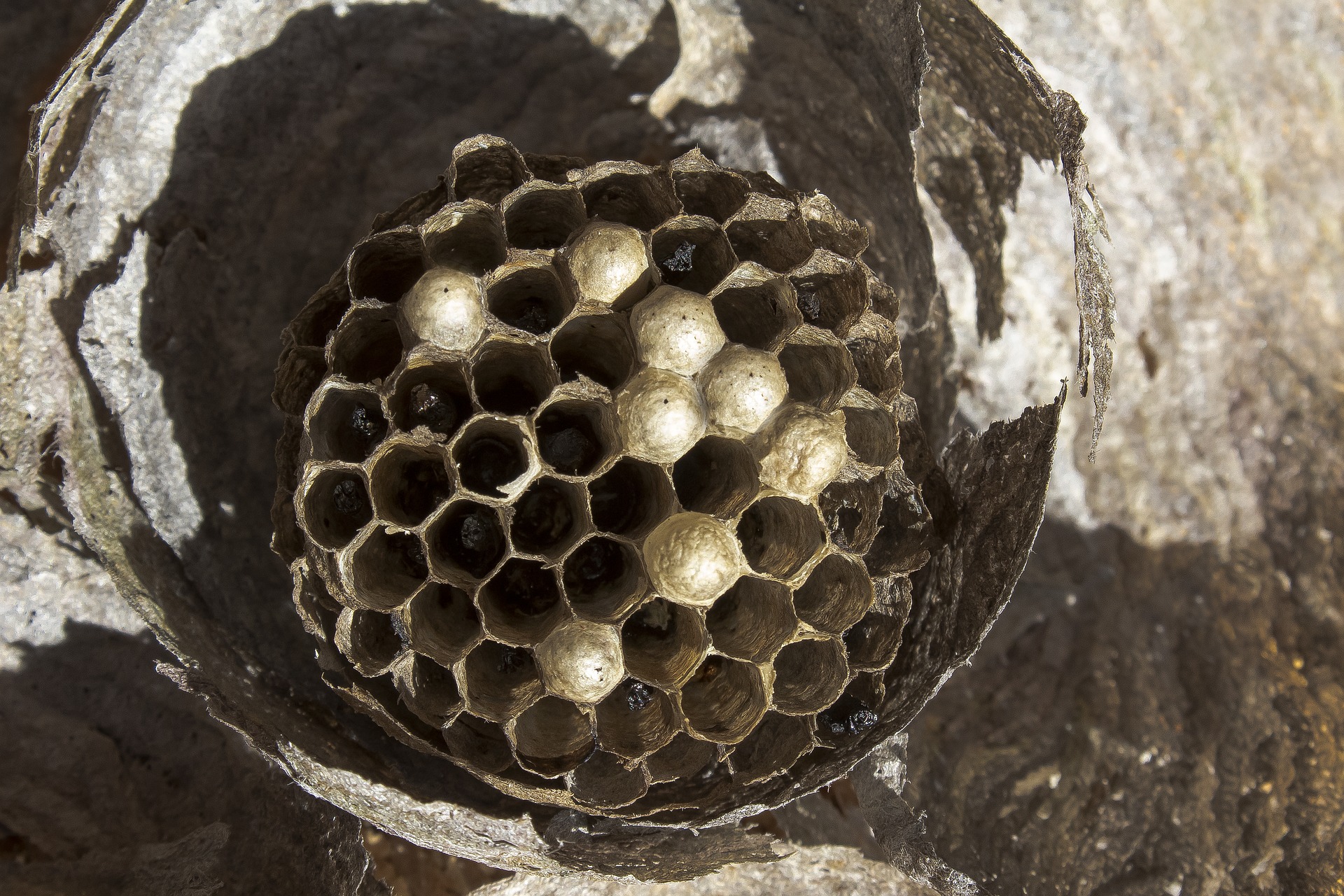
The black and yellow terrors are communal insects. They build nests of a papery substance created from wood. It usually begins in the spring when a queen lays eggs that hatch into workers. The workers are all female, and their ovipositors are what have become their stings.
Each spring, a new queen that has hibernated over winter, begins to build a new nest, built of wood she has chewed and mixed with saliva. Then she lays a few eggs. She has to forage herself for food for the hatched grubs until they become adult worker wasps.
These wasps only become a real nuisance in the late summer when the queen has stopped laying and no more workers are being produced. They search for food—sweet, sugary substances usually—and that is when they come into contact with humans.
And we don’t like it.
Most of the rest of the year, they are happily capturing insects and feeding on nectar from flowers. In fact, they are important pollinators. Not something most people know, but with the problems with the bee population recently, perhaps we should consider them more kindly.
Most wasps are not social, though, and live a solitary life. Some live in communities, with nests close to each other, but do not interact, except to sometimes steal each others’ prey. Some species actually build communal nests, but each adult wasp has her own cell, and there is no division of labour or community work. The females each catch and feed their own grubs.
The prey of these wasps is spiders and insects. They feed them to the grubs, which are carnivorous, but the adults usually feed on nectar. As such, they are useful to help get rid of unwanted insect pests.
Then there are the parasitic wasps. They lay their eggs in the body of the prey animal. The grubs then eat their way through the insides of the poor creature. Others lay their eggs in the tissue of plants. The plant responds by creating a gall around the growing grub.
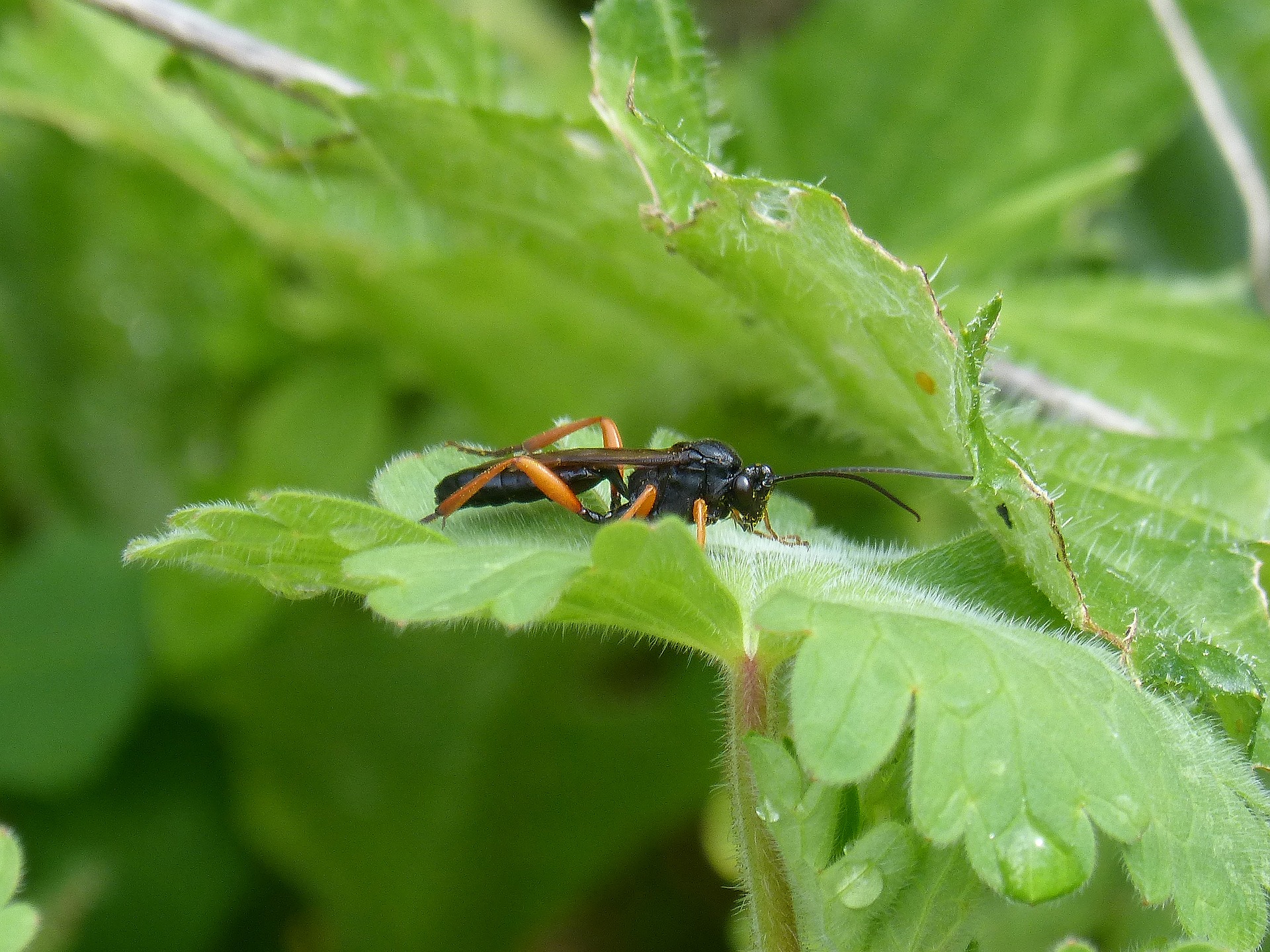
I admit I’m not the most generous of people to wasps. It’s now spring, and the queens are coming out to find a place to build their nests. Just this morning, while I was working at my computer, I heard a buzzing by the open window. It disappeared, but returned soon after. This happened several times and so I got up to investigate. A wasp was clearly inspecting the brickwork around my window. It then had the temerity to enter and start to look around my husband’s computer.
I went downstairs and got the Wasp and Fly killer and zapped it as it went back to the window. (I didn’t want to spray the killer onto my husband’s computer, just in case! I’ve no idea what it might do to it.) I might know they are important predators and pollinators, but I don’t want hundreds of them just outside the room where I work.
So please spare a thought for the poor wasp. They aren’t as useless as you thought.
Please leave your thoughts on the wasp in the comments box. Do you think they are useless, or do they have some use after all?
Discover more from Dragons Rule OK. V.M.Sang (author)
Subscribe to get the latest posts sent to your email.
 Dragons Rule OK. V.M.Sang (author)
You shared a few details about wasps that I didn’t know, Viv. I don’t mind insects at all and cohabitate without a problem. But my husband goes into hysterical mode when bugs get near him (city boy). 🙂
LikeLiked by 1 person
The first inclination of many people is to kill any insects or other small arthropods. My son-in-law is an arachnophobe and he kills any spider he sees, in spite of me telling him not to and that I’ll put it out. They don’t realise the importance of these creatures to life on this planet!
LikeLiked by 1 person
My husband’s panic at seeing a bug has influenced our grandkids, which really annoys me. The same with snakes (we have no poisonous snakes where I live, so it’s irrational).
LikeLiked by 1 person
Same here. A long time ago a neighbour told me there had been a snake in their garden and her husband had killed it. On further enquiry, it was a harmless grass snake, which would have been actually useful in the garden!
But that reminds me of a funny story I heard recently. A friend who recently died lived in Manchester, England. The council were demolishing some tower blocks of apartments built in the 1960s. Families were moved to council houses. One family with several children were housed near my friend. One day, they rushed to say there was a snake in the garden. On investigation, the snake was a worm.
Always loved in apartment blocks and had not had anything to do with gardens and soil. Sad, really.
LikeLiked by 1 person
Yes, that’s a whole other story – the disconnection from the natural world.
LikeLiked by 1 person
To the detriment of humanity.
LikeLiked by 1 person
Yes. We’re living it.
LikeLiked by 1 person
OK, I admit I haven’t respected wasps much because of several nasty bites when I was a kid. They sought me out and zapped me when I least expected it. One of those bites was on my cheek that then swelled up and closed my eye nearby! Some did go after my wife the other day when she got too close to their nest in our backyard. But… as you have pointed out, their support role as pollinators to help out our struggling bees is enough that I now say, “Let them be as long as they let me be, too!”
LikeLiked by 1 person
Yes, I’ll not disturb them as long as they leave me alone. (And my picnic!)
LikeLike
Fascinating and insightful. Thanks for sharing.
LikeLiked by 1 person
Glad you found it interesting, Andrew.
LikeLiked by 1 person
Thank you for this interesting post about wasps, Vivienne. I’ve been stung a number of times in my life by wasps, so I’m no fan of them. I do, however, recognise their usefulness in nature’s intricate tapestry.
I was in a friend’s garden a few days ago and a wasp wouldn’t leave me alone. I was eating a breakfast sandwich kindly prepared by my friend’s wife at the time and it may have been the tomato in that which so attracted the dratted thing!
On going into the house prior to leaving for home, the wasp decided to attach itself to my friend’s youngest son, which provoked some strong language from that young man!
I, like you, reach for the fly spray if a wasp enters my flat. Indeed, being blind, I tend to reach for the can if I hear anything buzzing around because I am never sure whether it is a wasp, bee or a fly!
Kevin
LikeLiked by 1 person
I read recently, a suggestion that if you let a wasp take a ‘bite’ from the food it’s after it’ll go away. I don’t know about that, though. I don’t think I want any insect eating my food, even if it’s only an infinitesimal bite.
LikeLiked by 1 person
I agree with you, Vivienne. On a humorous note. I remember a joke about wasps. A man goes into a pet shop and says to the man behind the counter, “I’d like to buy a wasp please”. The guy behind the counter replies, “we don’t sell wasps, they are not a pet!”. To which the customer responds, “why is there a wasp in the window then!”
LikeLiked by 1 person
😂🤣😂
LikeLiked by 1 person
I have mixed feelings about wasps, so I try to avoid having to make decisions about them.
LikeLiked by 1 person
I agree. I understand they are important, but I don’t like them buzzing around. Except the one busy gathering nectar. She was minding her own business, even though she was only a metre away from me.
LikeLiked by 1 person
Well, considering I was viciously attacked y a wasp at a church picnic ages ago… I have had to make peace with them after reading this.
LikeLiked by 2 people
Unlike bees, they will attack for no obvious reason, sometimes. But it’s usually in the late summer when the workers are coming to the end of their lives and there’s not much food in the way of nectar. They then go for ours, which we naturally object to. We flap at them, so they sting.
Sadly, unlike bees, they don’t leave their stings behind, so the little blighters can sting again.
LikeLiked by 2 people