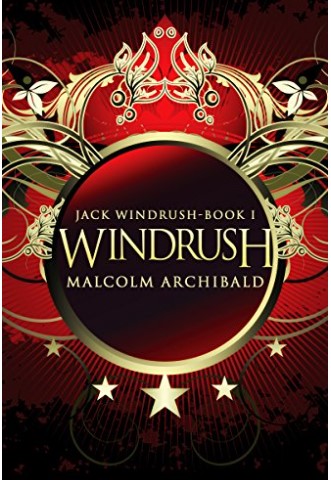
I hadn’t read any of the Windrush books, but I will certainly be reading more. Mr Archibald has created a character that one wants to know more about.
The book is full of excitement and action, and the story holds the reader, wanting to know what happens next and how Jack can escape from the predicaments he finds himself in.
I read it in 3 sittings and found it hard to put down when I needed to do something.
BLURB
Burmese War, 1852. Unable to join the famous Royal Malverns, Jack Windrush is commissioned into the despised 113th Foot.
Determined to rise in the ranks and make a name for himself, he is sent with the 113th to join the British expedition. But when they get involved in the attack of Rangoon, Jack realizes that war on the fringes of the Empire is not as honourable and glorious as he expected.
After a chance meeting with a renegade British soldier, Jack witnesses the true terrors of war, and begins to question the whole framework in which he has grown up.
CHARACTERS
The main character, Jack Windrush, is going to join the Royal Malverns like his father and grandfather before him. He has dreams of glorious warfare and winning honour. But things go against his dream and he finds himself in Burma with the despised 113th foot and discovers that war is dirty and frightening.
Through the book, Jack has doubts and fears but he grows and becomes a true leader.
Wells is a sergeant in the 113th. He is well-drawn by Mr Archibald. We can truly believe he is what he is portrayed to be, a hard-bitten career soldier. But why did he decide to stay in Burma and not return to England with his regiment? And why has he volunteered to join the 113th?
There is sensitive writing of the only female character in the Burma part of the story. Her name is Myat and she is something of a mysterious character, but she has an important role in Jack’s development.
The other characters are mainly officers who are hidebound and unbending. I suspect a lot of Victorian officers were like this.
Even the despised soldiers of the 113th have their own growth arcs.
WRITING
The writing gripped me. I could feel the heat and humidity and the biting insects in the forest, and hear the drums of the natives.
I felt Jack’s suppressed fear, as he went into battle for the first time, and his determination not to show it. It would not be gentleman-like, nor officer-like.
There were one or two typos that had got through, but not enough to spoil my enjoyment of the story.
I give it 5*
My ranking of books.In order to get a particular number of stars, it is not necessary to meet all the criteria. This is a guide only.
5* Exceptional. Wonderful story. Setting well drawn, and characters believable. Not perfect, but with flaws. Will keep you up all night. No typos or grammatical errors.
4* A thoroughly enjoyable read. Great and original story. Believable setting and characters. Very few grammatical errors or typos.
3* I enjoyed it. Good story. Characters need some development. Some typos or grammatical errors.
2* Not for me. Story not very strong. Unbelievable and flat characters. Setting not clearly defined. Many typos or grammatical errors.
1* I hated it. Story almost non-existent. Setting poor. Possibly couldn’t finish it.
Owen Elgie has posted a thoughtful post about ow to get past the depressing news we are all subjected to these days.
Here is wh
It’s far too easy these days to look at the world as nothing but a parade of horror.
Rolling news channels and social media access stream an un-ending diet of the latest news stories which tend to be tales of suffering, corruption and pain so we can easily drown under the rising tides of bad news.
No wonder there’s so many people struggling with viewing the world in a negative way.
As everyone will know, there is a problem with the global economies. Inflation is rife everywhere, although some countries are suffering more than others.
In the UK in the 21st century we have people having to go to food banks in order to eat, and parents going without food so their children can eat. This is more like Victorian England than the 21st century.
I’m not going to get into the causes, nor the solutions. I’m not an economist nor a politician, but what I can do is hand out a few tips that might help.
I recently read of a family that, in order to save energy, decided to only put on their heating one day a week, and to use lights on their head to do everything else, so they did not need to turn their room lights on. Now, I’ve not looked into this, but my instinctive thoughts are this: They need to buy the lamps, one for each person. These light won’t last indefinitely and will need bulbs replacing or recharging. Also, energy saving light bulbs save around 80% over standard bulbs, so using those might be as good as the head lights this family is using, and better for seeing.
As for only putting on the heating once a week, I think that would be no saving at all. During the six days the heating is off, the family will be uncomfortable and the house cooling down. Then, on the one day with heating, it has to be heated up from a low level and would cost quite a lot. That is not to mention the danger of burst pipes if the temperature outside goes below freezing. That would incur plumber’s bills, which, as we all know, is high.
Here are a few ideas.
To help conserve heat, close curtains when it gets dark. Actually, as soon as you need to put on a light is best.
Put thermostatic valves on every radiator. I know it costs money, but you will get it back in the long run.
Don’t heat rooms that are not being used. Or at least turn down the heating in those rooms.
Nowadays, with central heating, everyone can retire to their own rooms and be comfortable. When I was growing up, I could not be comfortable in my bedroom in winter. It was just too cold. The family was in one room—the living room; everyone together. (No one had their own TV in their bedroom!) An individual generates around 400 watts, so a family of four, just be being together generates 1600 watts. And if the TV is on, or a computer, that will add to that heat. So all live in one room.
And finally, turn the heating down a couple of degrees. That will save you money and you will barely notice.
Finally, WEAR MORE CLOTHES! I see people thinking that in the house they should be able to wear a t-shirt. No. If it’s winter, wear a pullover and a long-sleeved something underneath.
I will make a few other suggestions in another post soon, about what else you can do to help save money in this difficult time.
On Friday I received an email from my publisher to say that my first ever poetry book has been released. Currently it is only available in e-book format, but within the next week it should be available as a paperback.
These poems are, in the main, rhyming poems, and those that do not rhyme have rhythm. (I’m a bit of a traditionalist when it comes to poetry.)
Some of these poems are featured in my books, and quite a few of the others have also been on this blog, but there are a few new ones, too.
If you would like to take a look, you can click here or on the book in the sidebar. The link will take you to where you can choose your favourite store.
A book such as this would make a wonderful Christmas present.
If you read the book, I would be eternally grateful if you would leave a review. Reviews are important to both authors and readers.
I would love to hear your views, so add them to the comments box, please.
I am excited to reveal the cover for my poetry book, Miscellaneous Thoughts. I hope you like it.
Let me know in the comments.
I’m still keeping my fingers crossed that it will be out before Christmas. I’ve just done the formatting check and there are a number of things to correct, not least one of the limericks being there no less than 17 times! It’s one I like, but it’s not THAT good that it needs to be repeated over and over.
Most of the poems are rhyming poems and those that don’t rhyme have rhythm.
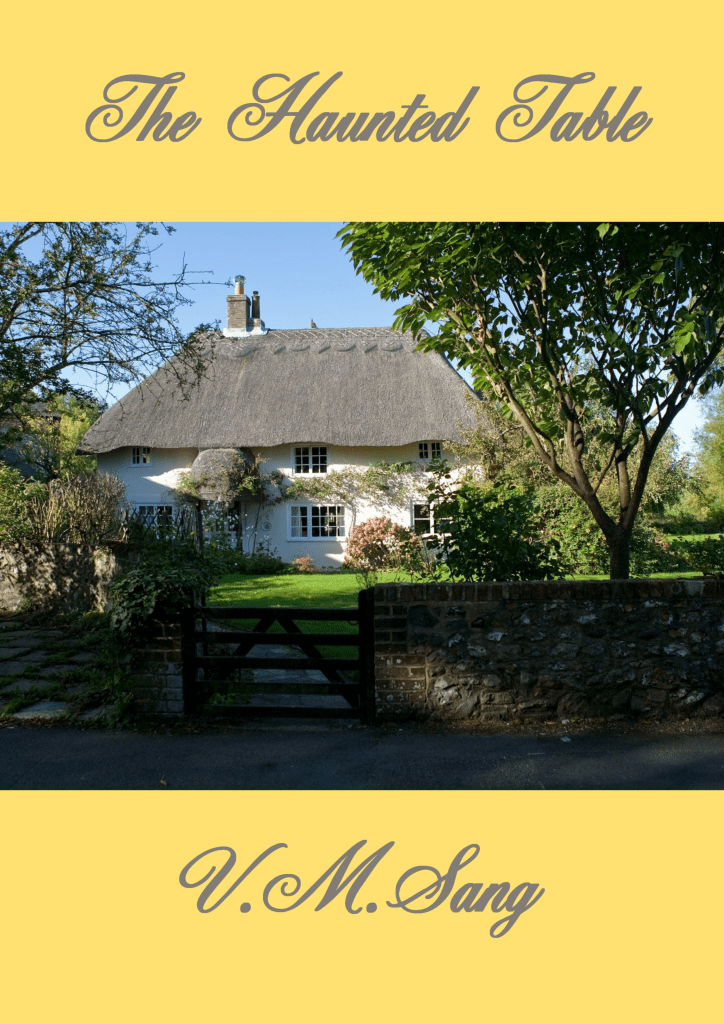
If you would like to receive an exclusive, free short story by me, called The Haunted Table, simply click the link. This will take you to the page where you can download it.
Maria and Tom have bought an antique table for the old cottage they have bought. When they hear strange noises in the night that sound like crying, they worry their house is haunted, but the sounds seem to come from the table.
They set about trying to find what is causing the disturbances. The answer is stranger than either of them had thought.
(Clicking the link will add your email address to my email list, but don’t worry, you can unsubscribe immediately if you wish.Nor will you get any spam. I only send out an email each quarter, or if I have any exciting news–like a new release.)
Chris the Story Reading Ape posted this link on his website. I followed it to acflory’s site where she posted this interesting post about Amazon’s latest shenanigans.
I’ve been buying books from Amazon since the days when the company didn’t make a profit, and the pundits thought that Jeff Bezos was mad. That’s a long time and an awful lot of books. Yet suddenly I can’t be trusted to choose books for myself????
For those who do not yet know, Amazon has a new ‘feature’ whereby an algorithm decides which books you should see when you go to an author’s ‘Author Page’. The ‘feature’ is called Top Picks and:
‘…allows Amazon customers to see personalized recommendations from your catalog of books. Customers will see this on your Author Page and it will suggest books based on these traits:
• New releases and pre-order books matching their interest. • Unread books from a series they started. • The customer’s reading and purchase history.
I’ve just finished reading this article on Medium by Umair Haque. I think everyone should read it. It paints a bleak picture of the future unless we do something immediately.
Umair Haque says,
“2022. It was the year that climate change became frighteningly real. Europe burned, Pakistan drowned. A mega-heatwave stretched from China to America, reaching every corner of the globe. Rivers ran dry, and crops failed.
One of the most urgent tasks our civilization faces is educating people about the reality of climate change. After too long, spent in a haze of denial, largely coming from the far right, funded by Big Energy, it’s undeniable now that climate change is real, and it’s here. And yet really understanding it? Most people, even at this juncture, have far too little awareness of what it really means.”
I recently noticed that my white geranium flowers seemed to be being eaten by something. The petals had become shredded and looked very tatty. Strangely, the red ones hadn’t been touched.
At first, I blamed birds. I know in the spring some birds eat the yellow flowers of daffodils and primroses, so I thought perhaps they were being attracted to the white colour.
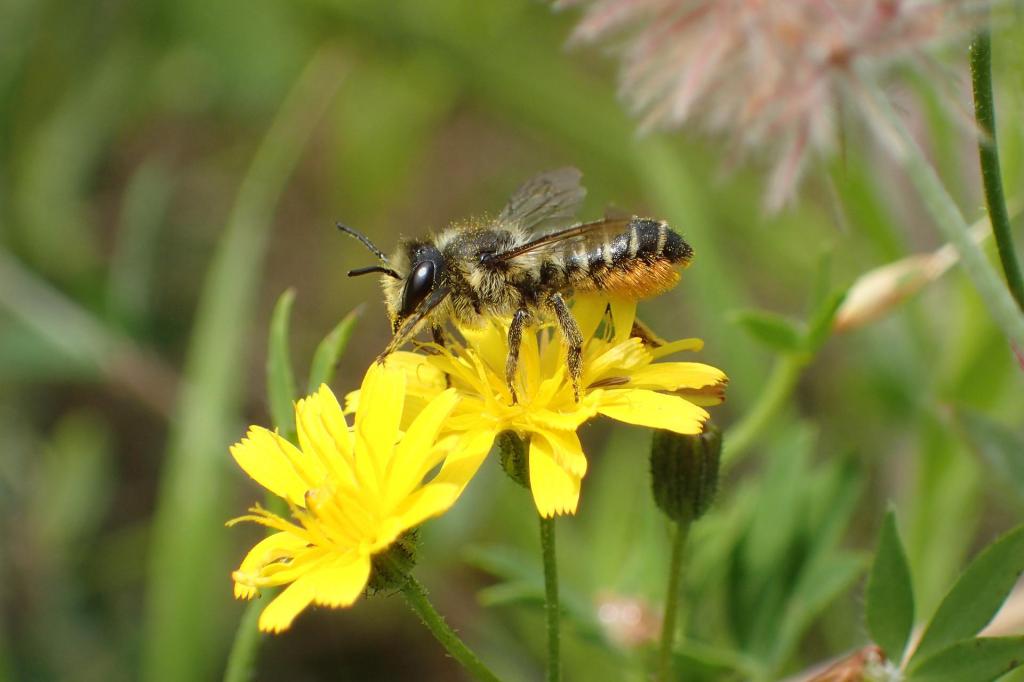
Then one day as I was sitting on my garden seat, which is next to one group of white geraniums, I saw a small bee. She flew down and settled on one of the geraniums. I expected her to begin feeding from the nectar, but no. She proceeded to bite the petal she was on. She cut a beautiful, neat semicircle of petal and flew off, carrying it with her legs. She came back several times and each time cut a semicircle of petal and flew off with it.
I was somewhat bemused by this behaviour. I knew about leaf-cutter bees. We had them cut bits out of our rose leaves in the past, but never petals. Well, they’re called leaf cutter bees, not petal cutter bees.
I watched her for several days, busy cutting the petals. Then we had some canna come out and to my annoyance, she started on those!
She seems to have stopped now, fortunately, so our flowers are once more looking lovely.
After seeing this behaviour, I looked up leaf cutter bees, but found no reference to them cutting anything other than leaves.
Anyway, here’s a bit more information I discovered.
The bees cut the leaves (or petals) and take them back to their nest, which is usually in a hole. It can be in wood, a bee hotel, or masonry. They aren’t fussy.
I love this particular one and the sense of humour by its creator.
Once there, they form thimble-like structures to which they add a mixture of nectar and pollen. She will continue to build these cells and provision them. Then when she has finished, she lays a single egg in each cell and caps it with a piece of leaf (or petal!). Each nest may contain up to 20 eggs.
Female eggs are laid at the back of the nest, while male eggs are laid at the front. This is because the males hatch first and fly out to hang around until the females emerge.
Apparently, there are seven species of leaf-cutting bees in Britain. They are all small and have wingspans of 8-14mm. The bees are dark brown in colour and are covered in lighter brown or orange hairs.
They are amazing pollinators, being much better at the job than honey bees, apparently, so in spite of the minor annoyance, they should be encouraged.
Have you had any problems with such creatures? Please let us know in the comments box.
If you would like to receive an exclusive, free short story by me, called The Haunted Table, simply click the link. This will take you to the page where you can download it.
Maria and Tom have bought an antique table for the old cottage they have bought. When they hear strange noises in the night that sound like crying, they worry their house is haunted, but the sounds seem to come from the table.
They set about trying to find what is causing the disturbances. The answer is stranger than either of them had thought.
(Clicking the link will add your email address to my email list, but don’t worry, you can unsubscribe immediately if you wish.Nor will you get any spam. I only send out an email each quarter, or if I have any exciting news–like a new release.)






 Dragons Rule OK. V.M.Sang (author)