Overview. This is the second book in Paul Cude’s White Dragon series. It follows on after the events in book 1. If you’ve not read any of his books before, I will tell you that the concept is an original one. Dragons live below the ground in a complex society. They have houses, monorails and many other things we have. The one thing they can do which we can’t is use magic. Dragons use this magic in order to protect and help humankind. In order to do this, they take human form and live amongst us.
Blurb Treachery from the sands of Egypt to the plains of Antarctica. Following on from the harrowing events of ‘A Threat From The Past’ (Book 1), a new found friendship with the dragon king is forged. Soon though, young and old alike are unwittingly drawn into a deadly plot, when a straight forward meeting with the monarch sees them helping an injured dragon agent, straight back from his mission in Antarctica with news of a devastating encounter with another ancient race. Blackmail, intrigue, forbidden love interests, a near fatal mantra gone wrong, a highly charged rugby match in which Tank takes a beating, combined with enough laminium ball action to please dragons the world over, stretch the bonds of the dragons’ friendship like never before. New friends and ancient enemies clash as the planet braces itself for one of the most outrageous attacks it has ever seen. Lost secrets and untold lore come to light, while sinister forces attempt to steal much coveted magic. Explosive exploits, interspersed with a chilly backdrop and unexpected danger at every turn, make for an action-packed, electrifying adventure.
Story The tale begins in the distant past, with an exciting chase. A dragon, in human form is trying to help prevent a meeting between Ptolomy and Alexander the Great, for the good of Humanity. We then learn that this is a story being told to young dragons in the ‘nursery ring’. Peter, Tank and Ritchie, from Book 1, are again featured. Peter has struck up a friendship with the dragon king after he visits with Peter in the hospital at the end of Book 1. He and his friends are invited to visit the king. While they are there, some terrible news breaks and they become involved in solving a dastardly plot from Antarctica. The story was exciting, especially at the end.
Characters Peter, although the main character in the story, is the least well-drawn. He has very few outstanding characteristics. He’s a ‘nice’ young man. He works for Croptech, a company involved in the production of the metal, laminium, that is very important in the dragon world. Here, he is in charge of security. Tank, on the other hand, is a kind-hearted dragon. He does seem to have more about him than Peter, especially when he stands up to his boss. He works in a shop selling and researching spells (called mantra). The last of the trio is Ritchie. She is a feisty young woman, and often gets herself into trouble for ignoring rules. Tank’s boss, Tee Gee is my favourite character and the most well-drawn. He is an ancient, irascible dragon who hides a kind heart beneath a grumpy exterior. In this book, we are introduced to Flash, a member of the King’s Crimson Guard, an elite force. In many ways, Flash is an innocent of human and dragon society, having spend much of his life working alone.
Writing Sadly, like the first book, the writing leaves much to be desired. Mr Cude hops from head to head. One minute we’re looking at the world from Peter’s point of view, then the next from, say, Ritchie. On at least one occasion, he changes viewpoint in the middle of a sentence. Many of his paragraphs are overlong. I assume he got carried away with the story. There are occasional wrong words used. He seems to think the readers have poor memories, and he keeps reminding us that dragons have eidetic memories, that Ritchie, is small, etc. And the sports. There were 31 pages devoted to a hockey match at one point. This match was not essential for the plot, nor did it add anything to our knowledge of the characters. I skipped it. One final thing that I found irritating was Mr Cude’s seeming reluctance to tell us who a chapter was about until at least a page and a half in, using the pronouns, ‘he’ and ‘she’. I got the impression that Mr Cude got to the end of the book, wrote The End, sighed with relief and pressed ‘Publish’ without reading it through again.
Conclusion This was an excellent, and exciting story. I thoroughly enjoyed it, but the writing lets it down. This is a pity. My feelings about the series are mixed. I want to know what happens next (this book ended with a cliffhanger), but will I be able to cope with the amateurish writing? I’m giving it 4*, in spite of the writing, because it’s a good story.
A moving piece by Andrew Joyce. One that should teach us all something the world seems to have forgotten.
I went off to war at the tender age of sixteen. My mother cried and begged me to stay, but my country needed me. I would not see my mother again for four very long years.
Due to my age, I was assigned to field headquarters as a dispatch courier for the first two years of the war. However, by the beginning of the third year, I had grown a foot taller and was shaving. And because men were dying at an alarming rate, I was sent into the trenches.
They say that war is hell. I say hell is peaceful compared to living in a muddy trench with bombs exploding around you at all hours of the day and night, although there were periods of respite from the shelling. Those were the hours when the enemy had to let their big guns cool or else the heat of firing would warp them. I lived like that for two years.
I was at Verdun where I saw the true hell of war. After eleven months, we fought to a standstill. When the dead were counted, almost a million men from both sides had given their lives and not one inch of ground had been gained.
By November of 1918, we were out of food, out of ammunition, and almost out of men to send to the slaughter. The people at home had had enough of seeing their sons and fathers and brothers shipped home in boxes. There were marches and protests against the war. Near the end, the dead were not even sent home, but buried in the fields where they had fallen.
At last, the war was over. I am told that nine million men died in those four years, and another twenty million were wounded. I was there and those numbers seem a little low to me, but what do I know? I was only a private.
I’ve been on another Scottish holiday. This time to the islands of Islay (pronounced Iyla) and Jura. We chose the hottest week ever on the islands, or even in Scotland, I think.
Anyway, here are some photographs I took while there.
The first place we stayed was at an inn on the shores of Loch Fyne. A lovely position for a lovely inn.
The Creggans Inn
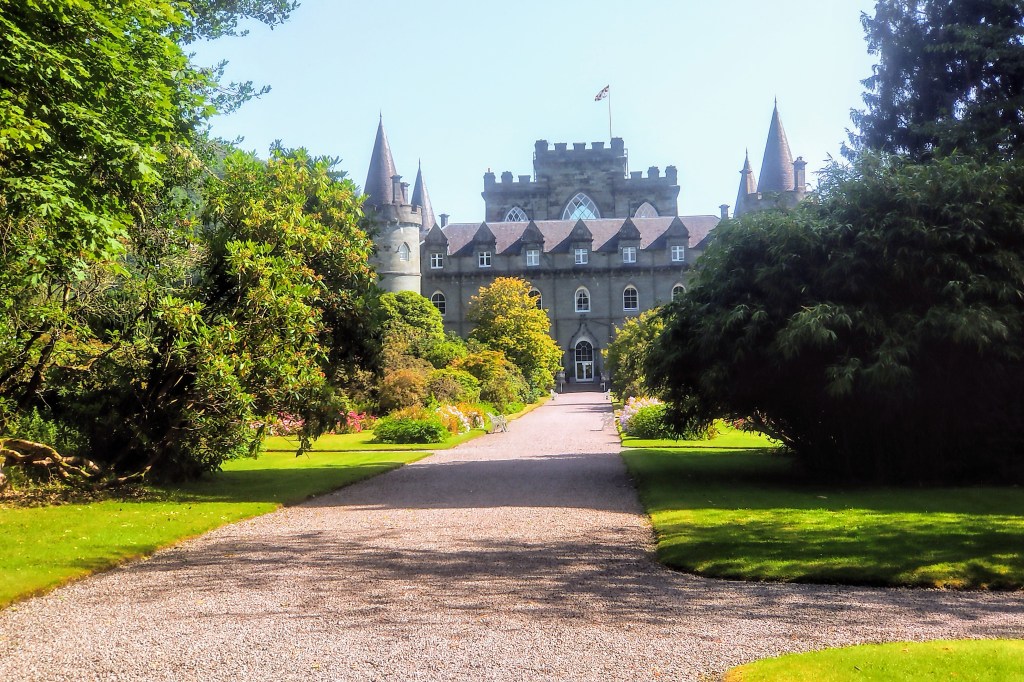
From here we went to look at Inverary Castle, the seat of the Dukes of Argyll, Chief of Clan Campbell.
An impressive Scottish castle
And another view.
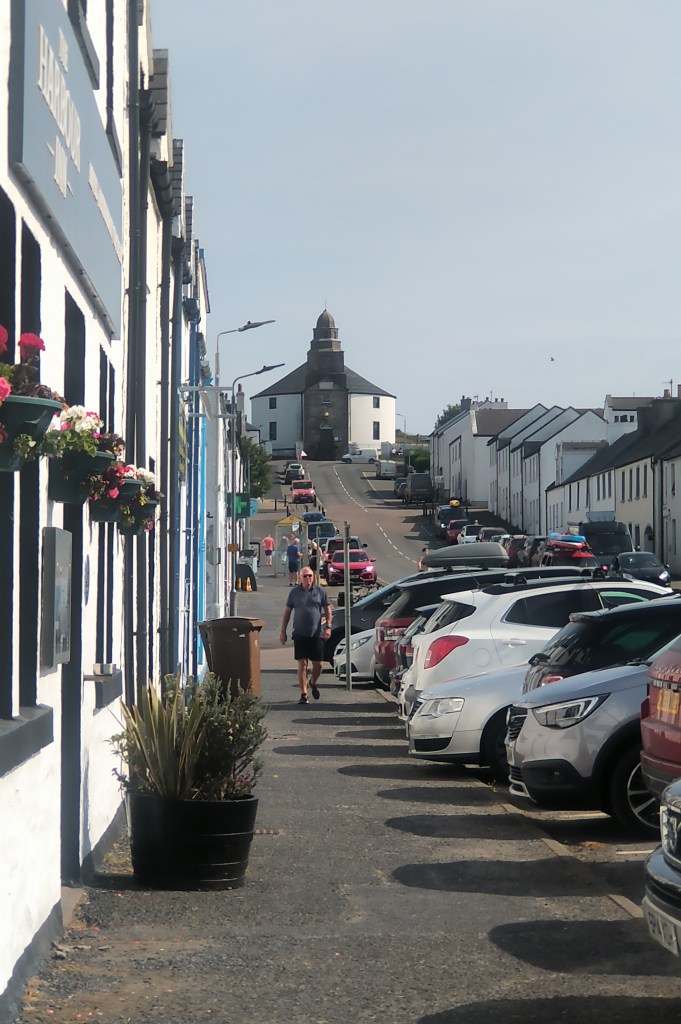
We caught a ferry over to Islay. It took just over 2 hours, travelling down Loch Long, until docking at Port Askaig in the north of the island. From here we caught a bus to Bowmore, the capital of Islay.
The main street in Bowmore.
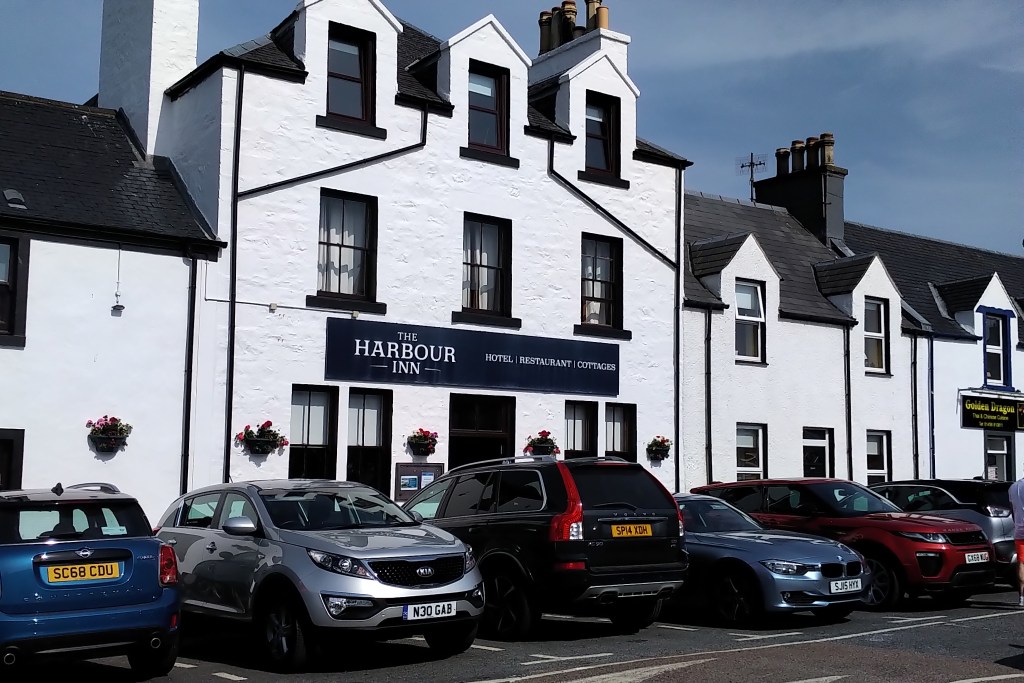
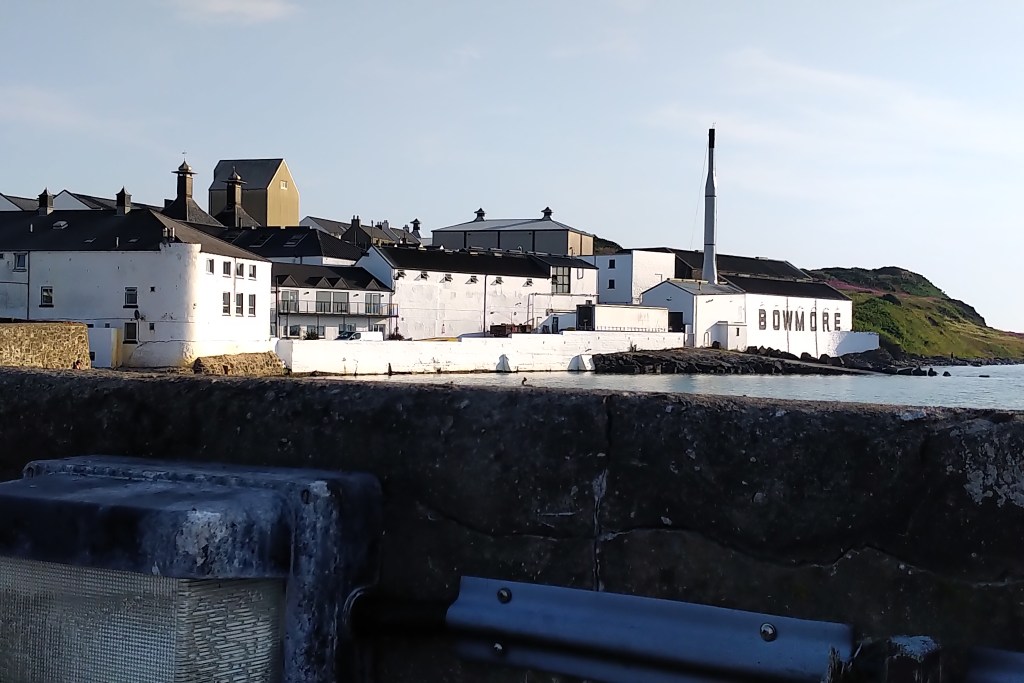
Bowmore is famous for its whisky. The hotel where we stayed actually belonged to the Bowmore distillery.
The excellent hotel where we stayed.
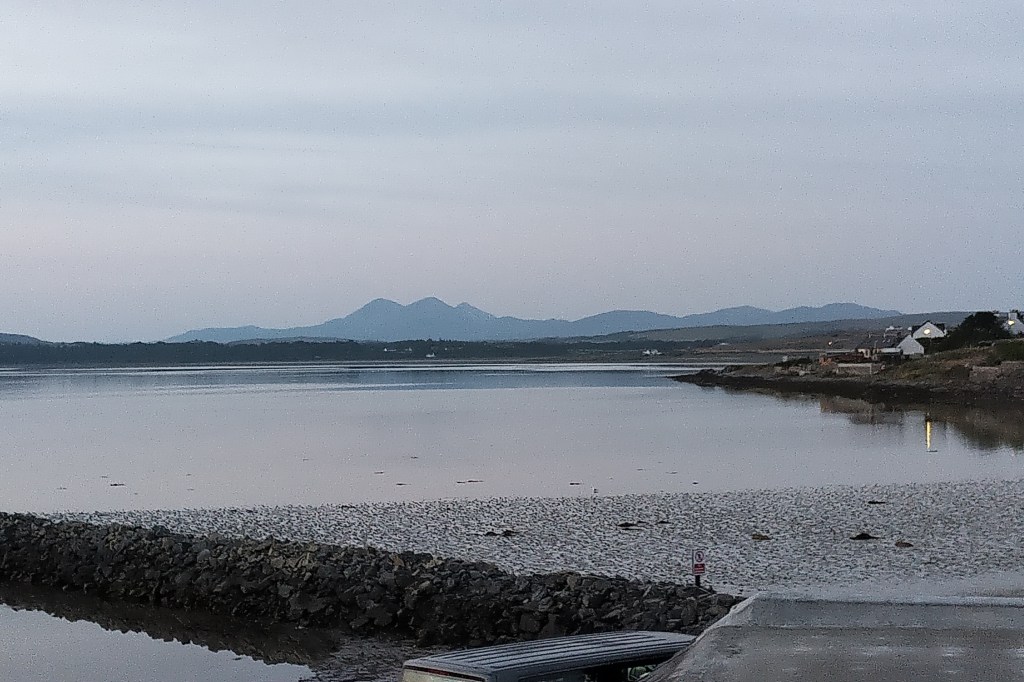
We had a room that had the most tremendous view across to Jura.
The Paps of Jura from our bedroom window.
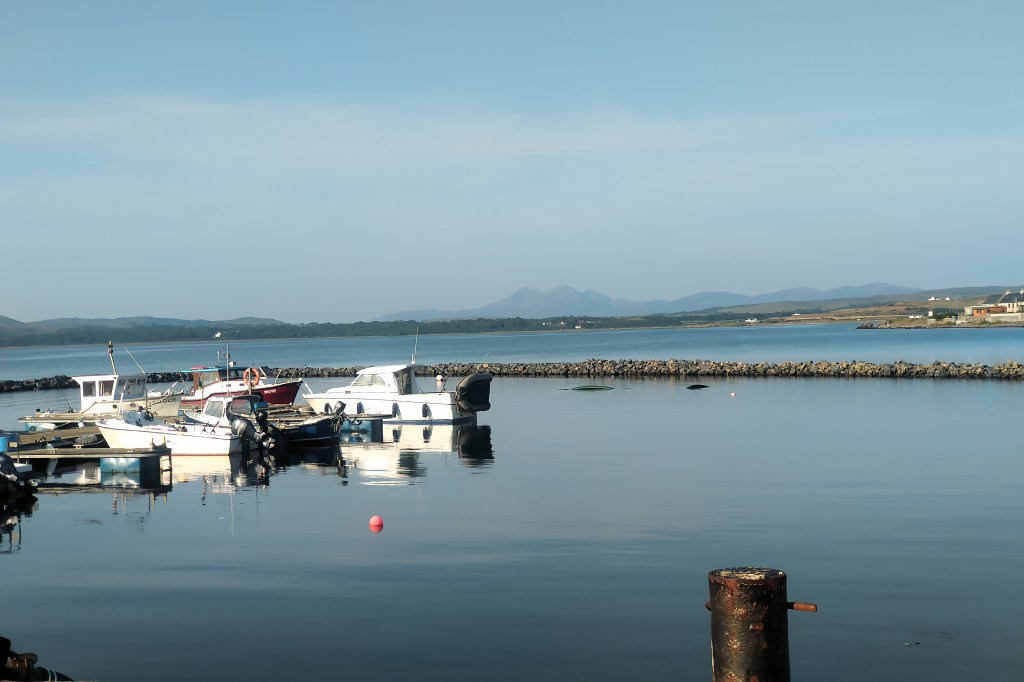
And here is the harbour next to the inn.
Bowmore Harbour
The Bowmore Distillery
The next day we caught the bus back to Askaig where we caught a ferry, this time to Jura. The two island are very close together and the ferry only took 10 minutes maximum to cross. The natives don’t want a bridge though, as the bus driver on Jura told us.
We were planning to walk to a beautiful beach from the town of Craighouses. I say ‘town’, but both this place and Bowmore were scarcely bigger than villages.
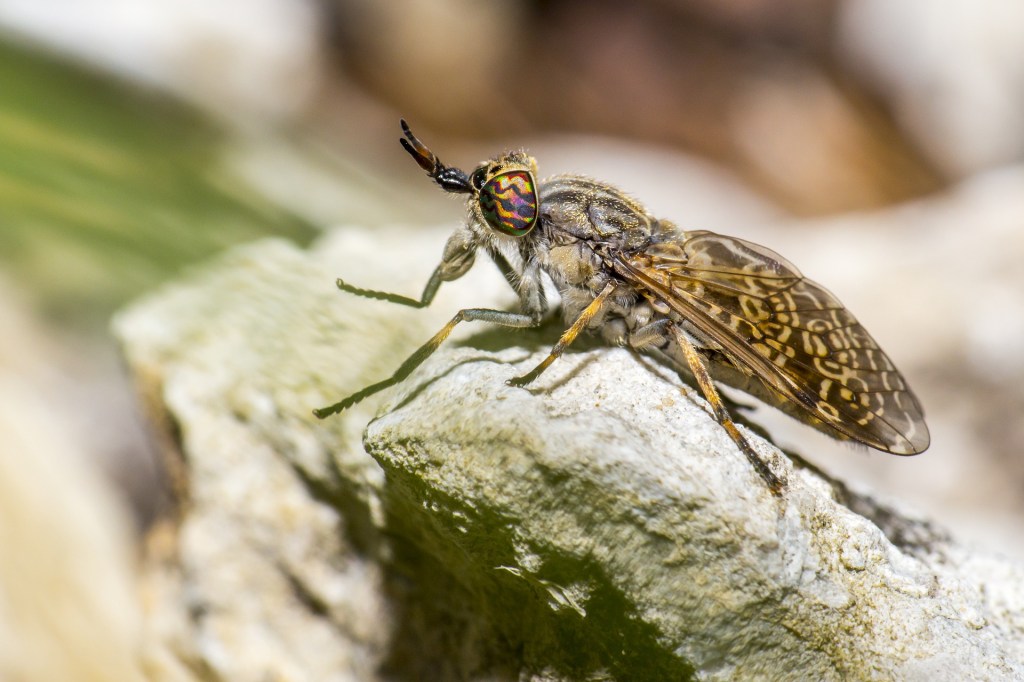
Anyway, we set off for what should have been about a 3 mile walk. As we passed a cottage, a man was just going in and he warned us that the ‘clegs’ were out and we’d get bitten. We had no idea what these ‘clegs’ were. I assumed they were the midges that Scotland is infamous for. How wrong I was. Clegs, it seems, are nothing less than horseflies.
Now, I’ve come across these nasty insects before, when I used to ride, but only in ones and twos. These were in swarms. We took our hats off and walked for a while swiping at the little blighters, but eventually we were driven back to Craighouses.
Apparently they have the most painful bite of all the insect world.
So we sat in the hot sun, ate our lunch and contemplated the view.
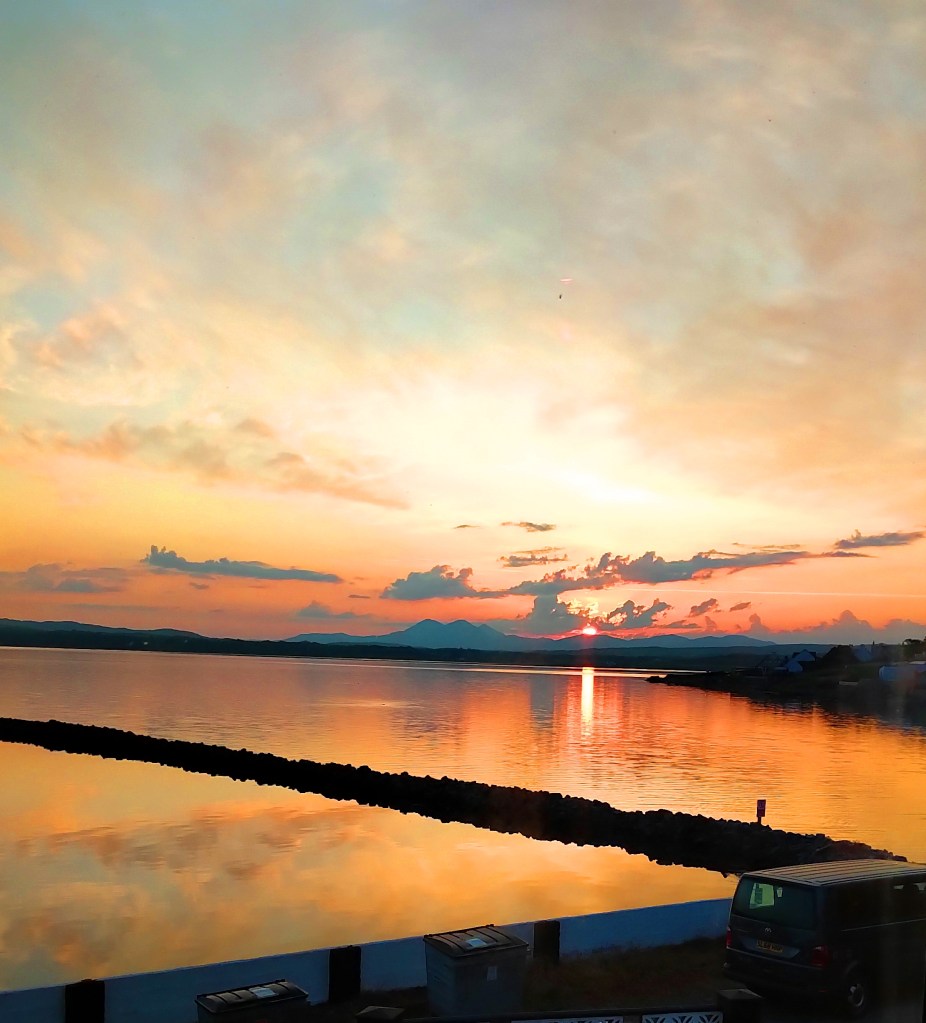
On the day of our return to the mainland, we had to get up very early. Our ferry left at 6:50 and it was about a 20 minute drive. We’d ordered a taxi for 6:15, so were up at just before 5:45. What a sight greeted our eyes. A wonderful sunrise over the Paps of Jura.
After returning to the mainland, and collected our car, we had a beautiful drive to Glasgow, where we stayed for the night.
Sorry, Glasgow! Not impressed, even though we were on the banks of the Clyde near the new exhibition centre, dubbed the Armadillo, which I found underwhelming. It’s supposed to reference ships’ hulls, but I didn’t think it looked as spectacular in the flesh as it does in pictures. (I didn’t take a photo, and couldn’t find a free one, so if you want to see it you’ll have to look it up. Sorry.)
We walked to the centre of the city. Or at least what the map said was the centre, and it was where the main station was. It was packed with people, and little else other than eating places. No shops that we found. At a time of a pandemic, it was a little nerve-shredding being amongst crowds. There was litter around, too. The only place where there was any space to move without dodging people was the waterfront.
The following day we set off back to England, calling at friends and relatives on the way.
We’d had an excellent holiday, with fantastic weather. We’ve always been quite lucky in Scotland and keep telling people that it has brilliant weather! (I hope they take that with a pinch of salt, though.)
I would love to hear your views. Have you been to Scotland? How did you find the weather?
Would you like an exclusive short story? The story will be publishednowhere else. You can only get it by clicking on the button below.
Maria and Tom have bought an antique table for their 17th century house, but during the night, strange sounds begin. They are assured it’s not haunted, so what is causing the sounds and can they get rid of what is making them?
This will allow you to receive my quarterly newsletter, too. If you don’twant to receive my latest news about my writing, and what I’ve been up to, you can unsubscribe whenever you wish.
Has anyone had a problem with tags? After I’ve added some (occasionally, like today, just one), the add tags disappear and I can’t add any more. Has anyone else had this problem, and how can you fix it?
Today I’m delighted to welcome my friend David Kummer to my blog. David and I met a few years ago when we read and critiqued one another’s works. I’ve read and reviewed several of David’s books and consider him to be a young man to watch for the future.
Hi, David. And Welcome to Dragons Rule OK. I’ve read your latest book, Everything Somewhere and consider it your best to date, although in a very different genre from your others.
My first question is, will there be a sequel?
This is a tough question to answer right now. I’ve been thinking about it a lot, as I move into my next book projects, and I do think I want to write a sequel. However, I think that will probably be five or ten years down the road. At that point, I’ll have more life experience and better understanding of what it means to go through your mid-20’s. I’d love to catch up with these characters and find out what they’ve been up to. So, yes, I really do expect there to be a sequel, but you’ll have to wait a while for it. In the meantime, I’ve written and will keep on writing other books, so check them out!
As I said before, this is a very different type of book from you others. What inspired you to write this?
This book is the most personal I’ve ever written, because it draws a lot on my personal experiences and those of people I’ve known. The characters are a mixture of people I’ve known and have heard stories about. I was also inspired to write it because I wanted to tackle the darker side of being a teenager and growing up through high school, things like mental illness, substance abuse, suicide, relating to parents. All subjects that are real and important, and that I think we don’t talk about enough. So this book did a lot of things I think are important, all of which made it very personal for me to write and publish, but people have loved it! That’s made this a very special book already, and I’m so thrilled about what’s happened with it.
There are a number of interesting characters in this book. Who is your favorite?
Willow has grown into my favorite character from the novel, which I didn’t expect when I started writing it. She’s been a source of inspiration for me to push through writing it and is a combination of a lot of people I know. Certain aspects of her strength and tenacity and integrity I drew from my mom, who the book is dedicated to. Willow also has this ability to see the town as it was, as it is, and as it could be in the future, making her an important character for not only the readers but also all the other figures in the book. In short, she makes the novel what it is, and she’s remained my favorite character throughout.
Can you tell us a bit about Willow?
I think WIllow is the best one to tell you about herself. At the end of Everything Somewhere, she finds herself pregnant. She has married Mason, her child’s father, and this is an extract from a bonus chapter I wrote.
Willow
We left shoe prints in the dirt, still damp from recent storms. The three of us, ambling between the trees, our voices free and our laughter wild. Hudson had a cigarette between two fingers and would raise it to his lips absentmindedly, between one-line stories or well-intentioned jabs at Mason. My husband stayed close to me, his hand clutching my own. We’d been married just under a month, and it still felt weird to call him that.
But his fingers were my only warmth against the biting, March wind, and I sank into his touch.
“I’m not smoking ‘til after the baby comes,” Mason replied when Hudson offered him one.
“I told you it’s fine, babe.” I rolled my eyes but squeezed his hand with affection. “Obviously, I can’t, but you can. Who cares.”
Hudson took another breath of his cigarette and exhaled behind us. The smoke drifted back the way we’d come, up toward the leaves, as our trio moved farther along the trail. He eyed me, questioning something, and I understood.
“Maybe I’ll stay off ‘em forever,” I said, granting him a relaxed shrug.
Hudson snorted. “Fat chance of that. I’m not the only addict here.” He grinned at me, and I smiled back.
We were headed to one of my favorite hideaway spots in downtown Little Rush. Perfect for any time of the year, any state of mind. I’d taken long walks there on my own, for years and years, spent countless hours in the shadow of those tall trees. The three of us had been here a few times before, though not often, and I figured today was as good as any. Our work schedules were so full now, it wasn’t easy to find a day where we could be together, doing nothing. But it had, at last, arrived, and so I led them to my once-secret spot.
There weren’t too many places in downtown Little Rush where I could exist for hours without encountering a single human. But this little grove of trees, right alongside the Ohio River, was the perfect spot of solitude. From my dad’s apartment, I walked straight down to the bricks winding beside the river, and turned my back on the bridge. Then, I would follow that sidewalk until it abruptly ended, meshing with the railroad tracks, at the end of the street. There were walking trails leading away, following the tracks, and they could take you all the way up the hillside, if you wanted. But I didn’t want that. I would simply step off the path, through a thick arrangement of bushes, and emerge on the other side into a different world.
The ground dropped a few feet there, as I climbed through the shrubbery, and it felt like I had disappeared into a place nobody even knew of. The trees were tall and thick, but sparse. It didn’t feel as enclosed or dark as a typical forest. And the river swept by on one side, bumping up against some of the trunks, turning the hardened dirt into squelching mud under my feet. From the railroad tracks I’d left behind, no hikers could even hope to see down here, unless they followed. And very few did.
That expanse of dried mud and fallen leaves became a comfortable place for me. I would wander deeper into the trees, which stood around like the crowd at an amusement park when all the rides are closed. Dancing my way through their shadows and touching their rough trunks, I found an area of large stones where I could sit and soak my feet in the water. As the Ohio flowed by, its touch loving and familial, I looked across at the banks of Kentucky or to the right, where the river curled around a jutting hill and disappeared out of sight. There was a large, wooden structure near my spot, sticking out of the water, like it might’ve been support for a dock, long ago. Down that direction, I could make out the power plant, and often a barge in the distance.
A line of trees behind me. The river in front, stretched out, endless. The rolling hills of Kentucky, like staring into a mirror, with beautiful, leaf canopies glowing in the sunlight or waving in the breeze. This place felt like a step back in time, like a setting all its own. Nobody could find me here. Nobody could shatter this mirage.
“How many weeks are you out now?” Hudson asked. He continued to work on the cigarette, nearing the end of it now.
Mason stumbled over a root and we chuckled about that for a moment. Just a few minutes now and we’d reach that sacred spot next to the river, with large rocks meant for seating and small, rippling waves that brought in plastic cans, bits of floating wood, and an assortment of little fish. They would swim right under the surface, as if putting on a show, and I would stare at them more intently than anything else.
“Due in just over two weeks,” I answered Hudson once Mason had regained his balance. “Before you know it…” I placed a hand on my protruding stomach, though he didn’t kick in response.
“What happens if he comes on St. Patrick’s Day?” Hudson asked, a glint in his eye. “You have to dye his hair green. That’s just a rule.”
“Shut up! God, can you imagine?” I covered my hand with a mouth, laughing. The image of a green-haired baby, my baby, was almost too much. “I feel bad for your kids, if you ever have some.”
Hudson chuckled at this and blew one last cloud of smoke into the air. Then he ground out the cigarette butt on a passing tree.
“Speaking of…” Mason jumped into the conversation. “When’s the wedding? For you and Layla?”
Hudson stuffed both hands into the pockets of his jacket, throwing an exasperated look at Mason. “Whatever. It’s only been a few dates.” The corner of his mouth twitched and his eyes gleamed with something like mischief. “But… we are going on a weekend trip this summer, up near Indy. Brown County, you know. It’s kinda crazy. Did you know when I first met her, I gave her a handshake?”
Mason burst out laughing and Hudson smacked himself on the forehead. “I’m such a dumbass.”
This news about him and Layla made my heart skip a beat. I smiled at Hudson, imagining him and her, off in a cabin somewhere, a place all to themselves. I wondered if they’d go to college in the fall, if they’d go together, but I didn’t want to pry. Hudson deserved a peaceful, relaxing summer with a girlfriend and a future. I hoped he would really soak it in, before everything started to change at a relentless pace. Then again, maybe we were too late and things already had.
“Oohh.” Mason winked at me. “That’s the first step, right, babe?”
“We’ve got big plans this summer, too,” I said to Hudson, ignoring Mason’s question.
Thank you, David. I can thoroughly recommend Everything Somewhere to everyone. I found it an engrossing read.
For everyone, here’s a bit more about it.
The power of memories.
Little Rush is a sleepy town on the Ohio River. Bruce Michaels is a renowned Hollywood actor. The two should never cross paths, yet one summer everything changes. The actor, haunted by demons, chasing a ghost. The town, unaware. Until the two collide.
Hudson, Willow, and Mason are high school seniors with very different upbringings, but all on the verge of adulthood. As the sun sets on their final summer, questions abound. Will they ever leave the town? Is there a future here? As their plans waver, time is running out.
The struggle of mental illness.
As he loses his friends and sinks deeper into depression, Hudson forms an unlikely bond with the actor, Bruce Michaels. But the old man is a ticking time bomb. As Hudson relies on him more, the danger to them both grows.
When dark secrets are revealed, Hudson must confront the truth about his idol and himself. Bruce Michaels isn’t who he seems. Hudson is nearly lost. And in the end, they may be more similar than different.
The search for meaning.
Different paths, converging in a web of alcohol, fights, and romance. Worlds collide one summer in Anywhere, USA. The question is who will make it through.
EVERYTHING, SOMEWHERE is an ambitious, sprawling look at the stories, people, and places forming the nuanced landscape of rural America.
And a review.
Theresajcbs 5.0 out of 5 stars Must read Reviewed in Canada on 3 June 2021 Verified Purchase This book takes you deep into the souls of it’s characters. You feel their longing, pain, wonder and joys. Anyone whose lived in a small town will instantly relate to their need for escape. It touches on depression and substance abuse, but also how it feels to grow up and what changes transpire for the adults who also grew up and stayed in the small town. The prose is stunningly beautiful and nostalgic and worth reading over and over.
Apologies for being a day late with this information. I’ve just got back from holiday this morning!
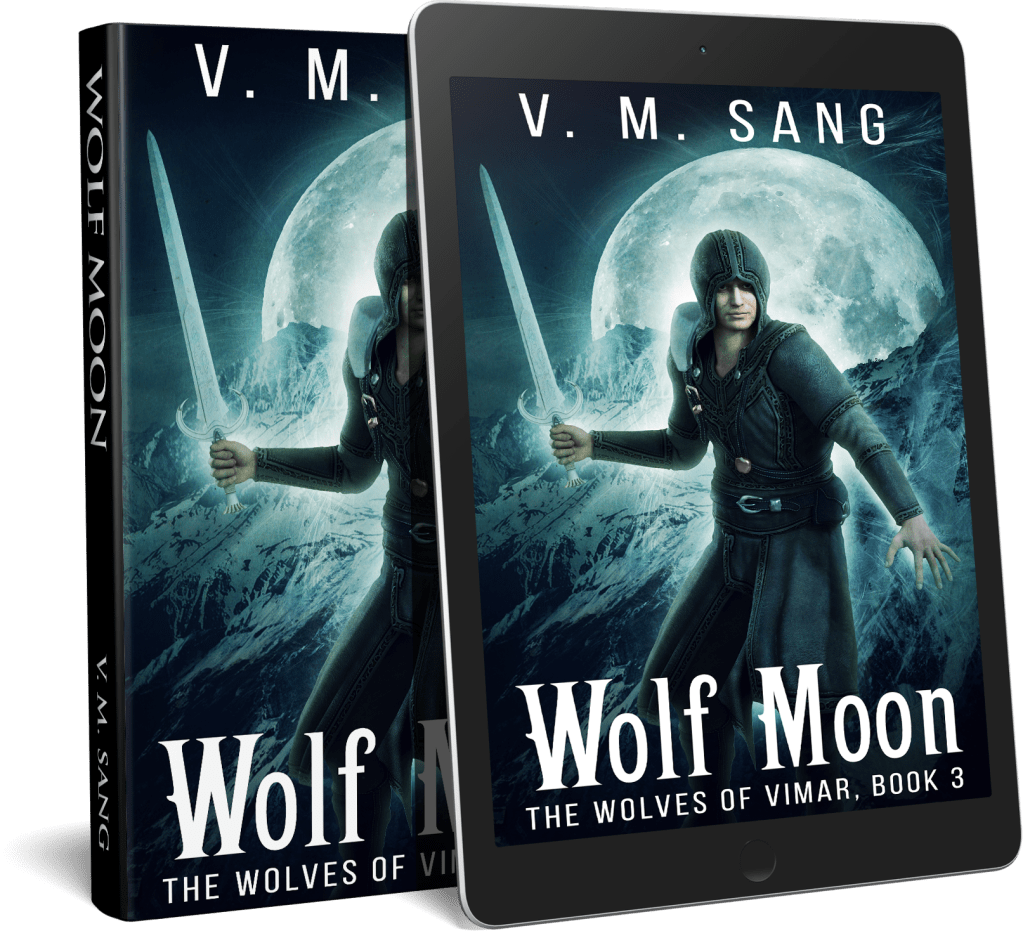
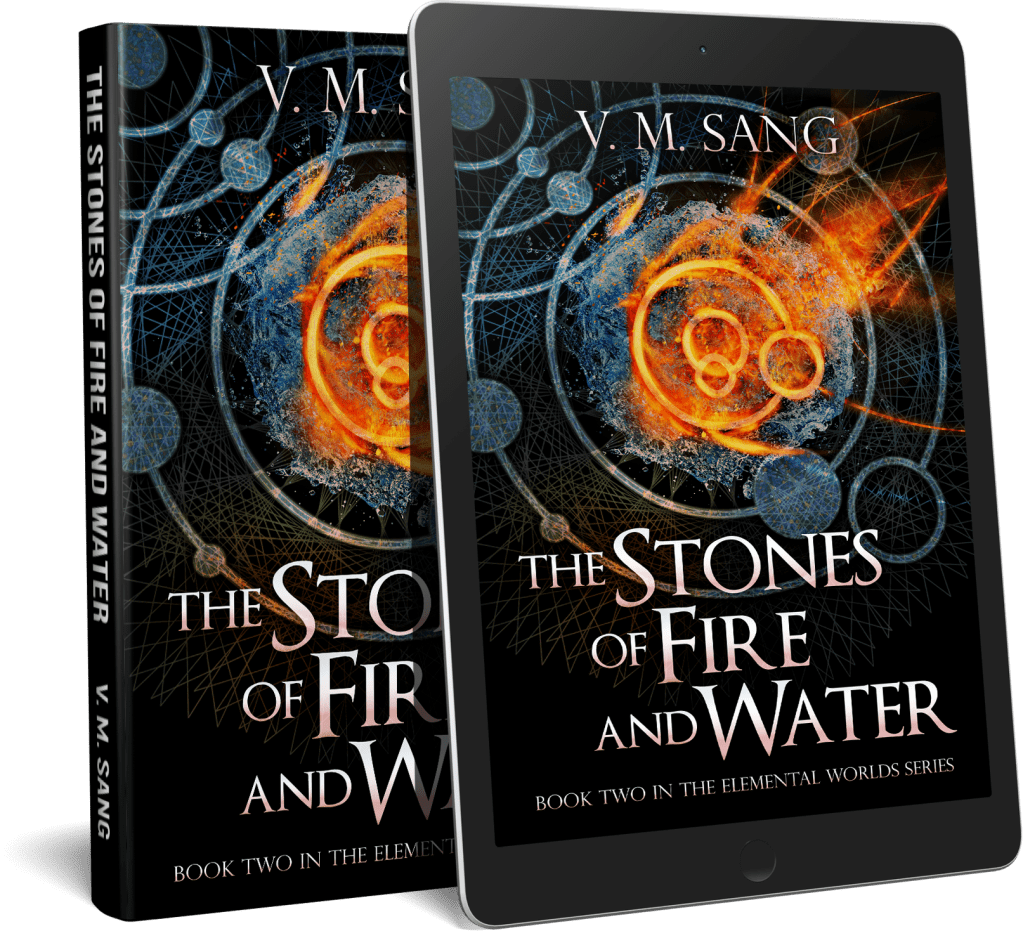
From now until 29th July you can get the ebook version of Wolf Moon, Book 3 of The Wolves of Vimar, AND The Stones of Fire and Water, book 2 of Elemental Worlds for a mere 0.99 (£ or $).
Don’t miss this opportunity.
You can get the books by clicking on the title, or the cover in the sidebar.
The Stones of Fire and Water is also available as an audio book, and both are available in multiple formats. Just click the link to go to Amazon where you are.
And here is the blurb:
WOLF MOON
The group called Wolf has been enlisted into the Erian Army against their will, and they soon learn that an invasion is planned into their homeland of Grosmer.
As the heroes make their escape, they accidentally stumble upon an old Dwarven city, and become friends with them.
Facing enemies on all sides, the five must find where their loyalties lie, and save their homeland from certain destruction.
To give you a taste, here’s an extract from Wolf Moon:
On entering this large cavern, they noticed they could see, if only faintly. Looking around, dim lights glowed high on the walls of the cave.
‘They could be phosphorescent fungi,’ mused Basalt, who had experience of living deep underground, ‘or they could be some kind of creature that gives off light, like glow-worms or fireflies.’
‘Look,’ Asphodel said, pointing. ‘Those formations over there look like buildings.’
‘Perhaps they’re natural stone formations,’ Grimmaldo mused.
Basalt shook his head. ‘No, those are not natural. They’ve been built in here.’ He approached one standing closer than most of the others. ‘It looks a bit like dwarven work, but there are aspects of the building work that aren’t dwarven. At least, not modern dwarven workmanship. For a start, they’re round. Dwarves used to build round buildings centuries ago but not any more.’
‘Perhaps they’ve been here for that long. Abandoned by the dwarves who built them,’ Grimmaldo suggested.
As they walked through the buildings, though, Thadora noticed something odd. She pointed at the door of one of the houses.
‘That wood looks fresh. It’s certainly not hundreds of bleedin’ years old, Basalt.’
The dwarf frowned. ‘You’re right, there, Thadda. This wood is no more than ten years old.’
‘Then someone lives here,’ said Asphodel. ‘Perhaps they’ll show us the way out.’
Basalt frowned. ‘Something’s odd,’ he said. ‘I’ve never heard of dwarves living in the Mountains of Doom. All our race for thousands of years have lived in the Western Mountains, with a few groups in the Roof of the World. We all know of each other and are in communication. But none have ever, in all that time, been known in these mountains.’
Fero led the way towards the centre of the cavern. They walked for fifteen minutes but still no one, not even Basalt or Asphodel, could make out the far wall. As for the roof, well, that disappeared high above.
Asphodel could see no sign of life, though. When the travellers got nearer to the centre, they found dim lamps burning around the village on tall posts, giving a shadowy light. Here they noticed a dropped basket, there, a fallen vegetable. They saw dwellings here, in this part of the cavern, all built of stone or carved from the cave walls. The settlement seemed the size of a large village or small town, but where, in a village above ground there would have been a bustling population, here nothing stirred. There remained only the signs they had noticed showing that people lived in the village.
The buildings lay scattered around in seemingly random fashion. A large building with double doors lay on the left of where they entered. Not one of the buildings had any windows. They passed buildings with the appearance of houses. A couple, with open doors, had tables, chairs, and even food left. Some looked like workshops that had been left hurriedly, tools scattered around. Then they found a big open area with a large building at one side, a bit like a square in a town above ground. Even here they saw no sign of life. It looked as if everyone left hurriedly.
‘People live here, still,’ Asphodel said. ‘All these buildings show signs of recent occupation. Very recent. I wonder where they’ve gone, and why?’
‘Perhaps they think something dangerous is about to happen, like an earthquake or a volcanic eruption,’ Thadora said.
‘Or perhaps we are the danger,’ Fero pointed out. ‘After all, these people, assuming they are people, have been cut off from outside for thousands of years, if Bas is anything to go by.’
‘What do you mean “If Bas is anything to go by.” I know my people’s history.’
‘Sorry, Bas. Of course you do. What I meant is, these people might see anyone from outside as a threat. We should just sit down and wait, to show them we’re not going to harm them. A bit like you would with a wild deer. After a while, if you are quiet and still enough, they’ll come closer.’
Thadora drummed her fingers. They entered this cave what seemed to her like hours ago, and Fero told them to sit and do nothing. The seventeen-year old was not good at waiting. In her own words she had said, ‘I don’t do patience.’ when Asphodel admonished her for not sitting still.
The others all sat there with peaceful expressions on their faces, barely moving, and not talking. The girl edged slowly away from the others. No one noticed so she edged some more. Her curiosity burned in her like a flame. She really must take a look around this place.
Through the occasional door, left open, they glimpsed rooms as though they had been hurriedly left and their owners would soon return. A meal in the process of being prepared, a child’s toys scattered around, tools left where they lay in a workroom, half-finished handiwork on a chair.
The girl decided she must explore this strange place to see if she could answer the many questions running through her head. Who were these people? Why had they left so suddenly? Why did they live completely under the mountains? Why did no one know of their existence?
When they arrived in this square in the centre of the village, Fero had called a halt. He said if their approach had frightened whoever lived here, they must do nothing to antagonise them or give them reason to fear.
‘Maybe,’ he said, ‘If we indicate we are not in anyway dangerous, the people will show themselves and help us find another way out.’
Therefore, they waited. And waited. Then they waited some more. And Thadora got impatient.
Just as she rose to her knees, about to make a dive for the nearest corner, Basalt spotted her. At the same time, a movement came from the northern end of the square.
Basalt reached out and made a grab at the girl, hissing, ‘Just what do you think you’re doing?’
Because of this, they both missed the entrance of three inhabitants of the village.
AND SOMETHING FROM THE STONES OF FIRE AND WATER
After his return from Aeris with the gem of air, Pettic receives a letter from the king. He is to see Torren and rekindle their relationship.
Soon after, Torren and Pettic meet a strange man and their lives change drastically, as they’re dragged into a mystery surrounding the red dragon Monarlisk and his former mate.
But will Pettic’s magic be enough to help them finish their quest in time – and in the end, will the rightful king be crowned?
As before, a mist rose in front of Pettic and he walked into it with a little more confidence than he had the first time. The mist soon gave way to a view halfway up a mountain.
It was night here too. He looked back but could only see the cliff that he had exited. This was more difficult than the previous journey. There, he exited in a cave and there could be no mistake in the place to return through. Here there was the whole side of a cliff. He looked around for some landmarks to indicate where he had come out. He spotted a rock just ahead that looked like a dog’s head. That he committed to memory and began to walk down the mountainside.
This was a range of large mountains from what he could see. The moon was full here, too, and lending a silvery light to the scene. He could see a valley below, but not any details. Whether there was a village or town he could not make out. He tripped on a rock he had not noticed. Perhaps he should stay here on the mountain until daylight when he could see better where he was going.
It was not cold here, but there was an unpleasant smell. It was a bit like rotten eggs, he thought. He sat down and Cledo lay down next to him. The smell was not good, but a broken leg would be worse, so he lay down next to his dog to sleep.
He woke to hear the sound of creaking leather. He sat up rubbing his eyes and coughing against the smell. He thought perhaps some people had come up in leather armour and slowly opened his eyes.
What he saw astounded him. In front of him, black scales gleaming in the sun, was an enormous beast. It had two black horns protruding from its head and a mane of leathery fronds around its long neck. Its eyes were green and slit vertically, and on its back, now neatly folded, was a pair of leathery wings. It had been the sound of these wings that had woken him. All the way from its head to the tip of its tail was a double row of spines of varying length, longer on its thorax tapering to small ones at the tip of its tail. The sound of the wings folding away had woken him.
Then the beast spoke.
‘What have we here on my mountain? A little human it would seem.’
‘Yes, I’m a human,’ said Pettic, his voice trembling, but he felt he should say something, ‘but not small by human standards.’
The beast looked startled. ‘You speak dragonish? How come you speak dragonish. Humans have never been able to speak our language before.’
‘Actually, I’m speaking my own language and we can understand each other because of this magic amulet I’m wearing.’
‘How intriguing. We dragons have magic, but no magic that can do such a thing. What kind of magician are you that can make such a thing?’
‘I’m not a magician. This was given to me by a magician on my home world.’
‘What do you mean, “your home world”?’
Pettic wondered if he should be talking to this creature. Dragons were mythological creatures on his world, like unicorns and griffins but did not actually exist. There people considered them to be evil beasts. Were these myths based on fact and were dragons evil? If so, perhaps he should not be telling this creature too much.
‘I think I may have fallen and taken a blow to the head. I really don’t know where I am,’ Pettic told the dragon. ‘Please tell me.’
‘You are on the side of my volcano, near the sacrifice stone.’ replied the dragon. ‘This valley and the one beyond are my territory. No one comes here except to sacrifice. Perhaps that’s why you’re here. Are you the sacrifice, or is it this beast with you?’
Pettic gulped. Sacrifice? This creature wanted a sacrifice and thought that he or Cledo were it. How was he going to talk his way out of this one? It would have to be talk because there was no way he and Cledo could fight this creature and win.
If you wish to leave a comment, please do so in the comments box. I love to hear from youand know your thoughts.
Feel free to share this and other posts with your friends and followers.
Would you like an exclusive short story, absolutely free? This story will never be published elsewhere. To receive your copy, simply click on the button below.
This will also sign you up to my quarterly newsletter where I tell my exclusive group of friends about what I am up to in my life and my writing.
Your email address is safe with me, and will never be shared with third parties, nor will I spam you. You can unsubscribe at any time. (Even immediately after receiving your freebie!)
The people we call Vikings didn’t call themselves by that name. The word Viking refers to the act of going on raids by ship. Or piracy, if you wish to call it that. A group of men would ‘Go viking’.
They were not a unified group, either. The people who raided Scotland and to the north of Ireland were mainly from Norway, and were known as the Norse, while those who attacked England were the Danes.
However, they were called different names in different parts of the world. The one who came from what is now Sweden, were known as the Rus. They raided to the east.
Eventually they conquered nearly all of England, except for Wessex, in the far south. This kingdom was ruled by the only English king to be given the appellation of The Great. He was, of course, Alfred.
Eventually, a treaty was made between King Alfred and the Danes in which they were given all the lands lying to the north and east of what was the Roman road of Watling Street. In this part of what is now England (which did not exist at that time), the Danes practised their own laws, and so it became known as the Danelaw.
Next time, I’ll tell you a little more about the Danes and how they lived; their laws, customs and religion.
If you can’t wait until them, though, you can always get a feel of those times by reading my recently released book, Jealousy of a Viking.
You can get a copy by clicking here or on the book cover in the sidebar.
If you would like to get to know me better, join a select number of people to receive my quarterly newsletter. Click the button below.
From today, for 5 days only, The Never-Dying Man is for sale at a mere 0.99 (£ or $)
The above picture shows the western entrance gate to Frelli, the capital city of Erian. In the past, many wars had been fought between Erian and Grosmer, and Frelli developed as a fortress city. On this side, the Grosmer side, the gate and walls fill the narrow valley.
Here is a bit about the book.
After finding Sauvern’s Sword, the companions set off to help a friend rescue his child from kidnappers. Instead, they stray into Erian and find preparations for war. They are drafted into the Erian army but are recognised by an old enemy, who arrests some of them and takes them to Frelli, the capital of Erian, where they are put in jail.
The Master of Erian frees them and offers them work. Meanwhile, Carthinal has to face some unpleasant truths about himself. Is his desire to further his magical career more important than his friends and country? After they discover terrible truths about the Master and his magical research, they will need to escape in order to tell the leaders of Grosmer about the plans for war.
To buy, click on the book cover here, in the sidebar, or the link below.
And an extract.
Carthinal, Randa, Davrael, Kimi and The Cat have been taken to Erian’s capital, Frelli as prisoners. The Master of Erian has freed them and is treating them as valued guests, although they are not allowed to leave the castle. There is a mysterious tower that all are forbidden to enter, and the Cat decides to climb the walls to find out what is going on.
Carthinal had said there would be traps, probably magical, but the Cat decided that no one would bother to put traps on a window so high above the ground. It had to be fifty feet at least. Glancing down, he saw that there were people beginning to move around in the courtyard below. Should he risk it now, or leave it till nightfall? Both were risky. At night, though, he would not be able to see well, and he judged that it was unlikely that anyone would bother to look up, and if they did, would not believe they saw someone climbing on the walls. People usually saw what they expected to see.
He decided to take the risk and go now. His curiosity as to what was in the tower was burning him up. Tell him not to go somewhere, and that is precisely what he wanted to do above all else.
Scrambling up onto the window ledge, he felt to his left. Yes, there was a secure hold. He gripped it with the fingers of his left hand then felt with his left foot. He quickly found a foothold, and then repeated the movement with his right hand and foot. He was now hanging, face pressed against the rough stone of the wall, next to his window. Moving with great care, he repeated the procedure and moved slowly to his left and the walls of the tower.
Twice he thought he was going to have to retreat as he could find no purchase, but then the smallest ledge made itself felt. Once he almost fell, putting too much weight on a crumbling stone. No one called out from below that someone was climbing on the walls. His luck was holding.
It took him about an hour to reach the tower and manoeuvre himself to below the window. Whenever he thought he heard someone below him, he paused, knowing that movement was what attracted attention. Then he began to climb. This was easier as he could look up and see ledges and crannies, and knowing where they were, could put his feet in them after releasing his hands to find the next cracks. After about a further half-hour he reached the window ledge.
He was sweating profusely by now. The sun was climbing the heavens and it was only about two sixdays until the solstice and the warmth of the sun plus his exertions had made him hot. He paused to get his breath. After a couple of minutes, the burglar hauled himself onto the ledge of the tower window. He peered in. There was no glass here, and the shutters were open, but he could see nothing inside for it was dark after the sunlight outside. He squeezed through and dropped silently to the floor, crouching and listened carefully.
Breathing. Very quiet breathing. Someone in here was trying to breathe so as not to be heard. Of course! Stupid person. He was obviously getting out of practice. His body would have been seen blocking the light from the window. Shit. Suppose this person were to jump him? He remained crouched beneath the window for a second, then slowly and silently crept to one side.
As his eyes became used to the dark he could pick out a shadowy shape sitting on a bench opposite the window. A human shape. It too was sitting absolutely still, as though trying not to be noticed. He moved a few more paces.
The tower room was circular it seemed. It must cover the whole of this floor of the tower. He moved again, felt behind him and touched wood. A door most likely. He was nearing the person on the bench when he heard steps approaching the door. Someone coughed and The Cat froze. Were there enough shadows in this room to hide him when the door was opened? Would the person entering have a lamp? Probably.
More importantly, would the person on the bench give him away? Who was it? Was he (or she, he added to himself) working here or a prisoner? If the latter, why were they being held here and not in the dungeons? So many questions passed through his head in the seconds it took him to leap for the window and pass through to hang, breathing heavily, on the window ledge outside.
Fortunately for him, the man entering took several seconds to unlock the door. When he entered, The Cat heard him speak and recognised the voice of Wolnarb. Gone was the charming man who had wined and dined them and the voice now had a grating quality that made the Cat shudder. He ventured to peek round the edge of the window.
He could see little, but could just make out the shape of a small man standing before the bench on which he had spotted the figure previously. He held his breath, hoping that the person on the bench would not give him away, though he felt that he was fairly safe here, as it appeared the other was a prisoner. He listened to the words being spoken, but could understand little as Wolnarb spoke in Erian.
Wolnarb’s words elicited a slight whimper from the person on the bench and he (for it was indeed a man as The Cat could now ascertain) moved away, shuffling along the bench. Wolnarb laughed an unpleasant laugh, and then he spoke again. The man shook his head and lay down as though in resignation.
Wolnarb laid his hands on the man, his left on the man’s forehead and the right on the man’s chest, where his heart was as much as The Cat could ascertain. Words flowed from the magister that made the hairs on the back of the Cat’s neck stand up. He was aware that magic was being done in that room. He had had sufficient dealings with Carthinal in the past to be aware when magic was being performed. The man in the room screamed once, convulsed, then fell to moaning.
Soon, the murmuring stopped and the man fell back as though he had just performed a great feat. Wolnarb laughed again, not a pleasant sound, then spoke. He indicated a tray he had brought with him, spoke again and left.
‘What is going on here?’ thought The Cat. He considered whether to re-enter the room or go back to his own rooms and tell the others what he had observed. Then he heard the prisoner approach the window and speak. Again he could not understand the words, but decided to re-enter the tower and see if he could make any sense out of what was going on. After climbing back through the window, he made his way to the bench. On it a young man sat with a tray of food.
The young man spoke as though in great pain.
‘I’m sorry, I don’t speak Erian,’ The Cat told him. ‘Mo hambro Erian.’
‘You from Grosmer?’ a heavily accented voice asked. ‘I speak a little but bad. How you get to window?’
‘Climbed, but why are you here? What was going on?’
‘Climbed? It high. It smooth. Why man from Grosmer here?’
‘Not too high or smooth for a cat burglar. Plenty handholds. As to why I’m here in Erian, I’m not sure, myself, and it’s a rather long story. I’m with some friends though. We’re housed not far from here.’
The young man coughed.
When The Cat looked at him, he saw he looked grey and ill. ‘You’re not well. You need a healer. Tell me, why are you in the tower and not in the dungeon if you’re a prisoner, and what did you do to be held?’
‘I a special prisoner. My crime, being young and strong and believing Wolnarb.’
It took The Cat longer to get back to his room as the day had grown quite warm and the climbing was not so easy in the heat. He was relieved to be back in his rooms, which were cool, facing north as they did. He ran his hands through his hair and hurried off to see Carthinal.
To read the book, click on the book cover in the sidebar, or here to go to Amazon where you are.
Please leave your comments in the comments box. I love hearing your thoughts.
Would you like an exclusive short story?
Sign up to join my quarterly newsletter and I will send you the story absolutely free. This story will not be posted on any blog, mine or anyone else’s, nor published in any book or magazine.
I promise not to spam you, (I hate spam as much as everyone) and you can unsubscribe at any time. Nor will your email address be shared with anyone else.
If you would like to receive this story, click on the button below.
I almost entered this into a contest a year or two ago, but in the end chickened out. I thought I’d share it with you. I hope you like it.
England
That misty isle across the sea Will always be a home to me. The cliffs of white that guard our shores, The rolling Downs, the bleak, cold moors, The skylark with his liquid song Soaring high above the throng Of hikers, picnickers and such, Whose hearts he never fails to touch.
The little streams and brooks do run Through woodlands, glistening in the sun. The little fish are swimming here; A kingfisher is always near. A flash of blue above the stream, A dive, then gone, that silver gleam Of minnows, gone to feed his brood In holes, all waiting for their food.
In cities where the pigeons fly The wind-blown litter flutters by. The cars and buses, cycles too, Line up at lights, forming a queue. The city’s clamorous roar assaults The ears, but never, ever halts. The busy folk all rushing past. They never slow, time goes so fast.
The little market towns do snooze. The slightest little thing is news. In pretty villages with greens Are cottages with oaken beams. The church bells echo o’er the fields Calling us with merry peals As they have done for many a year Bringing hope and lots of cheer.
This land does not a climate boast. Just weather blown from coast to coast. All in one day, this land can get All four seasons, sun and wet. Though no extremes do us attack, Do not go out without a mac For rain can come at any time, Though rarely with a gale force nine.
The English folk are stubborn, too, As we showed in World War 2. We do not push, but stand in line, Waiting patiently till it’s time. We do not wail and wave our arms We think such behaviour has bo charms, But when we’re roused, then just watch out We’ll demonstrate, wave flags and shout.
And so my country is unique; Its people never really meek. An upper lip that’s stiff conceals A wicked humour that reveals Our lack of deference for power, Our love for bird and bee and flower. Abroad may have its charms, it’s true, But England’s magic’s ever new.
Did you like this poem? Let me know your thoughts in the comments. I always enjoy hearing from you.
Would you like a short story? Sign up to join my quarterly newsletter and I will send you an exclusive story absolutely free. This story will not be posted on any blog, mine or anyone else’s, nor published in any book or magazine.
If you would like this offer, click on the button below.









 Dragons Rule OK. V.M.Sang (author)