Tag Archives: british wild flowers

Discover the Beauty of Wood Anemones in Spring. British Wild Flowers.

Image by mikezwei from Pixabay

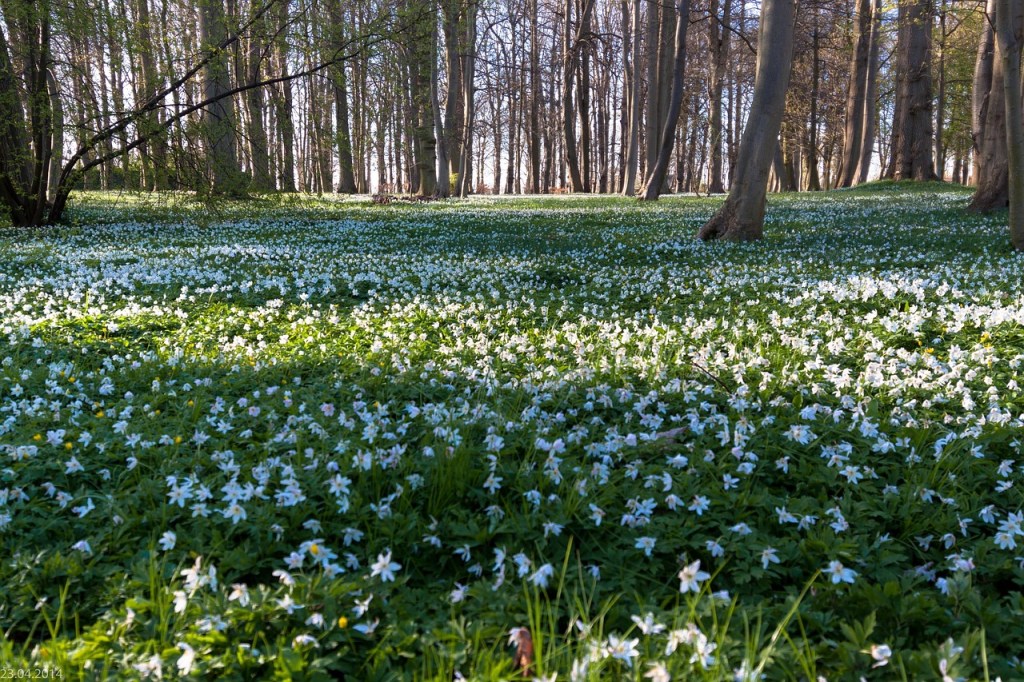
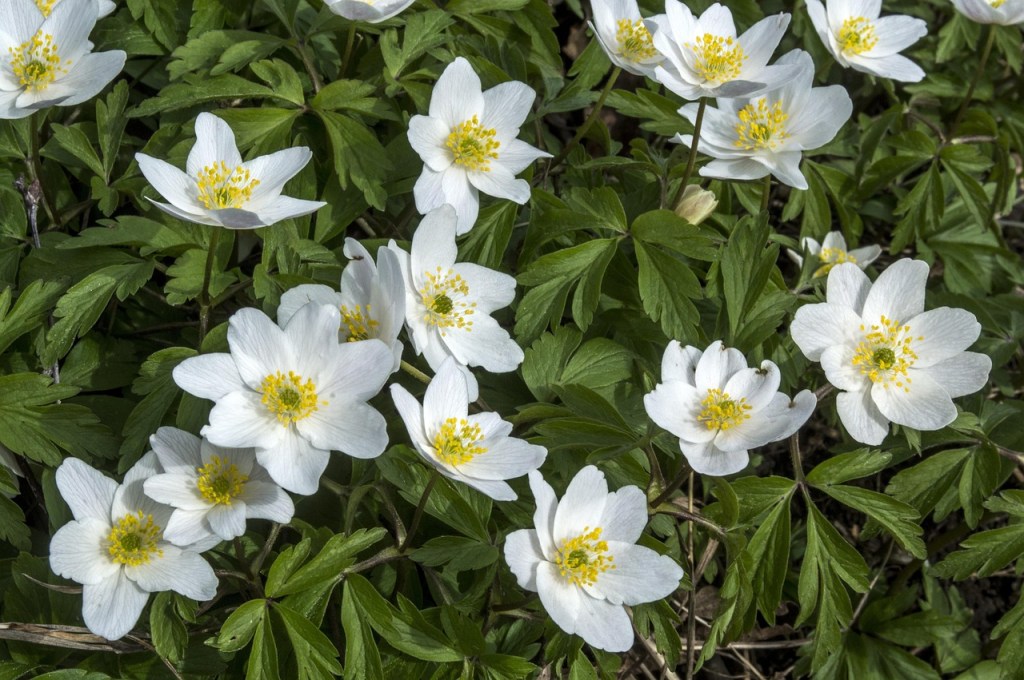
One of the prettiest sights in spring is the carpets of white that cover the ground beneath woodland trees.

This is not a late scattering of snow, but thousands of wood anemones.

The Woodland Trust says:
A sign of ancient woodland.

Wood anemone is an ancient-woodland-indicator plant. If you spot it while you’re out exploring, it could be a sign you’re standing in a rare and special habitat. 

I am lucky enough to have woodlands with these flowers within walking distance of my house. Ancient woodland that has been there since time immemorial.

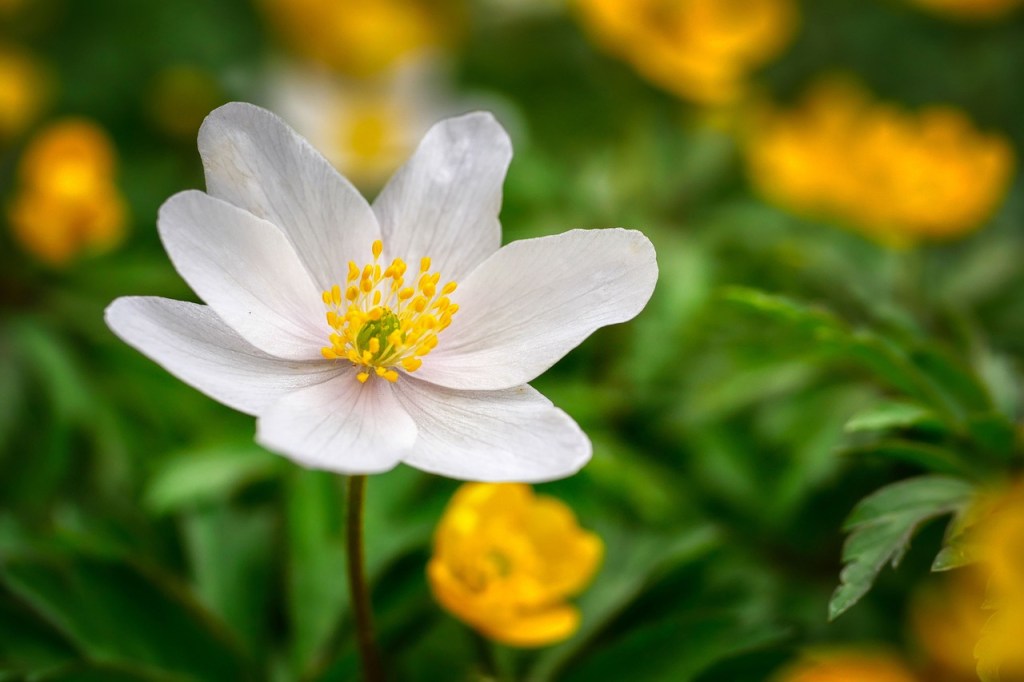
The wood anemone is a delicate-looking plant with white star-shaped flowers.

Image by Pirkko Valtonen from Pixabay

The Wood anemone found in the UK is Anemonoides nemorosa, while in the US there are two species–Anemonoides quinquefolia, which has white stamens as well as white flowers, and the western wood anemone Anemonoides oregana, which is blue.

I am going to talk about ours, though, since this is one my British Wild Flowers posts.

Image by Albrecht Fietz from Pixabay

These plants are very small. Wikipedia says seldom reaching a height of more than 30cm, but I’ve yet to see one anywhere near that height. Most of those I’ve seen are around half that. They have delicate leaf-like bracts beneath the flowers that are divided into three lobes.

We find these little beauties in bloom from May until about April, so they are one of the earliest to appear, flowering before the trees come into leaf and block the sunlight. The flowers are around 2cm across with six or seven petals surrounding a large number of stamens.

It spreads by rhizome, but only extremely slowly. One estimate I read was that it was only 6 feet per 100 years! This is why it can be used as an identifier of ancient woodland. If the ground is covered, then the woodland is several hundred years old.

How useful is it?

Deer and many other herbivores such as rabbits, hares, mice and voles will eat wood anemones. Many insects also feed on it, including small wasps and flies.

The wood anemone is also a host plant for larvae of some butterfly species .

Human uses.

It has been traditionally used to treat some illnesses (although I don’t suggest trying it unless you know exactly what you are doing!)

According to Glenlivet Wildlife “it has been reported to have several medicinal properties, including sedative and cardiovascular benefits, amongst others.

“Wood anemone root extracts have been used to treat a wide range of liver diseases, including chronic hepatitis and liver cirrhosis.”

“In traditional medicine, it is also believed that they can induce menstruation if eaten in large amounts.

“Used by many European countries, they help prevent soil erosion due to their extensive root system, which binds the soil together with their numerous fibrous roots.”

Picking wild flowers wasn’t illegal when I was growing up, and I used to pick many of our wild flowers. The local church had an annual flower show, and one of the classes was for a wild flower arrangement. Wood anemones would not have been good for this as I discovered. They fade and die very quickly when picked.

White heads dancing
In the gentle breeze
Carpet the ground
Beneath the trees

Bees buzz eager
For this new supply
Of nectar from
A flower so shy.

Fill your eyes with
Ethereal sight.
They’ll soon be gone
These flowers so white.

British Wild Flowers. The Lesser Celandine.

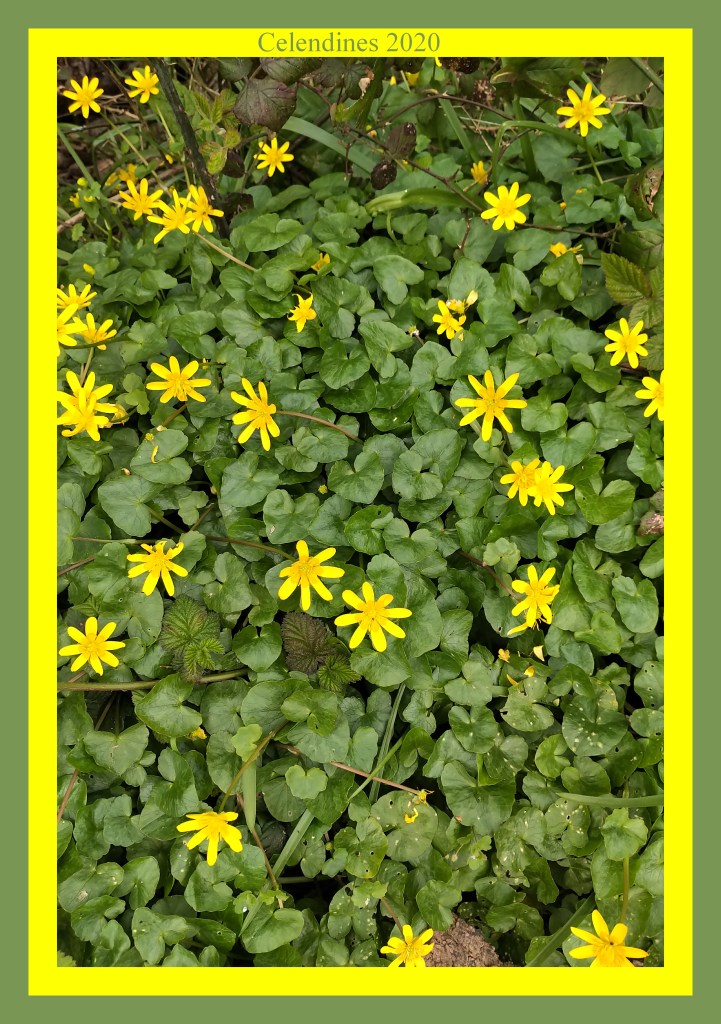
Lesser celandines are one of the earliest wild flowers to appear, blooming from late January until the end of April.

They are small, growing to a mere 2-3 inches, but form masses of flowers. They look gorgeous when in bloom. A veritable carpet of yellow stars.

They are found on banks, at the edges of woods and paths, in grassland. In fact, almost everywhere. One might be tempted to put some in the garden, but think twice. Although they are lovely little flowers and bloom when there isn’t much else, they can be invasive.

They spread from tiny tubers which grow in the leaf axels. Rooting them out can be a problem as it can help them to spread! My suggestion is to enjoy them where they are. I did see some for sale in a local garden centre. They were lovely with unusual dark, reddish leaves. Very tempting.

I understand, from reading on the net, that their leaves are a rich source of vitamin C. Useful at a time when, in past ages people hadn’t had much green vegetables during the winter months and may have been suffering from scurvy as a result. I have no experience of eating these leaves, and so cannot recommend them as a salad vegetable. ALWAYS CHECK FOR TOXICITY BEFORE EATING ANYTHING GATHERED FROM THE WILD.

Here’s a little poem to the celandine.

Celandines

Little stars litter the grass.

Have they fallen from the sky?

They are shining when I pass

Reflecting sun’s rays from on high.

Celandines are here to say

Winter’s gloom is nearly past.

Spring is really on the way;

Warmth will soon be here, at last.

Bright and cheerful little flowers

Covering the woods and banks  

Creating lovely yellow bowers.

We should all be giving thanks.

I hope you enjoyed this little post about one of our early spring flowers. Feel free to share it with anyone you think might find it interesting, but please link back to this blog if you do.

If you want to read more of my poetry, you can buy my first poetry anthology, Miscellaneous Thoughts, by clicking on the book cover in the side bar or the title in this paragraph.

I just looked at my poem on the preview, and the breaks between the verses does not appear even though I added them when writing. this always happens and I wonder why. Does anyone know why?

Please leave your comments in the comments box. I love hearing from you.

British Wild Flowers: The Scarlet Pimpernel

Many of you will have heard of the book by Alexander, Dumas, The Scarlet Pimpernel. This story told of a British aristocrat who rescued French aristocrats in the Revolution. He got his name because he took as his emblem a simple, small red flower.

This flower is also known as Poor Man’s Weathervane, or, according to the Wildlife Trust, Old Man’s Weathervane, or Shepherd’s Weathervane, but where I come from originally, it was Poor Man’s Weathervane!

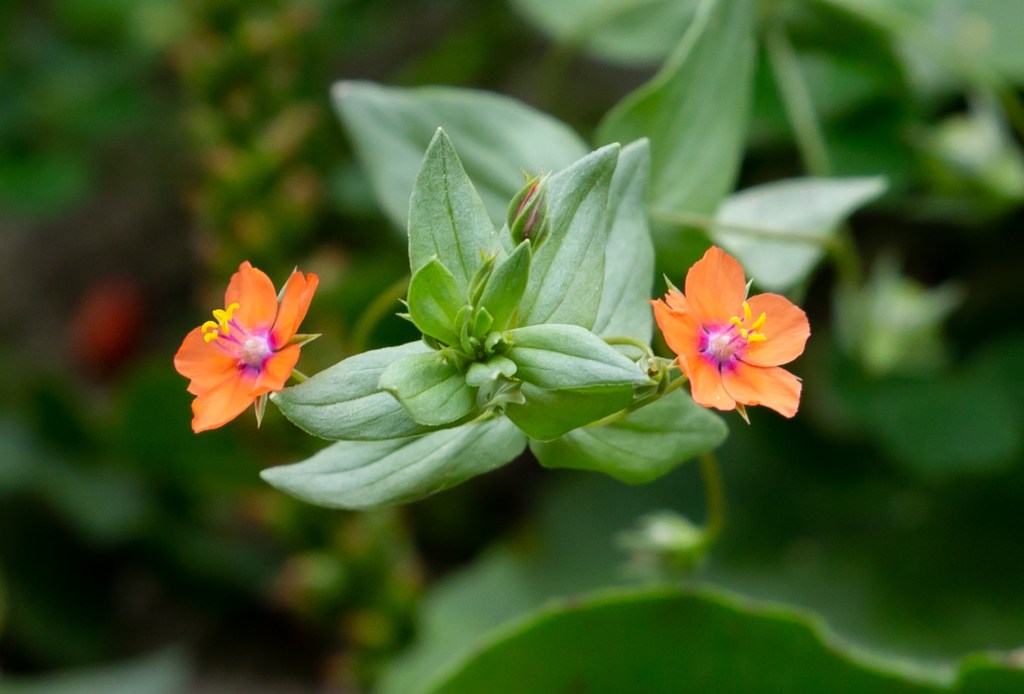
This simple little flower got its name because it closes its petals when the pressure falls, and bad weather is on the way.

It is a pretty little flower that was once a weed of cereal crops, is now in decline because of the way farmers now farm the land, spraying crops with herbicides to maximise their yield. It is now found mainly in gardens and roadside banks, and other waste ground.

It is easily overlooked because of its small size, which is a pity, because it’s a pretty little flower.

The picture, which I got from Pixabay, makes it look larger than it is in real life. The flowers are only about 1 cm across. I think it’s a lovely little flower and I hope it doesn’t decline further.

I have one small plant in my garden that comes back each year, and I hope it stays. I don’t think of it as a weed, because a weed is a plant growing where you don’t want it, and I want this wild, little beauty.

Do you have a favourite wild flower? If so, what is it? Where does it grow?

Please leave your comments and answers in the comments box.

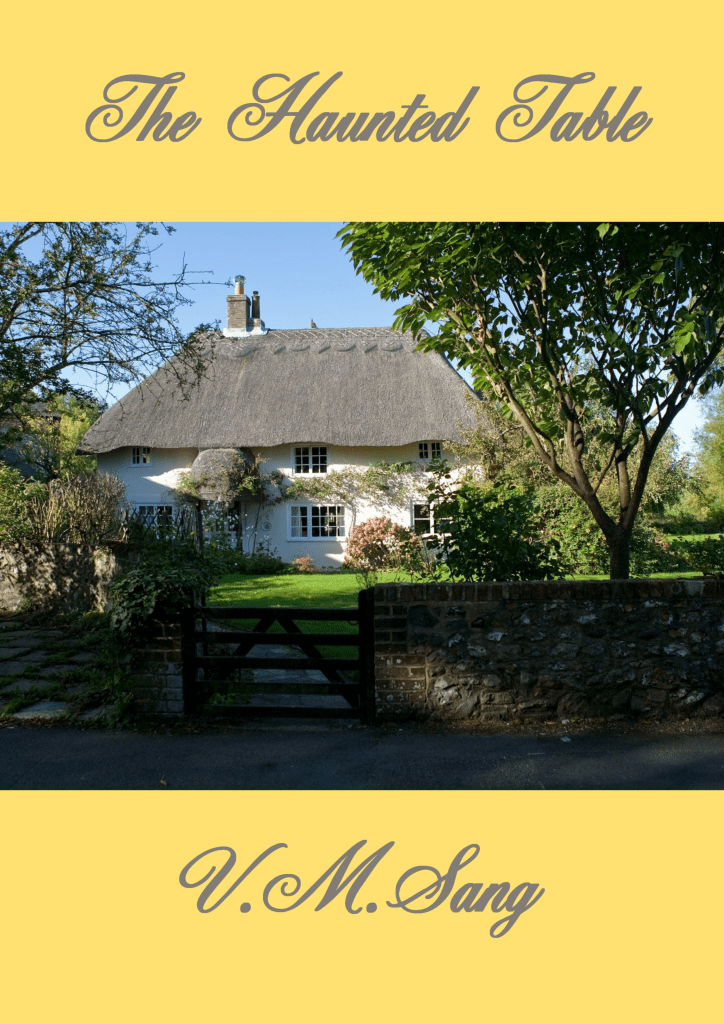
If you would like to receive an exclusive, free short story by me, called The Haunted Table, simply click the link. This will take you to the page where you can download it.

Maria and Tom have bought an antique table for the old cottage they have bought. When they hear strange noises in the night that sound like crying, they worry their house is haunted, but the sounds seem to come from the table.

They set about trying to find what is causing the disturbances. The answer is stranger than either of them had thought.

(Clicking the link will add your email address to my email list, but don’t worry, you can unsubscribe immediately if you wish. Nor will you get any spam. I only send out an email each quarter, or if I have any exciting news–like a new release.)

Wild Flowers of Britain. 1. The Dandelion

Some people will refer to these plants as weeds. But what is a weed? Grass growing on your lawn is not a weed, but if it grows between your beloved flowers in the flowerbed, then it is.

In the above case, the grass is growing where you don’t want it, hence it’s a weed. So a weed is any plant growing where it’s not wanted.

I have, in the past, bought plants from garden centres and put them in my garden. Sometimes I regretted it as they wanted to take over the whole garden, even though they might be pretty. They have become weeds.

A weed is a plant growing in the wrong place.

So here are a few wild flowers, not growing in the wrong place!

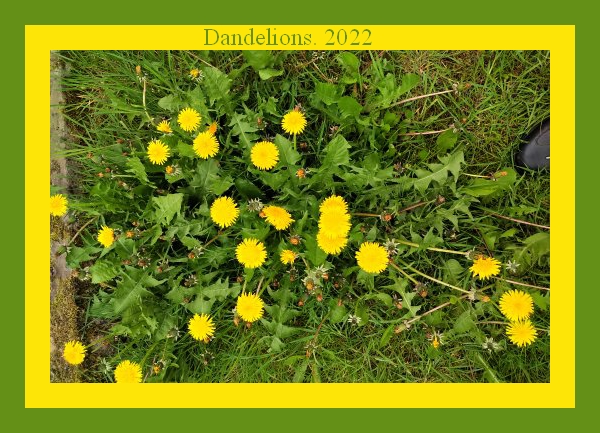
The first of these is one that is often disparaged, and called a weed wherever it grows. That’s the Dandelion.

These plants are so-called from the French, ‘dent-de-lion’, meaning ‘lion’s tooth’. If you look at the leaves, you can see how this name came about. However, the French call it ‘piss-en-lit’ or ‘wee the bed.’

When I was growing up, we told each other not to pick dandelions or we’d wet the bed. There is a miniscule truth in this as the sap of the plant has diuretic properties.

I also believe that the leaves make a spicy addition to a salad, but I’ve never tried it myself.

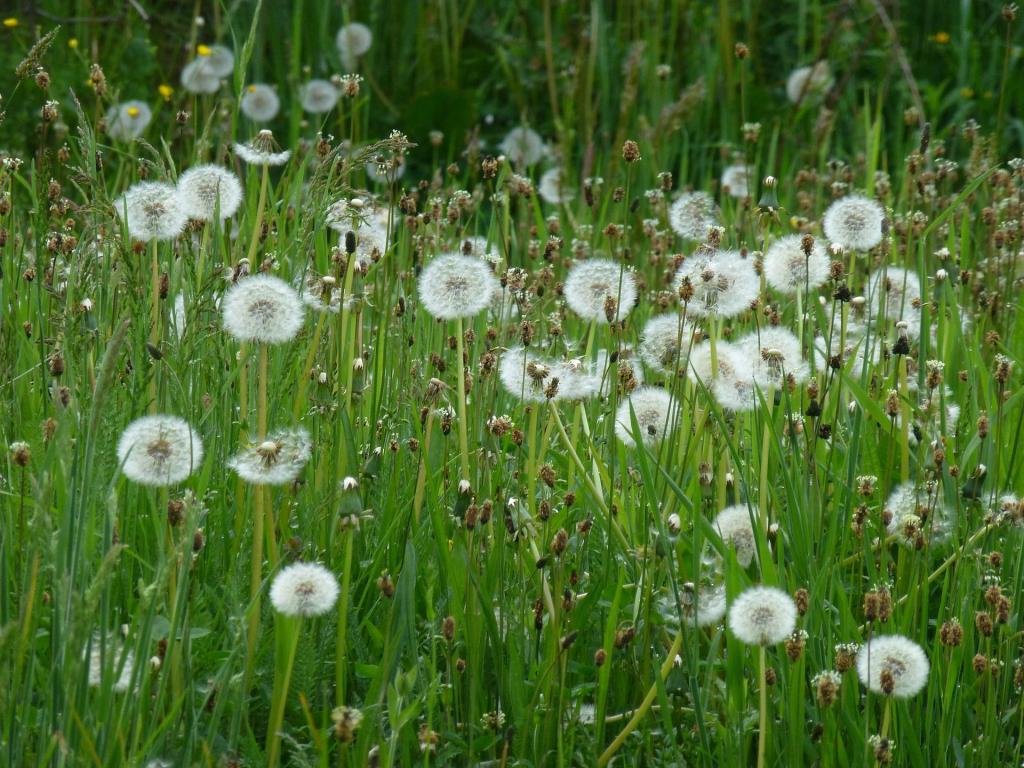
When we were growing up, we used to call the seed heads ‘Dandelion clocks’. We blew the seeds of, counting ‘one o’clock, two o’clock etc’ until all the seeds were gone. then that was the time. We never really believed it, but it was a fun thing to do. And it helped spread the dandelion seeds.

Personally I like dandelions. They are lovely flowers, and make a bright carpet in the springtime on roadside banks.

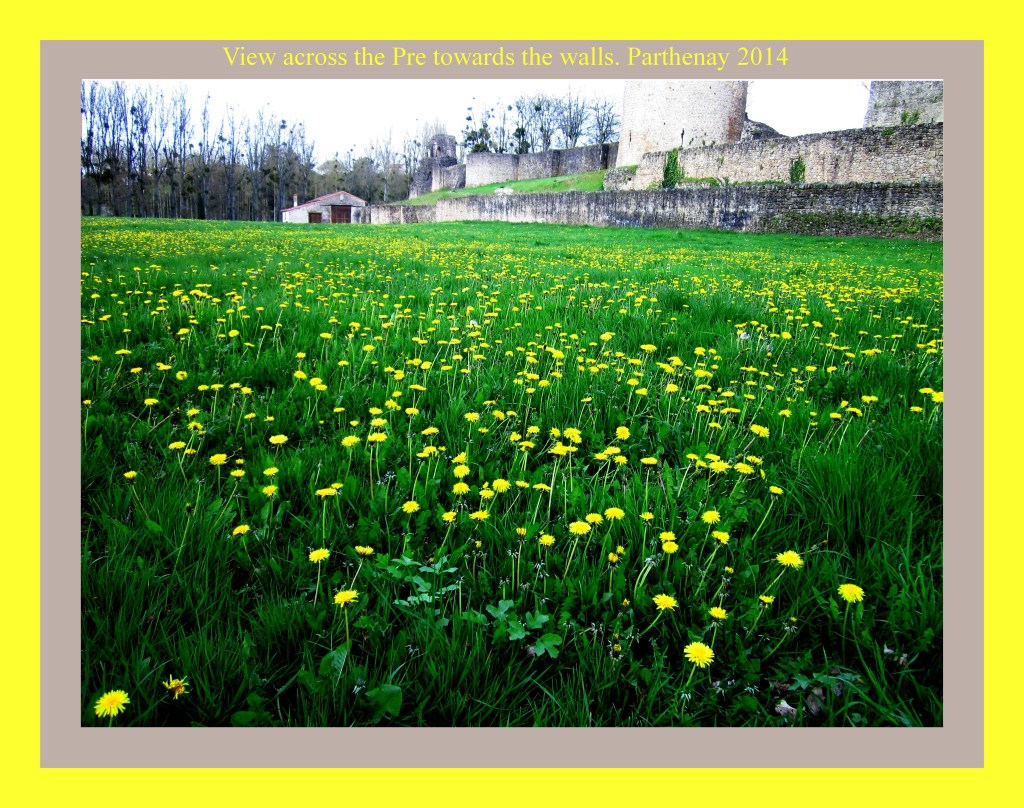
Here is a picture of a field of dandelions in Parthenay, France, just outside the walls.

I have a vague memory of being told that during WW2, people used to make coffee from the long tap roots. It would certainly be caffeine free! Anyone who has ever tried to dig up a dandelion can testify to those roots!

Dandelions, though, have a high propensity for absorbing things around them, that includes weedkillers and pesticides, as well as heavy metals such as lead, so it is as well not to eat them from anywhere near roads, or places where herbicides and pesticides can be absorbed.

Wikipedia tells me that dandelion flowers were used to make a pale yellow dye, and the inner ribs of the leaves made a purple one.

They can self-pollinate, which is useful for them as they flower early, so they can pollinate themselves before insects are around, but their bright yellow flowers attract bees as soon as they emerge in the spring. Be careful of using herbicides on them, though, as it can harm or kill the pollinating insects.

And, of course, the Rolling Stones made a song about this flower. Here’s a link to YouTube so you can listen to it.

If you would like to join my mailing list and receive a quarterly email about what I’ve been up to, click the button below.

You will receive a free and exclusive short story by me as a thank you.