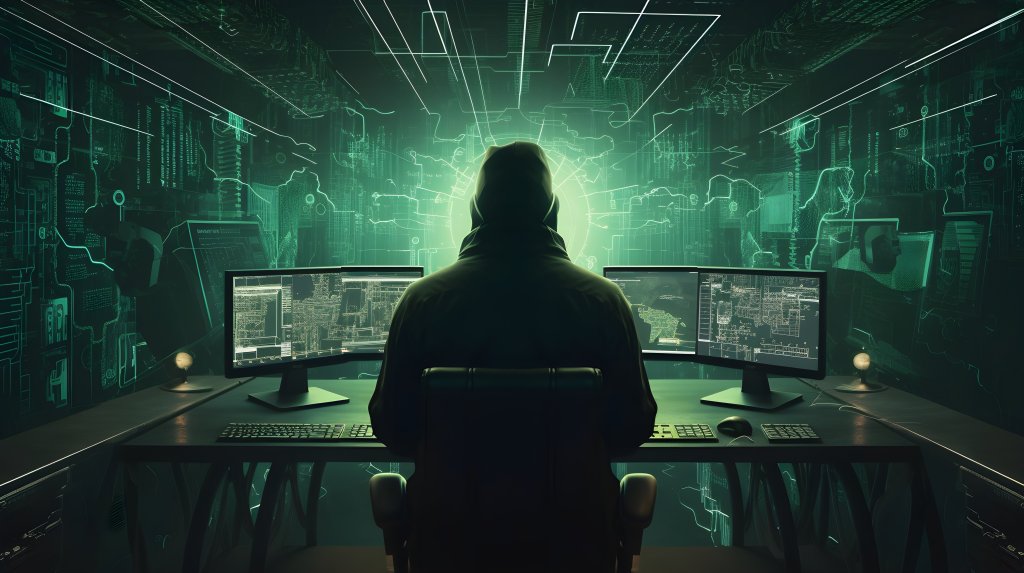
AI is everywhere these days. Almost everything we have any contact with is AI in some form or other.
Fears About AI
One thing we must remember, though, is that AI isn’t sentient. It’s only following what it’s been programmed to do.
People are afraid of AI. They wonder what the rapid growth will entail, and will AI eventually be the cause of the end of humanity. I say that’s possible.
The Robot Army and AI Takeover
What most people envisage is AI taking over. There are several ways that Sci-Fi has shown this.
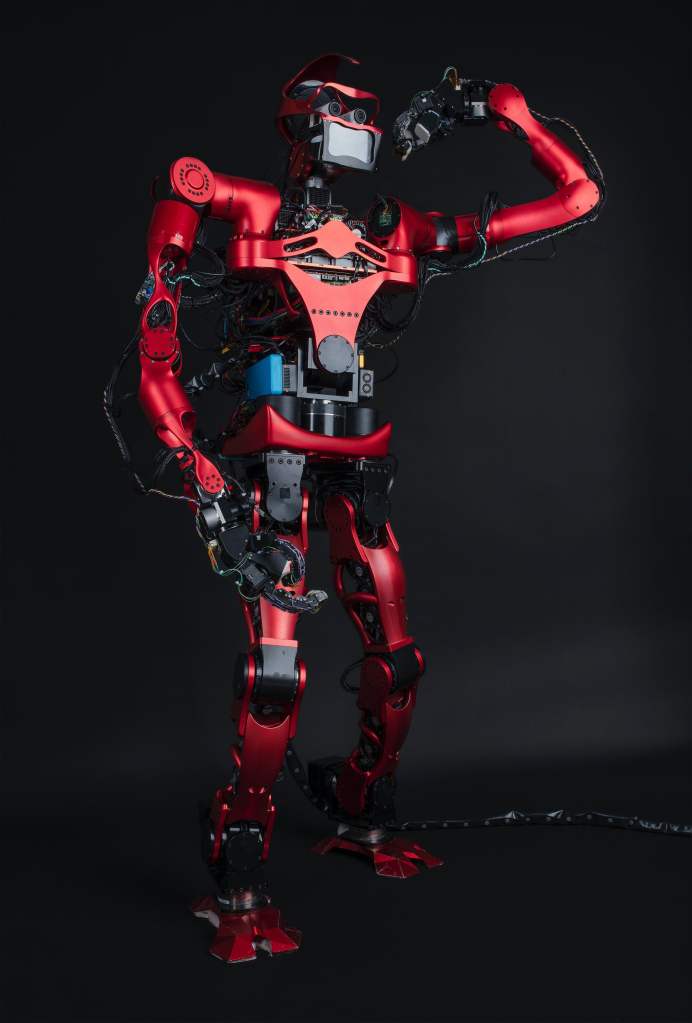
There is the robot army. Humanoid robots with weapons fighting the army. Constructing new robots to replace those destroyed by people. Quickly effecting repairs on injured robots far more quickly than flesh and blood can repair itself.
Then there are computers. These wage a different kind of war. One where they put people into jobs to perform certain tasks, and as they have no concepts of things like boredom, they insist people continue with their allotted tasks ad infinitum. Perhaps they will begin to control reproduction. Perhaps they had human autocratic masters in the beginning who were harsh with anyone who did not comply with their orders. The computers would continue to enforce these rules and laws even when their masters have disappeared.
AI in the Arts
Another thing people worry about is if robots will take over their jobs. I think this is a much more real problem. I saw a video of a humanoid robot sweeping the floor in a house. There are those which cut grass without supervision, build cars in factories where there once were lots of people working. Now only one or two.
Then there are the Arts. Will robots be writing our novels, writing the music we listen to, painting pictures we visit in Art Galleries? And is it important as long as it’s good? Which it isn’t at the moment.
AI in Medicine
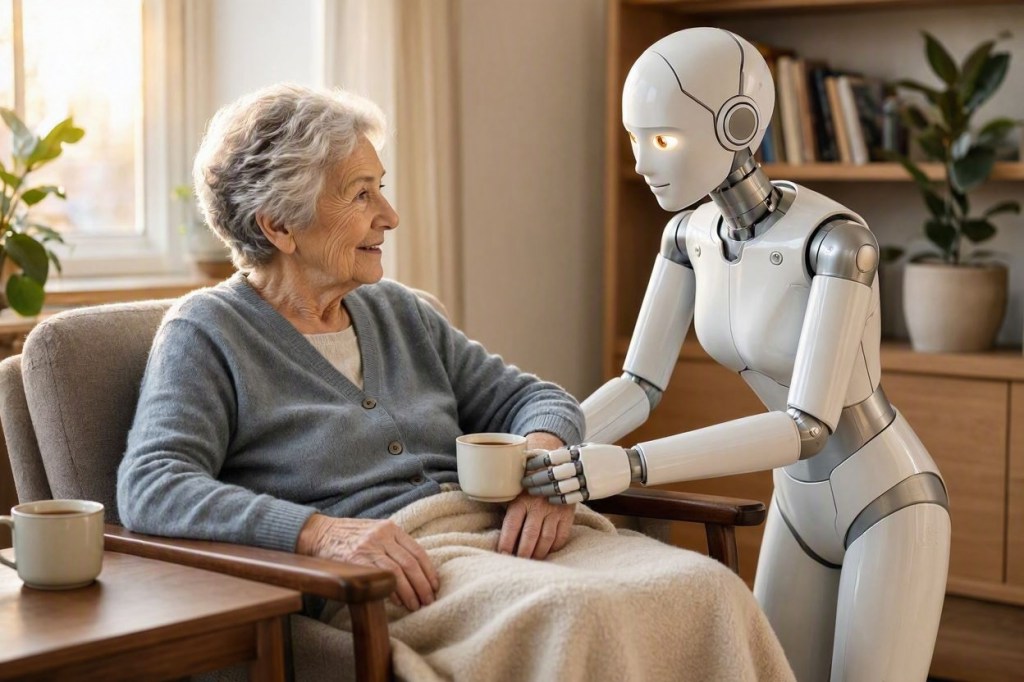
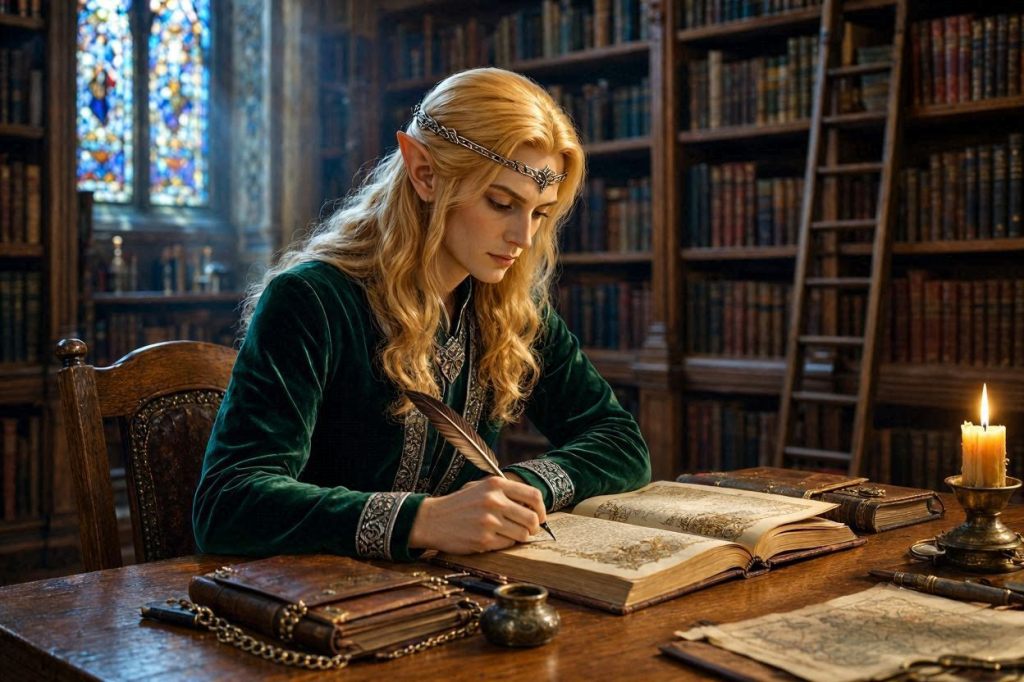
Created with Bing AI
The medical profession. Do we want to be interviewed about our illnesses by a computer or by a real person? What about our teeth being filled or extracted by a robot, and not a humanoid one at that? And the carers? Do we want robot carers?
These are all concerns, and I’m sure you can think of many more. But what I think is the worst part of all this AI business isn’t any of that.
Everyday AI We Already Use
AI tells us what to do in many cases, already. I’ve consulted AI about a problem I had transferring photos from my phone to my pc. Yes, it was good, on the whole, but it didn’t foresee some of the problems. But whenever we ask Google a question, the first thing that comes up is AI.
Drive a car? It tells you when you are straying from your lane. It’ll tell you if it thinks you’re tired, you can get cars that prevent you from getting too close to the car in front.
You can tell it where you want to go and it’ll calculate the best route and tell you as you are driving, where to turn, and when to get into which lane.
We can now, using QR codes, tell a restaurant what we want to eat before we get there.
Our Smart TVs ask if they should suggest something for us to watch.
All these things mean we don’t need to make decisions for ourselves. AI will do it for us. This means we’re not using our brains.
The lack of using our brains to solve these little problems means that there will be an increasing stupidity and inability to solve problems. It’s already starting!
We used to have to have a map, read it and then plot our routes manually. We used to have to decide what TV programme we wanted to watch. We didn’t have Amazon suggesting what we should buy based on what we already bought.
The Real Danger: Forgetting How to Think
This is what I consider the real danger of AI–the downgrading of human ability to think.
You can call me hypocritical if you wish, but I did use AI in the production of this post. I used WordPress’s Agent. The words are mine, the pictures from Pixabay, except the one I created with Bing, just the layout is from AI.
What are your opinions on AI? Do you think it’s a danger to humanity, and in what way?
Recently I’ve been seeing a lot of ads when playing games on my tablet. I checked on many of them and found they are misleading at best, and fraudulent at the worst.
That inspired me to write this post.
I contacted the game developer and had the reply that they get their ads from Meta. They said they’ll look into them, and in all fairness, some of the ads I’ve complained about have decreased significantly, but there are still too many. In fact, I would almost say that the majority are scams.
AI generated image from Pixabay
These are divided into several groups.
Common Types of Online Scam Ads
Play to Earn Money: These ads show games where it appears you can earn significant amounts of money. One actually says that the actor (I assume it’s an actor) earned enough to give up her job and play the game 2-3 hours a day, earning enough to live. Another group have a poor person, always looking dirty! who can’t afford to buy food. She may attempt to steal either money or food. A kind person asks for her phone which she hands over. To a complete stranger, no questions asked! The stranger then downloads an app. She plays and immediately ‘wins’ a large amount of money. These ads are misleading at the least. The games do not give out anything like the amount of money suggested. They give pennies only for each game completed. Many of them have impossibly large amounts that have to be reached before you can cash out, and sometimes cashing out is made extremely difficult. Some don’t give you the cash at all.
Deep Fakes: These ads use an AI generated image of a well-known celebrity who is endorsing something, often crypto. These are fake. AI generated videos use captured samples of the celebrity’s voice, and videos made from photos or other videos of the celebrity.
Celebrity Impersonation: Another one is using Mr Beast’s image in the same way as above. This one shows Mr Beast handing out huge amounts of money to random strangers. He then says that you can ‘earn’ vast sums if you download his arrows game. He says he wants to help people. Now the real Mr Beast has nothing to do with this game. It’s a scam.
Fake Products: These scams do actually have a product for sale. The ones I’ve seen are for a top with a built-in bra, a birdbath fountain thingy, advent calendars with amazing gifts, like lego, model vehicles, model highland cows, etc. And there’s one with a robotic puppy. If you buy from these, the product is shabby and of poor quality, or not as the ad says. The puppy one shows a very realistic puppy, running around and snuggling up to its owner’s face, just like a real puppy. It’s very appealing. But it’s AI generated, and the actual product apparently only moves forwards and backwards, and squeaks! Most of these have difficult return procedure: extremely high postage, or no return procedure at all. You may not even receive the product.
Every time I see an ad that looks appealing to me, I go to Google and ask if it’s legitimate. Most aren’t!
How to Spot a Scam
Of course, there are those that are legit, like the Red Cross, PayPal, the RSPCA, Vintage Cash Cow etc. But I warn you to be EXTREMELY CAREFUL about responding to online ads.
Always check their website. If an email address is a generic address, like Gmail or Hotmail, it won’t be genuine.
How to Protect Yourself
Here are some practical steps to protect yourself from online scam ads:
Search before you click. If an ad looks interesting, Google the company or product name plus the word “scam” or “review” before doing anything else. What comes up will tell you a lot.
If it sounds too good to be true, it is. No game will pay you enough to quit your job. No stranger online is giving away free money. No celebrity is personally endorsing a crypto scheme in a social media ad.
Check the website carefully. Look for a professional domain (not Gmail or Hotmail), clear contact details, a returns policy, and secure checkout (https://). Poor grammar and spelling are also red flags.
Reverse image search. If a product ad shows amazing photos, drag the image into Google Images to check if those photos appear elsewhere — often they’re stolen from other sites.
Check reviews on independent sites. Look for reviews on Trustpilot, Reddit, or consumer watchdog sites — not just reviews on the seller’s own website.
Report scam ads. If you see a scam ad, report it to the platform (Meta, Google, etc.) and to Action Fraud (in the UK) or your country’s equivalent consumer protection body.
The best defence against scams is a healthy scepticism. Take a moment to pause and check before you click, download, or buy — it could save you a lot of money and frustration.
Every September Hailsham, in EastcSussex, has 2 weeks dedicated to the Arts.
There is something for everyone. The Downland Poets hold a poetry reading, with an open mic, a local Townswomen’s Guild puts on a play. There is music in the church and other venues, workshops in painting, glass work and other things. Comedy is also included.
There is street drama, a talk on the history of Punch and Judy, and the magic of pantomime, as well as a performance by the Ukrainian Choir and Dancers.
Children aren’t left out, either. There are puppet shows and workshops for them, too, as well as stories. And a writing competition.
There is also a short story competition for adults, and a ‘Meet the Author’ session. No, I’ve not been invited to take part in that! 😕
Near the beginnjng of this festival, artists were invited to enter artwofk to be disp.ayed in shop windows. I had some of my paintings exhibited in that.
On one of the bridges, more recently, artists has been exhibited on a bridge over a disused railway line, now a footpath.
During the pandemic, the organisers put artwork online in a virtual art gallery. They have continued it this year, and I am pleased to say that some of my art is exhibited.
I saw a post on Reddit where the person asked about how we each came about being a writer. I answered, but then thought it might make a post for my blog.
In the beginning, I always loved books and stories for as long as I can remember. When I was very little, long before I could read, maybe about 3 years old, I loved a story called Pink and Ponk. It’s still available on Amazon! I knew it off by heart. One say, I was holding the book and speaking the words, when a friend of my mother saw me and thought I was actually reading!
When I could read for myself, I read a book by Enid Blyton, called Shadow the Sheepdog. I loved that book and reread it many times. It inspired me to write my own story. That was the first story I remember writing. I also devoured many other of her books, as well as books like Black Beauty and Little Women.
Also, when a child I made a little fairy out of grass and made up tales for my little sister about it.
When I was at school, I loved English lessons where we were told to write a story or an essay. I enjoyed both types of writing. I also enjoyed the literature lessons where we read many classic books. It was here that I discovered the Bronte sisters. And unlike many of my compatriots, I also enjoyed poetry.
In my teens I wrote a very bad romance. I only read it to my friends, They were kind about it, but fortunately, it has now disappeared into the mists of time.
After my A levels, I went to do teacher training in Manchester. Here I studied science as a main subject and maths as one of my subsidiaries. As I liked English literature, I chose that as my other subsidiary subject. It was here, at college, that I took to writing some poetry. My first ever published work was a poem I wrote about the atomic bomb. (It was the time of the Cold War, the Aldermaston Marches and CND.) It was published in the magazine of UMIST (University of Manchester Institute of Science and Technology).
During this time, I discovered Lord of the Rings, I was doing a teaching practice at a primary school. A 9 year-old boy asked me if I’d ever read it, and recommended it to me, telling me I should first read The Hobbit. When I found them in the library, I was immediately turned on to fantasy.
Then my writing adventures stopped as I began work, got married and had a family. No time for writing.
My writing started with a Dungeons and Dragons scenario I wrote. I read the Dragonlance Saga and found out it was based on a D&D scenario, and I thought I’d try my hand at converting my scenario to a novel. A standalone was what it was going to be, but in the way these things happen, it’s now up to the 4th book with more to come. The story hasn’t yet finished. (Although the characters think it has!)
Then came the inspiration to write Elemental Worlds, which turned into a duo. It could have been a standalone, but it would have been rather long. I really enjoyed writing that one (or pair, I should say!)
I began writing poetry again at this time.
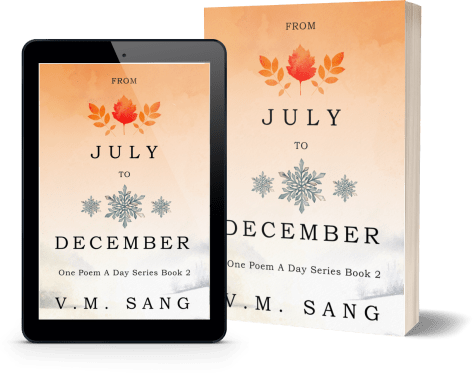
My daughter had a book when she was little that had a very short story or poem for every day of the year, so I conceived of writing one poem every day for a full year. I did manage to do this, and it’s now published as 2 volumes, January to June and July to December. It has a variety of poems from limericks and haiku to longer narrative poems. Some serious, some amusing.
Another thing that has been fermenting in my head for decades is a saga of a family through the ages. This started when I was in my teens and I was walking with a friend and her family in Derbyshire. We came across a ruined mansion. This picture has been in my head ever since, so I started to write a historical series, now up to Book 2.
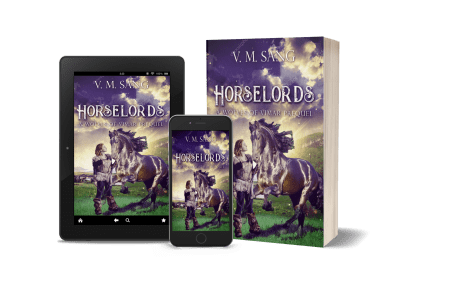
I’ve also written 3 novellas; The Wolves of Vimar prequels.
Currently I’m writing Book 3 of the historical series, and hope to soon get on to Book 5 of my fantasy series (The Wolves of Vimar.) I am also working on some short(ish) stories inspired by fairy tales. 2 are already written and 3 is on the way.
And that’s how I became a writer!
If you are interested in any of my books, you can click on the image in the side bar. It will take you to where you can choose your favourite retailer.
Some of these books are also available as audiobooks.
I don’t usually post two reviews immediately one after the other, but I was asked to review this collection of poems, so here is another.
I was given a copy of this book in exchange for an honest review.
This book of poems comprises thoughtful images. Kevin Morris writes beautifully about his life experiences. He contemplates mortality in his poems, but not in a morbid way.
His thoughts from hospital, where he underwent an operation for a brain abscess, give us an insight into his thoughts on this close brush with the Grim Reaper.
The poems in memory of his friend are touching. Here is one of my favourites.
Your Shadow
On a day in early spring I heard the birds sing As we walked together And, as we walked, I wished to talk With you my dear old friend. But it was my shadow That walked in sunshine For you have crossed the line Where all things end.
I cannot cry Or go where you have gone, Yet our friendship lives on And one day I will become A shadow in sun And shade For life is made Of fleeting shadows. And I know That I must one day go Where you have gone. But other men May see my shadow Walking beside them And know me And their own mortality.
I also enjoyed the one he wrote to his guide dog, Apollo.
Dog and Human (Dedicated to Apollo)
You know not what I write As day turns to night But lie near me Unaware of our shared mortality. We love our walks. You just do What dogs do— While I have my thoughts Of endings And how I envy you!
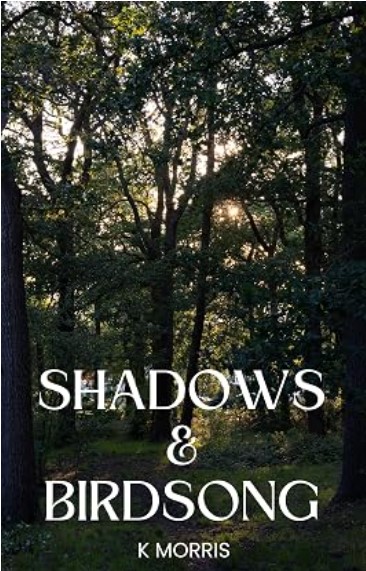
I enjoy Morris’s unusual rhyme schemes. They make the poems interesting and unusual. And I love the cover.
This is a wonderful collection of poems, and I fully recommend them to you. Even if you’re not a poetry person, you will be sure to find some you enjoy. They will give you food for thought.
I give it 5*
The explanation of my ranking of books doesn’t fit with poetry as it’s for novels.
Have you read ;any of Kevin Morris’s poetry? What did you think of it? Please leave your comments in the comments box.
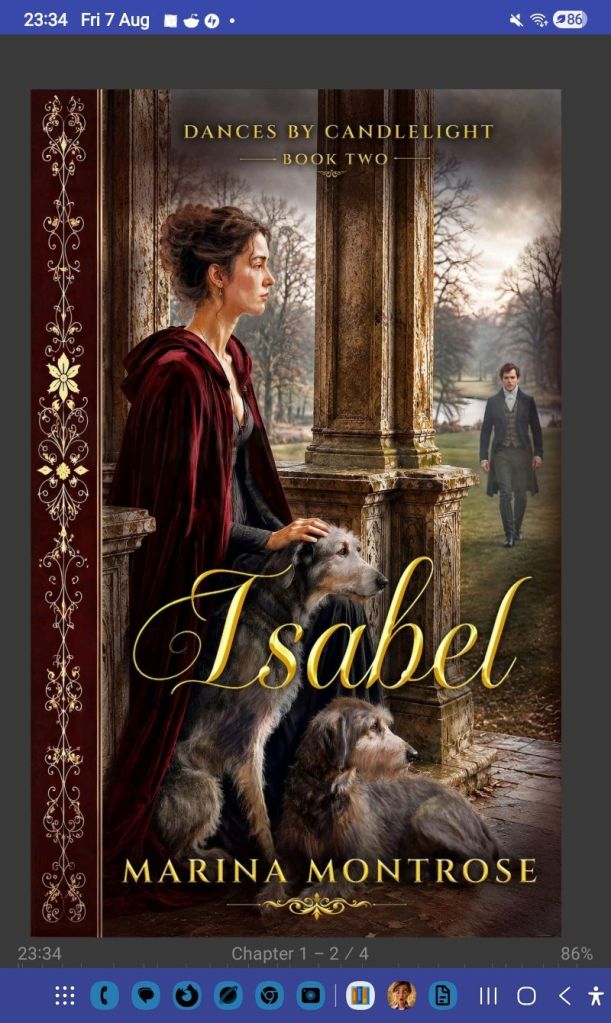
OVERVIEW This is a ‘nice’ Regency story. There is little to object to about it. However, I found it very similar to her first book in this series.
STORY Isabel is a young woman whose family has fallen on hard times. Her father has recently died and left debts. When Francis, Earl of Bengrave asks for her hand in marriage, she sees it as a way to help her family, and agrees to marry him, although she barely knows him. What she does know, is that he has a reputation as a rake, and has a long-term mistress, Mrs Morrell. Francis needs to marry to secure an heir for his title and fortune, and has picked Isabel as a likely candidate. The couple agree not to interfere with each other’s lives too much. The story is told from the POVs of both Isabel and Francis.
CHARACTERS Isabel. At the beginning, Isabel is naturally nervous of the unknown man she has married, but gradually, as she learns her husband is basically a kind and generous man. As she grows in confidence, so she asserts herself more. Francis. He is naturally worried his lifestyle will be impacted, but tries hard with his new wife, giving her gifts, although he is reluctant to join in with the Regency society. I did feel that he was very similar to the protagonist in her first book,
WRITING Although well-written from the point of view of grammar and spelling, I felt the story was a little too simplistic. There was little tension. The protagonists didn’t have to struggle much to discover they had fallen in love with each other. Nor did Francis have too much difficulty in getting rid of his mistress. That could have been made much more of, and becomes built around ‘will he, won’t he’ get rid of her. The other thing I felt was that the protagonist in this book was almost interchangeable with the one in her first. Nevertheless, it was a pleasant and easy read.
I give it 3*
My ranking of books. In order to get a particular number of stars, it is not necessary to meet all the criteria. This is a guide only. 5* Exceptional. Wonderful story. Setting well drawn, and characters believable–not perfect, but with flaws. Will keep you up all night. No typos or grammatical errors. 4* A thoroughly enjoyable read. Great and original story. Believable setting and characters. Very few grammatical errors or typos. 3* I enjoyed it. Good story. Characters need some development. Some typos or grammatical errors. 2* Not for me. Story not very strong. Unbelievable and flat characters. Setting not clearly defined. Many typos or grammatical errors. 1* I hated it. Story almost non-existent. Setting poor. Possibly couldn’t finish it.
I decided to repost some of my earlier blog posts as there are new people who won’t have seen them. Here is the first one.
I apologise for being a day late with the interview with Archmage Yssalithisandra, but she was extremely busy with some new magic texts that have recently come to light and put the interview off for a day.
Me: Good morning, Archmage Yssalithisandra. I am glad you decided to meet me and answer afew questions that our readers would like toknow about.
Yssa: Please call me Yssa. Everyone does, you know. It is a pleasure to be interviewed by you.
Me: How is it that an elf is working in Hambara and not in Rindisillaron, the elven homeland?
Yssa: I came here because of the Mage Tower. There is no longer one in Rindissillaron, you know.
Me: I believe there was one once though. Why has it not been found or rebuilt?
Yssa: Mage towers are always built on special places where the mana is at its strongest. Places where it wells up rather like springs out of the ground. The whereabouts of the Mage Tower in Rindisillaron has long been forgotten, as is the case of the towers in most places in Khalram.
Me:Why has this occurred?
Yssa: It was after the Forbidding when they were deserted for several hundred years.
Me:The Forbidding?
Yssa: Yes. Two hundred or so years after the death of Sauvern, there was an uprising by a group of mages who thought that because they could weave the mana, they were superior to others and that they should be the rulers of all the lands in Khalram. There was another group who opposed them, of course and the result was a terrible war. The results were so devastating that when the rightful rulers were restored, the practice of magic was forbidden throughout the lands that make up Khalram. All books of magic were burned and the mage towers were, for the most part destroyed. All people who could do any magic were put to death too.
Me:So that is why you are researching the past. To find the lost spells. How long ago did the Forbidding occur?
Yssa: How long? Well it began about 600 years ago and lasted for about 3oo years. That means that it ended about 300 years ago.
Me:And in 300 years you still haven’t found all that was lost?
Yssa: Remember; there were no mages in the continent when it ended, nor any books. We had to start again from scratch.
Me:How is your work coming on?
Yssa: Oh, we’re beginning to make more progress and we keep finding books that had been hidden away by mages when they thought they would be executed. One such is the one Mabryl found and Carthinal brought to Hambara.
Me:Do you think that the mage towers will ever be re-built?
Yssa: That depends on whether or not we can find where the nodes were that they were built on. In the past there were said to have been mages who were able to detect these places, but we know of none at the moment. There are a few mages who can weave the mana without recourse to arcane language and hand gestures, but use just the power of thought, and it is possible that some of these could do so as they are much more sensitive to magic. We have yet to find any though, so at the moment it’s just a hypothesis.
Me:You met Carthinal when he came to take his tests. What did you think of him?
Yssa: (blushing slightly) He is a very charismatic young man. He is also a very talented mage. I oversaw his practical test, as you probably know, and was most impressed.
Me: Is it true that you had a relationship with him while he was in Hasmbara?
Yssa: (looking down at her hands.) Yes. It was brief, and then he left to do the job that the Duke set him. I don’t know when he’ll be back, but I don’t expect him to want to continue with me.
Me:Do you think you will ever go back to Rindissillaron?
Yssa: Probably not. I do go to visit my parents as often as I can. Mother says it’s not often enough of course. She misses me, I think. I have no brothers and sisters, so I’m her little lost lamb. She means well, but she does fuss.
Me:Thank you for giving up your precious time, Archmage.
Yssa: Yssa!
Me:Sorry, Yssa. I am sure our readers will be interested in the history that you have told us about, and good luck with the research.
Yssa: Thank you. It was a pleasure talking to you. Grillon’s blessings on your readers.
Carthinal met Yssawhen he went to the Mage Tower in Hambara to complete his apprenticeship as a mage.They had a brief affair before Carthinal went on the quest to find Sauvern’s Sword.
Later Yssa became more important in Carthinal’s life and appears in several of the books in the series.
If you would like to know more about Yssa and Carthinal, you can read about them in The Wolf Pack, Book 1 of The Wolves of Vimar series.
The ebook version ofThe Wolf Pack is free.
Click on the book title to buy, or on the book’s image in the side bar to go to your favourite online store.
There are also some prequels where you can find out a bit more about the characters in the books.
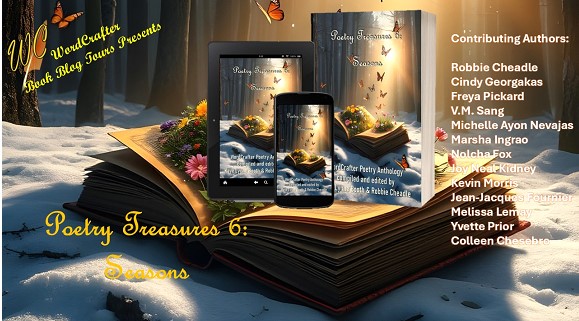
Welcome to Day 2 of the WordCrafter Poetry Treasures 6: Seasons Book Blog Tour, where we’re sending off the sixth volume of the Poetry Treasures anthology series, Seasons.
Each volume of this poetry anthology series features the work of the talented poets, spotlighted as guests on Robbie Cheadle’s blog series, “Treasuring Poetry”, from the previous year. Seasons’ poets were guests in 2025.
For this tour, you’ll meet two poets at each stop, with fun facts about them and reviews of their work. Some of the contributors also share guest posts or poetry readings. Today, we’re introducing Jean-Jacques Fournier and Colleen Chesebro.
And we’re giving away three digital copies of the anthology in our Giveaway. Each comment earns a chance to win, so be sure to give a shout out and let us know you were there.
Giveaway
We’re giving away three digital copies of Poetry Treasures 6: Seasons.
Follow the tour and leave a comment at each stop for additional entries. Winners are selected in a random drawing following the tour.
Tour Schedule Mon. – Cindy Georgakas (Reading) & Kevin Morris – Poetry by Mich, Hotel by Masticadores, Masticadores Phillipines Tues. – Jean-Jacques Fournier (Reading) & Colleen Chesebro (Reading) – Dragons Rule OK Wed. – Freya Pickard & V.M. Sang (Reading) – JoyNealKidney.com Thurs. – Joy Neal Kidney & Yvette Prior – Roberta Writes Fri. – Michelle Ayon Navajas (Guest Post & Reading) & Marsha Ingrao (Guest Post & Reading) – Prior House Sat. – Nolcha Fox & Robbie Cheadle – Writing to be Read
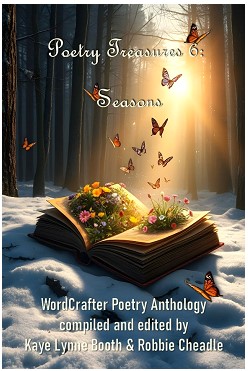
Introducing Poetry Treasures 6: Seasons
Picture caption: Cover of Poetry Treasures 6: Seasons
Blurb Open the cover and you will discover Poetry Treasures from the guests on Robbie Cheadle’s 2025 “Treasuring Poetry” blog series on Writing to be Read.
Join poets Robbie Cheadle, Cindy Georgakas, Freya Pickard, V.M. Sang, Michelle Ayon Navajas, Marsha Ingrao, Nolcha Fox, Joy Neal Kidney, Kevin Morris, Jean-Jacques Fournier, Melissa Lemay, Yvette Prior, and special guest, Colleen Chesbro share their personal seasons of poetry.
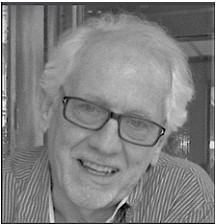
Jean-Jacques Fournier is a native of Montréal, in the province of Québec, Canada. He continued his studies while in the Canadian Navy and travelling substantially over the world. He started writing in earnest while living in California in the early eighties. In the process of reinventing himself numerous times, his penchant for the language of poetry seemed best suited, for him to express his emotions and life experiences. He then spent several years pursuing his writing in the south of France, during which time he published his first three books. He has long since moved back to Canada and is presently living in the Eastern Townships of Québec. He has published twenty-one books of poetry to date.
Picture caption: Author photograph of Jean-Jacques Fournier
Fun Facts about Jean-Jacques Fournier
He’s always loved France, had moved to France, married a French woman, who in the end pulls him back to Canada.
Because he was constantly on the move, he was never truly interested in animals but now, he is surrounded by two indoor cats, as well as birds, racoons, deer, chipmunks, coyotes, foxes who all inhabit the garden.
He loves dancing since he was young and now, basically still young considering years passed, he continues dancing but mostly with the words.
A review of Poetry in Brief – a blissful silence – (review by author Paulette Mahurin)
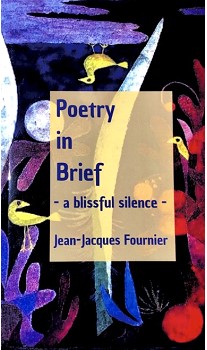
Picture caption: Cover of Poetry in Brief – a blissful silence – by Jean-Jacques Fournier
From the lovely cover of “Poetry in Brief – a blissful silence” designed by Marianne Dessis and the book’s various represented artists like Paul Klee included on the pages of this special book of poetry to all the words depicting the human experience, I am stunned by masterful poetry. This is a special book of poetry and author Jean-Jacques Fournier has a great gift in his usage of words. A minimalist, he writes vast emotions that run deep and strong of all that it is to be alive. Each and every poem, unique in its message, draws the reader into thoughts and emotions. Way too many to enumerate on. This was an enticingly enjoyable book right down to the last poem: “Ye May Not Hear-past silent fear” with its beautiful artwork by Mikalojus Konstantinas Ciurlionis – Silene, which was my favorite. Kudos to the author for this lovely achievement.
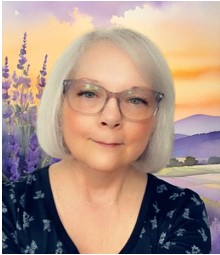
Colleen M. Chesebro hails from the heartland of the Midwestern United States. After graduating, she enlisted in the U.S. Air Force, launching a lifelong journey of self-exploration. Following a successful career in accounting, Colleen returned to her creative roots, reigniting her love for poetry. Today, she enjoys crafting poetry, flash fiction, and both creative and nonfiction work. In addition to her poetry books, Colleen has contributed to numerous anthologies featuring short stories, flash fiction, and poetry. She actively supports her writing community on tankatuesday.com, by hosting a community syllabic poetry challenge called Tanka Tuesday, and by co-editing the Sunflower Tanka Anthology with Robbie Cheadle. This annual syllabic poetry anthology celebrates tanka, tanka prose, and other experimental tanka forms. Residing in her dream home in mid-Michigan, Colleen enjoys the beauty of the Great Lakes with her husband and their two (unicorn) cats, Chloe and Sophie. You can find her at Tanka Tuesday on http://www.tankatuesday.com.
Picture caption: Author photograph of Colleen Chesebro
Fun Facts about Colleen Chesebro
When I served in the USAF, I lived in England for several years.
I crochet old-fashioned doilies with thread.
I’m taking a class in Jungian psychology and dream tending.
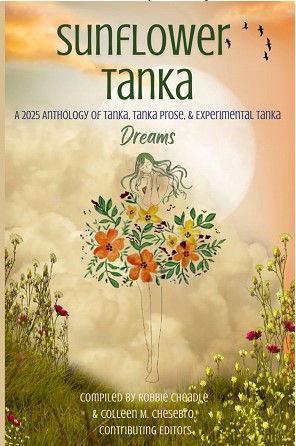
A review of Sunflower Tanka: A 2025 Anthology of Tanka, Tanka Prose, & Experimental Tanka compiled by Colleen Chesebro and Robbie Cheadle (Amazon review)
Picture caption: Cover of Sunflower Tanka: A 2025 Anthology of Tanka, Tanka Prose, & Experimental Tanka compiled by Colleen Chesebro and Robbie Cheadle
Sunflower Tanka 2025 anthology of Tanka, Tanka Prose and Experimental Tanka begins with an introduction and a short explanation of the different forms of poetry included in this collection: Tanka, Tanka Prose, Bussokuseki, (a new form for me to try,) Rensaku, Experimental Tanka, Garland Tanka, Tanka Puente, and Taiga!
The topic is dreams. And what dreams they are for poets to indulge their creative juices in! Resulting in such a range of marvellous interpretations.
You’ll find poems from a wide variety of international poets to connect with. There are 54 poets in the 2025 anthology!
It is lovingly compiled by the contributing editors, Robbie Cheadle and Colleen Chesebro with a short analysis of their favourite poems at the end.
It’s a delightful collection and a great introduction to new poets to enjoy as well as old favourites to return to again.
That wraps up Day 2 of the WordCrafter Poetry Treasures 6: Seasons. Join us again tomorrow over at JoyNealKidney.com, where we’ll be meeting Freya Pickard and V.M. Sang.
I am delighted to say that at the end of this month, an anthology of poetry will be released. It’s called Poetry Treasures 6. Seasons, and, I’m excited to say, some of my poetry is featured.
This is the poem for today from my poetry book, From January to June, One Poem a Day. In it there is one poem for every day of the year, including an extra for leap years.
This one is considering how quickly the years go by, especially later in life.
Tick tock. Time slips by, One tick at a time. The older we get, The faster it goes I’m wondering why.
Tock tick. Time flows on. It feels just last year I could run quickly, Pick up a hay bale Throw it to the sheep.
Tick tock. Time goes forth. It plods without care Of how bodies grow old But minds remain young Think still they can do.
If you enjoyed this poem, or even if you didn’t, I welcome your opinion. Please leave any comments in the comments box.
If you would like to read more of my poetry, click on the image of the poetry book in the sidebar. This will take you to where you can choose to buy from your favourite online platform.