

I recently noticed that my white geranium flowers seemed to be being eaten by something. The petals had become shredded and looked very tatty. Strangely, the red ones hadn’t been touched.
At first, I blamed birds. I know in the spring some birds eat the yellow flowers of daffodils and primroses, so I thought perhaps they were being attracted to the white colour.
Then one day as I was sitting on my garden seat, which is next to one group of white geraniums, I saw a small bee. She flew down and settled on one of the geraniums. I expected her to begin feeding from the nectar, but no. She proceeded to bite the petal she was on. She cut a beautiful, neat semicircle of petal and flew off, carrying it with her legs. She came back several times and each time cut a semicircle of petal and flew off with it.
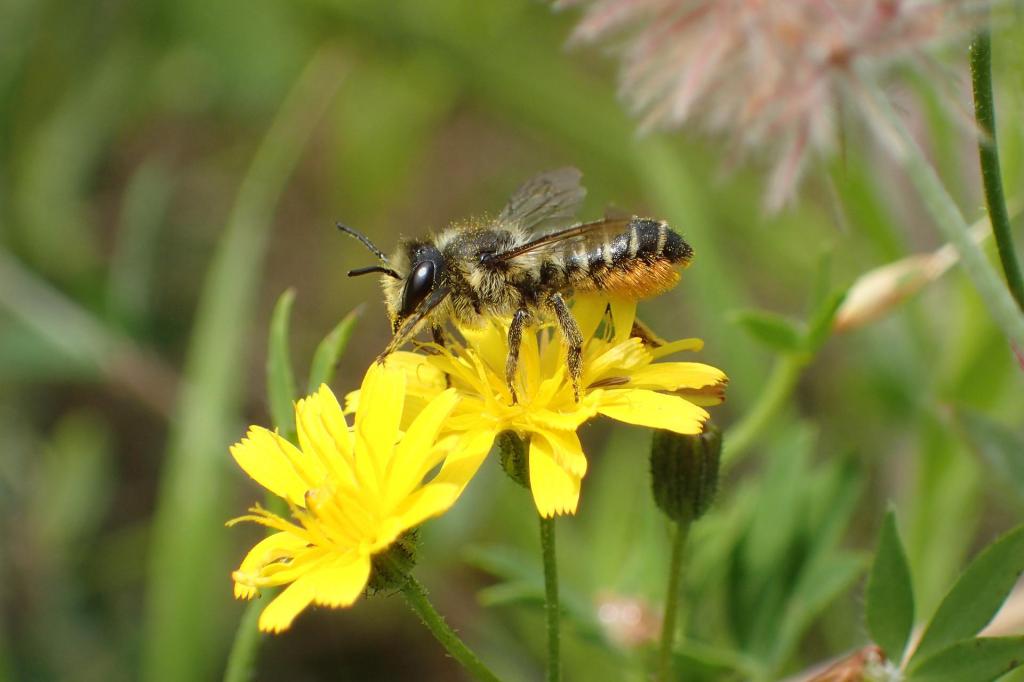
I was somewhat bemused by this behaviour. I knew about leaf-cutter bees. We had them cut bits out of our rose leaves in the past, but never petals. Well, they’re called leaf cutter bees, not petal cutter bees.
I watched her for several days, busy cutting the petals. Then we had some canna come out and to my annoyance, she started on those!
She seems to have stopped now, fortunately, so our flowers are once more looking lovely.
After seeing this behaviour, I looked up leaf cutter bees, but found no reference to them cutting anything other than leaves.
Anyway, here’s a bit more information I discovered.
The bees cut the leaves (or petals) and take them back to their nest, which is usually in a hole. It can be in wood, a bee hotel, or masonry. They aren’t fussy.

Once there, they form thimble-like structures to which they add a mixture of nectar and pollen. She will continue to build these cells and provision them. Then when she has finished, she lays a single egg in each cell and caps it with a piece of leaf (or petal!). Each nest may contain up to 20 eggs.
Female eggs are laid at the back of the nest, while male eggs are laid at the front. This is because the males hatch first and fly out to hang around until the females emerge.
Apparently, there are seven species of leaf-cutting bees in Britain. They are all small and have wingspans of 8-14mm. The bees are dark brown in colour and are covered in lighter brown or orange hairs.
They are amazing pollinators, being much better at the job than honey bees, apparently, so in spite of the minor annoyance, they should be encouraged.
Have you had any problems with such creatures? Please let us know in the comments box.
If you would like to receive an exclusive, free short story by me, called The Haunted Table, simply click the link. This will take you to the page where you can download it.
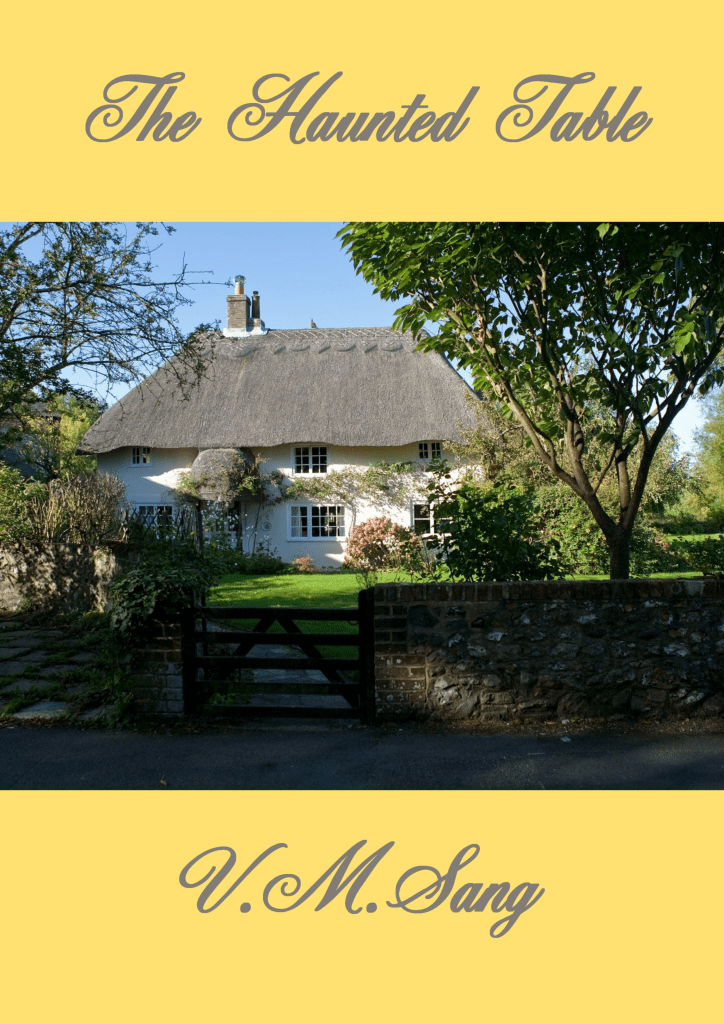
Maria and Tom have bought an antique table for the old cottage they have bought. When they hear strange noises in the night that sound like crying, they worry their house is haunted, but the sounds seem to come from the table.
They set about trying to find what is causing the disturbances. The answer is stranger than either of them had thought.
(Clicking the link will add your email address to my email list, but don’t worry, you can unsubscribe immediately if you wish. Nor will you get any spam. I only send out an email each quarter, or if I have any exciting news–like a new release.)
Discover more from Dragons Rule OK. V.M.Sang (author)
Subscribe to get the latest posts sent to your email.
 Dragons Rule OK. V.M.Sang (author)
I am fascinated by your account of the petal cutting bee. There are so many things one can discover about nature – even in one’s garden!
LikeLiked by 1 person
How interesting, Viv. I hadn’t heard of these types of bees before, and though I don’t want them chewing on my garden petals, their pollination is extremely important. Good for you for letting them bee. 🙂
LikeLiked by 1 person
The work ethic of bees is inspirational.
LikeLiked by 1 person
It certainly is. This little bee never stopped.
LikeLiked by 1 person
Given the colour mix I think you’ve got a colony of gaypride bees locally..
LikeLiked by 1 person
😂😂
LikeLike