
I know I’m a bit late with this, and it would have been better last week, but I already had a post scheduled.
I was struck with the similarity of the US Groundhog Day with the ancient Celtic festival of Imbolc.
It happens on the same day, more or less, and is the harbinger of spring. And just as the groundhog gives a weather forecast, so does Imbolc.
I think it’s probably easiest for me to describe Imbolc in an extract from my book, Vengeance of a Slave, where Ailbert and his sister, Awena, take part in their very first Imbolc after their escape from slavery under the Romans.
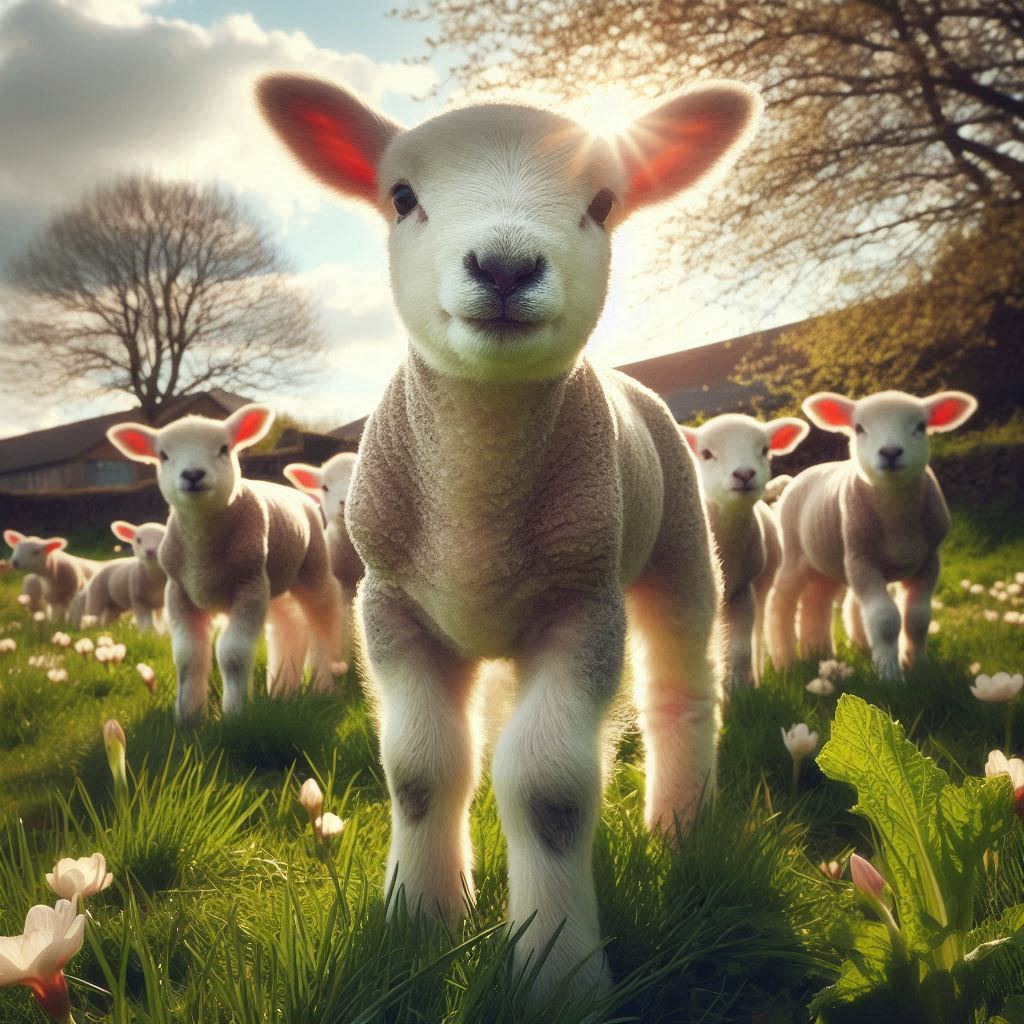
Soon it was Imbolc, the time when the young lambs began to be born. The villagers had much preparation to do, for they invited the goddess, Brigid, into their homes to bless them, and they prepared special food for this day. Awena, was delighted when the villagers chose her to help carry the image of Brigid around the village.
She helped to clean the house with enthusiasm, sweeping out all the old rushes and piling them up outside ready to be lit into a bonfire. Ailbert laughed at her enthusiasm saying he had never thought of her as a domestic type.
She stuck her tongue out at him in response. “It’s important everything is ready for Brigid.”
“What about the gods we worshipped in Londinium? Have you forgotten them? Jupiter, Juno, Venus and the rest?”
“They’re gods for the Romans.” She shook her head. “They’ve no use for the Britons. Only if we become Roman Citizens will they care for us, and that’s not going to happen. We’re now Britons and we must worship the gods that care for the Britons.”
She carried on sweeping while Ailbert continued walking towards the sheep pens to see if any lambs had been born.
He met Madoc on the way and the boy told him in excited tones that one of the ewes had gone into labour and the lamb, or hopefully lambs would arrive very shortly. Ailbert quickened his steps towards the pens in the hope of seeing the actual birth. Being a house slave in Londinium he had never been present at the birth of any of the animals owned by the dominus and domina.
They arrived in time to see the ewe pushing out what turned out to be the first of two lambs. Ailbert frowned. He had not expected blood. The little lamb lay on the ground, wet, and the mother turned to look at him, for it was a male lamb. Ailbert watched as she began to lick him clean. The second lamb was born soon afterwards and she repeated the process. The lambs staggered to their feet and immediately began suckling.
Ailbert smiled. He had witnessed a wonderful thing. New life being brought into the world and he ran off to tell Awena and Gwen the first lambs had been born and Imbolc was due to start.
At sunset that evening, the unwed girls carried the image of Brigid around the village. The villagers had made a crude image of reeds and the girls visited each house in turn, walked three times round it and then asked for admittance for Brigid. Each house opened the door and let the image and girls in. They gave them food and each householder added a decoration to the reed image.
For some weeks before, the women and girls had been busy making Brigid crosses out of reeds, and one hung over the door of each house.
As it was winter still, it soon got dark. Each household put out newly made clothes, and food and drink for the goddess. They also made a bed for her in the house, just in case she decided to visit.
They ate and drank the foods made for this special day. They had a kind of porridge made from the starch left in the husks of the oats, soaked out and left to ferment. It tasted sour to Ailbert and Awena but they ate their share as it would have been discourteous to do otherwise.
The next morning, Gwen looked carefully at the ashes that she had raked smooth the evening before, to see any disturbances that might indicate that Brigid had visited in the night, but they were as smooth as they had been when they all went to bed.

Gwen led the way outside to be met with a frost on the ground and an overcast sky. “Ah! That’s good. A cold, miserable day means that the Cailleach is still asleep and not gathering wood for fires to keep her warm through the next cold spell.” She turned to the young people who frowned and looked at each other. Ailbert shrugged his shoulders.
“Cailliach is winter personified. If today is bright and sunny, then she can come out and look for firewood and so keep herself warm for longer. If it’s cold and miserable, or rainy and stormy, then she’s asleep and will soon run out of firewood, so Brigid can bring the spring sooner.”
They, along with the rest of the village, made their way to the well. Here they walked round it in the direction of the sun and prayed to Brigid to bring health and prosperity. They gave offerings of strips of cloth and a few coins to the goddess.
Singing and dancing followed, as well as eating and drinking, and the day passed quickly, darkness coming early at this season, half-way between the winter solstice and spring equinox. Tired and happy with the prospect of a good season to come, the villagers retired to their beds.
Here’s the blurb.
Forced to watch his father’s crucifixion and separated from his mother, orphaned six-year-old Adelbhert’s life forever changes when he is sold into slavery in Britannia.
Years of servitude fill his heart with malice and he resolves to escape, determined to rescue those he loves and deliver retribution to the Romans who wronged him.
But as new allies shed light on old perspectives, Adelbhert begins to question his path. Will he find true freedom, or allow his vengeance to consume him?
And a review:
Ailbert keeps a running list in his head of all the reasons why he hates the Romans—they crucified his father, stole him as a child from his mother, and enslaved him. As he grows into his teenage years as a slave, the list gets longer. With the help of a network of Britons, he escapes, determined to exact his revenge, but not everything is as clear cut as he once thought.
The plot is straight forward, and though there are some tense moments, battling and mortal danger isn’t the point of the tale. This story has a strong moral message about the nuanced nature of people and how they treat and judge each other. Ultimately, it’s about a young man’s growth and the events that change his perceptions as he matures.
The pace is moderate with some repetition, but I was engaged throughout. The historical details seem well-researched, adding to the authenticity of the story. Point-of-view focuses on Ailbert for most of the book, with occasional shifts to other characters, and all main and secondary characters felt believable to me. Ailbert is particularly well-rounded and likable as the story centers on his thoughts and experiences.
Recommended for YA and adult readers who enjoy coming of age stories, historical fiction, and adventure.
If you want to read more about Ailbert and Awena, and how they escaped from being Roman slaves, click on the button below.
The book is available in ebook and physical book from your favourite online book store.
Do you enjoy historical fiction? What is your favourite era to read about?
Let us know in the comments.
Discover more from Dragons Rule OK. V.M.Sang (author)
Subscribe to get the latest posts sent to your email.
 Dragons Rule OK. V.M.Sang (author)
A lovely extract and super review by Diana.
LikeLike
Thank you.
LikeLike
I remember that scene! I wondered too about the relationship between Groundhog day and Imbolc and looked it up. Apparently the tradition of watching an animal emerge from hibernation to predict the weather has roots in ancient Celtic practices. So interesting. A great read, and thanks for sharing my review! Happy Valentine’s Day.
LikeLike
I’ve had comments suggesting this idea is in more cultures than we might think. One South African says it’s a tradition in one of the African tribes.
LikeLiked by 1 person
I wouldn’t be surprised at all, Viv. Acknowledging the patterns of nature’s seasons (everywhere) has been a matter of survival.
LikeLike
That information is intriguing and interesting! Thanks for sharing.
I adore your book cover, and I’ll definitely have to go and check out the book. Wishing you many many sales and lots of success! Hugs 🤗💗
LikeLike
I’m glad you found it interesting, Harmony.i hope you enjoy the book.
LikeLiked by 1 person
I am commenting in the Reader as I cannot on your actual site. I emjoyed the excerpt from your story. Here, the Xhosa people clean their houses and then burn a particular yellow flowering plant to let the smoke waft through their homes to cleanse it for their ancestors.
LikeLiked by 1 person
That’s interesting, Anne. Isn’t it amazing how people from many different cultures have similar rituals?
LikeLike