Category Archives: fruit

British Wild Flowers: The Blackthorn

I was driving along the roads around her a couple of days ago and the blackthorn was in full bloom. It struck me that I’d not posted a British Wild Flowers post for ages.

So let me introduce The Blackthorn.
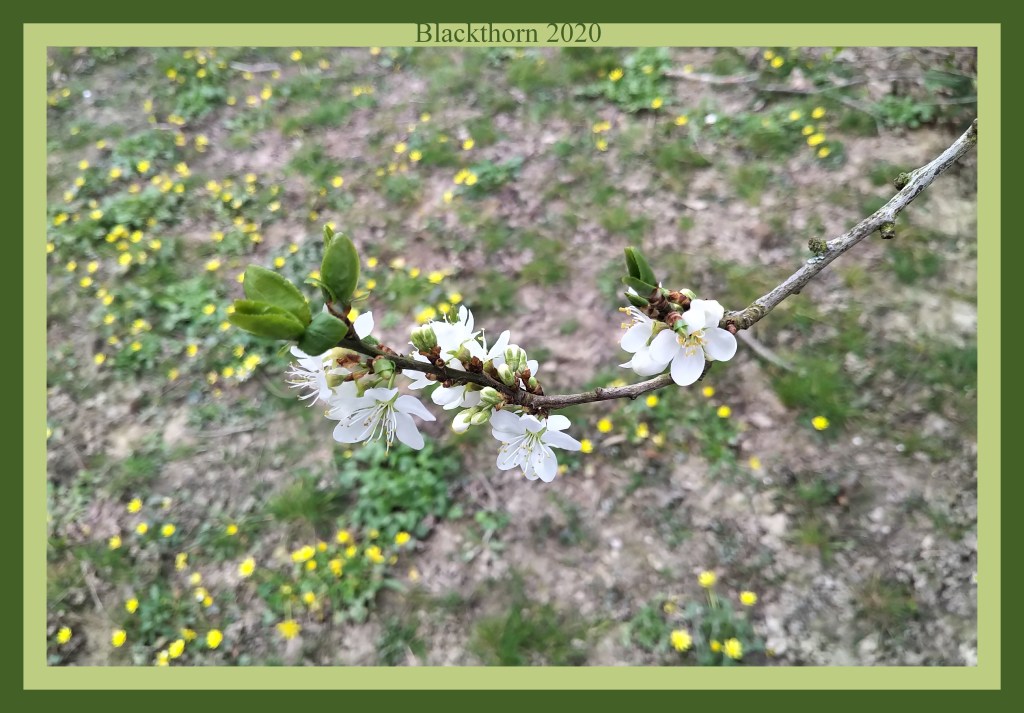
This tree is in flower right now. Large areas of white are visible in every hedgerow around here (East Sussex in the south east of the UK).

It is one of the earliest trees to bloom. I’m calling them trees because they can grow to four metres. Yes, that’s a smallish tree, but I think it’s bigger than a bush! However, because they are often found in hedges, they are trimmed and I’ve not seen a really tall one for ages.

They can live for 100 years, apparently.
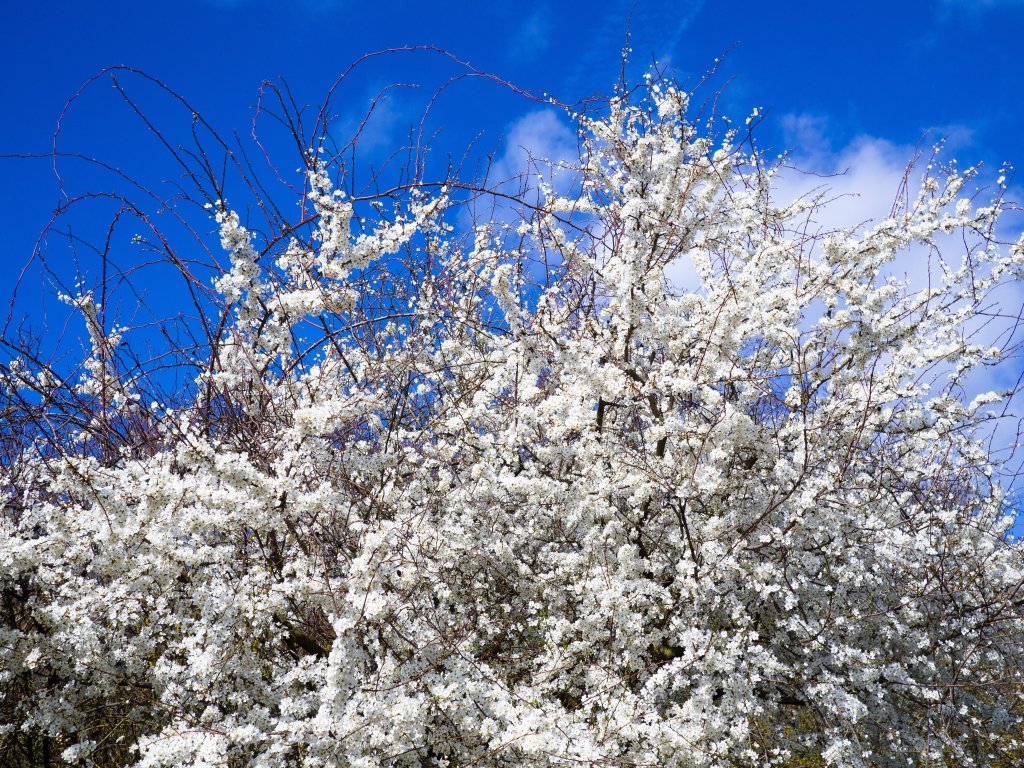
Image by Lenny Löwenstern from Pixabay

They are one of the earliest bushes to bloom in spring, usually around March. As such, they are very useful for insects to find nectar and pollen at this early time. The leaves are also the food for a number of butterfly caterpillars.

As the dense stems are very thorny, they provide an excellent nesting site for birds, and the caterpillars and other insects that eat it become an easy meal for them.

They have been associated with witchcraft and it was said that witches wands were made from its wood. More prosaically, it was used to make walking sticks and it is said to burn well.

In the past it was used to make tonics. Bark, flowers and fruits were used for these.

It belongs to the genus, prunus (Prunus spinosa), and is thus related to the cherry, plum, peach, nectarine, apricot and almond. Like them, it has a fruit containing a stone, but unlike them, you wouldn’t want to munch on them.
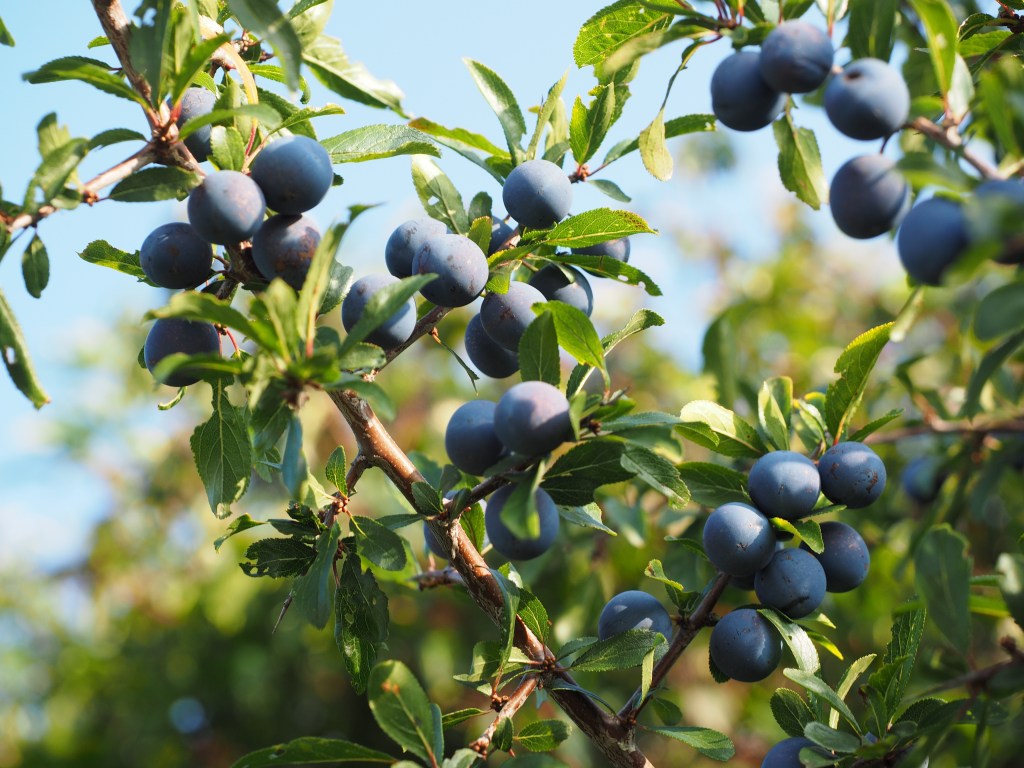
Image by Hans from Pixabay

The fruit is called a sloe. It is a small black fruit , but you wouldn’t want to eat it as it is because it’s very sour and bitter. However, when cooked, it is much more palatable. Sloes are often made into jam and sloe gin.

To make sloe gin, you need 500 ml gin, 250g of sloes and 250 g of sugar. and a 1 litre jar with a tight-fitting lid.

First prepare the sloes by cleaning them and pricking them all over with a fork. I believe that freezing them works, too. This is to break the skin so the juice can escape.

Add the sloes to the jar along with the sugar and gin. Shake it thoroughly. (Don’t forget to put the lid back on first!) Shake daily for the first couple of months, then weekly for about 3 months. Store it in a cool dark place.

The gin will have taken on a deep purple colour and the sugar will have removed the sour and bitterness from the sloes. When the time is over, decant the gin. You can filter it if you wish. Bottle it into clean dry bottles and store in a cool dry place. It continues to improve as it matures, and it’s best drunk after a year. (So prepare this year to drink next!)

Enjoy.

My mum made sloe gin from time to time, but her forte was damson gin. It was made in the same way, except she used damsons instead of sloes. I think that was even nicer!

Thanks to The Woodland Trust and Wikipedia for some of the details of this lovely plant.

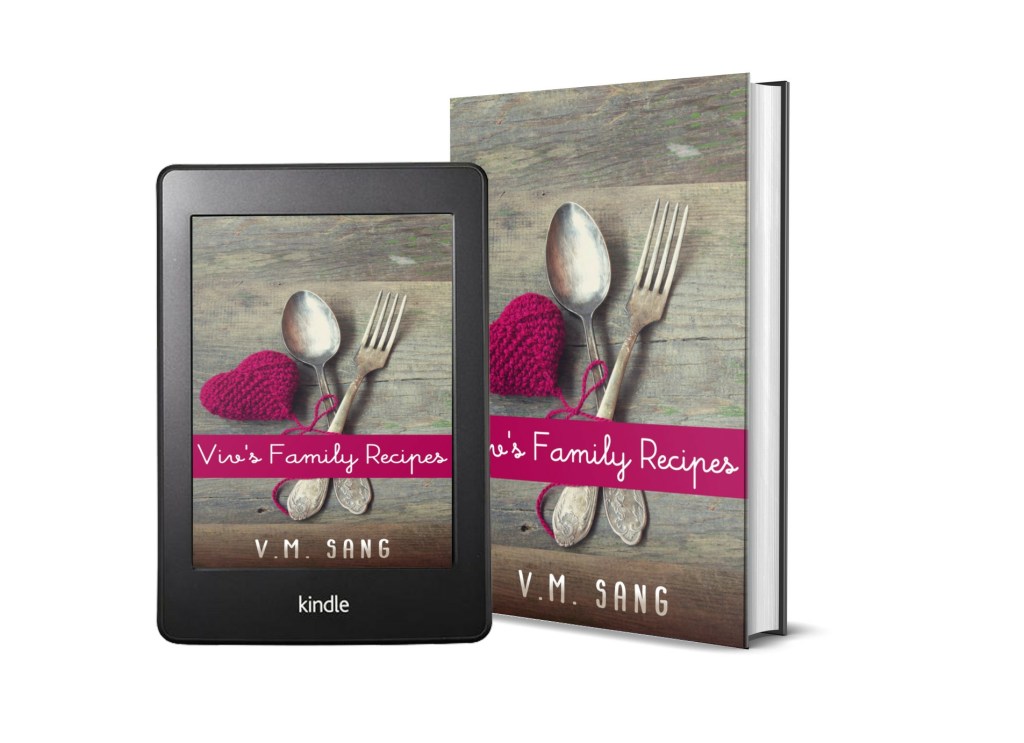
There are some more unusual drink recipes in my recipe book, Viv’s Family Recipes, which you can get by clicking on the cover of the book in the sidebar. This book has some recipes dating as far back as 1909 and came from my grandma. Although not things we eat nowadays, long cooking and probably too much fat, it’s interesting to see what kind of things people used to eat.

Have you ever made sloe gin, or any other kind of unusual drinks? I would be interested to find out.
I’m taking a break.

It”s the first of July, and here in the UK, and in Europe as a whole, we’re having some scorching days.

I’ve decided to take a little break from blogging for this month. I will, however, still read and comment on your posts.

So, to give you something to go on with, here’s today’s poem from my poetry book, From July to December. There is one poem to read each day of these six months. Book 1 is also available. It’s called From January to June.

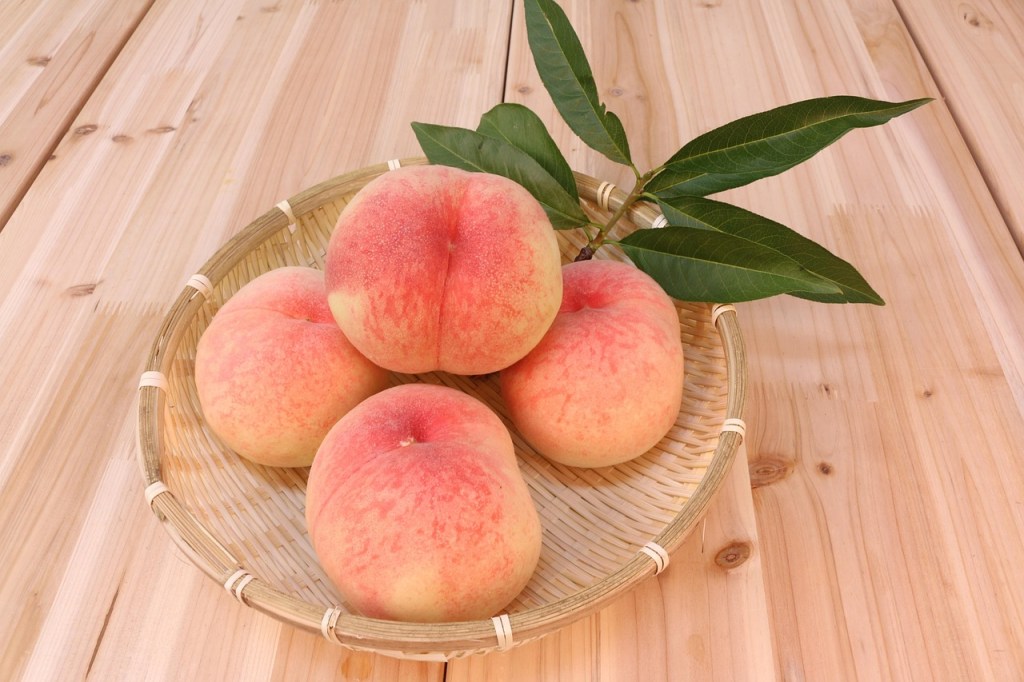
It’s deep into peach season, so I wrote this in honour of that delicious fruit.

Image by 현수 김 from Pixabay

Peaches

A peach with skin so soft.
Breathe in the sweet scent
As to my nose it wafts
Made just to tempt.

Bite into the flesh.
That scent did not lie.
The flavour so fresh
That I cannot deny.

Juice runs down my chin.
The peach is so sweet.
It must be a sin
To enjoy such a treat.

If you would like to purchase a copy of either, or both books, simply click on the cover in the side bare. It will take you to where you can choose your favourite online store.

The books are available as ebooks, or real books.

Have a good summer. See you in August.

More British Wild Flowers.

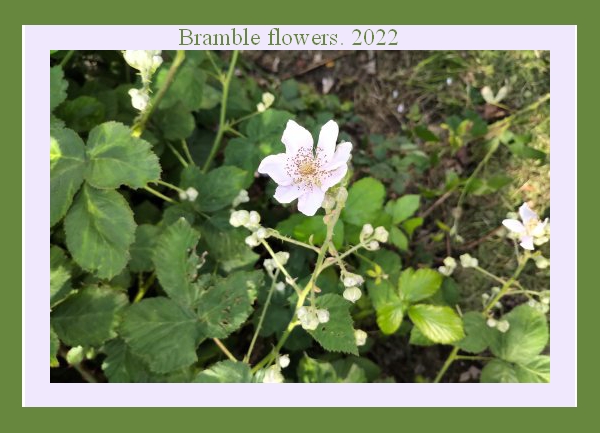
Today I’m going to talk about something that is useful as well as pretty. this flower graces our hedgerows every spring and gives us wonderful free fruit in the summer.

I am, of course, referring to the Bramble.

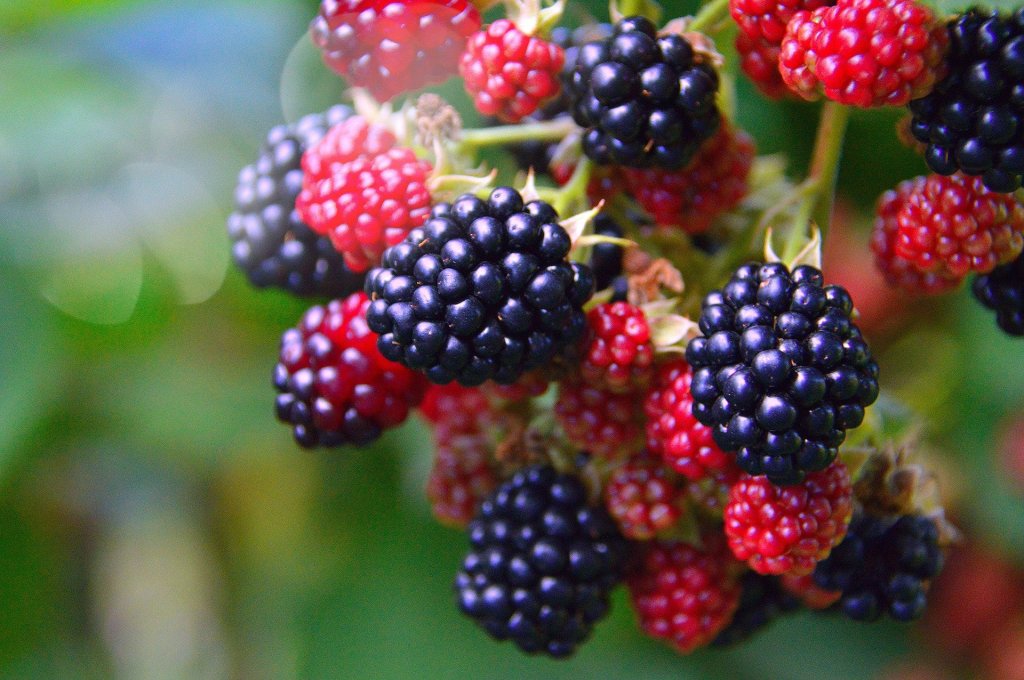
Bramble fruits are known as blackberries because of their black colour. And they are delicious in a pie or crumble, especially when paired with apples.

Image by Gábor Adonyi from Pixabay

As you can see, the fruit is red before it turns black, but it is only ripe when black. The red fruits are hard and sour. Each ‘fruit’ is made up of a number of small

Brambles are found in hedgerows and have long, thorny stems. Gathering them can be a somewhat painful experience, but well worth the occasional scratch.

If you wait too long to go out foraging for this delicious fruit, you will find the wildlife has got there before you. Not only humans, but the birds enjoy this fruit as well as a variety of insects.

Brambles belong to the Rosaceae family, which also includes the rose. Five heart-shaped petals and five sepals. The leaves are divided into three or five serrated leaflets. The leaf stalks are also prickly.

They grow almost anywhere, and have long roots which, I can tell you from experience, are almost impossible to get up. In spite of their wonderful fruits, they are a nuisance when they appear in your garden. They can root and produce new plants if the stems touch the ground, thus quickly taking over. This isn’t a problem in the hedges or scrubland, but not welcome in the garden.

Having said that, they are important to wildlife. They are a food source for bees, both honey and bumble. Some caterpillars eat their leaves, and foxes badgers, mice and birds eat the berries. A large clump will also provide a good habitat for wildlife, especially grass snakes (which, incidentally, are harmless).

You can buy cultivated blackberries in the supermarkets, but why would you do that? You can get this fruit absolutely free, and it’s a great afternoon out with the kids.

Just be sure that everyone has long sleeves, and if you have a dog, make sure he doesn’t like them, too. I had a dog that enjoyed them, abd we couldn’t put the bowl of gathered fruit down or he’d eat them.

FUN FACT.

I gave the name of Bramble to a dog that attached itself to Fero in my Wolves of Vimar series, Book 2, The Never Dying Man.

(Here are links to Book 1, The Wolf Pack, and Book 3, Wolf Moon.)

If you want to make a blackberry and apple crumble, it’s the easiest thing in the world.

  1. Peel and slice the apples and mix with the washed blackberries and put into an ovenproof dish, size depending on how much fruit you have.
  2. Add sugar to the blackberries and apples, according to your taste.
  3. In a large bowl, sift 170 grammes (6 oz ) of plain (all purpose) flour.
  4. Add 85 grammes (3oz) softened butter, cut into small pieces. Using your fingers, rub the butter into the flour until resembles fine breadcrumbs.
  5. Add 85 grammes (3oz) of caster sugar and mix well in.
  6. Sprinkle the flour mixture over the fruit and press down slightly.
  7. Sprinkle with sugar (optional) and cook in a pre-heated oven, 180C, until golden brown.
  8. Serve with custard or ice cream.

You can alter the quantities of crumble mix depending on the amount of fruit you have.

I had some of the mix left over last time I made a crumble. I seemed a waste to throw it away, so I pressed some into a couple of biscuit moulds and put them in the oven. I cooked them until they were golden brown. They turned out to be rather sweet, but crunchy biscuits!

For more recipes, and a few old-fashioned hints, you can buy Viv’s Family Recipes by clicking on the link, or the book cover in the sidebar. You can then choose your favourite book site to buy.

In this recipe book I give some tried and trusted recipes from my family and friends, as well as some from my grandma, dated 1909. (Most of which I’ve not tried! They are very carb and fat-heavy, and many require long cooking. But it’s interesting to see what they used to eat in days gone by.)

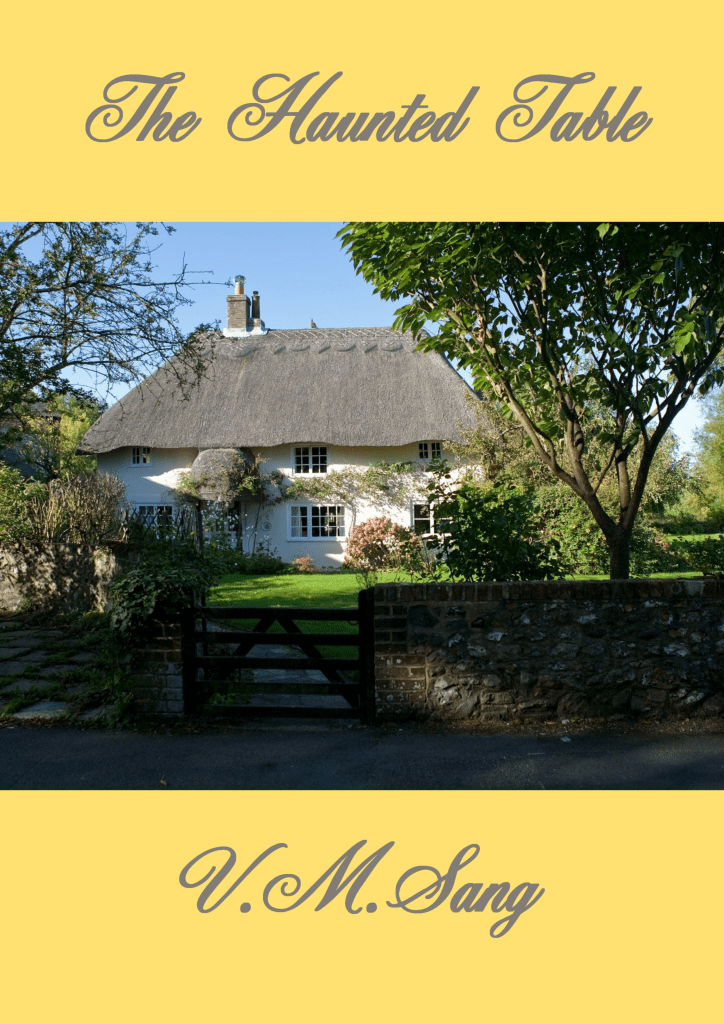
If you would like to receive an exclusive, free short story by me, called The Haunted Table, simply click the link. This will take you to the page where you can download it.

Maria and Tom have bought an antique table for the old cottage they have bought. When they hear strange noises in the night that sound like crying, they worry their house is haunted, but the sounds seem to come from the table.

They set about trying to find what is causing the disturbances. The answer is stranger than either of them had thought.

(Clicking the link will add your email address to my email list, but don’t worry, you can unsubscribe immediately if you wish. Nor will you get any spam. I only send out an email each quarter, or if I have any exciting news–like a new release.)

Whatever happened to the Bilberry?

moorland


I was remembering the bilberries I used to buy from the market in Rochdale, England in the early 70s and got a desire for a bilberry pie. Nowhere can I find anyone who sells them, except for Amazon who sell dried ones.

The little purple berries are about half the size of their cousin, the blueberry, but are packed with so much more flavour. There is nothing quite like it. Imagine a blueberry, then concentrate its flavour into a volume about one quarter its size, then double the flavour for good measure. You might then have a slight idea of the pleasure of eating bilberries.

They were made into pies, jams or stewed and served with ice cream or cream Mmmm, delicious. Their sweet tartness bursts on the tongue like nothing else. I’m sorry, my American friends, but the blueberry is NOT a substitute, but is bland, squishy and watery in comparison.

Now don’t get me wrong. I enjoy the occasional drink of blueberry juice or fresh blueberries in a fruit salad, it’s just when I think to compare them with the bilberry I feel disappointed. I’ve been searching websites for pictures of bilberries, but there is confusion here and all the ones I could find were actually of blueberries. Some even said they’re  the same fruit!

Why has this delicious little fruit fallen out of favour? Who knows. I suspect it’s something to do with the low-growing habit of the plant. Gathering bilberries is back-breaking work, and not one that many people would relish except for gathering a few wild ones for their own consumption.

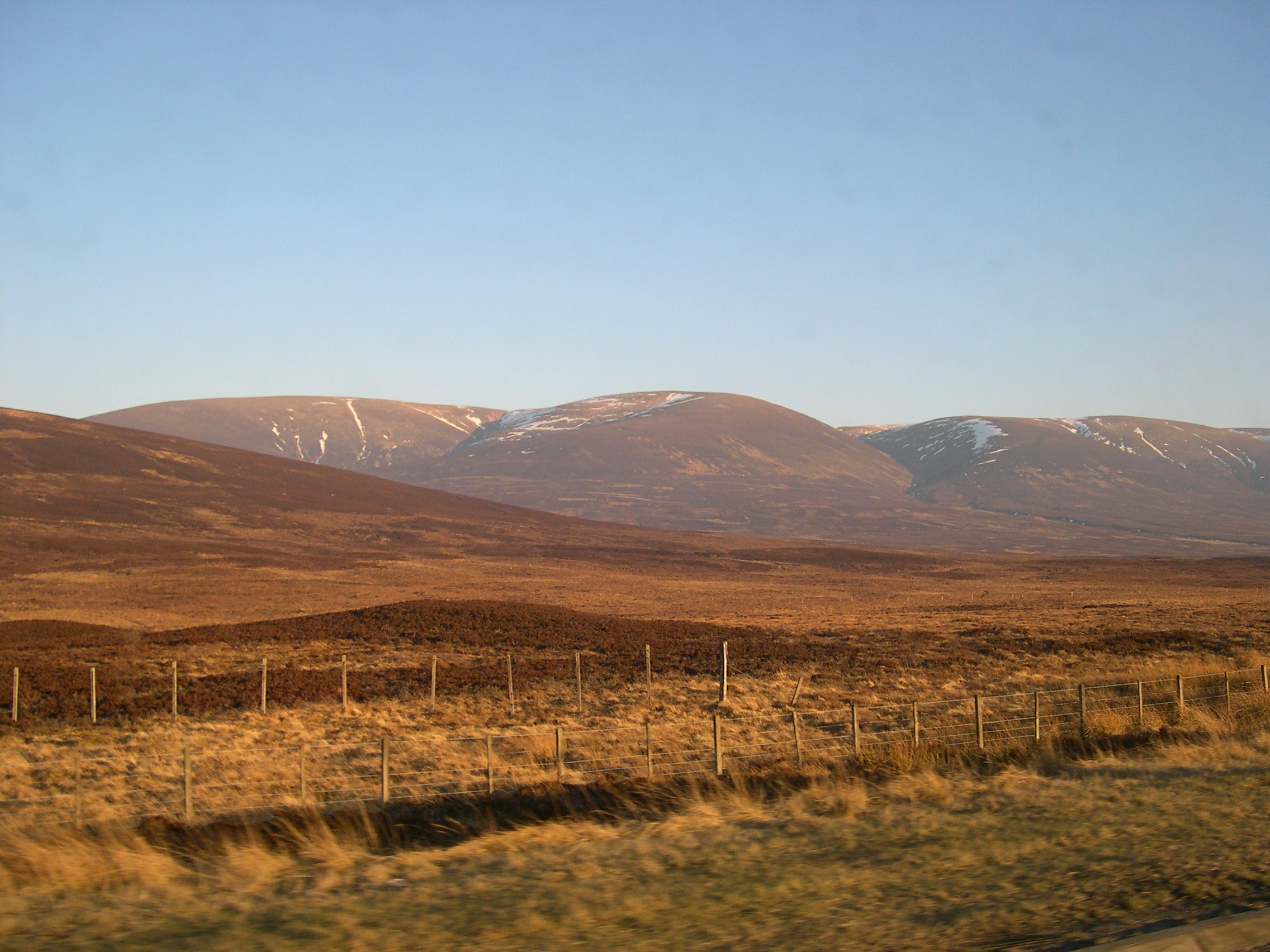
They grow on heath and moorland. wild country where few go these days, when people don’t move more than 50 yards from their cars and think themselves adventurous for driving up into the hills and walking so far. So people don’t see these little beauties. Anyway, we have grown so far from nature that unless something comes in a neat package from a supermarket, many are afraid to gather the wild bounty of our hedgerows. (I don’t see many people gathering blackberries from the hedges or picking mushrooms from the fields these days.)

I’ve picked wild stuff since I was a child. Going mushrooming was a delight. we quickly learned to recognise a delicious field mushroom, and to eat them fresh for breakfast, with egg and bacon, well, it makes my mouth water just to think of them. They, like the bilberries, burst with lovely mushroomy flavour.

To make a pie with blackberries you’ve gathered yourself is a pleasure. To be out in the countryside, listening to the birds singing and watching the butterflies and bees–there’s nothing like it, quite apart from the health benefits of the walk.

I do see people gathering blackberries, but they are picking them from the roadside with lorries, cars and buses hurtling by and throwing up dust to coat them, Not to mention those lower down that I’ve seen people picking, just at dog pee level.

I’ve picked elderberries and made wine and jam from them, and the fluffy white umberellas of blossom also makes a lovely cordial as well as elderflower wine.

I’ve digressed from my original thought about bilberries. I long to eat another bilberry pie before I die, but they seem to be a forgotten fruit. Even Word is putting a red squiggly line underneath it everytime I write ‘bilerry’, but it doesn’t under ‘blueberry’.

Amazon’s dried bilberries, at nearly £11 for 250g seems rather a lot. and one of their products is called ‘blueberry juice (bilberry), which isn’t the same thing at all. The only review of the dried bilberries says they are horrible.

I’ve looked on the websites of all the major British supermarkets and none of them stock even jars of the fruit, even though I’ve come across websites that say they do.

So if anyone out there knows of somewhere I can get them, please let me know. I’ll be forever grateful.