Category Archives: Uncategorized

Stones of Earth and Air. Elemental Worlds, Book 1 is Free for a limited time.

What would you do if you saw your best friend behaving out of character?

Imagine they were usually kind and considerate, and they had become rude and cruel?

This is what happened to Pettic, only his best friend isn’t just anyone. He’s Crown Prince Torren. This person will become the next ruler of the land of Ponderia.

Pettic, along with Torren’s sister, believe something happened to Torren. He had either been changed by magic, or replaced by a doppleganger. Either way, they must find out and restore Torren to his former self.

This is the dilemma in my YA fantasy duo, Elemental Worlds. The pair enlist the help of the court magician, who discovers that Torren has been captured and that this new person is a doppleganger, made to look like Torren by magic.

In order to rescue Torren, Pettic must enter four worlds, each associated with one of the four elements, Earth, Air, Fire and Water. There he must find a magical jewel associated with that element.

But he can’t return without the jewel!

The ebook version of the first book in the duo, The Stones of Earth and Air, is FREE on Amazon from today, 3rd October, until the 7th.

Don’t delay. Go over to Amazon NOW and get your copy.

The book is also available in paperback and audio.

I am having a little trouble with getting my free and exclusive story for signups to work. If you want to sign up for my newsletter, I hope to have it sorted very soon.

Please leave any comments in the comments box.

VISIT FROM CHARLES YALLOWITZ

I am delighted to welcome Charles Yallowitz, author of the Legends of Windemere, a fifteen book series, and War of Nytefall, a six book series. Two immense fantasy series that have received excellent reviews on Amazon.

Good to have you here, Charles. Would you be prepared to answer a few questions so we can get to know you better?

  1. Apart from writing, what is the thing you enjoy doing the most?

I really enjoy spending time with my son, but that’s pretty much a given. The solitary hobby I have is doing jigsaw puzzles. They help me relax after a rough day or week, so I have a corner of my room set up at all times. I end up focusing a lot on the project and figuring out what goes where, so everything that is stressing me out gets forgotten. Due to space, I can’t do more than a 1,000-piece puzzle, but that’s enough.

Yes, I would think so! I don’t think I could manage more than 1,000 pieces.

  1. If you have a ‘proper’ job, what is it?

My ‘proper’ (aka paying) job is working as a Teaching Assistant at a high school. I work with a variety of students and really feel like I’m helping people. I can always end the day satisfied if not fairly exhausted.

As an ex-teacher, I can sympathise with you on the exhaustion front. I think it’s marvellous that you’ve managed to write all those books.

  1. Why do you write?

Every time I see this question, I want to come up with a deep answer. Yet, the truth is rather simple. I write because I have stories in my head and I want to share them. I want to bring happiness, excitement, and fun to others, which is why I write with such detail. If I can get a stressed person to escape reality for even a few minutes then I’ve done my job.

I agree wholeheartedly with that, Charles. Yes, if we can help people to escape the stresses of their lives, our job is done.

  1. Do you write to music? If so, what music inspires you?

I need music on when I’m writing. This has been a habit since doing homework in school. I have a few Pandora playlists, which are typically collections of rock or alternative songs. I have another that’s anime and one for video game music, which help when I have more action-based scenes to write.

  1. A question I can’t answer, myself. Where do you get your ideas from?

I get my ideas from over there, over here, and that way. They can come from anything. Many are inspired by role-playing games I joined in the past. Others come from books, movies, television, video games, philosophical discussions, world events, and other things that strike my brain when it’s open. Best to leave myself exposed to inspiration to avoid missing any juicy ideas.

  1. Do you prefer the city or the country?

If I had to choose between the two then it would be the country because I don’t like crowded places. Ideally, I prefer small towns and suburbs. You don’t feel like you’re in the middle of nowhere, but you aren’t suffocating. Probably because that’s where I grew up though.

I’m with you there, Charles. I hate crowds, although when I was younger, they didn’t bother me as much.

  1. Do you enjoy sport? Do you prefer to watch or take part?

I prefer to watch sports, but it’s more for socializing. I like being around the energy that comes off people who are excited about the games. The sport I enjoy the most is football. That’s the American version and specifically NY Giants. My dad is a big fan and has been since before I was born, so I do the same. Guess being a glutton for punishment is genetic.

  1. What is your most irritating habit?

I have to decide on how mean I want to be to myself. Probably one of the core negative habits of mine is getting easily frustrated, which leads to pessimism and anxiety. It isn’t hard to push me into a downward spiral of negativity. This causes those around me to get annoyed and walk away. Not an easy habit to break too because there’s always at least one person ready to tell me how I screwed up. Those types always seem to strike faster than those with praise.

Too true. People are much more inclined to criticise than praise. I don’t know why that should be. What happened to what my grandma used to say. “If you can’t say something good, keep quiet.”

  1. What, in your opinion, is your best trait?

Without a doubt, my creativity is my best trait. It’s what keeps me sane at times because it’s always coming up with ideas. Poor thing has been a little muffled last year or two because of stress, but it’s still kicking. Being creative helps with problem solving and deep discussions as well. It keeps my mind rather flexible and able to cope with situations. At least if my anxiety hasn’t been set off, which my creativity can then team up with to develop an assortment of doomsday scenarios. Downside to a highly active imagination is that when things go sideways, they really go sideways.

You certainly have an active imagination. Much appreciated by your fans.

  1. Do you cook? If so, what is your favourite thing to cook?

I don’t cook as often as I used to because of my work schedule, but I want to get back into it. Favorite dish is a tough one. My ‘go to’ one is pasta with homemade vodka sauce. It’s the first recipe I really learned and it never fails to be a hit. I’ve even made this dish and put it on a pizza crust. Nice, carb heavy combo when I haven’t eaten much.

Vodka Sauce? Sounds good.

  1. Can you swim?

Not very well. Don’t mind floating around in a pool, but that’s really it. I find water relaxing, especially when alone with my thoughts. I’m not a fan of swimming in natural bodies of water either. Not sure when that started, but I’m simply not comfortable swimming in oceans or lakes. Maybe it’s because I’m a little scared of sharks and alligators.

You’re not alone in being scared of sharks and alligators. ans with good reason, I’d say.

  1. What do you think is the biggest problem facing the world today?

Lots of problems in the world today, so it’s difficult to choose one as the biggest. One that I think is at the core of so many other issues is that not many people have empathy. We spend more time finding a reason to cast others aside than to understand where they’re coming from. A person in pain is more likely to be kicked to the side of the road because they’re too high maintenance, which stems from this lack of empathy. You listen to someone complaining and you turn off, which means you don’t really hear that they’re suffering. If you don’t realize this then you can’t do anything to help, which could be as simple as listening and letting them know that you understand. There’s a big push to separate ourselves and cast others as ‘lesser’ or ‘inhuman’ too, which I think is another offshoot of this lack of empathy. This issue did drive me a bit when writing War of Nytefall since the overarching story is about how the Dawn Fang vampires are working to prove they can live among mortals in peace. For that to happen, there has to be empathy and understand or the two species will end up trying to kill each other.

I think you’ve hit the nail on the head, there, Charles. Lack of empathy seems to be endemic these days. No one cares about anyone else. I’ve called it ‘selfishness’, but I think empathy is a much better word.

Thank you for joining me today. It was good to have a chat. Good luck with your latest ‘Nytefall’ book.

Bio-

Charles E. Yallowitz was born and raised on Long Island, NY, but he has spent most of his life wandering his own imagination in a blissful haze. Occasionally, he would return from this world for the necessities such as food, showers, and Saturday morning cartoons.

One day he returned from his imagination and decided he would share his stories with the world. After spending many years fiddling with his thoughts and notebooks, he decided that it was time to follow his dream of being a fantasy author.

So, locked within the house with only pizza and seltzer to sustain him, Charles brings you tales from the world of Windemere. He looks forward to sharing all of his stories with you and drawing you into a world of magic.

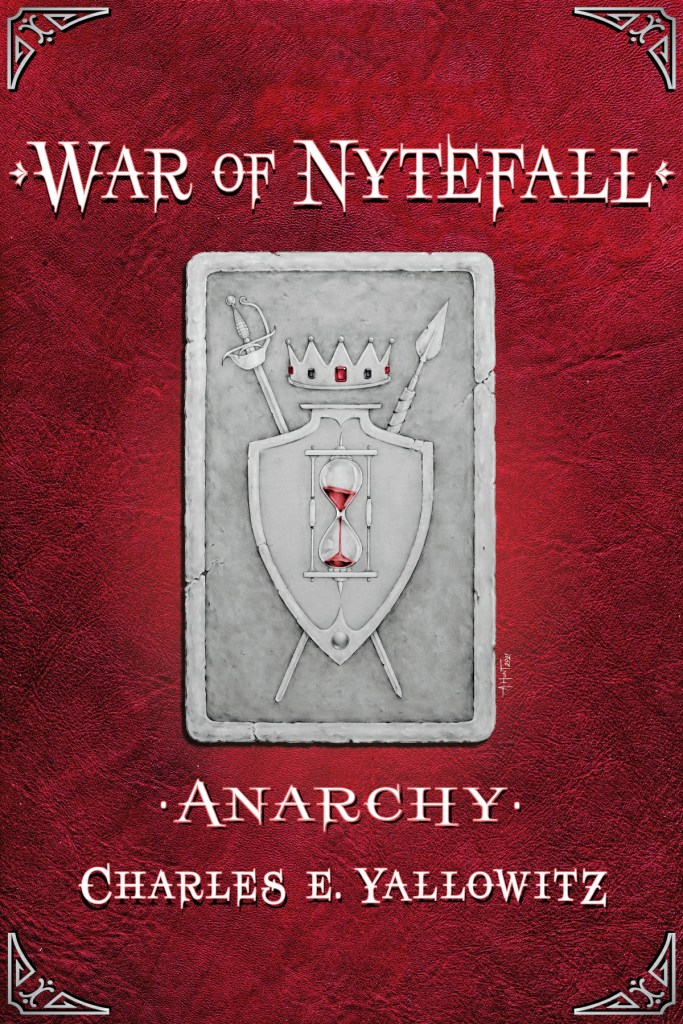
War of Nytefall: Anarchy Blurb-

The paladins of Windemere have had enough!
As the Vampire Civil War heats up, mysterious murders are being committed against members of every holy order. All signs point to the culprits being vampires, which has resulted in the creation of a unified paladin army. To protect his people, Clyde must find the killers before the holy warriors unleash their purifying crusade. It is a battle against frustrating obstacles as the war inches closer to mortal civilization and ambitious new allies join Nytefall.
One slip is all that is needed for the secret of the Dawn Fangs to be revealed.

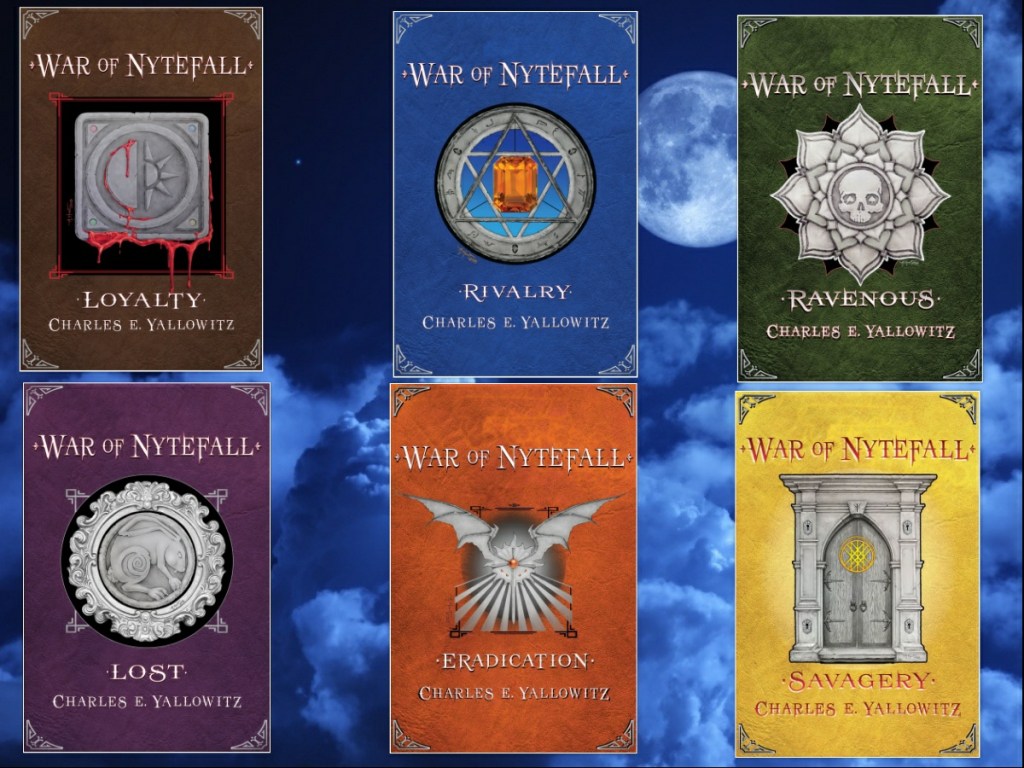
And here is a collage of some of Charles’ other books.

Charles’ books are available on Amazon.

He has a website, Legends of Windemere where you can find out more about him and his books.

If you enjoyed this post, please leave a comment in the comments box. I’d love to hear from anyone who has read any of Charles’ books.

How would you like a free, exclusive short story? Of course you would! You can get yours by clicking on the link below. This story won’t be published anywhere else, so this is your only chance of getting it. The link will take you to a page where you can sign up for my newsletter. I send a letter out 4 times a year, so you won’t be spammed, but I do let you know of any exciting things that are happening.

You can unsubscribe at any time, even straight after downloading your free story if you so wish.

I’m Angry and Anxious.

I recently bought a new tablet to replace my very old iPad. I decided I would like to use it on occasion to do some writing, and so decided to add Google docs and Dropbox. What a mistake!

I had Dropbox on my pc and used it as a backup to save my work. I decided to add my copies of my books mainly, and what I’m working on as well. Dropbox then uploaded EVERYTHING on my pc. Documents and pictures, then told me I had no free space left and needed to purchase more.

Well, I thought, that’s easily sorted. I’ll delete the photos. I’ve got them saved on an external drive as well as my pc. so I began to do so. Imagine my horror when I found out Dropbox was also deleting them from my pc and everywhere else!

Get rid of Dropbox, then. So I uninstalled it from both tablet and pc, but I still get messages that I need to upgrade! What’s going on?

The trouble is that I’ve now deleted the free story I was giving to subscribers to my email list, so they can’t get the story. (I forgot I was sending them there to get it.)

Then I decided to use OneDrive. That’s fine, but it seems it also wants to delete from everywhere. Isn’t it possible to delete only from the cloud and not from all devices? And what has happened to my files I thought I’d deleted on Dropbox? If they’re telling me I need more space, they must be somewhere in their servers.

I wonder if Google’s cloud service is the same?

It’s not good enough, and a bit scary!

Seeking…

A wonderful and powerful poem by Balroop Singh.

Despair and suffering has been the fate of women for centuries. I am dismayed that it still is in many parts of the globe. The long, endless battle against conservative forces that take pleasure in subjugation continues! The following poem is inspired from this thought.

We don’t want to mother a son
In this land of Taliban
We don’t want a daughter either
It’s better to end this race
If they can’t keep pace with the world.

REVIEW OF HISTORY IN ENGLISH WORDS BY OWEN BARFIELD

Blurb

For more than three-quarters of a century, Owen Barfield produced original and thought-provoking works that made him a legendary cult figure. History in English Words is his classic excursion into history through the English language. This popular book provides a brief, brilliant history of the various peoples who have spoken the Indo-European tongues. It is illustrated throughout by current English words whose derivation from other languages, and whose history in use and changes of meaning, record and unlock the larger history. “In our language alone, not to speak of its many companions, the past history of humanity is spread out in an imperishable map, just as the history of the mineral earth lies embedded in the layers of its outer crust…. Language has preserved for us the inner, living history of our soul. It reveals the evolution of consciousness” —Owen Barfield.

My Review

Owen Barfield wrote this book in the 1950s, but as it deals with the way words have come down to us through the ages, it remains relevant to this day.

This fascinating book takes us through the history of words. Barfield begins with the Greek and Latin words that have been incorporated into our language, and the changes that have come about in them. He then goes on to discuss how we can trace the travels of many peoples across Europe by looking at the way words have changed, and the words that were in common use.

I find it impossible to distill what Barfield is saying in a few words. It took him a whole book! But it shows how people’s thoughts and perceptions developed through the ages.

This book is a valuable handbook for those of us who write historical fiction. It tells when various words came into use, thus helping us not to write about clocks striking before they were invented, or as is said in the forward, writing about Dr Johnson (of dictionary fame) speaking on the telephone.

Those are obvious things, but there are words that we use today that are fairly modern.

An example is found in the words, pity, gentle and mercy.
Pity comes from ‘pietas’, meaning piety, gentle, from ‘gentilis’, meaning of the same family, or later, of noble birth, while mercy comes from ‘merces’, a reward, probably later, a reward in heaven for good works on Earth.

None of these words were known before the 13th century, so in a Viking Saga, a writer should not use them. This applies to many other words, as well as the obvious ones coming from scientific research, and show how human thinking has developed throughout the ages.

This is not an easy read, but a fascinating one, nonetheless. I give it 5*

Have you come across words that are used in historical fiction that are out of place? It’s easily done, believe me. I’ve probably done it myself, although I hope not! Let me know in the comments.

How would you like a free, exclusive short story? Of course you would! You can get yours by clicking on the link below. This story won’t be published anywhere else, so this is your only chance of getting it. The link will take you to a page where you can sign up for my newsletter. I send a letter out 4 times a year, so you won’t be spammed, but I do let you know of any exciting things that are happening.

You can unsubscribe at any time, even straight after downloading your free story if you so wish.

NEW BOOK RELEASED

I apologise for no post last week, but I’ve been away on holiday for the last week, without internet access! Shock, horror!

Anyway, when I got back to civilisation, I found that my latest book has been released in my absence. I knew it was close, but not that close.

This one is another of the fantasy series, The Wolves of Vimar prequels. I’ve already written the story of Carthinal’s parents, Jovinda and Noli, and Carthinal himself, The Making of a Mage. This one tells the story of Aspholessaria, known as Asphodel, and the turbulent affairs that led to her becoming a priestess of Sylissa goddess of life and healing.

Here’s the blurb.

Escaping an arranged marriage, young elf Asphodel flees her homeland with her lover, Vass.
They find a home in the capital of Erian, but their idyllic life soon comes crashing down when Vass gets in with the wrong crowd.
Can they resolve their problems, and can Asphodel find her dreams of helping others and living a life of peace and harmony?

And a brief taster.

This is where Asphodel arrives in the Grosmerian city of Bluehaven for the first time, along with a priestess she met on the way.

Asphodel and Trinelli sat alongside the driver as the caravan approached Bluehaven.

Asphodel sniffed. “There’s a smell in the air. It’s not unpleasant, though, just different from anything I’ve smelled before.”

Trinelli smiled at the girl. “That’ll be the sea. Bluehaven lies on the Inner Sea, almost directly opposite Holy Isle and Aspirilla, the capital of Grosmer. It’s the biggest of the three seas and the one furthest away from the ocean.”

Asphodel could see the white houses of the city in the distance. They gleamed in the summer sunshine as they tumbled down the hill to the sea. From this elevation, Asphodel could see the harbour. There were two large ships there, and a number of smaller ones.

Surrounding the harbour, the houses were smaller and not as white. They huddled together as if for shelter from the waves of the sea.

Soon the caravan approached the walls and stopped at the gate, along with other wagons waiting to enter. Asphodel looked at the chaos. Something was stopping them from moving forward. Straining her eyes, she saw a large wagon stuck in the gateway. People rushed around shouting.

“He’ll have to come back,” someone shouted.

“No, if we push we can get him through.”

A third voice said, “Stupid of him not to think of the width of the gate. He’s been here before.”

People milled around, no one knowing what to do. Six men got behind the stuck wagon and pushed. Nothing moved.

Trinelli sighed. “Looks like we’ll be here for a while.”

As she said this, a cheer sounded from the gate and the wagon popped through like a cork out of a bottle.

After a further half-hour’s wait, their turn came and a guard inspected all the wagons to make sure they were not carrying any contraband.
He poked and prodded at everything inside, then asked them to get down. “Open your packs, please.”

After rifling through everything, and creasing up their spare clothes, he waved them through. The driver clucked to the horses and they rolled on through the gate. Asphodel looked up as they passed under the arch. It looked solid at first glance, but she noticed a few of the stones had begun to come loose. The walls were in not much better state. It would not take much to make them collapse.

She asked Trinelli about it.

The priestess shrugged. “Walls aren’t needed nowadays. There are no wars. The old days, when city fought city, have long passed.”

Asphodel gazed around. The smell of the sea was stronger here in the city. She breathed deeply. It smelled of freedom and adventure. Seabirds wheeled above them, crying their raucous calls to one another.

“I wonder what they’re saying,” she said to Trinelli. “They have lots of different calls. They must all mean something.”

Trinelli shrugged. “I’ve never given it much thought. They’re just birds that are always here, making a noise. They can be annoying first thing in the morning when you want to sleep.”

“But they’re so beautiful. Look how white they are against the blue sky.”

The birds soared above them as the wagons began to descend the hill into the city.

Asphodel thought this city more beautiful than Frelli. As their wagon trundled on, they passed buildings of white stone that seemed to glow in the sunlight. There was a park with trees, and Asphodel determined she would go there as soon as she could. There had been no trees in Frelli.
They arrived at the caravanserai, which was close to the harbour. There were seven wagons in their caravan. Four of them carried goods, and only three had passengers.

As they descended from the seat on the wagon and retrieved their things from the back, Trinelli turned to Asphodel. “Where are you going to stay? Have you any idea?”

Asphodel’s face fell. “No. And I’ve only my ring. I’ll need to sell it after all, in spite of your kindness.”

Trinelli shook her head. “No! I’ll not let you sell something that means so much to you.”

“I won’t take anything more from you. Thank you for everything you’ve done for me, but I’m on my own now. We’re here, and I’m safe from Vass. I’ll manage.”

“You don’t need to take anything from me. Come with me to the temple. See how we live and if you’d like to join us as a lay healer.” She smiled. “I can understand if being a priestess might not be what you want.”

The pair walked the short distance from the caravanserai to the Temple of Sylissa. Here the temples were scattered around the city. Trinelli told her that some cities had a temple district where the temples of all the gods clustered together.

The temple of Sylissa stood much taller than the other buildings around it and Asphodel could easily see its dome over the roofs. They crossed a busy market square, with bustling crowds shopping at the many stalls. Shopkeepers and stallholders cried their wares to the passers-by, but Trinelli did not stop and so Asphodel had to content herself with brief glimpses of the wares.

Being on the sea, Bluehaven had things for sale that Asphodel had never seen before. What were those small, blue fruits? A large leafy vegetable caught her eye, but it was red, not green.

One trader called out “Dragon sausages. Get your dragon sausages. Real dragon meat from the dragons in the Mountains of Doom.”

I wonder if they’re really dragon meat? I didn’t know you could eat them. I thought they would be more likely to eat you

Asphodel drew her cloak closer to herself and kept glancing from side to side. So many people.

“Keep close and hold on your ring,” Trinelli whispered to her. “There are pickpockets here.”

Asphodel looked around. Most people appeared prosperous, but every so often, a ragged child appeared. She thought she saw a handsome, auburn-haired youth take something from a girl of similar age and then walk casually away. Were these the pickpockets? She gripped her ring as tightly as she could.

Trinelli led her along a broad street leading up the hill from the market. The round temple of Sylissa stood tall in a square with a fountain in the centre. Shops surrounded the other three sides and people wandered in and out, stopping to chat with people they knew.

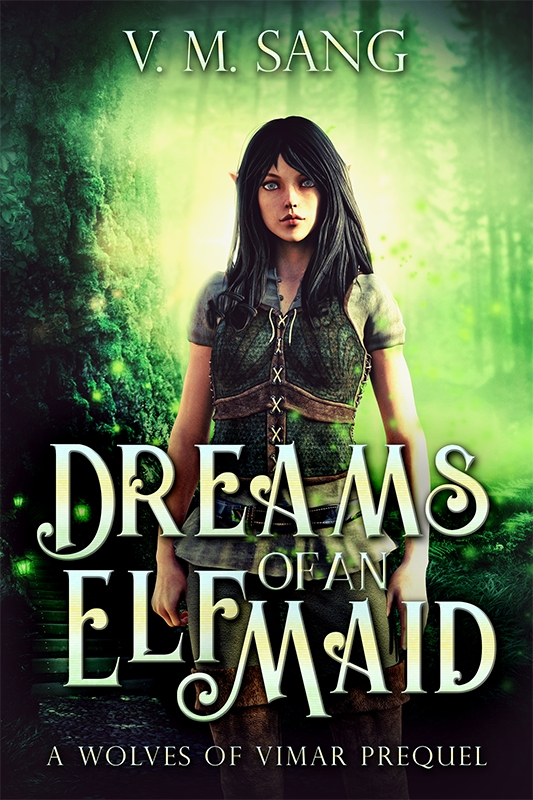
If you would like to read more of Asphodel and why she was in Bluehaven, you can read all about it in Dreams of an Elf Maid, available from Amazon. Simply click on the book title to go to Amazon where you are.

I would love to hear your thoughts. Did you enjoy that brief extract? Perhaps you wondered why Asphodel left Vass, the love of her life. I’m not going to tell you, of course. You’ll have to read the book to find out.

Please leave your thoughts in the comments box.

If you would like to know more about me, and get an exclusive short story, then click on the link below. This will sign you up to my newsletter. I only send one each quarter, so you won’t be bombarded with emails.

If you sign up, you can unsubscribe at any time, but the exclusive story will be yours to keep. You will be unable to get it anywhere else.

Passing

Food for thought from Kevin Morris.

Another of his wonderful poems.

K Morris Poet's avatarK Morris - Poet

I left the woodland path
To let the couple pass,
And heard the young girl laugh.

I think on urban foxes mating
And remember men impatiently waiting
Whilst the police cleared away.

All this fleeting thought
Of our brief day
Must end in nought.

View original post

Recipe for DELICIOUS PUDDING

This was a recipe in a book my mum wrote out for me when I got married. I don’t know if she gave it this name, or if it was called that when she got it.

Anyway, I think it’s well-named. It’s one of my favourite puddings and very easy to make.

Ingredients

220g sugar

1x20ml tablespoon butter

2x20ml tablespoons plain flour

Rind and juice of 1 lemon

250ml cup milk

2 eggs (separated)

Method

Cream the butter and sugar together until light and creamy.

Beat the egg yolks into the creamed mixture.

Mix in the rind and juice of the lemon, flour and milk.

Beat all together.

Beat the egg whites until stiff and gently fold into the mixture.

Bake in a greased dish in a bain-marie in the oven set to 180C for about 30 minutes.

This makes a light lemony pudding with its own lemon sauce at the bottom.

Sadly, I’ve not got a picture of this pudding.

You can find this pudding as well as savouries and cakes in Viv’s Family Recipes. This little book is the culmination of many years of cooking for my family, and collecting recipes from all and sundry.

This includes a little book I got from my Grandmother. There are some accounts in the back that make interesting reading and are dated 1909.

Grandma has several recipes in it that I’ve incorporated in this book. I doubt if anyone would make them now, as they take a lot of time (2 hours steaming, for example) and many have large amounts of fat. However, I think it’s interesting to see the kinds of things people ate over 100 years ago, and how our diets have changed.

If you are interested in this kind of thing, the ebook version of Viv’s Family Recipes is on offer for a limited time only, starting today, September 1st, until Monday 6th. Only 0.99 (£ or $)

The book is also available in paperback, and in Portugese.

To get your copy, click the button below or on the book image above or in the sidebar. The link will take you to Amazon where you are.

Would you like an exclusive short story? Of course you would! Who’d not want a free story? To get your copy, click the box below. This story will not be published anywhere else, so this is the only way of getting it.

When Maria and Jack move into a 16th century house, they wish to furnish it with period furniture and so they buy a table from that century.
That night, Maria hears a strange crying sound. On investigation, she finds it is coming from the table.
Fearing it might be haunted, and that they’ve brought a ghost into their home, they turn to a medium, only to find it isn’t a ghost.
If not a ghost, then what? The truth is stranger than either of them could have imagined.

review of the tigress and the yogi by shelley schanfield

Overview.

This book is in the genre Historical Fantasy. In this genre, the author takes some history and juggles it around a bit. They might add magic, change a person’s gender, talking animals, something about the setting or anything else that will make it fantasy. This book is set in the India of The Buddha, around 500BC.

Blurb

A talking tigress.
A wandering yogi.
A young woman’s harrowing journey through an ancient land where chaos threatens gods and mortals alike.

A tigress speaks to the outcaste girl Mala, and as she flees in terror, she stumbles upon an irascible old yogi. Though she is an Untouchable and her very shadow may pollute the holy man, she offers him hospitality, and he accepts, repaying her kindness with stories that awaken her hunger for forbidden spiritual knowledge. Soon after he leaves, she is brutally orphaned and enslaved, but the Devi, the Mother Goddess, appears as the warrior goddess Durga and offers her hope. As time passes, Mala, with the Devi’s help, gains the courage and strength to fight for her freedom.

Thus begins her quest for liberation, on which she meets gods and goddesses, high-born Brahmins and lowly keepers of the cremation grounds, outlaws and kings, and young Prince Siddhartha Gautama, who is prophesied to become the Buddha.

The Tigress and the Yogi is a historical fantasy that brings to life the vivid mythical world of ancient India and transports the reader to the Buddha’s time in a story filled with love and fear, anger and desire. This visionary novel creates a memorable portrait of a powerful woman, her extraordinary daughter, women, and the men they challenge and inspire. It examines the yearning for spiritual transformation and inner peace, and the ways in which the pursuit of wisdom and compassion can go terribly wrong.

Story

Mala is a very young girl when we meet her for the first time in her encounter with the tiger and the yogi of the title. Little does she know how her life is going to be affected by this chance meeting.
We learn about how her life as an Untouchable affects her, and follow her through sorrow as her lover and child are taken from her.
She commits terrible deeds on her life’s journey, until she finally comes back to the old yogi from her childhood.
Can she become enlightened and forgive herself? And can she let go of her longing for her daughter?

Characters

The character of Mali is well drawn. She is a complex person, and we can understand her loves and hates. She develops through the book in both good and bad ways, but we are always rooting for her.
Her daughter, Kisra, is also well drawn. We see a young girl gradually coming into womanhood, with all the changes that implies.
Siddhartha Gautama, who eventually becomes The Buddha, is a young man in the story. Actually, he’s a boy when we first meet him. He has extraordinary powers, but we can’t help but like him.
I cannot go into all the characters here, but one I must mention. That’s not a person, but the setting. Ms Schanfield has successfully brought us to the India of 500BC. She describes the monsoons, the heat, the cooling waters of the river and the magnificent palaces. We could almost imagine ourselves there. I would have, perhaps, liked a little more description of the towns, though.

Writing

The writing is excellent. Grammatically correct and well spelled. The words are used correctly.

Conclusion

This story is hanging about in my brain. It’s a beautiful tale, and there is much we can learn from it. There are examples of the philosophy of the times, much of which can still be applied today.
I’m glad I read it in ebook format, though, because there are many Sanskrit and Hindu words throughout. Being on the Kindle App, I could highlight them and their meaning came up.
I am definitely going to look for Book 2 in the trilogy. I want to know what becomes of the characters.

Please leave your comments in the comments box.

Would you like an exclusive short story? Of course you would! Who’d not want a free story? To get your copy, click the box below. This story will not be published anywhere else, so this is the only way of getting it.

When Maria and Jack move into a 16th century house, they wish to furnish it with period furniture and so they buy a table from that century.
That night, Maria hears a strange crying sound. On investigation, she finds it is coming from the table.
Fearing it might be haunted, and that they’ve brought a ghost into their home, they turn to a medium, only to find it isn’t a ghost.
If not a ghost, then what? The truth is stranger than either of them could have imagined.

historical background to vengeance of a slave

This book is the first in a series, following a family from their origins in Roman Britain.

The Batavian revolt indirectly led to the taking of Adelbhert and his sister as slaves, and hence began the tale told in Vengeance of a Slave.

arch-1590569_1280

This revolt took place between the years 69 and 70 CE. The Batavi was a small tribe living in Germania Inferior, near the Rhine delta. They sent some conscripts to Rome, who became what was known as The Germanic Bodyguard and were personal guards of the emperor.

The emperor Nero was becoming more and more despotic, and so the governor of Gaul, decided to try to do something about it. He found what he thought as a worthy successor to the emperor. A man called Galba. He fomented a revolution, Galba became emperor and Nero committed suicide.

Galba disbanded the Germanic Bodyguard because he mistrusted them as they had been loyal to Nero. The Batavian people took this as an insult.

After the death of Nero, Rome was plunged into civil war. There followed what is known as the Year of the Four Emperors. Galba’s deputy, Otho, overthrew him in a coup, then Vitellius prepared to take the Rhine legions to Rome to overthrow Otho. The Batavi joined the Rhine legions and overthrew Otho at the battle of Bedriacum.

After the battle, the Batavi were ordered to return home, but then Vespasian, commander of the forces in Syria, revolted. He was joined by the legions of the Danube.

Vitellius tried to conscript more than the agreed number of conscripts from the Batavi. This, on top of the insult of disbanding the Germanic Bodyguard, the brutality of the conscripting centurians and the sexual assaults on Batavian boys brought things to a head.

In the summer of 69, Civilis was commander of the Batavian troops in the Rhine regions. He persuaded the tribe known as Cananefates, to revolt and to attack a number of Roman forts.

This was a good time to do this since most of the troops were fighting the civil war in Rome.

The commander of the Rhine regions sent troops to put down this rebellion, leaving the rest of the area vulnerable. Civilis and his men defeated the Romans near what is now Arnhem.

To deal with this insurrection, the commander sent two legions, V Alaudae and XV Primigenea to fight them. These legions included some Batavian cavalry, who defected to their countrymen during the battle and so the Romans lost, after which the Batavians were promised independence.

Civilis wanted vengeance, however. He wanted to destroy the two legions. He besieged their camp. With the civil war in Rome, the Romans could do little about this. They did not have the troops to spare.

Then came the news of Vitellius’s defeat. This had been helped by Civilis pinning down two legions, but his aim was not to help Vespasian. He launched an attack on Krefeld, sending his eight best cavalry troops. This time, the Roman army was successful, destroying all eight troops, but at great loss to themselves.

Civilis then lifted the siege, saying that the legions could have free passage, providing they left everything behind for his men to loot. The two legions left with nothing, but a few kilometers away, they were ambushed and all of them destroyed.

Vespasian, once he had established himself on the throne, sent an enormous army to deal with Civilis and his rebels. On hearing of the approach of the army, one of Civilis’s allies surrendered, but Civilis himself continued to fight.

He made a series of raids from land and from the river, once capturing a Roman flagship. The Romans then invaded Batavia and the revolt was over.

It is against this chaotic time in the Roman Empire that Vengeance of a Slave is set. Adelbehrt’s father and some of the other villagers take the opportunity of a weakened army on the Rhine to raid across the river into the Roman lands. This leads to the terrible punishment of the men at the beginning of the book.

Here is a review of the book.

R. J. Krzak, Award-Winning Author

5.0 out of 5 stars 

A Riveting Story Set in Roman Times

Reviewed in the United States on 30 December 2019

Verified Purchase

Vengeance of a Slave by V.M. Sang is a riveting story set during the period when Rome controlled Britannia. Follow the trials and tribulations of Adelbhert after he and his sister are taken by the Romans from their mother. They eventually end up as slaves in what is modern-day London. Adelbhert performs a nightly ritual to remind himself of the suffering he and his sister have endured, beginning with the crucifixion of their father. He vows to escape and punish those who have wronged him.

V.M. has created a moving story which will keep you turning the pages to find out how Adelbhert and his sister handle their new life. Experience their sorrow, anguish, and finally hope as they adapt to their changing situation. This is the first novel I’ve read of V.M.’s and it certainly won’t be the last! Well done and highly recommended!

And a brief taste of the story.

In this extract, Adelelbehrt is growing up and is not the pretty small child he was when he became a pet. There is a threat to his life with his current owners.

One day, when the children had been slaves for six years, Marcus approached Adelbehrt.
“Have you a minute?” the older man asked.
Adelbehrt looked at Marcus. “What do you want?”
The boy sat on the edge of the impluvium and trailed his hand in the water. The domina did not seem to want him at the moment. In fact, she had not had much for him to do for a while now. He thought the novelty of his appearance might be wearing off, especially as he was now beginning to grow up.
He crossed to where Marcus emerged from the office of the dominus. What did the accountant want? He had little reason to ask Adelbehrt for anything. Marcus was an important man, even if a slave.
As Adelbehrt approached, Marcus began to speak. “How long have you been here now, Adelbehrt?”
“Six years.”
“That will make you about twelve then.”
The boy nodded “About that, I suppose.”
“Now I don’t want to worry you, but you’re growing up. You’re still an attractive boy—attractive enough to still be a pet—but as you get older, yes, from now on probably, the domina will find you less like her pretty, little slave boy.
“Your unusual hair colouring is no longer a novelty. No one comments on it any more. Soon the domina won’t want you as her slave and will find a new pet. Or perhaps she has already. Look at how she dotes on that little dog the dominus bought her.”
Adelbehrt looked at the older man. He had thought long about this himself. He noticed how the domina played with her puppy and spent less time with him. He wasn’t jealous. Not really. In fact, he often felt glad she had another toy to play with. After six years of petting and fussing he felt heartily fed up. Still, he found it galling to be ignored.
Marcus continued and he pricked up his ears and listened. It did not do to ignore one’s elders.
“I spoke to the dominus yesterday. It seems he’s noticed how his wife seems more concerned with her puppy than you and he talked about selling you.”
Adelbehrt drew in a sharp breath at that news and looked at Marcus.
“He said he’d noticed you liked the horses and are good with them, but he doesn’t need another slave in the stables. He thinks he can sell you as a stable lad, though.”
“But…” Adelbehrt did not know what to say. He thought of Avelina. Oh, the little girl seemed happy enough as Claudia’s slave, but she was still only ten summers old. She could not really remember their home by the Rhenus and had completely forgotten their native language.
Claudia treated her well. In fact, they were almost like friends rather than mistress and slave, but Adelbehrt had promised his mother he would look after her. How could he do that if the dominus sold him?

If you are interested in reading more about Adelbehrt and his sister Avelina, click on the link below.

The e-book is on offer for a mere 0.99 (£or $) from today, Saturday 28th until Wednesday 1st September.

It is also available in several other formats, including audio.