Don’t forget to leave a comment in the comments box.
If you would like to know more about me and my writing, join my quarterly newsletter by clicking the button below. You will get updates on my writing, cover reveals and the occasional freebie. You can also have some input in my writing, such as title suggestions.
If you would like to learn more about me and my writing, click on the button below to join my quarterly newsletter. You will get cover reveals, news of my current works in progress and the occasional exclusive story.
It seems to me that there are too many prepositions around. We are told not to use adverbs, except when necessary. To this, I would add prepositions.
These are little words that tell us a bit more about the relationship of a noun or pronoun to something else.
The tea IN the cup is hot. Here IN shows the relationship between the cup and the tea.
The book is ON the table. Here, ON shows the relationship between the book and the table.
But they are often used far too frequently.
Take, for example, the commonly used OFF OF.
Take your feet OFF OF the chair. This is perfectly comprehensible without the second preposition.
Take your feet OFF the chair. Not only that, it is grammatically correct.
In saying OFF OF, there are two prepositions next to each other. It’s OFF that’s important. OF is doing nothing. It is not referring to anything. We wouldn’t say “Put the cutlery ON OF the table.” It sounds silly. It is silly. Just as OFF OF is.
DOWN is another preposition often used unnecessarily.
He sat DOWN on the chair. It is perfectly understandable without the DOWN. He sat on the chair.
Similarly, with lie. She lay down on the bed.
We can just as easily say: She lay on the bed.
Also, sometimes, words are used interchangeably, which doesn’t make much sense. Sometimes we slow DOWN. Mostly we do, but occasionally you’ll hear “Slow up!”
Down is a decrease, and Up an increase, in height and in volume of sound, it makes no sense to ‘slow up’.
Here are some more you can delete.
UP, as in stand up. He stood UP before speaking.
This can easily be: He stood before speaking.
Open UP, or reopen UP. The shopkeepers are pleased to be able to open up again after the lockdown.
Can be: The shopkeepers are pleased to open again after lockdown.
Lose the UP and it’s still the same meaning.
ON.
This I read on a blog post. Deliver ON their expectations.
If we lose ON, it still means the same: Deliver their expectations.
OUT: They started out from the house at 6 a.m.
Can be: They started from the house at 6a.m. (Or, better still would be: They left the house at 6 a.m.)
OFF (again)
We have heroes Riding OFF into the sunset, instead of simply Riding into the sunset.
OVER
A football commentator said: He slipped OVER, instead of simply He slipped.
ON
I came across Continue on. This sounds odd to me. The robber continued on running after the policeman said to stop, instead of: The robber continued running after the policeman said to stop.
Of course, every preposition is not an enemy, just as every adverb or adjective isn’t. I would advise reading through your work and seeing how it sounds without these little words. Your work will be much tighter and stronger without those that can be eliminated.
And PLEASE don’t say OFF OF! That is so irritating.
What do you think of prepositions? Do you think they are overused? Tell me your thoughts in the comments box.
If you would like to know more about me and my writing, join my quarterly newsletter by clicking the button below. You will get updates on my writing, cover reveals and the occasional freebie. You can also have some input in my writing, such as title suggestions.
If you’re struggling to come up with your own medieval name, that’s what this medieval name generator is for. Having stood the test of time, these medieval names now stand at the ready for your use.
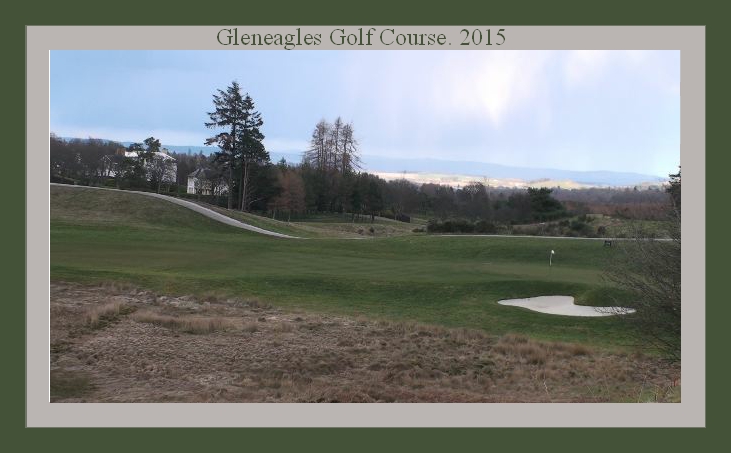
After leaving the Orkney Isles, we made our way to Duchally Country Estate, where we had booked a lodge. This place belongs to a company called CLC (Club la Costa). There is a hotel as well as the self-catering lodges.
(This was taken on another visit, as you can see!)
My daughter, son-in-law and grandson flew up to Edinburgh and joined us for a long weekend, which was nice.
On Saturday, we went to Loch Leven, not far away from Duchally. There is a castle on an island in the lake where Mary Queen of Scots had been imprisoned when some of her lords revolted against her rule. Due to the Covid-19 restrictions, that was closed.
We had a walk around part of the loch, which is very picturesque. We had a bit of trouble getting there because our satnav was completely thrown by a road closure for a market in the centre of Kinross. There were lots of people going down roads, then turning round and going back.
It was a lovely sunny day, but there had been a hatching of gnats as you can see in this picture. I was not deliberately taking photos of insects, but only saw them when I looked at the photo, later.
We went on to St Andrews, but the town was very busy and we couldn’t find anywhere to park, so we returned to Duchally.
The following day, we decided to climb a mountain. There was one called Ben Cleuch not far away, on the edge of the Trossachs. When we got there, it looked very steep, but we set off. I got about half-way up, but then the path became very rocky with a drop on one side. As my balance isn’t as good as it was, I opted to return to base camp. My husband came with me, of course, but daughter, son-in-law and grandson contiued onward and upward!
We had some fun watching a murder of crows (yes, that’s the collective noun) mobbing a pair of buzzards whenever they reached a certain point.
The gorse was magnificent, putting on a wonderful show on the hillsides.
Monday we went to the Falkirk Wheel. This is a means of lifting (or lowering) boats from one canal to another at a much higher level. It is the only one of its kind in the world, apparently.
Daughter and family were catching a flight from Edinburgh later that day, so we said goodbye to them and they set off towards home.
We had a walk around the grounds of Duchally Country Estate when we got back.
We visited Glamis (pronounced Glams) Castle. We’d pre-booked it as we had to with the Pandemic. It was an interesting visit. It was the place where Queen Elizabeth the Queen Mother was born and lived all her early life. There is supposed to be a secret room. It is said that if you count all the windows from outside, and all the doors from inside, there is a discrepancy. More windows than rooms!
A school friend of mine lives near to here, and we went to pick her up. She had agreed to come and spend a night with us at Duchally. On the way back from her home, we called at Dundee. I bought a Dundee cake, of course, but couldn’t find any Dundee Marmalade.
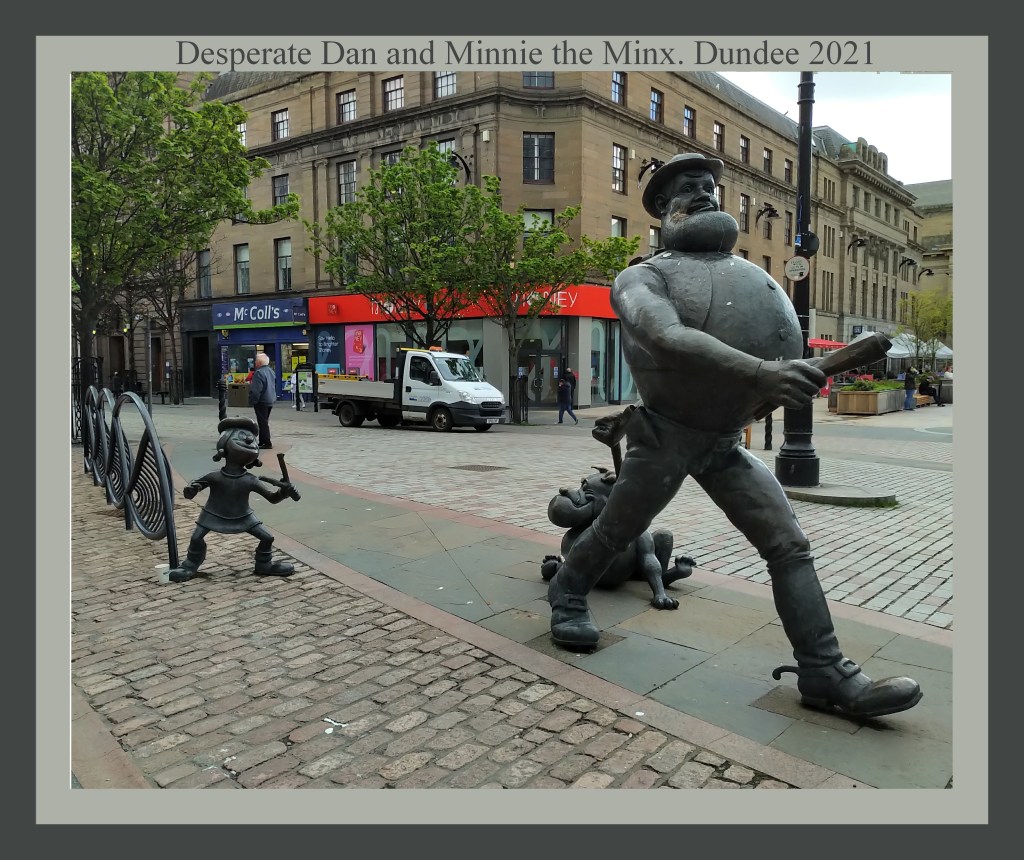
Dundee is the home of the Beano, a famous comic in the UK. The comic first appeared on 30 July 1938. I read it as a child, and so did my son. There are statues of some of the more famous characters in Dundee. There is another one, Dennis the Menace, whose statue we did not find, but I can’t believe he wasn’t somewhere.
The next day we visited the only lake in Scotland. The Lake of Monteith. We found out it’s called a lake because a Dutch cartographer mistranslated the word Laich, meaning a low place, as Lake, and it’s been a lake ever since.
One thing that impressed us was how light it stayed at night. This photograph was taken at 11pm and you can see how light the sky is still. This was at the end of May with still weeks to go until the Solstice.
Then, the following day, we sadly had to leave for home.
Depth is a vast word, a sea of information created of layers. It is complex, intense, and profound. Characters with depth feel solid, alive, as real as your best friend.
To achieve a sense of depth, we begin with simplicity. Each character’s sub-story must be built upon who these characters think they are.
One of the most useful seminars I’ve ever attended was given by a Romance writer. He is a strong proponent of assigning verbs and nouns to each character at the outset as a way to get inside their heads.
If there is one thing Romance authors understand, it is how to create a strong impression of character.
When I plan a character, I make a simple word picture of them. The word picture is made of a verb and a noun, the two words that best describe each person. We want to know the good things about these characters, so we assign nouns that tell us how they see themselves at the story’s outset.
I have recently returned from a holiday in Scotland and thought you might like to see some of the places we visited.
Scotland is a beautiful country with a lot of history. Definitely worth a visit. You must, however, take rainwear as its weather is notoriously fickle.
This year we managed to book a week in a lovely self-catering place. Duchally is a part of a group called CLC, and has a hotel and a number of lodges. There are two and three bedroom lodges that are more like houses than chalets you might find elsewhere. Each bedroom has its own ensuite bathroom.
But first, we decided to go to the Orkney Islands. We set off from here, near the south coast of England, and stayed for our first night with friends in Yorkshire, then set off for Scotland the following morning.
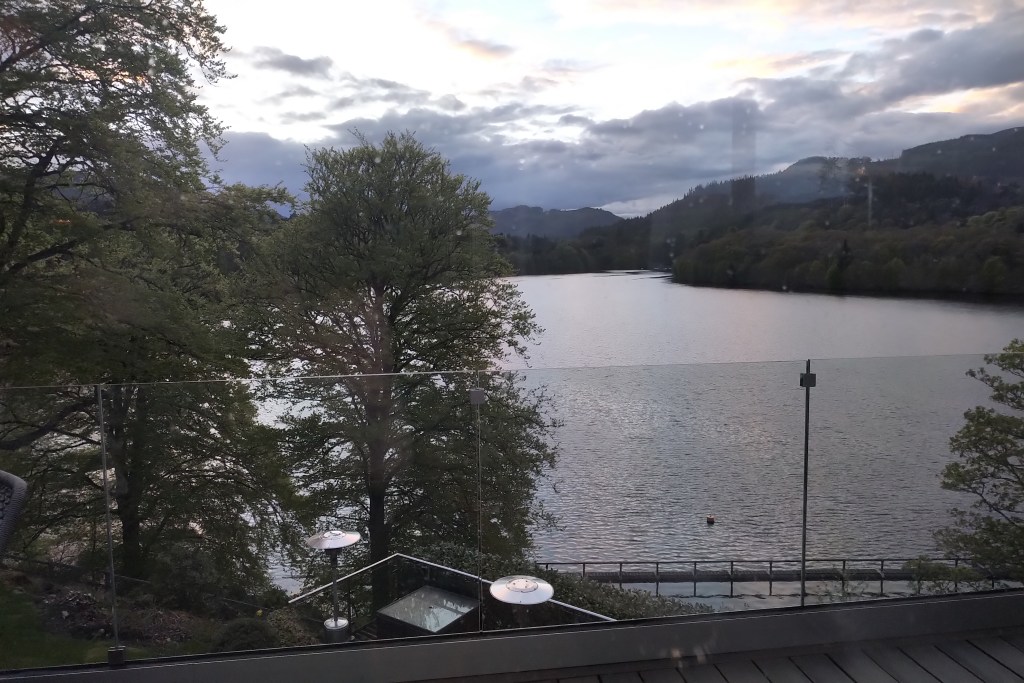
Our first night was in a hotel that had been a castle–Foneb Castle Hotel. The view from the dining room was amazing.
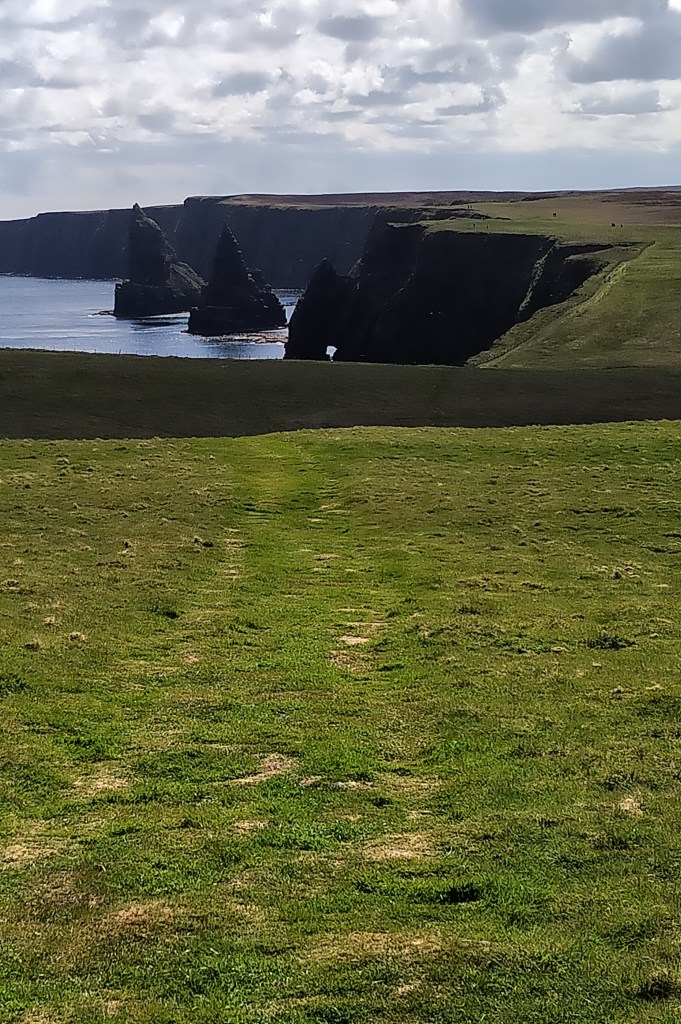
The next day we set off for the very north of the country. We had seen the stacks at Duncansbury Head on TV and we wanted to see them for ourselves. The stacks have been likened to sharks fins or witches hats. The Head is the most northeasterly place in Britain.
We still had time before our ferry to the Orkneys and so we thought we’d visit the most northerly point in the UK, which is not, as popularly thought, John o’ Groats, but a headland to the west of it, called Dunnett Head. We turned up a little road, which was narrow and potholed. As it was 5 miles to the head, we decided not to go.
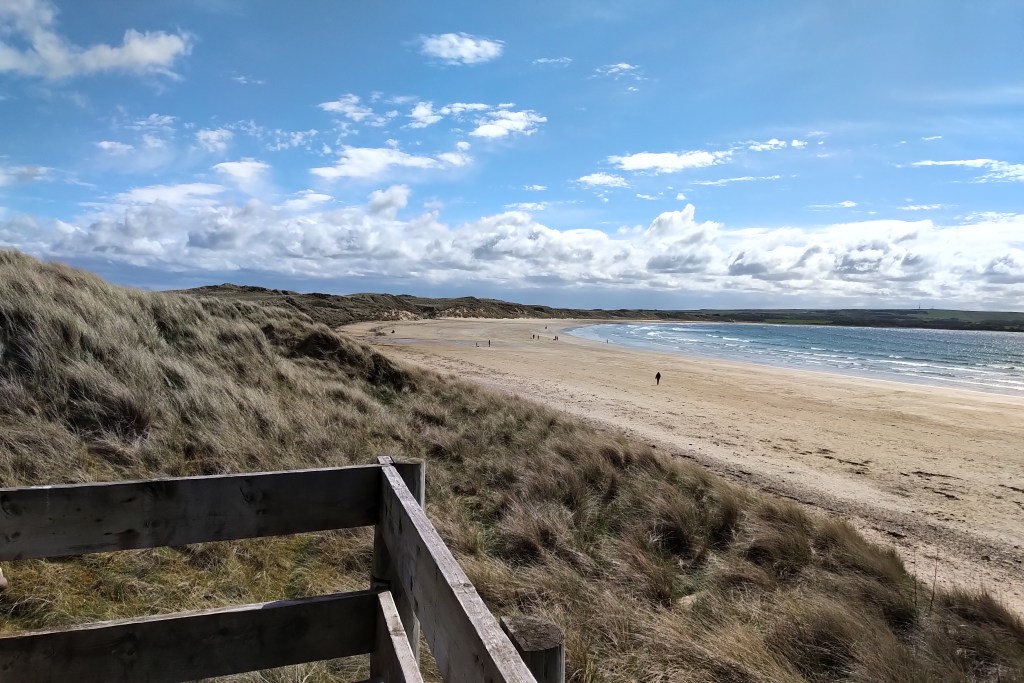
Travelling farther west, we came across Dunnett Bay. This was a beautiful, sandy beach. We had a nice walk along the bay. We did see one sad thing. There was a dead sheep on the beach. No idea how it came to be there.
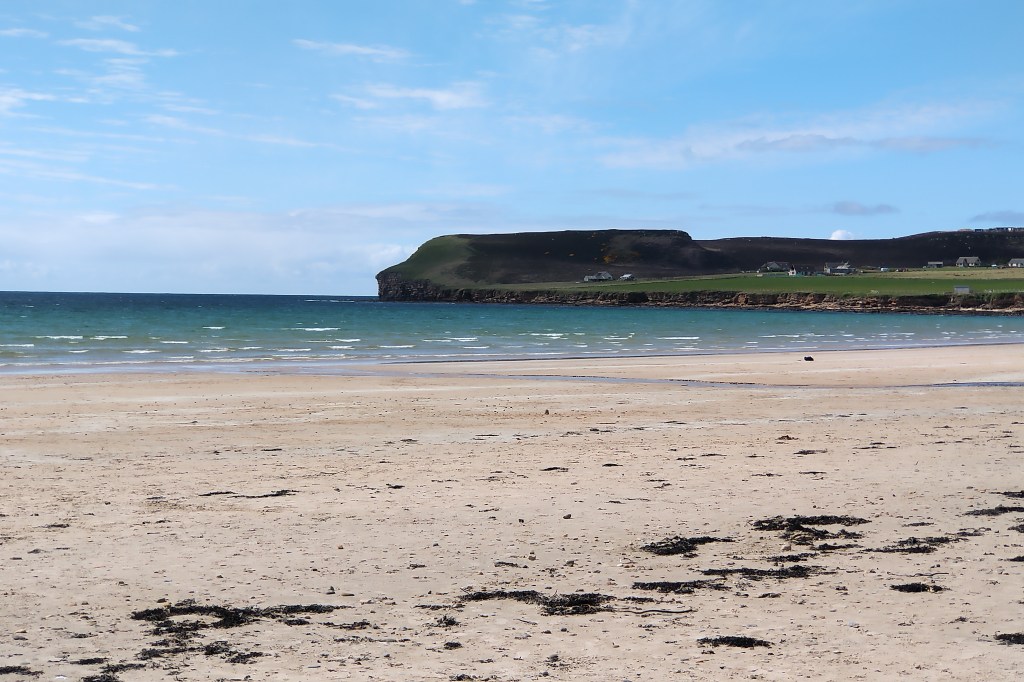
And here’s a picture of Dunnett head. At least we saw the most northerly point in mainland Britain.
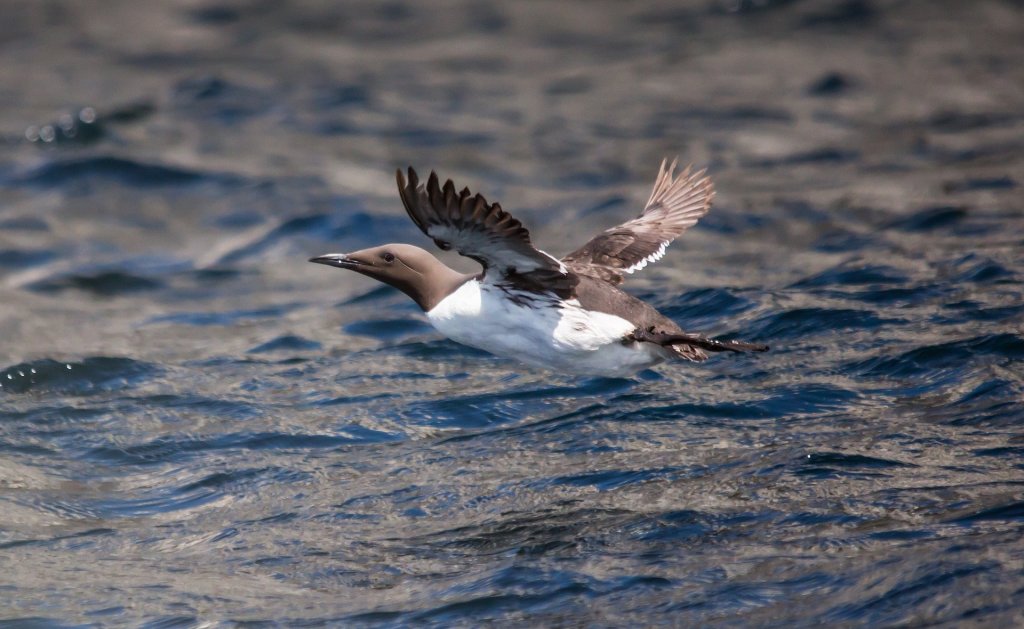
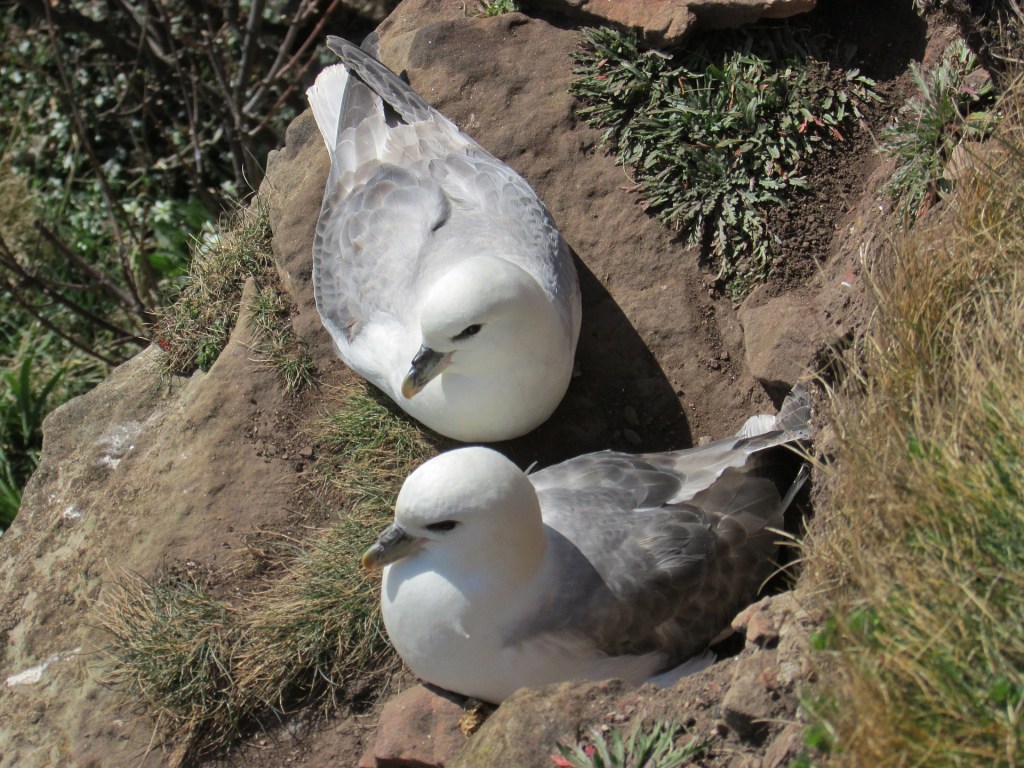
We then caught the ferry to the Orkneys. There were a lot of seabirds on the cliffs. There were supposed to be puffins, but I only saw fulmers and guillimots.
We landed at St Margaret’s Hope on the island of South Ronaldsay, from where we caught a bus to the capital, Kirkwall. As it was 8pm, and so far north, it was cold.
The bus journey was interesting as we crossed the narrow strips of sea between islands on barrages. We were told that they had been build during WW2 by Italian prisoners of war. They were actually defensive barrages, but as it was illegal to have POWs work on defences, the MOD said they were bridges, and built roads on top of them. Now they serve to allow access by land to other islands.
The biggest island, the one that has the capital, Kirkwall, is called Mainland. This seems a little odd to those of us from the mainland of the UK.
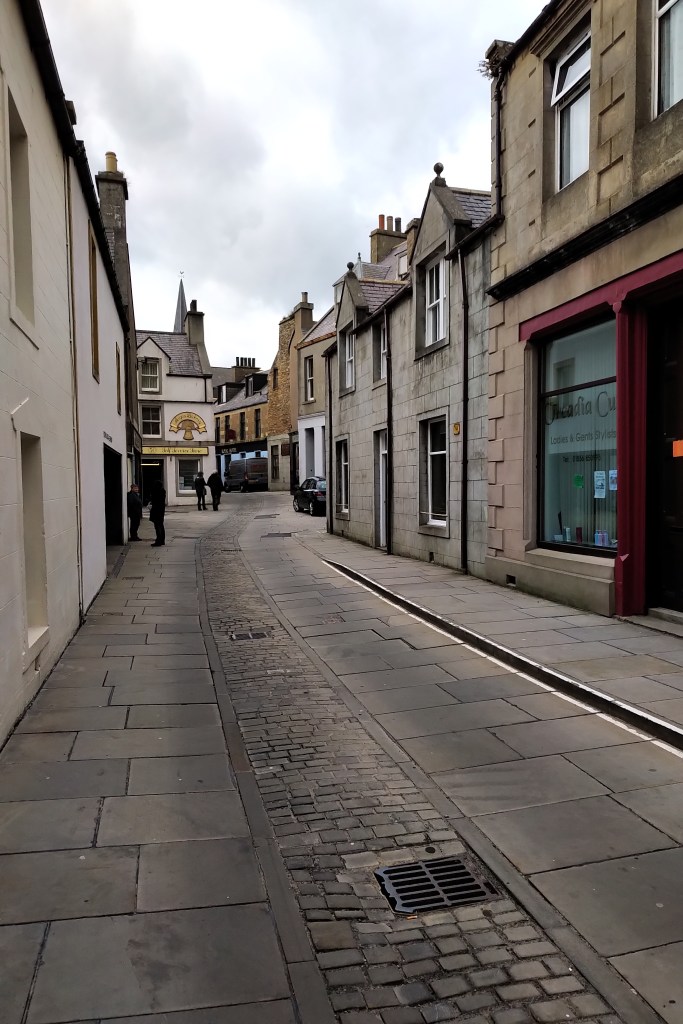
Here are some pictures of Kirkwall.
First the Cathedral.
The ruins of the Abbey
We caught the bus to Stromness at the other side of Mainland. There were Neolithic barrows and standing stones on the way. I was surprised that the island was not as flat as I had thought.
We explored the little town, which was not very crowded. The weather was still cold and windy, though, but I suspect that’s par for the course there.
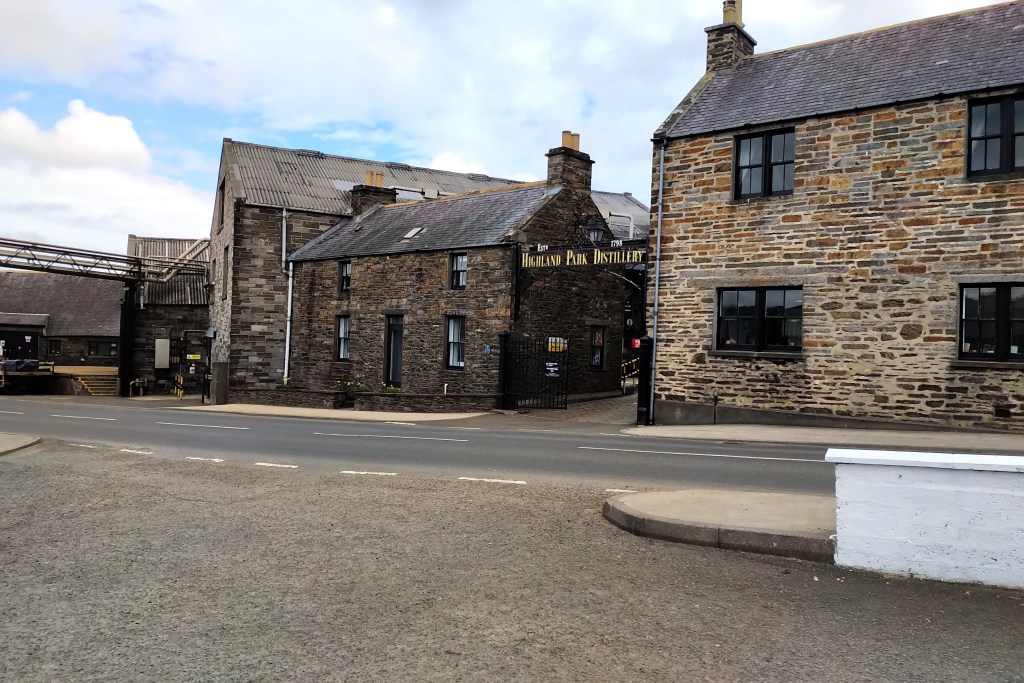
We had a visit to Highland Park Distillery booked for that afternoon, so we caught the bus back to Kirkwall. Highland Park is the most northerly whisky distillery in the world, so we were told.
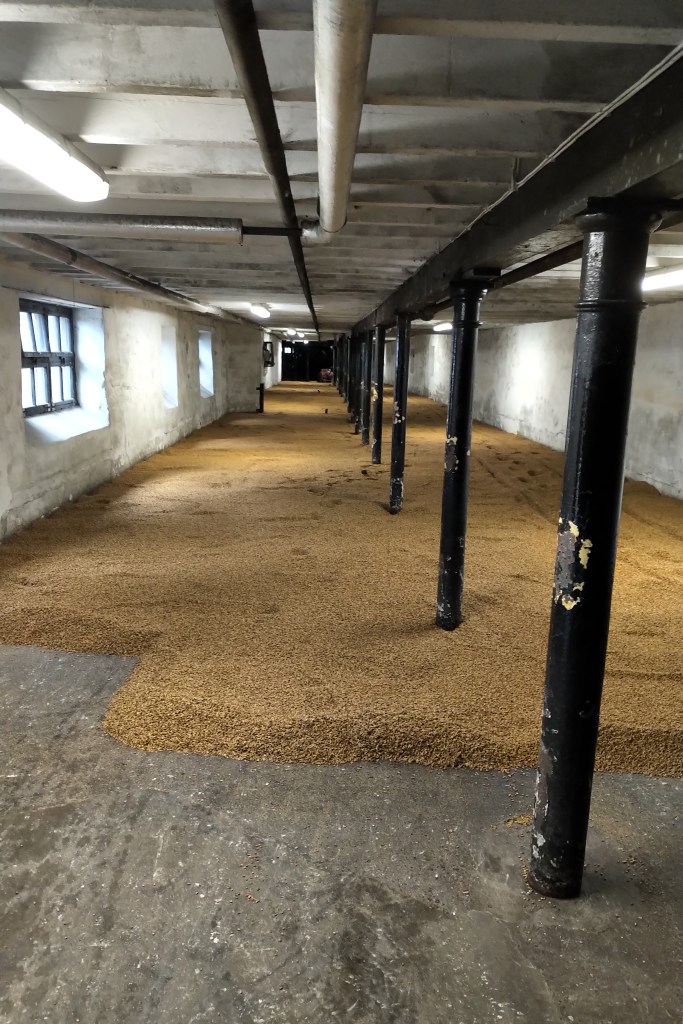
They produce their whisky in the traditional manner, malting their own grain, which most distilleries don’t do any more. The grain is turned by hand, but most maltings turn it mechanically.
It is dried over local peat, which is heather peat. This helps to give it its distinct bouquet and taste.
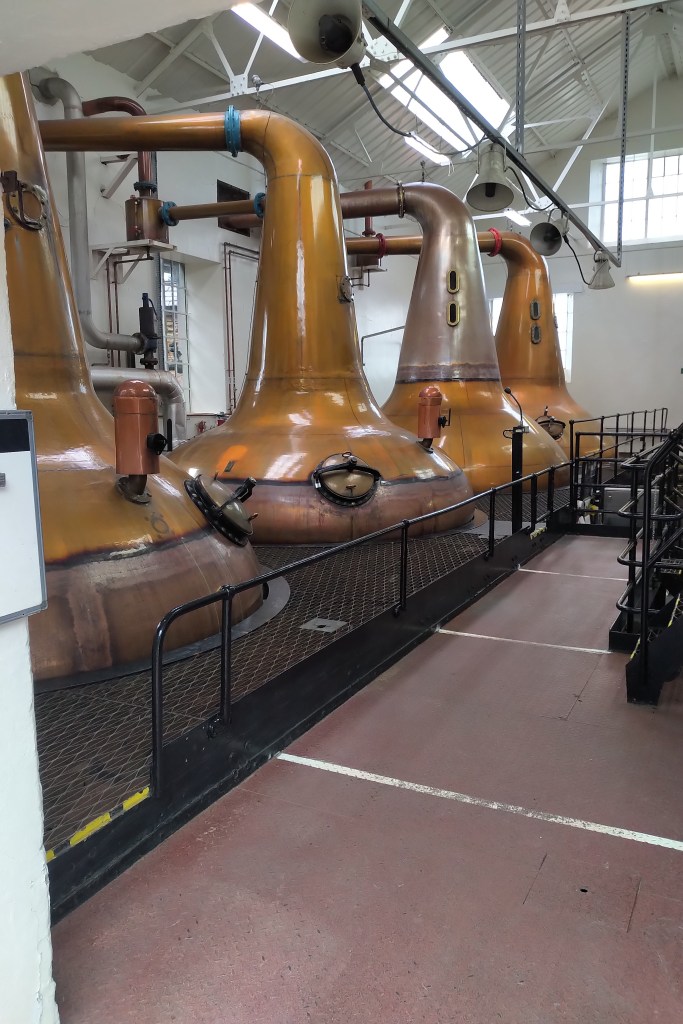
Our guide said that when the initial fermentation has taken place, what they have is essentially a very unpleasant beer. It is then taken to the stills where it is distilled into whisky.
Here is a picture of the stills.
They then mature the finished product in oak sherry barrels. Not just any sherry, but oloroso sherry.
Thus ends our visit to Orkney. I will tell you more about our Scottish holiday next week.
Incidentally, the spirit made in Scotland is whisky, while that made in Ireland is whiskey.
If you enjoyed this post, please leave a comment in the comments box. I enjoy reading what you think. Have you been to the Orkney Isles? If so, what did you think of it.Our visit was too short, really. There’s such a lot more to see.
If you wish to learn more about me and what I’m up to, as well as have news of my writing, with the occasional freebie, please sign up to receive my quarterly newsletter by clicking the button. The button will take you to a page where you can sign up.
I am completely stuck for a title for my latest novella in the Prequels to the Wolves of Vimar. The working title is Aspholessaria, which is the name of the protagonist, but as I don’t thing it’s very memorable, nor easy to spell putting it in a search engine, I don’t think I’ll go with it.
Of course, Aspholessaria isn’t known by that name, especially in the Human lands. (She’s an elf) Humans know her as Asphodel but that name could be misconstrued as a book about the flower, so I’ve rejected that.
I don’t want to spoil the story for anyone who wants to read it, but roughly it goes like this. She runs away from home with her lover in order to escape an arranged marriage. Of course it all goes wrong and she has to escape her lover. She ultimately finds herself in Bluehaven where she joins the priesthood of Sylissa, goddess of life and healing, and begins training to become a healer.
For various reasons she falls foul of the Great Mother in the temple when she follows her conscience rather than the rules.
I have a few ideas that I’m not really satisfied with and would like your opinion. Here are the ideas I’ve had.
From Darkness to Light
Dream of an Elf Maid
The Voice in the Air
Lady of the Healing Goddess
Priestess of Sylissa
Consequences of Conscience.
Which, if any, of these titles appeals to you? Of course, if you have a brilliant idea, please let me know.
Please put your thoughts in the comments box.
If you would like to join my quarterly newsletter, to find out more about me and my writing, please click the button below. Not only news of what’s going on, I will send the occasional freebie for you.
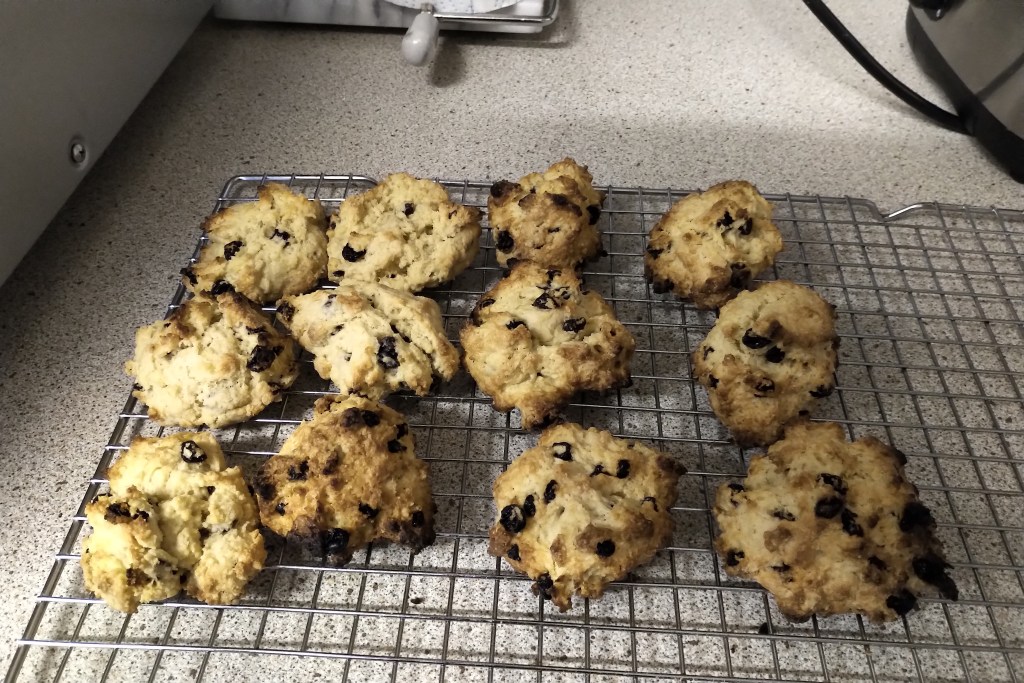
I made these rock cakes the other day. They are among my husband’s favourites.
Here is the recipe so you can make them, too.
Ingredients
250g SR flour
125g caster sugar
125g margarine
1 egg
Dried fruit to taste.
Method
Rub margarine into flour until it resembles fine breadcrumbs. (Or use a mixer.)
Add sugar and dried fruit and mix well in.
Add the eggs. This is a very stiff mixture.
Break into pieces and bake on a baking tray at 180o C for about 10 minutes.
For the next couple of days, Viv’s Family Recipes will be available of a mere 0.99 ($ or £). Get your copy, and make some more of my recipes collected over the years from friends and family. Click on this link or the book cover in the sidebar.
If you enjoy the recipes in this book, or even if you don’t, please leave a brief comment on Amazon’s reviews. It is a great help to both readers and writers if they can see what others thought about a book.
Please leave your comments in the comments box.
If you want to learn more about me and my writing, sign up for my newsletter by clicking here. It will take you to a page where you can sign up.
I promise I won’t spam you. I only send out a newsletter quarterly, with the occasional one in between with any exciting news or a freebie.











 Dragons Rule OK. V.M.Sang (author)