a review of a taste of ashes (echo 2) by kent wayne

Overview.
I would first warn people that this book details a battle. As a result there is a lot of violence and swearing in it. This is not a criticism, though. In a battle such as the one Atriya and his collegues are in there would be both violence and swearing.
The book takes place over one day, and has a profound effect on Atriya.

Blurb
Most of us change gradually—over the course of decades. For Crusader Atriya, it will happen in a single, agonizing day. On the edge of a decaying cityscape, Atriya struggles to hold onto his identity as he faces death from both enemies and allies alike. In the process, his old self is torn away, and he catches a glimpse of what he may one day become.

Twelve hundred years ago, humanity left Earth to settle on Echo. Despite hopes for a golden age, an era of darkness fell. Government and corporations merged into the Regime. The military and police merged into the Department of Enforcement. Over half the planet is covered by crumbling cityscapes and the elite live high above, removed and remote from the greater populace on the moon-city of Ascension. Hope lies in Atriya, but before he can break the cycle of darkness and ignorance on Echo, he has to do it within himself.

Story
During book 1, Approaching Shatter, Atriya has fallen foul of the Jury, a religious organisation.
Now he is sent on this mission to be killed. If he does not get killed during the mission, his superior officers have orders to shoot him.
He performs some amazing deeds during the battle, saving his comrades many times. Will his deeds persuade then to override their orders and allow him to live?

Characters
Wayne has built a cast of believable characters. Atriya is a man with many demons, good points and bad. He wrestles with these throughout the book during the battle. And he changes gradually during this encounter.
Clement is a thoroughly unpleasant character whom Wayne has built into a believable person. A bully and a coward. I hated him!
I did like the retrieval office, Liber, though. He had not lost all semblance of humanity as many others had. He does have some sympathy for others.

Writing
The writing is, on the whole, good. Mr Wayne builds the tension throughout the story.
There were one or two little places that grammar could have been improved, but, unless, like me, you are a member of the Grammar Police, I don’t think you’d notice. It’s not enough to warrant removing a star.
The descriptions of the battle are vivid (including the injuries and people being blown to bits). The story moves at a fast pace, as it should in such a time.

Conclusion
An excellent read for anyone who enjoys fast-action and adventure stories. Having said that, don’t read it before reading Book 1, Approaching Shatter.

I have awarded this book 5*

I hope you enjoy my reviews. I try to review all books I read. As an author myself, I realise how important reviews are to authors, and to readers, too, of course.

You will get to know a little about me from reading my posts, but you can learn more by joining my newsletter. I only send out 4 regular ones each year, so you won’t be bombarded. (Next one due March 1st.) Joining my newsletter, though, gives you previews of covers, news of special offers and any other titbits that come up related to my books and writing.

You can join by clicking on the link.

excerpt from the wolf pack

Silently, Thadora and Fero slipped through the rapidly lightning forest until they came out on an escarpment overlooking some flatter land. The trees disappeared here, and they could see the Grosmerian plain spread before them. To the east, the hills continued to rise to meet the mountains, but to the north and west the plains began.

Tracts of forest and open countryside separated small farmsteads They could just make out the lights coming on in Roffley, a day’s journey away, as people rose to their morning tasks.

Fero held out his hand to warn Thadora to be silent. They wormed their way forward on their stomachs, and looked down from the cliff top to the plain below and found themselves about twenty feet above the plain . Below them they saw a pack of wolves.

Thadora watched the animals in fascination. They were obviously a closely-knit group, with the exception of one animal, much paler than the rest, who seemed to hold itself aloof, or the others were ostracising it. Fero whispered that she, (for it was a she-wolf, he told her) was a stranger, and probably trying to join the pack. She had not been there when he caught sight of them yesterday. Maybe she had lost her own pack. He told Thadora that pack sizes were usually between six and ten, but that ten was rare. ‘More than about eight, and one kill would not suffice, and less than six and the pack would find it difficult to hunt down larger animals like deer,’ he whispered.

He pointed out the alpha male and female to her. The alpha male was a reddish brown animal, quite large, and the alpha female was a smaller, black creature. Fero told Thadora that only these two would mate, and the others would help in the rearing of the cubs.

Another large black male had begun to sniff at the pale she-wolf. She was cautious and bared her teeth at him, at the same time, crouching down, ears flattened to her head.

Of the others, one, obviously much younger, had a reddish coat again. She was obviously one of the cubs of the alpha male. There was another black wolf, slightly smaller than the very large one, and two greyish ones, one of which was a small female and the other was a very small adult male. Fero thought that the smaller dark wolf and the greyish female were probably littermates, the way they seemed to stick to each other’s company.

They watched for some time, and Thadora became fascinated. Then the large black wolf sniffed the air as the wind gusted and changed direction. He swung his head in their direction and gave a sharp bark at which the leader turned and led his pack at a loping trot away from the cliff.

‘Damn!’ swore Fero, ‘Wind changed direction and he smelled us. We’d better get back to the others. They should be ready to leave and we’ve still got our things to pack up.’

‘Thanks, Fero,’ said Thadora on their way back, ‘But, hey, those wolves didn’t seem scary. I don’t think I’ll be such a bloody wuss as far as wolves are concerned in future.’

Fero smiled.

When they got back to the camp, they found that the others had indeed packed up, including Fero and Thadora’s things, and that Basalt had made oatmeal porridge that he said would sustain them well for their trek.

Fero and Thadora sat down and took the wooden bowls of porridge that they were handed. The group sat round eating, then when they were finished, they wiped out the bowls, tied them to their packs and were ready to leave. Fero saw to it that they had put the fire out completely before they left, and they returned to the road.

Thadora was very quiet as they walked along. She had a frown on her face. Fero hoped that what she had seen of the wolves would help her with her fear.

She came up to Fero and asked, ‘’Ow common are th’ colourings o’ that pack, like?’

‘Well now—wolves come in a range of colours ranging from very pale to black. However, the very pale coat of the she-wolf we saw trying to join the pack is not common this far south, although they are more so in the snowy north. Maybe that was why she didn’t have a pack. Sometimes albinos are turned out. However, she wasn’t a true albino. Her eyes were brown and she had some colour to her coat.’

‘Hmm!’

When they stopped for a midday break, Thadora suddenly said, ‘Carthinal, that poem about soddin’ wolves that you ’ad, right? D’you still ’ave it?’

‘Somewhere in one of my pockets. I expect. Did you want me to read it?’

‘No, Mother taught me ter read, so I c’n read it by meself. She learned at Madame soddin’ Dopari’s, right? It were somethin’ th’ damn Madame insisted all th’ girls learn. Would yer lend it t’ me for a while?’

‘Of course. You can keep it. I don’t know why I’ve still got it, since it seems to have no relevance to us or our quest.’

Carthinal gave the poem to Thadora and she began to read it.

All the afternoon, Thadora kept perusing the poem as they walked. No one seemed to be able to get anything out of her, and they all thought her behaviour a little odd and out of character, but she had obviously been working something out. Fero thought she was trying to work through her fear of wolves, but Kimi had the feeling it was something more. She expressed her thoughts to Davrael.

‘I expect she’ll tell us when she’s good and ready, and not before,’ her husband replied. Davrael was a man of few words.

‘Yes, you’re right of course,’ Kimi replied, linking her arm through his. He placed his other hand over hers and smiled down at the small young woman with love. They continued in this way in silence.

Thadora did not reveal her thoughts until after they had stopped for the night. After they had eaten, she opened the paper with the poem on and began to read it aloud.

“The wolves will fight ’gainst every foe
The balance to maintain
But far and wide the pack must go
All borders they disdain.

The pack contains the strangest group,
The one whose pride comes with her
And one who slips through every loop
The wilful one, the tracker.

“The leader with his anger held,
The ones who hunt the horse
The rock that’s strong completes the meld
And makes the pack a force.

“The wolf pack’s members are filled with zest
And all do have their place
The hunt their foes with ruthlessness
Then vanish without trace.

“In times of danger all must know
The wolf pack will be there.
They work as one. They keep their vow.
For each other they will care.”

‘I think this bleedin’ poem refers to us.’

The others looked at her in surprise.

‘What makes you think that?’ queried Basalt.

‘It was, like, when I were watchin’ th’ wolves wi’ Fero. They seemed in lots o’ ways ter be like us, see. Th’ leader was a big, soddin’, reddish brown animal that made me kinda think o’ you, Carthinal, right? There were somethin’ about ’im that seemed so kinda dangerous, but hey, ’e didn’t show any behaviour to th’ others that made my feelin’ logical, see? I think it were just that ’e seemed ter be holdin’ somethin’ inside o’ ’imself, right? You give me that feelin’ too, Carthinal. An’ that, wi’ ’is colouring an’ all were what made me, like, think o’ you.

‘Then I looked at th’ others. We was all bleedin’ well there. A small black wolf, the alpha female Fero called ’er, was you, Asphodel. Small and pretty, but wi’ plenty o’ spirit you know. Then there were a damn big, black wolf that were obviously Fero. A little distant, yer know. I noticed that ’e sometimes wandered off, sniffin’ around—fer game I suppose, or danger.

‘A small reddish one, much younger than the rest were me, see, while th’ two ’oo was littermates and was always together was Davrael and Kimi. Th’ male o’ these was black too. Th’ other two were obviously Basalt, a small adult wolf, and a light-coloured female for Randa. The pale wolf were findin’ it hard ter get accepted inter th’ pack, a bit like Randa is wi’ us, like. (Sorry Randa, but it’s true, ain’t it?) Then th’ large black, Fero, showed interest in th’ pale wolf. Don’t look away, Fero. I’ve seen yer eyes on Randa when you think no one’s lookin’.’

At this comment, Fero looked embarrassed and Randa looked annoyed, but Thadora continued, ‘So I wanted ter look at th’ damn poem again, right? Here is ’ow I sees it. Th’ wolf pack in th’ poem is us. OK? I’ll ignore th’ first verse as I don’t know what that means. Th’ second starts to describe th’ wolves. “The one whose pride comes with her” is Randa. Hey, you are rather proud an’ ’aughty yer know, Randa, and th’ “one who slips through every loop” puzzled me at first, but I think it’s me. I seem to allus manage ter get away when some bleedin’ person is on me track for some damn scrape or other.

‘Now the “wilful one” I think is Asphodel, right? You told us you ’ad to leave ’Ambara because you ’ad annoyed the bleedin’ Great Father o’ th’ temple by disobeyin’ orders because yer didn’t agree wi’ them. That’s wilful! And “tracker” is obviously Fero, OK?’ She paused for breath and looked round at them.

They were all looking at her with interest.

‘“The leader” is Carthinal, right?’ she continued. ‘You seem to ’ave a ’idden anger too, Sometimes not so idden, either, Carthinal, so that fits in wi’ “with his anger held.” “The ones who hunt the horse” are Davrael and Kimi, though strictly speaking you don’t ’unt ’orses, but ’erd ’em; and finally, Basalt is “the rock that’s strong.” Basalt is, I think, a rock. Is it strong?

‘I’ve not got no further wi’ th’ meanin’ o’ th’ first verse, but th’ last obviously means that we must stick t’gether and be as a wolf pack.’

‘Maybe,’ said Basalt sceptically, ‘but it could just be coincidence, couldn’t it?’

‘I think Thadora is right,’ Randa disagreed, surprisingly agreeing with Thadora and earning a sharp look from Basalt, and a murmur of ‘Of course. Never do to agree with a dwarf!’

‘Basalt, don’t be like that,’ whispered Kimi. ‘She’s a right to voice her own opinion.’

The dwarf stopped grumbling and sat scowling to himself instead.

Randa continued, ‘Look at it this way then. We were unsure as to how many of us there should be. This poem makes that quite clear. There should be eight of us. It makes it clear who should be here.’ Here she threw a glance at Carthinal and Basalt who had been reluctant to have her in the group at first. ‘Those wolves that Thadora and Fero were watching served to jog Thadora’s mind about the poem and to set her thinking. Yes, I agree that it refers to us, and someone has put those wolves where we would see them. Everything seems to be happening rather too conveniently for it all to be accidental.’

Asphodel had been thinking as well. ‘The first verse,’ she said slowly, frowning as she spoke, ‘refers to the Balance. Some clerics believe that in order for the world to work, there must be a balance between good and evil. Just as there is night and day, so we can sleep at night and wake in the daytime refreshed for our daily tasks. We, it seems must maintain the Balance and to do so, we must cross borders and travel far.’

‘And last verse say we must “Work as one and keep our vow,” and look out for each other. Much like wolf pack. But we have make no vows, do we?’ This came from Davrael. ‘Well, not all to whole group.’ He looked at Kimi as he spoke of vows, and smiled.

‘Well, that can be remedied,’ Carthinal spoke for the first time in the discussion. ‘We have a representative of the gods here.’ He gestured towards Asphodel. ‘I’m willing to swear to protect you and treat you as the brothers and sisters I never had.’

The others agreed, and they all stood in front of Asphodel.

Carthinal thought for a few seconds and then said, ‘I think I have the words. I will let you decide if they are appropriate before we swear.’

When they had heard his thoughts, the others concurred and he said, ‘I will be as the wolves, and learn from them how to live for the pack. I will put the good of the pack before my own good, and protect the other members to the best of my ability. I will follow my destiny wherever it may lead, and through whatever dangers may befall, serving the pack and the land in all things. This I swear, and may the gods hear my vow.’

The all agreed that the words were good, and then they all joined hands and repeated them.

Then Thadora said, impulsively, ‘We are Wolf.’ and the others repeated her words.

So was born Wolf, from a group of unlikely companions, sworn to each other and to the world.

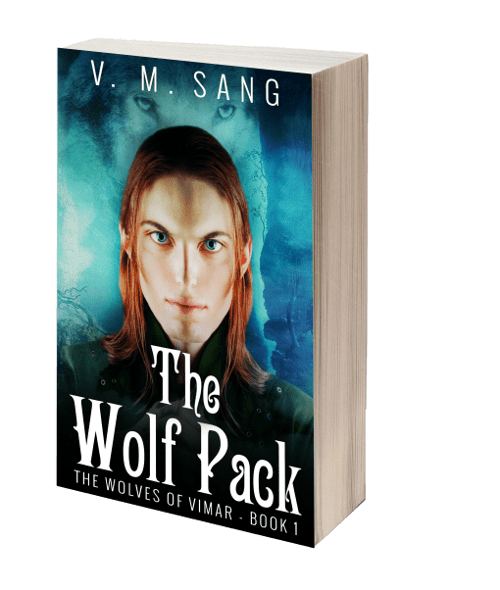
I hope you enjoyed this excerpt from The Wolf Pack. If you would like to read more about Wolf and their exploits, you can buy the book by clicking here or on the cover in the sidebar. It will take you to Amazon where you are.

The Wolf Pack is available in a number of different formats, including audio.

Every 3 months I send a newsletter to people on my mailing list. It tells you more about me and my writing. I occasionally send an extra one if there is something extra to tell you. To join, click here.

I welcome comments so please add yours in the comments box.

7 Tips to Adding Fear Into Fiction

Here are some helpful tips from Charles Yallowitz on adding fear to you writing.

Even if you don’t write horror, you may want to include some fear in your stories.  From fear, we can create hope and relief.  We can also drive people into despair and sadness.  It’s a fascinating jumping point for so many stories.  Yet, one does come off a little depraved if they enjoy the manipulation too much.  Still, we’ve come this far (5.5 sentences) and might as well move on to the advice.

Continue reading here

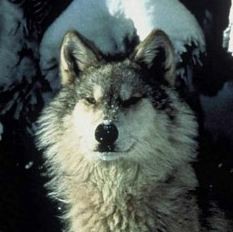
The wolf

Wolves have had a bad press over the years. Think of Little Red Riding Hood, The Three Little Pigs, The Wolf and the Seven Little Kids. There are others, too. I’m unsure why this is, except that wolves were probably the main enemy when humans first began to domesticate other animals like sheep, cattle, goats and pigs.

These animals would be seen, by wolves, as easy prey, being corralled and unable to escape easily, thus the humans began to look on the wolf as an enemy.

Wolves do not normally attack humans. They are aware of how dangerous people can be. They will only usually attack if they feel threatened, or are starving.

Of course, another thing that makes me think (and this is a personal view) that wolves were not considered to be too dangerous by our distant ancestors is that they were domesticated. Our modern dogs are descended from wolves. People did not decide to domesticate such creatures as lions or bears.

Wolves live a family group known as a pack. In the pack there is one wolf who is the leader. He is known as the Alpha Male and is the only one allowed to mate. He mates with the Alpha Female, although there is often only one female in the pack.

There is a hierarchy in the pack. There is a beta wolf who comes after the alpha. He will take over the position of the alpha when the alpha dies. Sometimes he will fight the alpha and gain the position that way.

The lowliest wolf is called the omega wolf. The other subordinate wolves are below the beta and above the omega wolf. Often they have climbed up the hierarchy by fighting those above them.
The alpha male is the first one to feed after a kill. When he has finished, the beta feeds, and the omega is the last. If there are weaned cubs, they feed first.

Wolves communicate through howls. They will howl to others in their pack through affection. They also howl to indicate their whereabouts or to tell other packs that this is their territory. A howl can travel for 10 miles if the territory is right. The sound of howling wolves will send a shiver down the spine of most people. It is a wonderful and evocative sound.

During the hunt, wolves will track their prey. They prefer animals like Elk or caribou, Although they will take other large creatures like bison. A bison, though, is a dangerous creature to tackle.

Some smaller and more agile wolves will herd the prey animals. The pack will often chase their prey over many miles during which time they choose the animal they want. It will often be a sick or old creature, or a youngster.

Young wolves will often hang around watching and learning rather than taking an active part in the hunt, then, when they are old enough they know what to do.

Wolves play an important part in the ecology of an area. They help to preserve the genetic viability of the prey animals by taking those less fit. They also help prevent the prey animals from over-running an area and decimating the vegetation.

They look after their own and are gentle and loving. I suspect it’s this quality that attracted our ancestors as well as their observations as to how they hunt.

In my books, The Wolves of Vimar series, the group of friends takes the name of Wolf after they find a poem and see a wolf pack interacting.

Here is the poem:

The wolves will fight ’gainst every foe
The balance to maintain.
Though far and wide the pack must go
All borders they disdain.

“The pack contains the strangest group
One whose pride comes with her,
And one who slips through every loop,
The wilful one, the tracker.

“The leader with his anger held,
The ones who hunt the horse.
The rock that’s strong completes the meld
And makes the pack a force.

“The wolf pack’s members are filled with zest
And all do have their place.
They hunt their foes with ruthlessness
Then vanish without trace.

“In times of danger, all must know
The wolf pack will be there.
They work as one; they keep their vow.
For each other they will care.”

Next week I’ll post an excerpt from Book 1, The Wolf Pack, but if you can’t contain your excitement until then, follow the link, or click on the book cover in the sidebar to go to Amazon where you are and pick up your copy.

Every 3 months I send a newsletter to people on my mailing list. It tells you more about me and my writing. I occasionally send an extra one if there is something extra to tell you.

To join, click HERE

Please post a comment in the comments box. You’ll always get a reply from me.

I hope this makes you smile for a while 🙂

It certainly did, I hope it makes you smile, too.

I hope this makes you smile for a while 🙂 | Phoenix Rainez (wordpress.com)

Trouble on the high seas (well, canals, anyway)

Reblogged from The Diesel Electric Elephant Company.

Ian Hutson is having a bit of trouble with the authorities. It seems, that unlike the rest of us who have to stay put, those on a canal boat have to move!

He has to prove he’s move the correct amount and to do so must show pictures of where he’s been. He has produced a number of pictures, showing how silly that idea is in this day and age.

It ought to be said, just so that it is noted, dire pandemic utterances from government notwithstanding, not even withsitting, that like other folk, I do not simply move my boat until C&RT cry ‘Halt! That’s enough for today’, then moor up and then stay inside peering out of some letterbox arrangement like a pair of disembodied, deranged, bloodshot eyes. No. I too need exercise and shopping and water and gazunders and suchlike. Like everyone else, I do get off the boat once moored up, once in a while. Moving my boat from neighbourhood to neighbourhood means, if it means nothing else, that my four or five mile daily “stay sane (ish)” walks must be taken in ever-changing neighbourhoods, with ever-changing people and ever-changing arrangements. In the more ordinary course of more ordinary World Events that would be fun fun fun, but in the Current Displeasantness it’s hardly the spirit of the whole Stay Safe thing, eh?

Continue reading here

new release

I am pleased to announce that The Making of a Mage has now been released and can be bought from Amazon as an ebook and paperback. It is also available in some bookstores.

It is the second prequel to The Wolves of Vimar and tells the story of the early life of Carthinal, the main character in the Wolves books.

Here is the blurb:

Carthinal is alone in the world. His parents and grandparents have died. Without money and a place to live, he faces an uncertain future.

After joining a street gang, Carthinal begins a life of crime. Soon after, he sees a performing magician, and decides he wants to learn the art of magic.

But can he break away from his past and find the path to his true destiny?

You can buy by following this link, which will take you to Amazon where you are.
Or you can use the ISBN numbers to request it from your local bookshop via the Ingram’s catalogue.

9781034314059 (6×9 Hardcover)
9781034314028 (6×9 Softcover)
9781034314035 (5×8 Hardcover)
9781034314042 (5×8 Softcover)

I am currently working on the third prequel, which tells of Asphodel and how she came to become a priest of Sylissa, Goddess of Life and Healing. I’ve finished the first draft, and had it critiqued, but it still needs work. I’ll keep you up to date with how that’s going.

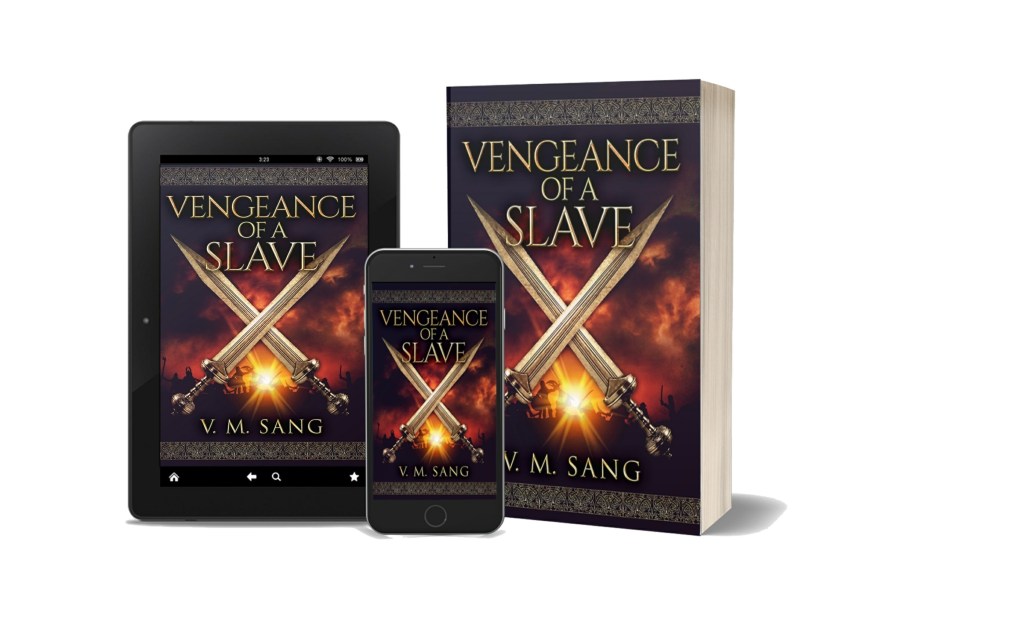
I’m also almost ready to send the second book in my historical novel series, A Family Through the Ages, to the publisher. It follows a descendant of Adelbehrt from Vengeance of a Slave.

Helgha is a young girl living in the Danelaw, a part of Britain ruled by the Vikings. The book is titled Jealously of a Viking.

All my books can be bought from Amazon by a simple click on the cover.

If you wish to join my quarterly newsletter and get all the latest updates and learn more about me, click here.

I am always delighted to hear from you. Please add any comments in the comments box.

Leaving the Land

This was written in response to Sue Vincent’s photo prompt. The word was RETURN and here is the photo.

Leaving the Land

“I want to go to university and study economics.” I sat with my fork poised to put a piece of Mum’s delicious roast beef into my mouth.
My father put his knife down and looked at me. “I always thought you’d take over the farm when you left school. You’re a good farmer. You love the animals and they like you.”
“Yes, Dad, that’s true, but there’s no money in it. You know that better than anyone.”
He sighed. “You’re right there. But it’s still a good life. Out in the fresh air, growing food for people to eat and being your own boss.”
I nodded. “And getting up at the crack of dawn every day. Sometimes during the night when a cow’s calving. Then working hard all day, so that you’re too tired to do anything in the evenings. And you can’t go on holiday without arranging for someone to come in and feed the animals and milk the cows.”
Mum stood and took our plates. “It’s home-made treacle tart for pudding. Your favourite.”
I grinned. “What do you think, Mum?”
“You should do what you want, darling.” She carried the plates through to the kitchen and called back, “I only want you to be happy.”
Dad called back, “So do I, Lily. If he want to go to University then he should go. He can earn a lot more as an economist than a farmer.”
“Then why did you say that about thinking he’d take over the farm?”
Dad shrugged. “Dunno, really. I think I always knew he was cut out for something more than we’ve got here.”
Jenny, my sister, interrupted him. “Are you being sexist, Dad? What’s wrong with me taking over the farm?”
Dad raised his eyebrows. “I’d not thought about that. I kind of assumed you’d marry and not want to.”
Jenny pressed her lips together. “Well I can do just as well as Tom. And I’ll prove it if you let me.”
Dad agreed to let Jenny help. She was only two years younger than me, and strong. She also loved the cows and had recently been raising a few chickens and selling the eggs.
After my A-Level results came in, I had done well enough to be offered a place at the London School of Economics, and so that October I packed my suitcase and set off for London.
The excitement I felt as I waved to my parents, standing on the station platform was like nothing I’d felt before. I was off to the capital city. All the freedom in the world was mine. I no longer had to tell anyone where I was going or why, nor when I would be back.
I had found a place in a Hall of Residence only half a kilometre from the College, so felt lucky.
Freshers’ week began. I joined the rugby club straight away, and was persuaded to join the hiking club and rock climbing.
I had brought my clarinet in anticipation of there being an orchestra. Of course, there was, and a jazz band too. I joined both.
In spite of all the people trying to persuade me to join their society, I thought I would have enough to do with my course and the societies I had already joined, so I declined the others.
Well, the academic year began. I went to the first orchestra rehearsal with some trepidation. Would I be good enough? What if I couldn’t play the works they chose?
I took my seat with the other clarinets and looked at the music. Gershwin. Yes, I liked that. They were doing Rhapsody in Blue, of course. Then there was Beethoven and Mozart. Good I’d be able to cope.
I looked around at the other members of the orchestra. One cellist caught my eye. She was beautiful. Black hair cascaded to her waist. She tossed her head to remove it from her eyes as she tuned her instrument. I found myself staring. Then the conductor tapped his baton on her lectern and the rehearsal began.
At the end, I looked for the girl with the black hair, but she was nowhere to be seen. I would have to wait for the next rehearsal to see her again.
At least, that’s what I thought. But as I entered the canteen at the College, I spotted her. She was sitting with another girl. Luke, who I had met on my first day, and who had become my friend, followed my gaze.
“She’s lovely” His eyes lit up.
I was about to say, “Hands off, she’s mine,” when he added, “I love blondes. Let’s go talk to them, but remember, the blonde is mine.”
That was how I met my beautiful Mandy. After we introduced ourselves, I asked Mandy out. She accepted and soon we were inseparable—except for when we had lectures, of course. We had so much in common, besides music.
It turned out she was also a member of the hiking club and we went on walks in the city. There is a thing called the London Loop, and we walked much of that besides other walks in and around the capital. I was surprised how much ‘countryside’ there is in London.
We played in the orchestra, of course, and I gave up the rock-climbing. It took time away from Mandy.
Three years passed quickly. I got my degree, a 2:1, which I was pleased with. Now I needed a job, and so did Mandy. Eventually I found a place with an investment bank in the City. Just what I was looking for.
Mandy found a research job at Imperial College.
We decided that now was the time to move in together As new graduates we could not afford to live in London, so managed to find a flat in Croydon on the main line into Victoria.
We went into London as often as we could. We met for drinks with collegues on Friday evenings after work. Visited museums and art galleries, went to concerts, and the theatre and, of course the clubs. Life was good.
We married eventually and bought a house in Tandridge, near Reigate in Surrey. By now we could afford a large house in a sought after area. We had expensive clothes and cars, and holidays. We had friends of like mind and entertained a lot.
Then Mandy became pregnant. We had twin boys and it seemed our lives were now complete. We made plans for the boys to go to private schools, and put their names down almost as soon as they were born to ensure their education.
I stood looking out of our kitchen window one day at our garden. We paid a gardener to come and do it, but I suddenly got the urge to get my hands dirty.
I opened the back door and walked along the path. I spotted a dandelion. Now I know how difficult it is to get dandelions up, so I went to the shed and found a hand fork. Kneeling by the offending weed, I probed the fork into the soil by its side and wiggled. I felt it come loose and then, suddenly, it shot out of the ground. I almost fell backwards.
Grinning, I took it to the compost heap and began to look for other weeds.
The next hour I spent weeding the garden. When I went back indoors, Mandy exclaimed, “What have you been doing? You’re filthy, Look at your trousers.”
I looked down. Soil clung to my knees and when I looked at my hands, under my nails was black soil.
“I was doing a bit of weeding, my sweet,” I answered.
She put her hands on her hips. “We employ Geoff for that job so we don’t need to. Are you trying to get him out of a job?”
Well, I’d now got the gardening bug and I did tell Geoff we no longer needed him. Mandy was furious. She did not think we needed, or should, be doing what she called ‘menial tasks’ when we could afford to pay someone to do it for us.
But I felt satisfied—no, happy—to look at our garden and know it was all my own work.
The boys grew fast and went away to school. I missed them. Mandy said it was best for them. It would teach them independence, and besides, we could carry on with our lives as before we had them.
I began to spend more time in the garden. I dug up a patch of perennials and turned it into a small kitchen garden. Mandy did not like the time I spent out there, but did appreciate the vegetables I grew. She said they were much better than those from the supermarket.
“That’s because they’re fresh,” I told her. “Speaking of fresh, why don’t we have a few chickens? Then we could have fresh eggs.”
But Mandy drew the line at this idea. “And how would we be able to go away on holiday? We can’t ask our friends and neighbours to come and feed our livestock.”
Then one day Mandy felt a lump. “It’s nothing,” she insisted. “It’ll go away.”
No matter how much I argued, she would not go and have it checked out. Then, of course, it was too late. She died in my arms. The boys came back from school for the funeral. They were only fourteen and were devastated at their mother’s death. I looked at them. They were the image of her.
I walked around the house where we had been so happy for all those years. It was dead. It no longer belonged to me.
As soon as the legalities had been completed I put it on the market. I gave up my job in the city, too. What to do now?
Six months later I got of the train, suitcase in hand, at the railway station I’d departed from so long ago. I called a taxi and gave the address of my parents’ farm. As we turned into the long drive leading to the house I wondered what reception I’d get. Oh, I’d phoned often, but hadn’t been home for years.
The taxi drew up and I paid him and strolled up to the door. As I reached for the handle it flew open and my mother grabbed me in a bear hug. I thought she’d never let me go.
“Tom, Tom, Tom,” was all she seemed able to say.
Then she called out “Brian, it’s Tom. He’s come home.”
Dad came out of the cowshed wiping his hands. He looked around. “Where are the boys?”
“At school, Dad. Remember they’re at boarding school, but I’m going to take them away, I think.”
He nodded. “Of course, it’s still term-time.”
“How long are you staying?”
“As long as you’ll have me.”
“Well, get yourself changed, you’re just in time for the milking.” He smiled and turned to my mother. “Cook a special meal tonight. Our boy’s come home.”

Cover Reveal

I had a different post in mind for today, but then I got the cover from my publisher so thought I’d let you see it instead.

This is the second prequel to The Wolves of Vimar series and tells how Carthinal came to be a mage in spite of his tragic childhood.

Anyway, without further ado, here’s the cover.

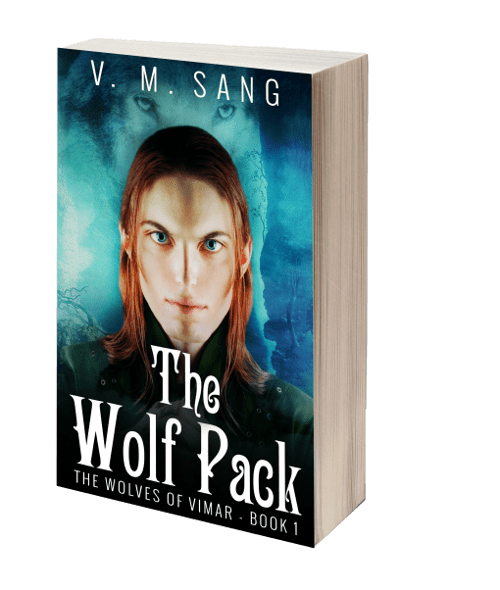
I would be interested to hear what you think of it? Do you like it or not? The mage on the front has longish auburn hair, as has Carthinal. One person in the book tells him to get it cut, so of course he’s all the more determined not to do so!

I’ll let you know as soon as I know when it’s out, but at the moment it’s out of my hands.

I also got the information that the first prequel, Jovinda and Noli, is now available in bookstores. That’s great news.

This one tells about Carthinal’s parents. How they met and about their tragic love affair. Of course, Carthinal’s birth is part of it. The ISBNs are below.

9781034257639 (6×9 Dust Jacket Premium Hardcover)

9781034257622 (5×8 Dust Jacket Premium Hardcover)

9781034178323 (6×9 Large Print Hardcover)

9781034178316 (6×9 Large Print Softcover)

Why not join my mailing list? I don’t bombard people with spam. The newsletter goes out quarterly, with occasional ones for special announcements.

If you wish to join, click on the link.

Thanks to All the People. A poem

I don’t usually write in free verse, but this time I’ve made an exception. Here’s my poem of thanks to a variety of people.

Image by Gerd Altmann from Pixabay

Thanks to all the people
Who broke the lockdown rules.
Thanks for spreading the virus.

Thanks to all the people
Who went to parties at New Year.
Thanks for spreading the virus.

Thanks to everybody
Who ran away from London as Tier 4 arrived.
Thanks for spreading the virus.

Thanks to everybody
Who wears masks below the nose.
Thanks for spreading the virus.

Thanks to everyone
Who fails to wash their hands.
Thanks for spreading the virus.

Thanks to the man
Who removed his mask to cough.
Thanks for spreading the virus,

Thanks to the people
Who fled Switzerland to avoid quarantine.
Thanks for spreading the virus.

Thanks to everybody
Who does not obey 2 metres.
Thanks for spreading the virus.

Thanks to everyone
Who filled the beaches in summer.
Thanks for spreading the virus.

Thanks to the people who went on demonstrations.
Thanks for spreading the virus.

Thanks to all those people
Who kept us all indoors.
Thanks to all the people
Who ruined kids education.
Thanks to all the people
Who made life more lonely
For all those living alone.
Thanks to all the people
Who made those with mental illness worse.
Thanks to all the people
Who spoiled Christmas and New Year.
Thanks to all the people
Who flew away for a birthday.

But

Thanks to all key workers
For putting your lives in danger.
Thanks to porters, and ambulance drivers.
Thanks to nurses and doctors.
Thanks to cleaners and radiographers.
Thanks to physiotherapists.
Thanks to all who work in our hospitals.
Thanks to farmers and supermarket workers.
For putting food on our tables.
Thanks to teachers
For working hard
To continue educating children
On line.
Thanks to refuse collectors
For keeping us safe from disease.
Thanks to the police
Who continue to protect us.
Thanks to everyone who is still working.

There are dragons and magic in the world if only you look for them… V.M. Sang