Tag Archives: Dragons Rule OK

English National Anthem


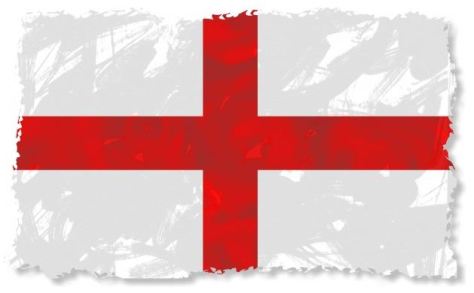
englishflag

I’ve posted on this before, but I want to be more specific this time.

The British Government has recently debated whether there should be a National Anthem for England, specifically to be sung at sporting events. Scotland has Flower of Scotland, Wales has Hen Wlad fy Nhadau and Northern Ireland uses Londonderry Air. England has used the UK National Anthem, God Save the Queen but does not have one of its own.

Many people have asked for England to have its own Anthem for events when England competes alone. There have been three main ones and one other that does not seem to have many in favour, although personally, I think it would be the best. These contenders are: Rule Britannia, Land of Hope and Glory and Jerusalem. The unfavoured one is I Vow to Thee My Country.

1. Rule Britannia is not good because it is not England. It’s Britain. The name itself implies Britain. Also, most people don’t know the words except for the two-line chorus. (Rule Britannia, Britannia rules the waves, Britons {Not English, note} never, never, never shall be slaves.) Not a good anthem for England as it refers to Britons, which includes Irish, Scots and Welsh.

2. Land of Hope and Glory is a little better. It is very patriotic and a brilliant tune, but also very much of the 19th century. Can we, in all honesty, in the 21st century sing ‘Wider still and wider shall thy bounds be set’? Imperalism gone mad!

3. The seemingly favoured one and one that has already been used at some sporting events. It was sung at the Commonwealth games, I believe, and I have heard it myself being sung at the current series of cricket matches against South Africa.

This is Jerusalem, of course. Brilliant tune, but what about the words?
Well, as I see it the title of the song is suspect. It’s Jerusalem, for goodness sake. Not London, Liverpool, Manchester, Birmingham, Leeds, etc All good English cities, but Jerusalem, a city in the Middle East. Yes, it is important worldwide as the birthplace and holy city of 3 great religions, but it’s NOT ENGLISH. It’s a national Anthem for England we’re talking about here.

Then there are its religious connotations. It is quite unashamedly Christian.
‘And did those feet in ancient times…’ Whose feet? Jesus’ feet.
‘And was t he Holy Lamb of God…’ Who is the lamb of God? Jesus.
‘And did the countenace divine…’ Whose countenance was divine? Jesus’ countenance.

There are many people in the UK who do not subscribe to Chrisitianity. There are, of course, Hindus, Muslims, Buddists, Sikhs, Jews and many others who won’t be represented by this song, but also the atheists and agnostics and other non-church-going people. We are constantly being told about how the ethnic groups (specifically Muslims) should be encouraged to integrate, and yet a national anthem that will not include them is being seriously discussed.

Finally, on Jerusalem, it is associated with the Womens’ Institute. They sing it at all their meetings.

No, Jerusalem ought to be scrapped as an idea for an English National Anthem, as should any other with overt Christian overtones.

I Vow to Thee My Country is a hymn, yes, but the first verse certainly has no religious implications, just talking about loyalty to one’s country, which is what a National Anthem ought to be about. not vague wishes that Jesus may or may not have come to England, and a wish to build Jerusalem, a city torn apart by religious strife, in our country.

5 more commonly confused words.

113biggestbookdubai

Since I started writing about these words, more and more are coming to my notice. I suppose it’s because I’m now looking out for them. Some can be quite amusing, like in a previous blog when I talked about vicious and viscous.
A pupil wanted to say that a liquid became more VISCOUS, i.e. thicker and less runny. In fact, he said it became more VICIOUS.

Here are this week’s words.

 Advise/Advice.

Advise is a verb. It is what you do. You advise someone.
e.g. I would advise you not to put all your money in the same shares.

Advice is a noun. It is what you give.
e.g. My advice to you is not to put all your money in the same shares.

 Comprise/Compose

Comprise means to include.
e.g. The house comprised five bedrooms.

Compose means to make up.
e.g The hamper was composed of a bottle of wine, a ham, a box of dates and a goose.

 Lie/lay

Lie is to recline.
e.g. My back hurts when I lie down.

Lay is to put an object down.
e.g. The man came to lay the carpet in the hall, or Lay the book on that table, please.

 Defective/Deficient

Defective means that something does not work.
e.g. When I tried the new camera I had bought, I found it to be defective.

Deficient means that something is missing.
e.g. When the doctor analysed the results of the girl’s blood test he found she was deficient in iron.

Oh, here is one that is always got wrong.

 Hung/Hanged

Hung refers to an object.
e.g. He hung his coat in the cloakroom.

Hanged refers to a person or other living thing.
e.g. One argument against capital punishment is that if a person is found to be innocent after they have been hanged it’s too late to do anything about it.

7 more commonly confused words


wolf1

I first of all apologise to everyone for being late with my blog this week. You can blame NaNo in part, but also I had to go out Monday and yesterday.

Anyway, here are another 7 commonly confused words.

PRACTICE/PRACTISE.

Practice. This is a verb. It is what you do when learning to play the piano. Your teacher would say:

‘You must PRACTICE for half an hour every day’

Practise. This is a noun. It is where the doctor or lawyer practices his/her calling.

e.g.  I hear there is a new doctors’ PRACTISE opening in the town.

CONFIDENT/CONFIDANT

Confident. When you are CONFIDENT you are sure of yourself.

e.g. I am confident that I will pass my driving test this time.

Confidant. This is someone you confide in.

e.g. I have always told my best friend my secrets. She is my CONFIDANT.

UNCONSCIOUS/SUBCONSCIOUS
The second of these two words is almost always substituted by unconscious. It really irritates me!

Unconscious. This is what happens when you get a blow to the head.

e.g. When the piano fell from the second floor, the man walking beneath was knocked UNCONSCIOUS

Subconscious. This is a word used in psychology. It means the part of the mind that you are unaware of, yet it still acts to bear on your actions.

e.g. The doctor said that it was Mary’s SUBCONSCIOUS that was making her afraid of snakes.

UNIQUE/RARE

Unique. When something is unique, there is only one of it. It does not mean very uncommon Thus you cannot have grades of uniqueness.

e.g. I am told that this is the last dodo on Earth. It is UNIQUE.

Rare. Something that is uncommon. You can have gradations of rareness.

e.g. The hedgehog is becoming increasingly RARE in the United Kingdom. There numbers are decreasing rapidly.

THEORY/THEOREM

This one I came across in a book I was reading only the other day. It was not one I would have thought to put in otherwise.

Theory. This is an idea that explains something. It is usually based on some evidence.

e.g. Isaac Newton saw an apple fall from a tree and reasoned out the THEORY of gravity.

Theorem. This is a mathematical term whereby a proposition is shown to be true by a chain of logical reasoning, based on accepted truths.

e.g. Pythagoras managed to prove the THEOREM that now bears his name.

LIBEL/SCANDAL

Libel. This is bringing someone’s reputation into disrepute by something you’ve written.

e.g. The journalist was accused of LIBEL by the man she had reported to be the thief.

Scandal. The gossips in the village were accused of spreading scandal about the vicar and his housekeeper.

VISCOUS/VICIOUS

This one I saw in a thread I was following the other day. It was another that I hadn’t though of before.

Viscous. A thick, slow-flowing liquid.

e.g. In order to get syrup to drop easily from the spoon you need to make it less VISCOUS. You can do this by heating it up by dipping the spoon into hot water before getting the syrup.   (This is quite a good tip.)

Vicious. It actually means addicted  to vice, but nowadays it has come to mean more along the lines of vicious.

e.g. The growling of the dog behind  the door sounded vicious.

Those are this week’s commonly confused words. I hope you enjoyed them. If you did, please leave a comment, and if you didn’t, please leave a comment too explaining what you thought was wrong with them.

5 more commonly confused words.

gloriosarothchildiana

One of my paintings.

Gloriana Rothchildiana

Tuesday again. It’s the last Tuesday of the month and so here are some more commonly confused words. Some of these words are confusions of meaning and some are confusions of spelling, while some are both.

I know I said I’d have a particular plan for when I was going to post what, but I’ve forgotten it! How stupid can you get? I’ve even forgotten where I put the note that I wrote to myself. I can remember that the first Tuesday was an extract from The Wolf Pack and the third some of my other writing or that of another writer I like. (This includes my Mum’s poems, of course.) Now the third Tuesday seems to be grammar.

Anyway, here it is.

Here are a few more words that are often confused.

Council/counsel

‘Council’ is some sort of ruling body, as in the local town council or the General Medical Council.
e.g. The Council passed a new by-law to prevent dog fouling in the local parks.

‘Counsel’ is to give advice, or to act as a lawyer.
e.g. He gave me some good counsel about my problems.

Imply/Infer

‘Imply’ is what the speaker hints at without actually saying it in so many words.
e.g. Are you implying that Jack was the thief?

‘Infer’ is that which is deduced from the implication.
e.g. From what you say, I infer that you think Jack was the thief.

Literal/Virtual

‘Literal’ means that it actually happened, or that something is ACTUALLY the thing referred to.
e.g. The bird flew past me, its wings literally brushing my face.

‘Virtual’ means that it was AS IF the thing were happening.
e.g. The footballer virtually flew down the wing before putting the ball in the back of the net.
(the winger literally flying would be an awesome sight, as would, as we sometimes here when a player is playing well, ‘He’s literally on fire this afternoon.’ Poor lad!)

Convex/Concave

‘Convex’ is protruding outwards. A magnifying glass has a convex lens, one that is thicker in the centre than at the edges.
e.g. There was a convex protuberance on the wall that had to be sorted out before Harry could paint it.

‘Concave’ is going inwards, like a cave. Glasses for short sight are concave. They are thinner in the middle than on the outside.
e.g. Breathe out so that your stomach is concave.

There/Their

‘There’ is denoting a place.
e.g. Put the parcel down over there please.

‘Their’ is donating ownership. Something that belongs to them.
e.g. Is that their car in the car park?

A poem in answer to a challenge.

roman centuryA Roman Century

This poem was difficult to write. The challenge was to take the seventh book on your bookshelf, look at t he seventh chapter and take the seventh sentence in that chapter.  At least I think it was that. It was close anyway. The you used that sentence to start a poem.

The book I found to be the seventh book was one on the Roman Empire and the seventh sentence in the seventh chapter was ‘The Roman Legion also had other skills.’ Not and easy thing to write a poem about. (I was tempted to cheat, but then thought that it was a good exercise anyway.)


Here is my attempt.


A ROMAN LEGION

A Roman legion also had other skills
As well as its ability in war.
As builders, Roman soldiers were not poor
And built a wall for Hadrian ’cross the hills.

When soldiers met a river, wide and deep
A bridge they built to get across the flow.
The soldiers toiled in sun of rain or snow
And if some died, well OK life was cheap.

Vercingetorix was a Celt from Gaul
Who won a massive battle, but in vain.
They soon lost all that they had gained
And Roman soldiers camped outside the wall.

The siege engines the Roman soldiers built
Bombarded all the walls around the town.
Their engineering capabilities shown
And Vercingetorix’s strength did wilt.

The soldiers built the roads so straight and true
Joining all their governed lands to Rome.
Where the Emperor did sit upon his throne
And that is why the empire grew and grew.

The soldiers sewed their clothing, built the roads,
And bridges, walls and siege engines as well.
They fought and conquered as the stories tell
And beat the Celtic peoples in their woad.

The legions helped the Empire last so long.
Fighters, engineers and builders, they
Worked hard and long, they toiled throughout the day
To make the Roman Empire wide and strong.