If you would like to learn more about me and my writing, click on the button below to join my quarterly newsletter. You will get cover reveals, news of my current works in progress and the occasional exclusive story.
The origin of the Limerick is uncertain. I read that it was around in the thirteenth century, but the rhyming sequence was different, and so I ask, “Can they be called Limericks?”
Some sources say it came from an Irish soldiers’ song called “Will You Come up to Limerick.” People made up verses as it was sung.
They may also have been a way for people to remember things. It’s easier if there’s a known rhythm .
It was made popular in England by Edward Lear who wrote his “Book of Nonsense” in 1846, although he did not call his poems limericks, but Nonsense Verse.
Wherever the name and the poems came from, they are an important part of our culture, and the form appears from nursery rhymes to songs.
Limericks were typically rude and bawdy, but as this is a family-friendly website, I’ve kept mine clean. I hope you enjoy these two.
I was inspired to begin to write this form of poetry by reading many written by Kevin Morris, who seems to be the Edward Lear of today. Thanks Kevin.
Difficult maths is my pride. I can solve it when others have cried. Cone volume divining, Circle area refining. I think you can say it’s pi-eyed.
If you enjoyed my limericks, (or even if you didn’t) please add a comment in the comments box.
If you would like to buy any of my books, simply click on the cover in the sidebar and it will take you to Amazon where you are.
All are available in ebook and paperback format, with some also in hardback and audio.
I send out a newsletter every 3 months with news of my writing, new releases, cover reveals and the occasional exclusive short story. If you would like to join, please click on the button below.
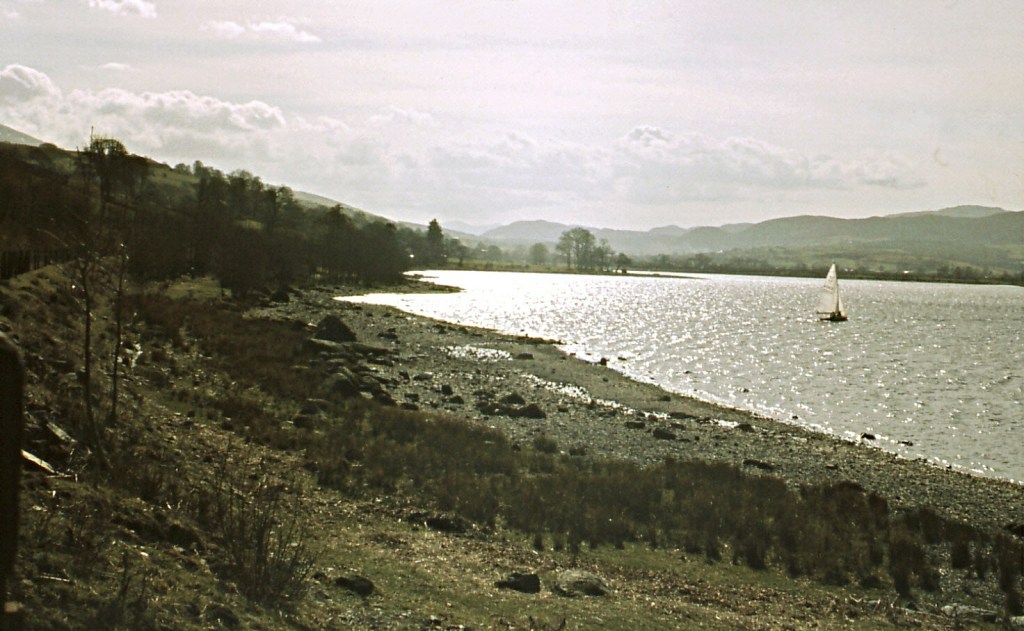
I‘ve shared some of my Mum’s poetry with you before, so I thought I’d post this one of hers about the River Dee. The one in Wales, not the Scottish one!
Just imagine you’re with me Along the banks of the River Dee. Such beautiful sights you then will see From Bala Lake to Connah’s Quay.
Gracefully she flows along From her source at Bala Lake On through the beautiful ‘Land of Song’ Her journey she doth make.
On she goes through Corwen Town Her ripples quietly stirring, As slowly, majestically, she moves down To the foaming falls at Berwyn.
A wonderful scene which doth never fail To convey a calm and sweet repose As through the beautiful sunlit vale And under Llangollen’s bridge she flows.
Tirelessly on o’er Cefn’s smooth rock The viaduct and aqueduct are here. On to pretty Erbistock Past its Inn, Church, Mill and Weir.
Overton Bridge, what a lovely sight. Here you hear wonderful tales Of how, for salmon, they had to fight, The fishermen of Wales.
Historic Bangor she now leaves Here the monks fought their foes. Serenely weaving her way she goes Through green Worthenbury meadows.
The place which she now comes upon Was surely made for fairies. Lovely Holt and quaint Farndon Famed for their strawberries.
Leaving the scenery of Wales For the land of the ‘Gentlemen Merry’ To see the launch that daily sails And turns at Eccleston Ferry.
Past the vast estates of Westminster The banks they look so pretty, As busily she enters Chester; The ancient cathedral city.
Twisting around the famous Roodee Back to Wales again she goes. Queensferry Bridge, Shotton, Connah’s Quay And into the estuary she flows.
Where e’er you go in this whole, wide world By car, coach, sea or rails. Like the river, you will return and say, “There’s nowhere quite like Wales”
I hope you enjoyed my Mum’s poem. Although born and bred in England, she always had a love of Wales. She lived many years on the border, on a farm not far from the River Dee. In fact it flowed through the farm lands. We used to take a picnic down to the river in the summer.
For some of the distance the river marks the border between England and Wales, and when we had our picnics, we were in England, but the other side was Wales.
I heard a story that during the ban on travel from England to Wales, a person drove across the bridge in Farndon to pick up a takeaway just on the other side. Sadly that was in Wales and they got fined for crossing the border!
If you enjoyed my Mum’s poem, please leave a comment in the comments box.
You can follow me on Facebook, Twitter and Linked In by clicking on the icons, or sign up for my quarterly newsletter by clicking on the join button in the left sidebar.
My newsletter will tell you more about me and what I’m up to as well as my writing. You will get first chance to see book covers, and perhaps get the chance to help choose. I also intend to send the occasional exclusive bit of writing to you.
Feel free to share this with your readers, and leave a comment in the comments box.
If you would like to find out more about me and my writing, then join my mailing list by clicking here. I promise, NO SPAM. I hate it as much as everyone else.You will find more about me and my writing, and get the first views of covers and information about new releases. I usually send an email every three months, with occasional ones in between, so you won’t be inundated with emails filling up your inbox!
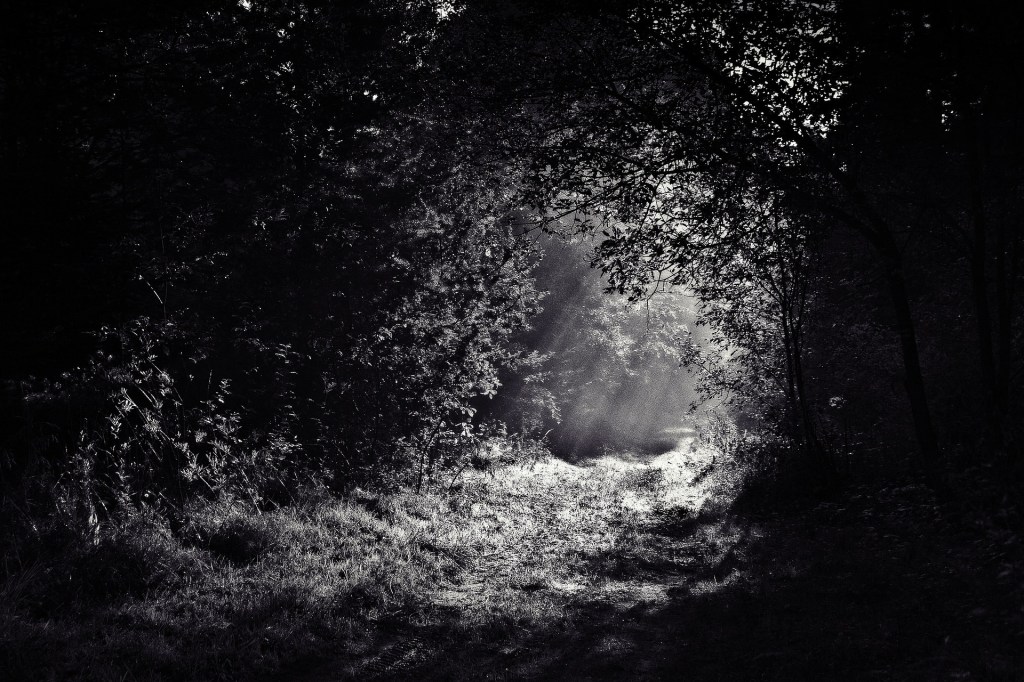
I was staying in Germany, near Leipzig a few years ago in order to go to a concert in the Thomaskirke. On our way back to the hotel, there was a tremendous thunderstorm. I was inspired to write the following poem.
The Storm
A lovely day, the sun was warm It had shone on us since dawn. The heat oppressed us all the day, Even as in bed we lay.
We went to Leipzig in the heat. In Thomaskirke we took our seat To hear St John by J.S.Bach. It did not end till after dark.
When we emerged it was in rain. We rushed to find our car again. The thunder rolled across the sky, The lightning flashed, but now we’re dry.
We drove toward Chemnitz and saw O’er Dresden, flashes like the War. Was it ’45 again With bombs falling like the rain?
The lightning flashed, the thunder boomed. We thought that we were surely doomed’ It must at least be Armageddon, Such brightness in a sky so leaden.
The storm went on for several hours Showing nature’s awesome powers And even though it scared us some We were impressed. It struck us dumb.
I recently welcomed Kevin Morris to my blog where he kindly told us a bit about himself. I have read his latest poetry book, and here is my review.
Kevin writes what I call ‘real’ poetry. I don’t like the so-called free verse that most poets seem to write nowadays. Free of what? Rhyme and rhythm. Both are what make a poem. Without those, it might just as well be a piece of prose, albeit in arbitrary lines.
Kevin’s poems rhyme, by and large, and they have rhythm. The poetry in this book is beautiful, and makes you think.
As implied by the title, the poetry is both serious and amusing. I love Kevin’s limericks. They are always witty and sometimes a bit naughty.
The serious poems are lovely and have deep thoughts behind them. This is definitely a poetry book to read many times over,
Today I welcome one of my favourite poets to my blog.
Kevin Morris is a poet who writes both humorous and serious poetry. I will hand over to Kevin now, and he can explain about his poetry much better than I can.
Welcome, Kevin. Please tell us about your poetry.
I have, for as long as I can remember, been a lover of poetry. The first poem I recollect having read is Alfred Noyes’s “The Highwayman”, https://www.poetryfoundation.org/poems/43187/the-highwayman. I was (and remain)entranced by the rhythm of the poem and how it matches the beat of the horse’s feet, as the Highwayman approaches the inn:
“The wind was a torrent of darkness among the gusty trees. The moon was a ghostly galleon tossed upon cloudy seas. The road was a ribbon of moonlight over the purple moor, And the highwayman came riding— Riding—riding— The highwayman came riding, up to the old inn-door”.
I find good rhyming poetry profoundly beautiful, and much of my own work is written in rhyme. Take, for example my poem “Autumn Fly”, which appears in my forthcoming collection, “Light and Shade: Serious (and Not so Serious) poems”.
“An autumn fly Buzzes around my head. Summer is dead Yet will not die. Seasons pass. We are brittle as glass, This fly And I”.
Whilst sitting in my study, in late autumn, a fly began buzzing around my head. This brought to mind the mortality of this tiny insect and also that of man. Hence the above poem was born.
I have many happy memories of strolling through the woods with my grandfather and it was from him that I gained my love of nature. This affection for nature was, I believe encouraged further by my reading of poems such as Keats “Autumn”. Much of my own poetry touches on the theme of nature. Take, for example my poem “Rain”.
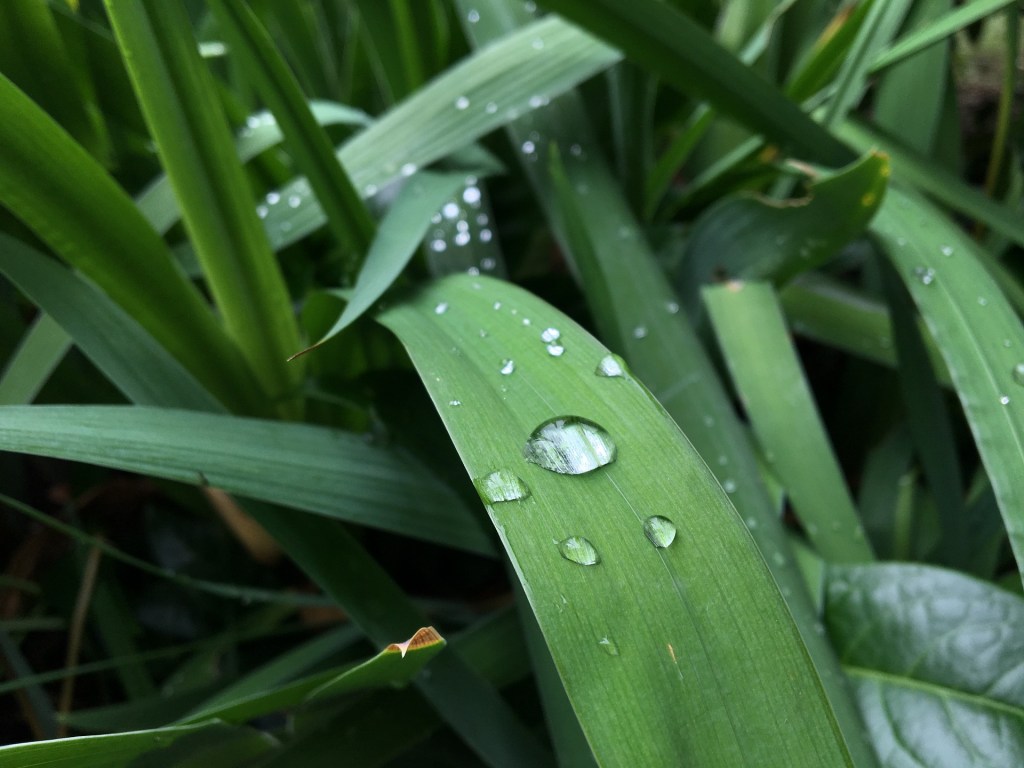
“The rain Patters amongst these leaves. I listen again And ascertain That it’s the breeze Midst these trees. Yet it sounds the same As rain”.
As with “Autumn Fly”, “Rain” came to me naturally as a rhyming poem. I could not have expressed what I wished to convey had I utilised free verse, as rhyme comes naturally to me, whilst other forms of poetic expression do not.
Whilst there exists some wonderful poetry composed in free verse, to me much free verse is poetic prose rather than true poetry. Many poems written in free verse are beautiful. However, for me their beauty resides in their poetic prose, they are not, in my opinion poetry as I understand it (I.E. with real rhyme and metre).
One can not always be serious, and section 2 of “Light and Shade” is devoted to my humorous verses. Take, for example my poem “Jane’s Sad Refrain”:
“A young lady named Jane Sang a most mournful refrain. I could repeat her song, As it wouldn’t take long, But it’s copyright of Jane!”
To conclude. Poetry is, for me about rhyme and its rhyme with which I feel most comfortable. There is, as I said, some wonderful free verse poetry out there. However, for me at least much of this (but by no means all) is poetic prose rather than poetry proper.
(“Light and Shade: Serious (and Not so Serious) Poems”, by Kevin Morris will be available in the Amazon Kindle store, and as a paperback in July 2020).
Thank you, Kevin, for telling us more about your poetry. I agree with you about free verse. It’s something I’ve thought for a long time. I have written poetry that doesn’t rhyme, but it always has rhythm. And I love the poem about Jane!
I would encourage everyone to search out your poetry books and to visit your blog.
Good luck with this latest one. I look forward to its publication.
If you have any comments to either myself, or Kevin, please enter them in the comments box. Feel free to reblog this.














 Dragons Rule OK. V.M.Sang (author)