
Tag Archives: William the Conqueror

Key Events Leading to the Battle of Hastings Explained

Today is the 959th anniversary of the Battle of Hastings. This is probably the most important battle in the history of England. It changed our country forever. But before I begin, I would like to state that I’m not a historian, and so I might have some of these things wrong, especially where people have the same names!
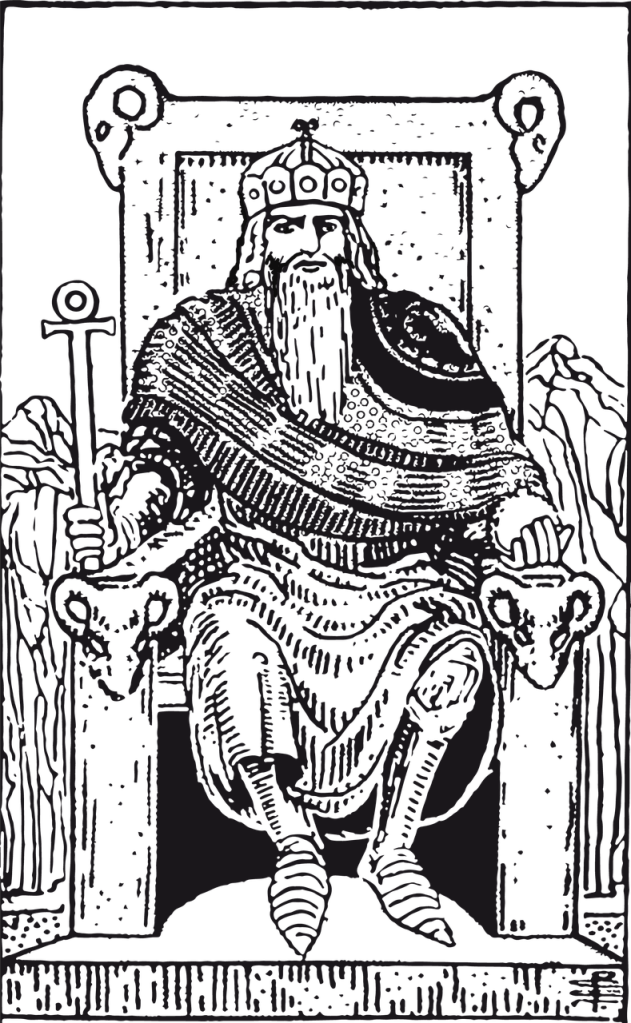
Edward the Confessor was born between 1003 and 1005, the son of Æthelred the Unready and Emma, sister of Duke Richard of Normandy, He died in January 1066 and had been king from 1042.

The politics of this time is complicated, and so I will try to simplify it as much as possible. (This is to clear things in my own mind as much as anything!)

 Æthelred the Unready (which means poorly advised) was deposed as king by the Danish king, Swein Forkbeard. He fought, but eventually fled to Normandy. Swein took the English throne.

When Swein died in 1014, his son, Cnut became king of England and Edward, his brother, Alfred and sister Godgifu, joined their parents in Normandy. Edward, Alfred and Godgifu remained there for 24 years and were looked after by their uncle, Duke Robert.

When Cnut died in 1034, he was succeeded by his son, Harold Harefoot, and later by another son, Harthacnut. Hartharcnut was, in fact, Edward’s half-brother, his mother, Emma, having married Cnut after the death of Æthelred.

Harthacnut died suddenly, and that left the way open for Edward. He sailed to England and became king. He wanted to unite the Danish people in England with the Anglo Saxons.

Edward became peaceful Man of God, hence the name ‘Confessor’ that was given to him.

In 1045, Edward married Edith, the daughter of the most powerful earl in England. Earl Godwin had gained his power under Cnut, and wanted to hold onto it. Marrying his daughter to the king was an excellent way to do so. But she was very much younger than Edward, and some said it ws more like a father daughter relationship. Whatever the case, they had no children and there is speculation the marriage was never consummated.

Because of his early life spent in Normandy, the king naturally wanted his friends from that time to join him. Earl Godwin saw his power begin to wane, and he had a big fallout with Edward and went into exile.

He did return, however, and patched up his differences with the king and they seemed to be of similar mindsets from then on.

but Edward and Emma had no children, so what was going to happen when he died? Well he had a nephew who had been in exile in Hungary (another Edward). King Edward sent for him, but he sadly died on arrival, leaving his son, still a young boy, as heir to the throne. This boy was known as Edgar.

Duke Robert of Normandy, had an illegitimate son called William, but no legitimate heirs as he never married. While on pilgrimage to Rome, he died, and his son became the Duke of Normandy, often known as William the Bastard. As he was a cousin to Edward the Confessor, he also had a claim to the English throne.

The Normans claim that Edward declared William to be his successor .

Harold Godwinson, son of Earl Godwin, was sent to Normandy to tell William, and he was captured by the French. William effected his release, and Harold swore loyalty to William.

In January 1066, King Edward died. It is thought that the queen, Harold Godwinson, who had now inherited his father’s title and lands, and Archbishop Stigand were present, and Harold claimed that Edward had nominated him as his heir. Of course, the Queen, being Harold’s sister, would more than likely uphold what he said.

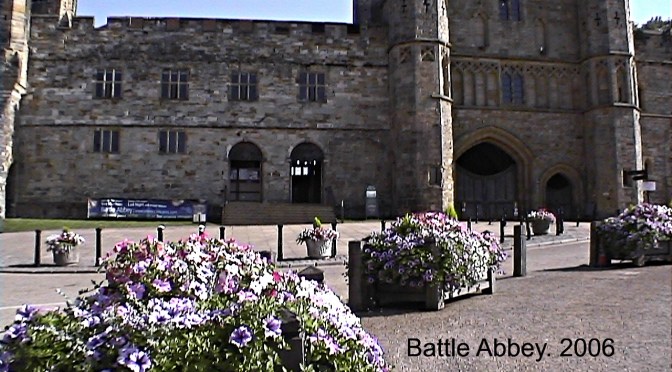
When this came to the ears of Duke William, it triggered his anger, and he began his plans for invasion, leading to the most famous battle in English history, the Battle of Hastings. (Which incidentally, didn’t take place at Hastings, but at Senlac Hill, at a place where there is now a town known as Battle.)
William the Conqueror and the Battle of Hastings.

Image by Jo Justino from Pixabay

I am now King of England. King William I. Doesn’t that sound great? However it wasn’t such an easy position to gain. Let me go back to the beginning.

Edward, my second cousin, was in exile in Normandy after Cnut had taken the English throne. I decided to go and see him. He was family, after all, and he had no heirs.

While I was there, I played on the family connection, and reminded him that, although he might eventually get an heir with his wife, Emma of Normandy, if he should die suddenly, there would be no obvious claimant to the English throne.

Well, he hummed and hawed and didn’t make a decision then. I’m not surprised, really, because his mother had married Cnut and had a son by him. She supported her son, Harthacnut, and eventually he became king of England.

Edward was lucky. Harthacnut died, and Edward sailed unopposed into England to take the throne. Not long after, he sent his son-in-law, Harold Godwinson to tell me he had decided to make me his heir. King William sounded good, I thought, but I didn’t trust Harold, so I had him imprisoned. Eventually, in order to regain his freedom, he swore an oath of fealty to me: the rat!

In the year of our Lord, 1066, King Edward, who had become to be know as The Confessor, due to his religious convictions, died. Harold, the rat, took the throne and was crowned the day after Edward’s death. He said Edward had made him his heir on his deathbed. A likely story!

It was then I decided I needed to go to England and sort this man out. He had broken a holy oath, and I was the rightful king. But it seemed I wasn’t the only one to want the crown of England. Harald’s own brother, Tostig, joined forces with the Norwegian king, Harald Hardrada, and launched an invasion.

They met initially at a place called Fulford, in the north of England, not far from the city of York. This was on September 20th 1066. It seems the invaders won, but Harold was not to be defeated so easily. He fought another battle five days later at a place called Stamford Bridge where both Tostig and Harald Hardrada were killed.

Well, this was too good an opportunity to miss. I set sail, knowing that Harold would be occupied, and we landed at a place called Pevensey. There had been a Roman castle there, and we made use of that. I ordered a wooden fort to be built inside the Roman walls. It was a good defensive position.

The whole area was marshland, and the sea came up to the fort walls. We marched over the marshes, heading towards the town of Hastings. Once we got there, I ordered a fort to be built, and we raided the land for supplies.

We waited for Harold to arrive from his battle at Stamford Bridge. We knew they would be tired after a forced march. I set a watch the night before the battle. I would not have put it past Harold to make a surprise attack, but he didn’t, and so on 14th October, at dawn, the battle began.

I won’t go into details here. Suffice it to say that it was hard fought and lasted all day. It was very bloody, but in the end we won, and Harald was dead. I was now King of England.

I have begun the research for the next book in the series, A Family Through the Ages. This one will start in 1066 with the Battle of Hastings. There’s a lot that is uncertain about the battle. Even the place it happened is disputed, as is how Harold was killed. In the Bayeux tapestry, beneath the word Harold, is a picture of a man being hit in the eye by an arrow. Many believe the name refers to the picture below it, but as the name is part of the text, that could be coincidence, and there are other knights shown being slain by the sword.

Two other books I’m working on are another prequel novella for The Wolves of Vimar series, this one dealing with the horselords, Kimi and Davrael, and I’ve finished the fourth book of The Wolves series. It has yet to go through the critiquing process. I am also writing a book of poetry in which there will be one poem a day to read. January to December is finished, but I’m waiting until a bit closer to Christmas to bring that one out so that people can begin reading in January.

If you enjoyed this little story, perhaps you would like to read another by me.

If you would like to receive this exclusive, free short story, called The Haunted Table, simply click the link. This will take you to the page where you can download it. You can’t get it anywhere else.

Maria and Tom have bought an antique table for the old cottage they have bought. When they hear strange noises in the night that sound like crying, they worry their house is haunted, but the sounds seem to come from the table.

They set about trying to find what is causing the disturbances. The answer is stranger than either of them had thought.

(Clicking the link will add your email address to my email list, but don’t worry, you can unsubscribe immediately if you wish. Nor will you get any spam. I only send out an email each quarter, or if I have any exciting news–like a new release.)