Category Archives: history

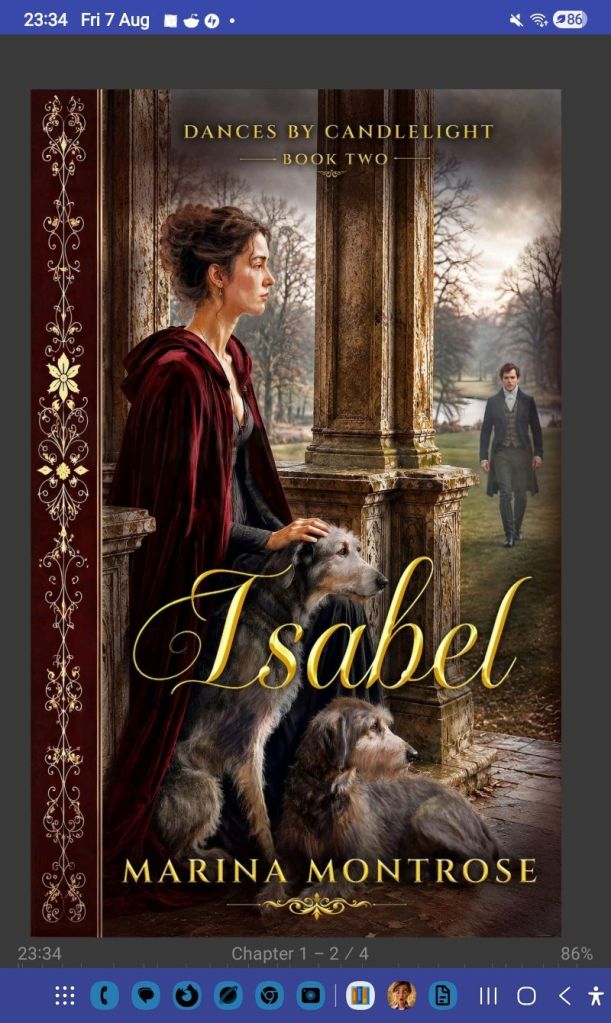
Review of Isabel By Marina Montrose


OVERVIEW
This is a ‘nice’ Regency story. There is little to object to about it. However, I found it very similar to her first book in this series.

STORY
Isabel is a young woman whose family has fallen on hard times. Her father has recently died and left debts.
When Francis, Earl of Bengrave asks for her hand in marriage, she sees it as a way to help her family, and agrees to marry him, although she barely knows him. What she does know, is that he has a reputation as a rake, and has a long-term mistress, Mrs Morrell.
Francis needs to marry to secure an heir for his title and fortune, and has picked Isabel as a likely candidate.
The couple agree not to interfere with each other’s lives too much.
The story is told from the POVs of both Isabel and Francis.

CHARACTERS
Isabel. At the beginning, Isabel is naturally nervous of the unknown man she has married, but gradually, as she learns her husband is basically a kind and generous man. As she grows in confidence, so she asserts herself more.
Francis. He is naturally worried his lifestyle will be impacted, but tries hard with his new wife, giving her gifts, although he is reluctant to join in with the Regency society.
I did feel that he was very similar to the protagonist in her first book,

WRITING
Although well-written from the point of view of grammar and spelling, I felt the story was a little too simplistic. There was little tension. The protagonists didn’t have to struggle much to discover they had fallen in love with each other. Nor did Francis have too much difficulty in getting rid of his mistress. That could have been made much more of, and becomes built around ‘will he, won’t he’ get rid of her.
The other thing I felt was that the protagonist in this book was almost interchangeable with the one in her first.
Nevertheless, it was a pleasant and easy read.

I give it 3*


My ranking of books.
In order to get a particular number of stars, it is not necessary to meet all the criteria. This is a guide only.
5* Exceptional. Wonderful story. Setting well drawn, and characters believable–not perfect, but with flaws. Will keep you up all night. No typos or grammatical errors.
4* A thoroughly enjoyable read. Great and original story. Believable setting and characters. Very few grammatical errors or typos.
3* I enjoyed it. Good story. Characters need some development. Some typos or grammatical errors.
2* Not for me. Story not very strong. Unbelievable and flat characters. Setting not clearly defined. Many typos or grammatical errors.
1* I hated it. Story almost non-existent. Setting poor. Possibly couldn’t finish it.

Early Schoolday Memories

It’s been a while since I did a Memories post, so here’s another one.


They say you never forget your first day at school. Well I must be strange because I don’t remember the actual first day. What I do remember is general.

I entered a hallway with pegs on either side. Each peg had a picture of an animal next to it. I couldn’t read and neither could the other children, so we recognised our own pegs by the picture.

A motherly lady with white hair greeted us and told us her name was Mrs Rose and that she was our teacher.

I hung my coat on the peg Mrs Rose said was mine then followed her, along with everyone else, through a door on the left of the entrance.

In the classroom were double desks arranged in rows. The walls in this classroom were painted white, and there were windows at the left of the door. I couldn’t see out of them, though, as they were high in the wall.


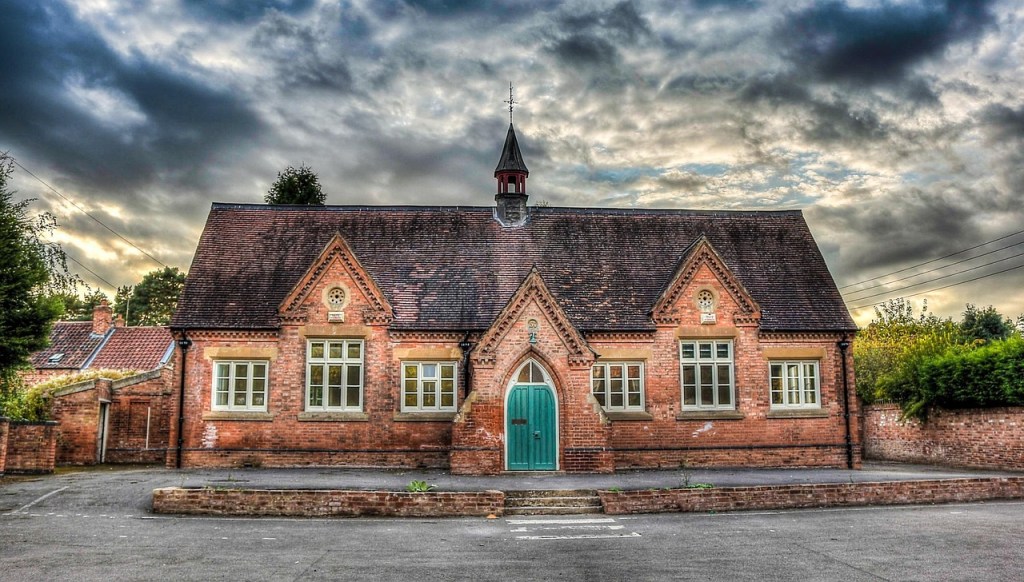
The school was a Victorian brick building. The windows were pointed arches, a bit like church windows, but without the stained glass. As it was a Church school, that might have been the reason for making it look like a church.

I looked it up yesterday, and the school has apparently been converted to dwellings! At least it’s not been knocked down.

Although only little, 5 years old at the most, I walked the half mile to school with a girl just a couple of years older than me. No adults accompanied us. That sounds terrible in this day and age, but I don’t remember any parents waiting at the school gates. Certainly no cars.

One day, I came out of school and couldn’t see Margaret. I was frightened she’d gone without me and, ignoring the teacher who was seeing the children across the road, I ran out to try to catch her up and was knocked down by a cyclists. Everyone was most concerned. I didn’t get into trouble, though. They were more worried to see if I, or the cyclist, were hurt. We were both alright.

And Margaret hadn’t gone without me.

The reason I was so worried was walking up the hill home. There was a long, high wall with tall trees behind it, and a field with equally tall trees on the other side. This made this part of the walk quite gloomy even on bright days. I was afraid of passing this dark area on my own.

Attached to the wall, just outside the door, was an enamel plaque with a flaming torch depicted on it. It was the sign for a school in those days, mirrored in the road signs until they became international. The torch was the torch of learning.

We used to line up and jump to tap it as high as we could. The person who reached the highest was the winner, of course.

What do you remember about your first school?

Let me know in the comments.

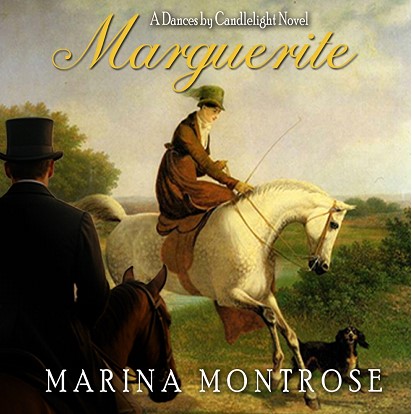
Review of Marguerite by Marina Montrose

Overview

This is an enemies to lovers story. The setting is the Regency period in the United Kingdom. I did wonder if it would be a take on  Jane Austin’s Pride and Prejudice, but apart from the time period, I was wrong.

Blurb

Chemistry sizzles between Lady Marguerite and the Duke of Argyle. Will she be able to reconcile reason with passion?
When the arrogant Duke of Argyle makes an offer for her hand, Lady Marguerite Lennox is quick to refuse, thinking him arrogant and aloof.
Her parents are disappointed she has turned down the best catch in the matrimonial stakes. The duke himself is reeling from the insult to his ego. He decides to pursue her as he has never pursued anyone before. His aim is to conquer, to bend her to his will.
When the duke steals a burning kiss at a ball, sparks fly. Marguerite is struck by lightning, but is terrified of getting burned. If passion wanes, she fears her life will be bleak.
Marguerite is the story of a man who is obsessed with a feisty but kind woman—who loves him but does not much like him.

Story

Marguerite has an English father and a French mother. Her father, Lord Lennox, had been an envoy for the British Government in Paris, but had now returned to England with his wife and daughter.

Marguerite was introduced to Society on their return. The balls, house parties etc are quite simply a means of young people finding a suitable marriage partner.

Marguerite draws a lot of interest. She has been brought up to have a mind of her own, unlike most other young women of the time, who are expected to be meek and accomplished in such things as painting and music, but not anything that uses their intellect.

One person who is drawn to her is the Duke of Argyle. He is not very pleasant, and when he asks her parents for her hand in marriage, she adamantly refuses.

I don’t want to say any more as I don’t want to add a spoiler.

Characters

Marguerite: She is, as I said, a young woman who knows her own mind. She is determined to marry for love and not wealth or position. Her mother regrets her decision to turn down Argyle as he’s a wealthy man and a duke. Marrying him would make her a duchess. But Marguerite dislikes him, and refuses him, even though a part of her is drawn to him.

Marguerite is a kind person and she doesn’t restrict her kindness to those of her own class, as is shown when she helps a poor woman, and a young woman who is finding it difficult to fit in with the snobbish aristocrats as her father, although wealthy, is ‘in trade’.

Duke of Argyle: I did wonder if this story should have him as the protagonist as he has the biggest character arc. At the beginning he is a man who feels entitled to respect. But he doesn’t do much to earn it. He was orphaned early and came into his inheritance. Although his father had been somewhat profligate with his money, Argyle has a good brain and by judicious use, has gained a fortune. However, he is known as a ‘rake’, and keeps several mistresses, and gambles at cards. He is also somewhat disdainful about the society he finds himself in. 

Until he meets Marguerite, he attends few balls.

However, his growing love for Marguerite encourages a change in attitudes.

Alice: Alice is Marguerite’s cousin. She helps Marguerite with her entry into society. However, she isn’t strong-minded like Marguerite, and fits into what a young woman of the Regency period should be. 

Charles: This young man is in love with Marguerite, although he never declares it. He is a bit wishy-washy in my opinion. Not a suitable match for the firebrand Marguerite. If I met him, I think I’d probably quite like him, but consider him a bit meh!

Writing: On the whole the writing was quite good for a first book. No major grammatical or spelling errors.

The point of view in the story is from several viewpoints. We see Marguerite and Argyle, mainly, with occasional forays into Marguerite’s mother. Not a problem as it’s clear who we’re with.

I was a little confused at the beginning as the book opens with Argyll asking for Marguerite’s hand, then goes back to things that led up to it. It was quite a long way into the book before I realised that.

I would have liked to see more emotion shown by the characters, and how they felt inside, but it wasn’t really problem. I enjoyed reading it.

I give it 4*

 My ranking of books.

In order to get a particular number of stars, it is not necessary to meet all the criteria. This is a guide only.

5* Exceptional. Wonderful story. Setting well drawn, and characters believable–not perfect, but with flaws. Will keep you up all night. No typos or grammatical errors.

4* A thoroughly enjoyable read. Great and original story. Believable setting and characters. Very few grammatical errors or typos.

3* I enjoyed it. Good story. Characters need some development. Some typos or grammatical errors.

2* Not for me. Story not very strong. Unbelievable and flat characters. Setting not clearly defined. Many typos or grammatical errors.

1* I hated it. Story almost non-existent. Setting poor. Possibly couldn’t finish it.

Meet Marina Montrose: Author, Artist, and Horse Breeder

Marina has just released her first book. It is a historical novel set in the Regency Period. I’m looking forward to reading it as I enjoy that genre, and have written two historical fiction books, myself.

Marina has kindly agreed to come and be interviewed on Dragons Rule OK.

Welcome, Marina. It’s good to meet you. It’s always exciting when one publishes a new book, but especially so when it’s your first. Congratulations. You’ve arrived at a place many would like to be. I hope your book is a great success.

Now to the questions.

Who is your favourite author?

This is impossible to answer! There are so many I love—and admire. Also impossible to choose a favourite book.

If that book isn’t a ‘classic’, what is your favourite ‘classical’ book?

My favourite classic has to be Middlemarch, by George Eliot.

If you have a ‘proper’ job, what is it?

My husband and I breed racehorses on a farm in Normandy, France, where I enjoy riding on the beach.

Why do you write?

I have felt the need to write since early childhood, but I never took myself too seriously. I scribbled down stories and was editor of our high school magazine, Sunny Days. I write simply because I enjoy it—I don’t agonise over it and I don’t get writer’s block because I have to steal time to do it.

Many of us feel this compulsion to write. I think if we were prevented from writing, we’d tell stories, either to anyone who would listen, or even just to ourselves.

Why do you write historical romance?

I like to write in a wide range of genres. I have written a number of short stories, some poems, two mysteries (as yet unpublished) and am working on a family memoir. I also write a blog, Letters from Athens, about art, books and other things that interest me. I like to have a few things on the go at the same time. During lockdown, I started re-reading Jane Austen and Georgette Heyer (whom I hadn’t touched since my teens) and was inspired to write a series of Regency Romances, the first of which, Marguerite, was recently published.

Do you have any pets?

We have a huge ridgeback and a tiny dachshund. Guess who is alpha dog?

Haha! My aunt had a dachshund, so I know how feisty they can be!

If you could meet any 3 people, alive or dead, who would they be? Why?

I’ve always had a wish to meet Tom Stoppard, but this dream is over now, sadly. I adored his plays. Also Margaret Atwood, whom I’ve heard speak a few times—I just love her style and her sharpness of mind. Finally, Turkish writer Orhan Pamuk. He grew up in Istanbul at the same time as I did in Athens, and his description of life there (in his books ‘The Museum of Innocence’ and ‘Istanbul’) is eerily similar to my experience, only more ‘oriental’. I would love to have a chat with him a about it.

Yes, it’s a great loss . Like you, I enjoyed his plays.

Do you enjoy sport? Do you prefer to watch or take part?

I competed in show jumping for many years as an amateur at international level.

Wow! Impressive. I rode when I was younger, but never in any competitions.

Do you like art? Who is your favourite artist?

I am an artist as well as a writer. I love to draw and paint and I take part in a local workshop twice a week. I love to visit museums and exhibitions but I cannot name a single favourite artist—there are so many fantastic ones, in all styles and eras.

I, too, paint and draw. I love the Impressionists especially, but the Old Masters were amazing.

Can you swim?

I’m Greek, of course I can swim! I spent my childhood summers barefoot and half-naked on island beaches.

It sounds idyllic.

Do you do any voluntary work? If so, what?

During the lockdown, I started teaching Greek online to refugees— unaccompanied minors who were confined in a shelter in Athens. Later they went back to school, but two boys have stayed connected to me. They are now working adults and we still keep in close contact. I’m also mentoring a wonderful Persian girl who came to Greece at fifteen not speaking a word of Greek or English. She is now studying International Affairs on a full scholarship in America. Long stories but so rewarding.

What a rewarding thing to do. And it’s really nice that you keep in contact with some of your students. I was a teacher until I retired, and some of my ex-pupils keep in touch via Facebook. It’s really good to know how they are going on.

And now a biggy. What do you think is the biggest problem facing the world today?

As usual, the inability of humankind to stop repeating the same mistakes. Reading Herodotus’s Histories is an eye-opener. It is terrifying that human nature has not changed over the centuries.

Yes, it seems the human race is incapable of learning from its mistakes.

Thank you so much for taking the time to visit. I’m sure all your readers will enjoy knowing a bit more about you. I know I’ve enjoyed listening to your answers.

A bit more about Marina

Marina Montrose is based in Deauville, France, where she breeds horses with her husband. She is also an artist and writer. She writes Regency Romances, short stories and mysteries. ‘Marguerite’ is her debut novel—a stand-alone, but the first in a series.

Now about her new book:

Blurb

Chemistry sizzles between Lady Marguerite Lennox and Thomas, the Duke of Argyle — communication, less so.

Newly arrived from Paris and enjoying her first London season, Lady Marguerite Lennox has no wish to be married and exchange dancing and flirting for boring wifely duties in a crumbling mansion. So, when the handsome but supercilious Duke of Argyle makes her an offer, she promptly refuses, even though it is a brilliant match. Being a duchess holds no charms for her and what is more, she thinks him arrogant and unlikeable. She much prefers her entourage of charming and amusing swains.

Thomas, the Duke of Argyle, will not take no for an answer. Piqued by her refusal, he decides to pursue her as he has never pursued any woman before. He is obsessed with her, although he thinks her headstrong, obstinate, and rude. But even after a burning, stolen kiss, and a house party full of tender and erotic moments, Marguerite is still unwilling to marry him. This is driving him insane—she is so different from any other woman he has known, he has no idea how to deal with her. 

The duke is tired of locking horns with Marguerite. But what will it take for him to win her heart?

I’ve started to read the book, but am less than halfway through, so it wouldn’t be fair for me to post a review yet. I will do so as soon as I’ve finished, both here, Amazon and Goodreads, as usual.

Here is a link to the book on Amazon.

Bonfire Night

Remember, Remember
The 5th of November
Gunpowder, Treason and Plot.
I see no reason
Why Gunpowder treason
Should ever be forgot.

So we used to sing as Bonfire Night approached, but what is that rhyme all about?

Here is a link to English Heritage’s post about it.

I would normally have written about it myself, but I’ve received the edited manuscript of Immortal’s Death and need to go through it. I’m consequently a bit short of time.

I hope you enjoy reading about it.

My Visit to Mary Deal.

First of all, before I begin this post, I would like to say that I tried to respond to the comments and suggestions that many of you gave for my story based on Snow White and the Seven Dwarves. For some reason, WordPress said they couldn’t respond. Apologies. I hope the replies get through eventually. I did try several times!

I have been honoured to appear on Mary Deal’s blog. I love Mary’s books, she is an excellent author of mystery and thriller, and all the books I’ve read kept me on the edge of my seat.

Mary has featured an excerpt from my historical novel, Vengeance of a Slave. This is set in Roman Britain and tells the story of a slave boy, ripped from his family at merely six years old, and how he builds up his hatred of the Romans in the hope of escaping and taking revenge.

There is also a link to an interview I did with Mary some time ago.

If you would like to be featured on Mary’s website, she is kindly offering to do so. You can contact her by clicking on ‘Write Any Genre’ above.

Key Events Leading to the Battle of Hastings Explained

Today is the 959th anniversary of the Battle of Hastings. This is probably the most important battle in the history of England. It changed our country forever. But before I begin, I would like to state that I’m not a historian, and so I might have some of these things wrong, especially where people have the same names!

Edward the Confessor was born between 1003 and 1005, the son of Æthelred the Unready and Emma, sister of Duke Richard of Normandy, He died in January 1066 and had been king from 1042.

The politics of this time is complicated, and so I will try to simplify it as much as possible. (This is to clear things in my own mind as much as anything!)

 Æthelred the Unready (which means poorly advised) was deposed as king by the Danish king, Swein Forkbeard. He fought, but eventually fled to Normandy. Swein took the English throne.

When Swein died in 1014, his son, Cnut became king of England and Edward, his brother, Alfred and sister Godgifu, joined their parents in Normandy. Edward, Alfred and Godgifu remained there for 24 years and were looked after by their uncle, Duke Robert.

When Cnut died in 1034, he was succeeded by his son, Harold Harefoot, and later by another son, Harthacnut. Hartharcnut was, in fact, Edward’s half-brother, his mother, Emma, having married Cnut after the death of Æthelred.

Harthacnut died suddenly, and that left the way open for Edward. He sailed to England and became king. He wanted to unite the Danish people in England with the Anglo Saxons.

Edward became peaceful Man of God, hence the name ‘Confessor’ that was given to him.

In 1045, Edward married Edith, the daughter of the most powerful earl in England. Earl Godwin had gained his power under Cnut, and wanted to hold onto it. Marrying his daughter to the king was an excellent way to do so. But she was very much younger than Edward, and some said it ws more like a father daughter relationship. Whatever the case, they had no children and there is speculation the marriage was never consummated.

Because of his early life spent in Normandy, the king naturally wanted his friends from that time to join him. Earl Godwin saw his power begin to wane, and he had a big fallout with Edward and went into exile.

He did return, however, and patched up his differences with the king and they seemed to be of similar mindsets from then on.

but Edward and Emma had no children, so what was going to happen when he died? Well he had a nephew who had been in exile in Hungary (another Edward). King Edward sent for him, but he sadly died on arrival, leaving his son, still a young boy, as heir to the throne. This boy was known as Edgar.

Duke Robert of Normandy, had an illegitimate son called William, but no legitimate heirs as he never married. While on pilgrimage to Rome, he died, and his son became the Duke of Normandy, often known as William the Bastard. As he was a cousin to Edward the Confessor, he also had a claim to the English throne.

The Normans claim that Edward declared William to be his successor .

Harold Godwinson, son of Earl Godwin, was sent to Normandy to tell William, and he was captured by the French. William effected his release, and Harold swore loyalty to William.

In January 1066, King Edward died. It is thought that the queen, Harold Godwinson, who had now inherited his father’s title and lands, and Archbishop Stigand were present, and Harold claimed that Edward had nominated him as his heir. Of course, the Queen, being Harold’s sister, would more than likely uphold what he said.

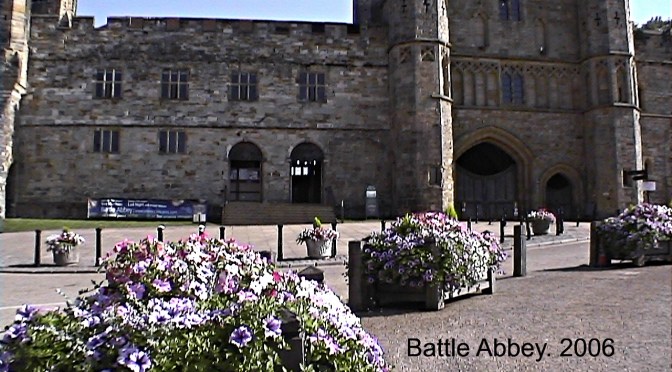
When this came to the ears of Duke William, it triggered his anger, and he began his plans for invasion, leading to the most famous battle in English history, the Battle of Hastings. (Which incidentally, didn’t take place at Hastings, but at Senlac Hill, at a place where there is now a town known as Battle.)

A Chilling Comparison.

Morgan has compared the rise of Hitler to that of Trump.

We Will Remember Them: Reflecting on WW1’s Legacy

Today is Armistice Day. World War 1 ended at 11th hour of the 11th day of the 11th month.

I wrote a poem to commemorate the 100th anniversary of the end of WW1. I’ve published it before on Dragons Rule OK, and make no apologies for re-publishing it now.

For those of you who haven’t seen it before, I hope you enjoy it and that it makes you think of the futility of war. And to those of you who remember it, similarly.

War is evil and should never happen. It’s always a result of greed and/or hatred; two emotions that should be relegated to the deepest depths of Hell. And as all wars end in talks, why not begin there?

Here’s my poem.

We Will Remember Them.

I’ll never truly understand
How World War I began.
The death of Archduke Ferdinand
Started the deaths of many more,
The young, the old, the rich, the poor.
All died with guns in hand.

    My Grandad went with Uncle Jim 
    And Our Poor Willie, too.
    They sent them off, singing a hymn.
    Grandad went to Gallipoli,
    Uncle Jim left his love, Polly.
    Gas in trenches did kill him.

    I cannot see, in my mind’s eye
    Grandad with gun in hand.
    A peaceful man, sent out to die.
    He fought for us, for you and me
    So we can live and so that we
    Safely in our beds may lie.

    Granddad came home, and Willie too,
    But millions more did not.
    Their duty they all had to do.
    They died in fear, in noise, in blood.
    Everything was caked in mud.
    Yet in those fields the poppies grew.

    The War to end all wars, they said,
    So terrible were the deaths.
    The youth of Europe all lay dead.
    Yet 21 short years to come
    Another war. Once more a gun
    In young men’s hands brought death.

    One hundred years have passed since then.
    What have we learned? Not much!
    Too many men are killing men. 
    Wars still abound around the world.
    Bombs and missiles still are hurled
    At those who disagree with them.

    Uncle Jim was my Grandfather’s brother. I never knew him as I wasn’t born when he died.

    ‘Our poor Willie’ was what my grandmother said when referring to her brother. No one ever knew why he was ‘Our poor Willie’, except that she didn’t get on with his wife and thought she made his life difficult.

    I hope you enjoyed my poem. I wish I thought it might make a difference to the terrible wars going on at the moment, but I’m just a teeny drop in a vast ocean. Sadly, my voice is only heard by a very few people.

    Please let me know what you think in the comments box.

    You can read more of my poetry by clicking on the cover in the side bar. This one comes from Miscellaneous Thoughts.