Category Archives: Poetry

Discover the Beauty of Wood Anemones in Spring. British Wild Flowers.

Image by mikezwei from Pixabay

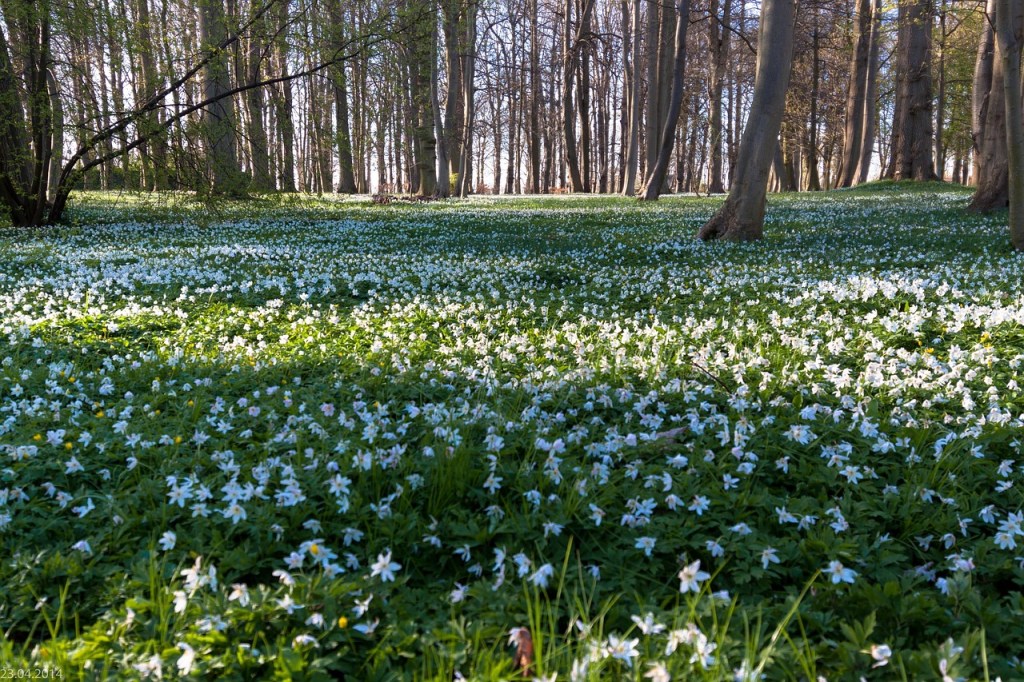
One of the prettiest sights in spring is the carpets of white that cover the ground beneath woodland trees.

This is not a late scattering of snow, but thousands of wood anemones.

The Woodland Trust says:
A sign of ancient woodland.

Wood anemone is an ancient-woodland-indicator plant. If you spot it while you’re out exploring, it could be a sign you’re standing in a rare and special habitat. 

I am lucky enough to have woodlands with these flowers within walking distance of my house. Ancient woodland that has been there since time immemorial.

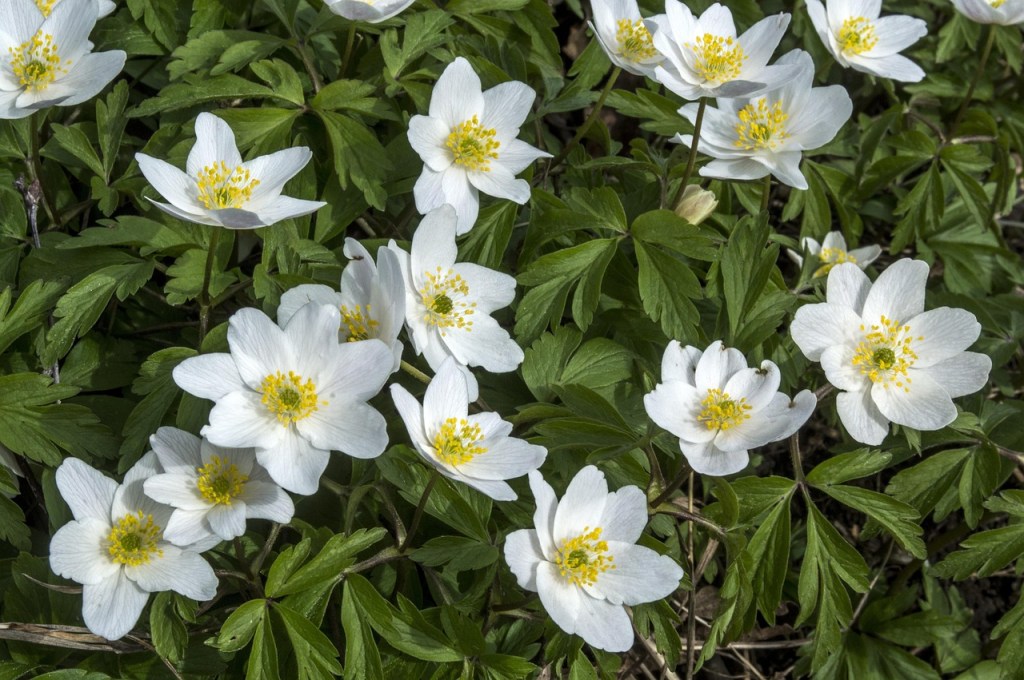
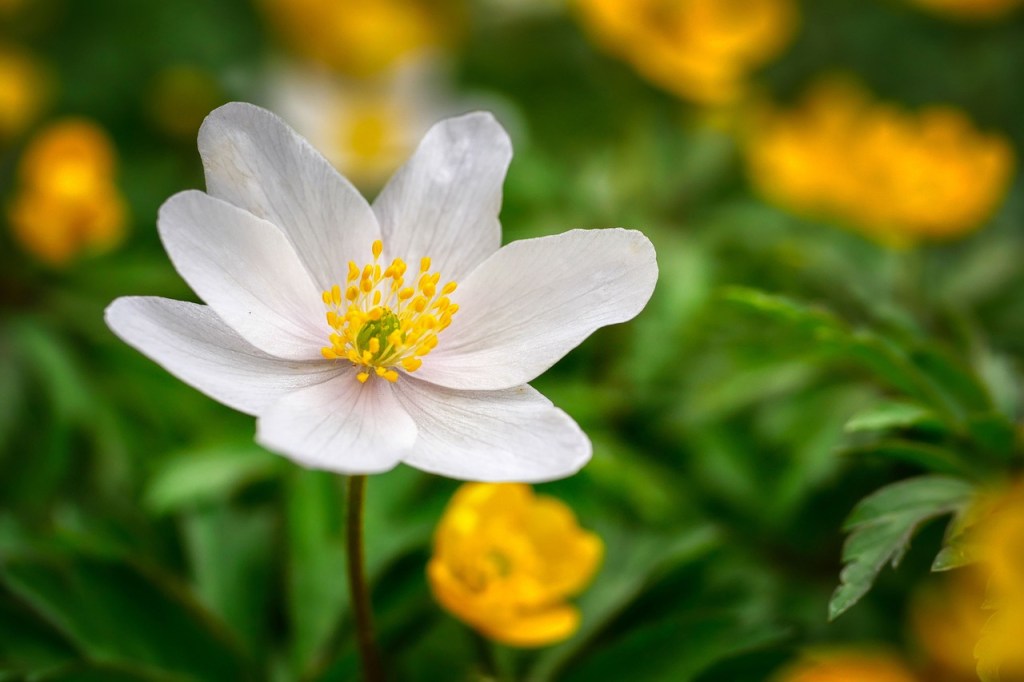
The wood anemone is a delicate-looking plant with white star-shaped flowers.

Image by Pirkko Valtonen from Pixabay

The Wood anemone found in the UK is Anemonoides nemorosa, while in the US there are two species–Anemonoides quinquefolia, which has white stamens as well as white flowers, and the western wood anemone Anemonoides oregana, which is blue.

I am going to talk about ours, though, since this is one my British Wild Flowers posts.

Image by Albrecht Fietz from Pixabay

These plants are very small. Wikipedia says seldom reaching a height of more than 30cm, but I’ve yet to see one anywhere near that height. Most of those I’ve seen are around half that. They have delicate leaf-like bracts beneath the flowers that are divided into three lobes.

We find these little beauties in bloom from May until about April, so they are one of the earliest to appear, flowering before the trees come into leaf and block the sunlight. The flowers are around 2cm across with six or seven petals surrounding a large number of stamens.

It spreads by rhizome, but only extremely slowly. One estimate I read was that it was only 6 feet per 100 years! This is why it can be used as an identifier of ancient woodland. If the ground is covered, then the woodland is several hundred years old.

How useful is it?

Deer and many other herbivores such as rabbits, hares, mice and voles will eat wood anemones. Many insects also feed on it, including small wasps and flies.

The wood anemone is also a host plant for larvae of some butterfly species .

Human uses.

It has been traditionally used to treat some illnesses (although I don’t suggest trying it unless you know exactly what you are doing!)

According to Glenlivet Wildlife “it has been reported to have several medicinal properties, including sedative and cardiovascular benefits, amongst others.

“Wood anemone root extracts have been used to treat a wide range of liver diseases, including chronic hepatitis and liver cirrhosis.”

“In traditional medicine, it is also believed that they can induce menstruation if eaten in large amounts.

“Used by many European countries, they help prevent soil erosion due to their extensive root system, which binds the soil together with their numerous fibrous roots.”

Picking wild flowers wasn’t illegal when I was growing up, and I used to pick many of our wild flowers. The local church had an annual flower show, and one of the classes was for a wild flower arrangement. Wood anemones would not have been good for this as I discovered. They fade and die very quickly when picked.

White heads dancing
In the gentle breeze
Carpet the ground
Beneath the trees

Bees buzz eager
For this new supply
Of nectar from
A flower so shy.

Fill your eyes with
Ethereal sight.
They’ll soon be gone
These flowers so white.

Discover the Beauty of Spring Through Poetry

 I thought I’d write some poems about the seasons. Here is one about spring.

Spring is a lovely month. We’ve lived through the cold of winter and the seeming death of life. Many animals hibernate through the winter and are not seen; the trees are bare; the grass stops growing and many plants die back.

But with the spring, the sun gets warmer and life begins anew. It is an optimistic time of year.

Spring

Dandelions, like gold, cover the meadows.
Newborn lambs frolic in fields.
New leaves on the trees are casting their shadows
And winter’s cold grip quickly yields.

At the edges of woodland the primroses glow
And cowslips their scent fills the air.
Anemones dance when the breezes do blow
And birds sing with never a care.

Then bluebells and campions come into bloom
Their colour the blue of the sea.
The cuckoo, that herald of spring, will come soon,
His call echoing over the lea.

The song of the blackbird is like molten gold.
His notes are so pure and so clear.
Hearing him seems to banish the cold
And brings joy to all those who hear.

Robin is nesting, and other birds too,
The hedgehog is active once more.
The young of the deer and the badger and shrew
Play their games as in old days of yore.

The sun climbs higher and higher each day
Giving more of his heat and his light.
It sparkles like stars fallen into the bay.
All smile at the beautiful sight.

Hope and excitement come with each spring morn.
What blessings will come with this day?
New starts can begin once again with each dawn
And send us all hopeful away.

I hope you enjoyed my spring poem. It can be found in my poetry book, Miscellaneous Thoughts along with many more of my poems, both about the seasons and nature and a variety of other subjects.

If you would like to read more of them, you can click on the book cover in the sidebar, or click the button to take you to the online bookstore of your choice. It is available in ebook format as well as a ‘real’ book.

A Review of ‘From January to June’: Dive into Poetry

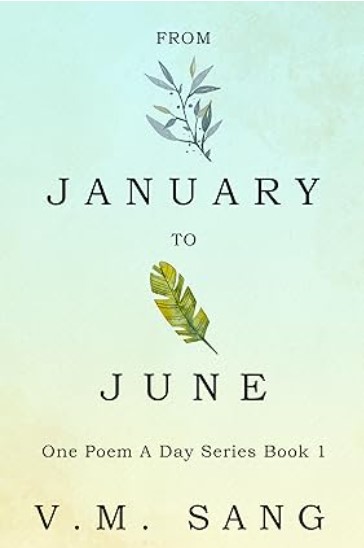
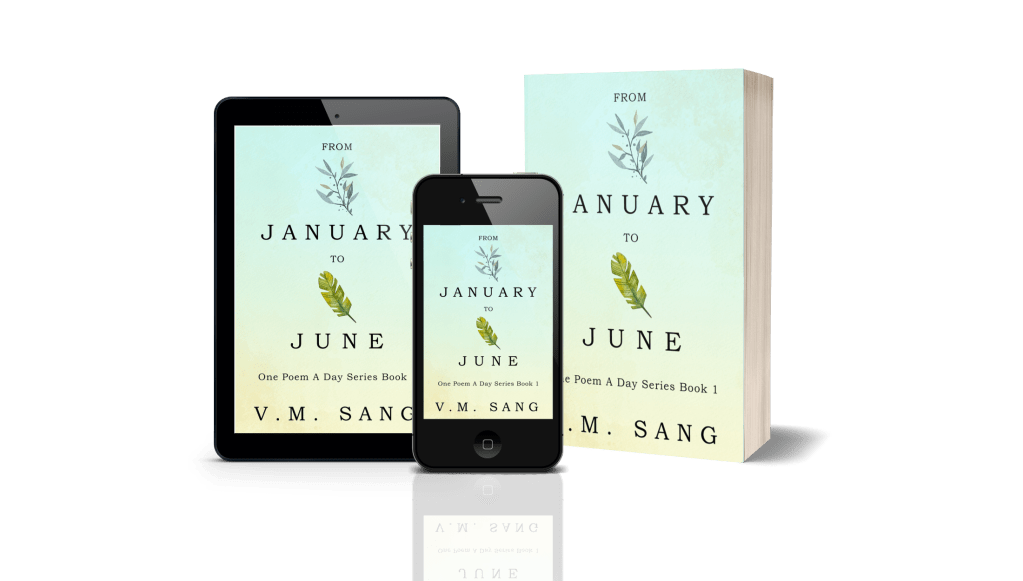
I recently looked at the reviews I received for my poetry book, From January to June ; One Poem a Day, and was delighted to find this.

From January to June (One Poem A Day Series Book 1)

imagemarjorie mallon

A variety of poems to enjoy

December 13, 2024

From January to June. V M Sang

As a poetry enthusiast I was keen to read V M Sang’s poetic observations: From January to June.

It’s a eclectic collection with a variety of topics such as Spring, Family, Communications (how they change through time,) music, travel, (France and UK,) amusing poems, and daily life.

Some of my favourite poems: Grandma’s Hands, Son, Songbirds, Teddy, Dark Creatures, Doorway, Home Sweet Home, New Mown Grass, The Internet, and I Am A Writer.

Something for everyone, some short, like this haiku.

‘The bees are humming.
Gentle breeze quivers the leaves
And a poet dreams.’

Some poems are longer, some telling a tale. A good way to discover more about the author and what makes them tick!

I enjoyed, and can recommend – 4 stars 🌟

And now to whet your appetite, here’s today’s poem from the collection.

February 17th

Another one from a prompt. This time it was to write a poem with the following words. Lavender, horn, gold, hooves, trot.

Unicorn

I heard a sound in the wood.
And thought, “What can it be?”
I kept silent where I stood
Hoping I would see
Something wonderful and rare.
Perhaps a shy and timid deer.
But there is magic in the air
And stranger beasts live near. 

A glimpse of lavender appeared
Between the beech trees tall.
My brow I furrowed. This is weird.
I could not work it out at all.
Then from the trees a unicorn
Trotted out so that I
Could see his unique horn of gold
And cloven hooves and clear, bright eye.

I held my breath to see this beast.
I felt my heart beat fast.
My mind was filled with thoughts of peace
As he trotted past.
He paused and took away my pain.
I knew not what to say,
But he shook his lavender mane
And trotted on his way.

If you would like to read more of my poetry, you can get the ebook for free. by clicking the button below or the cover in the sidebar.

It is available from your favourite bookstore in ebook, paperback or hardcover versions.

I would like to thank Marjorie Mallon for her kind review.

Do you enjoy poetry? What is your favourite kind of poetry?

Discover Haikus & Poetry Inspired by Winter

I am currently reading D Wallace Peach’s latest book, The Season’s Weaver. It deals with a world plunged into perpetual winter. I will be reviewing it shortly.

It made me think of a Haiku I wrote. It’s still winter, and although we have no snow here, at least not in the south of England where I live, I know there is a lot of it in the US where many of you live.

Here is the Haiku.

Gently, silently
Throughout the night the snow fell.
A monochrome world.

And some more I wrote that you can find in my Miscellaneous Thoughts poetry book.

SNOW

Flakes drop gently down,
Turning all the land to white.
A magical sight.

Nothing can be seen.
Earth and sky blend into one
In the blizzard’s rage.

Waking in the dawn,
Mysterious light shines in.
It snowed in the night.

If you are interested in reading more of my poetry, you can go to a page where you can Miscellaneous Thoughts from your favourite online retailer by clicking on the link or the book cover in the sidebar..

It is available in different formats from ebooks to physical books.

Please leave a comment. Comments are GOOD.

The Littlest Christmas Tree. A Poem

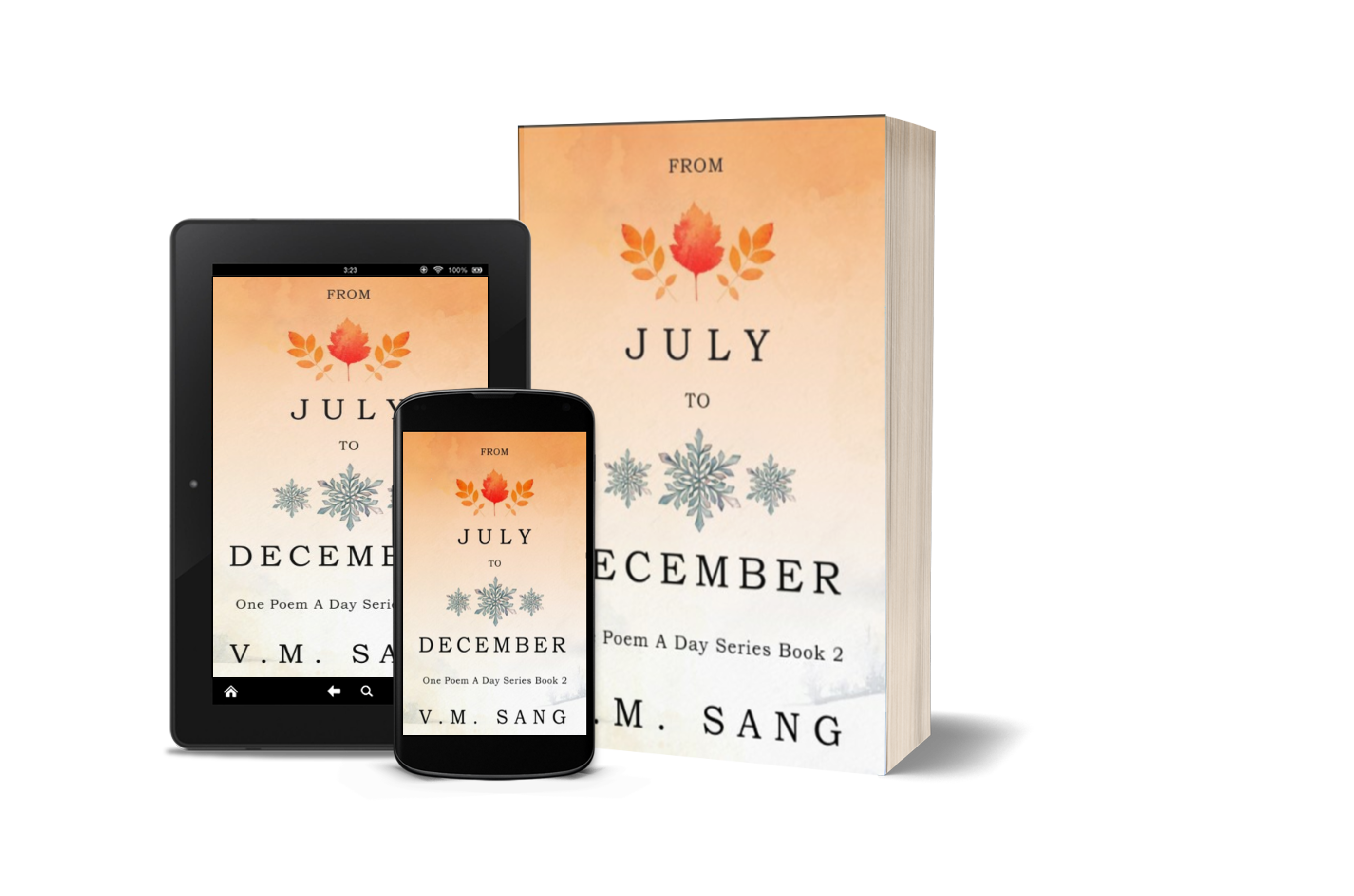
This is from the second book in my 2 book series of poems, ‘One Poem a Day.’ The first one is called ‘From January to June’ and the second ‘From July to December.

This poem is from Book 2 and is today’s poem.

Image by V.M.Sang and Bing AI

December 16th.

As it gets nearer to Christmas, Christmas trees are going up everywhere. Yes, I know some have been up since November! Here’s a poem about one.

The Littlest Christmas Tree.

The other trees looked oh, so tall
To him, who was so very small.
And now it is the time of year
When everyone is filled with cheer.

Some men came for the tallest tree.
They took him with them, full of glee.
He was going into town.
In Market Square he’d wear a crown.

The littlest tree watched on as folk
Bought others. He was full of hope
That soon he would be picked to go
To a home to put on a show.

But people passed him by and said,
“That one’s too small. That one instead.”
His branches drooped. He felt so sad,
Until a man came, with a lad.

Most other trees had long been sold.
The little tree stood in the cold.
“Look, there’s a small one,” said the lad
As he turned towards his dad.

“It will just fit in our hall.
We can’t have one that is too tall.”
And so they came with spade and dug
Around his roots, all in the mud.

The littlest tree went home with them.
The lights and baubles gleamed like a gem.
He was so happy in that home
With all the love around him shown.

But Christmas passes soon away.
Then there came that dreaded day.
They took away the lights and balls.
“What happens now?” was all his thoughts.

He saw the tall trees passing by
On lorries, going off to die.
Their needles withering and brown
On their proud branches, drooping down.

Fear now filled the littlest tree.
“Is that what’s going to happen to me?”
But then the Dad came with a spade.
“I’ll not throw that for which we’ve paid.”

He dug a deep hole for the roots
And tamped it down with his big boots.
“We’ll let him grow, and then next year
We’ll bring him in again. Don’t fear.

And so the littlest tree was glad
That he’d been bought by this kind dad.
For now he has nothing to fear.
He’s decorated every year.

If you enjoyed this poem, and would like to read more, you can buy from the online store of your choice by clicking the cover below or in the side bar.

The books are available as ebook, hard back or paperback.

Here is the blurb for book 1

Take a lyrical journey through the first half of the year with V.M. Sang’s FROM JANUARY TO JUNE.

This anthology captures the essence of everyday life, nature, and the world around us through the versatile medium of poetry. From haiku to narrative poems, and the humor found in limericks, From January To June is a diverse collection of poetry.

A calendar in creativity, a diary in verse; this collection is the perfect companion for daily reflection and inspiration, providing a poem for each day that resonates with the diverse experiences of life.

And the blurb for book 2

The second book of poetry in V.M. Sang’s One Poem A Day Series takes us through summer to midwinter.

Each day there is a poem to read. These poems are often related to the season, for example, Harvest, or the first flight by the Montgolfier brothers, and of course, Christmas.

The poems are varied in type and length. There are haiku, haibun and tanka, limericks, sonnets, odes and narrative poems among the collection. Some poems are comments on serious subjects, while others are amusing and entertaining.

Many of the poems in this collection are in the traditional vein, so if you enjoy this type of poetry, this book is for you.

We Will Remember Them: Reflecting on WW1’s Legacy

Today is Armistice Day. World War 1 ended at 11th hour of the 11th day of the 11th month.

I wrote a poem to commemorate the 100th anniversary of the end of WW1. I’ve published it before on Dragons Rule OK, and make no apologies for re-publishing it now.

For those of you who haven’t seen it before, I hope you enjoy it and that it makes you think of the futility of war. And to those of you who remember it, similarly.

War is evil and should never happen. It’s always a result of greed and/or hatred; two emotions that should be relegated to the deepest depths of Hell. And as all wars end in talks, why not begin there?

Here’s my poem.

We Will Remember Them.

I’ll never truly understand
How World War I began.
The death of Archduke Ferdinand
Started the deaths of many more,
The young, the old, the rich, the poor.
All died with guns in hand.

    My Grandad went with Uncle Jim 
    And Our Poor Willie, too.
    They sent them off, singing a hymn.
    Grandad went to Gallipoli,
    Uncle Jim left his love, Polly.
    Gas in trenches did kill him.

    I cannot see, in my mind’s eye
    Grandad with gun in hand.
    A peaceful man, sent out to die.
    He fought for us, for you and me
    So we can live and so that we
    Safely in our beds may lie.

    Granddad came home, and Willie too,
    But millions more did not.
    Their duty they all had to do.
    They died in fear, in noise, in blood.
    Everything was caked in mud.
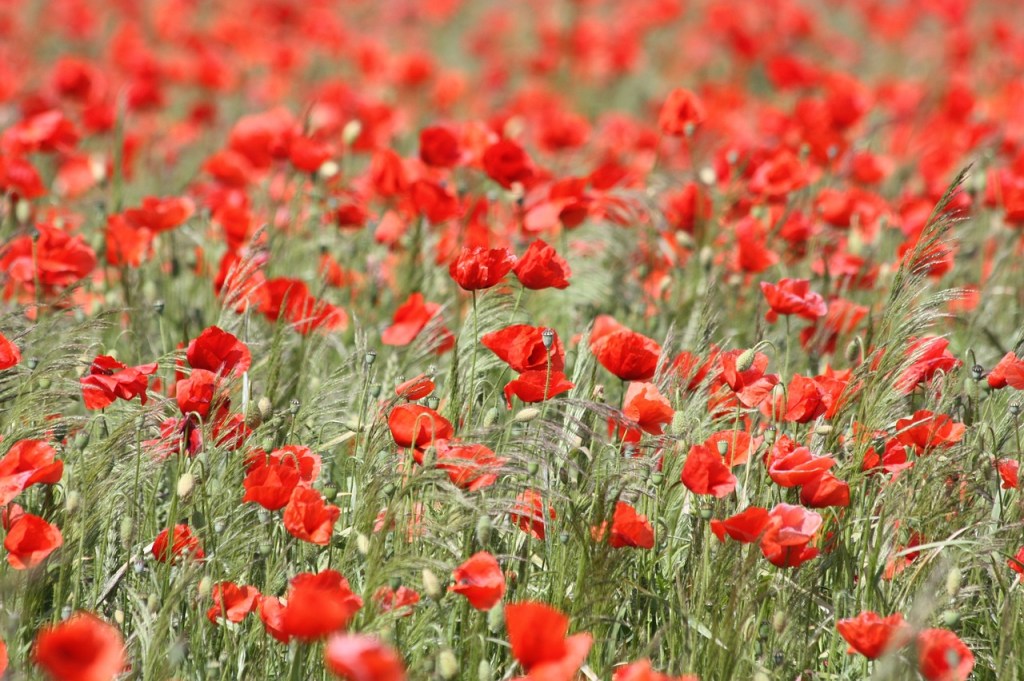
    Yet in those fields the poppies grew.

    The War to end all wars, they said,
    So terrible were the deaths.
    The youth of Europe all lay dead.
    Yet 21 short years to come
    Another war. Once more a gun
    In young men’s hands brought death.

    One hundred years have passed since then.
    What have we learned? Not much!
    Too many men are killing men. 
    Wars still abound around the world.
    Bombs and missiles still are hurled
    At those who disagree with them.

    Uncle Jim was my Grandfather’s brother. I never knew him as I wasn’t born when he died.

    ‘Our poor Willie’ was what my grandmother said when referring to her brother. No one ever knew why he was ‘Our poor Willie’, except that she didn’t get on with his wife and thought she made his life difficult.

    I hope you enjoyed my poem. I wish I thought it might make a difference to the terrible wars going on at the moment, but I’m just a teeny drop in a vast ocean. Sadly, my voice is only heard by a very few people.

    Please let me know what you think in the comments box.

    You can read more of my poetry by clicking on the cover in the side bar. This one comes from Miscellaneous Thoughts.

    Celebrating Halloween with Poetic Fun

    Image by ApplesPC from Pixabay

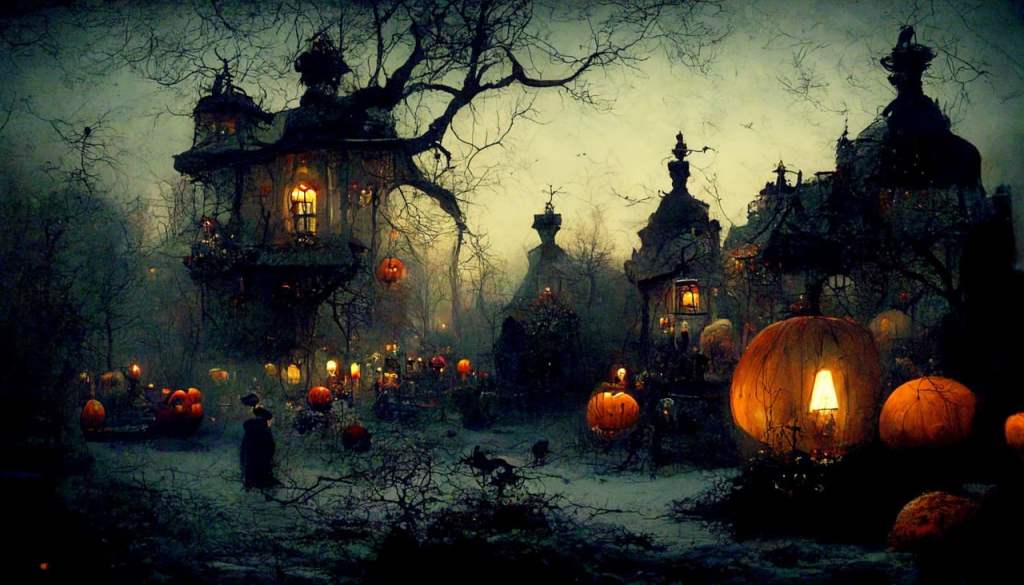
    As it’s Halloween today, I thought I’d write a little poem to celebrate it. We don’t do as much for Halloween in the U.K. as the people of the US do, but it’s beginning to creep in here. This year I’ve noticed a few people have decorated their houses.

    Halloween

    Witches gather their broomsticks
    Putting on pointy hats.
    Devils creep out from hell
    As spiders build their webs.
    Ghosts walk the streets
    And skeletons leave their graves
    Jack O’Lanterns grin
    With fiery eyes that glow   

    A cold wind blows the leaves
    As we shiver in our homes.
    The darkness seems to creep
    Beneath the gap below the door.
    Ghostly sounds are heard.
    And the doorbell rings
    We huddle together in fear.
    What horrors await outside?

    We creep towards the door
    And open it with care.
    The ghosts and skeletons jump
    Towards us with a screech.
    The witches cackle loudly,
    Jack O’Lantern held up high.
    Then come the words we know


    Image by Nisse Andersson from Pixabay

    This is a new poem, but if you enjoyed it and would like to read more. simply click on the image in the side bar.

    Currently, Next Chapter, my publisher, has discounts for people who buy 2 or more books in a series from Google Play Store

    • 2 books: 20% discount
    • 3 books: 30% discount
    • 4 or more books: 40% discount

    No coupon code is needed for these discounts: all customers who find Next Chapter books in the Google Play Store are able to use these discounts (as long as they buy 2 or more books in any one series at the same time).

    Here’s a link to my One Poem a Day series if you are interested.

    Woodland Inspiration: A Free Verse Poem

    Rebecca Cunningham has challenged us to write a poem about a favourite place with alliteration.

    It is to be free verse and no more than 50 words. So here’s my offering.

    Woodland ways
    Wend past flowers.
    Winding paths walked
    Without worry.
    Wind whispers to willows
    Waving branches.
    White wood anemones 
    Water at the heart of the wood
    With wavelets kissing the shore.
    Woodpecker, willow warbler
    Wing through trees.
    Wonderful. 

    And here’s a link to Rebecca’s website so you can view the other poems.

    Click here

    National Poetry Day.

    Today is National Poetry Day in the UK. I. Its honour, I decided to add a poem as an extra post.

    I wrote a poem for each day of the year, and thought that the one I wrote for October 3rd would be the obvious one. I hoped it would be one of the longer ones, but it’s a tanka. Still, I must go with it. It’s today’s poem, after all.

    Created with AI

    Stars

    Clear the sky above

    The moon has not yet risen

    Many stars twinkle

    The Milky Way curves above.

    Infinity stretched on high.

    This is from my One Poem a Day book, July to December.

    Last year I wrote one poem each day. It was hard going. I can’t say I didn’t have the occasional lapse, but managed to make up in the next few days.

    The poems are very varied. There are tanka and haiku, like this one, lyrical poems, limericks, some rhyming poetry (well, quite a lot, actually) and some non-rhyming. I think there’s something for everyone.

    Why not give poetry a chance by reading one a day? Take a look at the books by clicking on the cover in the side bar.

    Did you enjoy my tanka? What kind of poetry do you enjoy? Let me know in the comments.

    Ode to Rain. A poem


    In response to Rebecca Cunningham’s s poetry challenge to write an ode in praise of rain, I came up with this.

    We’ve had such a lot of rain during winter, spring and summer.

    Ode to Rain.

    Sweet and gentle rain does fall
    Giving flowers what they need
    To bloom beneath the garden walls
    Making nectar, bees to feed.

    Dusty, dry, the desert sleeps
    Waiting for the rain to come
    Now the thunder, downpour seeps
    Desert blooms and insects hum.

    Rain fills rivers, lakes and streams
    Essential for all life to live.
    Be grateful for the sunlight beams
    But also thanks for rain, we give.