Tag Archives: books

I Am Earth: Poem of a Dying Planet and Humanityโ€™s Final Warning


This poem is the third one I’ve written entitled I Am Earth. You can find the others here and here. They are also published in my poetry books, Miscellaneous Thoughts and One Poem a Day.


I am Earth
I am your mother.
I gave you birth.

For your greed
You plunder my wealth
And weaken me.

You care not
For my other offspring
You let them die.

Seas and oceans
You are destroying
With all your waste.

They will die
No life will be left
In their depths.

Unlike you
I think of the future
For each child.

All the life
That lives on my skin
Is in danger.

Think of this.
You are a parasite
That kills its host.

You will die
From wars and heat.
I won’t cry.

I WILL START AGAIN.

You can buy any of my books by clicking on the cover in the side bar.

If you enjoyed this poem, and agree with its sentiments โ€“ or even if you didnโ€™t โ€“ please leave a comment.


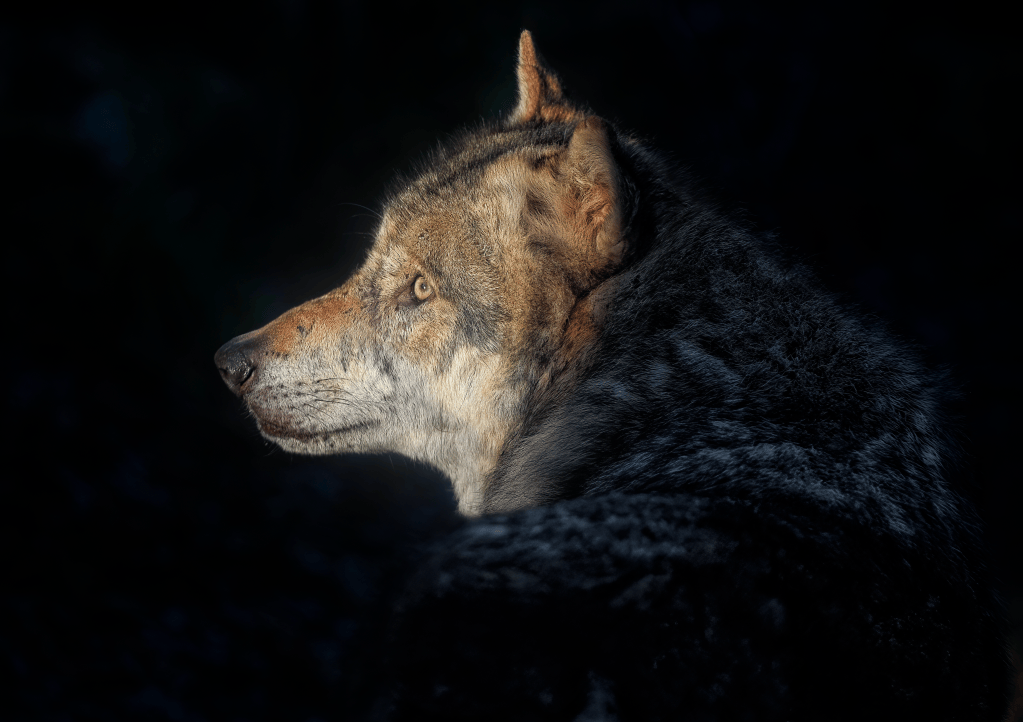
Wolf Awareness Week & The Fantasy Wolf Pack That Found Its Name

I was reading a post by Charles Yallowitz about it being Wolf Awareness Week.

These beautiful animals are much misunderstood. It seems that their reputation is not completely true. Here’s a link for some information of wolf attacks from the International Wolf Center.

The poor reputation, nay, even scary one, is due to tales like ‘Little Red Riding Hood,’ ‘The Three Little Pigs,’ etc.

I was surprised to learn that there are 38 subspecies of wolf.

Wolves are social animals. They usually live in family groups comprising a mated pair and their offspring. They hunt as a pack, cooperating to bring down large herbivores. All will help to raise the cubs.

There are no wolves left in the UK, the last one being shot in Scotland near Killiecrankie in 1680, while English folklore places the final English wolfโ€™s death at Humphrey Head in the 14th century. As a result of this, there are no large predators to hunt the deer population, and so they have to be culled.

In Yellowstone National Park, in the USA, Wolves were not protected, the same as other large predators like cougar. Gradually they became exterminated.

The elk population then rose and decimated the vegetation. This had a knock on effect on the whole ecology. In 1995 the first wolves were released in Yellowstone, from Canada.

There has been talk of reintroducing wolves in the UK, but the problem is the density of the human population, as I see it, especially in England. There is also much understandable opposition from farmers, so I don’t think it’s gonna happen! If it does, it’ll probably be in Scotland where there is more uncultivated land.

If you are interested in learning more, there is a good Wikipedia post on them.

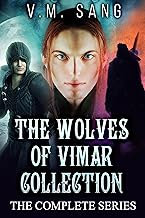
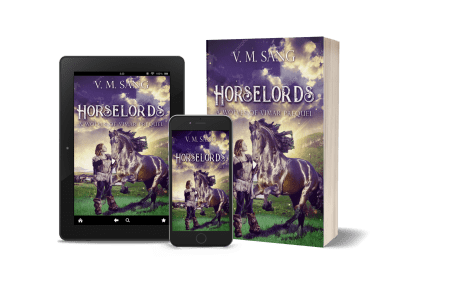
Talking of wolves, and wolf packs, you might like to read The Wolf Pack, Book 1 in The Wolves of Vimar series. Here is an extract where the group decides to call themselves Wolf.

As they sat, they heard a howl. It did not seem too near, but Kimi looked at Fero for confirmation of her assessment that there was no danger. Seeing Fero’s relaxed attitude, she allowed herself to relax too. Then they heard a sound from near the fire.

Fero looked round, and saw Thadora had woken at the sound of the howl, and sat bolt upright clutching her sword in her hand.

Fero went over to her.

โ€œIt’s all right, Thadda,โ€ he said, using her pet name to reassure her, โ€œThat is the cry of a normal wolf. They don’t attack people, especially a well-armed group like we are. Nor do they come near fire.โ€

โ€œThose others damn well did,โ€ she replied. Thadora looked around, wild-eyed.

Fero tried to reassure her. “That group was very strange. I told you at the time. A pair of unnaturally intelligent dire wolves led them. These others near here are just a normal pack.โ€

โ€œโ€œOw’d yer know?โ€ Thadora demanded.

โ€œI saw them yesterday when I went out to scout,โ€ he told her. โ€œWhen the others wake up, weโ€ll go and look at them. If you watch them for a while, you will see what they are truly like. They are not the fearsome beasts that people tell about in children’s stories, and tales related by travellers in the taverns. Those tales are all made up or greatly embroidered to frighten people or make the tellers seem brave and bold.โ€

The early morning saw Fero and Thadora moving through the forest towards where he had seen and heard the wolves. โ€œDo you know how to walk quietly, Thadora?โ€ asked Fero as they neared the place for which he was heading.

โ€œYou know it!โ€ came the reply. โ€œHey! It’s a requirement o’ th’ job o’ a bloody thief. It’d be so no use if yer wake folk by bangin’ about.โ€

Silently, they slipped through the rapidly lightning forest until they came out on an escarpment overlooking some flatter land. The trees disappeared here, and they could see the Grosmerian plain spread before them. To the east, the hills continued to rise to meet the mountains, but to the north and west the plains began.

Tracts of forest and open countryside separated small farmsteads They could just make out the lights coming on in Roffley, a day’s journey away, as people rose to their morning tasks.

Fero held out his hand to warn Thadora to be silent. They wormed their way forward on their stomachs, and looked down from the cliff top to the plain below. They found themselves about twenty feet above the plain here and below them they saw a pack of wolves.

Thadora watched the animals in fascination. They were obviously a closely-knit group, with the exception of one animal, much paler than the rest, who held itself aloof, or the others were ostracising it.

Fero whispered that she, (for it was a she-wolf, he told her) was a stranger, and probably trying to join the pack. She had not been there when he caught sight of them yesterday. Maybe she had lost her own pack. He told Thadora that pack sizes were usually between six and ten, but that ten was rare.ย  โ€œMore than about eight, and one kill would not suffice, and less than six and the pack would find it difficult to hunt down larger animals like deer,โ€ he whispered.

He pointed out the alpha male and female to her. The alpha male was a reddish brown animal, quite large, and the alpha female was a smaller, black creature. Fero told Thadora that as a rule, only these two would mate, and the others would help in the rearing of the cubs. Another large black male had begun to sniff at the pale she-wolf. She was cautious and bared her teeth at him, at the same time, crouching down, ears flattened to her head. Of the others, one, obviously much younger, had a reddish coat again. She was obviously one of the cubs of the alpha male. There was another black wolf, slightly smaller than the very large one, and two greyish ones, one of which was a small female and the other was a very small adult male. Fero thought that the smaller dark wolf and the greyish female were probably littermates, the way they seemed to stick to each otherโ€s company.

They watched for some time, and Thadora became fascinated. Then the large black wolf sniffed the air as the wind gusted and changed direction and he swung his head in their direction, gave a sharp bark, andturned and led his pack at a loping trot away from the cliff.

โ€œDamn!โ€ swore Fero, โ€œWind changed direction and he smelled us. We’d better get back to the others. They should be ready to leave and we’ve still got our things to pack up.โ€

โ€œThanks, Fero,โ€ said Thadora on their way back, โ€œBut, hey, those wolves didn’t seem scary. I don’t think I’ll be such a bloody wuss as far as wolves are concerned in future.โ€

Fero smiled.

When they got back to the camp, they found that the others had indeed packed up, including Fero and Thadora’s things, and Basalt had made oatmeal porridge that he said would sustain them well for their trek. Fero and Thadora sat and took the wooden bowls of porridge they were handed.

The group sat around eating, then when they were finished, they wiped out the bowls, tied them to their packs and were ready to leave.

Fero saw to it that they put the fire out completely before they left, and they returned to the road.

Thadora was very quiet as they walked along. She had a frown on her face. Fero hoped that what she had seen of the wolves would help her with her fear.

She came up to Fero and asked, โ€œ’Ow common are th’ colourings o’ that pack, like?โ€

โ€œWell nowโ€”wolves come in a range of colours ranging from very pale to black. However, the very pale coat of the she-wolf we saw trying to join the pack is not common this far south, although they are more so in the snowy north. Maybe that was why she didn’t have a pack. Sometimes albinos are turned out. However, she wasn’t a true albino. Her eyes were brown and she had some colour to her coat.โ€

โ€œHmm!โ€

When they stopped for a midday break, Thadora suddenly said, โ€œCarthinal, that poem about soddin’ wolves that you ‘ad, right? D’you still ‘ave it?โ€

โ€œSomewhere in one of my pockets. I expect. Did you want me to read it?โ€

โ€œNo, Mother taught me ter read, so I c’n read it by meself. She learned at Madame soddin’ Dopari’s, right? It were somethin’ th’ damn Madame insisted all th’ girls learn. Would yer lend it te’ me for a while?โ€

โ€œOf course. You can keep it. I don’t know why I’ve still got it, since it seems to have no relevance to us or our quest.โ€

Carthinal gave the poem to Thadora and she took it and began to read it.

All the afternoon, Thadora kept perusing the poem as they walked. No one seemed to be able to get anything out of her, and they all thought her behaviour a little odd and out of character, but she had obviously been working something out.

Fero thought she was trying to work through her fear of wolves, but Kimi had the feeling it was something more. She expressed her thoughts to Davrael.

โ€œI expect she’ll tell us when she’s good and ready, and not before,โ€ her husband replied. Davrael was a man of few words.

โ€œYes, you’re right of course,โ€ Kimi replied, linking her arm through his.

He placed his other hand over hers and smiled down at the small young woman with love. They continued in this way in silence.

Thadora did not reveal her thoughts until after they had stopped for the night. After they had eaten, she opened the paper with the poem on and began to read it aloud.

โ€œThe wolves will fight ‘gainst every foe
The balance to maintain,
But far and wide the pack must go
All borders they disdain.

โ€œThe pack contains the strangest group,
The one whose pride comes with her
And one who slips through every loop,
The wilful one, the tracker.

โ€œThe leader with his anger held,
The ones who hunt the horse
The rock that’s strong completes the meld
And makes the pack a force.

โ€œIn times of danger all must know
The wolf pack will be there.
They work as one. They keep their vow.
For each other they will care.

โ€œI think this bleedinโ€ poem refers to us.โ€

The others stared at her in surprise.

โ€œWhat makes you think that?โ€ queried Basalt

โ€œIt was, like, when I were watchin’ th’ wolves wi’ Fero. They seemed in lots o’ ways ter be like us, see. Th’ leader was a big, soddin’, reddish brown animal that made me kinda think o’ you, Carthinal, right? There were somethin’ about ‘im that seemed so kinda dangerous, but hey, ‘e didn’t show any behaviour to th’ others that made my feelin’ logical, see? I think it were just that ‘e seemed ter be holdin’ somethin’ inside o’ ‘imself, right? You give me that feelin’ too, Carthinal. An’ that, wi’ ‘is colouring an’ all were what made me, like, think o’ you.

โ€œThen I looked at th’ others. We was all bleedin’ well there. A small black wolf, the alpha female Fero called ‘er, were you, Asphodel. Small and pretty, but wi’ plenty o’ spirit you know. Then there were a damn big, black wolf that were obviously Fero. A little distant, yer know. I noticed that ‘e sometimes wandered off, sniffin’ aroundโ€”fer game I suppose, or danger.

โ€œA small reddish one, much younger than the rest were me, see, while th’ two ‘oo was littermates and was always together was Davrael and Kimi. Th’ male o’ these were black too. Th’ other two were obviously Basalt, a small adult wolf, and a light-coloured female for Randa. The pale wolf were findin’ it hard ter get accepted inter th’ pack, a bit like Randa is wi’ us, like. (Sorry Randa, but it’s true, ain’t it?) Then th’ large black, Fero, showed interest in th’ pale wolf. Don’t look away, Fero. I’ve seen yer eyes on Randa when you think no one’s lookin’.โ€

At this comment, Fero hung his head and Randa frowned and pressed her lips together, but Thadora continued, โ€œSo I wanted ter look at th’ damn poem again, right? Here is ‘ow I sees it. Th’ wolf pack in th’ poem is us. OK? I’ll ignore th’ first verse as I don’t know what that means. Th’ second starts to describe th’ wolves. โ€œThe one whose pride comes with herโ€ is Randa. Hey, you are rather proud an’ ‘aughty yer know, Randa, and th’ “one who slips through every loopโ€ puzzled me at first, but I think it’s me. I seem to allus manage ter get away when some bleedin’ person is on me track for some damn scrape or other.

โ€œNow the โ€œwilful oneโ€ I think is Asphodel, right? You told us you ‘ad to leave ‘Ambara because you’d annoyed the bleedin’ Great Father o’ th’ temple by disobeyin’ orders because yer didn’t agree wi’ them. That’s wilful! And โ€œtrackerโ€ is obviously Fero, OK?โ€ She paused for breath and looked round at them. They were all looking at her with interest.

โ€œโ€œThe leaderโ€ is Carthinal, right?โ€ she continued. โ€œYou seem to ‘ave a ‘idden anger too, Sometimes not so ‘idden, either, Carthinal, so that fits in wi’ โ€œwith his anger held.โ€ โ€œThe ones who hunt the horseโ€ are Davrael and Kimi, though strictly speaking you don’t ‘unt ‘orses, but ‘erd ’em; and finally, Basalt is โ€œthe rock that’s strong.โ€ Basalt is, I think, a rock. Is it strong?

โ€œI’ve not got no further wi’ th’ meanin’ o’ th’ first verse, but th’ last obviously means that we must stick t’gether and be as a wolf pack.โ€

โ€œMaybe,โ€ said Basalt sceptically, โ€œbut it could just be coincidence, couldn’t it?โ€

โ€œI think Thadora is right,โ€ Randa disagreed, surprisingly agreeing with Thadora and earning a sharp look from Basalt, and a murmur of  โ€œOf course. Never do to agree with a dwarf!โ€

โ€œBasalt, don’t be like that,โ€ whispered Kimi. โ€œShe’s a right to voice her own opinion.โ€

The dwarf stopped grumbling and sat scowling to himself instead.

Randa continued, โ€œLook at it this way then. We were unsure as to how many of us there should be. This poem makes that quite clear. There should be eight of us. It makes it clear who should be here.โ€ Here she threw a glance at Carthinal and Basalt who had been reluctant to have her in the group at first. โ€œThose wolves that Thadora and Fero were watching served to jog Thadora’s mind about the poem and to set her thinking. Yes, I agree it refers to us, and someone has put those wolves where we would see them. Everything seems to be happening rather too conveniently for it all to be accidental.โ€

Asphodel had been thinking as well. โ€œThe first verse,โ€ she said slowly, frowning as she spoke, โ€œrefers to the Balance. Some priests believe that in order for the world to work, there must be a balance between good and evil. Just as there is night and day, so we can sleep at night and wake in the daytime refreshed for our daily tasks. We, it seems, must maintain the Balance and to do so, we must cross borders and travel far.โ€

โ€œAnd last verse say we must โ€œWork as one and keep our vow,โ€ and look out for each other. Much like wolf pack. But we have make no vows, do we?โ€ This came from Davrael. โ€œWell, not all to whole group.โ€ He smiled at Kimi as he spoke of vows.

โ€œWell, that can be remedied,โ€ Carthinal spoke for the first time in the discussion. โ€œWe have a representative of the gods here.โ€ He gestured towards Asphodel. โ€œI’m willing to swear to protect you and treat you as the brothers and sisters I never had.โ€

The others agreed, and they all stood in front of Asphodel.

Carthinal thought for a few seconds and then said, โ€œI think I have the words. I will let you decide if they are appropriate before we swear.โ€

When they had heard his thoughts, the others concurred and he said, โ€œI will be as the wolves, and learn from them how to live for the pack. I will put the good of the pack before my own good, and protect the other members to the best of my ability. I will follow my destiny wherever it may lead, and through whatever dangers may befall, serving the pack and the land in all things. This I swear, and may the gods hear my vow.โ€

They all agreed the words were good, and all joined hands and repeated them.

Then Thadora said, impulsively, โ€œWe are Wolf.โ€ and the others repeated her words.

So was born Wolf, from a group of unlikely companions, sworn to each other and to the world.

And a review.

Amanda GRIFFITHS-JONES

4.0 out of 5 stars A Perfectly Set Scene

Reviewed in the United Kingdom on 24 September 2019

Format: Kindle EditionVerified Purchase

Occasionally I step out of my comfort zone & read a book that takes my into unknown literary territory. This was one of those times. Within a couple of chapters I was drawn into a world of mages, elves & mystical creatures & thoroughly enjoyed the ease with which the author breathed life into her characters. The scene is set perfectly as a quest unfolds, allowing the reader to become absorbed in a fantasy world that holds many surprises. Iโ€™ll definitely be looking out for book two in the series.

If you want to read The Wolf Pack, it is free on Kindle, and also comes as a paperback, hardback and audio book.

Click on the cover in the sidebar to go to your preferred book seller.
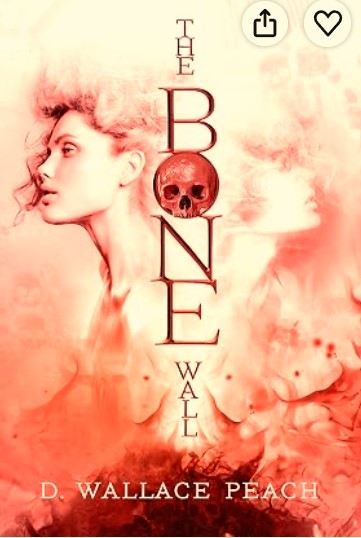
Book Review: The Bone Wall by D. Wallace Peach (5 Stars)

Overview

This book review is about The Bone Wall by D. Wallace Peach, a novel very different from others Iโ€™ve read by Ms Wallace Peach. Itโ€™s a dystopian, post-apocalyptic story set in the distant future after a human-made disaster has overtaken the world. Ms Wallace Peach doesnโ€™t spell out exactly what the disaster was, instead leaving the reader to imagine the cause, which adds to the mystery and tension.

Blurb

Blue light ripples and crackles as the shield walls fracture. The remnants of a doomed civilization stand vigil outside, intent on plunder and slaves, desirous of untainted blood to strengthen their broken lives. With the poisons came deformities and powers, enhanced senses, and the ability to manipulate waves of energyโ€”lightbenders and fire-wielders.

For those who thrived for generations within the walls, the broken world looms, strange and deadly, slowly dying. While the righteous pray for salvation, Rimma prepares for battle, fueled by rage and blinded by vengeance. Her twin, Angel, bound to her by unbreakable magic, seeks light in the darkness, hope in the future, and love in a broken world.

The Bone Wall foretells of a dystopic world where a poisoned planet no longer sustains its inhabitants. Who survives when there isnโ€™t enough for all? Who decides?

Three hundred years in a post-apocalyptic future, precisely controlled communities, with forgotten histories, thrive beneath protective energy shields โ€ฆ until those shields begin to fail. What happens when the facades crumble and the pastโ€™s dark truth is unearthed?

Twins Rimma and Angel share this tale of a life unraveling and mending. They chose opposing paths when thrust into a strange and perilous world. The simplistic lines dividing good and evil blur, and beg the question: Can one survive without the other? What is the secret of their lives that even they canโ€™t comprehend?

Award-winning author D. Wallace Peach combines elements of fantasy and science fiction, merging them with rich characters and desperate action. If grimdark tales of spiraling destruction and redemption crowd your bookshelf, this fantasy-science fiction adventure desires a place among them.

The Bone Wall contains scenes that some readers might find triggering.

Story

Rimma and Angel are identical twins living in a place they call Heaven, one of the strictly controlled communities set up by the ancestors who broke the world. They are among those considered saved.

Their world exists inside a hemisphere of protective energy created by the survivors. The people of Heaven believe they are Godโ€™s chosen because they were righteous and obedient when the world was broken.

Life inside Heaven is governed by strict religious rules. Women must wear skirts long enough to cover their ankles. Men and women are separated, although marriage is allowed. Sex is permitted only for procreation.

Despite the rigid rules, everything needed for physical comfort in Heaven is provided. The weather is always pleasant, crops grow reliably, and there is no hunger or obvious hardship.

Outside the shield, the world is very different. People still live there, but theyโ€™re wild, forced to scrape a living from a largely barren land. The people of Heaven call them Biters because they have a reputationโ€”rightly or wronglyโ€”for consuming human flesh. Many are deformed to varying degrees, and some possess strange magical abilities.

When the protective barrier fails, Rimma and Angel are captured by those outside. It then becomes clear that most people can only see one of the twins when they are together, with the exception of a few individuals who have magic.

There is a place called The Fortress, where people are trying to rebuild the world. To achieve their idea of perfection, they allow no deformities. Deformed children are killed, or their parents are expelled. Many of these outcasts make their way to another settlement called The Colony, where people try to live a more civilised life and accept everyone, with or without deformities.

Characters

There are many characters in this book, so Iโ€™ve picked out only a few of the ones who stood out to me in this 5-star book review of The Bone Wall by D. Wallace Peach.

Rimma is a strong personality and something of a rebel. She persuades her sister to go outside the protective sphereโ€”something strictly forbidden. She feels deeply responsible for her twin and swears to protect her. Over the course of the book, Rimmaโ€™s more rebellious and violent side develops, largely because of how she is treated after sheโ€™s captured by the Biters.

Angel, on the other hand, is a gentler soul. Sheโ€™s the one who isnโ€™t seen when they are together. Although grateful for Rimmaโ€™s protection, she feels guilty about the risks her sister takes. Angel is willing to forgive where Rimma seeks vengeance, which creates a powerful emotional contrast between them.

Mag is a Biter with strong magic and the rare ability to see both girls. She wants to understand why only one of the twins can be seen at a time. She tells them they donโ€™t have magic themselves, yet Rimma can burn thingsโ€”and even peopleโ€”with something very like magical power.

Greeb is also a Biter, and a thoroughly unpleasant one. He lusts after Rimma (he canโ€™t see Angel at all). Itโ€™s only because Mag claims Rimma as hers that he restrains himself from raping her.

Priest appears later in the story. He has a withered arm and lives in The Colony. He is kind and compassionate, and he despises the cruelty and ruthless rules of The Fortress. I liked him a lot.

Writing

Ms Wallace Peachโ€™s wonderful writing draws you straight into this dark fantasy world. Her descriptions make it easy to imagine the devastated landscape and the rigid life inside Heaven, and to feel with her characters as they struggle, suffer, and grow. Although this is a grim and often dark story, the prose is beautiful and immersive, which is one reason this is a 5-star book review from me.

I found no typos or grammatical errors, which made reading The Bone Wall by D. Wallace Peach smooth and enjoyable from start to finish.

I give this book 5*.

My ranking of books.

In order to get a particular number of stars, it is not necessary to meet all the criteria. This is a guide only.

5* Exceptional. Wonderful story. Setting well drawn, and characters believableโ€”not perfect, but with flaws. Will keep you up all night. No typos or grammatical errors.

4* A thoroughly enjoyable read. Great and original story. Believable setting and characters. Very few grammatical errors or typos.

3* I enjoyed it. Good story. Characters need some development. Some typos or grammatical errors.

2* Not for me. Story not very strong. Unbelievable and flat characters. Setting not clearly defined. Many typos or grammatical errors.

1* I hated it. Story almost non-existent. Setting poor. Possibly couldnโ€™t finish it.

I really enjoy Ms Wallace Peach’s writing. Have you read any of her books? Do you enjoy her writing?

Podcast Episode: Mystery, Poetry, And Fantasy

Pip: Dragons Rule OK โ€” where you can find a CIA spy hiding among monks, a murder at an antique market, and a recipe for sloe gin, sometimes in the same week.

Mara: V.M.Sang covers a lot of ground on this site โ€” fiction reviews across spy thrillers and cozy mysteries, poetry, a Regency novel, fantasy worldbuilding, and a detour into British wildflowers.

Pip: Let's start with the fiction reviews, where the stakes range from international espionage to a dead tennis coach.

Spy Thrillers and Cozy Mysteries

Mara: Two recent reviews land at opposite ends of the crime spectrum โ€” one a high-tension spy thriller, the other a small-town Australian whodunit โ€” and both ask what it costs a person to be seen.

Pip: The thriller is Alone by Anna Michelle Page, and the review pulls no punches on what makes London compelling: "She is a hard woman, made so by her difficult past. She is dangerous, clever and a killer for the CIA."

Mara: That damage is the engine of the whole book. London expects to die on every mission, and the Commander's patient effort to reach her โ€” described as winning the trust of a frightened deer โ€” is what gives the thriller its emotional weight alongside the action. It earns a five-star rating.

Pip: The other review covers Murder in Myrtle Bay by Isabel Blackthorn โ€” cosier territory, a converted factory, a dead tennis coach, and an elderly neighbour who suspects the killer based entirely on her own prejudices. Four stars, and a promise to read the rest of the series.

Mara: From crime scenes to something quieter โ€” poetry that sits with mortality and doesn't flinch.

When Poems Do the Work Prose Can't

Mara: The review of Shadows and Birdsong by Kevin Morris makes a case that poetry about death doesn't have to be morbid โ€” that it can be generous and strange at the same time.

Pip: The collection grew partly from Morris's hospital stay after a brain abscess, and the poems in memory of a lost friend carry that weight. Here is the closing stanza of "Your Shadow," quoted in full: "But other men / May see my shadow / Walking beside them / And know me / And their own mortality."

Mara: What that gets the reader is a poem that turns private grief outward โ€” the dead friend becomes a way of seeing your own end, and somehow that feels like a gift rather than a warning. The review gives it five stars and recommends it even to readers who don't normally read poetry.

Pip: The rhyme schemes are described as unusual, which is doing a lot of heavy lifting as a compliment โ€” but having read that stanza, it lands.

Mara: The second review in this segment covers Isabel by Marina Montrose, a Regency novel that gets three stars. The writing is technically clean, but the review finds the central tension too easily resolved โ€” Francis sheds his mistress without much struggle, and Isabel's arc closely mirrors the protagonist from Montrose's first book. Pleasant, the review says, but not surprising.

Pip: Two very different books, then โ€” one that earns its feeling, one that stays comfortable. From literary territory to somewhere with actual dragons.

Archmages, Prophecies, and Lost Spells

Pip: The fantasy segment pulls back the curtain on the Wolves of Vimar world through an in-character interview โ€” and the history it reveals is darker than the format suggests.

Mara: Archmage Yssalithisandra โ€” Yssa, please โ€” explains the Forbidding: "All books of magic were burned and the mage towers were, for the most part destroyed. All people who could do any magic were put to death too."

Pip: So the mages of the present are essentially archaeologists, rebuilding from nothing after a centuries-long erasure. That reframes what magic means in this world entirely.

Mara: A removed chapter from The Wolf Pack puts flesh on that history โ€” Carthinal and his fellow apprentices discover an ancient spell-book and a loose prophecy that may or may not be centuries old. The worldbuilding carries through consistently between the two posts. There is also a brief pointer to a review of Echo Volume 1 by Kent Wayne, linked for readers who want more fantasy reading.

Pip: From lost spells to something you can actually find in a hedgerow in March.

The Blackthorn in Full Bloom

Mara: The British Wild Flowers series returns with the blackthorn โ€” one of the earliest trees to bloom in spring and, as the post puts it, belonging to the genus Prunus spinosa, making it a relative of the cherry, plum, peach, nectarine, apricot, and almond.

Pip: A family reunion nobody asked for, but the sloe is the troublemaker of the group โ€” too bitter to eat raw, but the post includes a full sloe gin recipe that takes about five months and rewards patience.

Mara: The ecological detail is solid too: dense thorny stems provide nesting cover for birds, the flowers are early nectar for insects, and the tree can live a hundred years. It has also been associated with witchcraft, with wands supposedly made from its wood.


Pip: Damaged spies, dead tennis coaches, a poem about mortality, and a hedgerow shrub with a criminal bite โ€” it's a wide orbit.

Mara: The thread running through it is attention โ€” to characters, to plants, to the lines of a poem that stay with you.

Pip: Next time, we find out what else is growing in the hedgerows. Or who else turns up dead at a market.

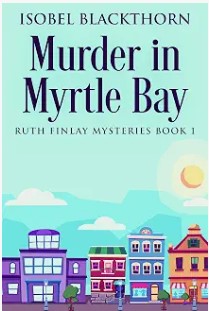
Review of Murder in Myrtle Bay by Isabel Blackthorn

Overview

This is a cosy mystery set in the south of the Australian continent, where the cold southern wind blows from  Antarctica. 

Blurb

When feature writer Ruth Finlay and her elderly neighbor Doris Cleaver visit an antique and collectibles market in the small town of Myrtle Bay, they get a lot more than they bargained for.

After Ruth’s old tennis coach is found dead, they discover that there’s no lack of people who harbor a grudge against the victim, and a tangled web of family ties and lies begins to unravel. But can Ruth and Doris find the killer in time to avert a second murder?

A quirky feel-good mystery laced with intrigue, Murder in Myrtle Bay is the first book in Isobel Blackthorn’s ‘Ruth Finlay Mysteries’ series. Set in small town Australia, it is a sure pick for any fan of classic whodunits and cozy mysteries!

Story

Ruth Finlay goes shopping with her neighbour and friend, Doris, in a converted factory. She finds her old tennis coach lying on the floor, having been hit on the head. His last words were,โ€˜I didn’t do it.โ€™

But what was it he didn’t do?

Ruth is intrigued and, along with Doris, decides to start her own investigation, having admired  the victim throughout her life.

Of course, things are not straightforward.  It transpires that the victim isn’t the man Ruth thought he was, and there are many who hold a grudge against him.

Characters

Ruth is a writer for a magazine. She is currently researching for an article on the old factory. A sensible woman, Ruth keeps herself fit by going on a daily run. It is on one of these runs that she spots some suspicious activity. Her natural curiosity is what makes her decide to investigate the murder.

Doris is a favourite character of mine. She is an elderly lady who seems to think she is still a hippie from the 70s. She dresses in an eccentric style.

She joins Ruth with enthusiasm and thinks she knows who the murderer is based on nothing more than her own prejudices. She is also very stubborn.

There are many other characters in the book, of course, but I really can’t pick any out without mentioning all of them, which isn’t practical. Suffice it to say that they are all believable.

Writing

Fairly near the beginning, there is a description of the relationships between some of the families in the story. I found this somewhat confusing, and I don’t think it was necessary; at least not until we got to know the characters. There were other places, too, where information was given that wasn’t needed.

On the whole the writing is good with no typos, but there are a few grammatical errors. For example, Ms Blackthorn says, โ€˜Doris and Iโ€™ on occasions where it should be โ€˜Doris and me,โ€™ and she mentions โ€˜French provisional cuisineโ€™, when it should be โ€˜French Provenรงal cuisineโ€™.

But these are few and far between, and didn’t distract me too much from the story.

I GIVE IT 4*

My ranking of books.

In order to get a particular number of stars, it is not necessary to meet all the criteria. This is a guide only.

5* Exceptional. Wonderful story. Setting well drawn, and characters believableโ€“not perfect, but with flaws. Will keep you up all night. No typos or grammatical errors.

4* A thoroughly enjoyable read. Great and original story. Believable setting and characters. Very few grammatical errors or typos.

3* I enjoyed it. Good story. Characters need some development. Some typos or grammatical errors.

2* Not for me. Story not very strong. Unbelievable and flat characters. Setting not clearly defined. Many typos or grammatical errors.

1* I hated it. Story almost non-existent. Setting poor. Possibly couldn’t finish it.

I’ve not read any other books in this series, but I will definitely be doing so.

Have you read any of Isabel’s books?

From Reader to Writer: My Story

I saw a post on Reddit where the person asked about how we each came about being a writer. I answered, but then thought it might make a post for my blog.

In the beginning, I always loved books and stories for as long as I can remember. When I was very little, long before I could read, maybe about 3 years old, I loved a story called Pink and Ponk. It’s still available on Amazon! I knew it off by heart. One say, I was holding the book and speaking the words, when a friend of my mother saw me and thought I was actually reading!

When I could read for myself, I read a book by Enid Blyton, called Shadow the Sheepdog. I loved that book and reread it many times. It inspired me to write my own story. That was the first story I remember writing. I also devoured many other of her books, as well as books like Black Beauty and Little Women.

Also, when a child I made a little fairy out of grass and made up tales for my little sister about it.

When I was at school, I loved English lessons where we were told to write a story or an essay. I enjoyed both types of writing. I also enjoyed the literature lessons where we read many classic books. It was here that I discovered the Bronte sisters. And unlike many of my compatriots, I also enjoyed poetry.

In my teens I wrote a very bad romance. I only read it to my friends, They were kind about it, but fortunately, it has now disappeared into the mists of time.

After my A levels, I went to do teacher training in Manchester. Here I studied science as a main subject and maths as one of my subsidiaries. As I liked English literature, I chose that as my other subsidiary subject. It was here, at college, that I took to writing some poetry. My first ever published work was a poem I wrote about the atomic bomb. (It was the time of the Cold War, the Aldermaston Marches and CND.) It was published in the magazine of UMIST (University of Manchester Institute of Science and Technology).

During this time, I discovered Lord of the Rings, I was doing a teaching practice at a primary school. A 9 year-old boy asked me if I’d ever read it, and recommended it to me, telling me I should first read The Hobbit. When I found them in the library, I was immediately turned on to fantasy.

Then my writing adventures stopped as I began work, got married and had a family. No time for writing.

My writing started with a Dungeons and Dragons scenario I wrote. I read the Dragonlance Saga and found out it was based on a D&D scenario, and I thought I’d try my hand at converting my scenario to a novel. A standalone was what it was going to be, but in the way these things happen, it’s now up to the 4th book with more to come. The story hasn’t yet finished. (Although the characters think it has!)

Then came the inspiration to write Elemental Worlds, which turned into a duo. It could have been a standalone, but it would have been rather long. I really enjoyed writing that one (or pair, I should say!)

I began writing poetry again at this time.

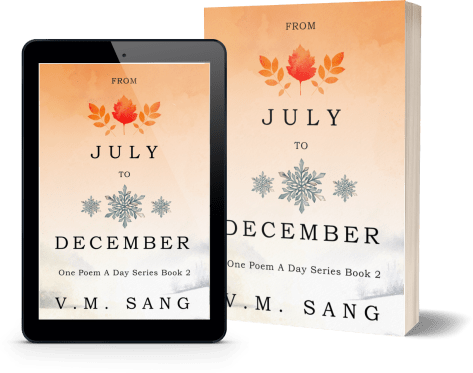
My daughter had a book when she was little that had a very short story or poem for every day of the year, so I conceived of writing one poem every day for a full year. I did manage to do this, and it’s now published as 2 volumes, January to June and July to December. It has a variety of poems from limericks and haiku to longer narrative poems. Some serious, some amusing.

Another thing that has been fermenting in my head for decades is a saga of a family through the ages. This started when I was in my teens and I was walking with a friend and her family in Derbyshire. We came across a ruined mansion. This picture has been in my head ever since, so I started to write a historical series, now up to Book 2.

I’ve also written 3 novellas; The Wolves of Vimar prequels.

Currently I’m writing Book 3 of the historical series, and hope to soon get on to Book 5 of my fantasy series (The Wolves of Vimar.) I am also working on some short(ish) stories inspired by fairy tales. 2 are already written and 3 is on the way.

And that’s how I became a writer!

If you are interested in any of my books, you can click on the image in the side bar. It will take you to where you can choose your favourite retailer.

Some of these books are also available as audiobooks.

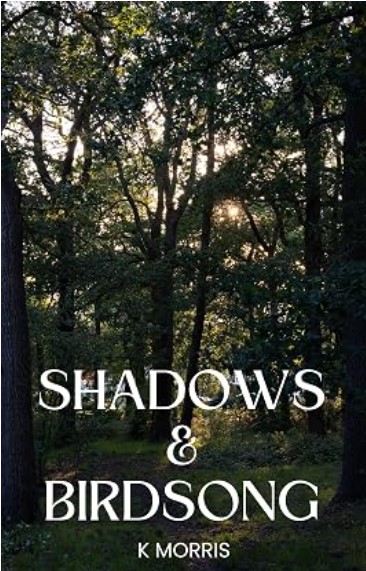
Review of Shadows and Birdsong by Kevin Morris

I don’t usually post two reviews immediately one after the other, but I was asked to review this collection of poems, so here is another.

I was given a copy of this book in exchange for an honest review.ย 

This book of poems comprises thoughtful images. Kevin Morris writes beautifully about his life experiences. He contemplates mortality in his poems, but not in a morbid way. 

His thoughts from hospital, where he underwent an operation for a brain abscess, give us an insight into his thoughts on this close brush with the Grim Reaper.

The poems in memory of his friend are touching. Here is one of my favourites.

Your Shadow 

On a day in early springย 
I heard the birds singย 
As we walked togetherย 
And, as we walked,ย 
I wished to talkย 
With you my dear old friend.ย 
But it was my shadowย 
That walked in sunshineย 
For you have crossed the lineย 
Where all things end.

I cannot cryย 
Or go where you have gone,ย 
Yet our friendship lives onย 
And one day I will becomeย 
A shadow in sunย 
And shadeย 
For life is madeย 
Of fleeting shadows.ย 
And I knowย 
That I must one day goย 
Where you have gone.ย 
But other menย 
May see my shadowย 
Walking beside themย 
And know meย 
And their own mortality.

I also enjoyed the one he wrote to his guide dog, Apollo.

Dog and Human (Dedicated to Apollo) 

You know not what I writeย 
As day turns to nightย 
But lie near meย 
Unaware of our shared mortality.
We love our walks.ย 
You just do
What dogs doโ€”ย 
While I have my thoughtsย 
Of endingsย 
And how I envy you!

I enjoy Morris’s unusual rhyme schemes. They make the poems interesting and unusual. And I love the cover.

This is a wonderful collection of poems, and I fully recommend them to you. Even if you’re not a poetry person,  you will be sure to find some you enjoy. They will give you food for thought.

I give it 5*

The explanation of my ranking of books doesn’t fit with poetry as it’s for novels.

Have you read ;any of Kevin Morris’s poetry? What did you think of it? Please leave your comments in the comments box.

An Interview with Archmage Ysallithisandra from The Wolves of Vimar Series.

I decided to repost some of my earlier blog posts as there are new people who won’t have seen them. Here is the first one.

I apologise for being a day late with the interview with Archmage Yssalithisandra, but she was  extremely busy with some new magic texts that have recently come to light and put the interview off for a day.

Me: Good morning, Archmage Yssalithisandra. I am glad you decided to meet me and answer afew questions that our readers would like toknow about.

Yssa: Please call me Yssa. Everyone does, you know. It is a pleasure to be interviewed by you.

Me: How is it that an elf is working in Hambara and not in Rindisillaron, the elven homeland?

Yssa: I came here because of the Mage Tower. There is no longer one in Rindissillaron, you know.

Me: I believe there was one once though. Why has it not been found or rebuilt?

Yssa: Mage towers are always built on special places where the mana is at its strongest. Places where it wells up rather like springs out of the ground. The whereabouts of the Mage Tower in Rindisillaron has long been forgotten, as is the case of the towers in most places in Khalram.

Me: Why has this occurred?

Yssa: It was after the Forbidding when they were deserted for several hundred years.

Me: The Forbidding?

Yssa: Yes. Two hundred or so years after the death of Sauvern, there was an uprising by a group of mages who thought that because they could weave the mana, they were superior to others and that they should be the rulers of all the lands in Khalram. There was another group who opposed them, of course and the result was a terrible war. The results were so devastating that when the rightful rulers were restored, the practice of magic was forbidden throughout the lands that make up Khalram. All books of magic were burned and the mage towers were, for the most part destroyed. All people who could do any magic were put to death too.

Me: So that is why you are researching  the past. To find the lost spells. How long ago did the Forbidding occur?

Yssa: How long? Well it began about 600 years ago and lasted for about 3oo years. That means that it ended about 300 years ago.

Me: And in 300 years you still haven’t found all that was lost?

Yssa: Remember; there were no mages in the continent when it ended, nor any books. We had to start again from scratch.

Me: How is your work coming on?

Yssa: Oh, we’re beginning to make more progress and we keep finding books that had been hidden away by mages when they thought they would be executed. One such is the one Mabryl found and Carthinal brought to Hambara.

Me: Do you think that the mage towers will ever be re-built?

Yssa: That depends on whether or not we can find where the nodes were that they were built on. In the past there were said to have been mages who were able to detect these places, but we know of none at the moment. There are a few mages who can weave the mana without recourse to arcane language and hand gestures, but use just the power of thought, and it  is possible that some of these could do so as they are much more sensitive to magic. We have yet to find any though, so at the moment it’s just a hypothesis.

Me: You met Carthinal when he came to take his tests. What did you think of him?

Yssa: (blushing slightly) He is a very charismatic young man. He is also a very talented mage. I oversaw his practical test, as you probably know, and was most impressed.

Me: Is it true that you had a relationship with him while he was in Hasmbara?

Yssa: (looking down at her hands.) Yes. It was brief, and then he left to do the job that the Duke set him. I don’t know when he’ll be back, but I don’t expect him to want to continue with me.

Me: Do you think you will ever go back to Rindissillaron?

Yssa: Probably not. I do go to visit my parents as often as I can. Mother says it’s not often enough of course. She misses me, I think. I have no brothers and sisters, so I’m her little lost lamb. She means well, but she does fuss.

Me: Thank you for giving up your precious time, Archmage.

Yssa: Yssa!

Me: Sorry, Yssa. I am sure our readers will be interested in the history that you have told us about, and good luck with the research.

Yssa: Thank you. It was a pleasure talking to you. Grillon’s blessings on your readers.

Carthinal met Yssa when he went to the Mage Tower in Hambara to complete his apprenticeship as a mage. They had a brief affair before Carthinal went on the quest to find Sauvern’s Sword.

Later Yssa became more important in Carthinal’s life and appears in several of the books in the series.

If you would like to know more about Yssa and Carthinal, you can read about them in The Wolf Pack, Book 1 of The Wolves of Vimar series.

The ebook version ofThe Wolf Pack is free.

Click on the book title to buy, or on the book’s image in the side bar to go to your favourite online store.

There are also some prequels where you can find out a bit more about the characters in the books.

Review of Alone by Anna Michelle Page

Overview.ย 

This was an exciting read. It had me turning the pages anxiously wanting to know what happened next.

Story.

London is a spy. She works for the CIA and has been sent to Korea with a special missionโ€“to destroy a particular weapon that the North Koreans have been developing.

But London is a damaged young woman after abuse, and has decided that being alone is safe. She has no fear of dying, and in fact looks forward to it and fully expects to die on one of her missions.

Then she meets the Commander. He is a South Korean, leading a small group of men, who are devoted to him. He observes how she handles a persistent soldier from the US army who is pestering her, and becomes fascinated with her.

London tries to reject the offered friendship of the Commander, but he is understanding of her problems, although he doesnโ€™t know any details. He gently tries to get her to trust him, much like winning the trust of a frightened deer.

She, in spite of not wanting to like him, finds herself being drawn to him in a way she finds unsettling.

But her mission is dangerous, and she expects not to survive it. She has not reckoned with the Commander, though. He manages to extricate her, but she has to go into hiding as she is pursued by an assassin after her mission to destroy the weapon.

Blurb

Alone Trained to survive. Destined to be alone. Until him.

London moves through the world as a ghostโ€”unseen, unstoppable, untraceable. Trained for precision, she leaves no loose ends. But the military town of Cheondochon, South Korea changes everything.

Posing as a saloon girl at the Whiskey River, she hides in plain sight, where deception is her greatest weaponโ€”until the Commander crosses her path.

He sees through her disguise, sensing the predator beneath the surface. Their connection is undeniable, dangerousโ€”an attraction that threatens to dismantle her mission and expose the secrets she has buried deep.

Then the operation unravels.

A brutal attack by a DPRK assassin after she takes out a secret super engine, forces her to confront a past she thought was dead. Killing the man who once controlled her should have been justiceโ€”but instead, it shatters everything. Her mind fractures, her memories slip away, and the Commander makes an impossible choice. Hidden among monks in Japan, she rebuilds, heals, remembers.

Now, in England, she waitsโ€”not as an assassin, not as an agent, but as a woman. Waiting. Hoping. Longing for the day the Commander finds her. When he does, can London face the one mission that ever truly mattered โ€“ love?

Characters

London. This is not her real name, as we learn later in the book. She is a hard woman, made so by her difficult past. She is dangerous, clever and a killer for the CIA. She slips in and out of places unseen, if she so wishes. She knows she is safest when she is working alone. In spite of being a hard character, I found myself liking her.ย 

The Commander. London realises this man is her equal in combat skills, sneaking, bushcraft and spying. She hopes they wonโ€™t be pitted against each other and that his death isn’t what she is required to accomplish.

On his part, the Commander hopes the same thing. He quickly realises that she has been badly damaged by her past and wants to help her.ย 

In spite of being a tough soldier, he is kind and sympathetic, coaxing her from her skewed view of the world.

I liked him a lot.

Joe. Joe is also working for the CIA and is the man who organises London’s missions. Unknown to her, Joe is in love with London.

Claire is also a CIA agent, posing as an American woman running an American bar. She dislikes London, partly because of Joe’s infatuation.

Writing.

Ms Page has given us a page turner. After the first few pages, I was gripped by the story, thanks to the excellent way the characters were portrayed,ย  and the pace of the action. There were also a few quiet moments that were well written, showing the softer side of these tough people.

The grammar was good, and there were few, if any, typos.

Just one factual error that didn’t spoil it for me, and wouldn’t be noticed by most people. Ipswich, UK, isn’t a seaside town! Not far away, though.

An enjoyable read that I would recommend to anyone who enjoys a good adventure story.

I give it 5*

ย My ranking of books.

In order to get a particular number of stars, it is not necessary to meet all the criteria. This is a guide only.

5* Exceptional. Wonderful story. Setting well drawn, and characters believableโ€“not perfect, but with flaws. Will keep you up all night. No typos or grammatical errors.

4* A thoroughly enjoyable read. Great and original story. Believable setting and characters. Very few grammatical errors or typos.

3* I enjoyed it. Good story. Characters need some development. Some typos or grammatical errors.

2* Not for me. Story not very strong. Unbelievable and flat characters. Setting not clearly defined. Many typos or grammatical errors.

1* I hated it. Story almost non-existent. Setting poor. Possibly couldn’t finish it.

Day 2 of the WordCrafter โ€œPoetry Treasures 6: Seasonsโ€ Book Blog Tour โ€“ Jean-Jacques Fournier and Colleen Chesebro

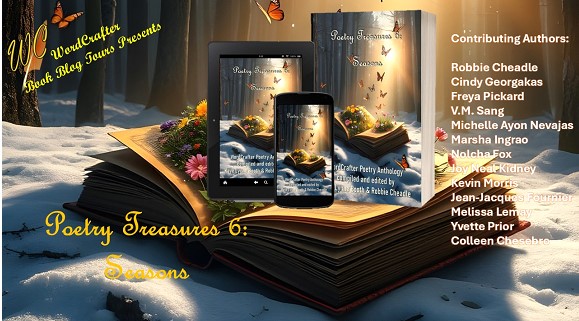
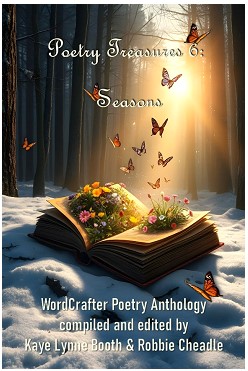
Welcome to Day 2 of the WordCrafter Poetry Treasures 6: Seasons Book Blog Tour, where weโ€™re sending off the sixth volume of the Poetry Treasures anthology series, Seasons.

Each volume of this poetry anthology series features the work of the talented poets, spotlighted as guests on Robbie Cheadleโ€™s blog series, โ€œTreasuring Poetryโ€, from the previous year. Seasonsโ€™ poets were guests in 2025.


For this tour, youโ€™ll meet two poets at each stop, with fun facts about them and reviews of their work. Some of the contributors also share guest posts or poetry readings. Today, weโ€™re introducing Jean-Jacques Fournier and Colleen Chesebro.

And weโ€™re giving away three digital copies of the anthology in our Giveaway. Each comment earns a chance to win, so be sure to give a shout out and let us know you were there.


Giveaway


Weโ€™re giving away three digital copies of Poetry Treasures 6: Seasons.


Follow the tour and leave a comment at each stop for additional entries.
Winners are selected in a random drawing following the tour.

Tour Schedule
Mon. โ€“ Cindy Georgakas (Reading) & Kevin Morris – Poetry by Mich, Hotel by Masticadores, Masticadores Phillipines
Tues. โ€“ Jean-Jacques Fournier (Reading) & Colleen Chesebro (Reading) โ€“ Dragons Rule OK
Wed. โ€“ Freya Pickard & V.M. Sang (Reading) โ€“ JoyNealKidney.com
Thurs. โ€“ Joy Neal Kidney & Yvette Prior โ€“ Roberta Writes
Fri. โ€“ Michelle Ayon Navajas (Guest Post & Reading) & Marsha Ingrao (Guest Post & Reading) โ€“ Prior House
Sat. โ€“ Nolcha Fox & Robbie Cheadle โ€“ Writing to be Read

Introducing Poetry Treasures 6: Seasons

Picture caption: Cover of Poetry Treasures 6: Seasons

Blurb
Open the cover
and you will discover
Poetry Treasures
from the guests on
Robbie Cheadle’s 2025ย 
“Treasuring Poetry”
blog series
onย Writing to be Read.
ย 
Join poets Robbie Cheadle, Cindy Georgakas, Freya Pickard, V.M. Sang, Michelle Ayon Navajas, Marsha Ingrao, Nolcha Fox, Joy Neal Kidney, Kevin Morris, Jean-Jacques Fournier, Melissa Lemay, Yvette Prior, and special guest, Colleen Chesbro share their personal seasons of poetry.

Purchase link
https://books2read.com/PT6Seasons


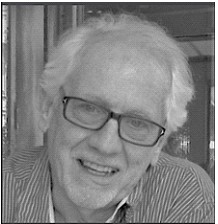
Meet Jean-Jacques Fournier


Jean-Jacques Fournier is a native of Montrรฉal, in the province of Quรฉbec, Canada. He continued his studies while in the Canadian Navy and travelling substantially over the world. He started writing in earnest while living in California in the early eighties. In the process of reinventing himself numerous times, his penchant for the language of poetry seemed best suited, for him to express his emotions and life experiences. He then spent several years pursuing his writing in the south of France, during which time he published his first three books. ย He has long since moved back to Canada and is presently living in the Eastern Townships of Quรฉbec. He has published twenty-one books of poetry to date.


Jean-Jacques Fournierโ€™s blog isย Poetry on a canapรฉย 

Picture caption: Author photograph of Jean-Jacques Fournier

Fun Facts about Jean-Jacques Fournier


Heโ€™s always loved France, had moved to France, married a French woman, who in the end pulls him back to Canada.


Because he was constantly on the move, he was never truly interested in animals but now, he is surrounded by two indoor cats, as well as birds, racoons, deer, chipmunks, coyotes, foxes who all inhabit the garden.


He loves dancing since he was young and now, basically still young considering years passed, he continues dancing but mostly with the words.

Poetry Reading: โ€œI the Bumble Bee โ€“ in bombinate flightโ€https://youtu.be/ETprgKugzfM

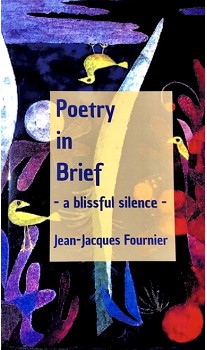
A review of Poetry in Brief โ€“ a blissful silence โ€“ (review by author Paulette Mahurin)

Picture caption: Cover of Poetry in Brief โ€“ a blissful silence โ€“ by Jean-Jacques Fournier


From the lovely cover of “Poetry in Brief – a blissful silence” designed by Marianne Dessis and the book’s various represented artists like Paul Klee included on the pages of this special book of poetry to all the words depicting the human experience, I am stunned by masterful poetry. This is a special book of poetry and author Jean-Jacques Fournier has a great gift in his usage of words. A minimalist, he writes vast emotions that run deep and strong of all that it is to be alive. Each and every poem, unique in its message, draws the reader into thoughts and emotions. Way too many to enumerate on. This was an enticingly enjoyable book right down to the last poem: โ€œYe May Not Hear-past silent fearโ€ with its beautiful artwork by Mikalojus Konstantinas Ciurlionis โ€“ Silene, which was my favorite. Kudos to the author for this lovely achievement.


Purchase Poetry in Brief โ€“ a blissful silence โ€“ from Lulu here: https://www.lulu.com/shop/jean-jacques-fournier/poetry-in-brief-a-blissful-silence-/ebook/product-9vppw2.html?srsltid=AfmBOooRgWPVvjnWCRJTOlOhMUNgzKa7UNzAFgbFECsxQhkepWVd1d_T&page=1&pageSize=4


And from Amazon US here: https://www.amazon.com/Poetry-Brief-Forever-After/dp/B0GT7CJ29R


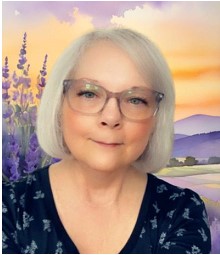
Meet Colleen Chesebro


Colleen M. Chesebro hails from the heartland of the Midwestern United States. After graduating, she enlisted in the U.S. Air Force, launching a lifelong journey of self-exploration. Following a successful career in accounting, Colleen returned to her creative roots, reigniting her love for poetry. Today, she enjoys crafting poetry, flash fiction, and both creative and nonfiction work.
In addition to her poetry books, Colleen has contributed to numerous anthologies featuring short stories, flash fiction, and poetry.
She actively supports her writing community on tankatuesday.com, by hosting a community syllabic poetry challenge called Tanka Tuesday, and by co-editing the Sunflower Tanka Anthology with Robbie Cheadle. This annual syllabic poetry anthology celebrates tanka, tanka prose, and other experimental tanka forms.
Residing in her dream home in mid-Michigan, Colleen enjoys the beauty of the Great Lakes with her husband and their two (unicorn) cats, Chloe and Sophie.
You can find her at Tanka Tuesday on http://www.tankatuesday.com.

Picture caption: Author photograph of Colleen Chesebro


Fun Facts about Colleen Chesebro


When I served in the USAF, I lived in England for several years.ย 


I crochet old-fashioned doilies with thread.


Iโ€™m taking a class in Jungian psychology and dream tending.ย 

Poetry Reading: โ€œThe Fight for Springโ€ (Haibun)
https://youtube.com/shorts/KMhNk_dNFNU?feature=share

A review of Sunflower Tanka: A 2025 Anthology of Tanka, Tanka Prose, & Experimental Tanka compiled by Colleen Chesebro and Robbie Cheadle (Amazon review)

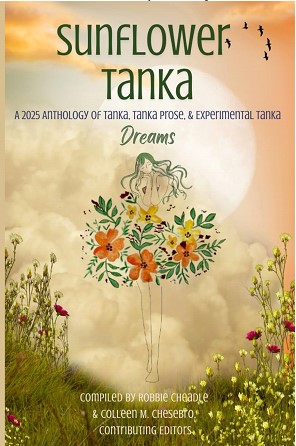
Picture caption: Cover of Sunflower Tanka: A 2025 Anthology of Tanka, Tanka Prose, & Experimental Tanka compiled by Colleen Chesebro and Robbie Cheadle


Sunflower Tanka 2025 anthology of Tanka, Tanka Prose and Experimental Tanka begins with an introduction and a short explanation of the different forms of poetry included in this collection: Tanka, Tanka Prose, Bussokuseki, (a new form for me to try,) Rensaku, Experimental Tanka, Garland Tanka, Tanka Puente, and Taiga!

The topic is dreams. And what dreams they are for poets to indulge their creative juices in! Resulting in such a range of marvellous interpretations.

You’ll find poems from a wide variety of international poets to connect with. There are 54 poets in the 2025 anthology!

It is lovingly compiled by the contributing editors, Robbie Cheadle and Colleen Chesebro with a short analysis of their favourite poems at the end.

It’s a delightful collection and a great introduction to new poets to enjoy as well as old favourites to return to again.

I bought a paperback copy. What a treat.


Purchase Sunflower Tanka: A 2025 Anthology of Tanka, Tanka Prose, & Experimental Tanka from Amazon US here: https://www.amazon.com/Sunflower-Tanka-Anthology-Prose-Experimental/dp/B0G51RKG61

Wrap-Up


That wraps up Day 2 of the WordCrafter Poetry Treasures 6: Seasons. Join us again tomorrow over at JoyNealKidney.com, where weโ€™ll be meeting Freya Pickard and V.M. Sang.


Book yourย WordCrafter Book Blog Tourย today!