
Category Archives: Uncategorized

extract from jealousy of a viking

Here is an extract from the book, Jealousy of a Viking, which has recently been released.

The Danes, as the people who lived in the east of Britain were known, had a strong belief in magic. Magic was used as well as herbs by wandering healers, called Volvir. These women practiced Seidr, or magic, to heal. To avoid confusion I have called healers “Wise Women”.

In my research I learned that the Volvir were respected and sometimes a little feared, but I also discovered that the Vikings believed in Black Magic too, and did not tolerate witches.

Helgha and Erik met when he was lost in the forest. His horse had been injured and Helgha took him to her home. Her father tended the horse and Erik stayed the night as it was getting dark and unsafe for him to leave.
Helgha felt a strong attraction to Erik, a young and handsome man.
In this chapter she dreams of what might happen.

Each night for the next two weeks, Helgha recalled Erik’s features before falling asleep. She could see them as clearly now as she had when she first saw him in the forest. She thought about how he moved his head and how he walked. His laugh sounded in her ears as sleep found her. She dreamed of him walking into her home and asking her father’s permission to court her.

One day Helgha sat with a spindle in hand. She ought to be spinning wool but instead gazed into the fire where her mother stirred broth in a cauldron hanging over the flames. In the smoke, she imagined herself and Erik in a marriage ceremony.

Ædelflaed noticed her idleness and interrupted her dreams. “It’ll be your job to tend to the sickness and injuries of your people when you marry. You’ll need to know what herbs to use for each job.”

Helgha’s heart sank as reality reared its head She dragged her gaze away from the firepit. “Mother! I’ve been watching and learning all my life. I know almost as much as you about tending the sick and injured.”

“I know, Helgha, but your father’s going to talk to Gunnar Janson about you marrying his son. You might think you know everything, but there are still many things you need to understand and not only about healing.”
Ædelflaed stretched, put down her spoon and stood. “Come with me, girl.” She left the longhouse and walked toward the storeroom where she kept her dried and fresh herbs.

Helgha followed.

She took a deep breath as they entered the storeroom and a smile lit up her face. The scents of the herbs perfumed the air. She picked out lavender and meadowsweet. There was the clean-smell of mint. And under it all the earthy perfume of fungi. Some herbs hung in bunches from the ceiling, drying. Others, already dry, Ædelflaed had put into pots and stored on shelves around the room.

Ædelflaed reached up, lifted a pot from a high shelf, and turned to Helgha. “Sometimes, Helgha, no matter how much you care for each other, a man will hanker after other women. You need to understand how to prevent him from straying. Now, I will teach you how to stop that. It involves herbs added to his drink, but also words said over it.” She paused, glancing around. “Magic words.”

Helgha’s eyes opened wide and she gasped. “Magic? You know magic? Isn’t that dangerous?”

“Not if you know what you’re doing, and do it right.”

“But if someone found out, they could accuse you of witchcraft.”

Ædelflaed smiled at her daughter. “That’s why I’ve told no one except you, and you must never tell anyone, either, or we’ll both be in a lot of trouble. This knowledge has been handed down from mother to daughter for many generations. My grandmother taught my mother and she taught me. Now I’m teaching you and I expect you’ll teach your daughter when you have one.”

She told Helgha which herbs to use and in what proportions. “It’s important you get this right. If you use the wrong amounts it won’t work.”
She heated some water, poured it onto the herbal mixture and began chanting mysterious words over it.

“You learn these words, Helgha. You’ll need this someday when your husband casts glances at some pretty slave girl.”

Each day for the next week, Helgha practised the words until her mother declared herself satisfied. “Good. Now your husband won’t stray.”


One morning, about ten days after Erik’s final departure, her father came to her. “I’ve chosen a husband for you. I’ve decided on Gunnar Janson’s son. I spoke with Gunnar yesterday and he’s in agreement.”

Helgha hung her head. She must obey her father, but her dream of becoming Erik’s wife dissolved as she foresaw a life lived with a man she did not like.

Gunner Janson’s son won’t make any woman a good husband.

On the few occasions they met, he had treated her with disdain. He barely spoke to any woman unless it was to give her an order and he had told Helgha he thought them weak. They did not know how to fight, and fighting was life.

But she must do as her father said, and so she whispered, “Yes, Father,” hoping she sounded acquiescent, but a feeling of tightness encompassed her chest, and her hands clenched involuntarily.

Helgha took a deep breath and carried on with her tasks with a heavy heart. She would obey her father, but all her dreams of a life with Erik came crashing down around her ears. Thoughts of rebellion flashed through her mind but immediately disappeared. She did not know if Erik felt the same way. Most probably, he did not. They had been beautiful dreams though.

Crushing her thoughts if Erik, she left the longhouse and walked to the well where two serving women were drawing water. Hearing the drumming of hooves on the road, she looked up. Her stomach turned over and her heart beat faster as Erik rode through the gate. He slid from Stjarna’s back and jogged over to where she stood. Taking the buckets from her, he looked into her eyes. Helgha thought there was something there. Some warmth that made her think her dreams were not in vain.

“Hello, Helgha,” Erik said, then looked away.

Had she imagined what she saw in his eyes?

“Hello, Erik.” Redness crept up her neck and infused her face.

Leaving the other women staring after them, the pair walked to the house in silence.

Why had he come? Surely her dream had not come true and he intended to ask for her hand in marriage. He must have some other reason to come here. Yes, that was it. He was on his way somewhere else and stopped at Thoringsby because it was convenient.

They entered the house, Erik following Helgha. He put the buckets down and spoke to Ædelflaed. “Thank you for your hospitality the other week. I wouldn’t be alive now if it weren’t for your kindness.”

Ædelflaed smiled at the young man. “No thanks are necessary. We did what anyone would do. You could have been killed by wolves or bears out there in the dark.”

“I have something for you. To thank you. Wait a moment and I’ll go and get it.” Erik ducked through the door, and a moment later returned with his saddlebags over his arm.

“First, for you, Ædelflaed, I have this.” He handed over a necklace of glass beads.

Ædelflaed gasped. “This is beautiful, Erik.”

“It was made in Jorvik. We don’t make much glass there, but what we do is usually made into beads or rings, and is of fine quality. Now, for Biorn I have some wine. I’m sure he’ll enjoy it when he comes in. It’ll make a change from ale.”

Helgha smiled at the thought. Biorn drank more ale or mead than wine, but he would enjoy the change.

Erik pulled something else from his saddlebags. “For Hartvigg I have this wooden sword. He needs to learn how to fight like a true Dane. I have a Kubb set for Laeff and for Sigmund this toy longboat. After all, we Danes are seamen.” He turned and smiled at Helgha.

Her stomach turned somersaults.

“And for you, this amber necklace. The amber comes all the way from the Baltic Sea.”

Helgha blushed as Erik fastened it around her neck, and she looked at her mother.

Ædelflaed frowned. Helgha knew what thoughts passed through her mother’s mind. Like the ones passing through her own head.

Why has Erik brought me such a valuable gift? Does he want to court me?

Neither she nor her parents knew anything about the young man. He appeared to be well off if his clothing were anything to go by. But would Erik’s father want his son to marry someone from a family who could not bring an advantage? Helgha’s father was a free man, a ceorl, but what Erik’s status was Helgha did not know. She realised he must be richer than her own family and would demand a high bride price.

Helgha sighed, pushing those thoughts away. If it were the case that Erik wanted to marry her, then his father would speak to hers. She would be the last to know.

Thank you for reading. I hope you enjoyed this short extract. If you would like to know more about Helgha and Erik, you can find out by reading the book. Click here, or on the book cover in the sidebar, to go to Amazon where you are.
The book is currently available as a paperback and ebook. Eventually it will be released in other formats.

If you would like to learn more about me and my writing, click on the button below to join my quarterly newsletter. You will receive cover reveals, news of my current works in progress and the occasional exclusive story.

The Wolf pack OFFER

Image by Ylanite Koppens from Pixabay

From today, The Wolf Pack, Book 1 of The Wolves of Vimar Series, is only 0.99 (£ or $).

This offer is for a limited time only, so be sure to pop over to Amazon and get your copy before it’s too late. The offer ends on Friday, 2nd July.

Here is the blurb

To end his apprenticeship and be admitted to the ranks of the mages is all that Carthinal wants and so he is excited to travel from Bluehaven to Hambara, where the tests will take place. He did not expect to end up travelling far beyond Hambara on a quest to find the long lost sword of the legendary King Sauvern.

Along with three strangers that he met on his journey, the beautiful but headstrong elven cleric, Asphodel, Fero, a dark foreigner from lands far to the south, known as the Black Ranger and a fearless dwarf, Basalt, Carthinal reluctantly sets out on this seemingly impossible quest.

Followed by Randa, the snooty aristocratic daughter of the Duke of Hambara and a very young runaway thief, known as Thad, Carthinal has to decide whether to send them back or allow them to continue on this dangerous quest. There will certainly be fireworks as Randa will try to take over the leadership of the group.

Faced with floods, wolf attacks and near death in the mountains, Carthinal and his friends will have to accept help from the least likely sources and face their innermost fears.

But this is more than a simple adventure. The fate of a nation hangs in the balance.

And a short extract.

Carthinal, a half-elf mage, and Basalt, a dwarf, have been trying to find out where the lost Sword of the legendary king, Sauvern, might lie. They are searching in the library of the Duke of Hambara, helped by his rather snooty daughter, Randa.

The next day, Carthinal and Basalt returned to the Palace to try to find anything about the whereabouts of the tomb. Lady Randa arrived again, saying that she had risen early in order to exercise her stallion, Storm, and she did not have any weapons practice that day. She should have gone to practice her music, but her music master had reported that he felt ill and so they had all day. Her expression said that she was glad of this excuse to get away from her music, even if it meant spending the day with “riffraff”. Truth to tell, she found the work interesting. She had never taken much interest in history before and it surprised her how fascinating she found it.

Carthinal and Bas exchanged a glance at this dire prospect, but both wisely refrained from making comment.

Lady Randa did not make it any easier, however. She did most of the time remember to call them by their names, but made it abundantly clear that she considered herself above them in all ways and that only her father’s request made her come to work with them.

Shortly after lunch, just after Lady Randa had returned from lunching with her father as usual and as Carthinal searched for a specific scroll, he noticed an unusual crack around a particular bookshelf. He called Lady Randa over and asked her if she knew of any secret passages in the house.

‘There are tales and rumours of course,’ she replied, ‘as there always are in old houses and this house is very old. It has been rebuilt, modernised and extended many times over the years. Why do you ask?’

‘Because,’ responded Carthinal, ‘unless I am very much mistaken, there is a hidden door here which may lead to a secret room.’

‘This is part of the old house,’ Lady Randa told him, ‘but I hardly think that a secret passage would have gone unnoticed by my father, or myself—or my grandfather come to think of it. Why would a half-elf find something in a few minutes that the family hasn’t found in generations?’

‘Elvenkind have very good eyes, and we are good at spotting such things,’ retorted Carthinal, keeping his temper with difficulty.

Basalt spotted the warning tone in Carthinal’s voice and glared at him. It would not do for him to lose his temper and anger the daughter of the second most powerful man in all of Grosmer. However, Carthinal managed to hold onto his temper and suggested that he try to open the disputed door.

‘If it will satisfy you,’ replied Lady Randa imperiously, and turned away.
A few moments later, a grinding and rumbling came from behind. She turned and her eyes popped. Where there had been a bookcase hole had appeared with steps leading downwards.

The three stood looking at each other in amazement. Carthinal had been sure that the bookcase concealed a hidden door, but not that it would open so easily, nor that it would reveal a secret passage. He had thought at the most that it would reveal a hidden room.

The stairs looked dark and cobwebby. Carthinal shuddered to think of the spiders running around. They had had generations to breed down there. However, he would not reveal his feelings of revulsion to Lady Randa.

Instead, he said, ‘Lady Randa, do you think it pertinent to explore this passage at this point. We are not sure that it will aid us in our quest.’
He secretly hoped not to have to go down the stairs with their cobwebs and spiders, and that she would say that others could explore. However, Lady Randa decided that since they had found the passage, they should be the ones to explore it.

‘Why give the pleasure of discovering something new to people who did not find the passage?’ she said.

Carthinal had to admire her guts. She reached for a torch on one of the walls and lit it, then made her way to the entrance.

‘My Lady,’ murmured Bas, ‘we don’t know what’s down there. Maybe we shouldn’t go down without some weapons.’

‘Are you afraid, Dwarf?’ retorted her ladyship. ‘If you are, then stay here. I’m going down.’ She started to move towards the open door.

‘Basalt is right, Your Ladyship,’ Carthinal backed up his friend. ‘At least get a sword or a dagger.’

‘Hmm… I suppose that makes some sense,’ Lady Randa eventually agreed. ‘You two stay there and I’ll get some weapons. What’s your preferred weapon, Dwa…er… Basalt?’

‘A battle axe, if you have one, your ladyship,’ replied the dwarf.

‘Typical. A rather messy weapon, but I understand the dwarves prefer it to a sword. A sword takes so much more skill to use.’

With that she disappeared through one of the library doors to go in search of weapons. It was just as well that she did, for she would have had Basalt taken to the nearest prison and the key thrown away if she could have heard him cursing at her condescension.

‘A battle-axe takes as much bloody skill in wielding as a bleeding sword,’ he spluttered. ‘Dwarves begin to learn at a very young age to become proficient. To become a master of the weapon takes years. That little minx knows nothing. How old is she? Seventeen? Eighteen?’

Fortunately, Carthinal had managed to calm him down by the time Lady Randa re-appeared with the weapons. She had a rather fine long sword, which she claimed as her own, and a rather less than fine battle axe, which she gave to Basalt, for once having the grace to apologise for it.

‘It’s the only one I could find,’ she explained. ‘My father captured it in some war or other, I believe. We don’t have anyone here that uses a battle-axe now. Carthinal, just in case, I’ve brought a dagger. I understand that mages often use one, as they do not have the time to learn more subtle weapons.’

This she handed to the mage, hilt first as was polite. It appeared she did know some of the niceties of life.

‘Diplomacy is not her second name, is it?’ hissed Basalt to Carthinal.

The mage grinned at his friend in reply.

After they were armed, and Bas had hefted his battle axe a few times and proclaimed it ‘Not too bad, considering’, they made their way to the hidden entrance to the staircase. Basalt insisted on going first, much to Lady Randa’s annoyance. She told him that she had trained in weapons with her father’s master at arms and could use the sword, and since it her father owned house, and she outranked the others in the group, she should lead the way.

Basalt pointed out be that as it may, but her father would have their heads if anything happened to her, and he was not going to allow her to go first.

Carthinal held his breath, waiting for the explosion from Lady Randa. She did not disappoint him.

She rounded on Bas like a whirlwind. ‘You…you…Dwarf!’ She said the word as though it were the worst insult in the world, (which to her it may have been.) ‘You DARE to speak to me like that! Me! The Honourable Lady Randa! I am my father’s only heir and will inherit this Dukedom. Yet you tell me you will not allow me! How dare you?’

However, she had not met with the stubbornness of the mountain dwarves. Carthinal thought they would remain there for the rest of their lives with the two arguing, and finally with Basalt standing, arms folded in front of the doorway so that no one could pass. Lady Randa tried to push him out of the way at first, but Bas stood his ground. A dwarf standing his ground is very hard to move, even for a grown man, and Lady Randa was no grown man.

Eventually her curiosity over the passageway overcame her anger and she said, rather reluctantly, ‘Go in front if you wish then—and hope that whatever’s down there kills you before I do.’

So the three crept stealthily down the stairs, Basalt in the lead, Lady Randa next, and Carthinal in the rear. Carthinal was grateful for that as most of the cobwebs had been swept away by the others, but he still had to steel himself not to cry out as a stray one swept his face. It would not do for them to think him such a coward as to be afraid of spiders, even if it were the truth. He kept a look out both to the side and behind, trusting to Bas to watch for anything in front, but they had an uneventful descent of the stairs, although the stairs were old. No one had passed that way in many, many years and their feet sent up clouds of dust, which made them sneeze. The stairs were not worn away either, in spite of their age. Another indication that they had not been much used.

To his consternation, Carthinal saw many small glowing creatures with his infra-vision. Spiders he assumed, that had lived and bred there for aeons. He shuddered, then suddenly, after what seemed like a very long descent, they found themselves in a passage leading straight ahead.
He called to Basalt and the dwarf looked round. ‘We seem to have come down a long way. You dwarves are used to being underground. How far down do you think we’ve come?’

Basalt frowned, did some calculations in his head and replied, ‘We’re very deep, Carthinal. Well below the foundations of the present Palace. If you ask me, we are at least two hundred feet down. This looks like old stone. About a thousand years, maybe a bit more, maybe a bit less.’

The three looked around in awe. The dry air in the room had preserved the stonework well. The fact that no more cobwebs hung from this ceiling pleased Carthinal too. The walls were well built, and strong. They walked slowly and quietly down the corridor. They passed doors on either side, but none of them could manage to open them, no matter how hard they tried. They walked until they came to the end of the corridor, where another door stood in the end wall.

‘Should I try?’ whispered Basalt. (It did not seem right to speak normally in this ancient place.)

‘Go on then.’ said Lady Randa and Carthinal together, and Carthinal added, ‘Although why this one should be any different Majora alone knows.’

He had hardly got the words out of his mouth when he saw that the door swinging open with a loud creak. Bas had hardly had to try. It had not been either locked or stuck. As they entered the chamber in front of them, each drew a breath of amazement.

Fabulous carvings decorated the room. Unicorns and satyrs played in woods where dryads peeped shyly from behind their trees. A Centaur appeared to be discussing something with a nymph, half in and half out of her pool. Dragons basked in the sunlight and elves and humans were gathering flowers and making garlands to adorn each other. Here a group of dwarves, hard at work, dug minerals from their mines, there some merfolk sat on rocks in a cove while the waves broke around them. The surf looked so realistic that they almost thought they could actually hear its booming as the waves crashed to the shore.

The room was circular in shape and in the centre stood a large round table. On the table lay a number of books, a quill pen in its stand, rather tattered after all the years that had passed, a knife for sharpening the quill and an ink well, which had dried up.

The books were stacked neatly, all except for one, which lay in front of a chair drawn up to the table as though the room’s occupant had been working there and just slipped out for a moment. A piece of paper in the book seemed to mark a place.

The three walked slowly around the room, gazing at the superb workmanship of the carvings. Basalt declared that it must have been dwarves who carved the stone, and no one, not even Lady Randa, disputed this statement.

Eventually, Carthinal left Lady Randa and Basalt admiring the room, as he felt drawn to the books. He picked up one at random. It was a spell book. He carefully opened it, and it crackled with age. It seemed to be the spell book of a powerful mage.

There were many very complex spells in it, which Carthinal could not begin to comprehend. He put it down in its place, and picked up another. This one he recognised. These were the simpler spells that he himself had in his own spell book, but it had been written in an archaic style and he had some difficulty recognising some of the words. Then he noticed that Bas had gone to the desk, and had picked up the book with the “bookmark” in it.

Basalt thought he would look at the book although he could not read. Maybe he would be able to recognise the word shape that Carthinal had taught him stood for ‘Sauvern’. To his surprise, part way through the text, he thought he recognised the word. He was not certain. These letters were formed in a slightly different way from the way Carthinal had taught him, but it was enough for him to call Carthinal over.

Carthinal looked over Bas’s shoulder, and Lady Randa came to see what Bas had found.

‘It certainly seems to say “Sauvern”,’ Carthinal confirmed.

‘But the rest?’ queried Lady Randa. ‘What about the rest? It looks like no language I’ve ever seen.’

‘No. You won’t have, and probably won’t again,’ Carthinal told her. ‘If I am not much mistaken, this is an archaic form of Elvish.’

‘Can you read it?’ asked Randa.

‘Unfortunately, no,’ Carthinal replied, ‘but I know someone in the Mage Tower who may, or at least, she may know someone who can translate it for us.’

‘There’s some writing on the paper that kept the place too,’ observed Bas. ‘It looks different.’

True enough, the writing was in Grosmerian. Again, it was an old form of Grosmerian, but Lady Randa had learned something of this during her extensive education as the heir to a Dukedom.

‘It’s a poem,’ she said. ‘Should I read it?’

‘We’d better not ignore anything. Especially in view of the fact that the book seems to mention Sauvern,’ Carthinal said. ‘Go ahead.’

‘It’s called “The Wolf Pack.”’, she went on.

“The wolves will fight ’gainst every foe
The balance to maintain.
Though far and wide the pack must go
All borders they disdain.

“The pack contains the strangest group
One whose pride comes with her,
And one who slips through every loop,
The wilful one, the tracker.

“The leader with his anger held,
The ones who hunt the horse.
The rock that’s strong completes the meld
And makes the pack a force.

“The wolf pack’s members are filled with zest
And all do have their place.
They hunt their foes with ruthlessness
Then vanish without trace.

“In times of danger, all must know
The wolf pack will be there.
They work as one; they keep their vow.
For each other they will care.”

‘Doesn’t seem to make a lot of sense. I think it’s just something the writer of this book used as a book mark.’

‘I think you’re right there, Your Ladyship.’ Basalt always seemed to make his use of the honorific sound like an insult, and Lady Randa bristled. ‘No reference to Sauvern or his Sword.’

Carthinal replaced the “bookmark” in the place in the book where it came from, remarking that they may as well use it for the job the original writer did.

He went on to remark that the books were all very old, and moving them may damage them, so, with the Lady’s permission, he would bring his friend to the Palace so she could translate it in situ as it were. Randa agreed, and with that, they left the hidden room, almost having to drag Bas out from his examination of the carvings.

When they came up the stairs to the library they found that darkness had fallen. The candles had been lit in the chandeliers and the light bounced around the room, split into colours by the glass, and making rainbows everywhere. The slight draughts moving around the room caused the candles to flicker and the light looked like thousands of fireflies dancing around.

‘This never fails to impress me,’ said Lady Randa, momentarily forgetting to be the Duke’s Daughter. ‘My grandfather had it done. Look at the way the windows reflect the light back into the room. Isn’t it beautiful?’

The others agreed, and reluctantly tore themselves away from the beautiful library to make their way back to the inn and dinner.

To get your copy, click on the book cover in the sidebar, or here to go to Amazon where you are.

Please leave a comment in the comments box. I love hearing your thoughts.

Would you like to find out more about me and my books? Then sign up for my quarterly newsletter. I will tell you what I’ve been up to, and how my writing is going. You will get early cover reveals and the occasional story.
To sign up, click on the button below.

Housework won’t kill you, but why take a chance?

More amusement from Bluebird of Bitterness.

And I agree wholeheartedly.

Housework won’t kill you, but why take a chance?

Please leave your thoughts in the comments box and I’ll get back to you.

I send out a newsletter every quarter with the latest news of my writing. I also send occasional exclusive stories. If you want to find out more about me and what I’ve been up to, sign up to join my other friends.
If you’ve enjoyed what you see on my blog, click on the link to go to my sign up page.

Signs of the times

These signs are hilarious. Pop over to Bluebird of Bitterness to see the rest.

Signs of the Times

Don’t forget to leave a comment in the comments box.

If you would like to know more about me and my writing, join my quarterly newsletter by clicking the button below. You will get updates on my writing, cover reveals and the occasional freebie. You can also have some input in my writing, such as title suggestions.

Poetry Month: Warlord of the Forgotten Age #fantasy #adventure

Cover Art by Jason Pedersen

Champions
Facing their destined foe
Enduring scars

Add your comments to the comments box.

If you would like to learn more about me and my writing, click on the button below to join my quarterly newsletter. You will get cover reveals, news of my current works in progress and the occasional exclusive story.

Preposition problems.

It seems to me that there are too many prepositions around. We are told not to use adverbs, except when necessary. To this, I would add prepositions.

These are little words that tell us a bit more about the relationship of a noun or pronoun to something else.

The tea IN the cup is hot. Here IN shows the relationship between the cup and the tea.

The book is ON the table. Here, ON shows the relationship between the book and the table.

But they are often used far too frequently.

Take, for example, the commonly used OFF OF.

Take your feet OFF OF the chair. This is perfectly comprehensible without the second preposition.

Take your feet OFF the chair. Not only that, it is grammatically correct.

In saying OFF OF, there are two prepositions next to each other. It’s OFF that’s important. OF is doing nothing. It is not referring to anything. We wouldn’t say “Put the cutlery ON OF the table.” It sounds silly. It is silly. Just as OFF OF is.

DOWN is another preposition often used unnecessarily.

He sat DOWN on the chair. It is perfectly understandable without the DOWN. He sat on the chair.

Similarly, with lie. She lay down on the bed.

We can just as easily say: She lay on the bed.

Also, sometimes, words are used interchangeably, which doesn’t make much sense. Sometimes we slow DOWN. Mostly we do, but occasionally you’ll hear “Slow up!”

Down is a decrease, and Up an increase, in height and in volume of sound, it makes no sense to ‘slow up’.

Here are some more you can delete.

UP, as in stand up. He stood UP before speaking.

This can easily be: He stood before speaking.

Open UP, or reopen UP. The shopkeepers are pleased to be able to open up again after the lockdown.

Can be: The shopkeepers are pleased to open again after lockdown.

Lose the UP and it’s still the same meaning.

ON.

This I read on a blog post. Deliver ON their expectations.

If we lose ON, it still means the same: Deliver their expectations.

OUT: They started out from the house at 6 a.m.

Can be: They started from the house at 6a.m. (Or, better still would be: They left the house at 6 a.m.)

OFF (again)

We have heroes Riding OFF into the sunset, instead of simply Riding into the sunset.

OVER

A football commentator said: He slipped OVER, instead of simply He slipped.

ON

I came across Continue on. This sounds odd to me. The robber continued on running after the policeman said to stop, instead of: The robber continued running after the policeman said to stop.

Of course, every preposition is not an enemy, just as every adverb or adjective isn’t. I would advise reading through your work and seeing how it sounds without these little words. Your work will be much tighter and stronger without those that can be eliminated.

And PLEASE don’t say OFF OF! That is so irritating.

What do you think of prepositions? Do you think they are overused? Tell me your thoughts in the comments box.

If you would like to know more about me and my writing, join my quarterly newsletter by clicking the button below. You will get updates on my writing, cover reveals and the occasional freebie. You can also have some input in my writing, such as title suggestions.

Medieval Name Generators

This post from Nicholas Rossis will be invaluable to writers of historical fiction. Especially of early ages.

You may recall my previous posts on naming your characters (Old Anglo-Saxon Character NamesFree Online Character Name Generators, and Naming your Characters the Easy Way).

There is now a new character naming tool on Reedsy, the Medieval Name Generator

If you’re struggling to come up with your own medieval name, that’s what this medieval name generator is for. Having stood the test of time, these medieval names now stand at the ready for your use.

#New Release – Jealousy of a Viking, by V.M. Sang…

Many thanks to Chris, The Story Reading Ape, for posting this on his blog.

Click here to read.

more scotland

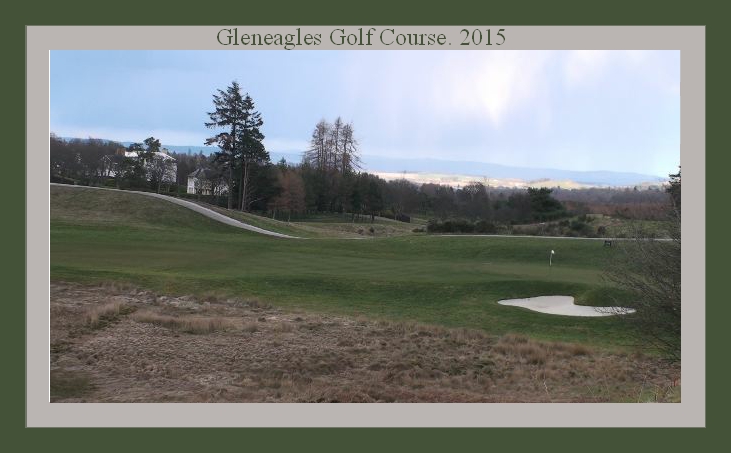
After leaving the Orkney Isles, we made our way to Duchally Country Estate, where we had booked a lodge. This place belongs to a company called CLC (Club la Costa). There is a hotel as well as the self-catering lodges.

(This was taken on another visit, as you can see!)

My daughter, son-in-law and grandson flew up to Edinburgh and joined us for a long weekend, which was nice.

On Saturday, we went to Loch Leven, not far away from Duchally. There is a castle on an island in the lake where Mary Queen of Scots had been imprisoned when some of her lords revolted against her rule. Due to the Covid-19 restrictions, that was closed.

We had a walk around part of the loch, which is very picturesque. We had a bit of trouble getting there because our satnav was completely thrown by a road closure for a market in the centre of Kinross. There were lots of people going down roads, then turning round and going back.

It was a lovely sunny day, but there had been a hatching of gnats as you can see in this picture. I was not deliberately taking photos of insects, but only saw them when I looked at the photo, later.

We went on to St Andrews, but the town was very busy and we couldn’t find anywhere to park, so we returned to Duchally.

The following day, we decided to climb a mountain. There was one called Ben Cleuch not far away, on the edge of the Trossachs. When we got there, it looked very steep, but we set off. I got about half-way up, but then the path became very rocky with a drop on one side. As my balance isn’t as good as it was, I opted to return to base camp. My husband came with me, of course, but daughter, son-in-law and grandson contiued onward and upward!

We had some fun watching a murder of crows (yes, that’s the collective noun) mobbing a pair of buzzards whenever they reached a certain point.

The gorse was magnificent, putting on a wonderful show on the hillsides.

Monday we went to the Falkirk Wheel. This is a means of lifting (or lowering) boats from one canal to another at a much higher level. It is the only one of its kind in the world, apparently.

Daughter and family were catching a flight from Edinburgh later that day, so we said goodbye to them and they set off towards home.

We had a walk around the grounds of Duchally Country Estate when we got back.

We visited Glamis (pronounced Glams) Castle. We’d pre-booked it as we had to with the Pandemic. It was an interesting visit. It was the place where Queen Elizabeth the Queen Mother was born and lived all her early life. There is supposed to be a secret room. It is said that if you count all the windows from outside, and all the doors from inside, there is a discrepancy. More windows than rooms!

A school friend of mine lives near to here, and we went to pick her up. She had agreed to come and spend a night with us at Duchally. On the way back from her home, we called at Dundee. I bought a Dundee cake, of course, but couldn’t find any Dundee Marmalade.

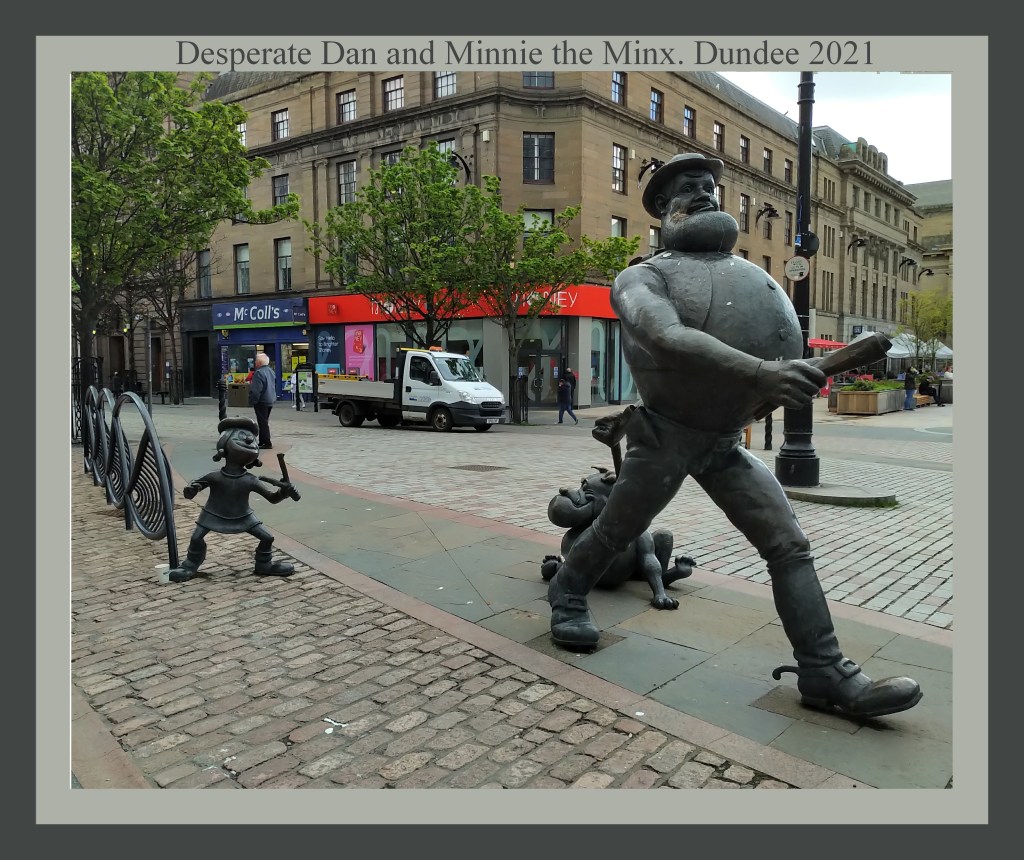
Dundee is the home of the Beano, a famous comic in the UK. The comic first appeared on 30 July 1938. I read it as a child, and so did my son. There are statues of some of the more famous characters in Dundee. There is another one, Dennis the Menace, whose statue we did not find, but I can’t believe he wasn’t somewhere.

The next day we visited the only lake in Scotland. The Lake of Monteith. We found out it’s called a lake because a Dutch cartographer mistranslated the word Laich, meaning a low place, as Lake, and it’s been a lake ever since.

One thing that impressed us was how light it stayed at night. This photograph was taken at 11pm and you can see how light the sky is still. This was at the end of May with still weeks to go until the Solstice.

Then, the following day, we sadly had to leave for home.

creating character depth

Depth is a vast word, a sea of information created of layers. It is complex, intense, and profound. Characters with depth feel solid, alive, as real as your best friend.

depth-of-character

To achieve a sense of depth, we begin with simplicity. Each character’s sub-story must be built upon who these characters think they are.

One of the most useful seminars I’ve ever attended was given by a Romance writer. He is a strong proponent of assigning verbs and nouns to each character at the outset as a way to get inside their heads.

If there is one thing Romance authors understand, it is how to create a strong impression of character.

When I plan a character, I make a simple word picture of them. The word picture is made of a verb and a noun, the two words that best describe each person. We want to know the good things about these characters, so we assign nouns that tell us how they see themselves at the story’s outset.