We planted a vine in our garden when we moved into the house. It has now become a lovely shady spot for sitting and reading. The leaves shade your eyes so that it’s possible to read without squinting.
For visually impaired readers, the picture shows a garden bench against a fence with some patches of ivy growing up it, and the trunk of a vine. On the bench is a pair of spectacles and a book. the book cover shows a young man with shoulder-length auburn hair. The background is a pale blue with the shadow of a wolf behind the young man.
The book on the bench is The Wolf Pack, which was my first ever book to be published. It is the first of a series that I’ve entitled The Wolves of Vimar (Vimar being the world where the action takes place).
The story is based on a Dungeons and Dragons scenario I wrote, but in the writing, it changed somewhat. Some places where certain things happened in the scenario I moved to somewhere else in the book.
I was excited to hear from Next Chapter that it has been translated into French and Spanish, too.
The Wolf Pack tells of a group of people, unknown to each other in the beginning, who are commissioned to go and find a magical sword that used to belong to the legendary king, Sauvern. Its whereabouts has been lost for many centuries.
There are surprises and dangers to be encountered in the tale. Death is never far away, and help comes in unexpected ways. Every character has to confront their fears, and they are all changed by their experiences.
Due to the very different characters, there are arguments and confrontations on the way as well.
The book has been generally well received and is currently number 47 in Teen and Young Adult Fantasy Interactive Fiction. (Although I didn’t write it as a teen book, and it’s not interactive! Still, who knows the workings of the Great Zon!)
Here is one of the reviews it received in the USA:
John Thornton 5.0 out of 5 stars
A solidly done, and crafted fantasy novel
“The Wolf Pack” is an original and well crafted fantasy novel. If you like novels like the “Earthsea Saga” by Ursula Le Guin or “When the Heavens Fall” by Marc Turner then I suggest that you may well enjoy “The Wolf Pack.” British style and spellings throughout. Not really a negative, just a difference to be noted.
I found the characters well developed, and complex (in a good way).
The plot is unique and unusual. It is not easy to explain, but does unfold nicely as one reads through the book. I am trying to avoid spoilers, so I do not want to give too much away.
Dialogue is well written and each character has his or her own voice.
If you are interested in purchasing this book, it is available in ebook and paperback format. You can buy it by clicking on the cover in the sidebar or here. This will take you to Amazon where you are.
If you read the book, please leave a review. Reviews are the lifeblood ofauthors as they are the best way to let people know about books, good or bad, so peoplewill have an idea if they will enjoy it.
I welcome any comments you wish to make. Please add them to the comments box.
Today I am honoured to receive a visit from award-winning author Randall Krzak. I have been a fan of Randall for a while now and am delighted he has agreed to be interviewed so that you can all find out a bit more about him and his books.
KODAK Digital Still Camera
Me:Hello, Randall. It’s good to have you here on Dragons Rule OK. (I hope the dragons don’t eat you!) Perhaps you would like to answer a few questions for my readers so they can get to know you.
Me:Who is your favourite author?
Randall: I have two authors who I equally consider my favourite: Tom Clancy and Clive Cussler.
Me: Apart from writing, what is the thing you enjoy doing the most?
Randall: Sightseeing (especially historical locations), candle-making, and pyrography.
Me: That’s one of my favourite things, too. Historic locations are so interesting, and can give you ideas for books, too.
If you weren’t a writer, what job would you do?
Randall: I don’t consider writing a job, but if I wasn’t writing, I’d probably be on a golf course as this is something I always saved for retirement.
Me:Do you have a ‘proper’ job,? If so, what is it?
Randall: Retirement!
Me: Haha. I know what you mean, though. No time to go out to work when you’re retired, is there?
Something that non-writers often want to know iswhy do you write?
Randall: I never considered writing until a long-time friend and work colleague suggested I write a novel. I took his advice and I’m still writing.
Me:So you started writing late. How old were you when you published your first book?
Randall: Sixty-two.
Me:A bit like me, then. I started after I retired. I suspect there are more writers about who started around that time!
Now for a question I can’t answer, myself, but another non-writers often ask. Where do you get your ideas from?
Randall: Sometimes my research will prompt an idea. A reviewer once sent me three sentences and asked if I could do anything with it. They became the basis for my most recent release, Colombian Betrayal. Someone else recently sent me a link to a news article, saying they thought the location would be excellent for one of my stories. I’ve outlined a multi-volume series, with the first one to be called Pirates on the Delta.
Me:Do you have any pets?
Randall: Right now we have five cats (all rescued or ferals we’ve slightly domesticated) plus we look after a stray.
Me:You obviously like animals would you say you are a dog or a cat person?
Randall: We’ve had both. As with our cats, our dogs have all been from non-kill shelters.
Me:When you go out to eat, what type of food do you prefer?
Randall: It varies, but the last two times we went out to eat, we selected an Indian restaurant. My favorite is chicken biryani with a Peshwari naan.
Me:Do you prefer the city or the country?
Randall: I prefer the country, although being somewhat near to amenities is useful, too.
Me:Yes. It’s nice to know you’re not completely cut off from society, even though the country is lovely.
Do you enjoy sport? Do you prefer to watch or take part?
Randall: I only watch now, but used to play baseball, basketball and American football.
Me: It catches up with us all, eventually, doesn’t it? What is your favourite sport?
Randall: American football.
Me: That’s one game I’ve never really got into. It seems complicated, but it probably isn’t when you get to know it.
Do you cook? If so, what is your favourite thing to cook?
Randall: One of my favourites is chicken curry.
Me:One of mine, too.
Can you play a musical instrument? If so, what is it?
Randall: I used to play the Hawaiian or steel guitar, but haven’t picked it up in decades. I used to sing lead with a British barbershop chorus. In 2007, we picked up the bronze medal in the annual British competition, jumping from seventh place.
Me:Impressive. I’ve recently started playing the piano again after decades. It’s not like riding a bike. You do forget! Who is your favourite musician?
Randall: I’d have to say Freddie Mercury was one of my favourites. Don’t really listen to music now.
Me:Do you have any siblings? Do any of them write?
Randall: Six (all younger). None of them write.
Me: A big family! It must have been fun growing up. Can you swim?
Randall: No.
Me: Do you do any voluntary work? If so, what?
Randall: We used to do a variety of events to help animal charities. Right now, we support several with monthly donations.
Me: Taking in stray and unwanted animals is a great thing to do.
Your work is well researched. Do you have personal experience of these places you write about?
Randall: Wherever possible, I use personal experiences to help my stories along. Sometimes, I have to rely solely on my research and/or information from those who might have visited or lived in a specific location.
Me:Your work has won awards. Can you tell us how many you have won?
Randall: My first three novels have all been recognized.
Me:That’s impressive. How did you feel when you won your first award, and what was it?
Randall: I was absolutely thrilled! I actually received two awards simultaneously. I submitted The Kurdish Connection and Dangerous Alliance to the 2018 Chanticleer International Book Awards in their Global Thrillers category. I couldn’t believe it when both were recognized as semi-finalists, but it didn’t stop there.
The Kurdish Connection finished its run in the competition as a semi-finalist, while Dangerous Alliance was one of seven First in Category winners.
As of June 17th 2020, Carnage in Singapore is a finalist in the 2019 competition. The final results were delayed due to the coronavirus pandemic, but the First in Category winners and the category Grand Prize winners will be announced in early September.
Me: Wow! But having read some of your novels, I can say that the awards are well deserved.
Thank you so much for your time. I’ll be looking out for your next novel.
And now here’s a bit more about Randall and his books.
BIO:
Randall Krzak is a U.S. Army veteran and retired senior civil servant, spending thirty years in Europe, Africa, Central America, and the Middle East. His residency abroad qualifies him to build rich worlds in his action-adventure novels and short stories. Familiar with customs, laws, and social norms, he promotes these to create authentic characters and scenery.
His first novel, The Kurdish Connection, was published in 2017, and the sequel, Dangerous Alliance, was released in November 2018. Both placed in the 2018 Global Thriller Book Awards sponsored by Chanticleer International Book Awards, with The Kurdish Connection finishing as a semi-finalist and Dangerous Alliance being selected as one of seven first in category winners. The third novel in the series, Carnage in Singapore, was released in August 2019, and is currently a finalist in the 2019 Chanticleer International Book Awards (as of August 17th, 2020). He also penned “A Dangerous Occupation,” a winning entry in the August 2016 Wild Sound Writing and Film Festival Review short story category.
He holds a Bachelor of Science degree from the University of Maryland and a general Master in Business Administration (MBA) and a MBA with an emphasis in Strategic Focus, both from Heriot-Watt University, Edinburgh, Scotland. He currently resides with his wife, Sylvia, and six cats in Dunfermline, Scotland. He’s originally from Michigan, while Sylvia is a proud Scot. In addition to writing, he enjoys hiking, reading, candle making, pyrography, and sightseeing.
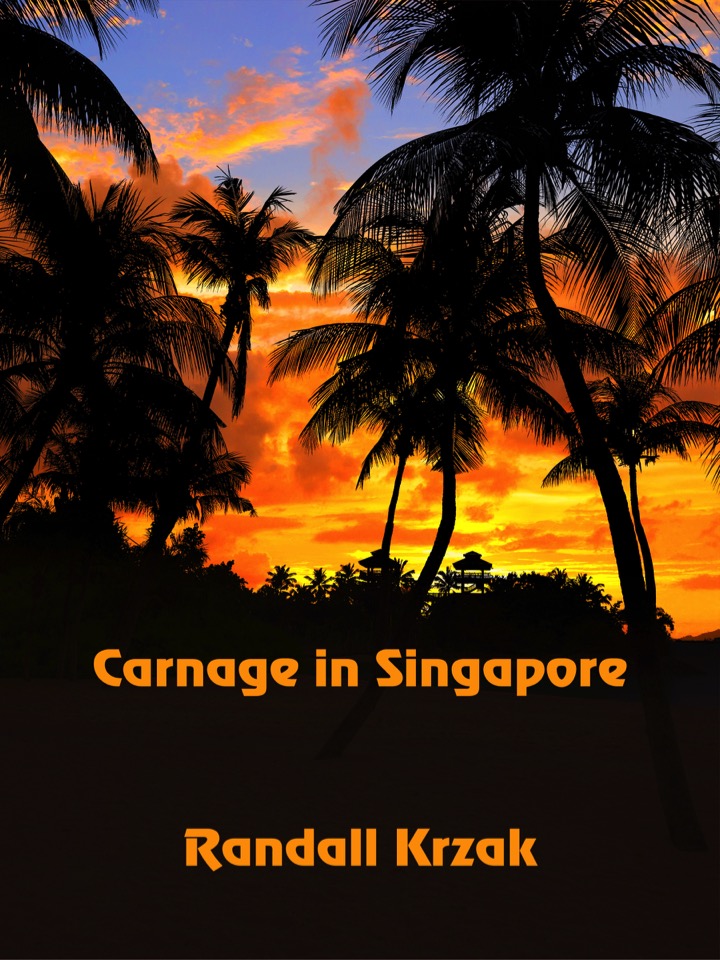
Here’s something about one of his books, Carnage in Singapore, which, incidentally, was the one that brought Randall to my attention. I think it’s a great cover.
Terrorist groups such as Abu Sayyaf and Jemaah Islamiyah have flourished in recent years with new recruits joining them and ISIS-affiliates at an alarming rate. Blended operations by various Asian countries have forced the groups to work together to identify a new operational base.
They seek an island nation to call home, one where they can plot against countries who oppose their ideals. They found a target, a small nation-state, perfect for their needs: The Republic of Singapore.
Before anyone can respond, the ambassadors of the United States, Great Britain, and Australia are kidnapped from their residences in Singapore. Right index fingers of each victim are sent as a warning. Any attempt to recover the ambassadors will result in the removal of additional body parts.
Bedlam Charlie team leader, Evelyn Evinrude, leads the group to rescue the ambassadors and capture the local leaders of Abu Sayyaf and Jemaah Islamiyah. Can Bedlam succeed or will events escalate, resulting in more deaths?
If you have any Portugese speaking friends, please let them know. This is more than just a recipe book. It has recipes from over 100 years ago and gives an insight into how people ate from 1909 to the present day. There are also anecdotes about the people from whom Viv received the recipes.
Click on the book title to buy. It is available from your favourite book seller.
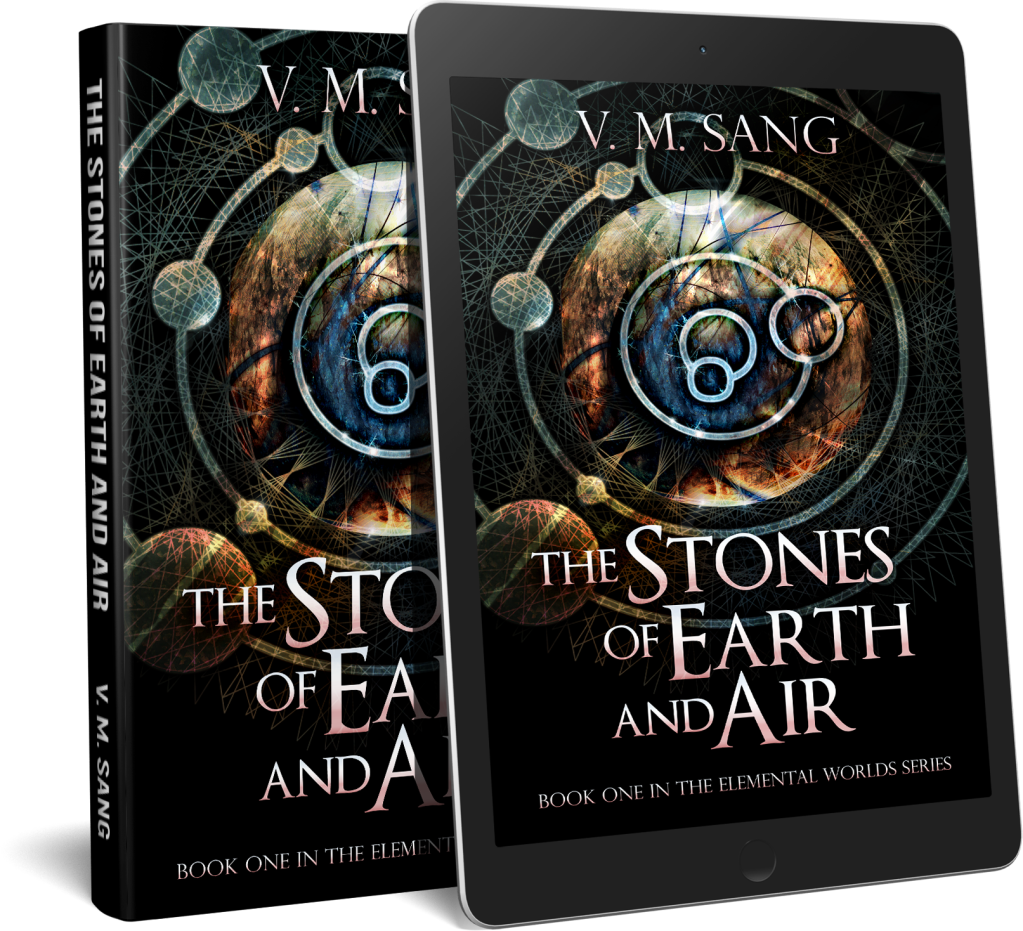
Also, The ebook version of The Stones of Earth and Air, which has recently been released as an Audiobook, will be FREE from tomorrow until 7th July. Hurry to get this bargain before you miss it.
After the Crown Prince of Ponderia starts behaving strangely, his best friend Pettic discovers that the prince has been replaced by a doppelganger, and the real prince kidnapped.
Unable to accept the loss of his friend, Prince Torren, nor the cruel impostor to become the new king, Pettic sets on a quest to rescue the prince. After he sees the fake prince meet a mysterious man, Pettic discovers that Torren has been imprisoned in another plane of existence.
With the help of Blundo, the court magician, Pettic finds that the only way to enter this other world are with four keys, each of them associated with a different element. As Pettic sets on his seemingly impossible quest, he discovers that the four worlds that hold the keys are all vastly different… and more dangerous than he could have ever imagined.
Click on the book title or the picture in the sidebar to go to Amazon where you are.
If you buy and read one of these books, tell your friends about it and please consider writing an honest review. Reviews are very important to authors as it is one of the main ways that people can find out about the books.
I love to hear from you all. Please write your comments in the comments box.
Debbie Manber Kupfer announced the release of the latest episode of her P.A.W.S books on June 15th. I was delighted to receive a preview copy of this book, and am now posting a review here and on Goodreads.This, along with her other books, is a good read and will appeal both to teen and young adults, and adults who like the escapism of fantasy set in our real world.
*****stars
Overview
This is a continuation of Ms Kuyper’s P.A.W.S. saga. It is, in fact, the 6th book. She has moved away from concentrating on Miri and the St Louis P.A.W.S., and this book is mainly set in New York, although it does have a substantial part in St Louis where Sandy, a weather mage, is situated. I would class it as a Teen and Young Adult book, although many adults would enjoy reading it if they enjoy fantasy. It is a fantasy world that runs in our own, but that normal mortals know little or nothing about. Fairies abound, as do shapeshifters, werecreatures and animagi. And magic is real.
Blurb
Jenny has been painting fairies her whole life, but now a new fairy has emerged, one with wings of pure silver. She wishes she could share this new fairy with Jamie, but Jamie has disappeared and Jenny is worried. Sandy is also worried. Her weather magic is out of control and she is taunted by a storm that whispers its name to her – Jhara. Deep inside the bottle, the spirit of Jhara waits. She hates this form and detests her creator who has trapped her in there. It was not fair. You cannot create a storm and then trap it in a teacup. That worked only in idioms. And this was Jhara’s life. The P.A.W.S. Saga continues with Jhara.
Characterisation.
The characters are well developed, with flaws and good points. Most want to do good, but their flaws let them down on occasion. Some are tied to the evil werewolf, Frederick, and in spite of their better efforts, end up doing bad things.
Writing.
There are a few typos that have got through the editing process, but that can happen to the best of writers and editors. The rest of the writing is good. The descriptions of the places and the people bring them to life. Ms Kuyper has a large cast of characters in this book that she handles well. Each has their own voice and are sufficiently different that we always know who is speaking. It must have been difficult dealing with so many.
Conclusion
A thoroughly enjoyable read. It adds to the on-going story of P.A.W.S., but it could be read on its own if you haven’t read the others.
I don’t usually venture into the political scene on my blog, but I am becoming increasingly worried and angry.
I know that this pandemic has to be contained as much as possible, but it seems that everything in the NHS has gone into this.
Hospitals are full of Covod-19 patients and other treatments have not been happening, some of which are for patients with serious and life-threatening illnesses.
As I understand it, many patients’ treatment has been put on hold. Mine for one, but mine is relatively minor compared to others.
It is impossible to get an appointment in my area at the moment, either with the hospital or the GP. I had a brief phone consultation, which, in my opinion, resolved nothing. The consultant wants further tests, but nothing is going to happen for the forseeable future.
One NHS Trust that I know of, because a friend lives in that area, has kept one hospital ‘Covid-free.’ All Covid cases are sent to the other hospitals. As a result, her treatment and operations are going ahead as normal.
In my local area, the Trust has 3 hospitals. Why have they not designated one as Covid-Free?
And what about the Nightingale Hospital that was built with great fanfares and then not used? Could Covid patients not have been sent there, leaving other hospitals free for other treatments? I appreciate that it was only a ‘field hospital’, but it was built for Covid patients, so must have been able to deal with them.
I predict a rise in deaths from other sources because of this. It might already be happening, Probably is, but we’re not told of this. Only Covid deaths are important, it seems.
I tried to find how many cancer deaths had occurred so far this year and compare it with last, but could not find the statistics. I did find out that it is expected that over 18,000 more cancer deaths alone will occur in the UK due to Covid-19. Some of this is because people fear going to A&E due to the virus. But if there were a Covid-free hospital, that would be eliminated.
I have not researched the expected deaths from other serious illnesses, but I am sure that there will be an increase in them as well.
I am concerned that with the easing of lockdown, and the ignoring of the rules that are already there, we will see a spike in infections and deaths from Covid-19. People are gathering in large groups with no social distancing, and not only for demonstrations. This will mean that for those waiting for hospital appointments and treatment will be put on hold for even longer.
Thank you for reading. What do you think? Do you have any illnesses that are not being treated because all the hospitals in your area are full of Covid patients?
They say that you wait ages for a bus, then 2 come at once. Well. I’m not talking buses here, but news of my books.
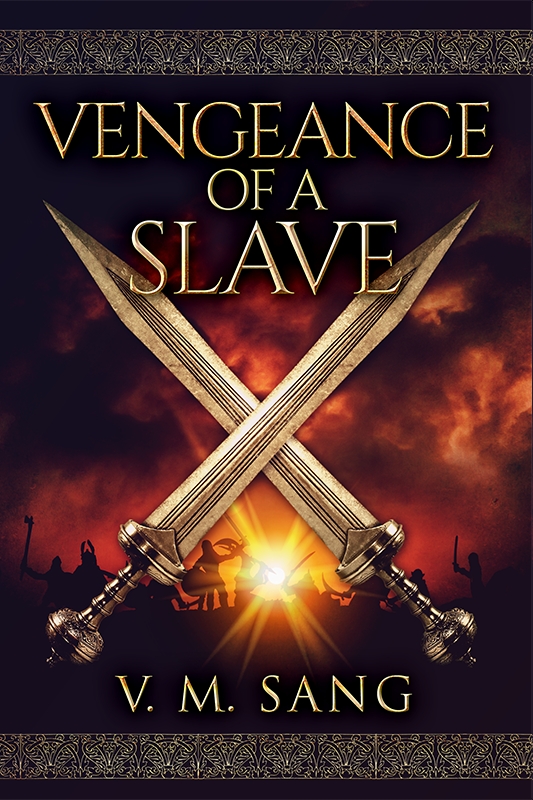
A few days ago I told you of the release of my new audiobook, Vengeance of a Slave. Yesterday I got the suggested cover for my latest book.
Its a novella, a prequel to my Wolves of Vimar series, and tells about the parents of Carthinal and how they met and fell in love.
Of course, things aren’t as straightforward as that. He’s and elf and she’s a human, so there are family problems. How do they overcome them, and do they live happily ever after with their little son, Carthinal? You need to wait until it’s out to find out!
Anyway, here’s the cover. I like it and have emailed my publisher to say so. What do you think? Would you pick it up if you saw that cover? Let me know in the comments box.
Hi. I just received an email saying that Vengeance of a Slave, my historical novel set in Britain at the time of the Romans, has been released as an audiobook. You can get a free 30 day trial of this book if you follow this link for the UK
If you do listen to it, I would be very grateful if you would post a brief review. Reviews are very important to authors and readers alike as there are so many books published it is difficult to know if a book is for you or not.
After finding the gems associated with the worlds of Earth and Air, Pettic needs to enter the final two Elemental Worlds to find the gems of Fire and Water.
In these two worlds, as before, he has to preform a task to help the inhabitants before the jewel will reveal its whereabouts.
But when he has found these gems, how can he rescue his friend, the Crown Prince of Ponderia? First, though, he needs to find the two missing gems.
In Ignis, the land of fire, he finds the magical creatures are having fewer and fewer offspring. Can he help them and find out the cause? And what can he do about it?
In Aqua, the land of water, he meets merfolk who have a problem. Their leader is dying because his magic staff has been stolen. Can Pettic find this staff and the culprit before it is too late?
I am pleased to say that the same narrator who narrated the audio version of The Stones of Earth and Air has agreed to narrate this book, too. He has finished the narration, and it is now with the publisher. I hope it won’t be too long before it’s available.
In the meantime, for those of you who can’t wait, the ebook version of The Stones of Fire and Water is FREE on Amazon from tomorrow (14th June) until Thursday 18th June.
Click on the link now, before you forget or you’ll miss this opportunity. You can get your book by clicking on the title, or the cover in the sidebar or the text.. This will take you to Amazon where you are.
I am always pleased to hear your comments. Add them in the comments box.