Category Archives: Uncategorized

Some thoughts on Enid Blyton and the 50p coin

girls-2838810

Recently, it was proposed to put Enid Blyton, the children’s author, onto the 50p coin. This was rejected on the grounds that she was a racist, homophobic and sexist.

This worries me slightly because we are judging someone from a different era in the light of our own. Admittedly, the three things she has been accused of are deeply unpleasant—at least to our more enlightened eyes. I personally abhor all these things.

She has also been condemned and removed from libraries, not because of this, but because some people thought that she used too simple language and did not stretch children’s vocabulary.

When I was a child, I loved her books. I read them avidly. They were exciting. Her Famous Five books, her Mallory Towers books, the Adventure books, the Faraway tree books, the Secret Seven, and my favourite as a child, Shadow the Sheepdog were all read with great pleasure.

Now let us examine the accusations.

Racism.

She certainly had golliwogs in the Noddy books, and they were the baddies. But golliwogs were common toys in the 40s and 50s and no one thought anything was wrong with them. There was The Black and White Minstrel Show on the TV, and the blacking up of white men as black minstrels was accepted.

Now I’m not saying it was right, Clearly it must have been deeply offensive to black people. What I am saying, is that when she was writing, golliwogs were not considered to be offensive, and so to brand her as racist on the grounds of having gollisogs in the Noddy books, and making them bad, was acceptable at the time.

Sexism.

Was she sexist? At that time, it women usually stopped working when they married. They then devoted their time to looking after the home and raising the children. That was how it was.

Because Anne, in the Famous Five, did the cooking when they were camping does not make Miss Blyton a sexist. She was reflecting the way things were at that time. Boys simply did not cook.

That they do now, shows how far we’ve come. When she was writing, boys didn’t learn cooking and needlework at school, neither did girls do woodwork and metalwork. Now they are all merged together under the title of Technology, or Design and Technology.

Homophobia.

Homosexual acts were illegal in England and Wales until 1967, but only between consenting adults over the age of 21, and even then, not in the armed forces, It was illegal in Scotland until 1980 and Northern Ireland until 1982. Thus, during the time when Enid Nlyton was writing, homosexuality was frowned upon by the state.

Having said that, reading the Famous Five books, Miss Blyton had a transexual (although the term was not used in those days.) Georgina, one of the five, and known as George, always dressed as a boy and had her hair cut short (unlike Anne who had long hair). She also expressed the desire to be a boy and behaved as a boy. That sounds very much like a transexual to me.

To conclude, I think that it is unfair to judge someone from a totally different era, with a totally different mindset by our much more enlightened and liberal standards.

children-studying-670663_1920

Miss Blyton was very important as an author. She got many children interested in reading. I am one of them. I devoured her books, as I said at the beginning of this post.
Some of her works, I understand, have been reworked. Things that we now consider wrong, why can’t they be altered. Noddy’s golliwogs could easily be changed into something else. Her baddies in the Famous Five, Sevret Seven and Adventure series, if people don’t think having them as foreign is right, could have their nationality changed.

The very first story I wrote was based on Shadow the Sheepdog. I was only about seven at the time. Would I have become a writer if I’d not had that early inspiration?

I think it’s wrong to judge people by today’s standards when the standards they lived in were so different.
I would love to hear what you think of this. Please post your comments in the comments box.
Sunday, bloody Sunday #narrowboat #boating #swansareevil

Since finding this blog, I’ve never failed to be amused. Well worth taking a look.

via Sunday, bloody Sunday #narrowboat #boating #swansareevil

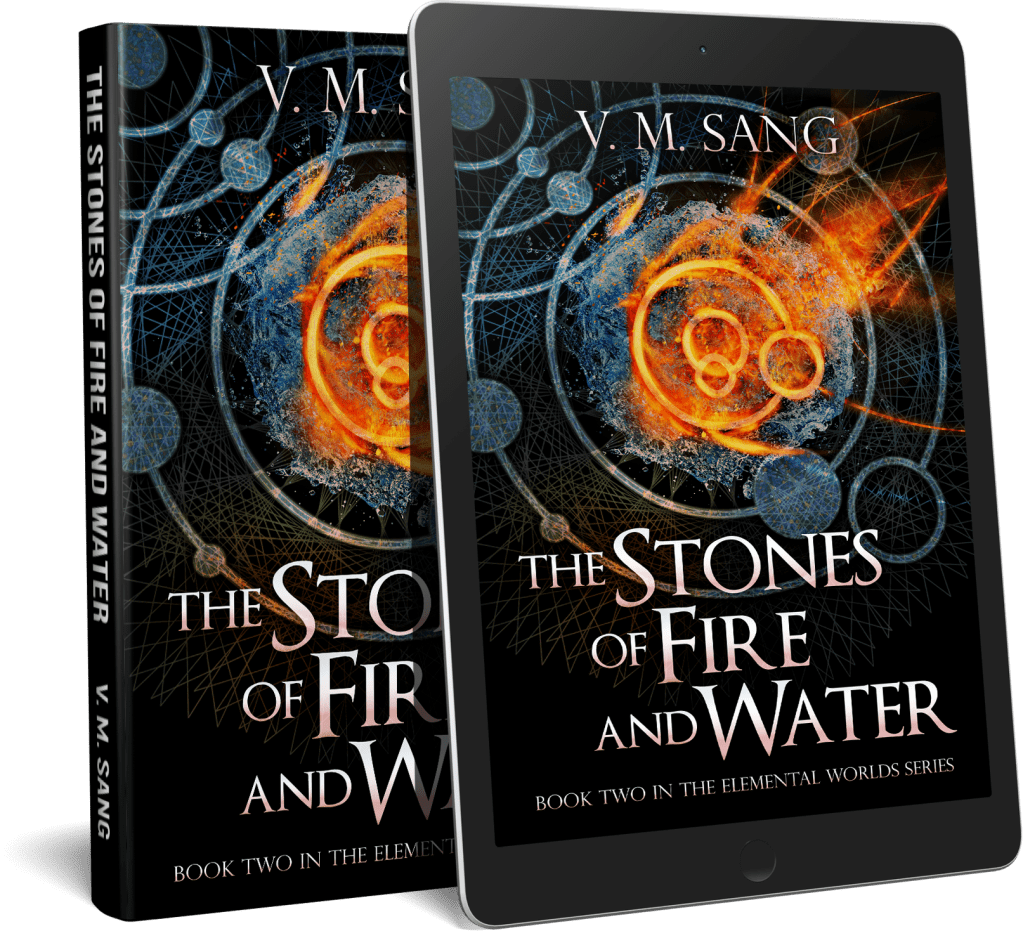
Sally’s Cafe and Bookstore, New on the Shelves – Pre- Order for August 7th – Racked: Grafton County Series, #4 by Sue Coletta

This sounds like an exciting read.

via Sally’s Cafe and Bookstore, New on the Shelves – Pre- Order for August 7th – Racked: Grafton County Series, #4 by Sue Coletta

Inclusive Language

winter-1142029_1280

I heard a programme on the radio yesterday. It was about domestic abuse. Specifically, coercive control. It got me thinking.

Why do men (it’s usually men, although not exclusively, I admit) think they have the right to control their partners or spouses?

Well, I think that it’s because these people consider themselves to be superior and ‘know what’s right’, as well, of course, wanting power over someone. But you can only get power over someone whom you think is inferior to you.

How has this come about? And how can we change attitudes?

This is not an easy thing, but there is one thing that, I think, adds to the problem, and that is exclusive language.

When I was growing up, the common term for our species that was in use was ‘Man’ (With a capital letter to distinguish it from ‘man’, the male of the species.) Nowadays, I often see ‘man’ as referring to the species as a whole. No capital letter to distinguish it from ‘Man’.

If we consider the animal kingdom, often we refer to a species by a name that is the name of one gender or the other. Cow, Goose, Hen, duck, dog etc. We say to our children ‘Let’s go and feed the ducks.’ Or ‘Look at those cows in that field.’
We call these creatures by the name of the gender that is most useful to us. Hens lay eggs. Cockerels don’t. Cows give us milk from which we make butter, and cheese. Bulls don’t. Ducks and geese lay eggs. Drakes and ganders don’t, and when I was growing up, a dog (male) was the preferred gender to have. And ‘bitch’ is a derogatory term, anyway, as are so many female names. (witch and cow, for example.) And if you want to insult a man, you can call him a bit of a ‘girl’ or ‘woman’.

In the north of England, a term of endearment is ‘duck’, but I think it has a certain condescention about it. Probably that’s just me, though

Male names are often, or were in the past, used as praise. A very long time ago, the term ‘a gay dog’ meant that the man was a womanizer. But that was not considered too bad, really. In fact it was often said with some hint of approval. Yet if a woman did the same type of things, she was a ‘slag’.

The male names for animals applied to men do not have the same connotation. A stag party is a group of young men out to have a good time before a wedding. Stags are imposing beasts, strong and beautiful. Now think about the female version—hen party—. Hens are silly, fluttering and noisy clucking creatures. If you want to say someone is unpleasant, you can call them a bitch, or a cow. Even a mare is occasionally used. All names for the female animal.

Now what about the males. I’ve already talked about ‘dog’, but ‘bull’ isn’t used derogatorily. It usually implies the man is strong, and stallion that he’s good in bed, to be polite.

Now to language, which is what this post is all about. Here are some alternatives you can use in your writing (or even in your speech).

winter-1142029_1280
 Man: Human, People, Humanity.
 Man-made: Artificial, Synthetic. (Not only men make goods, you know.)


In Defense of The Wasp

wasp-2300988_1920

This morning I was watching a wasp flying around the flowers in my garden. It wasn’t bothering me, just gong about its business, gathering nectar.

I remembered that I’d posted about wasps at an earlier date, and so decided it was time to repost it. So here it is!

I’ve decided to do a post about a much maligned insect. The Wasp.

We all know the nuisance black and yellow striped creature that buzzes round us when we want to eat outside, and I’ve heard it said, ‘What is the purpose of wasps?’

Well, here it is. Something that I hope will help to mollify your thoughts on the creatures.

I was brought to thinking of them last September when I got stung. In all fairness, it wasn’t the wasp’s fault. Well, not entirely, anyway. I saw one in my daughter’s bathroom and decided to let it out of the window. I failed to get it out, and it must have ended up on my clothes, just under my arm. When I put my arm down, it stung in self defence. Still, it didn’t half hurt, and continued to do so for days!

What we think of as wasps (and hornets), those black and yellow terrors of picnics, are not the only insects to be classified as wasps. Wasps belong to the order of insects called Hymenoptera and there are over a hundred thousand species.

The black and yellow terrors are communal insects. They build nests of a papery substance created from wood. It usually begins in the spring when a queen lays eggs that hatch into workers. The workers are all female, and their ovipositors are what have become their stings.

Each spring, a new queen that has hibernated over winter, begins to build a new nest, built of wood she has chewed and mixed with saliva. Then she lays a few eggs. She has to forage herself for food for the hatched grubs until they become adult worker wasps.

the-hive-3724761_1920

These wasps only become a real nuisance in the late summer when the queen has stopped laying and no more workers are being produced. They search for food—sweet, sugary substances usually—and that is when they come into contact with humans.

And we don’t like it.

Most of the rest of the year, they are happily capturing insects and feeding on nectar from flowers. In fact, they are important pollinators. Not something most people know, but with the problems with the bee population recently, perhaps we should consider them more kindly.

wasp-3603869_1920

Most wasps are not social, though, and live a solitary life. Some live in communities, with nests close to each other, but do not interact, except to sometimes steal each others’ prey. Some species actually build communal nests, but each adult wasp has her own cell, and there is no division of labour or community work. The females each catch and feed their own grubs.

The prey of these wasps is spiders and insects. They feed them to the grubs, which are carnivorous, but the adults usually feed on nectar. As such, they are useful to help get rid of unwanted insect pests.

Then there are the parasitic wasps. They lay their eggs in the body of the prey animal. The grubs then eat their way through the insides of the poor creature. Others lay their eggs in the tissue of plants. The plant responds by creating a gall around the growing grub.

ichneumonoidea-2181464_1920


I admit I’m not the most generous of people to wasps. It’s now spring, and the queens are coming out to find a place to build their nests. Just this morning, while I was working at my computer, I heard a buzzing by the open window. It disappeared, but returned soon after. This happened several times and so I got up to investigate. A wasp was clearly inspecting the brickwork around my window. It then had the temerity to enter and start to look around my husband’s computer.

I went downstairs and got the Wasp and Fly killer and zapped it as it went back to the window. (I didn’t want to spray the killer onto my husband’s computer, just in case! I’ve no idea what it might do to it.) I might know they are important predators and pollinators, but I don’t want hundreds of them just outside the room where I work.

So please spare a thought for the poor wasp. They aren’t as useless as you thought.

Please leave your thoughts on the wasp in the comments box. Do you think they are useless, or do they have some use after all?

Spring. A Poem

110daffodils

Dandelions, like gold, cover the meadows.
Newborn lambs frolic in fields.
New leaves on the trees are casting their shadows
And winter’s cold grip quickly yields.

At the edges of woodland the primroses glow
And cowslips their scent fills the air.
Anemones dance when the breezes do blow
And birds sing with never a care.

Then bluebells and campions come into bloom
Their colour the blue of the sea.
The cuckoo, that herald of spring, will come soon
His call echoing over the lea.

The song of the blackbird is like molten gold.
His notes are so pure and so clear.
Hearing him seems to banish the cold
And brings joy to all those who hear.

Robin is nesting, and other birds too,
The hedgehog is active once more.
The young of the deer and the badger and shrew
Play their games as in old days of yore.

The sun climbs higher and higher each day
Giving more of his heat and his light.
It sparkles like stars fallen into the bay.
All smile at the beautiful sight.

Hope and excitement come with each spring morn.
What blessings will come with this day?
New starts can begin once again with each dawn
And send us all hopeful away.

Words you should not use in writing or speech


Featured Image -- 1181. Obviously. This word is one that is unnecessary. If something is obvious, it does not need stating.
2. So. Lots of people open sentences with ‘so’. It usually has no meaning and is just a filler word. Someone asks a question ‘Why did you go to see Jason yesterday?’ , and the response is ‘So. I haven’t seen him for ages and wondered if he’s all right.’
3. Very unique. Unique means there is only one of it. Adding ‘very’ is meaningless. As is adding other qualifiers.
4. Just. Unless you are talking about the judicial system, ‘just’ is another filler word. We often say ‘I was just going to do it.’ Don’t write it.
5. Very. You should try to find stronger word. Don’t say ‘very big’ use ‘enormous’. ‘Huge,’ etc. The English language, thanks to the way it’s developed, is rich in synonyms.
6. Awesome. This word is greatly overused. It actually means something that fills you with awe, not just something that’s pretty good.
7. Nice. This is something I was taught at school, many centuries ago. OK, maybe not quite that long, but a long time ago anyway. Don’t use ‘nice’. Choose a stronger, more interesting word.
8. Really. Similar to ‘Very’. ‘A really nice cake’ (Look, I used 2 of these words in 1 sentence!) Choose a stronger word.
9. Irregardless. This is NOT a word. The word is ‘regardless’.
10. Try and…  actually means you will try, and you will succeed. If you succeed, you don’t need to try. If you try, you will nor necessarily succeed. Use ‘Try to…’ instead.


What do you think about using these words? Do you use them?