Here is a useful blog.
Examples of Narrative Endings: Via Writer’s Circle
Here is a useful blog.
Here is a useful blog.
Here is part 3 of the story of Jovinda and Noni, Carthinal’s parents. Since I missed last week’s post entirely in the end, I am continuing with my normal schedule with the third week of the month.
Jovinda went about her chores humming to herself. That afternoon she was going to see Noni again. It had been a week since she had last seen him. It was not always easy for them to arrange their meetings. Noni had his work to do and also they had to keep their meetings secret from their parents.
Salor helped the lovers. She thought it was exciting and romantic. She gave Jovinda alibis whenever the pair were to meet, and if the girls seemed to be meeting more frequently than previously, Jovinda’s parents did not seem to notice.
Noni could not get away as often as he would have liked, but every time he had any time to himself he and Jovinda would meet. Usually they went to the woods out of town. It was quiet there and there were many places they could be totally alone with little fear of discovery. The summer passed and the trees began to put on their autumn colours.
‘What are we going to do when winter is here?’ Jovinda asked one day. ‘It’ll be cold and wet. We won’t be able to sit on the ground then.’
Noni looked at her and stroked her auburn hair. ‘Something will turn up, darling,’ he said. ‘We’re meant to be together. I feel it deep inside my soul. Nothing will part us, not even winter.’
He was right, of course. As the last leaves fell from the trees and the summer warmth left the land, Jovinda came to a terrible realisation. She had missed her monthly bleeding. It was now time for the next one but still nothing happened. She had been in such ecstasy that she had not thought about anything other than Noni. Now she realised she was pregnant.
How could she tell her parents? What would they do? Would they disown her? How would Noni react? Would he stand by her or would he abandon her? Oh why had she been so foolish. She had not thought about possible consequences when they had made love in their glade in the wood. Now she was suffering the results of that lack of forethought.
‘I’m going to see Salor,’ she told her mother after she had finished her chores. She left the house and hurried to her friend’s home. Salor had become engaged to a young man during the months that had passed and was due to be married in the spring. He was the son of a friend of theirs and they were delighted with the engagement. They had been going to suggest the pair get married when the young people themselves said they wanted to get married.
It was so different from Jovinda and Noli’s experience that Jovinda was a little jealous. She would not change Noli in any way, though, even for approval by her parents.
She arrived at Salor’s house and was admitted. Salor took her to her room where she burst into tears.
‘Jovinda, what’s wrong? It’s not a problem with Noli, is it?’
Jovinda dried her eyes and sighed.
‘Well, it is and it isn’t. Oh, Salor, I’m in so much trouble. I’ve missed two monthly bleedings.’
Salor put her hand to her mouth.’That means…’
‘Yes. I’m pregnant.’
Salor looked at her friend with eyes opened wide. ‘I didn’t think you’d be so foolish, Jo,’ she said. ‘How did you not think this might happen?’
Jovinda’s eyes began to leak tears again as she tried to push them back. ‘I didn’t think. Oh, Salor, it seemed so right. We love one another and soon kisses weren’t enough to show our love. What am I to do?’
‘Does he know?’
Jovinda shook her head. ‘I’ve not seen him since I realised.’
‘Will he marry you? Or do you want to go to a witch woman and get rid of it?’
‘I don’t know,’ wailed Jovinda, crying again.
Eventually the girls decided that Jovinda must tell Noli. He was as much to blame as Jovinda for the predicament she was in. Salor privately hoped that Noli was not one of those men who ran away from responsibility. She had seen young women left with an unwanted baby when the father decided he did not want a wife and child. He had his fun then ran. The girl concerned never regained her reputation. It was different if the man married the girl. Oh, there was scandal at first, but later people either forgot the child was born rather early or deliberately forgot when the wedding had been.
Salor helped Jovinda get a message to Noli and the pair met at their usual place the next day.
It was cold. The fallen leaves made a multicoloured carpet on the ground in the glade where Noli waited. He pulled his cloak round him as he wondered what Jovinda wanted to see him about so urgently. He heard a crackle in the leaves and turned to see Jovinda crossing the glade. He opened his arms and she ran into them. They kissed passionately before saying a word.
He looked into his lover’s eyes and saw they were red. She had been crying. Had her parents found out about them? He held her close and waited for her to speak.
‘Noli,’ she said through her tears, ‘I’m pregnant. I am thinking of going to a witch woman to get rid of it though.’
For the first time since they met, Noli became angry.
‘You will not kill this child,’ he said, and he stalked to the opposite side of the glade.
‘It is a new life beginning. Who knows what great deeds it could do, or how important its decendants could be. We elves will never destroy a life, even an unborn one.’
‘But, Noli, what are we to do?’
He came back to her side and put his arms round her again. ‘We’ll get married, sweetheart. It’s what I would like and I hope you would like it too.’
‘Of course I would like that. We can have this baby and then lots more.’
Noli laughed. ‘I hope so. Elves aren’t very fertile as a rule. I suppose it’s because we live so long. If we had too many children we’d soon overrun the world. But an elf and a human…who knows?’
They parted after discussing whether Noli should go with Jovinda when she told her parents. He wanted to be there to support her, but she said she thought it would be better if she told them alone.
Jovinda walked slowly back home having resolved to tell her parents the very next day.
How will Jovinda’s parents react to her news? The next installment will be on the third Tuesday of April.
Your comments are more than welcome. I will try to reply to all comments.
Why not sign up to receive news of release, giveaways and other things by email. I promise not to spam you. I hate spam too.
Or follow me.
I’ve been away for just over a week, visiting friends and relatives. I did manage to schedule last week’s post as it was easy, just copy/paste, but I didn’t have time to schedule this week’s. Consequentially it will be a little late. I’ll try to get it up for tomorrow but I’ve still to write it!
My sincerest apologies to all my followers.
A warning for all authors.
I don’t normally do this sort of thing, but hopeful (and sometimes desperate) authors should be warned when there is someone out there that will try to take advantage of them or promise them things that they don’t deliver. There are enough scams and half-assers out there, but when someone can stop someone else from making a big mistake, this is exactly what should be done.
I want to talk to you about seriousreading.com and the bullshit I just dealt with. Maybe, once you see for yourselves what it is they *actually* deliver, you can avoid making the DUMB mistake I did.
On Feburary 19, I came across a suggested post on FB. I wish I had taken a screenshot of it so I could relay their pitch word-for-word, but you will just have to go onto their FB and read for yourself because they have blocked me. Basically, it…
View original post 1,307 more words
A great post for all bloggers to think about.
What is talking?
Talking is using words in order to express a meaning.
What is a word?
A word is a sound, or combination of sounds assigned to a particular thing.
Having set that out I will state that in my opinion, animals can and do talk. Just because they do not talk in such a complicated way as we do does not mean they

are not talking.
Take birds, for example. Birds sing. Some birds have songs that are beautifully melodic and musical. Take the British robin for example. He isn’t just singing because at last winter is over and it’s a nice sunny day, so he feels happy. No, he’s saying to all other male blackbirds ‘I’m here and this is my patch, so stay away.’
At the same time, he’s advertising to all female robins that he is a good catch.
Songbirds emit up to 20 different sounds that tell of fear, hunger or alarm an
d warnings to fledgelings. (The Free Dictionary.com)
OK, so perhaps that is communicating and not talking. After all, we communicate an awful lot without saying a word , so let’s look a little deeper.
Anyone who had a cat or a dog can usually catch on pretty quickly what their various sounds mean. One meow for ‘I’m hungry’, and a different one for ‘Let me out, I need a pee.’ If your cat always makes the same sound for the same thing, is that not what a word is?
I have no idea what all the sounds made by Herring gulls mean, but they have such a wide variety that I would like to find out if they use them for particular things. I do know that young herring gulls make a little squeaking noise to beg for food from their parents. Is this a ‘word’ meaning ‘food’ or ‘I’m hungry’? It’s not used at any other time as far as I am aware.
What made me thi nk of this was something I was reading in a book called ‘Proust and the Squid’ about how we learn to read. It told of monkeys that when danger was spotted, used a particular call for a leopard and a different one for an eagle, the two main predators. They had also combined the two to mean ‘get out of here fast.’
If the sounds are made exclusively for those things, and as I read it, they are, then are they not ‘words’?
An article in ‘Dr Goodword’s Office’ on ‘Can Chimpanzees Speak’ (Alphadictionary.com) decides they cannot. It states that chimpanzees that learned to sign cannot form complex sentences. they would say ‘Give John Banana’ or, ‘Car hit man.’ The writer states that these are not truly speech because there are no morphemes (-ing, -ed, at, I, she etc). I hesitate to disagree with the writer, but I am going to anyway. The chimpanzee is communicating its desires or information using, in this case, signs and not sounds, but I would say it’s talking.
Just because an animal can’t make the same sounds that we do, does that mean it can’t talk? That would be like saying the French can’t talk because they don’t use the same sounds that we do for specific things. (‘chien’ for ‘dog’, ‘livre’ for ‘book’.)
OK, I’ll admit that animals can’t hold conversations in the way we understand them, nor express complex ideas, but they do talk to each other using ‘words’ and we are being rather superior in thinking they can’t talk. Dr Goodword’s Office seems to have the definition of speech as a rather complex achievement, involving sentence structure and all parts of speech.
Your cat ‘tells’ you what she wants by her meow. The pygmy sloth ‘tells’ all around he’s feeling randy by a particular call. (I heard that one on the Radio 4 the other day.) The young herring gull ‘tells’ its parent it wants food by squeaking. If these sounds are used specifically for that particular thing, then it fits the definition I made above of what a word is.
I think it all depends on your definition of talking, and there may be a difference in speech and talk. Perhaps animals can talk, but what they say is not speech.
My conclusion? Animals can talk (but your cat will never make a speech).
I am going to take a rest from my usual second Tuesday subject of Commonly Confused Words to talk about a few words and phrases that I think are very overused in today’s world. The unfortunate thing is that the overuse dilutes the meaning and/or impact of the words.
I am talking from a UK point of view, here, of course. These words and phrases may not be in common use in other parts of the English speaking world. They may interest some of you. though.
1. ICONIC or ICON.
Everything nowadays seems to be iconic. An icon was originally a religious picture. They were used in the Greek and Russian Orthodox churches and were usually pictures of Christ, the Virgin Mary, saints or angels and were used as aids to worship.
Another meaning of the word is a small picture or symbol that links to a program in computing.
Neither of these seem to fit the use of it as used commonly these days. It has come to mean something that represents something else.
‘The Eiffel tower is an iconic building.’ It represents Paris.
There are so many icons around these days! Nearly everythibng and everyone is an icon.
2. AWESOME.
I’m afraid our American friends are largely responsible for this one. While there are some truly awesome sights and events in the world, much of the time this word is used, the users mean something really good. It won’t fill them with awe and wonder, just make them feel excited and possibly surprised.
Having used the word ‘wonder’ above, it occurs to me that the word ‘awesome’ is going the same way as ‘wonderful’ and having its meaning diluted. What are we going to say to something truly awesome?
3. AT THIS MOMENT IN TIME.
As opposed to a moment out of time? where else is a moment except in time?
What’s wrong with ‘NOW’?
4. One beloved by football commentators. I’m still not sure how it came about.
EARLY DOORS.
This means that someone is going to do something , well, early! Why the ‘doors’ has been added, your guess is as good as mine. Are doors early? How are doors early? It irritates me.
5. VARIOUS DIFFERENT.
As opposed to various the same? Tortology, I think. Can you have a variety of things that are the same?
6. There are a couple of variations on this one.
THE REAL TRUTH, or THE TRUE FACTS.
You can’t have either an unreal truth or untrue facts. It’s either true or not, or it’s a fact or not.
7. UNIQUE.
‘Unique’ means there is only one. It does NOT mean that something is unusual or rare. You cannot have things that are ‘fairly unique’, ‘very unique’ or any other modifier. Something is either unique or it’s not. Period!
8. EPIC.
This word has come to mean some large event. We, in the UK have apparently been having floods of epic proportions. (Or else, if not epic, then of Biblical proportions!)
Epic is supposed to mean a monumental struggle of some kind, or something monstrously huge.
It originally meant a heroic story.
It is another use of a word being downgraded.
If you enjoyed this post, please consider reblogging it, or make a comment. I will endeavour to reply to all comments.
Sign up to my email list for all the latest news about my writing. I promise not to spam you. I hate spam too.
Great thoughts for all writers.
Photo post by @KawaneeHamilton.
Source: 8 laws of Foreshadowing (shared from Writer’s circle)
I’ve posted on this before, but I want to be more specific this time.
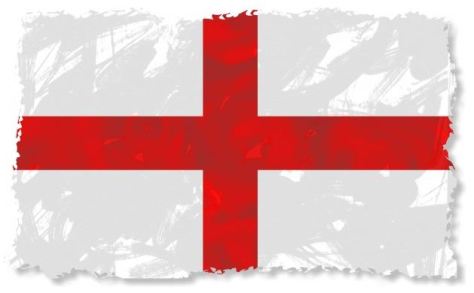
The British Government has recently debated whether there should be a National Anthem for England, specifically to be sung at sporting events. Scotland has Flower of Scotland, Wales has Hen Wlad fy Nhadau and Northern Ireland uses Londonderry Air. England has used the UK National Anthem, God Save the Queen but does not have one of its own.
Many people have asked for England to have its own Anthem for events when England competes alone. There have been three main ones and one other that does not seem to have many in favour, although personally, I think it would be the best. These contenders are: Rule Britannia, Land of Hope and Glory and Jerusalem. The unfavoured one is I Vow to Thee My Country.
1. Rule Britannia is not good because it is not England. It’s Britain. The name itself implies Britain. Also, most people don’t know the words except for the two-line chorus. (Rule Britannia, Britannia rules the waves, Britons {Not English, note} never, never, never shall be slaves.) Not a good anthem for England as it refers to Britons, which includes Irish, Scots and Welsh.
2. Land of Hope and Glory is a little better. It is very patriotic and a brilliant tune, but also very much of the 19th century. Can we, in all honesty, in the 21st century sing ‘Wider still and wider shall thy bounds be set’? Imperalism gone mad!
3. The seemingly favoured one and one that has already been used at some sporting events. It was sung at the Commonwealth games, I believe, and I have heard it myself being sung at the current series of cricket matches against South Africa.
This is Jerusalem, of course. Brilliant tune, but what about the words?
Well, as I see it the title of the song is suspect. It’s Jerusalem, for goodness sake. Not London, Liverpool, Manchester, Birmingham, Leeds, etc All good English cities, but Jerusalem, a city in the Middle East. Yes, it is important worldwide as the birthplace and holy city of 3 great religions, but it’s NOT ENGLISH. It’s a national Anthem for England we’re talking about here.
Then there are its religious connotations. It is quite unashamedly Christian.
‘And did those feet in ancient times…’ Whose feet? Jesus’ feet.
‘And was t he Holy Lamb of God…’ Who is the lamb of God? Jesus.
‘And did the countenace divine…’ Whose countenance was divine? Jesus’ countenance.
There are many people in the UK who do not subscribe to Chrisitianity. There are, of course, Hindus, Muslims, Buddists, Sikhs, Jews and many others who won’t be represented by this song, but also the atheists and agnostics and other non-church-going people. We are constantly being told about how the ethnic groups (specifically Muslims) should be encouraged to integrate, and yet a national anthem that will not include them is being seriously discussed.
Finally, on Jerusalem, it is associated with the Womens’ Institute. They sing it at all their meetings.
No, Jerusalem ought to be scrapped as an idea for an English National Anthem, as should any other with overt Christian overtones.
I Vow to Thee My Country is a hymn, yes, but the first verse certainly has no religious implications, just talking about loyalty to one’s country, which is what a National Anthem ought to be about. not vague wishes that Jesus may or may not have come to England, and a wish to build Jerusalem, a city torn apart by religious strife, in our country.


 Dragons Rule OK. V.M.Sang (author)