All posts by V.M.Sang

I was born and educated in the north west of England. I trained as a teacher in Manchester and taught in Salford, Lancashire, Hampshire and Croydon. I write fantasy novels currently. I also make cards, knit, crochet, tat, do cross stitch and paint. I enjoy walking on the Downs, cycling and kayaking. I do not enjoy housework, but like cooking.

The Unlikely Origins of BeatrixPotter’s Tales.

An interesting post about where Beatrix Potter may have got her inspiration from.

I Am Earth.

After some protests in Germany in February, over the destruction of a village to make way for the expansion of an open cast coal mine,I thought of a poem I wrote a couple of years ago, called I Am Earth (found in Miscellaneous Thoughts) and decided to write a sequel.

The Ancient Greeks thought that the Earth itself was a goddess called Gaia who, along with Uranus, the sky, created all living things. In I Am Earth, she bemoans what humanity has done, and threatens us with destruction. Here she is telling us what she is doing to bring this about.

I Am Earth (2)

I am Earth.

I am your mother.

I gave you birth.


I told you

What will occur.

And now you will rue.


You ignore me

And take little heed

Of my anxious plea.


So I send you rain

To flood all your homes

And give you pain.


I send the drought

So no crops will grow.

There’s famine, no doubt.


I heat the world

And many will die

From the heat I have hurled.


Winds I will send

In hurricanes now.

Your lands they will rend.


Yet you will not learn.

To me you are deaf

So the world I will burn.


Fires in the summer;

Deep snow in the cold.

You get dumber and dumber.


My skin I do shiver

And make buildings fall

As the ground it does quiver.


I will belch forth fire

From deep in my heart.

Make Earth like a pyre.


Will you now learn?

Don’t exploit my wealth.

Or you I will burn.


I AM DESTROYING YOU.

You can buy my poetry book, Miscellaneous Thoughts, from your favourite retailer, in ebook and physical book form.

The poems are in a variety of styles, some serious and some amusing.

If you purchase it I would be ever indebted to you if you would leave a little honest comment on what you think of it. You can post on any of the retailers.

St Lawrence’s Lament

I discovered poet’s corner purely by accident. I love the poetry. So much better than mine!

Jem Croucher's avatarPoet's Corner

Deconsecrated hallowed walls to commercial gain
Shamefaced the stone walls weep
The ageing tower crenels kiss the sky
and now glazed windows
arch to residential pews

View original post 153 more words

Why Don’t People Read More

This post was inspired by on posted by Charles Yallowitz last Tuesday.

To read what he says, click here.

I always loved reading from a very early age, but not always the books we read at school. Sometimes I did. We read The History of Mr Polly by H.G.Wells for ‘O’ level (aged 16), and it was interesting and funny.

When I went on to higher education I chose English Literature as a subsidiary subject (I think it’s called minor in the US) because I enjoyed reading.

One book we studied I refused to answer any exam questions on it (we had a choice) because I felt that analysing it would ruin it for me. It’s this analysis of books we read where I think we go wrong. Everyone has an opinion about a book from whether it was enjoyable to what it means. (Same with poetry.) Many books people read and don’t see any extra meaning; yet in school we force them to find meaning, even if there may not be one. One of the comments said that in an interview with Pinter, he stated that An Inspector Calls has no meaning beyond the straightforward story. Yet children are taught to look for one.

As a writer, I read many posts and books on the craft of writing. One thing that constantly crops up is Theme. It seems as though we all have to have a message. Well, I’m with Pinter. Why can’t I just write a story without having to have a message and deeper meaning?

Poetry is the same, in fact, more so. Oddly, the posts of mine that get the most views are when I post a poem. Yet poetry books, we are told, don’t sell.

I also think that teaching is the reason people don’t review the books they read. Memories of doing book reviews at school (usually of the books they read independently) are not good. It’s work, and not easy work, either. I have quite a lot of ratings that do not turn into written reviews. I prefer to ask my readers to leave a comment rather than a review. I think this is less intimidating. So what if I receive some that are just one line. That’s better than none.

I read to my children. One has grown up reading, and loves a good book. The other never reads fiction. Hardly any books, in fact, preferring to get stuff from the net. My daughter read to her children, but they don’t read.

The way we teach our children should be improved. Not every child can be taught in the same way, yet in the UK at least, everyone seems to be taught in an academic way. This goes for all subjects. Some children respond to that well, but others are turned off.

And how many people remember much of what they were taught at school? Maybe they’d remember more if they were taught it in a less academic way.

We are told how important reading is, but turn so many of our children off it.

The FA Cup.

Just finished watching the FA Cup Final. We were beaten by our biggest rivals. *Sigh.*

Here’s a little limerick about it.

United has lost the cup

From it champagne we’ll not sup.

City won the game

And now it’s their aim

To win the treble, like us.

Poet Kevin Morris’s Interview on Vancouver Co-op Radio’s the World Poetry Reading Series

If you like poetry you might like to have a listen to Kevin’s interview. His poetry is sometimes funny, sometimes poignant, but always worth reading or listening to.

K Morris Poet's avatarK Morris - Poet

On Monday 29 May, I was interviewed by Ariadne Sawyer, of Vancouver Co-op Radio’s the World Poetry Reading Series about my recently released poetry collection, More Poetic Meanderings. My interview, during which I discuss and read my poetry, is due to be aired at 1 pm (pacific standard time) on Thursday 1 June, which equates to 9 pm here in the United Kingdom. You can find details of the World Poetry Reading series here https://coopradio.org/shows/world-poetry-cafe/.

I am pleased to announce that my interview is already available as a podcast on Mixcloud and can be found here https://www.mixcloud.com/VictorSchwartzman/world-poetry-cafe-for-june-1-with-kevin-morris/. I listened to my interview using Google Chrome, however other browsers should also work.

More Poetic Meanderings is available in Kindle and paperback and can be found here https://www.amazon.com/More-Poetic-Meanderings-K-Morris-ebook/dp/B0BZT9G139/.

My thanks to Ariadne Sawyer of Vancouver Co-op Radio’s the World Poetry Reading Series for hosting me on the World Poetry…

View original post 1 more word

Bluebells. A poem for May.

It’s May, so the bluebells are out.

Image by Herbert Aust from Pixabay

Bluebells

Blue, blue,

Everywhere blue.

Bluebells your eyes they will woo.

Blue, blue,

A sea of blue

A sight you never will rue.

Blue, blue,

Woodland floor, blue

Gleaming with droplets of dew.

Blue, blue,

Bells of deep blue.

Such a magnificent hue.

Blue, blue,

Fallen sky, blue.

But under the trees they grew.

Blue, blue, all around, blue.

Such a beautiful view.

Do you like bluebells? I used to pick them from a woodland near where I lived, when I was a child. It wasn’t forbidden then!

Memories. 10 Games We Used to Play

Image by Silviu on the street from Pixabay

I wrote a post about my memories of my early days at school. That set me to thinking about the games we used to play.

At dinner time, we walked about 300 metres to the Church Hall where dinner was served. It was brought in, I think. I’m pretty sure it wasn’t cooked there.

After dinner we went outside to play.

There was a variety of games that we played.

First, there was what was commonly called ‘Mummies and Daddies’, or sometimes ‘House’. Someone would be Mummy, someone, Daddy and someone the baby. The baby would walk around in a crouched position. I can’t really remember what we actually did!

Other games involved larger groups of people. Here are some of them.

  1. The Farmer’s in the Dell. Someone was the farmer and stood in the centre of a ring. Then people would circle around singing a song in which the farmer chose, from the ring, a wife, a child, a nurse and a dog. Then ‘We all pat the dog’ and everyone would pat, in various degrees of hardness, the person who was the dog. The dog would then become the farmer.
  2. Down by the Waterside. Another ring game. The people in the ring would sing, ‘Down by the water where the green grass grows, There sits ——– washing her clothes. She sang, she sang, she sang so sweet and called for her playmate across the street.’ The person in the ring did actions according to the song, then called ‘——-, ——–, won’t you come to tea? Won’t we have a jolly time at half past three.’ The ‘friend’ then became the next person in the ring.
  3. What time is it Mr Wolf? One person would stand a distance away and turn their back. Everyone else was a few yards away. They would shout ‘What time is it Mr Wolf?’ and Mr Wolf would say a time. Suddenly the player who was Mr Wolf would say ‘Dinner Time and try to catch one of the others, who were all running away. If caught they would become Mr Wolf.
  4. May I? Similar to Mr Wolf, except the person was facing the others. He/she would tell each person in turn to do something to advance their position. 3 baby steps. 5 skips, 1 giant stride, etc. Before complying, the person told to move had to say ‘May I ?’ or go back to the beginning.
  5. Of course, there was the usual game of ‘tag’, which we called ‘tick’. And Chain Tick, where, when caught, the player joined hands with the others who had been caught, forming sometimes, a long chain that was difficult to avoid when it stretched over most of the playground!
  6. We also played a version called ‘Off Ground Tick’ where you cold not be caught if you were off the ground.
  7. We also played skipping with a long rope. I was hopeless at ‘running in’. Sometimes we had an elimination game where if you failed to run in, skip and run out, you were ‘out’. But we also had mass skipping in the rope.
  8. Playing ball against the wall, or catch, with a variety of ball games.
  9. And there was always ‘Jacks’ that could be played with stones as well as bought metallic 3D cross things. Bounce a ball and pick up the jacks before catching it. I think that was the general gist.
  10. Finally, marbles. There were two games we played with them. One we had to try to hit other people’s marbles. Any hit were yours. Then there was a game which involved getting the marbles into a hole. Someone won all the marbles in the hole, but I can’t remember how that went.

Image by InspiredImages from Pixabay

Did you play any of these games? Or did you play others. there may be some that I’ve completely forgotten, or maybe people in other countries played different games. I would be fascinated to find out what games you played.

Answer in the comments please.

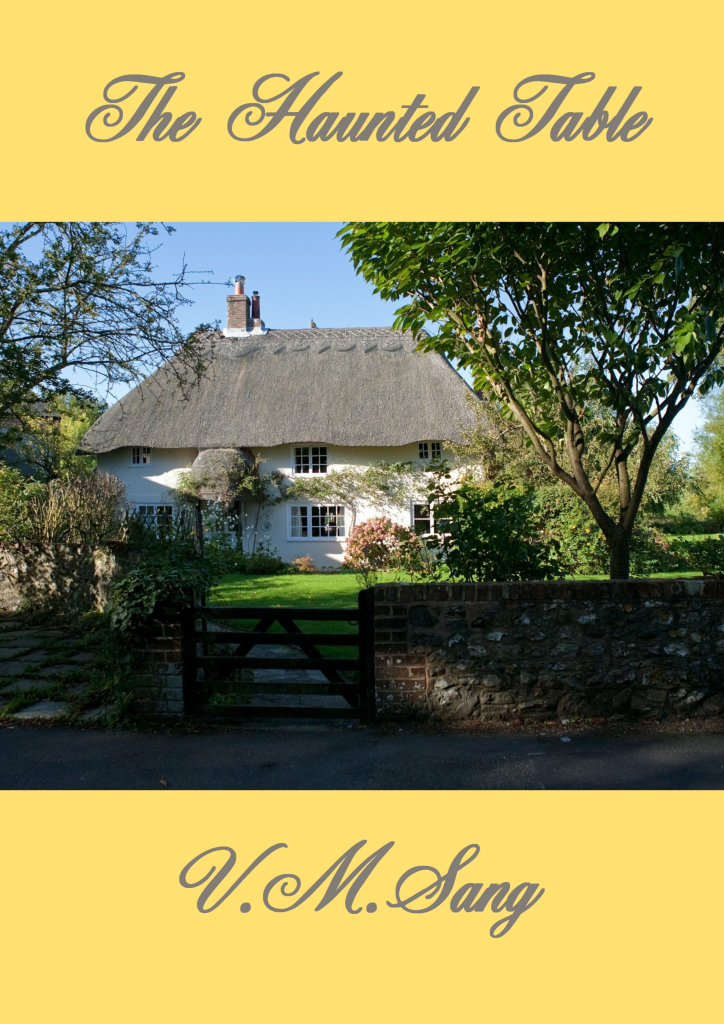
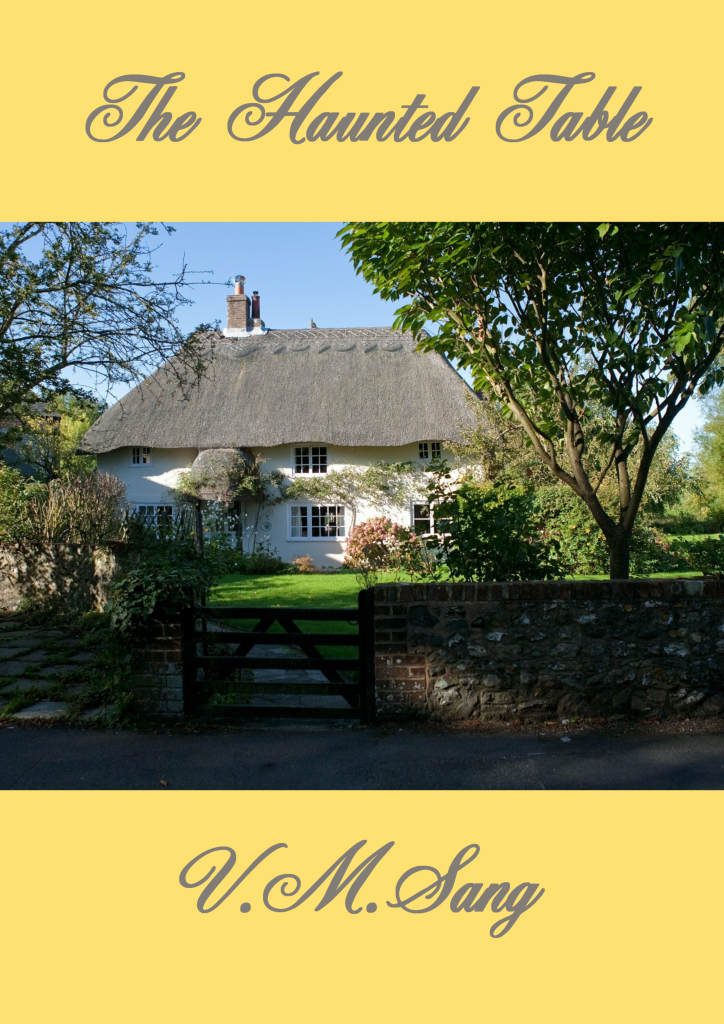
If you would like to receive an exclusive, free short story by me, called The Haunted Table, simply click the link. This will take you to the page where you can download it.

Maria and Tom have bought an antique table for the old cottage they have bought. When they hear strange noises in the night that sound like crying, they worry their house is haunted, but the sounds seem to come from the table.

They set about trying to find what is causing the disturbances. The answer is stranger than either of them had thought.

(Clicking the link will add your email address to my email list, but don’t worry, you can unsubscribe immediately if you wish. Nor will you get any spam. I only send out an email each quarter, or if I have any exciting news–like a new release.)
How I became a writer, and some of the books that led me here.

Image by Lubos Houska from Pixabay

I’ve always been a writer, although I didn’t understand that until late in my life. I wish I had realised earlier, but I didn’t. Nothing I can do about the past, but I can make up some of the time now.

I’ve always loved stories from being tiny. I can still remember my favourite story. It was about two little pandas called Pink and Ponk. I can still quote the first few lines, but I do remember the story quite clearly.

Later, when I could read myself, I devoured Enid Blyton books. Early on it was Noddy and The Faraway Tree. Later I loved Shadow the Sheepdog. I remember that the first ever story I wrote was about a dog, inspired by this story. I was only young–probably about seven or thereabouts – because my spelling was a bit dodgy.  I spelled ‘of’ as ‘ov’ , all the way through.

I also really enjoyed her Famous Five books, and the Adventure series. And although I read a couple, I was never really enthusiastic about Mallory Towers books.

Another book I loved reading was Black Beauty, about the life of a horse. It told of his life from his early days with his mother, through different owners, some good, some bad, to his retirement. 

When I graduated from the children’s section of the library, I discovered Jeffrey Farnol and Mary Webb. Later, I read many Agatha Christie books, and other books in that genre, and I loved Georgette Heyer and other historical novelists.

Of course, there were the classics. I always loved the Brontë sisters’ books, especially Wuthering Heights. 

I remember making a little fairy out of grass and telling my younger sister stories about him/her. 

At school, I loved it when we were given a title, or first line to write about. I can’t remember any of the stories I wrote then, but in my teens I wrote a very bad romance that I read to my friends. They said they liked it, but I suspect they were just being kind.

At Teacher Training college, I began my poetry writing. I had my first ever publication in the Manchester University Institute of Science and Technology magazine. The poetry era ended until I was teaching in 1990 when I wrote a poem for the staff Christmas party. I had to write one every year, by popular demand, after that. Sadly these have all been lost except the one in the UMIST magazine.

I loved reading Science Fiction, too and read all the well-known writers.

Then I found Fantasy. A young boy, by the wonderful name of Fred Spittal, asked me if I’d read The Lord of the Rings. He was reading it, but said I should start with The Hobbit. I found it in the college library and from then was hooked on fantasy.

I won’t go into all the fantasy books I’ve read. It would take too long.

Since writing Book 1 of my Wolves of Vimar series, I have published almost a dozen books. I have also drifted into historical fiction and begun writing poetry again. My first published poetry book is called Miscellaneous Thoughts.

So you see, I have always been a writer, but didn’t know.

Do you remember books that influenced you as a child? Tell us about them in the comments section.

Unique and Critically Endangered Axolotl

Charles Yallowitz shares some information about the interesting axolotl, and some pictures and videos.

So, what are some axolotl facts?

  • They have a rare condition called neoteny.  This means that they don’t lose their larva features when they become adults.
  • The larva features they keep include feathery exterior gills and a rear dorsal fin.
  • Axolotls still grow lungs, which they use to get air from the water’s surface.