All posts by V.M.Sang

I was born and educated in the north west of England. I trained as a teacher in Manchester and taught in Salford, Lancashire, Hampshire and Croydon. I write fantasy novels currently. I also make cards, knit, crochet, tat, do cross stitch and paint. I enjoy walking on the Downs, cycling and kayaking. I do not enjoy housework, but like cooking.

How to correct two simple wordprocessing errors.

There are two things that I want to tell you today. they are things that annoy me somewhat when I come across them. the first is how to create superscripts and subscripts.
So often I read 25C or H2O. They are both wrong. The Celcius scale is measured in degrees. and the formula for water needs the dropped 2 or it means, if it means anything, one atom of hydrogen and two of oxygen Which is an impossibility anyway.
This is a very simple thing to rectify. Simply click on ‘format’ on the toolbar and click on Font.
You will get the following window opening.

Capture

Check the superscript or subscript box, whichever you want and click OK. Then type what you want to be super- or subscripted. Go back to Format, Font and uncheck the bod. Click OK and you’re ready to go.

Unfortunately, WordPress does not recognise the superscript nor the subscript, and when I copied this into WordPress, it came out without these corrections. I had to remove the corrected words.


The other thing that irritates me when reading is when there is an apostrophe at the beginning of a word. (such as ’till, an abbreviation of until) So often, this comes out as ‘till, which is. of course a quotation mark and not an apostrophe. (A quotation mark that is not closed, either.)
In order to prevent this, it is very simple. You can fool Word into thinking it’s an apostrophe in the middle of a word by not pressing the space bar until after you’ve typed the two words.
EG. Wait here’till I arrive.

Then you simply go back and put in the space. Word will then keep the apostrophe the right way round.

Wait here ’till I arrive.

Both quite simple really, but are usually done wrongly, either because the writer knows no better, or through ignorance of the means to correct it.

Dance ‘Til It Rains

Definitely good advice. I’m going to dance until it rains from now on.

Review of Terry Ravenscroft’s Stairlift to Heaven 2. Further up the Stairlift.

stair-lift-1808512_1280

For those of you who have never heard of Terry Ravenscroft, he is a writer of comedy. He has written for such people as Les Dawson and The Two Ronnies, and has also been the script writer for such shows as Alas Smith and Jones, Not the Nine 0’Clock News and many others.

This book does not fail to live up to the expectations such a CV would lead one to expect. It is full of humerous anecdotes of his escapades with his friend, Atkins.

Atkins seems to be just the same kind of person as Terry Ravenscroft and the two egg each other on to all kinds of misdemeanours from misleading someone in a charity shop to believe he had found a valuable piece of pottery to annoying cold callers on the telephone.

This is the second book Mr Ravenscroft has written about his life in retirement and I am looking forward to reading Book 3.

Definitely worth a read. I award it 4.5 stars, rounded up to 5 stars for Amazon.

The Legend of Grillon and Parador.


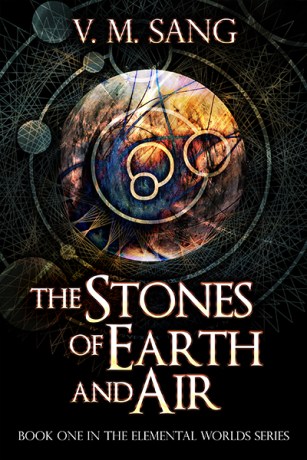
Grillon and Parador are two of the gods of Vimar, the world I created when I started to write The Wolves of Vimar Series.

Grillon is the god of Nature and wild things and Parador is the goddess of Agriculture. The legend is told each year on the first day of spring, which is also the start of the year on Vimar. The first month of the year is called after Grillon, and is known as Grilldar. It falls roughly the same time as mid-March to mid-April on Earth.

I hope you enjoy this poem, which also appears in the first book of The Wolves of Vimar, The Wolf Pack. The friends spend this day in Roffley on their way to find the Sword of the legendary king, Sauvern, who united the land of Grosmer.

On the eve of Grildar, morality is lax, and there are many children conceived at this time. They are considered as blessed, though, and are thought of as the children of the god, and not conceived of human males.

parador

Legend of Grillon and Parador

One day the Lord of Nature was walking all alone
When beside a hidden pool a lovely sight was shown.
For bathing in the moonlight, where no-one should have been
Was a beauteous maiden, the loveliest he’d e’er seen.

Lord Grillon lost his heart to her
This maiden oh so fair.
He vowed that she would be his own
His life with her would share.

He showed himself at once to her
As forward he did tread.
She said “And who are you, good sir?
Should you not be abed?”

Oh lovely maid, my love, my life,
I ne’er will rest again.
Unless you come to be my wife
My heart will feel such pain.”

And so fair Parador was wed
To Grillon. She agreed
To always sleep within his bed
And others ne’er to heed.

But evil now will turn to dust
That love and bliss
For Barnat after her did lust
And swore she’d be his.

He poisoned Grillon’s mind and said
She was untrue
That she had been into his bed
And others too.

Lord Grillon he was truly sad
That she should treat him so.
He thought that he’d go truly mad
So far from her he’d go.

Now Parador had done no wrong
To deserve this fate.
She could not any more be strong
Beneath Lord Grillon’s hate.

So mourn she did and all the world
Did join with her in sorrow.
All green things died and creatures curled
All safely in their burrow.

But in good time, Lord Grillon found
How false the god of war.
He came to her and he reclaimed
The love of his wife once more.

So once again the land grew green
And springtime came again.
And summer’s warmth and life serene
While she forgot her pain.

And so each year the land remembers
The love of Parador
And autumn comes and winter’s embers
Till Spring returns once more.

Looking Closer at the Semi-colon Used in Lists

Here are some thoughts on the semicolon. I found these ideas very interesting, especially to clarify things in lists.

Book offer

bookcover2


Starting on Monday 19th June, Emily Littler is offering Vengeance of a Slave at the special promotion price of $0.99 or £0.99. This is a 59% saving.


The price will increase in steps for the following 7 days, until June 26th, when it will be back at its full price of $2.99 or £2.35, so hurry so you don’t lose out.


Here is a bit about the story.


Adelbhert is only 6 years old when he is forced to watch the crucifixion of his father and other men from his village. They rebelled against the Romans and this was the punishment meted out.

Then he and his young sister are taken as slaves for their pretty looks and ash blonde hair. A rich merchant from Britannia buys them and takes them to give as presents to his wife and daughter. Adelbehrt promises his sister they will escape one day, but cannot promise when.

His experiences make the boy hate the Romans, and he nurtures this hatred throughout his years. as a slave. He is treated more as a pet than a human being, which he hates.

What will become of him and his sister when they are no longer pretty children? Will they be sold and separated? What will their future be?

Adelbehrt’s one ambition is to escape and take his revenge on the Roman Army.

But one young man against the might of Rome is seemingly impossible odds. How can Adelbehrt escape, and how can he fight the Roman Army, and can he overcome his hatred before it eats away at his soul.


In Defense of Grammar Schools

boy-160168_1280


There is a debate going on in the UK at the moment about education. As an ex-teacher I am interested in the arguments.

The Conservative Government wants to allow Grammar Schools to be re-established. Before the 1960s there was a system of Grammar Schools and Secondary Modern Schools.

In order to get into a grammar school, all children took an examination at age 11, in the final year of their primary school. It was called the 11+ examination. Those pupils who were in the top percentage got a place in the grammar school. I don’t know what that percentage was, but I have heard it said that the top 25% went to grammar schools.

home-1824815_1280

The grammar schools were academic schools, and they taught academic subjects. secondary moderns tended not to teach much in the way of languages, for example.

It is said that the future of children was settled at 11, and that was not good, because some children developed later. But the 11+ was not the end. There was a 12+ and a 13+ that pupils could take if they seemed to be developing in a more academic way.

At that time, the school leaving age was 15. The pupils who went to grammar school had to stay on until 16 so they could do the GCE ‘O’ level examination. A few pupils stayed on at secondary modern and did ‘O’ levels as well. If they did well in the examinations, they could then go on to the 6th form in the grammar school or at a college. I have several friends who did this.

During the 1960s, came the advent of the comprehensive school. These schools were deemed to be fairer than the old system. Each neighbourhood took in all the pupils from its catchment area. All went to the same school, regardless of their academic ability. This, it was said, was much fairer. It did not create an elite and a lot of ‘failures’ at the age of 11.

school-845196_1280

On the face of it, this seems to be fine, only I think there are a number of flaws in this argument.

The main one, I think is this. Pupils from a given area all go to the local comprehensive school. There is no examination for entry, so no feelings of failure by those who did not pass the 11+.
That sounds fine, but if the neighbourhood school is not very good, all pupils from that particular neighbourhood are being failed.

Children do not get the chance to meet children from a different background, either. They are living with these people, have been brought up in the area, either rich or poor, and so they do not get a rounded picture of society.

The idea was the opposite of this. Pupils attending comprehensive schools were supposed to see all the different types of people. Yes, they saw all the different academic types, but not people from different social backgrounds.

Comprehensive schools were supposed to prevent the feelings of failure by some pupils failing the 11+. I don’t think you can stop pupils from feeling inferior intellectually by lumping them all together. They can see the brighter pupils doing better than them in their academic work. That will make them feel inferior just as much as ‘failing’ the 11+.

One other thing brought about by the introduction of comprehensive schools, is that the education given is a watered-down academic curriculum, which is not suited to all pupils, and has lowered the academic standards for the very brightest pupils.

Grammar schools, they say, create an elite. This is supposed to be bad. In a perfect world, I suppose everyone would have the same academic capabilities, but everyone does not. There are some people who are much cleverer than others. Some say that it is solely due to their background how some people develop, and a middle class background is advantageous. This I would not dispute, but only to a point. There are middle class children who do not excel, and working class ones who do, in spite of their background.

They say that comprehensive schools help social mobility. How? Pupils live and learn in the same area with the same people and values.

In a grammar school, pupils come from all backgrounds and all areas of a town. They mix with each other and get to know something of the lives of each other. Pupils from working class backgrounds can get an academic education, and get away from the schools in their area where ambition is perhaps not so great.

Bright pupils who live in an area with a poor school can get away from that as well.

session-1989711_1280

It is said that grammar schools have more middle class pupils than working class ones. That is something that can be worked out. ‘They’ say that the exam can be coached and middle class parents are more likely to put up the money for coaching. Well, I went to a grammar school and was coached for the exam, but not by private tutor, which is the perception, but by my primary school. Encourage primary schools in working class areas to coach. Or develop an exam where coaching is no advantage.

There’s always an answer, and in my opinion, the advent of comprehensive schools has lowered standards. When I look at the exams I took at ‘O’ level and the exams pupils take at GCSE, there’s no comparison. We had to write essays. They just have ‘structured questions’, or fill in the blanks.

I see grammar schools as promoting social mobility far more than comprehensive schools in contrast to what the detractors say, that they are elitist and prevent it.

I would love to hear what you think of the grammar school debate.