Category Archives: novel

Podcast Episode: Mystery, Poetry, And Fantasy

Pip: Dragons Rule OK โ€” where you can find a CIA spy hiding among monks, a murder at an antique market, and a recipe for sloe gin, sometimes in the same week.

Mara: V.M.Sang covers a lot of ground on this site โ€” fiction reviews across spy thrillers and cozy mysteries, poetry, a Regency novel, fantasy worldbuilding, and a detour into British wildflowers.

Pip: Let's start with the fiction reviews, where the stakes range from international espionage to a dead tennis coach.

Spy Thrillers and Cozy Mysteries

Mara: Two recent reviews land at opposite ends of the crime spectrum โ€” one a high-tension spy thriller, the other a small-town Australian whodunit โ€” and both ask what it costs a person to be seen.

Pip: The thriller is Alone by Anna Michelle Page, and the review pulls no punches on what makes London compelling: "She is a hard woman, made so by her difficult past. She is dangerous, clever and a killer for the CIA."

Mara: That damage is the engine of the whole book. London expects to die on every mission, and the Commander's patient effort to reach her โ€” described as winning the trust of a frightened deer โ€” is what gives the thriller its emotional weight alongside the action. It earns a five-star rating.

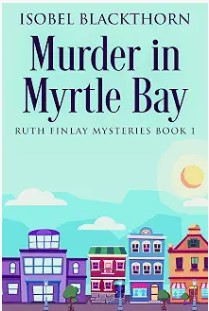
Pip: The other review covers Murder in Myrtle Bay by Isabel Blackthorn โ€” cosier territory, a converted factory, a dead tennis coach, and an elderly neighbour who suspects the killer based entirely on her own prejudices. Four stars, and a promise to read the rest of the series.

Mara: From crime scenes to something quieter โ€” poetry that sits with mortality and doesn't flinch.

When Poems Do the Work Prose Can't

Mara: The review of Shadows and Birdsong by Kevin Morris makes a case that poetry about death doesn't have to be morbid โ€” that it can be generous and strange at the same time.

Pip: The collection grew partly from Morris's hospital stay after a brain abscess, and the poems in memory of a lost friend carry that weight. Here is the closing stanza of "Your Shadow," quoted in full: "But other men / May see my shadow / Walking beside them / And know me / And their own mortality."

Mara: What that gets the reader is a poem that turns private grief outward โ€” the dead friend becomes a way of seeing your own end, and somehow that feels like a gift rather than a warning. The review gives it five stars and recommends it even to readers who don't normally read poetry.

Pip: The rhyme schemes are described as unusual, which is doing a lot of heavy lifting as a compliment โ€” but having read that stanza, it lands.

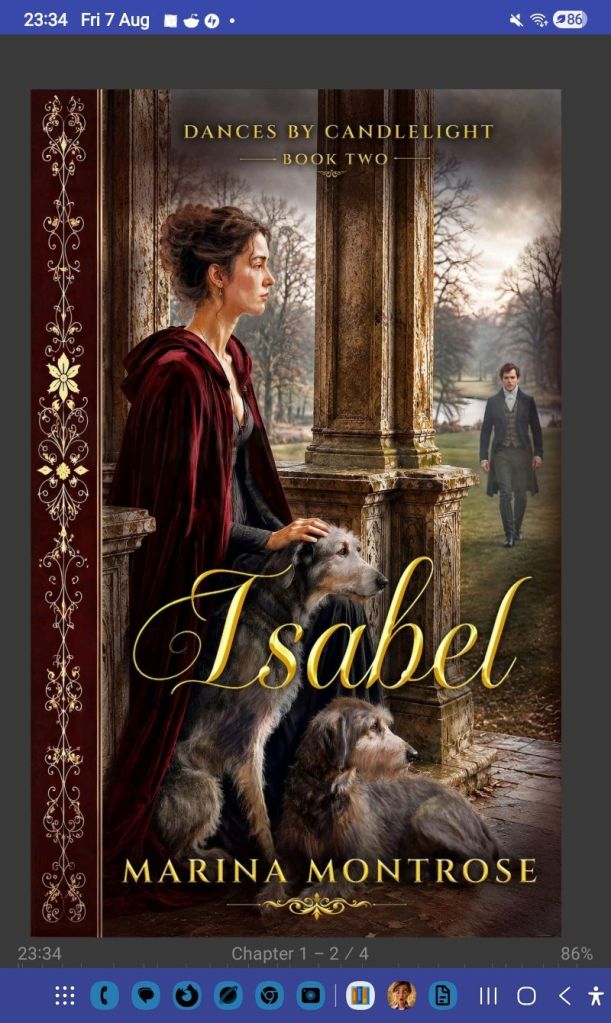
Mara: The second review in this segment covers Isabel by Marina Montrose, a Regency novel that gets three stars. The writing is technically clean, but the review finds the central tension too easily resolved โ€” Francis sheds his mistress without much struggle, and Isabel's arc closely mirrors the protagonist from Montrose's first book. Pleasant, the review says, but not surprising.

Pip: Two very different books, then โ€” one that earns its feeling, one that stays comfortable. From literary territory to somewhere with actual dragons.

Archmages, Prophecies, and Lost Spells

Pip: The fantasy segment pulls back the curtain on the Wolves of Vimar world through an in-character interview โ€” and the history it reveals is darker than the format suggests.

Mara: Archmage Yssalithisandra โ€” Yssa, please โ€” explains the Forbidding: "All books of magic were burned and the mage towers were, for the most part destroyed. All people who could do any magic were put to death too."

Pip: So the mages of the present are essentially archaeologists, rebuilding from nothing after a centuries-long erasure. That reframes what magic means in this world entirely.

Mara: A removed chapter from The Wolf Pack puts flesh on that history โ€” Carthinal and his fellow apprentices discover an ancient spell-book and a loose prophecy that may or may not be centuries old. The worldbuilding carries through consistently between the two posts. There is also a brief pointer to a review of Echo Volume 1 by Kent Wayne, linked for readers who want more fantasy reading.

Pip: From lost spells to something you can actually find in a hedgerow in March.

The Blackthorn in Full Bloom

Mara: The British Wild Flowers series returns with the blackthorn โ€” one of the earliest trees to bloom in spring and, as the post puts it, belonging to the genus Prunus spinosa, making it a relative of the cherry, plum, peach, nectarine, apricot, and almond.

Pip: A family reunion nobody asked for, but the sloe is the troublemaker of the group โ€” too bitter to eat raw, but the post includes a full sloe gin recipe that takes about five months and rewards patience.

Mara: The ecological detail is solid too: dense thorny stems provide nesting cover for birds, the flowers are early nectar for insects, and the tree can live a hundred years. It has also been associated with witchcraft, with wands supposedly made from its wood.


Pip: Damaged spies, dead tennis coaches, a poem about mortality, and a hedgerow shrub with a criminal bite โ€” it's a wide orbit.

Mara: The thread running through it is attention โ€” to characters, to plants, to the lines of a poem that stay with you.

Pip: Next time, we find out what else is growing in the hedgerows. Or who else turns up dead at a market.

Review of Murder in Myrtle Bay by Isabel Blackthorn

Overview

This is a cosy mystery set in the south of the Australian continent, where the cold southern wind blows from  Antarctica. 

Blurb

When feature writer Ruth Finlay and her elderly neighbor Doris Cleaver visit an antique and collectibles market in the small town of Myrtle Bay, they get a lot more than they bargained for.

After Ruth’s old tennis coach is found dead, they discover that there’s no lack of people who harbor a grudge against the victim, and a tangled web of family ties and lies begins to unravel. But can Ruth and Doris find the killer in time to avert a second murder?

A quirky feel-good mystery laced with intrigue, Murder in Myrtle Bay is the first book in Isobel Blackthorn’s ‘Ruth Finlay Mysteries’ series. Set in small town Australia, it is a sure pick for any fan of classic whodunits and cozy mysteries!

Story

Ruth Finlay goes shopping with her neighbour and friend, Doris, in a converted factory. She finds her old tennis coach lying on the floor, having been hit on the head. His last words were,โ€˜I didn’t do it.โ€™

But what was it he didn’t do?

Ruth is intrigued and, along with Doris, decides to start her own investigation, having admired  the victim throughout her life.

Of course, things are not straightforward.  It transpires that the victim isn’t the man Ruth thought he was, and there are many who hold a grudge against him.

Characters

Ruth is a writer for a magazine. She is currently researching for an article on the old factory. A sensible woman, Ruth keeps herself fit by going on a daily run. It is on one of these runs that she spots some suspicious activity. Her natural curiosity is what makes her decide to investigate the murder.

Doris is a favourite character of mine. She is an elderly lady who seems to think she is still a hippie from the 70s. She dresses in an eccentric style.

She joins Ruth with enthusiasm and thinks she knows who the murderer is based on nothing more than her own prejudices. She is also very stubborn.

There are many other characters in the book, of course, but I really can’t pick any out without mentioning all of them, which isn’t practical. Suffice it to say that they are all believable.

Writing

Fairly near the beginning, there is a description of the relationships between some of the families in the story. I found this somewhat confusing, and I don’t think it was necessary; at least not until we got to know the characters. There were other places, too, where information was given that wasn’t needed.

On the whole the writing is good with no typos, but there are a few grammatical errors. For example, Ms Blackthorn says, โ€˜Doris and Iโ€™ on occasions where it should be โ€˜Doris and me,โ€™ and she mentions โ€˜French provisional cuisineโ€™, when it should be โ€˜French Provenรงal cuisineโ€™.

But these are few and far between, and didn’t distract me too much from the story.

I GIVE IT 4*

My ranking of books.

In order to get a particular number of stars, it is not necessary to meet all the criteria. This is a guide only.

5* Exceptional. Wonderful story. Setting well drawn, and characters believableโ€“not perfect, but with flaws. Will keep you up all night. No typos or grammatical errors.

4* A thoroughly enjoyable read. Great and original story. Believable setting and characters. Very few grammatical errors or typos.

3* I enjoyed it. Good story. Characters need some development. Some typos or grammatical errors.

2* Not for me. Story not very strong. Unbelievable and flat characters. Setting not clearly defined. Many typos or grammatical errors.

1* I hated it. Story almost non-existent. Setting poor. Possibly couldn’t finish it.

I’ve not read any other books in this series, but I will definitely be doing so.

Have you read any of Isabel’s books?

From Reader to Writer: My Story

I saw a post on Reddit where the person asked about how we each came about being a writer. I answered, but then thought it might make a post for my blog.

In the beginning, I always loved books and stories for as long as I can remember. When I was very little, long before I could read, maybe about 3 years old, I loved a story called Pink and Ponk. It’s still available on Amazon! I knew it off by heart. One say, I was holding the book and speaking the words, when a friend of my mother saw me and thought I was actually reading!

When I could read for myself, I read a book by Enid Blyton, called Shadow the Sheepdog. I loved that book and reread it many times. It inspired me to write my own story. That was the first story I remember writing. I also devoured many other of her books, as well as books like Black Beauty and Little Women.

Also, when a child I made a little fairy out of grass and made up tales for my little sister about it.

When I was at school, I loved English lessons where we were told to write a story or an essay. I enjoyed both types of writing. I also enjoyed the literature lessons where we read many classic books. It was here that I discovered the Bronte sisters. And unlike many of my compatriots, I also enjoyed poetry.

In my teens I wrote a very bad romance. I only read it to my friends, They were kind about it, but fortunately, it has now disappeared into the mists of time.

After my A levels, I went to do teacher training in Manchester. Here I studied science as a main subject and maths as one of my subsidiaries. As I liked English literature, I chose that as my other subsidiary subject. It was here, at college, that I took to writing some poetry. My first ever published work was a poem I wrote about the atomic bomb. (It was the time of the Cold War, the Aldermaston Marches and CND.) It was published in the magazine of UMIST (University of Manchester Institute of Science and Technology).

During this time, I discovered Lord of the Rings, I was doing a teaching practice at a primary school. A 9 year-old boy asked me if I’d ever read it, and recommended it to me, telling me I should first read The Hobbit. When I found them in the library, I was immediately turned on to fantasy.

Then my writing adventures stopped as I began work, got married and had a family. No time for writing.

My writing started with a Dungeons and Dragons scenario I wrote. I read the Dragonlance Saga and found out it was based on a D&D scenario, and I thought I’d try my hand at converting my scenario to a novel. A standalone was what it was going to be, but in the way these things happen, it’s now up to the 4th book with more to come. The story hasn’t yet finished. (Although the characters think it has!)

Then came the inspiration to write Elemental Worlds, which turned into a duo. It could have been a standalone, but it would have been rather long. I really enjoyed writing that one (or pair, I should say!)

I began writing poetry again at this time.

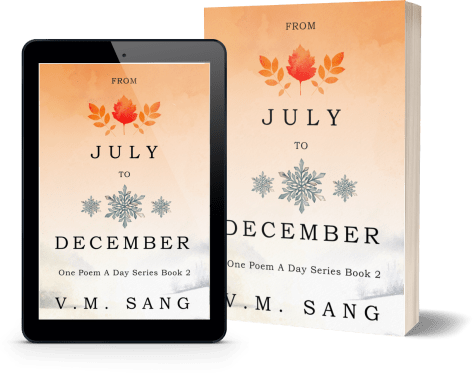
My daughter had a book when she was little that had a very short story or poem for every day of the year, so I conceived of writing one poem every day for a full year. I did manage to do this, and it’s now published as 2 volumes, January to June and July to December. It has a variety of poems from limericks and haiku to longer narrative poems. Some serious, some amusing.

Another thing that has been fermenting in my head for decades is a saga of a family through the ages. This started when I was in my teens and I was walking with a friend and her family in Derbyshire. We came across a ruined mansion. This picture has been in my head ever since, so I started to write a historical series, now up to Book 2.

I’ve also written 3 novellas; The Wolves of Vimar prequels.

Currently I’m writing Book 3 of the historical series, and hope to soon get on to Book 5 of my fantasy series (The Wolves of Vimar.) I am also working on some short(ish) stories inspired by fairy tales. 2 are already written and 3 is on the way.

And that’s how I became a writer!

If you are interested in any of my books, you can click on the image in the side bar. It will take you to where you can choose your favourite retailer.

Some of these books are also available as audiobooks.

Review of Isabel By Marina Montrose


OVERVIEW
This is a โ€˜niceโ€™ Regency story. There is little to object to about it. However, I found it very similar to her first book in this series.

STORY
Isabel is a young woman whose family has fallen on hard times. Her father has recently died and left debts.
When Francis, Earl of Bengrave asks for her hand in marriage, she sees it as a way to help her family, and agrees to marry him, although she barely knows him. What she does know, is that he has a reputation as a rake, and has a long-term mistress, Mrs Morrell.
Francis needs to marry to secure an heir for his title and fortune, and has picked Isabel as a likely candidate.
The couple agree not to interfere with each other’s lives too much.
The story is told from the POVs of both Isabel and Francis.

CHARACTERS
Isabel. At the beginning, Isabel is naturally nervous of the unknown man she has married, but gradually, as she learns her husband is basically a kind and generous man. As she grows in confidence, so she asserts herself more.
Francis. He is naturally worried his lifestyle will be impacted, but tries hard with his new wife, giving her gifts, although he is reluctant to join in with the Regency society.
I did feel that he was very similar to the protagonist in her first book,

WRITING
Although well-written from the point of view of grammar and spelling, I felt the story was a little too simplistic. There was little tension. The protagonists didn’t have to struggle much to discover they had fallen in love with each other. Nor did Francis have too much difficulty in getting rid of his mistress. That could have been made much more of, and becomes built around ‘will he, won’t he’ get rid of her.
The other thing I felt was that the protagonist in this book was almost interchangeable with the one in her first.
Nevertheless, it was a pleasant and easy read.

I give it 3*


My ranking of books.
In order to get a particular number of stars, it is not necessary to meet all the criteria. This is a guide only.
5* Exceptional. Wonderful story. Setting well drawn, and characters believableโ€“not perfect, but with flaws. Will keep you up all night. No typos or grammatical errors.
4* A thoroughly enjoyable read. Great and original story. Believable setting and characters. Very few grammatical errors or typos.
3* I enjoyed it. Good story. Characters need some development. Some typos or grammatical errors.
2* Not for me. Story not very strong. Unbelievable and flat characters. Setting not clearly defined. Many typos or grammatical errors.
1* I hated it. Story almost non-existent. Setting poor. Possibly couldn’t finish it.

How I Write: The Journey of a Pantser Author

I thought I’d tell you a little about how I set about writing my books and stories today, but first, for those non-writers amongst you I’d better make a few things clear. Writers ignore this as you already know it.

There are two–no, three–kinds of writers.

First are the plotters. They are the ones who write like you were taught at school, setting out to write an outline of their work before beginning. These people might write just a simple outline, but others go much farther and write a chapter by chapter outline. They search for the Inciting incident, decide where the first plot point is going to come, and all the other things we are told a good story needs. Then they refer to this as they write. It helps them to stay focused on the plot and not wander off.

Second are what are known as pantsers. These writers write ‘by the seat of their pants’. They don’t write a plan but simply start writing and see where the story goes. Sometimes they are called ‘discovery writers’.

The third type is a combination of the two, sometimes known as plantsers. These writers don’t have a massively detailed plan, but will often have a very general outline which they sort of follow.

I describe myself as a pantser. I haven’t the patience to write a detailed plan, although I often have something in my head. I often know the ending of a story before I start.

I do like to know my characters, though, so I will look at their background and what brought them to this point, even if it isn’t going to be in the story. People’s backgrounds affect how they behave, so this is important.

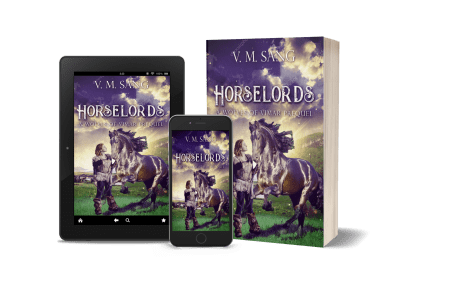
But in my Wolves of Vimar series, I have produced 4 prequels giving the background of some of the characters. There may be more to come in the future.

Once I have the characters and know them a bit, I begin to write. I allow things to happen as they occur to me. Sometimes it seems as if the characters are taking over. The first time this happened (in writing The Wolf Pack) I thought I must be going mad, because a character did something I wasn’t expecting. (No spoilers, so I won’t say what it was.) Then I discovered that other writers also have characters take over. They don’t always do as we want them to. One of my characters who first appeared in The Wolf Pack, a small dragon-like creature about the size of a cat, made no appearance in the second book, The Never-Dying Man, nor the third, Wolf Moon, but he demanded my attention, saying he must have a bigger role to play and he could be useful. So Muldee became a spy in Immortal’s Death and had quite a big and important role.

Stories often take a turn from what I originally envisaged. This is exciting. Sometimes it means I might have to change the ending. (Getting the right ending is difficult, so as to leave the reader feeling satisfied.)

There are times when I’m simply not inspired. A story is going nowhere and I spend hours trying to decide what to write. If I force myself to start, I frequently find that things happen and ideas flow that didn’t when I was just thinking about it. I suppose the characters are there and telling me what they want! :)) I have a couple of stories like that at the moment, but I have another project on the go, so they will have to wait.

But this method can take you down rabbit holes. This, of course, means more work in the editing process. It has to be sorted before anything else happens. Parts removed that are unnecessary and don’t add anything to the plot. Maybe characters need removing if they don’t do anything. But these can always be kept for another story.

I often run it through Grammarly or Hemmingway, a couple of grammar checkers. After I’ve done all I think I can do, I post it on a couple of on-line critique groups. These are invaluable and help me polish the manuscript as well as pointing out places where they got confused. Yes, I write confusing stuff sometimes.

Only then is it fit for human consumption, as it were. I don’t have beta readers, unfortunately. I’ve been unable to find any reliable ones, so it has to stand after this.

I hope to soon be back to my third historical novel set in the aftermath of the Battle of Hastings.

Thank you for reading.

If you have any comments, please add them to the comments box, and if you want to buy any of my books, you can click on the cover on the sidebar to take you to the online store of your choice.

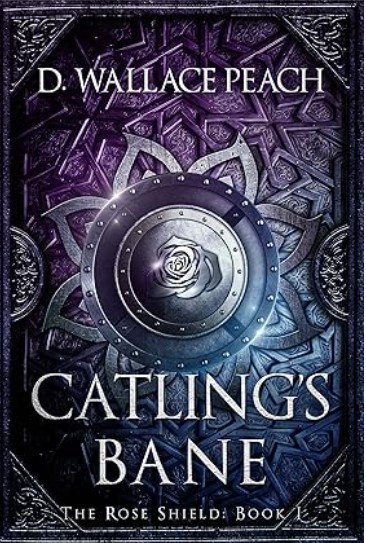
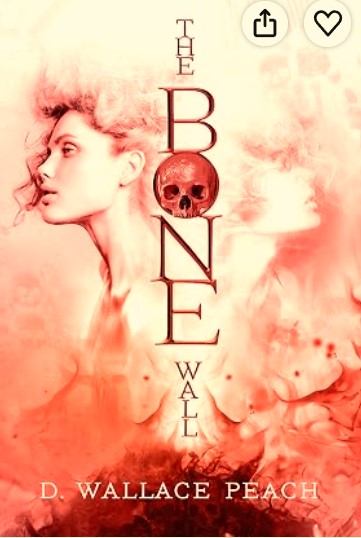
Review of Catling’s Bane by D. Wallace Peach

Overview.

I thoroughly enjoyed this book. It’s the first of a series, and I’m looking forward to reading the others. A wonderful story, well told.

Blurb

Catling โ€“ Sheโ€™s a weapon desired by those who reign and those who rebel.

In the tiered cities of Ellegeance, the elite Influencersโ€™ Guild holds the power to manipulate emotions. Love and fear, pleasure and pain mark the extremes of their sway. But itโ€™s the subtle blends that hook their victimsโ€™ hearts. They hide behind oaths of loyalty and rule the world.

Until Catling discovers the gift that will be her bane. She is the shield that disrupts the influencerโ€™s sway.

Born in the grim warrens beneath the city, Catling rues the rose birthmark encircling her eye. Yet, it grants her a unique ability, the means to remake a civilization. To the Guild, she an aberration, a threat, and they order her death. No longer a helpless child, Catling has other plans.

As chaos shakes the foundations of order and rule, will she become the realmโ€™s savior? Or its executioner?

Welcome to a world of three moons, a sentient landscape, rivers of light, and tier cities that rise from the swamps like otherworld flowers. A planet of waterdragons, where humans are the aliens living among three-fingered natives with spotted skin. Where a half-blood converses with the fog and the goddess plans her final reckoning.

In the spirit of the fantasy tradition set by Patrick Rothfuss, Karen Miller, and Glenda Larke, follow Catlingโ€™s journey as she grows into the deadly force that shapes the future. She is the realmโ€™s shield, an influencer, assassin, healer, mother, and avenger. And all she desires is to go home.

Story

Catling is first met as a child of around two years. She has a birthmark over her right eye, and her mother tries to scrub it off. 

She has been born into the poor, who scrape a living under a large tiered city. The richer a person is, the higher in the tiers they live, culminating in the High Ward’s place of residence.

High Ward Algar holds onto his position by means of regular hangings and the use of โ€˜influencersโ€™ who can manipulate the emotions of the people. These influencers make people enjoy the hangings, and even influence those being hanged to be happy about it.

Catling discovers she can block the influencers. It has something to do with her birthmarked eye. She has the sense to keep it a secret, though. 

Her mother thinks she can improve her lot without a child, and when Catling is six, she sells her.

The man who buys the child has a large family, and is kind, so Catling enjoys her life there.

Then things begin to change. Her idyllic life is shattered.

I won’t say any more because of spoilers.

Characters

Ms Wallace Peach has given us a wealth of interesting characters. Each one is an individual, with their own quirks. 

I liked the way Ms Wallace Peach dealt with Catling growing up. She was confused, afraid, loving, all the things a young girl would feel. But her special talent made her want to remain hidden. It would be extremely dangerous for it to be discovered that she could block the influencers.

There are a lot of individuals in this book, and I’m not going to pick any out.

Writing.

I find Diana Wallace Peach’s writing beautiful. She spins a wonderful tale, and draws the reader into the story. 

The atmospheres she creates in the different parts of the book seem real. The abject poverty of the people at the beginning of the book; the richness of the higher tiers; the love Catling found on the farm; the river and its dangerous denizens; the swamp people; all are shown so we feel we are part of those communities.

The grammar is good–no, excellent, and there are few typos.

I give it 5*.

 My ranking of books.

In order to get a particular number of stars, it is not necessary to meet all the criteria. This is a guide only.

5* Exceptional. Wonderful story. Setting well drawn, and characters believableโ€“not perfect, but with flaws. Will keep you up all night. No typos or grammatical errors.

4* A thoroughly enjoyable read. Great and original story. Believable setting and characters. Very few grammatical errors or typos.

3* I enjoyed it. Good story. Characters need some development. Some typos or grammatical errors.

2* Not for me. Story not very strong. Unbelievable and flat characters. Setting not clearly defined. Many typos or grammatical errors.

1* I hated it. Story almost non-existent. Setting poor. Possibly couldn’t finish it.

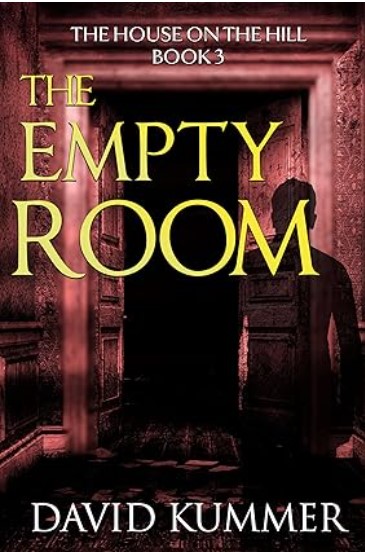
Surviving the Horror: The Woods Family’s Final Stand

Overview

This is the third and final part of The Misery House trilogy. This has given me a problem as I don’t want to give away anything from the first two books into case you’ve not yet read them.

The series is a horror series set in a small town in the US. Looming over the town is an abandoned house, which gives its name to the series as a whole. The story is told in the first person, but from several points of view.

Blurb

Everyone feels safe in their own house. Until it’s too late.

The Woods family is at peace, at last. With Allison now safe. Kaia is not afraid. But everything changes when Allison gets sick… and another child from New Haven goes missing.

Everything leads to the house on the hill. And this time, the whole town is at stake.

Cliff Woods petitions to demolish the house. In response, New Haven slowly turns against him, looking for any reason or way to burn him down, instead. And it’s not hard to find.

At the same time, Kaia simply needs to make it until Nate graduates. Less than a year. But Rhys has more to tell her… Secrets from a hundred years ago.

When the Woods family is no longer safe in their own home, they only have one choice: Fight until the end.

But in this town, there are no happy endings.

Story

This is where it gets difficult. In the first two books, mysterious things happen. 

The main protagonists are the Woods familyโ€“Cliff, Naomi and their children, Kaia and Nate.

In the first two books, lights are seen in the house at night. Something chases Naomi Woods and her son, Nate, when they are on a bike ride. 

Then Kaia’s best friend, Alison, disappears at the house, having gone there with her new husband, Malaki.

At the end of book 2 it seems everything has returned to normal after its terrifying ending, but it’s only just beginning. And a mysterious young boy called Rhys turns up and no one can find out his background or parentage. He appears to know little either, even of normal Iife. Cliff and Naomi decide to foster him.

In this third book, the town turns against Cliff, especially when he suggests demolishing the house. 

We are taken back in time to learn something of the history of the house and how it came to be so horrific, and something of its current denizens.

Alison has been so traumatised by her experiences that she is undergoing therapy and her family has moved to the nearby city. The sheriff also has been so affected that he has to retire. And then his four year old son vanishes.

I don’t think I can say much more without spoilers.

Characters

Kaia Woods is a young woman who has just finished school and is trying to decide on her next move. She is struggling with her sexuality and her growing feelings for Alison. When her family is threatened, she finds courage and decides to go to the house to put an end to the dangers in spite of her fears.

Nate Woods is a young man just entering 8th grade at the beginning of the book. He is a keen baseball player who plays for his school team. As a typical teen, he spends much time playing on his X-box with Rhys. He is devastated when his team loses a match.

Like Kaia, he discovers he has more courage than he knew when his family is in danger.

Cliff Woods left New Haven to go to university where he met Naomi, a beautiful black girl. They married, and he brought her back to help run his father’s farm. He loves his wife deeply, and is an excellent father to Kaia and Nate. But his paternal feeling and desire to protect his family leads to his being ostracised by the towns folk. 

He is willing to sacrifice anything, even his life, to keep them safe.

Naomi Woods is a strong woman with a good heart. She works tirelessly for the good of the town and the church. When she feels her children are threatened, she becomes like a lioness and will overcome her fears to protect them.

It appears that, as the only black woman in town, she has been accepted by everyone, but appearances can be deceptive.

Rhys appears towards the end of Book 2. He is a mystery. He is revealed at the end of Book 2 after the climax. He says he can remember nothing of his past, and is baffled by many modern things, even baseball. He tries very hard to fit in and seems to want to be adopted by the Woods family. They all grow to care for him.

There are other characters, such as the Sheriff, Jeremy, who is Cliff’s friend, and Naomi’s friend, Susan, amongst others, but I’ll leave these characters for now.

Writing

David Kummer writes well. There are a few typos in the work, and he hasn’t got the hang of the difference between โ€˜layโ€™ and โ€˜lieโ€™, which he gets wrong every time.

Having said that, he does a good job of building the tension. I found it difficult to put down, and felt a connection with the Woods family.

One thing I wondered about was why he gave Cliff Woods two names. The townsfolk call him Cliff, but Naomi calls him Ben.

There were also, I felt, a few loose ends. Where did Silas, the antagonist, get his power from? for example. And was Alison’s I’ll health due to the

power of the house, and why? Also, why was the Woods family such a target from the beginning?

Still, apart from these things, it was a good read.

I give it 4*

 My ranking of books.

In order to get a particular number of stars, it is not necessary to meet all the criteria. This is a guide only.

5* Exceptional. Wonderful story. Setting well drawn, and characters believableโ€“not perfect, but with flaws. Will keep you up all night. No typos or grammatical errors.

4* A thoroughly enjoyable read. Great and original story. Believable setting and characters. Very few grammatical errors or typos.

3* I enjoyed it. Good story. Characters need some development. Some typos or grammatical errors.

2* Not for me. Story not very strong. Unbelievable and flat characters. Setting not clearly defined. Many typos or grammatical errors.

1* I hated it. Story almost non-existent. Setting poor. Possibly couldn’t finish it.

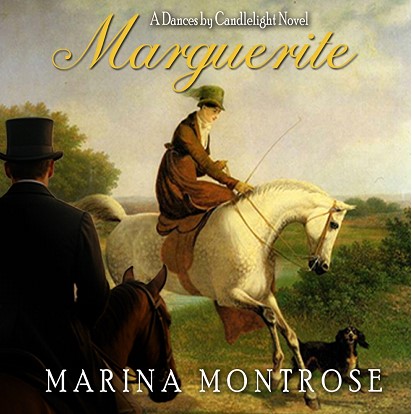
Review of Marguerite by Marina Montrose

Overview

This is an enemies to lovers story. The setting is the Regency period in the United Kingdom. I did wonder if it would be a take on  Jane Austin’s Pride and Prejudice, but apart from the time period, I was wrong.

Blurb

Chemistry sizzles between Lady Marguerite and the Duke of Argyle. Will she be able to reconcile reason with passion?
When the arrogant Duke of Argyle makes an offer for her hand, Lady Marguerite Lennox is quick to refuse, thinking him arrogant and aloof.
Her parents are disappointed she has turned down the best catch in the matrimonial stakes. The duke himself is reeling from the insult to his ego. He decides to pursue her as he has never pursued anyone before. His aim is to conquer, to bend her to his will.
When the duke steals a burning kiss at a ball, sparks fly. Marguerite is struck by lightning, but is terrified of getting burned. If passion wanes, she fears her life will be bleak.
Margueriteย is the story of a man who is obsessed with a feisty but kind womanโ€”who loves him but does not much like him.

Story

Marguerite has an English father and a French mother. Her father, Lord Lennox, had been an envoy for the British Government in Paris, but had now returned to England with his wife and daughter.

Marguerite was introduced to Society on their return. The balls, house parties etc are quite simply a means of young people finding a suitable marriage partner.

Marguerite draws a lot of interest. She has been brought up to have a mind of her own, unlike most other young women of the time, who are expected to be meek and accomplished in such things as painting and music, but not anything that uses their intellect.

One person who is drawn to her is the Duke of Argyle. He is not very pleasant, and when he asks her parents for her hand in marriage, she adamantly refuses.

I don’t want to say any more as I don’t want to add a spoiler.

Characters

Marguerite: She is, as I said, a young woman who knows her own mind. She is determined to marry for love and not wealth or position. Her mother regrets her decision to turn down Argyle as he’s a wealthy man and a duke. Marrying him would make her a duchess. But Marguerite dislikes him, and refuses him, even though a part of her is drawn to him.

Marguerite is a kind person and she doesn’t restrict her kindness to those of her own class, as is shown when she helps a poor woman, and a young woman who is finding it difficult to fit in with the snobbish aristocrats as her father, although wealthy, is โ€˜in tradeโ€™.

Duke of Argyle: I did wonder if this story should have him as the protagonist as he has the biggest character arc. At the beginning he is a man who feels entitled to respect. But he doesn’t do much to earn it. He was orphaned early and came into his inheritance. Although his father had been somewhat profligate with his money, Argyle has a good brain and by judicious use, has gained a fortune. However, he is known as a โ€˜rakeโ€™, and keeps several mistresses, and gambles at cards. He is also somewhat disdainful about the society he finds himself in.ย 

Until he meets Marguerite, he attends few balls.

However, his growing love for Marguerite encourages a change in attitudes.

Alice: Alice is Marguerite’s cousin. She helps Marguerite with her entry into society. However, she isn’t strong-minded like Marguerite, and fits into what a young woman of the Regency period should be. 

Charles: This young man is in love with Marguerite, although he never declares it. He is a bit wishy-washy in my opinion. Not a suitable match for the firebrand Marguerite. If I met him, I think I’d probably quite like him, but consider him a bit meh!

Writing: On the whole the writing was quite good for a first book. No major grammatical or spelling errors.

The point of view in the story is from several viewpoints. We see Marguerite and Argyle, mainly, with occasional forays into Marguerite’s mother. Not a problem as it’s clear who we’re with.

I was a little confused at the beginning as the book opens with Argyll asking for Marguerite’s hand, then goes back to things that led up to it. It was quite a long way into the book before I realised that.

I would have liked to see more emotion shown by the characters, and how they felt inside, but it wasn’t really problem. I enjoyed reading it.

I give it 4*

 My ranking of books.

In order to get a particular number of stars, it is not necessary to meet all the criteria. This is a guide only.

5* Exceptional. Wonderful story. Setting well drawn, and characters believableโ€“not perfect, but with flaws. Will keep you up all night. No typos or grammatical errors.

4* A thoroughly enjoyable read. Great and original story. Believable setting and characters. Very few grammatical errors or typos.

3* I enjoyed it. Good story. Characters need some development. Some typos or grammatical errors.

2* Not for me. Story not very strong. Unbelievable and flat characters. Setting not clearly defined. Many typos or grammatical errors.

1* I hated it. Story almost non-existent. Setting poor. Possibly couldn’t finish it.

Meet Marina Montrose: Author, Artist, and Horse Breeder

Marina has just released her first book. It is a historical novel set in the Regency Period. I’m looking forward to reading it as I enjoy that genre, and have written two historical fiction books, myself.

Marina has kindly agreed to come and be interviewed on Dragons Rule OK.

Welcome, Marina. It’s good to meet you. It’s always exciting when one publishes a new book, but especially so when it’s your first. Congratulations. You’ve arrived at a place many would like to be. I hope your book is a great success.

Now to the questions.

Who is your favourite author?

This is impossible to answer! There are so many I loveโ€”and admire. Also impossible to choose a favourite book.

If that book isn’t a ‘classic’, what is your favourite ‘classical’ book?

My favourite classic has to be Middlemarch, by George Eliot.

If you have a ‘proper’ job, what is it?

My husband and I breed racehorses on a farm in Normandy, France, where I enjoy riding on the beach.

Why do you write?

I have felt the need to write since early childhood, but I never took myself too seriously. I scribbled down stories and was editor of our high school magazine, Sunny Days. I write simply because I enjoy itโ€”I donโ€™t agonise over it and I donโ€™t get writerโ€™s block because I have to steal time to do it.

Many of us feel this compulsion to write. I think if we were prevented from writing, we’d tell stories, either to anyone who would listen, or even just to ourselves.

Why do you write historical romance?

I like to write in a wide range of genres. I have written a number of short stories, some poems, two mysteries (as yet unpublished) and am working on a family memoir. I also write a blog, Letters from Athens, about art, books and other things that interest me. I like to have a few things on the go at the same time. During lockdown, I started re-reading Jane Austen and Georgette Heyer (whom I hadnโ€™t touched since my teens) and was inspired to write a series of Regency Romances, the first of which, Marguerite, was recently published.

Do you have any pets?

We have a huge ridgeback and a tiny dachshund. Guess who is alpha dog?

Haha! My aunt had a dachshund, so I know how feisty they can be!

If you could meet any 3 people, alive or dead, who would they be? Why?

Iโ€™ve always had a wish to meet Tom Stoppard, but this dream is over now, sadly. I adored his plays. Also Margaret Atwood, whom Iโ€™ve heard speak a few timesโ€”I just love her style and her sharpness of mind. Finally, Turkish writer Orhan Pamuk. He grew up in Istanbul at the same time as I did in Athens, and his description of life there (in his books โ€˜The Museum of Innocenceโ€™ and โ€˜Istanbulโ€™) is eerily similar to my experience, only more โ€˜orientalโ€™. I would love to have a chat with him a about it.

Yes, it’s a great loss . Like you, I enjoyed his plays.

Do you enjoy sport? Do you prefer to watch or take part?

I competed in show jumping for many years as an amateur at international level.

Wow! Impressive. I rode when I was younger, but never in any competitions.

Do you like art? Who is your favourite artist?

I am an artist as well as a writer. I love to draw and paint and I take part in a local workshop twice a week. I love to visit museums and exhibitions but I cannot name a single favourite artistโ€”there are so many fantastic ones, in all styles and eras.

I, too, paint and draw. I love the Impressionists especially, but the Old Masters were amazing.

Can you swim?

Iโ€™m Greek, of course I can swim! I spent my childhood summers barefoot and half-naked on island beaches.

It sounds idyllic.

Do you do any voluntary work? If so, what?

During the lockdown, I started teaching Greek online to refugeesโ€” unaccompanied minors who were confined in a shelter in Athens. Later they went back to school, but two boys have stayed connected to me. They are now working adults and we still keep in close contact. Iโ€™m also mentoring a wonderful Persian girl who came to Greece at fifteen not speaking a word of Greek or English. She is now studying International Affairs on a full scholarship in America. Long stories but so rewarding.

What a rewarding thing to do. And it’s really nice that you keep in contact with some of your students. I was a teacher until I retired, and some of my ex-pupils keep in touch via Facebook. It’s really good to know how they are going on.

And now a biggy. What do you think is the biggest problem facing the world today?

As usual, the inability of humankind to stop repeating the same mistakes. Reading Herodotusโ€™s Histories is an eye-opener. It is terrifying that human nature has not changed over the centuries.

Yes, it seems the human race is incapable of learning from its mistakes.

Thank you so much for taking the time to visit. I’m sure all your readers will enjoy knowing a bit more about you. I know I’ve enjoyed listening to your answers.

A bit more about Marina

Marina Montrose is based in Deauville, France, where she breeds horses with her husband. She is also an artist and writer. She writes Regency Romances, short stories and mysteries. โ€˜Margueriteโ€™ is her debut novelโ€”a stand-alone, but the first in a series.

Now about her new book:

Blurb

Chemistry sizzles between Lady Marguerite Lennox and Thomas, the Duke of Argyle โ€” communication, less so.

Newly arrived from Paris and enjoying her first London season, Lady Marguerite Lennox has no wish to be married and exchange dancing and flirting for boring wifely duties in a crumbling mansion. So, when the handsome but supercilious Duke of Argyle makes her an offer, she promptly refuses, even though it is a brilliant match. Being a duchess holds no charms for her and what is more, she thinks him arrogant and unlikeable. She much prefers her entourage of charming and amusing swains.

Thomas, the Duke of Argyle, will not take no for an answer. Piqued by her refusal, he decides to pursue her as he has never pursued any woman before. He is obsessed with her, although he thinks her headstrong, obstinate, and rude. But even after a burning, stolen kiss, and a house party full of tender and erotic moments, Marguerite is still unwilling to marry him. This is driving him insaneโ€”she is so different from any other woman he has known, he has no idea how to deal with her. 

The duke is tired of locking horns with Marguerite. But what will it take for him to win her heart?

I’ve started to read the book, but am less than halfway through, so it wouldn’t be fair for me to post a review yet. I will do so as soon as I’ve finished, both here, Amazon and Goodreads, as usual.

Here is a link to the book on Amazon.

Immortal’s Death has Arrived

I’ve now been informed that Immortal’s Death is available on multiple platforms. The links are below.

UNIVERSAL BOOK LINK: https://books2read.com/u/b6AYN0

AMAZON: https://www.amazon.com/dp/B0G33NG9GJ

APPLE BOOKS: https://books.apple.com/us/book/immortals-death/id6755531622

BARNES & NOBLE: https://www.barnesandnoble.com/w/immortals-death-vm-sang/1148784243?ean=2940182385084

GOOGLE BOOKS: https://play.google.com/store/books/details?id=I_uZEQAAQBAJ

RAKUTEN KOBO: https://www.kobo.com/ebook/immortal-s-death

A royal wedding. A missing duke. An empire on the brink of war.

Carthinal and his companions gather to celebrate Princess Randaโ€™s wedding to Prince Almoroโ€”until news arrives that Duke Larrin of Sendolina and his wife are missing, and their lands have fallen to enemy forces. With tension rising between Grosmer and Erian, the king dispatches a dragonet to uncover the truth.

As the Wolf mercenaries set out on a dangerous rescue mission, they are blown off course and forced into battles on land and sea. Meanwhile, rebellion brews in Hambara, and young Thadoraโ€”noble by blood but raised in the shadowsโ€”must uncover Erianโ€™s next move.

Soon, loyalties will be tested, lives lost, and Carthinal will have to face a betrayal from someone he trusted the most.

A richly detailed epic fantasy adventure, IMMORTAL’S DEATH is the fourth book in the Wolves of Vimar series by V.M. Sang.

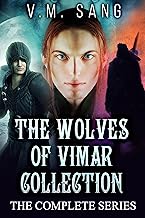
The first 3 books are available as a Collection. It says ‘The Complete Series’, but that was before Book 4 was published.

The Wolves of Vimar Collection: The Complete Series

The Wolves of Vimar Collection: The Complete Series

by V.M. Sang  | 18 Dec 2023

Kindle Edition ยฃ3.99

Paperback ยฃ21.99

Hardcover ยฃ37 54

All three books in V.M. Sang’s ‘The Wolves Of Vimar’ series of fantasy novels, now available in one volume!

The Wolf Pack: Carthinal is ready for his rite of passage to become a mage. What he doesn’t expect is ending up on a quest to find the long-lost sword of the legendary King Sauvern. Followed by Randa, the daughter of the Duke of Hambara, and the young thief Thad, Carthinal will need all the help he can get in order to complete his quest.

The Never-Dying Man: After straying into Erian, Carthinal and his friends find preparations for war. Carthinal will need to face unpleasant truths about himself; Is his desire to further his magical career more important than his friends, and his country?

Wolf Moon: An invasion is planned to Grosmer. As the heroes make their escape, they accidentally stumble upon an old Dwarven city. Facing enemies on all sides, the five must find where their loyalties lie, But can they save their homeland from certain destruction?


Although it is better to read the whole series, I believe that each book can be read on its own. There are some things that hang over, as it’s a series, but most things are settled in each book. There is an overarching quest of finding and killing the Never-Dying Man to save the land of Grosmer.

If you choose to read any or all of the books, I would be more than grateful for an honest review, and if you would like a free review copy of Immortal’s Death (or any of the other books), please let me know in the comments.

There is no obligation to review, but I would be greatly appreciative.