Category Archives: history

An Exciting Read

I am reviewing Dissolution by C.J.Sansom today. I bought this book because I read the third Shardlake book, having bought it in a Charity Shop, and enjoyed it immensely. I decided I like the character and wanted to know more about him, so  bought  the first two. I’ve yet to read the second one. I’ll review it when I do.

Review of Dissolution by C.J.Sansom

Blurb

It is 1537, a time of revolution that sees the greatest changes in England since 1066. Henry VIII has proclaimed himself Supreme Head of the Church. The country is waking up to savage new laws, rigged trials and the greatest network of informers ever seen. And under the orders of Thomas Cromwell, a team of commissioners is sent throughout the country to investigate the monasteries. There can only be one outcome: dissolution.

But on the Sussex coast, at the monastery of Scarnsea, events have spiralled out of control. Cromwell’s Commissioner, Robin Singleton, has been found dead, his head severed from his body. His horrific murder is accompanied by equally sinister acts of sacrilege.

Matthew Shardlake, lawyer and long-time supporter of Reform, has been sent by Cromwell to uncover the truth behind the dark happenings at Scarnsea. But investigation soon forces Shardlake to question everything that he hears, and everything that he intrinsically believes …

Review

This is the first book in CJ Sansom’s Shardlake series and I gave it five stars.

Shardlake is a lawyer at the time of Henry VIII. He is not what one might call a traditional hero. He is a hunchback whose infirmity often troubles him. He is also regarded with suspicion and superstition by those around him, but he is a clever man.

C,J,Sansom has captured the period very well in this work. There is a very real fear amongst the people that the new Protestant religion is threatening them if they are not seen to fully embrace it. The characters he has created are very believable with all the foibles of humanity throughout the ages.

The book is very well written and moves along at a fast pace, carrying the reader along with it. There are clues as to the murderer if the reader can manage to piece things together. I didn’t, and so was surprised at the ending.

I am looking forward to reading the next book in the series.

If anyone wishes to make a guest appearance on my blog, please message me. I would be only to pleased to welcome you.
20 commonly mis-spelled words

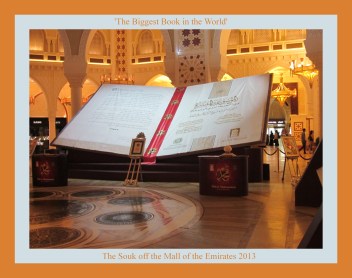
Here are some commonly misspelled words in English. 113biggestbookdubai

 Acceptable, not Acceptible
 Accessible, not Accessable
 Achieved, not Acheived
 Acquire, not aquire
 Analysis, not Analasis
 Business, not Busness
 Ceiling, not Cieling
 Consistent, not Consistant
 Definite, not Definate
 Discipline, not Disipline
 Exhilarate, not Exilarate
 Exceed, not Exeed
 Forfeit, not Forfit (or Forfiet)
 February, not Febuary
 Height, not hight (or hieght)
 Heirarchy, not Hierarchy (or Hirarchy)
 Independent, not Independant
 Inoculate, not Innoculate
 Leisure, not Liesure
 Liaise, not Liase

English is a very odd language as far as spelling is concerned. This is because it has words and roots from many other languages. There are still a few Celtic words, although not very many. Then the Romans came bringing Latin.

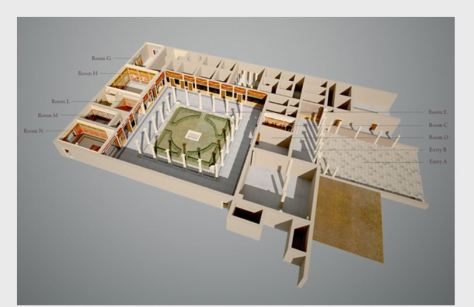
romanvilla

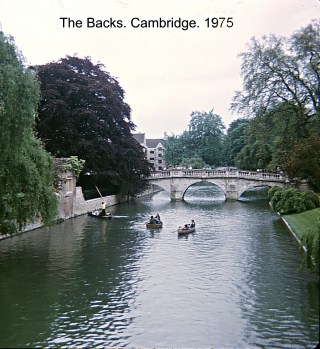
Latin was the language of scholars and it is only within living memory that it was a requirement to gain entry to Oxford and Cambridge Universities in England. The Roman Catholic Church used Latin in its services until comparatively recently, and many mottos are still in Latin.

080backscambridge

After the Romans left these isles, we were invaded by Scandinavian. These brought their own languages with them. Today, in Scotland in particular, there are many words similar, if not the same, as those in the Scandinavian languages. Dialect words often very old and date back to those languages.

There were also the Saxons. they brought Germanic languages to this country and we have many words that are very similar to the German equivalent. An example is Mutter, meaning Mother, and Haus, meaning House.

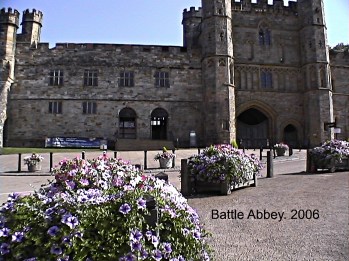
106BATTLEABBEY

After the Saxons came the Normans. They were, incidentally the last people to successfully invade these isles. This was in 1066. They brought French. The Normans became the ruling classes and spoke French. The workers spoke Anglo-Saxon. This explains why we have differences in the names of food we eat and the animals it comes from.

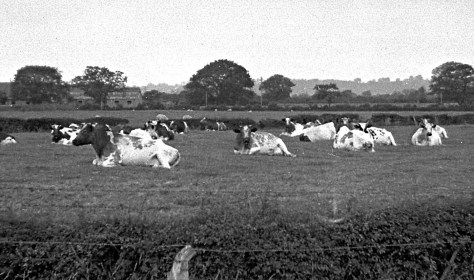
The French for a bull is Boeuf from which comes Beef. But in the field it is called a Bull, cow or in the plural, cattle.

060bluealbioncowscastletowncropped

The French for a sheep is Mouton, from which comes Mutton, but in the field it’s still the old word, sheep.

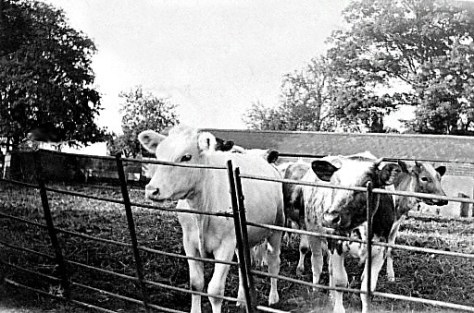
The French for a calf is Veau from whence we get Veal.

060calvescastletown
You get the picture.

Then Dutch engineers were brought in to drain what is now the Fens in East Anglia and they brought words with them. The British Empire was a source of words too, especially India.

So our language is something of a hotch-potch, hence the different spellings and pronunciation.

I will add to these words in a future blog. I hope you find this useful.