Category Archives: Poetry

Elven Evening Song from The Wolf Pack by V.M.Sang


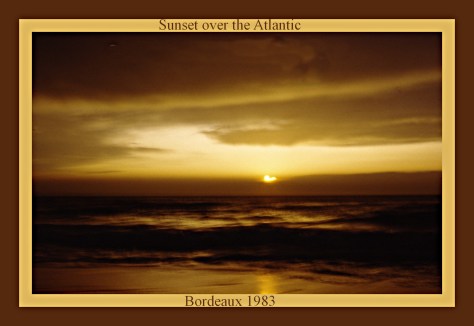
083atlanticsunset1

During their return from finding the Sword of Sauvern, the companions passed through the Elven homeland of Rindisillaran and stayed in the capital, Quatissillaron/ there they heard the beautiful song the elves sing at dusk.


Elven Evening Song

Ah equillin ssishinisi
Qua vinillaquishio quibbrous
Ahoni na shar handollesno
As nas brollenores.

Ah equilin bellamana
Qua ssishinisi llanarones
As wma ronalliores
Shi nos Grillon prones.

Ah equilin dama Grillon
Pro llamella shilonores
As nos rellemorres
Drapo weyishores.

Yam shi Grillon yssilores
Grazlin everr nos pronores
Wama vinsho prolle-emo
Lli sha rallemorres.

Translation

“Oh star of the evening
Shining brightly
You give us hope
In the deepening night.

Oh beauteous star
Who heralds the evening
You tell us all
That Grillon guards us

Oh Grillon’s star
As you sink westwards
Return again
To guard the dawn.

Ensure that Grillon
Through darkness keep us
Safe from all evil
Until the morn.”’

A poem to commemorate WW1

I make no apologies for re-posting this poem. I wrote it 2 years ago to commemorate the anniversary of the start of  World War One. As July 1st is the 100th anniversary of the terrible battle of the Somme, I thought I’d post it rather than the next episode of The Wolf Pack. That I’ll post next week instead.

My Great Uncle Jim, whom I mention in the poem. came back too, but he died shortly afterwards from the results of gassing. The lady known as Auntie Polly, who was his fiancee at the time, never married, but the family always treated her as though they had been.

‘Our Poor Willie’ was also my great uncle. He was my maternal grandmother’s brother. She always referred to him as ‘our poor Willie,’ but no one ever knew why.

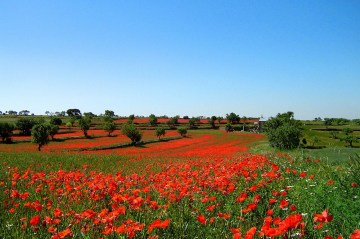
amapolas-28961290013507Xx9

WE WILL REMEMBER THEM.

I’ll never truly understand
How World War I began.
The death of Archduke Ferdinand
Started the deaths of many more
The young, the old, the rich, the poor.
All died with guns in hand.

015gtunclewilly102grandad


My Grandad went with Uncle Jim
And Our Poor Willie, too.

They sent them off, singing a hymn.
Grandad went to Gallipoli,
Uncle Jim left his love, Polly.
Gas in trenches did kill him.

Britishtrenchww1

I cannot see, in my mind’s eye
Grandad with gun in hand.
A peaceful man, sent out to die.
He fought for us, for you and me
So we can live and so that we
Safely in our beds may lie.

Grandad came home, and Willie too,
But millions more did not.
Their duty they all had to do.
They died in fear, in noise, in blood.
Everything was caked in mud.
Yet in those fields the poppies grew.

The War to end all wars, they said,
So terrible were the deaths.
The youth of Europe all lay dead.
Yet 21 short years to come
Another war. Once more a gun
In young men’s hands brought death.

One hundred years have passed since then.
What have we learned? Not much!
Too many men are killing men.
Wars still abound around the world.
Bombs and missiles still are hurled
At those who disagree with them.

V.M.Sang

July 2014

I make no apologies for this poem not being in the modern idiom of no rhymes and little rhythm. I’m old-fashioned enough to think that poems ought to differ from prose, and many modern ones I’ve read are little different. That doesn’t necessarily mean rhyming though. I’ve written blank verse myself on occasion.

I also think that they ought to be comprehensible!

Please leave a comment in the comments section.

A Dwarf Work Song

Today is the fifth Tuesday in the month, so we have an extra blog. This time I’m posting a poem.The blog is short because I”m on holiday. I hope you enjoy it.

DWARF WORK SONG

Deep, deep below the ground
Wielding spade and pick.
Dwarven miners found
Minerals lying thick.

Tin, iron copper too,
We dig the all day long.
The solid rocks we hew
With sturdy arms and strong.

Precious stones we find.
Opals, rubies, jet.
We leave non behind.
Everyone we get.

But don’t you delve too deep.
We don’t know what lies there.
All kind of dangers sleep
And fearsome things lie there.

Please comment on this poem in the comments section.