Tag Archives: aspholessaria

Cover Reveal

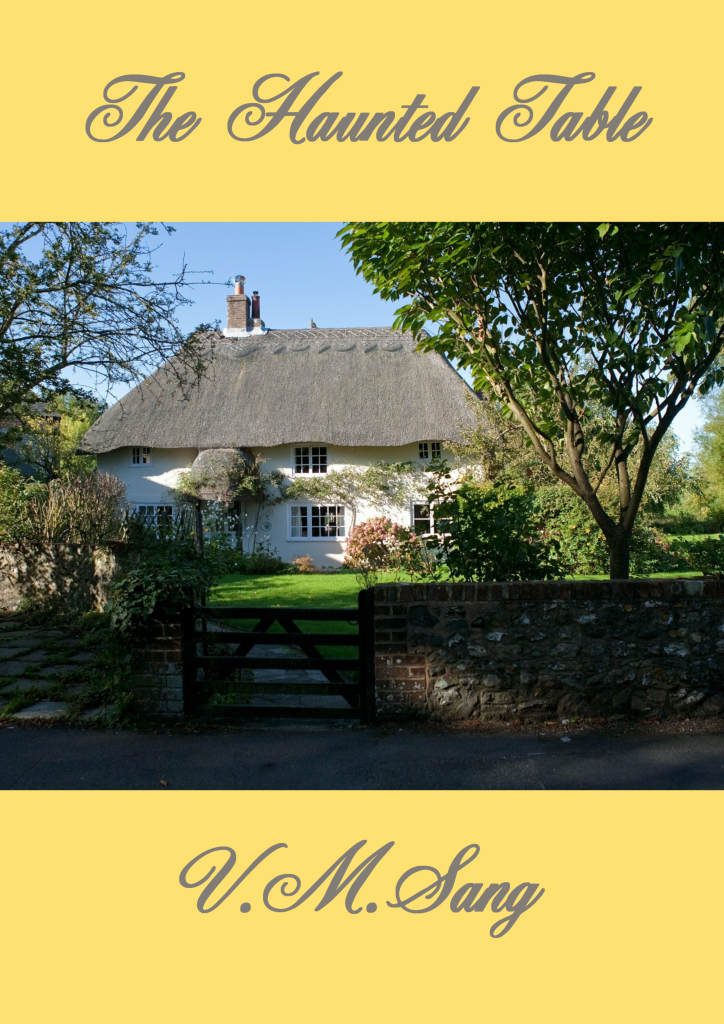
I’ve had the suggested cover back from the publisher and have accepted it. I like it. What do you think?

Should be out in time for Christmas, so if you are stuck for Christmas presents, here’s an idea. Details of where and how to buy coming when I know them.

In the meantime, if you would like a short story to read, completely free and exclusive, click on the button below.

Maria and Tom have bought an antique table for the old cottage they have bought. When they hear strange noises in the night that sound like crying, they worry their house is haunted, but the sounds seem to come from the table.

They set about trying to find what is causing the disturbances. The answer is stranger than either of them had thought.

(Clicking the link will add your email address to my email list, but don’t worry, you can unsubscribe immediately if you wish. Nor will you get any spam. I only send out an email each quarter, or if I have any exciting news–like a new release.)

A Halloween Poem.

Tonight is Halloween. This is an ancient festival that we have adapted to our own times. This poem harks back to those times when people really believed that the spirits of the dead could return to Earth, including demons and other malevolent creatures.

Hallowe’en


The moon has hidden her face tonight
Turned away from the Earth.
The clouds are scurrying away in fright
From what the night may give birth,
For tonight the veil is thin.

The wind is blowing the leaves around.
They hide in crannies and nooks.
Cowering, shivering, hope not to be found
By phantoms, ghosts and spooks,
For tonight the veil may tear.

Build a bonfire, create some light.
The spirits are afraid.
They like the shadows, shun what’s bright
And lurk within the shade
For tonight they cross the veil.

Ghouls and spectres, wraiths and shades
Return to Earth tonight.
We’re filled with dread as daylight fades.
The smallest sound will give us fright
For tonight the veil has gone.

This poem appears in my poetry book, Miscellaneous Thoughts. It is available in your favourite store, as ebook, or ‘real’ book.

There are more Halloween poems there as well as others from the various seasons, the countries of the UK, limericks, Haiku and many other things.

Most of my poetry is rhyming poems, so if you enjoy that kind of poetry, you will probably enjoy my poems.

Get your copy by clicking on the image of the book in the sidebar or the button below.

Did you like my poem? All comments will be read and answered. Add yours in the comments box.

Lobelia Cardinale

A couple of years ago we went to South Wales on holiday. Imagine our delight to find we were just a stone’s throw from The National Botanic Gardens of Wales.

We actually went twice in the week we were there, and the second time came across the beautiful and stunning Lobelia Cardinale.

If like me, you thought lobelias were little blue flowers that people put in their hanging baskets to trail over the edge, be prepared for a surprise. These are tall and bright red!

We decided we would like to get some for our garden, and so I went online and found somewhere that sold them. We got 6 plug plants and nurtured them. One died and one was eaten by snails. That one regrew, to my delight when put in a pot separate from the others.

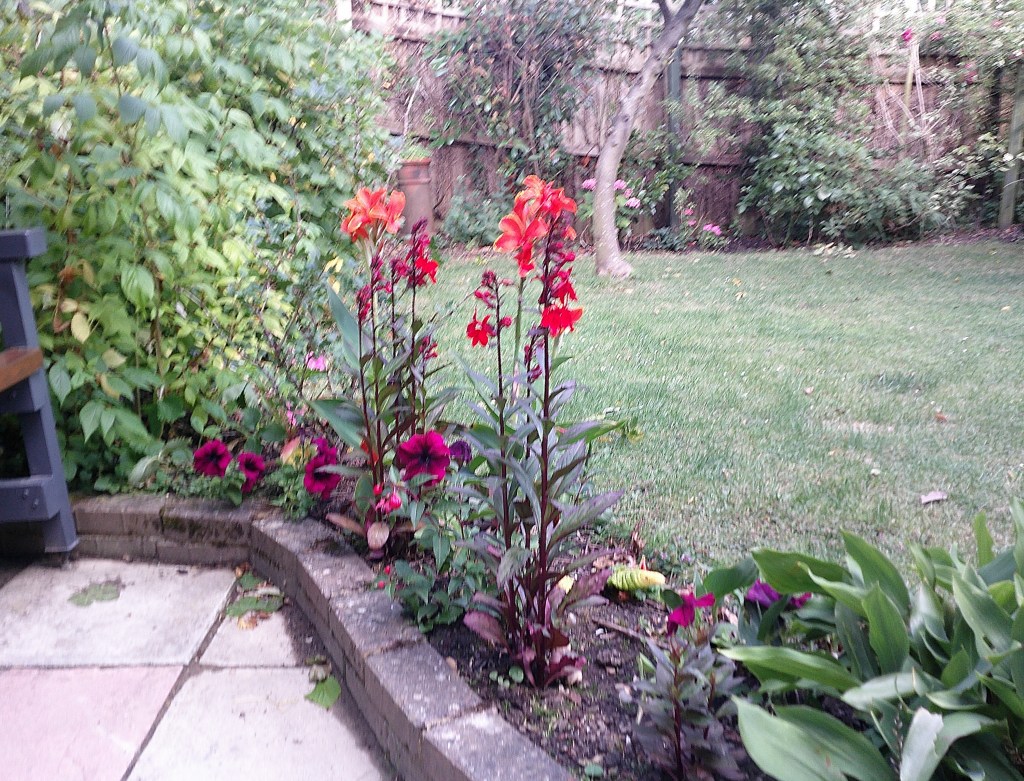
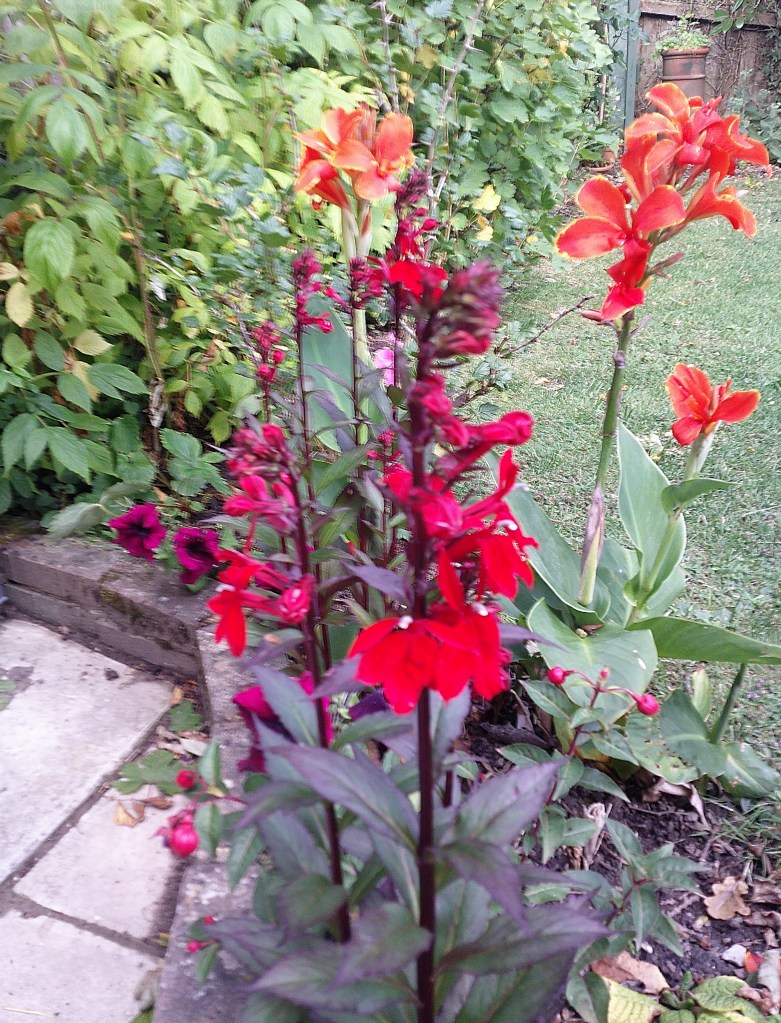
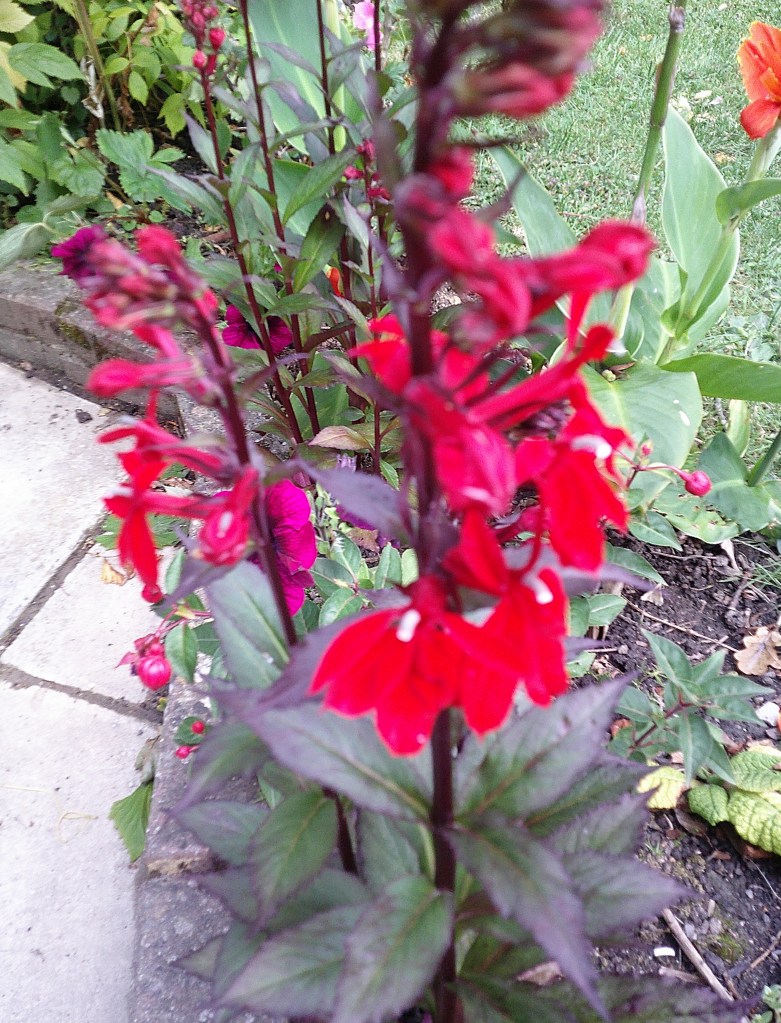
They grew and flourished the first summer, but did not flower, but this year, to our delight, they are magnificent. I promised to post some pictures, so here they are.

$CoMmEntˆ
$CoMmEntˆ
$CoMmEntˆ

I’m afraid the last two are not perfectly in focus. My camera was trying to focus on the farther shoots!

Do you know of this variety of lobelia? Please let us know your thoughts in the comments.

William the Conqueror and the Battle of Hastings.

Image by Jo Justino from Pixabay

I am now King of England. King William I. Doesn’t that sound great? However it wasn’t such an easy position to gain. Let me go back to the beginning.

Edward, my second cousin, was in exile in Normandy after Cnut had taken the English throne. I decided to go and see him. He was family, after all, and he had no heirs.

While I was there, I played on the family connection, and reminded him that, although he might eventually get an heir with his wife, Emma of Normandy, if he should die suddenly, there would be no obvious claimant to the English throne.

Well, he hummed and hawed and didn’t make a decision then. I’m not surprised, really, because his mother had married Cnut and had a son by him. She supported her son, Harthacnut, and eventually he became king of England.

Edward was lucky. Harthacnut died, and Edward sailed unopposed into England to take the throne. Not long after, he sent his son-in-law, Harold Godwinson to tell me he had decided to make me his heir. King William sounded good, I thought, but I didn’t trust Harold, so I had him imprisoned. Eventually, in order to regain his freedom, he swore an oath of fealty to me: the rat!

In the year of our Lord, 1066, King Edward, who had become to be know as The Confessor, due to his religious convictions, died. Harold, the rat, took the throne and was crowned the day after Edward’s death. He said Edward had made him his heir on his deathbed. A likely story!

It was then I decided I needed to go to England and sort this man out. He had broken a holy oath, and I was the rightful king. But it seemed I wasn’t the only one to want the crown of England. Harald’s own brother, Tostig, joined forces with the Norwegian king, Harald Hardrada, and launched an invasion.

They met initially at a place called Fulford, in the north of England, not far from the city of York. This was on September 20th 1066. It seems the invaders won, but Harold was not to be defeated so easily. He fought another battle five days later at a place called Stamford Bridge where both Tostig and Harald Hardrada were killed.

Well, this was too good an opportunity to miss. I set sail, knowing that Harold would be occupied, and we landed at a place called Pevensey. There had been a Roman castle there, and we made use of that. I ordered a wooden fort to be built inside the Roman walls. It was a good defensive position.

The whole area was marshland, and the sea came up to the fort walls. We marched over the marshes, heading towards the town of Hastings. Once we got there, I ordered a fort to be built, and we raided the land for supplies.

We waited for Harold to arrive from his battle at Stamford Bridge. We knew they would be tired after a forced march. I set a watch the night before the battle. I would not have put it past Harold to make a surprise attack, but he didn’t, and so on 14th October, at dawn, the battle began.

I won’t go into details here. Suffice it to say that it was hard fought and lasted all day. It was very bloody, but in the end we won, and Harald was dead. I was now King of England.

I have begun the research for the next book in the series, A Family Through the Ages. This one will start in 1066 with the Battle of Hastings. There’s a lot that is uncertain about the battle. Even the place it happened is disputed, as is how Harold was killed. In the Bayeux tapestry, beneath the word Harold, is a picture of a man being hit in the eye by an arrow. Many believe the name refers to the picture below it, but as the name is part of the text, that could be coincidence, and there are other knights shown being slain by the sword.

Two other books I’m working on are another prequel novella for The Wolves of Vimar series, this one dealing with the horselords, Kimi and Davrael, and I’ve finished the fourth book of The Wolves series. It has yet to go through the critiquing process. I am also writing a book of poetry in which there will be one poem a day to read. January to December is finished, but I’m waiting until a bit closer to Christmas to bring that one out so that people can begin reading in January.

If you enjoyed this little story, perhaps you would like to read another by me.

If you would like to receive this exclusive, free short story, called The Haunted Table, simply click the link. This will take you to the page where you can download it. You can’t get it anywhere else.

Maria and Tom have bought an antique table for the old cottage they have bought. When they hear strange noises in the night that sound like crying, they worry their house is haunted, but the sounds seem to come from the table.

They set about trying to find what is causing the disturbances. The answer is stranger than either of them had thought.

(Clicking the link will add your email address to my email list, but don’t worry, you can unsubscribe immediately if you wish. Nor will you get any spam. I only send out an email each quarter, or if I have any exciting news–like a new release.)

i need your help

I am completely stuck for a title for my latest novella in the Prequels to the Wolves of Vimar. The working title is Aspholessaria, which is the name of the protagonist, but as I don’t thing it’s very memorable, nor easy to spell putting it in a search engine, I don’t think I’ll go with it.

Of course, Aspholessaria isn’t known by that name, especially in the Human lands. (She’s an elf) Humans know her as Asphodel but that name could be misconstrued as a book about the flower, so I’ve rejected that.

I don’t want to spoil the story for anyone who wants to read it, but roughly it goes like this. She runs away from home with her lover in order to escape an arranged marriage. Of course it all goes wrong and she has to escape her lover. She ultimately finds herself in Bluehaven where she joins the priesthood of Sylissa, goddess of life and healing, and begins training to become a healer.

For various reasons she falls foul of the Great Mother in the temple when she follows her conscience rather than the rules.

I have a few ideas that I’m not really satisfied with and would like your opinion. Here are the ideas I’ve had.

From Darkness to Light

Dream of an Elf Maid

The Voice in the Air

Lady of the Healing Goddess

Priestess of Sylissa

Consequences of Conscience.

Which, if any, of these titles appeals to you? Of course, if you have a brilliant idea, please let me know.

Please put your thoughts in the comments box.

If you would like to join my quarterly newsletter, to find out more about me and my writing, please click the button below. Not only news of what’s going on, I will send the occasional freebie for you.

review of the dialectic of agony, echo 3 by Kent Wayne

Overview.

Another extremely enjoyable book in the Echo series by Kent Wayne. This book picks up where book 2 ends and has a surprise towards the end.

Blurb

While Crusader Kischan Atriya fights to keep his life and sanity, his mentor Chrysalis Verus undertakes a perilous journey across the wilds of Echo. Their separate paths intertwine in the unlikeliest of places and across all borders, both psychic and physical.

Story

Atriya is in a bad way after his fight in Book 2. He has ‘boosted’ three times in 24 hours. The recommended number is 1 or severe brain damage might occur.
This book follows Atriya and his friend and mentor, Verus, across realms both physical and mental.

Characters

The characters are, as in the o ther books, believable. They have their flaws, especially Atriya. During this book he develops in many ways through his interactions with other characters and begins to see that his life as a Crusader is not what he thought it was.

Writing

On the whole, Mr Wayne’s writing is good and clear. He sets scenes that one can easily picture and draws you into the story with ease, so you don’t want to put the book down.

Conclusion

Another 4* stars for this one, largely because of things that slightly irritated me, like the way he uses ‘earth’ when he means ‘ground’. We are not on Earth.

I hope you enjoyed this review. These books are definitely worth a read. They are not simply adventure stories, although they are that, but they have a definite philosophical slant as well.

Feel free to reblog this post. The more eyes on these books the better it will be for Kent Wayne.

If you enjoyed this review, please leave a comment in the comments box.

3 Haiku about snow.

Probably not the best time of year to remind you of the cold, but here are 3 snowy haiku.

Image by S. Hermann & F. Richter from Pixabay

SNOW

Flakes drop gently down,
Turning all the land to white.
A magical sight.

Nothing can be seen.
Earth and sky blend into one
In the blizzard’s rage.

Waking in the dawn,
Mysterious light shines in.
It snowed in the night.

3 more weather haiku

SUN

Image by FelixMittermeier from Pixabay

The warmth of the sun,
The gentle buzzing of bees,
Tells us it’s summer.

Image by Pezibear from Pixabay

Scorching the desert.
Nothing can live in this heat
From the burning sun.

Image by Amanda Napitu from Pixabay

The sun smiles in the sky.
People smile on Earth below
To see him shining.

I hope you enjoyed these three more haiku. I’m trying to give different images of the kinds of weather, both positive and negative.

Do you write Haiku? If you do, let us know in the comments box. Perhaps you can post one for us all to see.

Special offer

Don’t forget to get your copy of Viv’s Family Recipes at the special price of 0.99(£ or $). The offer ends today.

Click the book cover or this link. The link will take you to its page on Amazon. In your country.

http://mybook.to/FamilyRecipes

In Defense of Grammar Schools

boy-160168_1280


There is a debate going on in the UK at the moment about education. As an ex-teacher I am interested in the arguments.

The Conservative Government wants to allow Grammar Schools to be re-established. Before the 1960s there was a system of Grammar Schools and Secondary Modern Schools.

In order to get into a grammar school, all children took an examination at age 11, in the final year of their primary school. It was called the 11+ examination. Those pupils who were in the top percentage got a place in the grammar school. I don’t know what that percentage was, but I have heard it said that the top 25% went to grammar schools.

home-1824815_1280

The grammar schools were academic schools, and they taught academic subjects. secondary moderns tended not to teach much in the way of languages, for example.

It is said that the future of children was settled at 11, and that was not good, because some children developed later. But the 11+ was not the end. There was a 12+ and a 13+ that pupils could take if they seemed to be developing in a more academic way.

At that time, the school leaving age was 15. The pupils who went to grammar school had to stay on until 16 so they could do the GCE ‘O’ level examination. A few pupils stayed on at secondary modern and did ‘O’ levels as well. If they did well in the examinations, they could then go on to the 6th form in the grammar school or at a college. I have several friends who did this.

During the 1960s, came the advent of the comprehensive school. These schools were deemed to be fairer than the old system. Each neighbourhood took in all the pupils from its catchment area. All went to the same school, regardless of their academic ability. This, it was said, was much fairer. It did not create an elite and a lot of ‘failures’ at the age of 11.

school-845196_1280

On the face of it, this seems to be fine, only I think there are a number of flaws in this argument.

The main one, I think is this. Pupils from a given area all go to the local comprehensive school. There is no examination for entry, so no feelings of failure by those who did not pass the 11+.
That sounds fine, but if the neighbourhood school is not very good, all pupils from that particular neighbourhood are being failed.

Children do not get the chance to meet children from a different background, either. They are living with these people, have been brought up in the area, either rich or poor, and so they do not get a rounded picture of society.

The idea was the opposite of this. Pupils attending comprehensive schools were supposed to see all the different types of people. Yes, they saw all the different academic types, but not people from different social backgrounds.

Comprehensive schools were supposed to prevent the feelings of failure by some pupils failing the 11+. I don’t think you can stop pupils from feeling inferior intellectually by lumping them all together. They can see the brighter pupils doing better than them in their academic work. That will make them feel inferior just as much as ‘failing’ the 11+.

One other thing brought about by the introduction of comprehensive schools, is that the education given is a watered-down academic curriculum, which is not suited to all pupils, and has lowered the academic standards for the very brightest pupils.

Grammar schools, they say, create an elite. This is supposed to be bad. In a perfect world, I suppose everyone would have the same academic capabilities, but everyone does not. There are some people who are much cleverer than others. Some say that it is solely due to their background how some people develop, and a middle class background is advantageous. This I would not dispute, but only to a point. There are middle class children who do not excel, and working class ones who do, in spite of their background.

They say that comprehensive schools help social mobility. How? Pupils live and learn in the same area with the same people and values.

In a grammar school, pupils come from all backgrounds and all areas of a town. They mix with each other and get to know something of the lives of each other. Pupils from working class backgrounds can get an academic education, and get away from the schools in their area where ambition is perhaps not so great.

Bright pupils who live in an area with a poor school can get away from that as well.

session-1989711_1280

It is said that grammar schools have more middle class pupils than working class ones. That is something that can be worked out. ‘They’ say that the exam can be coached and middle class parents are more likely to put up the money for coaching. Well, I went to a grammar school and was coached for the exam, but not by private tutor, which is the perception, but by my primary school. Encourage primary schools in working class areas to coach. Or develop an exam where coaching is no advantage.

There’s always an answer, and in my opinion, the advent of comprehensive schools has lowered standards. When I look at the exams I took at ‘O’ level and the exams pupils take at GCSE, there’s no comparison. We had to write essays. They just have ‘structured questions’, or fill in the blanks.

I see grammar schools as promoting social mobility far more than comprehensive schools in contrast to what the detractors say, that they are elitist and prevent it.

I would love to hear what you think of the grammar school debate.