I think this was a recommendation by Sally Cronin. Thanks, Sally. An amazing book. I finished it a couple of days ago, but it’s still resonating.
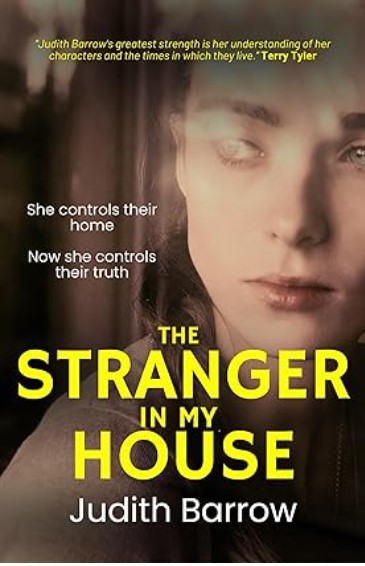
I think I’ve just found my new favourite author.
OVERVIEW
A heart wrenching story told with sympathy and understanding. Set in the 1960s, some of the treatment of the children seems harsh and wrong to us now, but in those days, people thought they were doing the right thing.
STORY
Charlie and Chloe are twins. When we first meet them they are eight years old and their mother died three years previously. They are living happily with their father, Graham, although they miss their mother, of course.
Then one day Graham brings home a woman whom he says he is going to marry. She is the nurse who cared for their mother in her final days.
But she isn’t the kind, understanding woman that she makes everyone believe.
Charlie sees through her right from the start, and their world gradually turns upside down.
The book takes us through many years as the children become adults.
I don’t want to say more as anything else would be a spoiler.
BLURB
A gripping ‘cuckoo in the nest’ domestic thriller
After the death of their mum, twins Chloe and Charlie are shocked when their dad introduces Lynne as their ‘new mummy’. Lynne, a district nurse, is trusted in the community, but the twins can see her kind smile doesn’t meet her eyes. In the months that follow they suffer the torment Lynne brings to their house as she stops at nothing in her need to be in control.
Betrayed, separated and alone, the twins struggle to build new lives as adults, but will they find happiness or repeat past mistakes? Will they discover Lynne’s secret plans for their father? Will they find each other in time?
The Stranger in My House is a gripping ‘cuckoo in the nest’ domestic thriller, exploring how coercive control can tear a family apart. Set in Yorkshire and Cardiff, from the 60s to the winter of discontent, The Stranger in My House dramatises both the cruelty and the love families hide behind closed doors.
CHARACTERS
The people in this story are well-rounded. No one is perfect.
Charlie is a perceptive little boy. But he lets his resentment eat away at him as he grows up. Not surprisingly, really, given what he has to go through. He is also stubborn in refusing to try to get on with Lynne, his new stepmother.
Chloe is more malleable. She wants to get on with Lynne, and tries to persuade Charlie he’s wrong about her.
Graham is a lovely father; kind and supportive until he becomes more and more under Lynne’s influence. He believes her over his children.
Lynne is shown as a manipulative woman who is willing to wait for years for what she wants. She says she has been in an abusive relationship, but managed to escape.
Lynne has two children of her own, Evie and Saul, both older than Charlie and Chloe.
Evie is lovely, and knows exactly what her mother is like and she helps the twins whenever she can, even if only lending an ear.
Saul, on the other hand, is a bully. He bullies Charlie, but if Charlie says anything, Lynne takes Saul’s side and convinces Graham that Charlie is making it up.
WRITING.
Excellent writing. I felt sympathy for the children and got angry with the adults, just as I would in real life.
The characters are believable written in a sympathetic way, except, of course, Lynne and Saul, whom I was anxious to see get their just deserts.
There were no grammatical errors or typos.
I would fully recommend this book. I couldn’t put it down.
I give it 5*
My ranking of books. In order to get a particular number of stars, it is not necessary to meet all the criteria. This is a guide only.
5* Exceptional. Wonderful story. Setting well drawn, and characters believable–not perfect, but with flaws. Will keep you up all night. No typos or grammatical errors.
4* A thoroughly enjoyable read. Great and original story. Believable setting and characters. Very few grammatical errors or typos.
3* I enjoyed it. Good story. Characters need some development. Some typos or grammatical errors.
2* Not for me. Story not very strong. Unbelievable and flat characters. Setting not clearly defined. Many typos or grammatical errors.
1* I hated it. Story almost non-existent. Setting poor. Possibly couldn’t finish it.
Have you read anything by Judith Barrow? I definitely intend to read more of her books.

 Dragons Rule OK. V.M.Sang (author)