Tag Archives: D. Wallace Peach

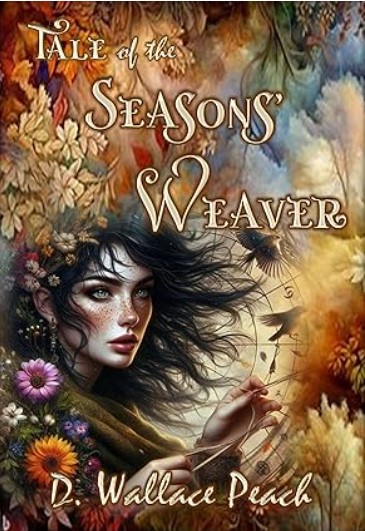
Review of Tale of The Season’s Weaver by D. Wallace Peach

OVERVIEW:

Ms Wallace Peach has done it again. This is a wonderful book.

BLURB:

“Already the animals starve. Soon the bonemen will follow, the Moss Folk and woodlings, the watermaids and humans. Then the charmed will fade. And all who will roam a dead world are dead things. Until they too vanish for lack of remembering. Still, Weaver, it is not too late.”

In the frost-kissed cottage where the changing seasons are spun, Erith wears the Weaver’s mantle, a title that tests her mortal, halfling magic. As the equinox looms, her first tapestry nears completion—a breath-taking ode to spring. She journeys to the charmed isle of Innishold to release the beauty of nature’s awakening across the land.

But human hunters have defiled the enchanted forest and slaughtered winter’s white wolves. Enraged by the trespass, the Winter King seizes Erith’s tapestry and locks her within his ice-bound palace. Here, where comfort and warmth are mere glamours, she may weave only winter until every mortal village succumbs to starvation, ice, and the gray wraiths haunting the snow.

With humanity’s fate on a perilous edge, Erith must break free of the king’s grasp and unravel a legacy of secrets. In a charmed court where illusions hold sway, allies matter, foremost among them, the Autumn Prince. Immortal and beguiling, he offers a tantalizing future she has only imagined, one she will never possess—unless she claims her extraordinary power to weave life from the brink of death.

In the lyrical fantasy tradition of Margaret Rogerson and Holly Black, D. Wallace Peach spins a spellbinding tale of magic, resilience, and the transformative potency of tales—a tapestry woven with peril and hope set against the frigid backdrop of an eternal winter.

STORY:

Erith is the Weaver of the Seasons. She has inherited the job from her immortal, Charmed (magical) mother who decided to follow her mortal husband into the underworld on his death.

The young Erith is unconfident of her abilities, being only half Charmed. She doubts her magic is sufficient to weave the seasons.

It is winter, and human hunters entered the Charmed forest in pursuit of a stag. They killed some of the Winter King’s creatures, and now he is out for revenge.

Erith has to travel to the magical Isle of Innisholm to spread her magical tapestry, woven by her with her mother’s magic threads. At the equinox, the spreading of Spring’s tapestry will enable the change from winter to spring to take place. The Winter King will relinquish his throne to the Spring Princess.

Or will he?

Intent on punishing the humans, he captures Erith and destroys her tapestry, insisting she weaves only winter. This will cause the death of all living things, and eventually, as there is no one to believe in them, and to pass on their stories, the immortal Charmed, themselves.

Who can Erith trust? The Charmed courtiers? The Spring Princess? The Autumn Prince? The Summer Queen?

CHARACTERS:

Erith is full of doubt. She is very young to have this responsibility thrust upon her. We can understand how she feels. She is alone in the world.

She feels anger at her mother for leaving her to perform this task alone. This anger is mixed with love for her mother.

She is a character we can relate to. I think everyone has felt, to some degree, what Erith feels.

But she must find the courage from somewhere to stand up to the Winter King.

The Winter King is a typical depiction of winter. He has icy blue eyes and long white hair. His personality is cold and ruthless. He has little empathy for the humans he is destroying by his refusal to allow spring to arrive. Even when his actions are impacting his own people he will not relent.

The Spring Princess loves pastel colours. She has blonde hair and wears a dress with spring flowers on it.

She is slightly insipid, I thought, and does not have the courage to stand up to Winter King. She seems to think he’ll relent and all will be well.

The Summer Queen dresses in bolder colours than the Spring Princess, as befits a summer day. She doesn’t stand up to the Winter King, either, and doesn’t seem too bothered about what is happening.

The Autumn Prince is the only one of the season’s royalty who is on Erith’s side. He does all he can to help her, even if she doesn’t always appreciate it.

There are lots of other characters, many of whom are Charmed. I especially liked Erith’s hospet, a small, goblin-like creature who, in exchange for clothes and food, keeps the house clean and tidy.

WRITING:

Ms Wallace Peach writes like the Weaver of the title. Her prose and word choice weave magic, just as Erith weaves magic into her tapestry.

Her descriptions are beautiful. I could picture the cold beauty of Winter with the glittering ice and snow, and with Erith’s visit to the realms of the other Seasons’ rulers on the Isle of Innisholm, the delicate loveliness of Spring and the bountiful colours of Autumn.

I found no grammatical errors, nor typos.Definitely one to read if you are a fan of fantasy, and maybe even if you are not. The writing alone is worth it.

I give it 5*.

My ranking of books. In order to get a particular number of stars, it is not necessary to meet all the criteria. This is a guide only.

5* Exceptional. Wonderful story. Setting well drawn, and characters believable–not perfect, but with flaws. Will keep you up all night. No typos or grammatical errors.

4* A thoroughly enjoyable read. Great and original story. Believable setting and characters. Very few grammatical errors or typos.

3* I enjoyed it. Good story. Characters need some development. Some typos or grammatical errors.

2* Not for me. Story not very strong. Unbelievable and flat characters. Setting not clearly defined. Many typos or grammatical errors.

1* I hated it. Story almost non-existent. Setting poor. Possibly couldn’t finish it.

A Visit from Diana Wallace Peach, and an Exciting New Release.

Today, I am honoured to be a part of Diana Wallace Peach’s blog tour. She is stopping by to tell us about the book she has recently released. It’s called The Necromancer’s Daughter, but I’ll let Diana tell you about it.

Take a seat and help yourself to a biscuit while I pour you some coffee.

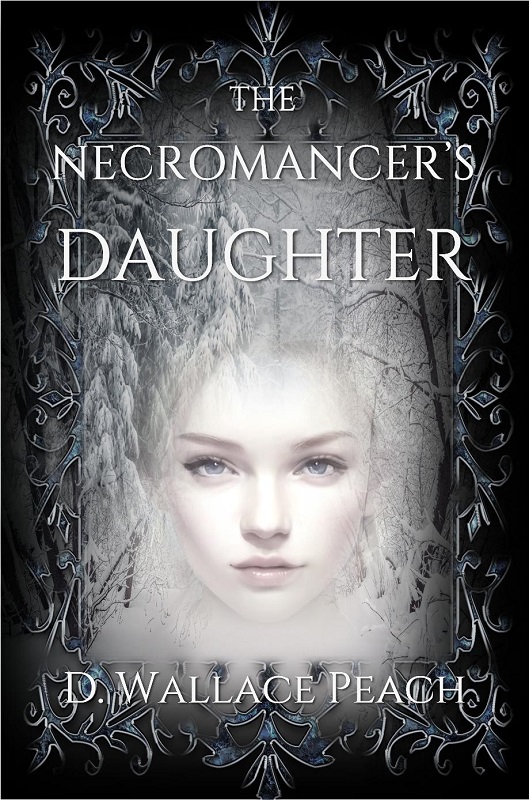
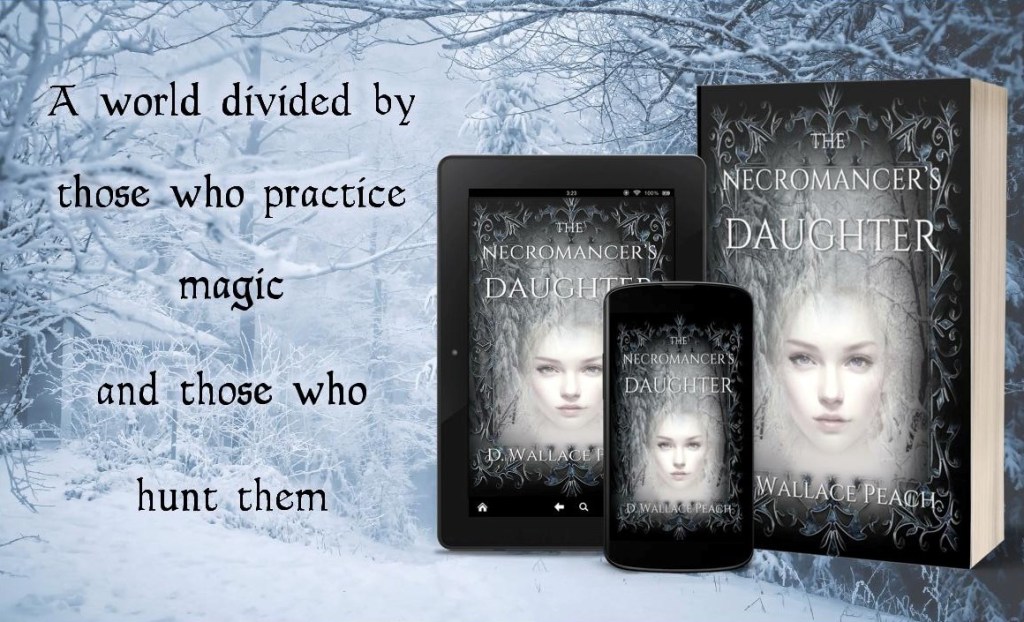
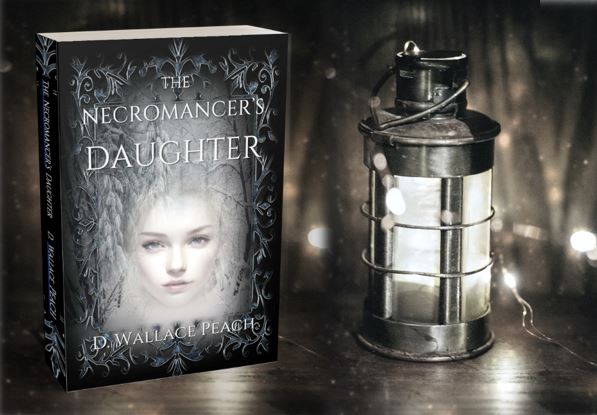
Isn’t this a beautiful cover?

Now you’re comfortable, I’ll hand you over to Diana.

Thanks for having me over to your blog, Viv. I’m delighted to share a thought or two about The Necromancer’s Daughter, and in this case, the challenges of crafting “good” characters.

My latest book has a couple of virtuous characters, different from my usual mixed bag of flawed souls. I think characters with flaws, inner conflicts, and ambivalence are easier to write because they’re inherently more interesting and often more active as they go around messing things up.

So, what did I do for my characters who aren’t emotionally compromised or moral wrecks?

Barus, my necromancer who starts off the book, is one of the sweetest people around. He’s led by his heart, and though that gets him into some dicey situations, his main challenge is simply to stay alive.

Fortunately for this writer, he fades into the background early on when Aster, the necromancer’s daughter, takes the forefront. She’s more of a challenge since she has to carry the story to the end.

She’s also “good,” and in her case, it’s that quality that creates danger for her and ambivalence for other characters. Her sweet nature gets her into trouble more than it saves her.

One way to make life miserable for our nice characters like Aster is to give them lose-lose choices. (Writers are ruthless, aren’t we?) And that’s exactly what I do to my poor heroine. She is constantly having to choose between two bad options, and that creates a lot of inner turmoil while also testing her convictions. By the end, she just might discover that there are worse choices than death.

Something about the story

A healer and dabbler in the dark arts of life and death, Barus is as gnarled as an ancient tree. Forgotten in the chaos of the dying queen’s chamber, he spirits away her stillborn infant, and in a hovel at the meadow’s edge, he breathes life into the wisp of a child. He names her Aster for the lea’s white flowers. Raised as his daughter, she learns to heal death.

Then the day arrives when the widowed king, his own life nearing its end, defies the Red Order’s warning. He summons the necromancer’s daughter, his only heir, and for his boldness, he falls to an assassin’s blade.

While Barus hides from the Order’s soldiers, Aster leads their masters beyond the wall into the Forest of Silvern Cats, a land of dragons and barbarian tribes. She seeks her mother’s people, the powerful rulers of Blackrock, uncertain whether she will find sanctuary or face a gallows’ noose.

Unprepared for a world rife with danger, a world divided by those who practice magic and those who hunt them, she must choose whether to trust the one man offering her aid, the one man most likely to betray her—her enemy’s son.

A healer with the talent to unravel death, a child reborn, a father lusting for vengeance, and a son torn between justice, faith, and love. Caught in a chase spanning kingdoms, each must decide the nature of good and evil, the lengths they will go to survive, and what they are willing to lose.

My Review of The Necromancer’s Daughter.

OVERVIEW:

This book is a definite page turner. I loved it all the way through and although I couldn’t put it down, I definitely didn’t want to get to the end.

The cover is beautiful.

CHARACTERS

Fantastic characters. D. Wallace Peach has brought us amazing people. They seem real as they have failings as well as good points. They struggle with knowing what is right and wrong amid conflicting views.

Aster has the ability to resurrect the dead. Is it evil to do so? She does not think so. Some think the Blessed One alone should have this right of who lives and who dies, and to go against her wishes is evil. But can Aster stand by and allow a death she could prevent? If the Blessed One did not want the dead person to be revived, surely she would not allow it?

Facing danger in the Forest of Silver Cats, Jorah questions his whole life. He has promised to help Aster get to Blackrock, against everything he has been taught to believe—that necromancy is evil and necromancers should be put to death. He is conflicted as to why he agreed to do so. His concerns trouble him throughout the book.

<p>Teko is a simple man. One whom the ‘civilised’ people consider to be a barbarian, but he is a loyal protector of Aster.

Finally, there is Barus. He is a man with a crooked spine. A truly good person. He resurrected Aster after she was stillborn and brought her up as his own daughter. He is a wonderful man whom I find difficult to forget. </p>

WRITING

The writing is amazing. This is one of the few books I’ve read recently that I have not had to get my metaphorical red pen out to correct errors.

D. Wallace Peach has a wonderful way with words. Her descriptions are beautiful, and I love her metaphores and similes. She takes you into the world of magic, dragons and kingdoms at odds with each other and makes you believe in it.

If you are a fantasy fan, I would recommend you go and buy it now.

Here’s a bit about Diana.

A long-time reader, best-selling author D. Wallace Peach started writing later in life when years of working in business surrendered to a full-time indulgence in the imaginative world of books. She was instantly hooked.

In addition to fantasy books, Peach’s publishing career includes participation in various anthologies featuring short stories, flash fiction, and poetry. She’s an avid supporter of the arts in her local community, organizing and publishing annual anthologies of Oregon prose, poetry, and photography.

Peach lives in a log cabin amongst the tall evergreens and emerald moss of Oregon’s rainforest with her husband, two owls, a horde of bats, and the occasional family of coyotes.

You can buy The Necromancer’s Daughter by clicking here or on the cover of the book.