Tag Archives: food

British Wild Flowers: The Blackthorn

I was driving along the roads around her a couple of days ago and the blackthorn was in full bloom. It struck me that I’d not posted a British Wild Flowers post for ages.

So let me introduce The Blackthorn.
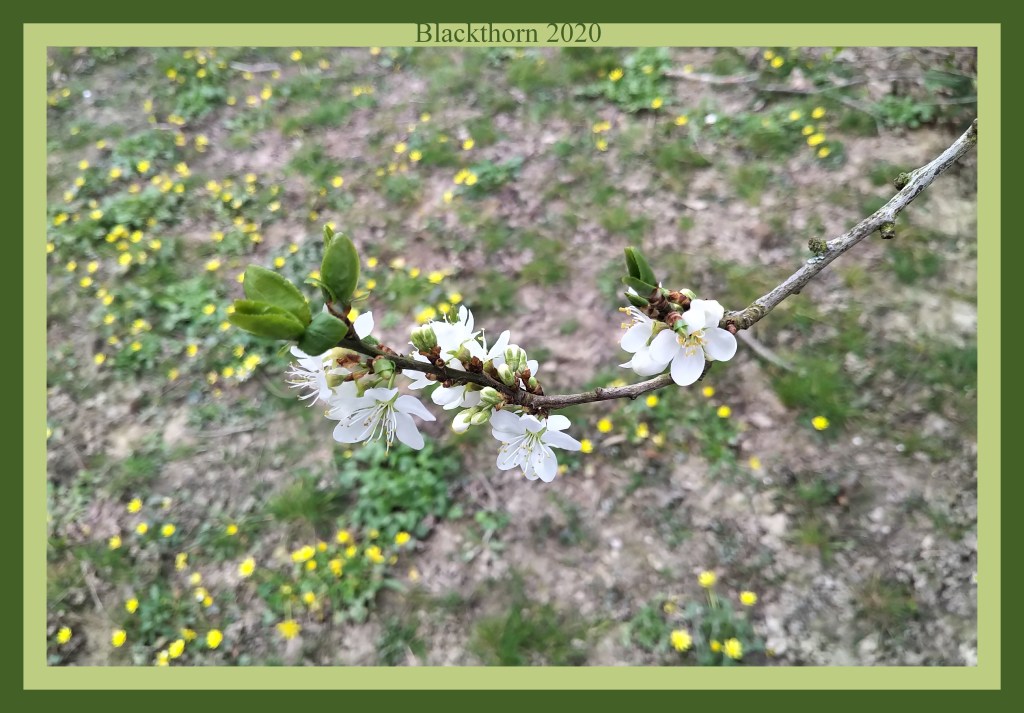
This tree is in flower right now. Large areas of white are visible in every hedgerow around here (East Sussex in the south east of the UK).

It is one of the earliest trees to bloom. I’m calling them trees because they can grow to four metres. Yes, that’s a smallish tree, but I think it’s bigger than a bush! However, because they are often found in hedges, they are trimmed and I’ve not seen a really tall one for ages.

They can live for 100 years, apparently.
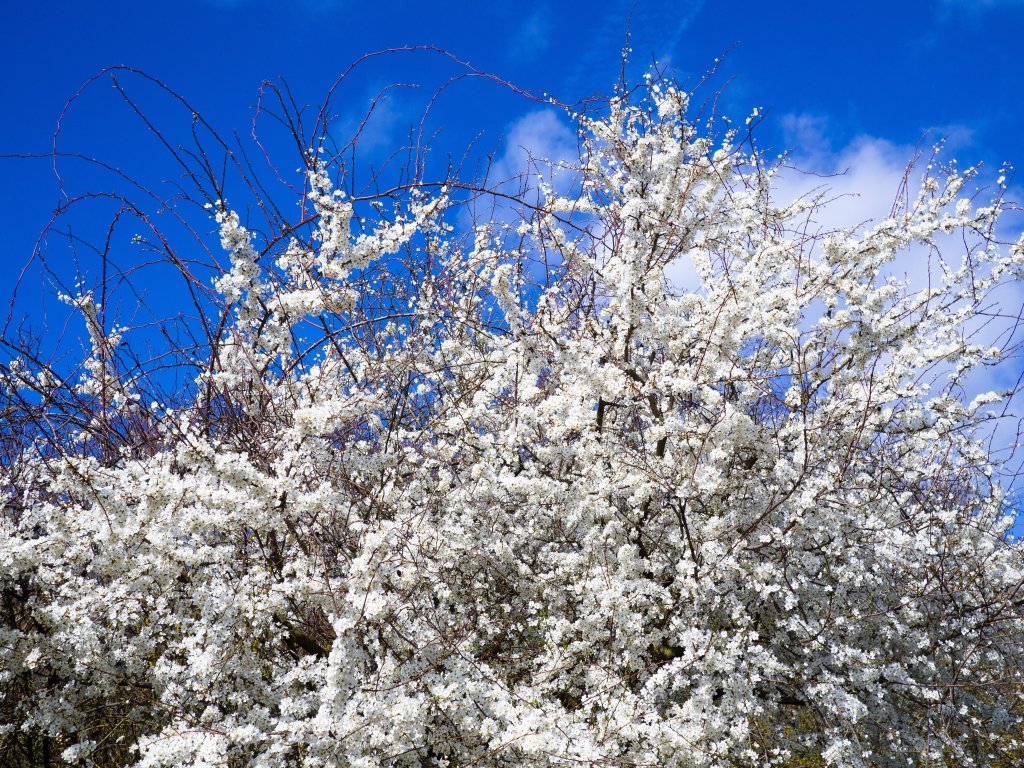
Image by Lenny Löwenstern from Pixabay

They are one of the earliest bushes to bloom in spring, usually around March. As such, they are very useful for insects to find nectar and pollen at this early time. The leaves are also the food for a number of butterfly caterpillars.

As the dense stems are very thorny, they provide an excellent nesting site for birds, and the caterpillars and other insects that eat it become an easy meal for them.

They have been associated with witchcraft and it was said that witches wands were made from its wood. More prosaically, it was used to make walking sticks and it is said to burn well.

In the past it was used to make tonics. Bark, flowers and fruits were used for these.

It belongs to the genus, prunus (Prunus spinosa), and is thus related to the cherry, plum, peach, nectarine, apricot and almond. Like them, it has a fruit containing a stone, but unlike them, you wouldn’t want to munch on them.
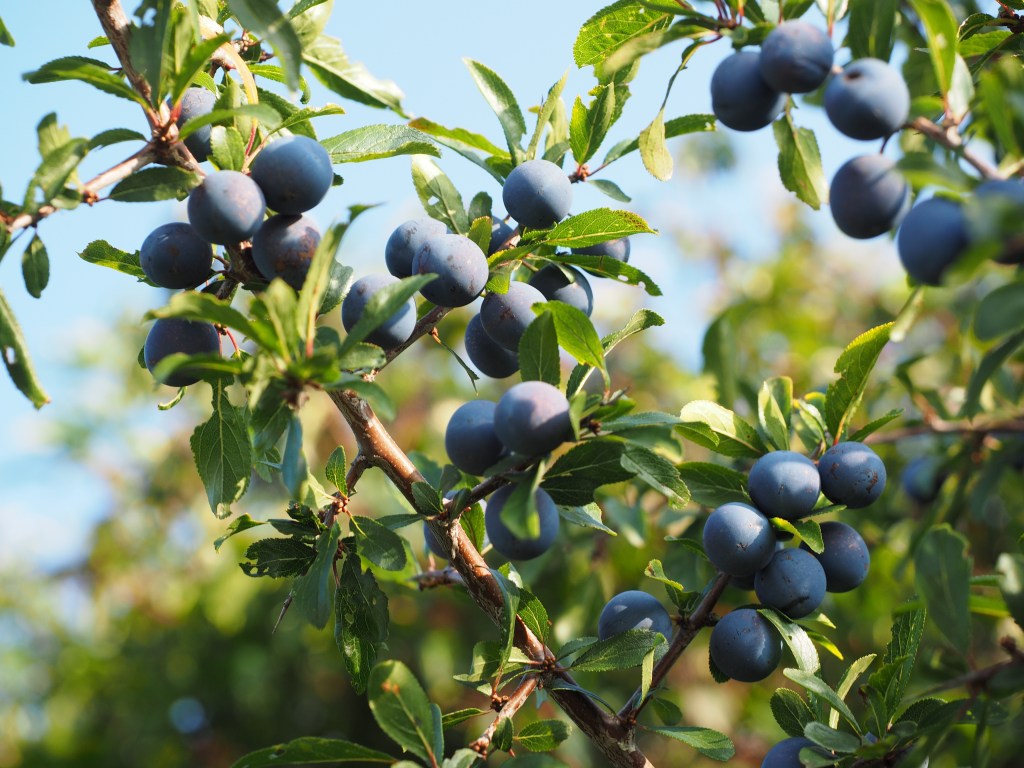
Image by Hans from Pixabay

The fruit is called a sloe. It is a small black fruit , but you wouldn’t want to eat it as it is because it’s very sour and bitter. However, when cooked, it is much more palatable. Sloes are often made into jam and sloe gin.

To make sloe gin, you need 500 ml gin, 250g of sloes and 250 g of sugar. and a 1 litre jar with a tight-fitting lid.

First prepare the sloes by cleaning them and pricking them all over with a fork. I believe that freezing them works, too. This is to break the skin so the juice can escape.

Add the sloes to the jar along with the sugar and gin. Shake it thoroughly. (Don’t forget to put the lid back on first!) Shake daily for the first couple of months, then weekly for about 3 months. Store it in a cool dark place.

The gin will have taken on a deep purple colour and the sugar will have removed the sour and bitterness from the sloes. When the time is over, decant the gin. You can filter it if you wish. Bottle it into clean dry bottles and store in a cool dry place. It continues to improve as it matures, and it’s best drunk after a year. (So prepare this year to drink next!)

Enjoy.

My mum made sloe gin from time to time, but her forte was damson gin. It was made in the same way, except she used damsons instead of sloes. I think that was even nicer!

Thanks to The Woodland Trust and Wikipedia for some of the details of this lovely plant.

There are some more unusual drink recipes in my recipe book, Viv’s Family Recipes, which you can get by clicking on the cover of the book in the sidebar. This book has some recipes dating as far back as 1909 and came from my grandma. Although not things we eat nowadays, long cooking and probably too much fat, it’s interesting to see what kind of things people used to eat.

Have you ever made sloe gin, or any other kind of unusual drinks? I would be interested to find out.
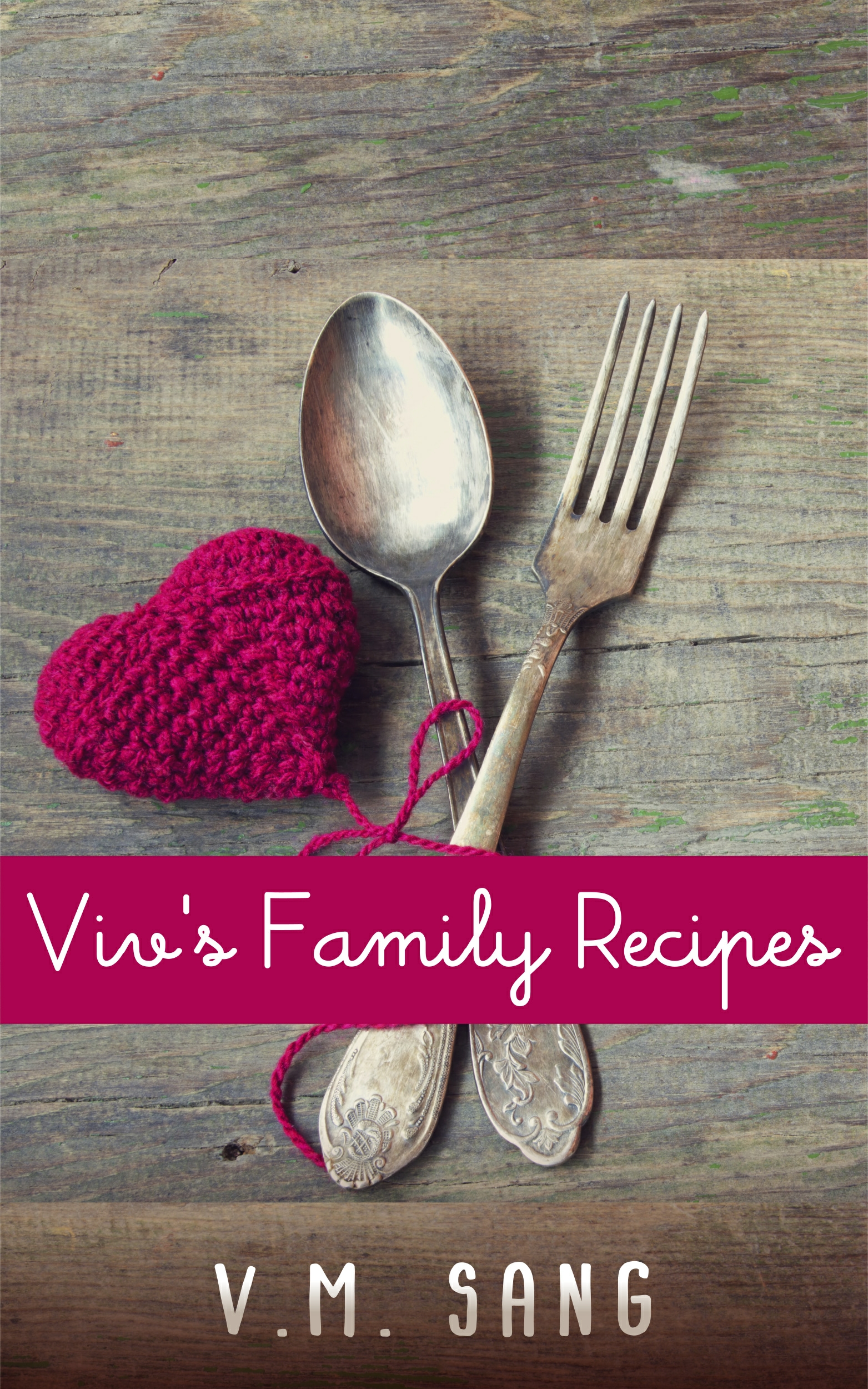
Historical Recipes FREE.

Do you enjoy cooking? Do you like history? Well, you will enjoy Viv’s Family Recipes.

This little book is a collection of recipes from the author’s family, collected over the 20th century from 1909 to the end. It gives an insight into how we ate and cooked throughout the last century, as well as a few comments about the people whom she got the recipes from.

vivsfamilyrecipecover

The book  also contains a few hints and tips from long ago about cleaning, as well as cures for coughs and colds.

From today, 5th February, until 20th Feb, Viv’s Family Recipes is FREE on Amazon.

Don’t miss out on the opportunity to get this interesting book absolutely free. Just click on the book cover.

if you buy this book, please leave a review on Amazon. Reviews are important to authors. That’s the way most of us get our books in the public eye.

Thank you for reading, and if you have, for buying this book. Leave a comment in the box. I’d love to hear from you.

Londoners to plant 80,000 trees across the city this weekend

Great to see activity that will improve the environment.


via Londoners to plant 80,000 trees across the city this weekend

A recipe from 1909

I inherited a small book of hand-written recipes from my Grandmother. The back of the book had some of her household accounts and they were dated, so I know the date of the recipes was around 1909.

I found it interesting to peruse these old recipes and compare them with the food we eat now. There was so much more fat then, and it was mainly animal fat.

I thought you might be interested in looking at some of our history, as far as food is concerned, and so here is one of the puddings from Grandma’s Little Book.

Of course, the weights and measures were in imperial measures, so I changed them for a more modern audience. If you live in the USA, I’ve put Grandma’s measures in brackets.

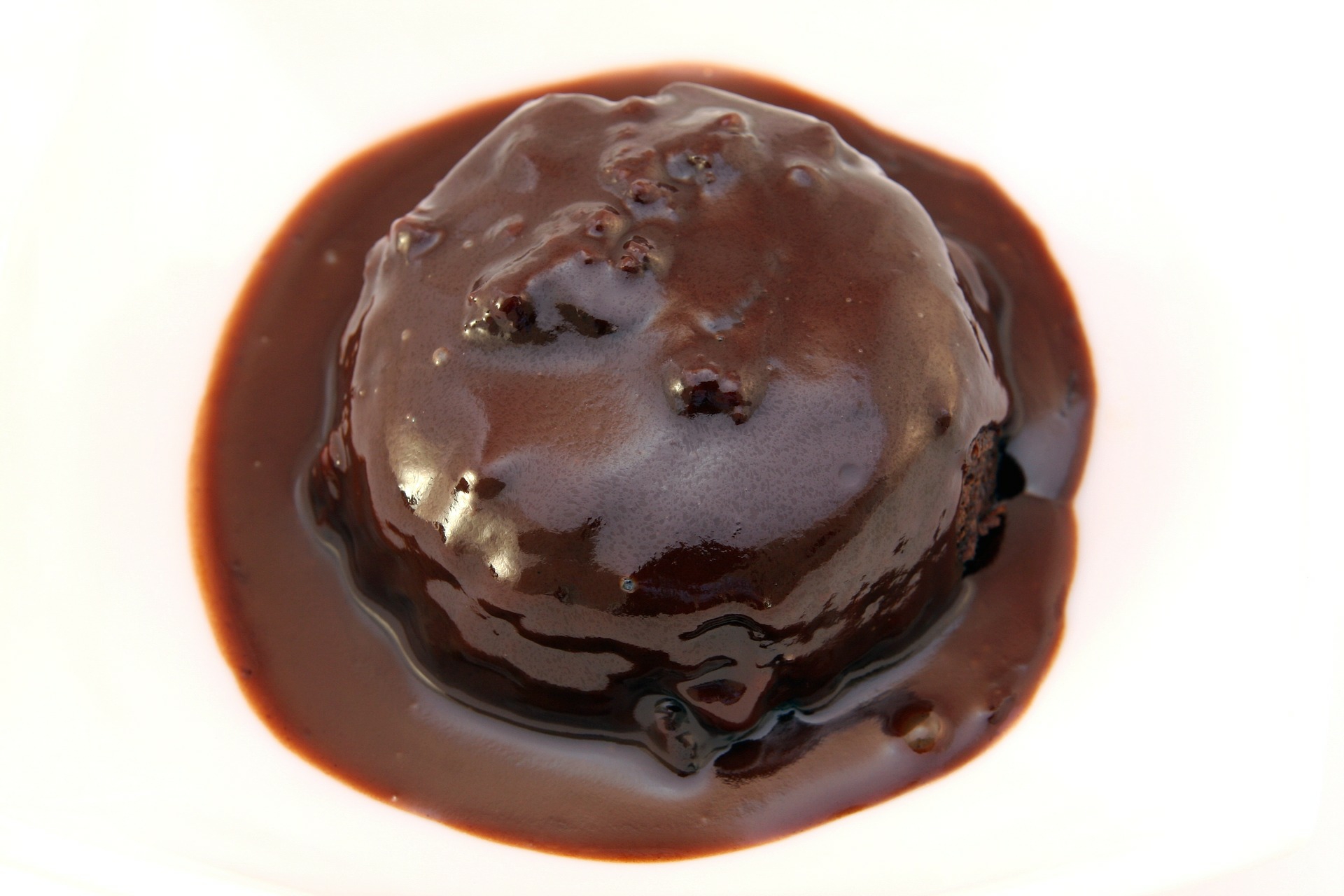
afters-1238531_1920

This is not a picture of the Amber Pudding, but the nearest I could find as to what I think it is. It will not have the sauce.


Amber Pudding

Ingredients

Just over 100g (8oz)  breadcrumbs

100g (8oz) beef suet

60g (2oz)moist brown sugar

2 eggs

3 dessertspoons marmalade

Method

Mix all ingredients well together.

Put into a buttered basin.

Steam for 2 hours.

If you find these old recipes interesting, you can find out more in Viv’s Family Recipes.  See the book on My Books page. Click on the link here and it will take you directly to the book’s page on Amazon.

How to Joint a Chicken

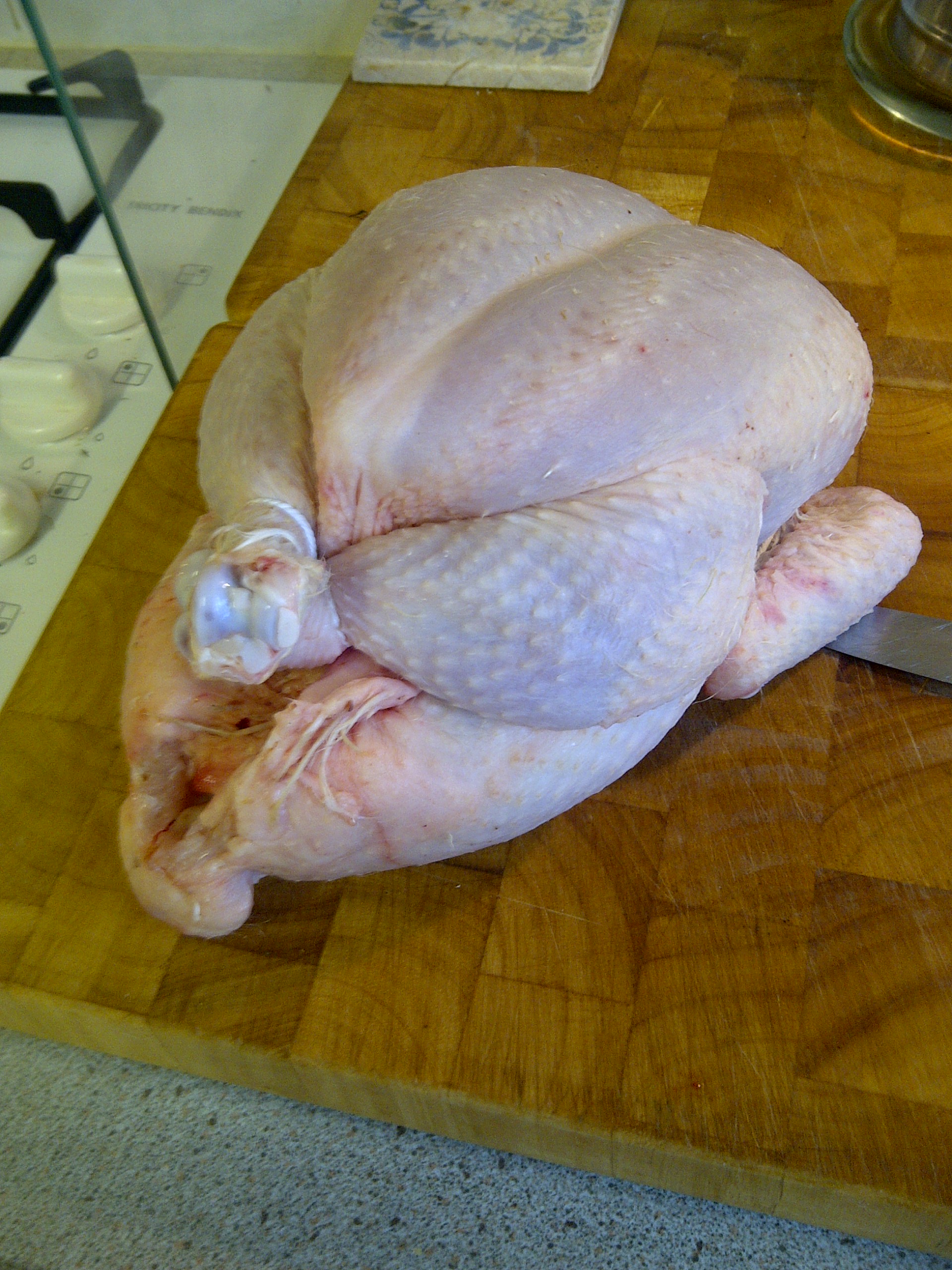
IMG-20180323-00185

1. Use a fresh chicken that has not been frozen if you want to freeze the joints.
2. Remove the string that is trussing the chicken, if there is any.

IMG-20180323-00186
3. Remove any feathers that have been left on the bird.
4. Cut off the end of the wings. They have very little, if any, meat, and so are going to be removed after cooking, anyway.

IMG-20180323-00196
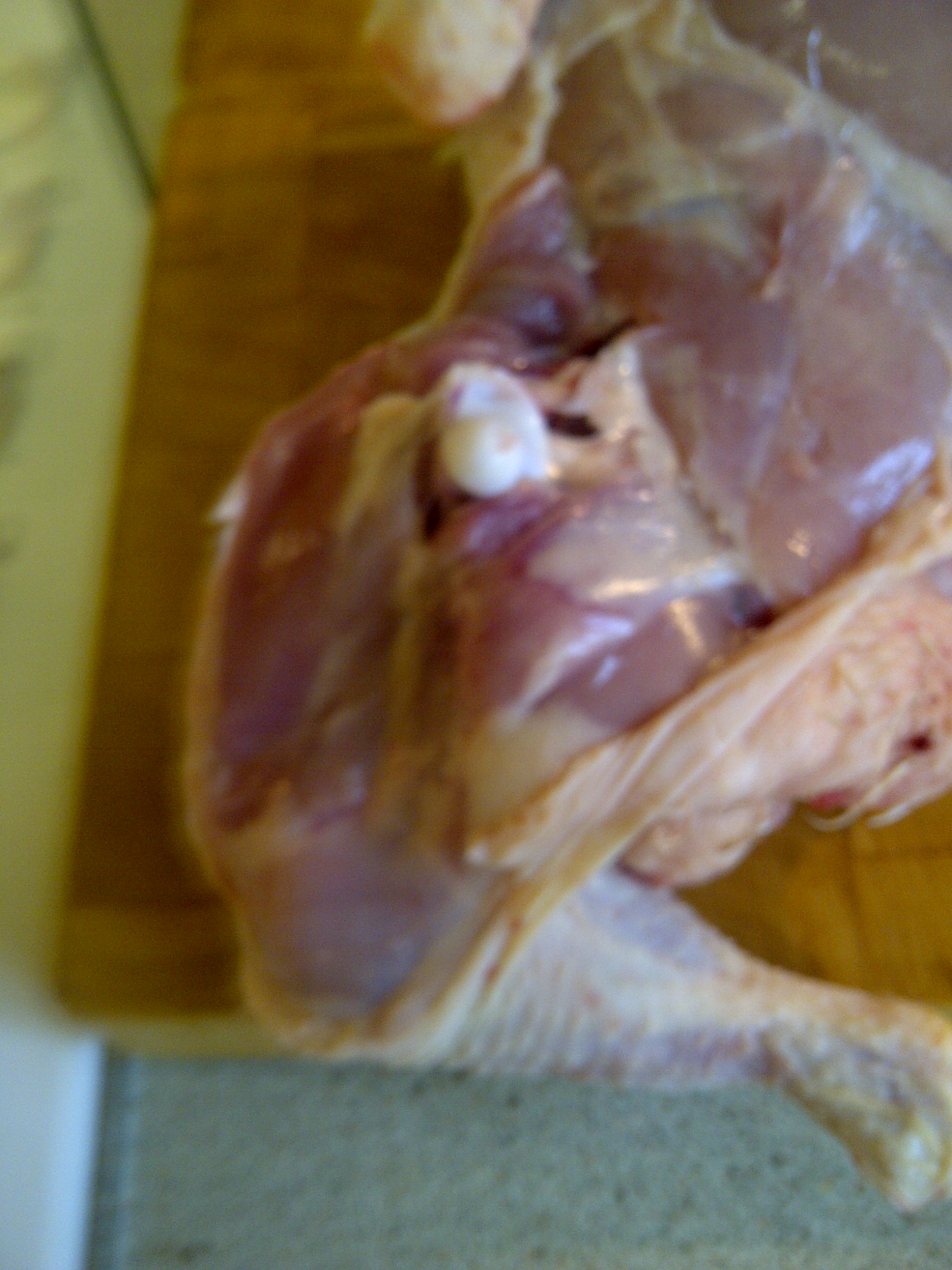
5. Remove the legs. To do this, cut the skin , then bend the leg backwards. This breaks the joint allowing you to see where to cut.

IMG-20180323-00188 IMG-20180323-00189 IMG-20180323-00190
6. If you want, you can separate the thighs from the drumsticks. this depends on preference, or the size of the chicken. With a small chicken, you might want to leave them whole

IMG-20180323-00192
7. Remove the wings, taking some of the breast with it. To locate the joint, use your finger. It’s easier to find with some of the breast there Wings have very little meat on them. and this makes them a bit more substantial.

IMG-20180323-00198
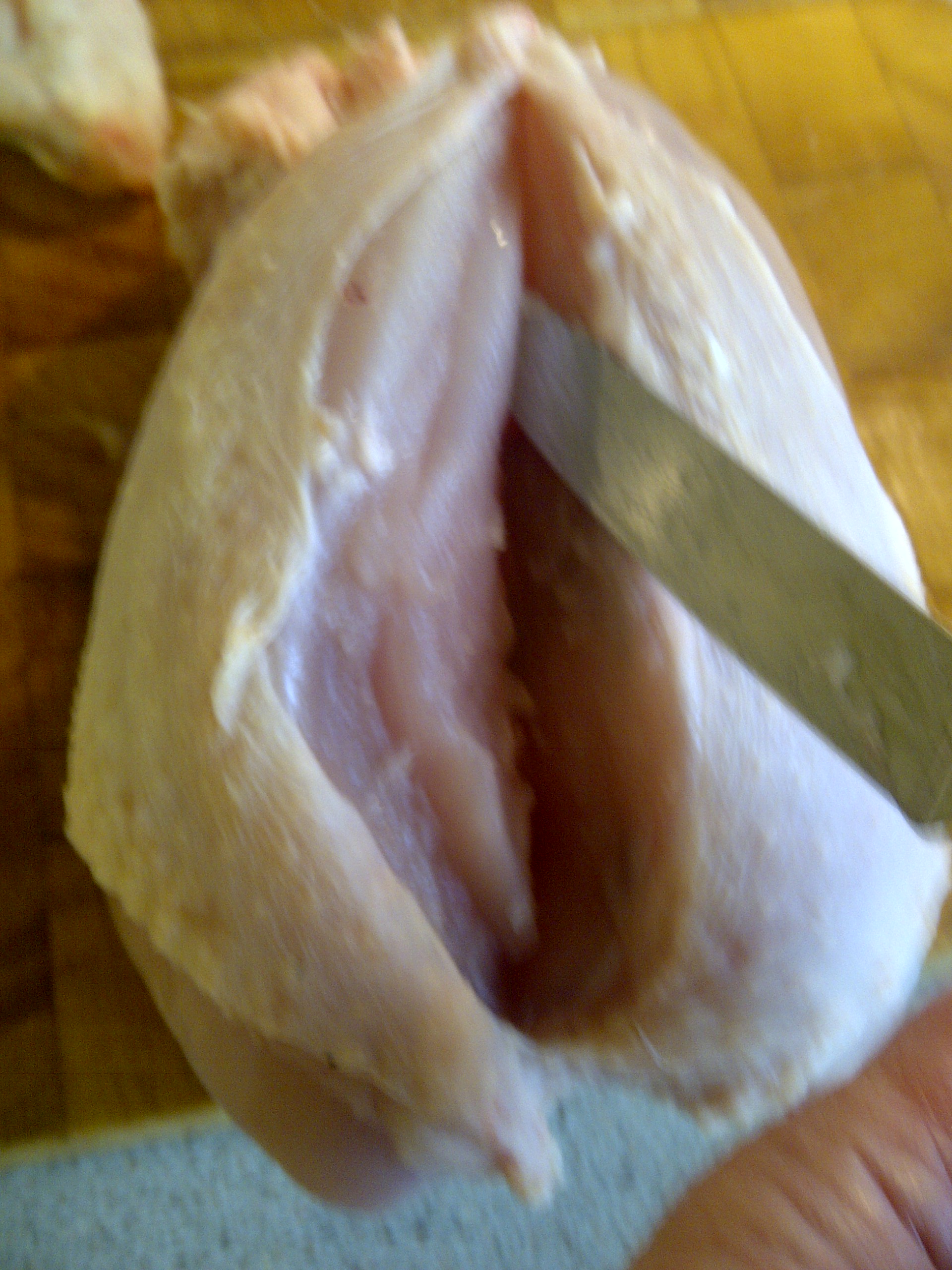
8. To remove the breast, feel for the breastbone with your finger, then, with a sharp, pointed knife, cut straight down until you meet the main carcass.

IMG-20180323-00201
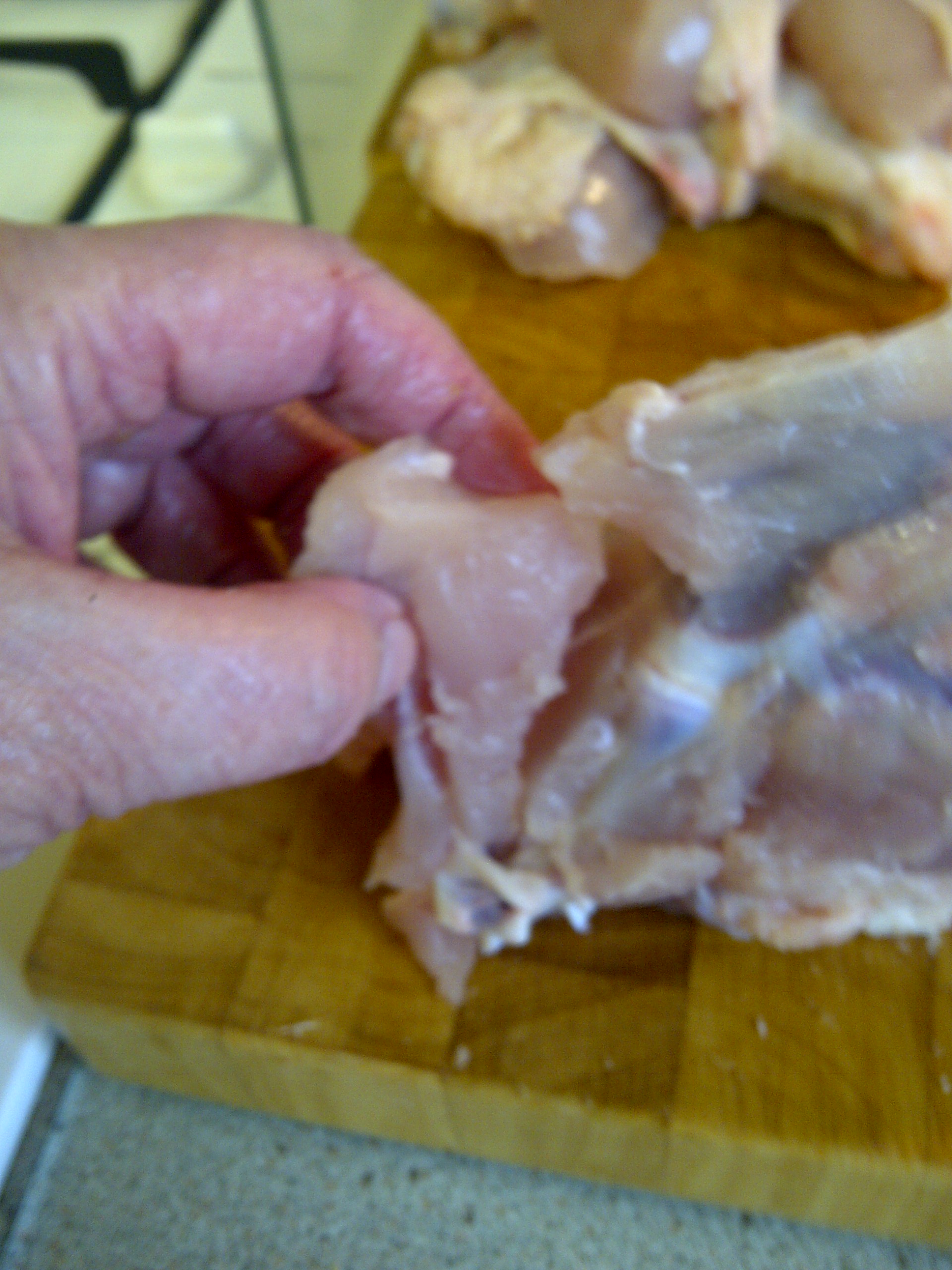
9. Then, using the point of your knife, gently loosen the meat from the carcass, keeping as close to the bones as possible.


IMG-20180323-00202

10. Do the same on the other side.
11. Don’t throw away the carcass. There is still quite a lot of meat on it if you search. I cut as much off as I can, then freeze the bits. The next chicken I joint, I add the bits to the bag. Remember to date the first lot, though, so you know when to eat them by. You can use these in stir fries.

IMG-20180323-00206 IMG-20180323-00207 IMG-20180323-00208
12. Don’t forget to freeze all the joints immediately. Freeze the carcass as well and use it to make stock for casseroles, gravies and soup.

Here are the joints you will now have in front of you, including the carcass that I’ve cut in half for freezing/

IMG-20180323-00205 IMG-20180323-00200 IMG-20180323-00194

IMG-20180323-00209


To find out some recipes as to how to use these joints, why not buy Viv’s Family Recipes? Click on the picture on the side bar and you will be taken to Amazon in your own country or follow the link above.

I love hearing from you, so please add a comment.

Last day of offer.

vivs-high-resolution


Don’t forget that today is the last day you can get Viv’s Family Recipes for only £0.99, or $0.99.

http://mybook.to.FamilyRecipes


I’ve just seen that it has a 5* review on Amazon. Weh Heh!

Book Offer

Starting tomorrow, 17th November, Viv’s Family Recipes will be on sale for only £0.99 or $0.99.  This offer will last only until 23rd November, so be quick and don’t miss it.

vivsfamilyrecipecover

The recipes in this book are from Viv’s family and friends. It is not only a recipe book for today, but also gives insight into how people cooked and ate in years gone by. The recipes date from 1909 to the present day.

There are also little anecdotes telling of the people whom the book mentions.


Get your copy by clicking on this link.

http://mybook.to/FamilyRecipes.