Tag Archives: historical novel

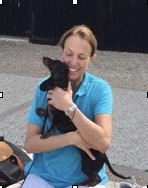
Meet Marina Montrose: Author, Artist, and Horse Breeder

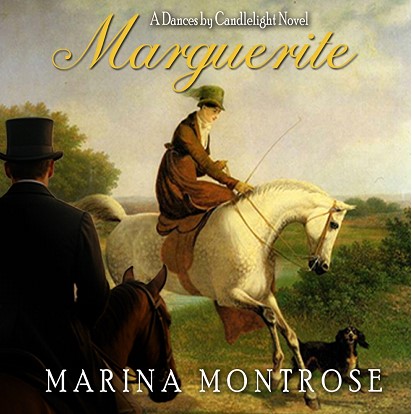
Marina has just released her first book. It is a historical novel set in the Regency Period. I’m looking forward to reading it as I enjoy that genre, and have written two historical fiction books, myself.

Marina has kindly agreed to come and be interviewed on Dragons Rule OK.

Welcome, Marina. It’s good to meet you. It’s always exciting when one publishes a new book, but especially so when it’s your first. Congratulations. You’ve arrived at a place many would like to be. I hope your book is a great success.

Now to the questions.

Who is your favourite author?

This is impossible to answer! There are so many I loveโ€”and admire. Also impossible to choose a favourite book.

If that book isn’t a ‘classic’, what is your favourite ‘classical’ book?

My favourite classic has to be Middlemarch, by George Eliot.

If you have a ‘proper’ job, what is it?

My husband and I breed racehorses on a farm in Normandy, France, where I enjoy riding on the beach.

Why do you write?

I have felt the need to write since early childhood, but I never took myself too seriously. I scribbled down stories and was editor of our high school magazine, Sunny Days. I write simply because I enjoy itโ€”I donโ€™t agonise over it and I donโ€™t get writerโ€™s block because I have to steal time to do it.

Many of us feel this compulsion to write. I think if we were prevented from writing, we’d tell stories, either to anyone who would listen, or even just to ourselves.

Why do you write historical romance?

I like to write in a wide range of genres. I have written a number of short stories, some poems, two mysteries (as yet unpublished) and am working on a family memoir. I also write a blog, Letters from Athens, about art, books and other things that interest me. I like to have a few things on the go at the same time. During lockdown, I started re-reading Jane Austen and Georgette Heyer (whom I hadnโ€™t touched since my teens) and was inspired to write a series of Regency Romances, the first of which, Marguerite, was recently published.

Do you have any pets?

We have a huge ridgeback and a tiny dachshund. Guess who is alpha dog?

Haha! My aunt had a dachshund, so I know how feisty they can be!

If you could meet any 3 people, alive or dead, who would they be? Why?

Iโ€™ve always had a wish to meet Tom Stoppard, but this dream is over now, sadly. I adored his plays. Also Margaret Atwood, whom Iโ€™ve heard speak a few timesโ€”I just love her style and her sharpness of mind. Finally, Turkish writer Orhan Pamuk. He grew up in Istanbul at the same time as I did in Athens, and his description of life there (in his books โ€˜The Museum of Innocenceโ€™ and โ€˜Istanbulโ€™) is eerily similar to my experience, only more โ€˜orientalโ€™. I would love to have a chat with him a about it.

Yes, it’s a great loss . Like you, I enjoyed his plays.

Do you enjoy sport? Do you prefer to watch or take part?

I competed in show jumping for many years as an amateur at international level.

Wow! Impressive. I rode when I was younger, but never in any competitions.

Do you like art? Who is your favourite artist?

I am an artist as well as a writer. I love to draw and paint and I take part in a local workshop twice a week. I love to visit museums and exhibitions but I cannot name a single favourite artistโ€”there are so many fantastic ones, in all styles and eras.

I, too, paint and draw. I love the Impressionists especially, but the Old Masters were amazing.

Can you swim?

Iโ€™m Greek, of course I can swim! I spent my childhood summers barefoot and half-naked on island beaches.

It sounds idyllic.

Do you do any voluntary work? If so, what?

During the lockdown, I started teaching Greek online to refugeesโ€” unaccompanied minors who were confined in a shelter in Athens. Later they went back to school, but two boys have stayed connected to me. They are now working adults and we still keep in close contact. Iโ€™m also mentoring a wonderful Persian girl who came to Greece at fifteen not speaking a word of Greek or English. She is now studying International Affairs on a full scholarship in America. Long stories but so rewarding.

What a rewarding thing to do. And it’s really nice that you keep in contact with some of your students. I was a teacher until I retired, and some of my ex-pupils keep in touch via Facebook. It’s really good to know how they are going on.

And now a biggy. What do you think is the biggest problem facing the world today?

As usual, the inability of humankind to stop repeating the same mistakes. Reading Herodotusโ€™s Histories is an eye-opener. It is terrifying that human nature has not changed over the centuries.

Yes, it seems the human race is incapable of learning from its mistakes.

Thank you so much for taking the time to visit. I’m sure all your readers will enjoy knowing a bit more about you. I know I’ve enjoyed listening to your answers.

A bit more about Marina

Marina Montrose is based in Deauville, France, where she breeds horses with her husband. She is also an artist and writer. She writes Regency Romances, short stories and mysteries. โ€˜Margueriteโ€™ is her debut novelโ€”a stand-alone, but the first in a series.

Now about her new book:

Blurb

Chemistry sizzles between Lady Marguerite Lennox and Thomas, the Duke of Argyle โ€” communication, less so.

Newly arrived from Paris and enjoying her first London season, Lady Marguerite Lennox has no wish to be married and exchange dancing and flirting for boring wifely duties in a crumbling mansion. So, when the handsome but supercilious Duke of Argyle makes her an offer, she promptly refuses, even though it is a brilliant match. Being a duchess holds no charms for her and what is more, she thinks him arrogant and unlikeable. She much prefers her entourage of charming and amusing swains.

Thomas, the Duke of Argyle, will not take no for an answer. Piqued by her refusal, he decides to pursue her as he has never pursued any woman before. He is obsessed with her, although he thinks her headstrong, obstinate, and rude. But even after a burning, stolen kiss, and a house party full of tender and erotic moments, Marguerite is still unwilling to marry him. This is driving him insaneโ€”she is so different from any other woman he has known, he has no idea how to deal with her. 

The duke is tired of locking horns with Marguerite. But what will it take for him to win her heart?

I’ve started to read the book, but am less than halfway through, so it wouldn’t be fair for me to post a review yet. I will do so as soon as I’ve finished, both here, Amazon and Goodreads, as usual.

Here is a link to the book on Amazon.

The Battle of Hastings: New Theories on the Site

King Harold engaged in two battles in Northumbria. He was defeated in the first, but triumphed in the second, which occurred five days later, resulting in the deaths of the opposing leaders, his brother Tostig and Harald Hardrada, the King of Norway.

Harold learned that Duke William of Normandy had embarked on an invasion of England to lay claim to the throne.

William’s landing occurred on September 28th near Pevensey, at a location now called Norman’s Bay. His initial plan was to invade in August, but due to unfavourable weather conditions, he postponed it until September.

On landing, William established his camp within the ancient Roman fortification at Pevensey, from where he marched towards Hastings, ten miles away. Once in Hastings, he built a wooden castle from pre-fabricated parts brought with him. (Was this the first flat-pack?) ๐Ÿ™‚

Meanwhile, Harold became aware of William’s invasion fleet during his southward march. Although he had left part of his forces in the north, he gathered additional troops en route to London, where he paused to muster more soldiers. From London, he made his way towards the south coast.

Most believe that the encounter between Harold and William occurred not at Hastings, for which the battle is named, but at Senlac Hill, which is now the town of Battle. Nevertheless, I have come across recent claims suggesting an alternative location for the battlefield.

Archeological investigations at Battle Abbey, which is said to be built on the site of the battlefield, apparently show no indications of a battle taking place there. Medievalists.net cites a paper, โ€œHeathfield Down: An Alternative Location for the Battlefield of Hastings, 1066,โ€ by Rebecca Welshman and Simon Coleman. This paper suggests that the battle might have taken place at a place called Heathfield Down. (I also came across something that stated that this place is also known locally as Slaughter Common.)

Also, on Medievalists.net I read this:

“Welshman and Coleman also find importance in a passage from the Anglo-Saxon Chronicle (D text), which explains that โ€œcom him togenes รฆt รพรฆre haran apuldran, and Wyllelm him com ongean on unwรฆr, รฆr รพis folc gefylced wรฆre.โ€ (โ€œ[Harold] came against him [William] at the grey apple tree. And William came upon him by surprise before his people were marshalledโ€). They believe that the English forces would have gathered at this apple tree because it was a significant landmark. There was such a ‘hoar apple tree’ in Heathfield that served as a boundary marker.”

If you go on to read the article, you will find an interesting map to show how the coastline has changed since 1066, and a section on how the weather would have impacted the battle if it took place on Senlac Hill.

In my current WIP, Wrath of an Anglo Saxon, I haven’t bothered too much about the situation of the battle, but more about the battle itself and the aftermath. This battle had a huge impact on life in England and is considered the beginning of the feudal system, whereby there is a strict hierarchy with the king at the top. and the peasants, or villeins as they are sometimes called, at the bottom. (This is where we get our word ‘villain’ from, although now it had become perjorative in its use.)

Here is an extract from the work g. Please bear in mind that this is certainly not the finished version, but only the first draft.

Durstan has been knocked unconscious during the battle. When he regains consciousness, he makes his way to where the defeated Anglo Saxon troops have gathered. After being treated for a head wound, he sleeps.

Durston opened his eyes, only to close them again quickly. 

Who made the sun so bright?

Gradually, he tried a tiny sliver. Not too bad. He parted his eyelids a bit more until they were fully open.

He reached to his head and let his fingers probe his injury.

It hurt, but like a bruise. It didn’t feel as if anything inside was damaged. He struggled to his feet. A bit of dizziness, but the trees were standing still now. He glanced at the sky. Still quite early. 

He ambled towards where he met Earl Edwin yesterday. There was a lot of activity. A few more men had arrived, and as he watched, two more straggled in. Some of the men were seriously injured, and Earl Edwin ordered them to be carried to the healers. 

Durston approached the earl. “My Lord, I am much recovered. I would like to gather those of my followers who survive and join with any counter attack.”

Earl Edwin turned to him. “Ah! Theign Durston.” He turned to a tall dark-haired man standing next to him. “Theign Durston was injured in the battle. I sent him to the healers. A blow on the head, it seems.”

“Well met, Theign Durston. I am Earl Morcar.โ€

Two men rushed up to the two earls carrying a man between them. They set him on the ground and bowed to the earls.

One of them panted, hands on knees. “My Lords, we found the king’s body and brought it here.”

Earl Edwin glanced at the corpse on the ground before him. “This man is not dressed like the king. He is dressed as one of the ordinary fighters.”

“When we found him, sir, he was dressed as a king should be, with the crowned helmet.”

Earl Edwin glared at the two men. “Then where is it now? Have you stolen it? Is it hidden for you to collect later and sell to the Bastard?”

The second man looked stricken. “No, my Lord. We wouldn’t betray our country.” He turned to his companion. “Tell him, Cenric.”

“We was searching for any survivors, my Lord, when we saw the king. We knew him by his helmet, see. I’ve never seen the king, so that was how we knew it were him.” He coughed. “He were obviously dead, but we knew we should bring him back here.”

His friend nodded. “But there were a lot of the enemy looking for their survivors, so we thought,’What if they catch us wiโ€™ the king?’ We spotted a body close by. Been shot with an arrow right through his eye, he had.” He shook his head. “Poor bastard. Must have been a painful way to go.”

Cenric continued. “We took his armour and clothes and swapped them with the king’s, so no one would know that the body we had was King Harold.”

Earl Edwin knelt next to the body. “He’s pretty cut up.” He peered into the face and looked up to Earl Morcar “It’s Harold, alright. I knew him quite well.” He turned to the two men. “Well done. You will be rewarded. Go and find some rest while we decide what to do with him.”

Durston staggered. His head still hurt and standing listening to the two men and the earls had made him dizzy.

Earl Edwin turned to him. “You need to go home, Durston. We’re planning a retaliation to take our country back, but I don’t think you are fit to join us.”

Durston’s heart sank. His stomach felt filled with lead. He wanted to fight; to help kill William the Bastard and to see young Edgar Aethling on the throne. His feet dragged as he made his way back to where the injured were being tended.

Plonking onto a log, he sank his head into his hands. 

Someone spoke. “Are you unwell, my Lord?”

He glanced through his fingers. It was Hrodgar, one of his loyal followers. He lowered his hands. “I’ve just been told I can’t help in resisting this takeover.”

“With all due respect, Lord Durston, I think the earls are correct. You were unconscious for a long time, I heard, and are still suffering the effects.”

Durston shook his head and immediately regretted it. Pain shot through his brain.  He sighed. “I suppose you are right. I would be a hindrance, not a help.”

Hrodgar went away and returned shortly with a flagon of ale. Durston drank gratefully and stood. The dizziness had gone. “How many of our men survived? Do you know?”

“Only about four or five, I think.”

Durston groaned. All those others dead. They had families, too. 

“Lord Durston.” A voice sounded through his thoughts. 

A young man approached. Durston has seen him with the earls.

“Earl Edwin wants to see you, my Lord.”

Durston followed the young man to where he had been talking to the earl.

“I have a job for you, Durston,” the earl said. “We must take the king’s body away from here. There’s no saying what those Norman’s would do with it if they found it.” He pulled at his beard. “Since you have been injured in the fighting, I would like you and a few of the less seriously injured, to take the king’s body to Waltham Abbey.  It was a place close to his heart. The king can be buried there with the correct ceremonies.”

Durston felt his heart sink once more. He was being sent away. Away from the defence of his homeland.

It will be a while before this book is published, but I’ll keep you informed as to its progress.

If you enjoyed this brief extract and would like to read more of my work, you can click on the book cover in the side bar to take you to the online retailer of your choice.

I wonder how correct the new ideas about the battle site are? What do you think?

A superb 5* review for Jealousy of a Viking from Readers’ Favourite

Review by Jamie Michele

Reviewed by:

Jamie Michele

Review Rating:

5 Stars – Congratulations on your 5-star review! Get your free 5-star seal!


Reviewed by Jamie Michele for Readersโ€™ Favorite

Jealousy of a Viking by Vivienne Mary Sang is set in 9th-century Britain where Helgha, a skilled healer and daughter of a Viking landowner, crosses paths with Viking noblity, Erik. Their forbidden love prompts a chain of events that alters Helgha’s destiny. The life Helgha knows is wiped out and Erik takes her away as his mistress. Bound by her deep affection for Erik, Helgha silently endures the public humiliation of their relationship and gives birth to two children. However, when Erik succumbs to familial pressure and weds within his own class, Helgha’s jealousy drives her to dark thoughts, and her craft is levied against her, further compounding her troubles. Branded a witch, Helgha flees with her young offspring, seeking shelter among the Saxons and discovering solace in Christian teachings.

Jealousy of a Viking is historical women’s fiction as it is meant to be and Vivienne Mary Sang depicts the harsh realities of the time with both authenticity in its representations and sympathy for Helgha’s lack of agency. The character arc is incredible as it really is the latter half of Helgha’s life in a time when even a quadragenarian life expectancy was almost unheard of. Helgha is a woman who has children, which she miraculously survives, and, along with multiple other instances of the things that feed into a 9th-century death, this is not given any sugar coating. The writing style of the book shows Sang’s ability to paint a visual portrait without wandering into the weeds and the author keeps the story propelling forward. I liked Helgha’s spiritual awakening as part of the arc even if it wasn’t something I was necessarily interested in seeing happen. However, it is well done and brings hope to a woman who should have lost it ages ago. Very highly recommended.

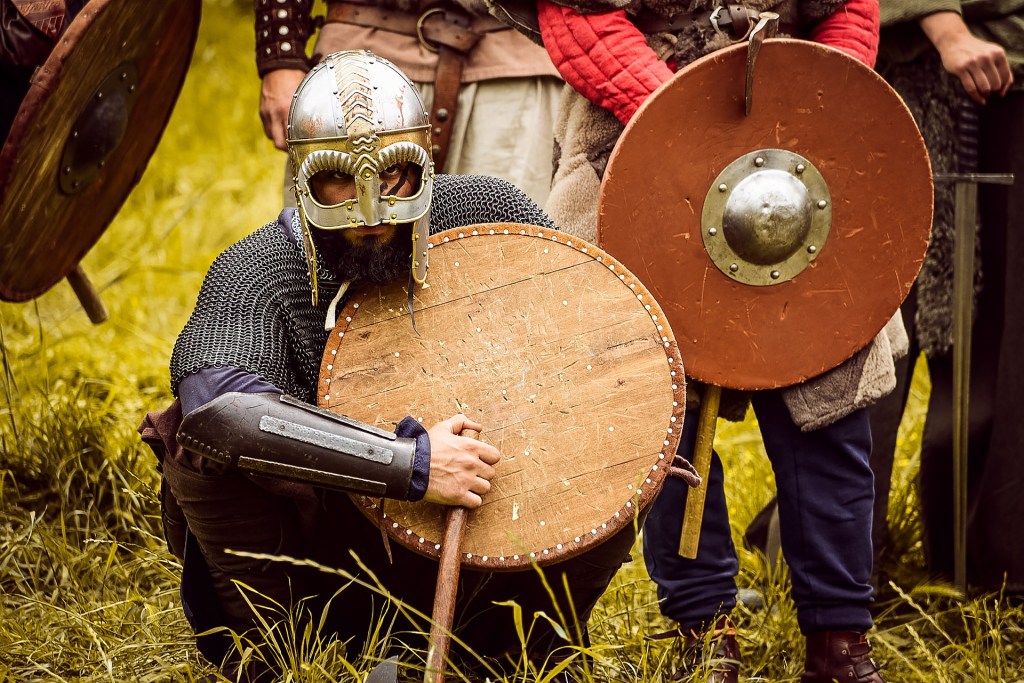
The Battle of Hastings.

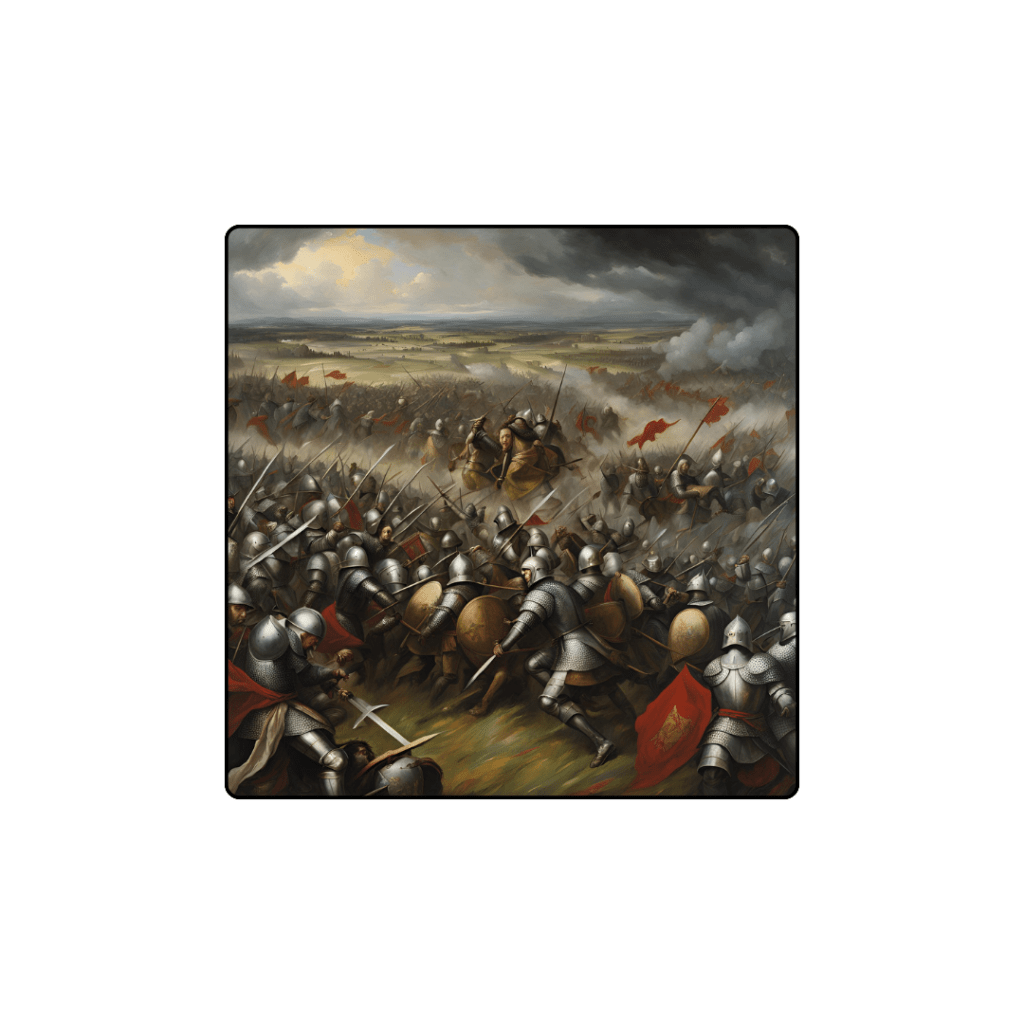
Image by Gioele Fazzeri from Pixabay

I am now King of England. King William I. Doesn’t that sound great? However it wasn’t such an easy position to gain. Let me go back to the beginning.

Edward, my second cousin, was in exile in Normandy after Cnut had taken the English throne. I decided to go and see him as he was family, after all, and had no heirs.

While I was there, I played on the family connection, and reminded him that, although he might eventually get an heir with his wife, Emma of Normandy, if he should die suddenly, there would be no obvious claimant to the English throne.

Well, he hummed and hawed and didn’t make a decision then. I’m not surprised, really, because his mother had married Cnut and had a son by him. She supported her son, Harthacnut, and eventually he became king of England.

Edward was lucky. Harthacnut died, and Edward sailed unopposed into England to take the throne. Not long after, he sent his son-in-law, Harald Godwinson to tell me that he had decided to make me his heir. King William sounded good, I thought, but I didn’t trust Harald, so I had him imprisoned. Eventually, in order to regain his freedom, he swore an oath of fealty to me, the rat!

In the year of our Lord, 1066, King Edward, who had become to be know as The Confessor, due to his religious conviction, died. Harald, the rat, took the throne and was crowned the day after Edward’s death. He said that Edward had made him his heir on his deathbed. A likely story!

It was then I decided that I needed to go to England and sort this man out. He had broken a holy oath, and I was the rightful king. But it seemed I wasn’t the only one to want the crown of England. Harald’s own brother, Tostig, joined forces with the Norwegian king, Harald Hardrada, and launced an invasion.

They met initially at a place called Fulford, in the north of England, not far from the city of York. This was 0n September 20th 1066. It seems the invaders won, but Harald was not to be defeated so easily. He fought another battle five days later at a place called Stamford Bridge where both Tostig and Harald Hardrada were killed.

Well, this was too good an opportunity to miss. I had set sail, knowing that Harald would be occupied, and we landed at a place called Pevensey. There had been a Roman castle there, and we made use of that. I ordered a wooden fort to be built inside the Roman walls. It was a good defesive position.

The whole area was marshland, and the sea came up to the fort walls. I ordered the troops to begin marching over the marshes, heading towards the town of Hastings. Once we got there, I ordered a fort to be built, and we raided the land for supplies.

We waited for Harald to arrive from his battle at Stamford Bridge. We knew they would be tired after a forced march. I set a watch the night before the battle. I would not have put it past Harald to make a surprise attack, but he didn’t, and so on 14th October, at dawn, the battle began.

I won’t go into details here. Suffice it to say that it was hard fought and lasted all day. In the end, though, we won, and Harald was dead. I was now King of England.

I have begun the research for the next book in the series, A Family Through the Ages. This one will start in 1066 with the Battle of Hastings.

If you would like to catch up on the series, the first book, Vengeance of a Slave, is free as an ebook. Alternatively, you can get it from your favourite store, here.

Jealousy of a Viking, the second book, can be got from your favourite store, here.

Or click on the images in the side bar.

Both books are also available as audio books.

My publisher has released merchandise with the book covers on. These include: t-shirts, mugs, drinking glasses, jigsaw puzzles, tote bags and many more.

Why not go and take a look at what’s on offer? Click here to go to the Next Chapter store.

Please let me know what you think about the story and the books and merchandise in the comments.

Feel free to share this, and any other posts. Just link back to this blog. I will be ever so grateful!