Just in time for winter!
My grandma had some recipes for coughs and colds. One was whiskey in hot water with a little sugar added. This was to stop coughing.
I’m not sure what coldsource is though and wonder if he meant coldsores.

Just in time for winter!
My grandma had some recipes for coughs and colds. One was whiskey in hot water with a little sugar added. This was to stop coughing.
I’m not sure what coldsource is though and wonder if he meant coldsores.
a new book from CS Boyack. It sounds interesting. Go over to his site and take a look.
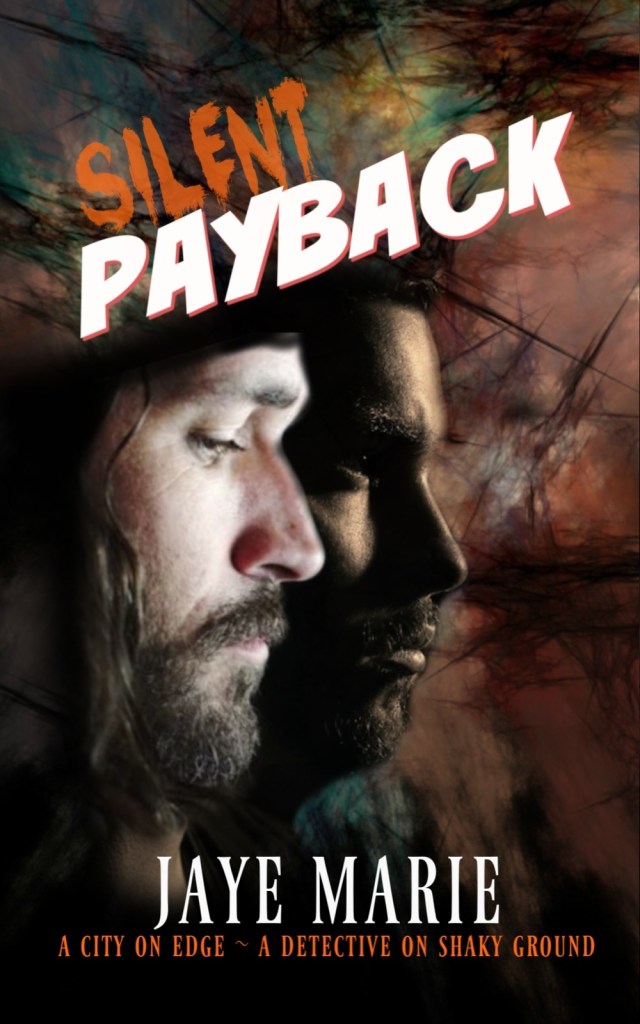
A serial killer roams the streets of Brighton, hunting for his next victim.
When the case lands on detective David Mallory’s desk, will his personal demon prevent him from bringing this vicious monster to justice?
As the body count rises, Mallory finds himself sinking under the weight of his heavy secret – one that could jeopardise his job and his reputation.
With the pressure building, can the troubled detective reconcile his issues and solve the case before more women die?
Overview.
This is an excellent story that kept me reading, wanting to know what happens next.
Plot.
The plot deals with two detectives trying to solve a series of murders in Brighton, England. But this is not all. Both David and Anna have their own individual problems to solve, and what these are remain a mystery until around half-way through the book. From then on, we follow them in their attempts to resolve both their individual personal problems and find the murderer.
The plot moves at a good pace, keeping the reader’s interest throughout.
Characters.
The main characters of David and Anna are drawn well. They are likeable, but with believable flaws. They develop nicely throughout the book.
Writing.
Sadly, this is where the book falls down. There are numerous editing errors in the text. Although this sometimes makes me not want to finish a book, the story here is strong enough that my desire to know what happens overcame my irritation at the mistakes. There are also a few plot holes. As a result of this, I have only given it 4 stars.
Today, and for the next 5 days, Book 2 of The Wolves of Vimar series, The Never-Dying Man, will be available for a mere $0.99, £0.99. If you got The Wolf Pack in the last offer, take the opportunity to get Book 2 now. Click on this link to go to Amazon where you are. http://myBook.to/TheNeverDyingMan
If you missed The Wolf Pack, you can get it from Amazon using this link. http://myBook.to/TheWolfPack
Here’s a bit about The Never-Dying Man
After finding Sauvern’s Sword, the companions set off to help a friend rescue his child from kidnappers. Instead, they stray into Erian and find preparations for war. They are drafted into the Erian army but are recognized by an old enemy, who arrests some of them and takes them to Frelli, the capital of Erian, where they are put in jail.
The Master of Erian frees them and offers them work. Meanwhile, Carthinal has to face some unpleasant truths about himself. Is his desire to further his magical career more important than his friends and country? After they discover terrible truths about the Master and his magical research, they will need to escape in order to tell the leaders of Grosmer about the plans for war.

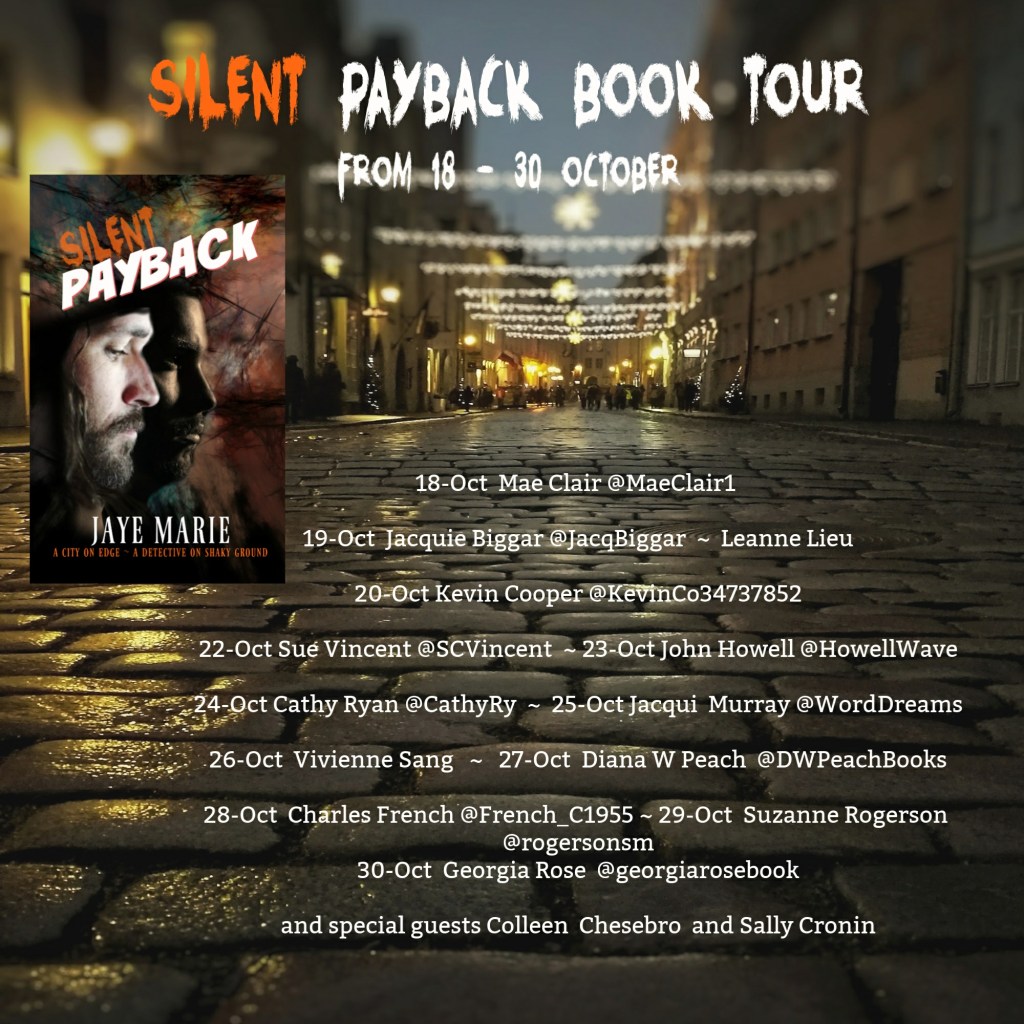
I am excited to welcome Jaye Marie as part of the blog tour for her new book, Silent Payback. I have been reading her blog for quite some time now, and so it is an honour to welcome her to mine.
Good to have you here, Jaye.
I hear your friends have a nickname for you. Would you like to share it with us?
*Laughs* Yes. My friends often call me the Giant Redwood because I am very tall, just like the tree.
That’s not the only reason, though, is it?
No. I am very fond of trees and the outdoors. I have quite a large bonsai collection and like to spend my afternoons repotting and generally tending to them.
But you obviously don’t spend all your time with your trees. You must go in to write sometimes.
Yes. It’s usually my love for detective mysteries that sends me back indoors.
Have you written any other detective novels?
Yes. In fact, Silent Payback is my fourth book.
Would you tell us the titles of the others?
Yes., certainly. My first book is called Nine Lives, then there are Out of Time and Crossfire. They are all in the detective mystery genre.
What do you do when you aren’t tending your bonsai or writing?
Currently I’m learning all I can about self-publishing. There are a lot of obstacles associated with it, but I’m determined not to give up. *laughs* Some people say I’m as stubborn as a mule when I start doing something difficult, and refuse to give up.
I believe you have a website.
Yes. I share a website, http://jenanita01.com with Anita Dawes.
Please visit Jaye’s website. I’m sure you will find it interesting. And thank you, Jaye, for coming to tell us about your new book. I believe it’s now available.
Yes. It was released on October 22nd.
Can you give us a link to it?
And now, what you’ve all been waiting for. A bit about this exciting book.

Silent Payback.
A city on edge – a detective on shaky ground…
A serial killer roams the streets of Brighton, hunting for his next victim.
When the case lands on detective David Mallory’s desk, will his personal demon prevent him from bringing this vicious monster to justice?
As the body count rises, Mallory finds himself sinking under the weight of his heavy secret – one that could jeopardise his job and his reputation.
With the pressure building, can the troubled detective reconcile his issues and solve the case, before more women die?
Click here to go to Amazon where you are and buy the book.
You can find Jaye in the following places:
Jaye’s Links
e-mails jayemarie01@btinternet.com
website https://jenanita01.com
Twitter https://twitter.com/jaydawes2
Facebook https://www.facebook.com/doubletrouble44/
Goodreads https://www.goodreads.com/author/show/6586480.anita_dawes
Amazon Author Page https://www.amazon.co.uk/Jaye-Marie/e/B00O2ZUFOK/
Pinterest https://www.pinterest.com/anitajayedawes
Instagram https://www.instagram.com/jenanita01/
Medium https://medium.com/@jaydawes2
I have recently returned from a holiday in Greece. While there, I visited Ancient Corinth. (Well worth a visit, especially if you are a Christian. You can see the very place where St Paul was tried for preaching Christianity.)
There is a small museum there where they show some of the things they unearthed while excavating the site. Amongst them were some mosaics from Roman villa floors. They are beautiful, and I thought I’d share them with you. I thought it pertinent at the moment because of the pre-order of Vengeance of a Slave. Adelbehrt, the slave of the title, is taken to a Roman villa where there would have been similar mosaics decorating the floors.
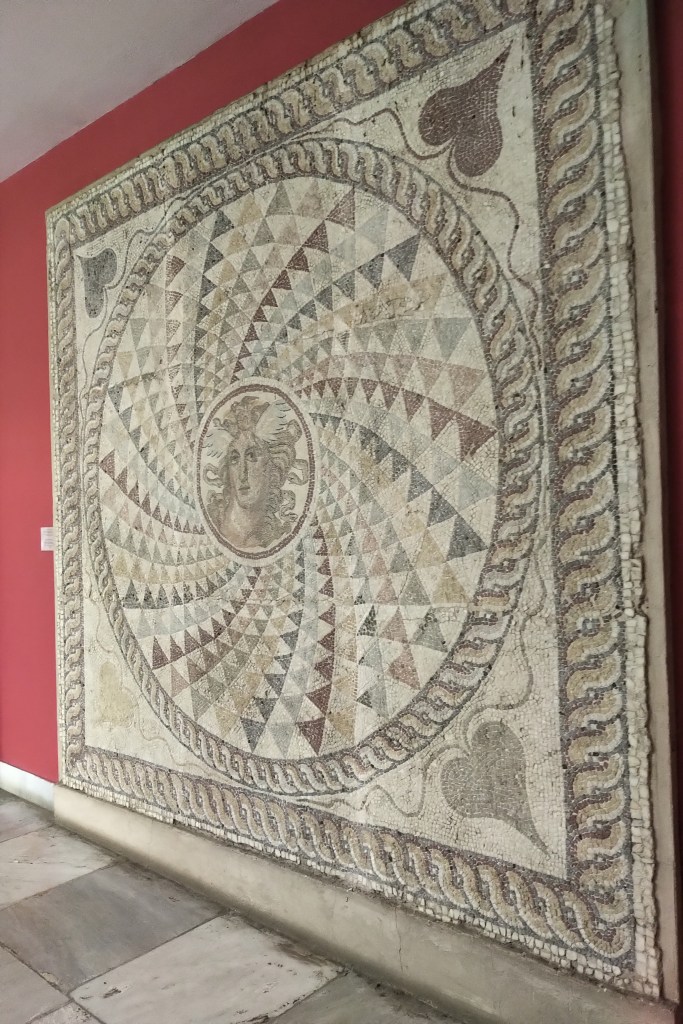
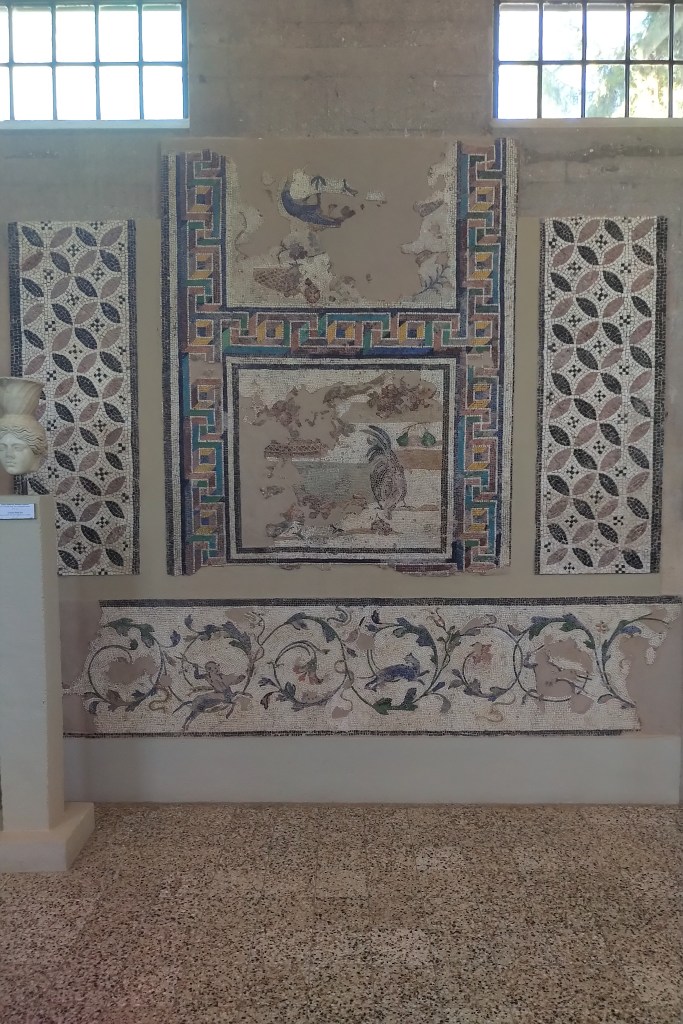
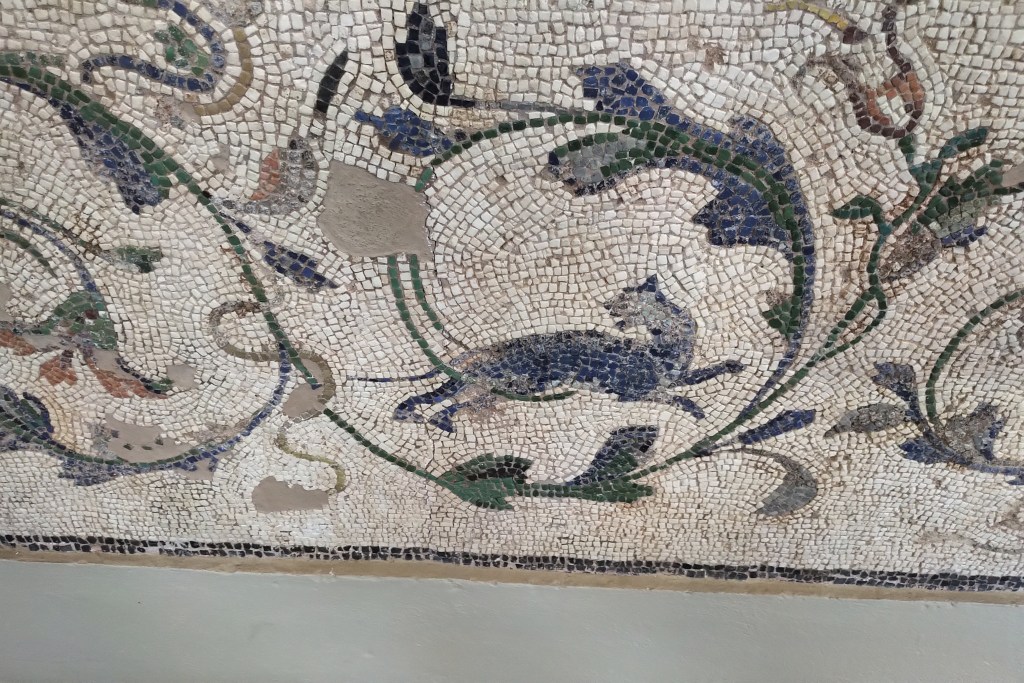
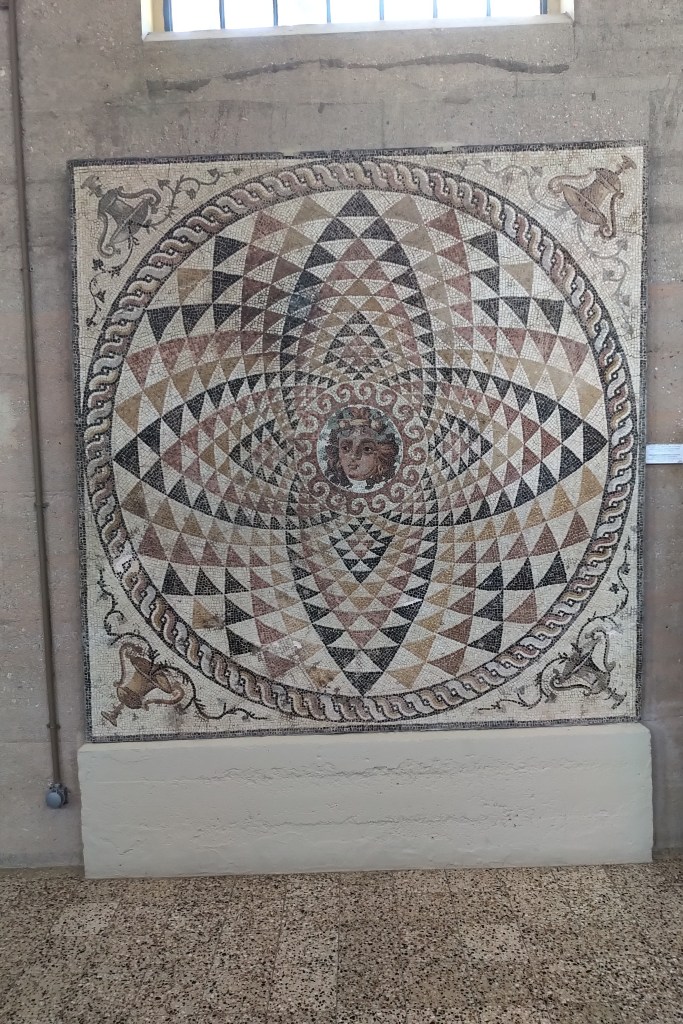
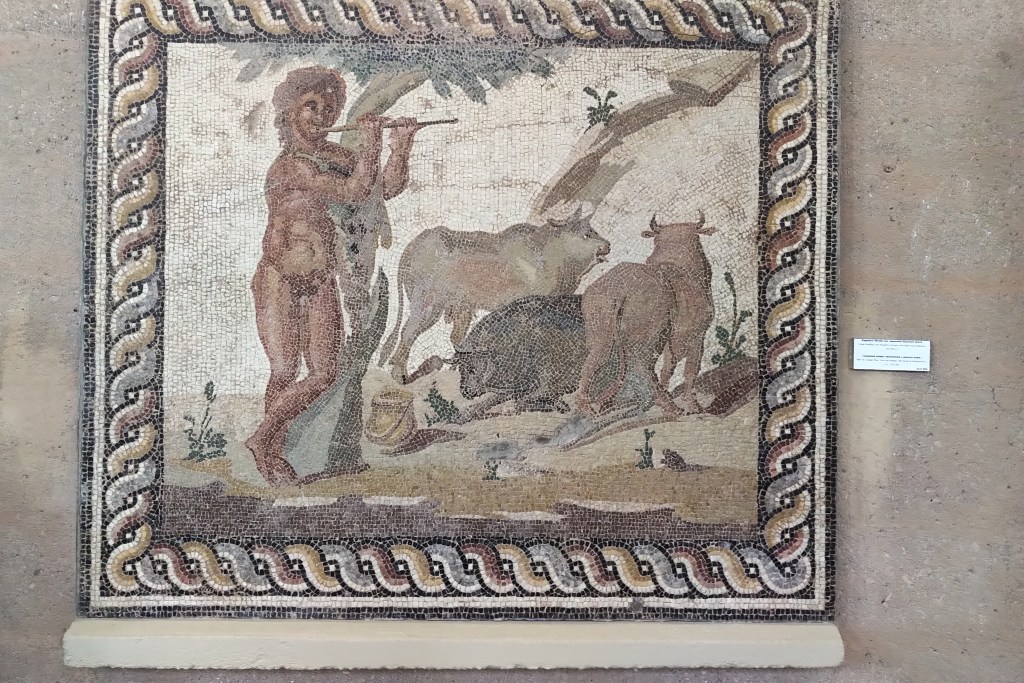
These pictures should give an idea of the beauty of the floors in the Roman villas.
Vengeance of a Slave is now on pre-order. You can order it from Amazon by clicking here. It is due to be released on December 26th. If you would like to have a pre-order copy so you can review it as soon as it is released, please contact me on vivienne.sang@gmail.com
I can provide pdf, mobi or epub, but not ‘real’ books as it has not been released yet.
I will be delighted to receive any comments in the comments box.
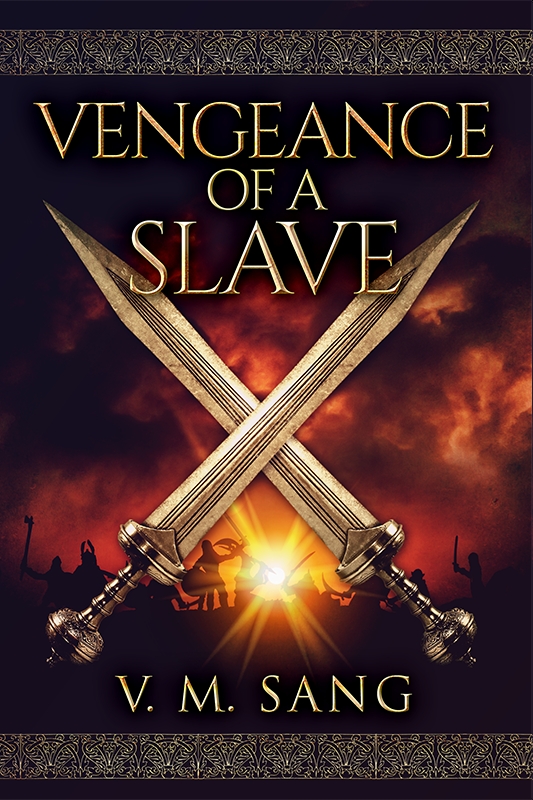
Adelbhert is only six years old when he is forced to watch his father and other men from his village being crucified in revenge for an attack on the Roman city of Mogontiacum.
Then he and his little sister are taken as slaves. They are sold to a merchant who takes them to the distant and mysterious island of Britannia. Here he is treated like a pet until he grows up and is no longer a pretty child.
His experiences make him hate the Romans and he resolves to escape one day and have revenge. but his hatred is eating away at his soul.
Will he get the chance to escape, and if so, can he remain free? And how can one young man take on the might of the Roman Army and win?
I’ve just read an article suggesting that meat-eating should be made illegal and a new crime of ecocide be put on the UN books.
Now, I’m not against that. The rearing of meat, especially in intensive conditions, no doubt does impact greatly on the environment. Not only on climate change, either.
These intensive farms are purely for economic reasons. The owners can argue all they like about how they aren’t impacting the welfare of the animals, but I saw, last night, a programme that mentioned the rising cost of pork in China. It showed a clip of pigs in what was described, in the case of veal, as crates. The animals would be able to lie and stand, but not turn around. Each crate housed only 1 animal.
Quite apart from the cruelty of this, surely in such intensive conditions, disease must be much easier to transmit. This will mean an increase in the use of antibiotics to alleviate this

The other day I was listening to the radio when I heard someone say “The FA is loathe to act on this.”
It struck me that she actually meant ‘loth’.
Loathe is to dislike intensely.
Loth is to be reluctant to do something.
There are many words that people mix up. Often they sound similar. Here are a few more I’ve heard recently.
Cowed/Cowered/Coward.
Cowed: Intimidated.
Cowered: Crouched in fear.
Coward: Someone who lacks bravery. Faint-hearted.
Averse/Adverse.
Averse: Opposed, disinclined or unwilling.
Adverse: Contrary. Hostile
Procedure/Proceedings
Procedure: Mode of conducting business.
Proceedings: An action or conduct.
I would be interested to hear any other word confusions you have heard recently. Please post your comments in the comments box
I have just got an email saying that Vengeance of a Slave is now on pre-order. The release date is 26th December.
You can ensure you get one of the first copies by clicking here.
It is available on Kindle and as a paperback. You can post reviews on the paperback site, but not on the Kindle one until the release day.
All reviews will be gratefully received. They are very important to get an author and his/her books into the public eye. In fact, some sites don’t allow promotion without a review.
This book is my first foray into historical fiction. It took a lot of research and hard work. I hope you enjoy it. Personally, I think it’s my best one to date.
Don’t forget the date DECEMBER 26th.
Forced to watch his father’s crucifixion and separated from his mother, orphaned six-year-old Adelbhert’s life forever changes when he is sold into slavery in Britannia.
Years of servitude fill his heart with malice and he resolves to escape, determined to rescue those he loves and deliver retribution to the Romans who wronged him.
But as new allies shed light on old perspectives, Adelbhert begins to question his path. Will he find true freedom, or allow his vengeance to consume him?
In preparation for the re-release of Vengeance of a Slave by Next Chapter (Date as yet unknown) I have unpublished it on Amazon. I will let you know as soon as I have a release date for the new version, with a brand new cover that I agreed on the other day.
 Dragons Rule OK. V.M.Sang (author)