Category Archives: history

Meet Marina Montrose: Author, Artist, and Horse Breeder

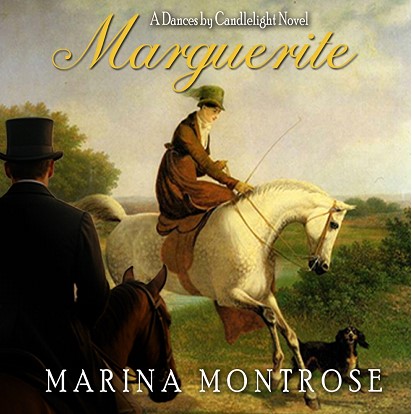
Marina has just released her first book. It is a historical novel set in the Regency Period. I’m looking forward to reading it as I enjoy that genre, and have written two historical fiction books, myself.

Marina has kindly agreed to come and be interviewed on Dragons Rule OK.

Welcome, Marina. It’s good to meet you. It’s always exciting when one publishes a new book, but especially so when it’s your first. Congratulations. You’ve arrived at a place many would like to be. I hope your book is a great success.

Now to the questions.

Who is your favourite author?

This is impossible to answer! There are so many I love—and admire. Also impossible to choose a favourite book.

If that book isn’t a ‘classic’, what is your favourite ‘classical’ book?

My favourite classic has to be Middlemarch, by George Eliot.

If you have a ‘proper’ job, what is it?

My husband and I breed racehorses on a farm in Normandy, France, where I enjoy riding on the beach.

Why do you write?

I have felt the need to write since early childhood, but I never took myself too seriously. I scribbled down stories and was editor of our high school magazine, Sunny Days. I write simply because I enjoy it—I don’t agonise over it and I don’t get writer’s block because I have to steal time to do it.

Many of us feel this compulsion to write. I think if we were prevented from writing, we’d tell stories, either to anyone who would listen, or even just to ourselves.

Why do you write historical romance?

I like to write in a wide range of genres. I have written a number of short stories, some poems, two mysteries (as yet unpublished) and am working on a family memoir. I also write a blog, Letters from Athens, about art, books and other things that interest me. I like to have a few things on the go at the same time. During lockdown, I started re-reading Jane Austen and Georgette Heyer (whom I hadn’t touched since my teens) and was inspired to write a series of Regency Romances, the first of which, Marguerite, was recently published.

Do you have any pets?

We have a huge ridgeback and a tiny dachshund. Guess who is alpha dog?

Haha! My aunt had a dachshund, so I know how feisty they can be!

If you could meet any 3 people, alive or dead, who would they be? Why?

I’ve always had a wish to meet Tom Stoppard, but this dream is over now, sadly. I adored his plays. Also Margaret Atwood, whom I’ve heard speak a few times—I just love her style and her sharpness of mind. Finally, Turkish writer Orhan Pamuk. He grew up in Istanbul at the same time as I did in Athens, and his description of life there (in his books ‘The Museum of Innocence’ and ‘Istanbul’) is eerily similar to my experience, only more ‘oriental’. I would love to have a chat with him a about it.

Yes, it’s a great loss . Like you, I enjoyed his plays.

Do you enjoy sport? Do you prefer to watch or take part?

I competed in show jumping for many years as an amateur at international level.

Wow! Impressive. I rode when I was younger, but never in any competitions.

Do you like art? Who is your favourite artist?

I am an artist as well as a writer. I love to draw and paint and I take part in a local workshop twice a week. I love to visit museums and exhibitions but I cannot name a single favourite artist—there are so many fantastic ones, in all styles and eras.

I, too, paint and draw. I love the Impressionists especially, but the Old Masters were amazing.

Can you swim?

I’m Greek, of course I can swim! I spent my childhood summers barefoot and half-naked on island beaches.

It sounds idyllic.

Do you do any voluntary work? If so, what?

During the lockdown, I started teaching Greek online to refugees— unaccompanied minors who were confined in a shelter in Athens. Later they went back to school, but two boys have stayed connected to me. They are now working adults and we still keep in close contact. I’m also mentoring a wonderful Persian girl who came to Greece at fifteen not speaking a word of Greek or English. She is now studying International Affairs on a full scholarship in America. Long stories but so rewarding.

What a rewarding thing to do. And it’s really nice that you keep in contact with some of your students. I was a teacher until I retired, and some of my ex-pupils keep in touch via Facebook. It’s really good to know how they are going on.

And now a biggy. What do you think is the biggest problem facing the world today?

As usual, the inability of humankind to stop repeating the same mistakes. Reading Herodotus’s Histories is an eye-opener. It is terrifying that human nature has not changed over the centuries.

Yes, it seems the human race is incapable of learning from its mistakes.

Thank you so much for taking the time to visit. I’m sure all your readers will enjoy knowing a bit more about you. I know I’ve enjoyed listening to your answers.

A bit more about Marina

Marina Montrose is based in Deauville, France, where she breeds horses with her husband. She is also an artist and writer. She writes Regency Romances, short stories and mysteries. ‘Marguerite’ is her debut novel—a stand-alone, but the first in a series.

Now about her new book:

Blurb

Chemistry sizzles between Lady Marguerite Lennox and Thomas, the Duke of Argyle — communication, less so.

Newly arrived from Paris and enjoying her first London season, Lady Marguerite Lennox has no wish to be married and exchange dancing and flirting for boring wifely duties in a crumbling mansion. So, when the handsome but supercilious Duke of Argyle makes her an offer, she promptly refuses, even though it is a brilliant match. Being a duchess holds no charms for her and what is more, she thinks him arrogant and unlikeable. She much prefers her entourage of charming and amusing swains.

Thomas, the Duke of Argyle, will not take no for an answer. Piqued by her refusal, he decides to pursue her as he has never pursued any woman before. He is obsessed with her, although he thinks her headstrong, obstinate, and rude. But even after a burning, stolen kiss, and a house party full of tender and erotic moments, Marguerite is still unwilling to marry him. This is driving him insane—she is so different from any other woman he has known, he has no idea how to deal with her. 

The duke is tired of locking horns with Marguerite. But what will it take for him to win her heart?

I’ve started to read the book, but am less than halfway through, so it wouldn’t be fair for me to post a review yet. I will do so as soon as I’ve finished, both here, Amazon and Goodreads, as usual.

Here is a link to the book on Amazon.

Bonfire Night

Remember, Remember
The 5th of November
Gunpowder, Treason and Plot.
I see no reason
Why Gunpowder treason
Should ever be forgot.

So we used to sing as Bonfire Night approached, but what is that rhyme all about?

Here is a link to English Heritage’s post about it.

I would normally have written about it myself, but I’ve received the edited manuscript of Immortal’s Death and need to go through it. I’m consequently a bit short of time.

I hope you enjoy reading about it.

My Visit to Mary Deal.

First of all, before I begin this post, I would like to say that I tried to respond to the comments and suggestions that many of you gave for my story based on Snow White and the Seven Dwarves. For some reason, WordPress said they couldn’t respond. Apologies. I hope the replies get through eventually. I did try several times!

I have been honoured to appear on Mary Deal’s blog. I love Mary’s books, she is an excellent author of mystery and thriller, and all the books I’ve read kept me on the edge of my seat.

Mary has featured an excerpt from my historical novel, Vengeance of a Slave. This is set in Roman Britain and tells the story of a slave boy, ripped from his family at merely six years old, and how he builds up his hatred of the Romans in the hope of escaping and taking revenge.

There is also a link to an interview I did with Mary some time ago.

If you would like to be featured on Mary’s website, she is kindly offering to do so. You can contact her by clicking on ‘Write Any Genre’ above.

Key Events Leading to the Battle of Hastings Explained

Today is the 959th anniversary of the Battle of Hastings. This is probably the most important battle in the history of England. It changed our country forever. But before I begin, I would like to state that I’m not a historian, and so I might have some of these things wrong, especially where people have the same names!

Edward the Confessor was born between 1003 and 1005, the son of Æthelred the Unready and Emma, sister of Duke Richard of Normandy, He died in January 1066 and had been king from 1042.

The politics of this time is complicated, and so I will try to simplify it as much as possible. (This is to clear things in my own mind as much as anything!)

 Æthelred the Unready (which means poorly advised) was deposed as king by the Danish king, Swein Forkbeard. He fought, but eventually fled to Normandy. Swein took the English throne.

When Swein died in 1014, his son, Cnut became king of England and Edward, his brother, Alfred and sister Godgifu, joined their parents in Normandy. Edward, Alfred and Godgifu remained there for 24 years and were looked after by their uncle, Duke Robert.

When Cnut died in 1034, he was succeeded by his son, Harold Harefoot, and later by another son, Harthacnut. Hartharcnut was, in fact, Edward’s half-brother, his mother, Emma, having married Cnut after the death of Æthelred.

Harthacnut died suddenly, and that left the way open for Edward. He sailed to England and became king. He wanted to unite the Danish people in England with the Anglo Saxons.

Edward became peaceful Man of God, hence the name ‘Confessor’ that was given to him.

In 1045, Edward married Edith, the daughter of the most powerful earl in England. Earl Godwin had gained his power under Cnut, and wanted to hold onto it. Marrying his daughter to the king was an excellent way to do so. But she was very much younger than Edward, and some said it ws more like a father daughter relationship. Whatever the case, they had no children and there is speculation the marriage was never consummated.

Because of his early life spent in Normandy, the king naturally wanted his friends from that time to join him. Earl Godwin saw his power begin to wane, and he had a big fallout with Edward and went into exile.

He did return, however, and patched up his differences with the king and they seemed to be of similar mindsets from then on.

but Edward and Emma had no children, so what was going to happen when he died? Well he had a nephew who had been in exile in Hungary (another Edward). King Edward sent for him, but he sadly died on arrival, leaving his son, still a young boy, as heir to the throne. This boy was known as Edgar.

Duke Robert of Normandy, had an illegitimate son called William, but no legitimate heirs as he never married. While on pilgrimage to Rome, he died, and his son became the Duke of Normandy, often known as William the Bastard. As he was a cousin to Edward the Confessor, he also had a claim to the English throne.

The Normans claim that Edward declared William to be his successor .

Harold Godwinson, son of Earl Godwin, was sent to Normandy to tell William, and he was captured by the French. William effected his release, and Harold swore loyalty to William.

In January 1066, King Edward died. It is thought that the queen, Harold Godwinson, who had now inherited his father’s title and lands, and Archbishop Stigand were present, and Harold claimed that Edward had nominated him as his heir. Of course, the Queen, being Harold’s sister, would more than likely uphold what he said.

When this came to the ears of Duke William, it triggered his anger, and he began his plans for invasion, leading to the most famous battle in English history, the Battle of Hastings. (Which incidentally, didn’t take place at Hastings, but at Senlac Hill, at a place where there is now a town known as Battle.)

A Chilling Comparison.

Morgan has compared the rise of Hitler to that of Trump.

Some Fascinating Facts About London.

We Will Remember Them: Reflecting on WW1’s Legacy

Today is Armistice Day. World War 1 ended at 11th hour of the 11th day of the 11th month.

I wrote a poem to commemorate the 100th anniversary of the end of WW1. I’ve published it before on Dragons Rule OK, and make no apologies for re-publishing it now.

For those of you who haven’t seen it before, I hope you enjoy it and that it makes you think of the futility of war. And to those of you who remember it, similarly.

War is evil and should never happen. It’s always a result of greed and/or hatred; two emotions that should be relegated to the deepest depths of Hell. And as all wars end in talks, why not begin there?

Here’s my poem.

We Will Remember Them.

I’ll never truly understand
How World War I began.
The death of Archduke Ferdinand
Started the deaths of many more,
The young, the old, the rich, the poor.
All died with guns in hand.

    My Grandad went with Uncle Jim 
    And Our Poor Willie, too.
    They sent them off, singing a hymn.
    Grandad went to Gallipoli,
    Uncle Jim left his love, Polly.
    Gas in trenches did kill him.

    I cannot see, in my mind’s eye
    Grandad with gun in hand.
    A peaceful man, sent out to die.
    He fought for us, for you and me
    So we can live and so that we
    Safely in our beds may lie.

    Granddad came home, and Willie too,
    But millions more did not.
    Their duty they all had to do.
    They died in fear, in noise, in blood.
    Everything was caked in mud.
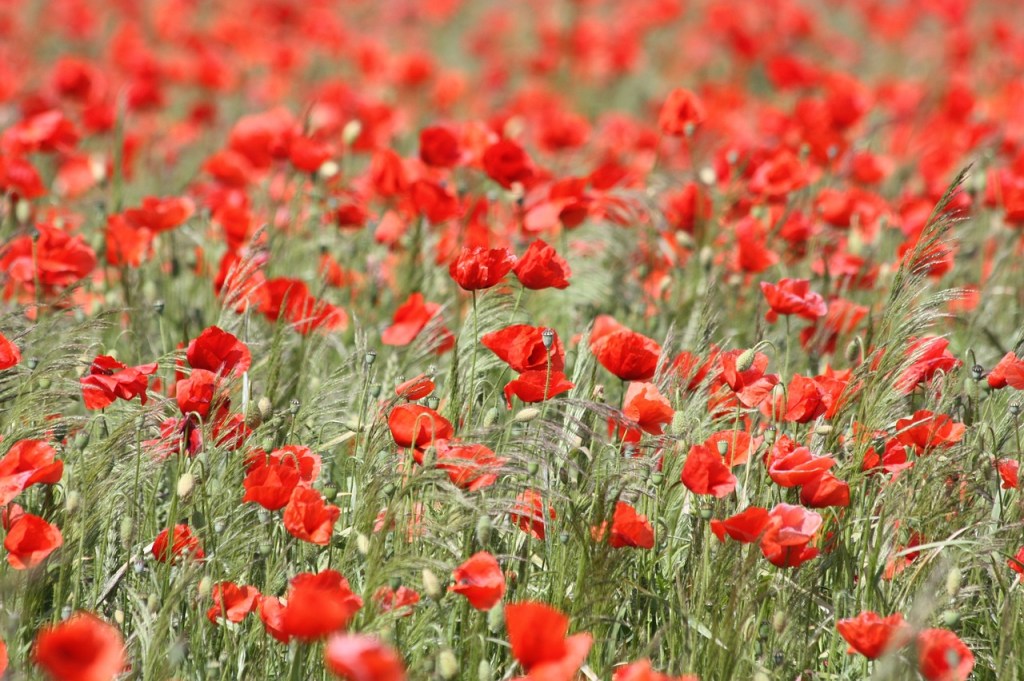
    Yet in those fields the poppies grew.

    The War to end all wars, they said,
    So terrible were the deaths.
    The youth of Europe all lay dead.
    Yet 21 short years to come
    Another war. Once more a gun
    In young men’s hands brought death.

    One hundred years have passed since then.
    What have we learned? Not much!
    Too many men are killing men. 
    Wars still abound around the world.
    Bombs and missiles still are hurled
    At those who disagree with them.

    Uncle Jim was my Grandfather’s brother. I never knew him as I wasn’t born when he died.

    ‘Our poor Willie’ was what my grandmother said when referring to her brother. No one ever knew why he was ‘Our poor Willie’, except that she didn’t get on with his wife and thought she made his life difficult.

    I hope you enjoyed my poem. I wish I thought it might make a difference to the terrible wars going on at the moment, but I’m just a teeny drop in a vast ocean. Sadly, my voice is only heard by a very few people.

    Please let me know what you think in the comments box.

    You can read more of my poetry by clicking on the cover in the side bar. This one comes from Miscellaneous Thoughts.

    Interview with Yecheilyah Ysrayl

    October is Black History Month and so I invited Yecheilyah Ysrayl to come on my blog.

    I have been following Yecheilyah for a few years. She is a wonderful poet and a champion of Black writers, and Black people in general. She recently wrote a book about Black History and I thought it would be appropriate to have her tell us a bit about herself.

    Welcome to my blog, Yecheilyah.

    Apart from writing, what is the thing you enjoy doing the most?

    Apart from writing, I enjoy traveling! Whether from state to state or country to country, there is something therapeutic about leaving the place of your origin to discover how people live in other parts of the world. Traveling even helps me to write.

    Do you prefer the city or the country?

    I prefer to live and settle in the countryside. I lived on over 40 acres of my husband’s elderly cousin’s land in Louisiana for five years and loved it. Even now, I live in a country-ish part of Georgia. Not entirely country, but country enough. The peace of birds singing and waking you up in the morning and the quiet of country living is also therapeutic. Nothing compares to the space to grow your garden and have animals roam your land. It reminds me of why my ancestors valued land ownership so much.

    I do not prefer to live in the city, but I am a Chicago girl, born and raised, so I won’t act like I don’t still enjoy the hustle and bustle of the city. I still love the energy and how the city comes alive. In Atlanta, there is always something to do.

    I agree. I much prefer the countryside.

    If you weren’t a writer, what job would you do?

    Before I dedicated my life entirely to writing and publishing (no 9-5), I was a certified Medical Assistant specializing in Phlebotomy so I would probably be doing that. I was also a teacher and enjoyed it more than the medical field, so I would definitely be somebody’s teacher somewhere. Even now I visit schools as an author-teacher on occasion.

    That’s interesting. Teaching can be a most rewarding profession, whether at school or adult education. It’s great to see people growing as they learn.

    I read your poetry book. I Am Soul and was greatly impressed by it. Why do you write poetry?

    I write poetry because I think it’s the most honest language there is. (Yes, I said language.) There is something about it that makes people see beyond what they can see. And there is something about writing it that has always been a balm to my soul. I like to say that if you want to know someone’s heart, read their poems.

    It’s very strange, but I’ve noticed that whenever I post a poem here it gets lots of views, but books of poetry don’t seem to sell. I suppose that poetry can influence people, just as other books we read, especially as children. The early books we read, I think, have a great influence on our reading later in life,

    What is the first book you remember either reading or having read to you?

    The first book I remember having read to me was the Bible by my mother. I don’t celebrate holidays today, but as a child, my mother would sit in front of us in a chair (we were in bed) during the Christmas holiday with this giant Bible that must have been passed down from generations because it was huge. My mother was always a small woman, so the book looked heavier than she was. Anyway, she would sit that thing in her lap and read it to us.

    Wonderful memories, I’m sure.

    If you could meet any 3 people, alive or dead, who would they be? Why?

    If I could meet anyone, it would be my grandmother Margurite, Maya Angelou, James Baldwin, and Malcolm X. I know that’s four, but I didn’t want to leave anyone out. I would like to meet my maternal grandmother because she died before I was born, and I carry her name as my middle name. I would like to ask her questions about my history to better understand my mother and myself. When asked questions like this, we often overlook our own family members, whom we might not have had a chance to meet, and the wisdom they could impart to us. As for the other three, I mostly want to meet them because I admire their oratory skills. I love hearing how they spoke and articulated their thoughts, beliefs, and philosophies on life. While I don’t agree with everything they stood for, they each had a powerful passion and never allowed anyone to change their mind. Their rebuttals to questions in interviews were just masterful. You weren’t going to trip them up. I would love to talk to them about how they did it and soak up their wisdom.

    You are correct about asking questions about your history. We should all ask those questions and not wait until it’s too late. I would also like to meet the others. All great people.

    Why do you write?

    As noble as it might sound to start this with how I write for others, the most honest answer is that I first write because it is healing to my individual self. It is a way to organize thoughts and feelings I might not have the words to say out loud. I write as a healing agent for myself first. After that, I write to restore the forgotten heritage to the forgotten people, first to Black people and then to all nations. My passion is to reclaim those lost stories that hold the key to our freedoms and shine the light of truth on them.

    That is a wonderful goal, Y

    Indeed it is, Yecheilyal. I hope you succeed in your ambitions on this front.

    A question I can’t answer, myself. Where do you get your ideas from?

    I think people see writers as these magical people who snatch ideas from the sky. And not that we are not magical, but most of our ideas, or at least mine, come from just living life. From seeing the extraordinary in the ordinary, the magic in the mundane. An idea can strike me as I am washing dishes or folding clothes. It can strike as I am traveling from place to place. It can also strike, and often does when I am reading and studying the work of others. I learn a lot from other writers, authors, and activists.

    Are you a dog or a cat person?

    I am definitely a dog person! Now, I grew up with cats, but after experiencing having a dog as a pet, I prefer dogs. Also, I don’t think my Missy (German Shepherd/Collie Mix) would appreciate me answering this question any other way.

    I’m sure she would be annoyed if you did.

    What do you think is the biggest problem facing the world today?

    The biggest problem facing the world today is a lack of love. The love of the world has grown cold.

    It has indeed. So much hatred around.

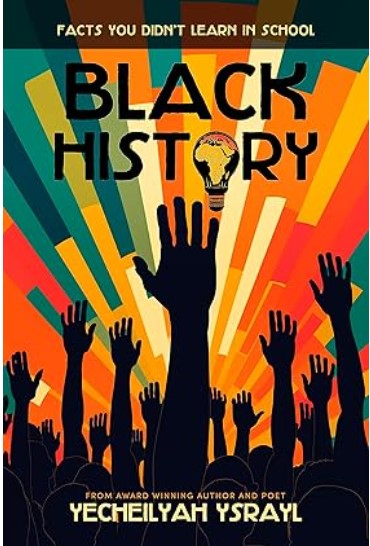
    Thank you for coming and answering my questions, Yecheilyah. I would now like to mention your book on Black History. It is a wonderful book and it can be bought from Amazon. (Click on the link or the book cover below.)

    Here’s a bit about it.

    Black History Facts You Didn’t Learn in School is a historical guide on Black Americans’ accomplishments, contributions, and struggles. It includes the experiences of Black individuals who have often been marginalized, overlooked, or omitted from mainstream historical accounts.

    From the resilience of women like Anna Douglass, first wife of Frederick Douglass, to the many Black communities that prospered, recognizing and celebrating Black history helps to ensure that these stories are acknowledged and that the achievements and resilience of Black people are valued and appreciated.

    And a review.

    Jeremy Lamkin

    5.0 out of 5 stars

     Awakening to the skeletons in America’s closet

    Reviewed in the United States on 6 March 2024

    Verified Purchase

    This book is full of the kind of history that should be taught in school, but instead is relatively unknown. The author did an outstanding job putting this material together, which took ten years and tons of research. It’s a must-read for anyone who’s into history.

    The author focuses on people and groups who have been pivotal in black history. She gives a voice to the marginalized and makes us aware of the contributions of the family of historical figures like Frederick Douglas and Martin Luther King Jr. Each chapter gets the dirt on whitewashed or forgotten pieces of history.

    Read this book to learn about the aftermath of the Civil War and how slavery was reconstructed in the form of criminal justice. The book is compelling and hard to put down, as you discover a series of horrific truths about history.

    This book contributed significantly to my view of American history, as it has put a lot of things in perspective. I see how slavery was reworked into other forms of slavery and evolved in complexity into the Bernaysian economic system based on Freud’s fear of human nature.

    Reading this, a lot of lightbulbs went off for me. It dawned on me that nothing that ever happened is ever really over, like slavery and public relations. I can’t recommend this book enough!

    Me again: I thoroughly recommend this book. So many important Black people have been ignored. This book highlights some of them and tells us how important they were.

    I would love to hear your thoughts on this. Please add your thoughts in the comments box.
    The Battle of Hastings: New Theories on the Site

    King Harold engaged in two battles in Northumbria. He was defeated in the first, but triumphed in the second, which occurred five days later, resulting in the deaths of the opposing leaders, his brother Tostig and Harald Hardrada, the King of Norway.

    Harold learned that Duke William of Normandy had embarked on an invasion of England to lay claim to the throne.

    William’s landing occurred on September 28th near Pevensey, at a location now called Norman’s Bay. His initial plan was to invade in August, but due to unfavourable weather conditions, he postponed it until September.

    On landing, William established his camp within the ancient Roman fortification at Pevensey, from where he marched towards Hastings, ten miles away. Once in Hastings, he built a wooden castle from pre-fabricated parts brought with him. (Was this the first flat-pack?) 🙂

    Meanwhile, Harold became aware of William’s invasion fleet during his southward march. Although he had left part of his forces in the north, he gathered additional troops en route to London, where he paused to muster more soldiers. From London, he made his way towards the south coast.

    Most believe that the encounter between Harold and William occurred not at Hastings, for which the battle is named, but at Senlac Hill, which is now the town of Battle. Nevertheless, I have come across recent claims suggesting an alternative location for the battlefield.

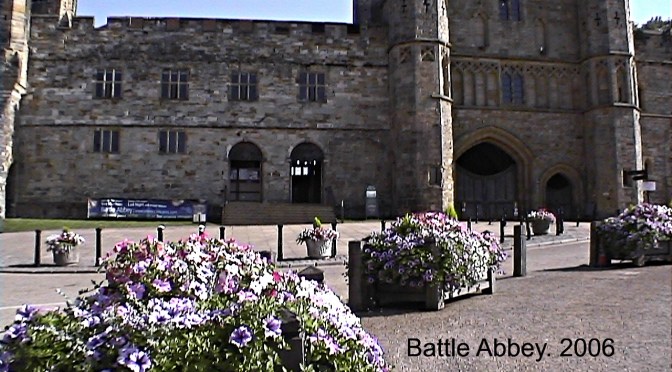
    Archeological investigations at Battle Abbey, which is said to be built on the site of the battlefield, apparently show no indications of a battle taking place there. Medievalists.net cites a paper, “Heathfield Down: An Alternative Location for the Battlefield of Hastings, 1066,” by Rebecca Welshman and Simon Coleman. This paper suggests that the battle might have taken place at a place called Heathfield Down. (I also came across something that stated that this place is also known locally as Slaughter Common.)

    Also, on Medievalists.net I read this:

    “Welshman and Coleman also find importance in a passage from the Anglo-Saxon Chronicle (D text), which explains that “com him togenes æt þære haran apuldran, and Wyllelm him com ongean on unwær, ær þis folc gefylced wære.” (“[Harold] came against him [William] at the grey apple tree. And William came upon him by surprise before his people were marshalled”). They believe that the English forces would have gathered at this apple tree because it was a significant landmark. There was such a ‘hoar apple tree’ in Heathfield that served as a boundary marker.”

    If you go on to read the article, you will find an interesting map to show how the coastline has changed since 1066, and a section on how the weather would have impacted the battle if it took place on Senlac Hill.

    In my current WIP, Wrath of an Anglo Saxon, I haven’t bothered too much about the situation of the battle, but more about the battle itself and the aftermath. This battle had a huge impact on life in England and is considered the beginning of the feudal system, whereby there is a strict hierarchy with the king at the top. and the peasants, or villeins as they are sometimes called, at the bottom. (This is where we get our word ‘villain’ from, although now it had become perjorative in its use.)

    Here is an extract from the work g. Please bear in mind that this is certainly not the finished version, but only the first draft.

    Durstan has been knocked unconscious during the battle. When he regains consciousness, he makes his way to where the defeated Anglo Saxon troops have gathered. After being treated for a head wound, he sleeps.

    Durston opened his eyes, only to close them again quickly. 

    Who made the sun so bright?

    Gradually, he tried a tiny sliver. Not too bad. He parted his eyelids a bit more until they were fully open.

    He reached to his head and let his fingers probe his injury.

    It hurt, but like a bruise. It didn’t feel as if anything inside was damaged. He struggled to his feet. A bit of dizziness, but the trees were standing still now. He glanced at the sky. Still quite early. 

    He ambled towards where he met Earl Edwin yesterday. There was a lot of activity. A few more men had arrived, and as he watched, two more straggled in. Some of the men were seriously injured, and Earl Edwin ordered them to be carried to the healers. 

    Durston approached the earl. “My Lord, I am much recovered. I would like to gather those of my followers who survive and join with any counter attack.”

    Earl Edwin turned to him. “Ah! Theign Durston.” He turned to a tall dark-haired man standing next to him. “Theign Durston was injured in the battle. I sent him to the healers. A blow on the head, it seems.”

    “Well met, Theign Durston. I am Earl Morcar.”

    Two men rushed up to the two earls carrying a man between them. They set him on the ground and bowed to the earls.

    One of them panted, hands on knees. “My Lords, we found the king’s body and brought it here.”

    Earl Edwin glanced at the corpse on the ground before him. “This man is not dressed like the king. He is dressed as one of the ordinary fighters.”

    “When we found him, sir, he was dressed as a king should be, with the crowned helmet.”

    Earl Edwin glared at the two men. “Then where is it now? Have you stolen it? Is it hidden for you to collect later and sell to the Bastard?”

    The second man looked stricken. “No, my Lord. We wouldn’t betray our country.” He turned to his companion. “Tell him, Cenric.”

    “We was searching for any survivors, my Lord, when we saw the king. We knew him by his helmet, see. I’ve never seen the king, so that was how we knew it were him.” He coughed. “He were obviously dead, but we knew we should bring him back here.”

    His friend nodded. “But there were a lot of the enemy looking for their survivors, so we thought,’What if they catch us wi’ the king?’ We spotted a body close by. Been shot with an arrow right through his eye, he had.” He shook his head. “Poor bastard. Must have been a painful way to go.”

    Cenric continued. “We took his armour and clothes and swapped them with the king’s, so no one would know that the body we had was King Harold.”

    Earl Edwin knelt next to the body. “He’s pretty cut up.” He peered into the face and looked up to Earl Morcar “It’s Harold, alright. I knew him quite well.” He turned to the two men. “Well done. You will be rewarded. Go and find some rest while we decide what to do with him.”

    Durston staggered. His head still hurt and standing listening to the two men and the earls had made him dizzy.

    Earl Edwin turned to him. “You need to go home, Durston. We’re planning a retaliation to take our country back, but I don’t think you are fit to join us.”

    Durston’s heart sank. His stomach felt filled with lead. He wanted to fight; to help kill William the Bastard and to see young Edgar Aethling on the throne. His feet dragged as he made his way back to where the injured were being tended.

    Plonking onto a log, he sank his head into his hands. 

    Someone spoke. “Are you unwell, my Lord?”

    He glanced through his fingers. It was Hrodgar, one of his loyal followers. He lowered his hands. “I’ve just been told I can’t help in resisting this takeover.”

    “With all due respect, Lord Durston, I think the earls are correct. You were unconscious for a long time, I heard, and are still suffering the effects.”

    Durston shook his head and immediately regretted it. Pain shot through his brain.  He sighed. “I suppose you are right. I would be a hindrance, not a help.”

    Hrodgar went away and returned shortly with a flagon of ale. Durston drank gratefully and stood. The dizziness had gone. “How many of our men survived? Do you know?”

    “Only about four or five, I think.”

    Durston groaned. All those others dead. They had families, too. 

    “Lord Durston.” A voice sounded through his thoughts. 

    A young man approached. Durston has seen him with the earls.

    “Earl Edwin wants to see you, my Lord.”

    Durston followed the young man to where he had been talking to the earl.

    “I have a job for you, Durston,” the earl said. “We must take the king’s body away from here. There’s no saying what those Norman’s would do with it if they found it.” He pulled at his beard. “Since you have been injured in the fighting, I would like you and a few of the less seriously injured, to take the king’s body to Waltham Abbey.  It was a place close to his heart. The king can be buried there with the correct ceremonies.”

    Durston felt his heart sink once more. He was being sent away. Away from the defence of his homeland.

    It will be a while before this book is published, but I’ll keep you informed as to its progress.

    If you enjoyed this brief extract and would like to read more of my work, you can click on the book cover in the side bar to take you to the online retailer of your choice.

    I wonder how correct the new ideas about the battle site are? What do you think?

    Memories. Washing Day

    Image by David Grimshaw from Pixabay

    I was putting my washing on the other day and suddenly thought about how washing clothes has changed since my grandmother’s day.

    This wasn’t in the 1900s, but the 1950s that I remember.

    My grandma had what she called a ‘dolly tub’. This was a metal barrel with an open top. I don’t really know what it was made of, but probably galvanised zinc. At least, that’s what it looked like.

    First she would boil some water, then pour it into the tub. This would take several pans as she didn’t have a boiler.

    Earlier we’d grated soap. There was no such thing as washing powder, which, of course, is a detergent, not a soap. The soap was allowed to dissolve in the hot water before the clothes were added.

    She then used a ‘posser’ to pound the clothes. This was hard work. Her posser was copper, but earlier ones were wood. These wooden ones looked a bit like a three-legged stool (but with more legs) on a long handle. Grandma’s was like an upturned bowl with a lid and holes drilled in it to allow water to escape.

    If clothes were particularly dirty or stained, she would rub them on a washboard with more soap and perhaps a scrubbing brush.

    After the clothes had been pounded clean, they were put through the mangle. This had to be turned by hand, and it squeezed the excess water out.

    Then the dolly tub was emptied and clean water added. The clothes were put back and once more possed to rinse the soap out. They had to be rinsed at least twice, preferably more. Once again passed through the mangle. 

    When all this was finished, grandma put out the clothes line and hung the washing on it. Pushing it up with a clothes prop, which was a long piece of wood with a v cut out at the top.

    Washing day was a strenuous day in those days.

    Then she got a washing machine.

    Unlike those of today, it loaded at the top and had a paddle to churn the clothes. No more strenuous possing. It still had a mangle on the top, but it was run by electricity and not by hand turning a wheel. Clothes still had to be hung out in the garden to dry though, or hung on a clothes horse around the open fire if the weather was wet..

    Washing took a whole day. No wonder women in those days stayed at home and didn’t go out to work. No labour saving devices!