Today is Armistice Day. World War 1 ended at 11th hour of the 11th day of the 11th month.
I wrote a poem to commemorate the 100th anniversary of the end of WW1. I’ve published it before on Dragons Rule OK, and make no apologies for re-publishing it now.
For those of you who haven’t seen it before, I hope you enjoy it and that it makes you think of the futility of war. And to those of you who remember it, similarly.
War is evil and should never happen. It’s always a result of greed and/or hatred; two emotions that should be relegated to the deepest depths of Hell. And as all wars end in talks, why not begin there?
Here’s my poem.
We Will Remember Them.
I’ll never truly understand How World War I began. The death of Archduke Ferdinand Started the deaths of many more, The young, the old, the rich, the poor. All died with guns in hand.
My Grandad went with Uncle Jim And Our Poor Willie, too. They sent them off, singing a hymn. Grandad went to Gallipoli, Uncle Jim left his love, Polly. Gas in trenches did kill him.
I cannot see, in my mind’s eye Grandad with gun in hand. A peaceful man, sent out to die. He fought for us, for you and me So we can live and so that we Safely in our beds may lie.
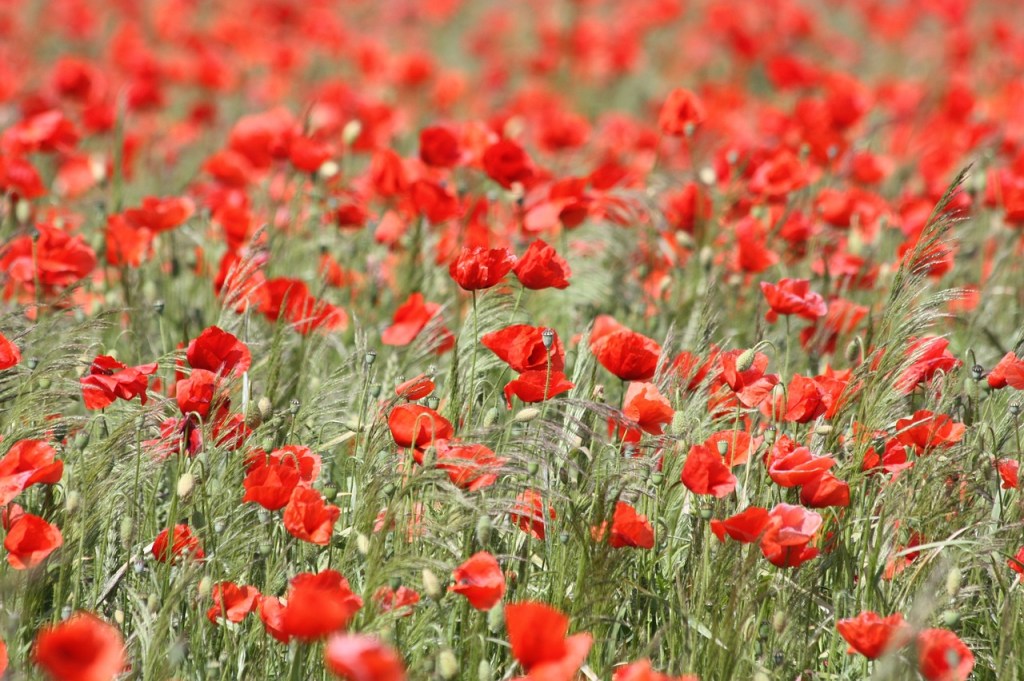
Granddad came home, and Willie too, But millions more did not. Their duty they all had to do. They died in fear, in noise, in blood. Everything was caked in mud. Yet in those fields the poppies grew.
The War to end all wars, they said, So terrible were the deaths. The youth of Europe all lay dead. Yet 21 short years to come Another war. Once more a gun In young men’s hands brought death.
One hundred years have passed since then. What have we learned? Not much! Too many men are killing men. Wars still abound around the world. Bombs and missiles still are hurled At those who disagree with them.
Uncle Jim was my Grandfather’s brother. I never knew him as I wasn’t born when he died.
‘Our poor Willie’ was what my grandmother said when referring to her brother. No one ever knew why he was ‘Our poor Willie’, except that she didn’t get on with his wife and thought she made his life difficult.
I hope you enjoyed my poem. I wish I thought it might make a difference to the terrible wars going on at the moment, but I’m just a teeny drop in a vast ocean. Sadly, my voice is only heard by a very few people.
Please let me know what you think in the comments box.
You can read more of my poetry by clicking on the cover in the side bar. This one comes from Miscellaneous Thoughts.
October is Black History Month and so I invited Yecheilyah Ysrayl to come on my blog.
I have been following Yecheilyah for a few years. She is a wonderful poet and a champion of Black writers, and Black people in general. She recently wrote a book about Black History and I thought it would be appropriate to have her tell us a bit about herself.
Welcome to my blog, Yecheilyah.
Apart from writing, what is the thing you enjoy doing the most?
Apart from writing, I enjoy traveling! Whether from state to state or country to country, there is something therapeutic about leaving the place of your origin to discover how people live in other parts of the world. Traveling even helps me to write.
Do you prefer the city or the country?
I prefer to live and settle in the countryside. I lived on over 40 acres of my husband’s elderly cousin’s land in Louisiana for five years and loved it. Even now, I live in a country-ish part of Georgia. Not entirely country, but country enough. The peace of birds singing and waking you up in the morning and the quiet of country living is also therapeutic. Nothing compares to the space to grow your garden and have animals roam your land. It reminds me of why my ancestors valued land ownership so much.
I do not prefer to live in the city, but I am a Chicago girl, born and raised, so I won’t act like I don’t still enjoy the hustle and bustle of the city. I still love the energy and how the city comes alive. In Atlanta, there is always something to do.
I agree.I much prefer the countryside.
If you weren’t a writer, what job would you do?
Before I dedicated my life entirely to writing and publishing (no 9-5), I was a certified Medical Assistant specializing in Phlebotomy so I would probably be doing that. I was also a teacher and enjoyed it more than the medical field, so I would definitely be somebody’s teacher somewhere. Even now I visit schools as an author-teacher on occasion.
That’s interesting. Teaching can be a most rewarding profession, whether at school or adult education. It’s great to see people growing as they learn.
I read your poetry book. I Am Soul and was greatly impressed by it.Why do you write poetry?
I write poetry because I think it’s the most honest language there is. (Yes, I said language.) There is something about it that makes people see beyond what they can see. And there is something about writing it that has always been a balm to my soul. I like to say that if you want to know someone’s heart, read their poems.
It’s very strange, but I’ve noticed that whenever I post a poem here it gets lots of views, but books of poetry don’t seem to sell. I suppose that poetry can influence people, just as other books we read, especially as children. The early books we read, I think, have a great influence on our reading later in life,
What is the first book you remember either reading or having read to you?
The first book I remember having read to me was the Bible by my mother. I don’t celebrate holidays today, but as a child, my mother would sit in front of us in a chair (we were in bed) during the Christmas holiday with this giant Bible that must have been passed down from generations because it was huge. My mother was always a small woman, so the book looked heavier than she was. Anyway, she would sit that thing in her lap and read it to us.
Wonderful memories, I’m sure.
If you could meet any 3 people, alive or dead, who would they be? Why?
If I could meet anyone, it would be my grandmother Margurite, Maya Angelou, James Baldwin, and Malcolm X. I know that’s four, but I didn’t want to leave anyone out. I would like to meet my maternal grandmother because she died before I was born, and I carry her name as my middle name. I would like to ask her questions about my history to better understand my mother and myself. When asked questions like this, we often overlook our own family members, whom we might not have had a chance to meet, and the wisdom they could impart to us. As for the other three, I mostly want to meet them because I admire their oratory skills. I love hearing how they spoke and articulated their thoughts, beliefs, and philosophies on life. While I don’t agree with everything they stood for, they each had a powerful passion and never allowed anyone to change their mind. Their rebuttals to questions in interviews were just masterful. You weren’t going to trip them up. I would love to talk to them about how they did it and soak up their wisdom.
You are correct about asking questions about your history. We should all ask those questions and not wait until it’s too late. I would also like to meet the others. All great people.
Why do you write?
As noble as it might sound to start this with how I write for others, the most honest answer is that I first write because it is healing to my individual self. It is a way to organize thoughts and feelings I might not have the words to say out loud. I write as a healing agent for myself first. After that, I write to restore the forgotten heritage to the forgotten people, first to Black people and then to all nations. My passion is to reclaim those lost stories that hold the key to our freedoms and shine the light of truth on them.
That is a wonderful goal, Y
Indeed it is, Yecheilyal. I hope you succeed in your ambitions on this front.
A question I can’t answer, myself. Where do you get your ideas from?
I think people see writers as these magical people who snatch ideas from the sky. And not that we are not magical, but most of our ideas, or at least mine, come from just living life. From seeing the extraordinary in the ordinary, the magic in the mundane. An idea can strike me as I am washing dishes or folding clothes. It can strike as I am traveling from place to place. It can also strike, and often does when I am reading and studying the work of others. I learn a lot from other writers, authors, and activists.
Are you a dog or a cat person?
I am definitely a dog person! Now, I grew up with cats, but after experiencing having a dog as a pet, I prefer dogs. Also, I don’t think my Missy (German Shepherd/Collie Mix) would appreciate me answering this question any other way.
I’m sure she would be annoyed if you did.
What do you think is the biggest problem facing the world today?
The biggest problem facing the world today is a lack of love. The love of the world has grown cold.
It has indeed. So much hatred around.
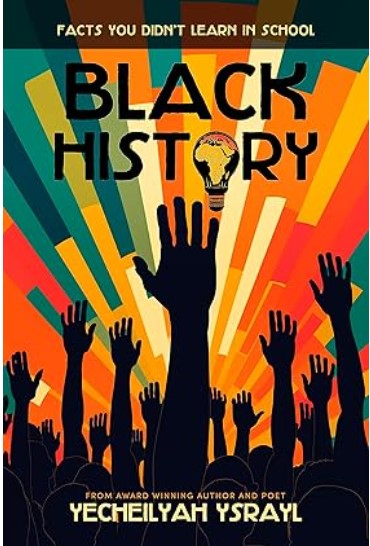
Thank you for coming and answering my questions, Yecheilyah. I would now like to mention your book on Black History. It is a wonderful book and it can be bought from Amazon. (Click on the link or the book cover below.)
Here’s a bit about it.
Black History Facts You Didn’t Learn in School is a historical guide on Black Americans’ accomplishments, contributions, and struggles. It includes the experiences of Black individuals who have often been marginalized, overlooked, or omitted from mainstream historical accounts.
From the resilience of women like Anna Douglass, first wife of Frederick Douglass, to the many Black communities that prospered, recognizing and celebrating Black history helps to ensure that these stories are acknowledged and that the achievements and resilience of Black people are valued and appreciated.
This book is full of the kind of history that should be taught in school, but instead is relatively unknown. The author did an outstanding job putting this material together, which took ten years and tons of research. It’s a must-read for anyone who’s into history.
The author focuses on people and groups who have been pivotal in black history. She gives a voice to the marginalized and makes us aware of the contributions of the family of historical figures like Frederick Douglas and Martin Luther King Jr. Each chapter gets the dirt on whitewashed or forgotten pieces of history.
Read this book to learn about the aftermath of the Civil War and how slavery was reconstructed in the form of criminal justice. The book is compelling and hard to put down, as you discover a series of horrific truths about history.
This book contributed significantly to my view of American history, as it has put a lot of things in perspective. I see how slavery was reworked into other forms of slavery and evolved in complexity into the Bernaysian economic system based on Freud’s fear of human nature.
Reading this, a lot of lightbulbs went off for me. It dawned on me that nothing that ever happened is ever really over, like slavery and public relations. I can’t recommend this book enough!
Me again:I thoroughly recommend this book. So many important Black people have been ignored. This book highlights some of them and tells us how important they were.
I would love to hear your thoughts on this. Please add your thoughts in the comments box.
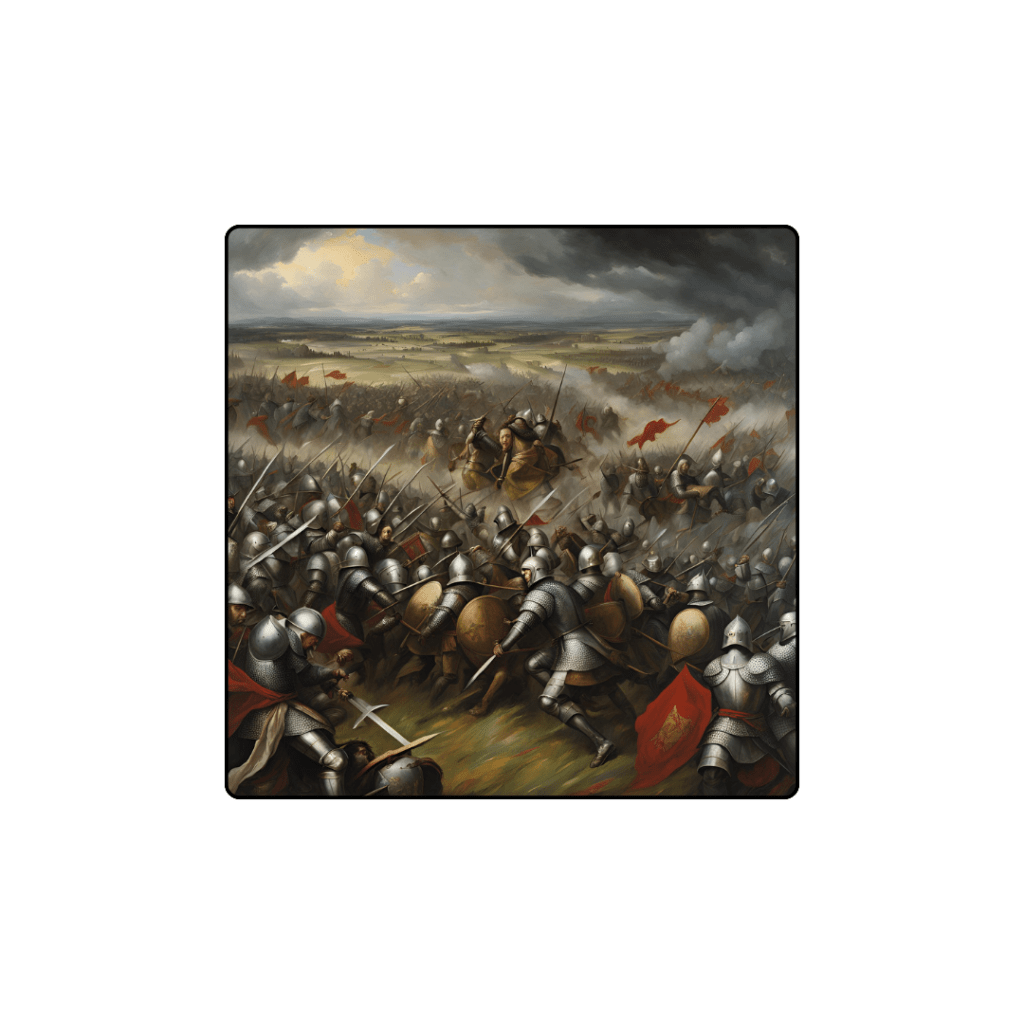
King Harold engaged in two battles in Northumbria. He was defeated in the first, but triumphed in the second, which occurred five days later, resulting in the deaths of the opposing leaders, his brother Tostig and Harald Hardrada, the King of Norway.
Harold learned that Duke William of Normandy had embarked on an invasion of England to lay claim to the throne.
William’s landing occurred on September 28th near Pevensey, at a location now called Norman’s Bay. His initial plan was to invade in August, but due to unfavourable weather conditions, he postponed it until September.
On landing, William established his camp within the ancient Roman fortification at Pevensey, from where he marched towards Hastings, ten miles away. Once in Hastings, he built a wooden castle from pre-fabricated parts brought with him. (Was this the first flat-pack?) 🙂
Meanwhile, Harold became aware of William’s invasion fleet during his southward march. Although he had left part of his forces in the north, he gathered additional troops en route to London, where he paused to muster more soldiers. From London, he made his way towards the south coast.
Most believe that the encounter between Harold and William occurred not at Hastings, for which the battle is named, but at Senlac Hill, which is now the town of Battle. Nevertheless, I have come across recent claims suggesting an alternative location for the battlefield.
Archeological investigations at Battle Abbey, which is said to be built on the site of the battlefield, apparently show no indications of a battle taking place there. Medievalists.net cites a paper, “Heathfield Down: An Alternative Location for the Battlefield of Hastings, 1066,” by Rebecca Welshman and Simon Coleman. This paper suggests that the battle might have taken place at a place called Heathfield Down. (I also came across something that stated that this place is also known locally as Slaughter Common.)
“Welshman and Coleman also find importance in a passage from the Anglo-Saxon Chronicle (D text), which explains that “com him togenes æt þære haran apuldran, and Wyllelm him com ongean on unwær, ær þis folc gefylced wære.” (“[Harold] came against him [William] at the grey apple tree. And William came upon him by surprise before his people were marshalled”). They believe that the English forces would have gathered at this apple tree because it was a significant landmark. There was such a ‘hoar apple tree’ in Heathfield that served as a boundary marker.”
If you go on to read the article, you will find an interesting map to show how the coastline has changed since 1066, and a section on how the weather would have impacted the battle if it took place on Senlac Hill.
In my current WIP, Wrath of an Anglo Saxon, I haven’t bothered too much about the situation of the battle, but more about the battle itself and the aftermath. This battle had a huge impact on life in England and is considered the beginning of the feudal system, whereby there is a strict hierarchy with the king at the top. and the peasants, or villeins as they are sometimes called, at the bottom. (This is where we get our word ‘villain’ from, although now it had become perjorative in its use.)
Here is an extract from the work g. Please bear in mind that this is certainly not the finished version, but only the first draft.
Durstan has been knocked unconscious during the battle. When he regains consciousness, he makes his way to where the defeated Anglo Saxon troops have gathered. After being treated for a head wound, he sleeps.
Durston opened his eyes, only to close them again quickly.
Who made the sun so bright?
Gradually, he tried a tiny sliver. Not too bad. He parted his eyelids a bit more until they were fully open.
He reached to his head and let his fingers probe his injury.
It hurt, but like a bruise. It didn’t feel as if anything inside was damaged. He struggled to his feet. A bit of dizziness, but the trees were standing still now. He glanced at the sky. Still quite early.
He ambled towards where he met Earl Edwin yesterday. There was a lot of activity. A few more men had arrived, and as he watched, two more straggled in. Some of the men were seriously injured, and Earl Edwin ordered them to be carried to the healers.
Durston approached the earl. “My Lord, I am much recovered. I would like to gather those of my followers who survive and join with any counter attack.”
Earl Edwin turned to him. “Ah! Theign Durston.” He turned to a tall dark-haired man standing next to him. “Theign Durston was injured in the battle. I sent him to the healers. A blow on the head, it seems.”
“Well met, Theign Durston. I am Earl Morcar.”
Two men rushed up to the two earls carrying a man between them. They set him on the ground and bowed to the earls.
One of them panted, hands on knees. “My Lords, we found the king’s body and brought it here.”
Earl Edwin glanced at the corpse on the ground before him. “This man is not dressed like the king. He is dressed as one of the ordinary fighters.”
“When we found him, sir, he was dressed as a king should be, with the crowned helmet.”
Earl Edwin glared at the two men. “Then where is it now? Have you stolen it? Is it hidden for you to collect later and sell to the Bastard?”
The second man looked stricken. “No, my Lord. We wouldn’t betray our country.” He turned to his companion. “Tell him, Cenric.”
“We was searching for any survivors, my Lord, when we saw the king. We knew him by his helmet, see. I’ve never seen the king, so that was how we knew it were him.” He coughed. “He were obviously dead, but we knew we should bring him back here.”
His friend nodded. “But there were a lot of the enemy looking for their survivors, so we thought,’What if they catch us wi’ the king?’ We spotted a body close by. Been shot with an arrow right through his eye, he had.” He shook his head. “Poor bastard. Must have been a painful way to go.”
Cenric continued. “We took his armour and clothes and swapped them with the king’s, so no one would know that the body we had was King Harold.”
Earl Edwin knelt next to the body. “He’s pretty cut up.” He peered into the face and looked up to Earl Morcar “It’s Harold, alright. I knew him quite well.” He turned to the two men. “Well done. You will be rewarded. Go and find some rest while we decide what to do with him.”
Durston staggered. His head still hurt and standing listening to the two men and the earls had made him dizzy.
Earl Edwin turned to him. “You need to go home, Durston. We’re planning a retaliation to take our country back, but I don’t think you are fit to join us.”
Durston’s heart sank. His stomach felt filled with lead. He wanted to fight; to help kill William the Bastard and to see young Edgar Aethling on the throne. His feet dragged as he made his way back to where the injured were being tended.
Plonking onto a log, he sank his head into his hands.
Someone spoke. “Are you unwell, my Lord?”
He glanced through his fingers. It was Hrodgar, one of his loyal followers. He lowered his hands. “I’ve just been told I can’t help in resisting this takeover.”
“With all due respect, Lord Durston, I think the earls are correct. You were unconscious for a long time, I heard, and are still suffering the effects.”
Durston shook his head and immediately regretted it. Pain shot through his brain. He sighed. “I suppose you are right. I would be a hindrance, not a help.”
Hrodgar went away and returned shortly with a flagon of ale. Durston drank gratefully and stood. The dizziness had gone. “How many of our men survived? Do you know?”
“Only about four or five, I think.”
Durston groaned. All those others dead. They had families, too.
“Lord Durston.” A voice sounded through his thoughts.
A young man approached. Durston has seen him with the earls.
“Earl Edwin wants to see you, my Lord.”
Durston followed the young man to where he had been talking to the earl.
“I have a job for you, Durston,” the earl said. “We must take the king’s body away from here. There’s no saying what those Norman’s would do with it if they found it.” He pulled at his beard. “Since you have been injured in the fighting, I would like you and a few of the less seriously injured, to take the king’s body to Waltham Abbey. It was a place close to his heart. The king can be buried there with the correct ceremonies.”
Durston felt his heart sink once more. He was being sent away. Away from the defence of his homeland.
It will be a while before this book is published, but I’ll keep you informed as to its progress.
If you enjoyed this brief extract and would like to read more of my work, you can click on the book cover in the side bar to take you to the online retailer of your choice.
I wonder how correct the new ideas about the battle site are? What do you think?
I was putting my washing on the other day and suddenly thought about how washing clothes has changed since my grandmother’s day.
This wasn’t in the 1900s, but the 1950s that I remember.
My grandma had what she called a ‘dolly tub’. This was a metal barrel with an open top. I don’t really know what it was made of, but probably galvanised zinc. At least, that’s what it looked like.
First she would boil some water, then pour it into the tub. This would take several pans as she didn’t have a boiler.
Earlier we’d grated soap. There was no such thing as washing powder, which, of course, is a detergent, not a soap. The soap was allowed to dissolve in the hot water before the clothes were added.
She then used a ‘posser’ to pound the clothes. This was hard work. Her posser was copper, but earlier ones were wood. These wooden ones looked a bit like a three-legged stool (but with more legs) on a long handle. Grandma’s was like an upturned bowl with a lid and holes drilled in it to allow water to escape.
If clothes were particularly dirty or stained, she would rub them on a washboard with more soap and perhaps a scrubbing brush.
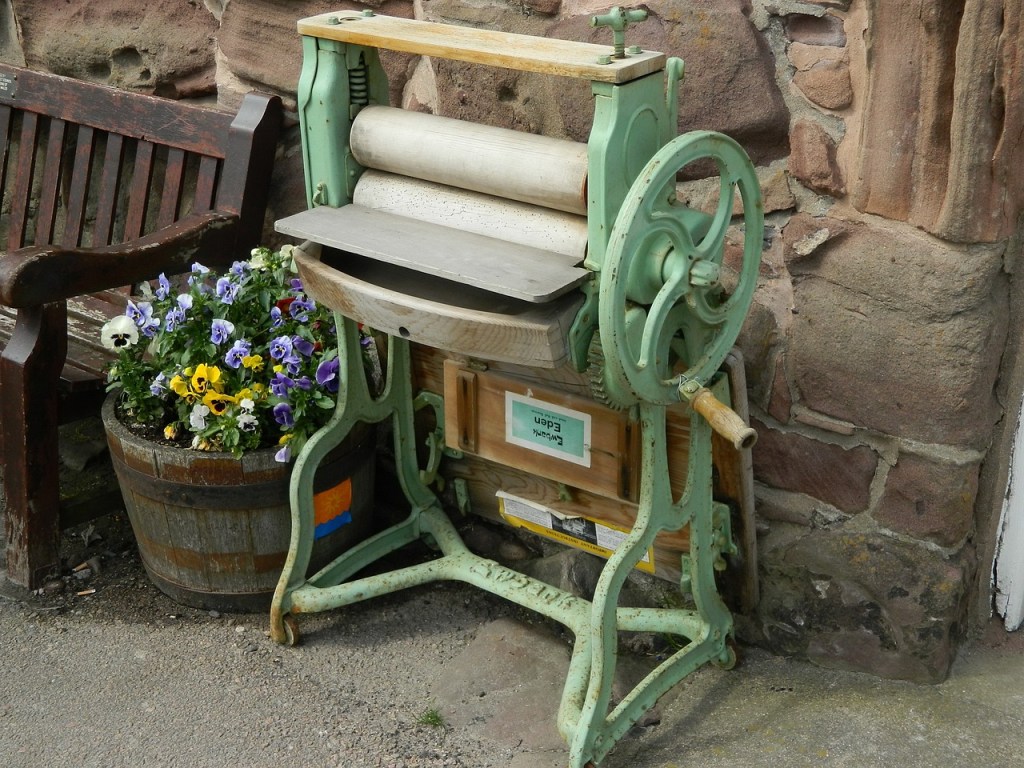
After the clothes had been pounded clean, they were put through the mangle. This had to be turned by hand, and it squeezed the excess water out.
Then the dolly tub was emptied and clean water added. The clothes were put back and once more possed to rinse the soap out. They had to be rinsed at least twice, preferably more. Once again passed through the mangle.
When all this was finished, grandma put out the clothes line and hung the washing on it. Pushing it up with a clothes prop, which was a long piece of wood with a v cut out at the top.
Washing day was a strenuous day in those days.
Then she got a washing machine.
Unlike those of today, it loaded at the top and had a paddle to churn the clothes. No more strenuous possing. It still had a mangle on the top, but it was run by electricity and not by hand turning a wheel. Clothes still had to be hung out in the garden to dry though, or hung on a clothes horse around the open fire if the weather was wet..
Washing took a whole day. No wonder women in those days stayed at home and didn’t go out to work. No labour saving devices!
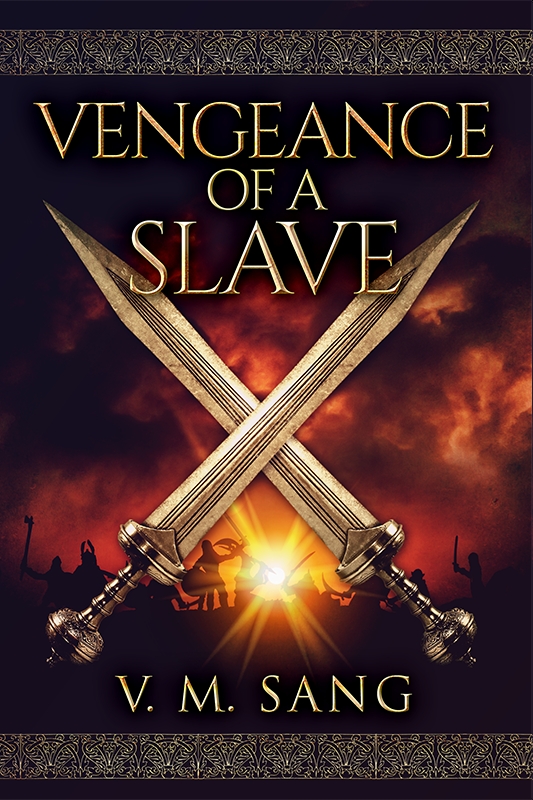
Vengeance of a Slave has now made it through to the last 50 in All Author Cover of the Month. It’s currently at Number 29.
In order to get higher, it needs lots more votes, so please will you pop over to All Author and vote?
In order to vote, you will need to sign up for the site, but you can unsubscribe afterwards, or maybe you would like to stay there and find loads of new books and authors.
It needs a huge push by my friends and followers in order to get to the top. The book currently at the top is one that I dislike the cover of, but I suspect the author has a load more people to call on than I have.
I know I said I was taking a break until after New Year,but yesterday I got to thinking of Christmas when I was a child, and how it differed from now. I can’t leave it until New Year as Christmas is over then, so decided to write it now.
I was three years old. I woke on Christmas Day excited to see what Father Christmas had brought me. My tummy felt churned up. Had he been? Had I been a good enough girl to receive presents.
Then I saw him. He was wrapped in red cellophane and peeked over the edge of the pillowcase left for Santa to fill.
Teddy.
I jumped out of bed and rushed to tear open the cellophane and release him. My wonderful teddy bear. I still have him. He sits on a set of drawers in my bedroom. He now has no eyes, the moths got his paws and he’s lost his growl, but I still love him.
I can’t remember what other presents I got, but I know one would have been a book from my Mum’s friend, Auntie Catherine. She wasn’t a real aunt, but we called all family friends Auntie and Uncle. Auntie Catherine was always good for a book to read.
We caught a bus to the local town. Not everyone had cars in those days and we had to rely on public transport. The buses were every fifteen minutes past our house and the journey took around a half hour. Once at the bus terminus we walked to Grandma’s house. I confess, I don’t remember catching the bus to Grandma’s. But I don’t remember getting there any other way. There wouldn’t have been a full bus service, though.
The first thing we did was to go and inspect the Christmas Tree that Grandma had in the hall. I shivered as we entered. There was no heating there.
The tree stood tall and beautiful. Grandma had gone into a little room off her bedroom and got it out. She had the same tree for as many years as I can remember, and I loved helping to decorate it. The same baubles came out every year. I can still remember some of them, especially a bird with a tail made of some kind of fibres. The baubles, or shiny balls as we called them, we’re made of glass and had to be handled carefully. No lights, though. They weren’t common then. Maybe they weren’t available.
We had a goose for many years that Grandma cooked in the small kitchen she called the scullery. Vegetables were cooked, potatoes roasted and stuffing made. All in this tiny space.
My mum had made Christmas puddings. She always made them a year in advance so they could mature, and there was homemade mincemeat, too, stuffed into mince pies. Nothing shop bought. Of course, there were limits to what people could buy at that time. In the early 50s there was still rationing from WW2, but I don’t remember being short of anything. But I suppose many memories have blurred together in my mind.
Grandad sat in his chair in the corner of the room where everything happened. (Confusingly, Grandma called it the kitchen!) He smoked his pipe sitting by the open fire. This was the only fire at the moment. Later, just before dinner–at midday–one was lit in the front room, commonly known as The Room.
This room was only used on special occasions. Then the aunts and uncles arrived and the table was opened up and set. We all ate a good meal, but didn’t stuff ourselves. The goose was perfectly cooked, and even the sprouts tasted good. Vegetables were seasonal. Sprouts and carrots I think were the most commonly eaten. Supermarkets and goods shipped from around the world didn’t exist.
After eating and clearing up we repaired to The Room. Here we played games. When my little sister and cousins came on the scene, it was tradition for us to go around the family shaking hands and singing ‘We Wish You a Merry Christmas.’ Before they were born I did it all by myself.
One game we played was Feather Football. We divided into teams and a large sheet was stretched between four people. A feather from a pillow was placed in the centre. The object was to blow it off the sheet at the opponents’ end. We also played charades, hunt the thimble and other such games.
One time I remember being blindfolded and told to stand on a board. Two uncles lifted the board.I felt my head hit something. “Ah, they’ve lifted me up to the ceiling,” I thought.“Jump off,” said one of my uncles.
“What?” I thought. “I’m up high.” But I jumped nevertheless.
Imagine my surprise when I landed immediately. The board had only been lifted a few inches. What I thought was the ceiling was a book.
Then came the singing. We were a musical family. My youngest aunt, who was a music teacher, played carols and we all joined in, singing in harmony, of course. Then everyone did their ‘party piece’.
We had fun. No TV or radio. No video games. Just everyone joining in.
I have no memory of getting home in those early days. I don’t suppose buses would be running, and Grandma didn’t have room for us to stay. Not when I was three as her two youngest children were still at home.
I hope you enjoyed this little glimpse of Christmas long ago. (Yes, it was long ago, wasn’t it. Historical to some of you.)
Please leave any comments in the comments box. I enjoy the connection we have.
Have a very Merry Christmas and an excellent New Year.
I ‘ve started writing book 3 in my series, A Family Through the Ages. Book 1 was set in Roman Britain, Book 2 in Viking Britain, and now Book 3 begins with the Battle of Hastings in 1066, probably the most remembered date in British history. Not for nothing, as it changed this country vastly.
Anyway, to whet your appetites, here’s the first chapter. It contains some violence, as it deals with the Battle itself.
Please remember that this is a very early draft, so there might be mistakes.
Anger of an Anglo Saxon
CHAPTER 1
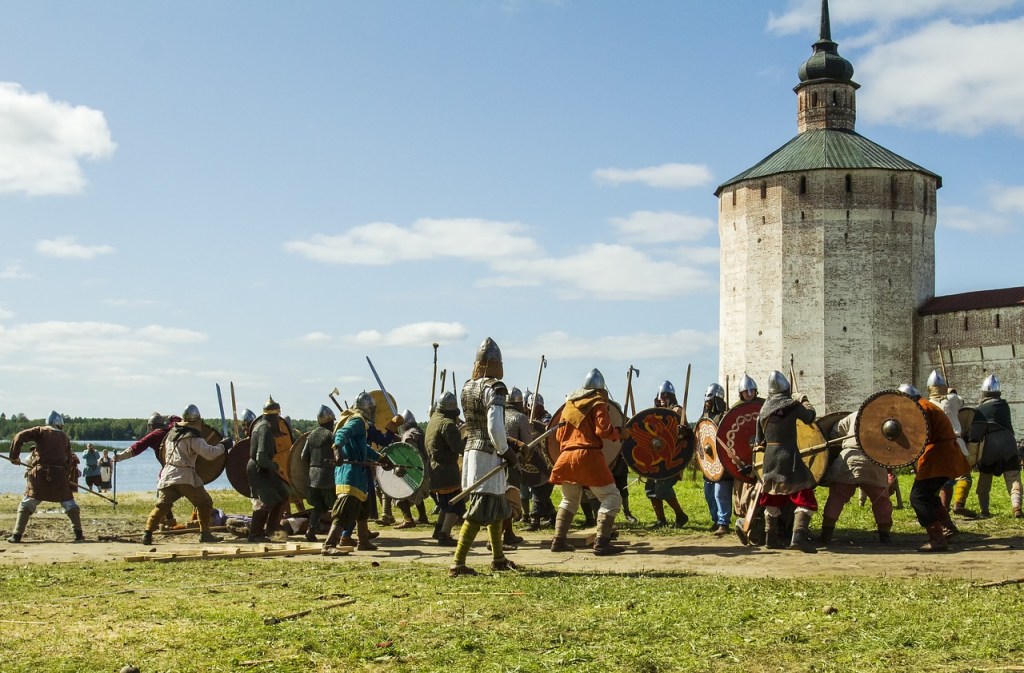
Durston stood with his shield locked with the ones on either side. A helmet covered his ash blond hair, and a breastplate made of hardened leather covered his torso.
He turned to the man on his left. “We’re in a better position. We should win this fight easily.”
Looking down the slope, he could see the Norman army gathering. There were many archers behind their infantry. He swallowed hard. The Anglo Saxon army did not have nearly as many. His legs felt weak and his hands shook. What if he were killed here? His son, just fourteen, would be the new theign. The lad did not have the experience to deal with the work.
Pull yourself together. Leola will help him. She’s competent. He smiled as he thought of his wife.
Taking a deep breath, he focused on the enemy.
His neighbour turned to him and grinned. “They won’t be able to use yonder horses against us. Shouldn’t be hard, this one. We’ve got the high ground. If we can kill that William the Bastard, they’ll run back to Normandy like rabbits before a fox. Should have this done by noon.”
The Anglo Saxon army had hurried south from defeating an attempted invasion by the Norse king and King Harold’s brother, Tostig, at Stamford Bridge. They were celebrating when the news of the invasion from Normandy came.
King Harold immediately demanded a forced march to the south coast to repel this new threat to his kingdom. On the way, they gathered more men, all willing to fight to protect their country from foreigners.
As Durston watched, a single person came out from the enemy lines.
The man sang as he brandished a sword. Durston could not understand the words, as they were French, but he understood the tone. The man sang insults and threats, underpinned by his sword waving.
As soon as his song ended, he ran towards their line. Durston’s eyes opened wide and he shook his head. The shield wall opened, a little to his left, and the singer was quickly cut down.
Then the battle began.
The twang of bowstrings filled the air, followed by the wizz of arrows. The men in the shield wall raised their shields as arrows fell like raindrops. The Anglo Saxon archers replied with volleys of their own, although they were fewer in number than the Norman archers.
Men shouted war cries, those who were hit screamed, arrows clanked on raised shields.
The two shield walls collided with a bang.
Men on both sides pushed as hard as they could, at the same time trying to spear those opposite.
The air was filled with the scentl of blood. Durston gasped as an enemy spear found a way through a small gap and cut his left arm.
He thrust back and was gratified to hear a scream of pain. “That’ll teach you to try to invade my country.”
The October sun rose in the sky as the fighting continued. Durston swallowed. It was thirsty work, this fighting. He glanced at the sky. Nearly noon. As he continued to thrust against the enemy shield wall he felt a tap on his shoulder. He dare not look round.
A voice. “Go get something to drink.”
He slipped his shield from its lock with those on either side and the man relieving him quickly took his place.
Durston staggered to the rear of the shield wall. He spotted a fallen tree trunk and sank onto it, leaned forward and put his head in his hands. He shivered uncontrollably. The hours in the shield wall took their toll.
“Here’s some ale.”
He glanced up to see a young man about thirteen years old, holding a flagon.
Reaching out, he swallowed it in one gulp. “Thank you.”
Someone handed him a chunk of bread and a slice of meat. He stuffed it into his mouth and stood. His legs gave way and he found himself sitting on the floor. Leaning against the log he had been sitting on, Durston closed his eyes. The fear came creeping back. He looked at the cut on his arm.
I hope that doesn’t turn bad.
He felt his eyes closing. In spite of the noise from the battle, he was drifting to sleep. Shaking his head, and ignoring his shaking legs, he pulled himself to his feet and staggered back to the shield wall. He relieved another man and locked his shield in place with the ones on either side.
Once back in the battle, the fear slipped away. Anger swept over him in its place. How dare these foreigners come to take over his country? His legs stopped trembling and his eyes opened wide. Showing his teeth, he grimaced.
The man in the enemy shield wall was also showing his teeth. He shouted a cry, but Durston did not know what it meant.
“For King Harold,” he shouted in reply.
Someone to his left cried out, “They’re running!”
Durston glanced and saw that the Norman shield wall had broken, and men were running down the hill. Someone shouted to keep the formation, but many of the Saxon defenders took off after the fleeing Normans.
Then Durston could see no more as he concentrated on his own battle.
The afternoon slowly passed. Men were relieved on the battlefield on both sides, but after they had shot most of their arrows, the Normans concentrated on the shield wall. They found it impossible to collect their spent arrows from beneath the feet of the two opposing armies.
Again, the Normans retreated. This time Dutston was aware that after running, and being chased, they turned on the Anglo Saxons chasing them and a hand-to-hand battle began. The Normans in front of Durston did the same. As they ran, Durston was unable to prevent his men from chasing.
“The cowards are running,” someone shouted.
“No, it’s a trick.” Durston tried to call his men back.
As he expected, the Normans turned on the chasing men. With the shield wall dismantled, the Norman cavalry charged. Durston threw his spear at one man bearing down on him. The spear hit his horse in the leg. The animal screamed and went down, throwing its rider.
Durston drew his seax. As the man regained his feet, Durston slashed at his face. Blood flowed as a long cut appeared from his ear to his chin. He screamed.
The downed rider staggered, giving Durston the chance to get in another slash. This one, however, only hit the man’s hauberk, but it did damage the chain mail that made it.
The man let out a grunt as the air was forced out of his lungs. He raised his sword, and Durston only just managed to dodge the downward slash as it narrowly missed cleaving his skull.
Another slash from Dursto’s seax caught the attacker’s leg. He went down, blood pouring from the wound. He screamed something Durston did not understand, but thought it was probably a curse. Before the man finished his curse, however, Durston’s seax slashed across his throat. His curse was never finished.
Durston took a breath. For the moment no enemy approached. He glanced to his right. There, a young man, one of his followers, was beset by two Normans.
He raised his seax, and shouted, “For King Harold.” He rushed at one of the men. This distracted him and he turned, allowing Durston to slash at his stomach. It opened, and the enemy soldier clutched his belly and fell, his guts spilling out and tangling around his feet.
Durston saw the young man dispatch his adversary before turning to look for another man to fight. He saw a man with a mace approaching. He raised his seax, but the enemy lifted his shield and blocked the cut.
The two skirted around each other, getting in the occasional hit on a shield, but neither getting the better of the fight. Durston’s legs began to shake, and it was more difficult to raise his shield or slash with his seax.
He looked at his opponent who was breathing heavily.
He’s exhausted, too.
At that moment, the Norman raised his mace and brought it down on Durston’s head.
***
Durston opened his eyes.
It was dark. His head hurt. He raised his hand to his head and felt something sticky.
Blood.
His helmet had gone. When did that happen? He placed his hands on the floor and raised himself to his elbows.
His head pounded.
Rolling onto his front, he struggled to his hands and knees. He closed his eyes briefly. It made no difference to the dark.
He raised himself to his knees and looked around. He could see very little. The darkness was like a blanket wrapping around him, determined he would not see anything.
Durston sat back on his heels, listening. Rustling sounded to his right. Something brushed against him. He swung his hand and made contact with a furry body. It squeaked as he bashed it away.
Rat. Nasty things.
Millions upon millions of stars covered the sky. Durston tried to decide the time by their positions. The sun had been still up when he was fighting. Someone must have hit him on the head. How long had he been unconscious? He estimated it was not yet midnight.
He managed to struggle to his feet. Dizziness threatened to overwhelm him, but he fought against it.
It was then he heard the singing. Must be our men singing their victory songs.
Staggering, he headed in the direction of the sounds. He passed hundreds of bodies, both Norman and Anglo Saxon. Horses, too. He felt sorry for the animals. They had not asked to come to fight. They knew nothing of the politics that caused this battle.
A shadow stood over a body. As Durston approached, it raised its head from its grizzly meal. Teeth bared, the wolf snarled. Blood dripped from its muzzle.
Durston backed away. “I’m not going to take your meal, revolting as I think it is.”
The wolf returned to eating the body of one of the fallen, whether Norman or Anglo Saxon, Durston could not tell.
Wolves, rats and foxes tonight. It’ll be crows, ravens and kites in the morning.
As he neared the camp where he heard the singers, Durston stopped. He crouched. He listened carefully. He recognised neither the songs, nor the words. Someone spoke.
Not Anglo Saxon.
The bastard Guillaume won the battle. How? We had the better position. And they ran away.
It came to him slowly. With his head pounding and his dizziness, his thoughts were sluggish, as though they had to wade through mud to get into his consciousness.
It was a trick. They feigned flight, then turned on us. They couldn’t beat us in the shield wall, so they broke it up by pretending to run.
Durston tried to raise himself from his crouch. He staggered and fell to all fours.
Blast. Did they hear that?
Someone shouted and Durston scrambled away, still on hands and knees. Then the shout stopped. Normal conversation resumed.
Must have decided I was a wolf.
When he was close to some trees, Durston stood. He leaned against a tree to get his bearings. Where was their camp? Had anyone returned to it? Would the Normans have found it and ransacked it?
He lurched in the direction of where the Anglo Saxon camp had been. When he arrived no one was there. Not even a horse. He felt the tears welling in his eyes. Dizziness threatened to overcome him.
No one? Was no one left alive?
A sound came from behind him. He swung round making the world spin. He drew his seax.
“Careful. You are in no condition to wield that safely.” The voice came from a stand of trees. A man stepped out. He smiled at Durston. “It’s good to see you, Lord Durston. I was afraid you had been killed.”
Durston frowned, staring at the man. “Do I know you?”
“No. Probably not, My Lord. I wasn’t one of your followers. I hold a farm not far from Alricking. When news came that Duke William had invaded, and King Harold’s army passed, I decided to join. To defend my country.”
Durston sank to the ground. “We lost.”
The man shook his head. “Yes, My Lord. We lost the battle.” He approached Durston and held out a hand. “The survivors are assembling a little distance away. Let me help you.”
“I suppose King Harold is organising an attack on the Normans’ army.”
The young man’s face fell. “King Harold is dead, My Lord. He fell in the battle.”
Durston groaned. “Who is in charge, now?”
“Lords Edwin and Morcar.”
Durston allowed the young man to help him to his feet and, with Durston leaning heavily on his arm, they proceeded through the trees.
I wish this headache would go. I can’t think clearly.
After what seemed to Dunston to be hours, they broke into a clearing. He glanced around and noticed many men. Some lay on the ground, moaning, some sat on the ground or leaned against tree trunks and others moved around the wounded, administering bandages.
“You found another survivor. Good. Now return and wait to see if any more turn up. When day breaks, come back here.” The man turned to Durston. “I’m Earl Morcar. You are?”
“Theign Durston, My Lord. Of Alricking.” He swayed on his feet.
“You are injured.” Earl Morcar called to a young man who was passing. “Help Theign Durston to the healers.”
The young man took hold of Durston’s arm. He guided him toward where healers worked on those injured. The scent of blood permeated the air along with the groans of men.
A woman covered in blood hurried over to them. “Another injured man?”
Durston glanced around. Cuts, stabs, bruises covered most of the men. One was missing an arm, and he saw two men with missing eyes.
The healer took his arm from the young man who escorted him. “I see you’ve a head injury. We’ll get it cleaned up in no time.” She paused as Durston staggered. “Do you have a headache?”
Durston nodded, then regretted it as his head pounded. “Yes, it’s the worst headache I’ve ever had.”
“Did you get a blow to the head?” The woman lowered Dunston to a seat on a log.
“I don’t know. I can’t remember much. I helped one of my followers who was beset by two men. Then a man with a mace approached me. The next thing I knew, I woke up in the dark. Beasts were devouring the dead. At least, I hope they were dead!”
The healer cleaned the wound on his head, which bled profusely, and told Dunston to lie down anywhere he could find a space. “I’ll bring you some willow bark tea if we’ve any left. Should help with your headache. You must rest,” She scurried away.
We can’t let these Normans win. I need to go back and fight them again. Is Earl Morcar organising a new attack?
He tried to stand, but his legs gave way as the clearing span around him. He decided he should take the healer’s advice and he lay in the space between the log he had been sitting on and an oak tree. Soon he was asleep.
Jealousy of a Viking by Vivienne Mary Sang is set in 9th-century Britain where Helgha, a skilled healer and daughter of a Viking landowner, crosses paths with Viking noblity, Erik. Their forbidden love prompts a chain of events that alters Helgha’s destiny. The life Helgha knows is wiped out and Erik takes her away as his mistress. Bound by her deep affection for Erik, Helgha silently endures the public humiliation of their relationship and gives birth to two children. However, when Erik succumbs to familial pressure and weds within his own class, Helgha’s jealousy drives her to dark thoughts, and her craft is levied against her, further compounding her troubles. Branded a witch, Helgha flees with her young offspring, seeking shelter among the Saxons and discovering solace in Christian teachings.
Jealousy of a Viking is historical women’s fiction as it is meant to be and Vivienne Mary Sang depicts the harsh realities of the time with both authenticity in its representations and sympathy for Helgha’s lack of agency. The character arc is incredible as it really is the latter half of Helgha’s life in a time when even a quadragenarian life expectancy was almost unheard of. Helgha is a woman who has children, which she miraculously survives, and, along with multiple other instances of the things that feed into a 9th-century death, this is not given any sugar coating. The writing style of the book shows Sang’s ability to paint a visual portrait without wandering into the weeds and the author keeps the story propelling forward. I liked Helgha’s spiritual awakening as part of the arc even if it wasn’t something I was necessarily interested in seeing happen. However, it is well done and brings hope to a woman who should have lost it ages ago. Very highly recommended.
I am now King of England. King William I. Doesn’t that sound great? However it wasn’t such an easy position to gain. Let me go back to the beginning.
Edward, my second cousin, was in exile in Normandy after Cnut had taken the English throne. I decided to go and see him as he was family, after all, and had no heirs.
While I was there, I played on the family connection, and reminded him that, although he might eventually get an heir with his wife, Emma of Normandy, if he should die suddenly, there would be no obvious claimant to the English throne.
Well, he hummed and hawed and didn’t make a decision then. I’m not surprised, really, because his mother had married Cnut and had a son by him. She supported her son, Harthacnut, and eventually he became king of England.
Edward was lucky. Harthacnut died, and Edward sailed unopposed into England to take the throne. Not long after, he sent his son-in-law, Harald Godwinson to tell me that he had decided to make me his heir. King William sounded good, I thought, but I didn’t trust Harald, so I had him imprisoned. Eventually, in order to regain his freedom, he swore an oath of fealty to me, the rat!
In the year of our Lord, 1066, King Edward, who had become to be know as The Confessor, due to his religious conviction, died. Harald, the rat, took the throne and was crowned the day after Edward’s death. He said that Edward had made him his heir on his deathbed. A likely story!
It was then I decided that I needed to go to England and sort this man out. He had broken a holy oath, and I was the rightful king. But it seemed I wasn’t the only one to want the crown of England. Harald’s own brother, Tostig, joined forces with the Norwegian king, Harald Hardrada, and launced an invasion.
They met initially at a place called Fulford, in the north of England, not far from the city of York. This was 0n September 20th 1066. It seems the invaders won, but Harald was not to be defeated so easily. He fought another battle five days later at a place called Stamford Bridge where both Tostig and Harald Hardrada were killed.
Well, this was too good an opportunity to miss. I had set sail, knowing that Harald would be occupied, and we landed at a place called Pevensey. There had been a Roman castle there, and we made use of that. I ordered a wooden fort to be built inside the Roman walls. It was a good defesive position.
The whole area was marshland, and the sea came up to the fort walls. I ordered the troops to begin marching over the marshes, heading towards the town of Hastings. Once we got there, I ordered a fort to be built, and we raided the land for supplies.
We waited for Harald to arrive from his battle at Stamford Bridge. We knew they would be tired after a forced march. I set a watch the night before the battle. I would not have put it past Harald to make a surprise attack, but he didn’t, and so on 14th October, at dawn, the battle began.
I won’t go into details here. Suffice it to say that it was hard fought and lasted all day. In the end, though, we won, and Harald was dead. I was now King of England.
I have begun the research for the next book in the series, A Family Through the Ages. This one will start in 1066 with the Battle of Hastings.
If you would like to catch up on the series, the first book, Vengeance of a Slave, is free as an ebook. Alternatively, you can get it from your favourite store, here.
Jealousy of a Viking, the second book, can be got from your favourite store, here.
Or click on the images in the side bar.
Both books are also available as audio books.
My publisher has released merchandise with the book covers on. These include: t-shirts, mugs, drinking glasses, jigsaw puzzles, tote bags and many more.
Why not go and take a look at what’s on offer? Click here to go to the Next Chapter store.
Please let me know what you think about the story and the books and merchandise in the comments.
Feel free to share this, and any other posts. Just link back to this blog. I will be ever so grateful!
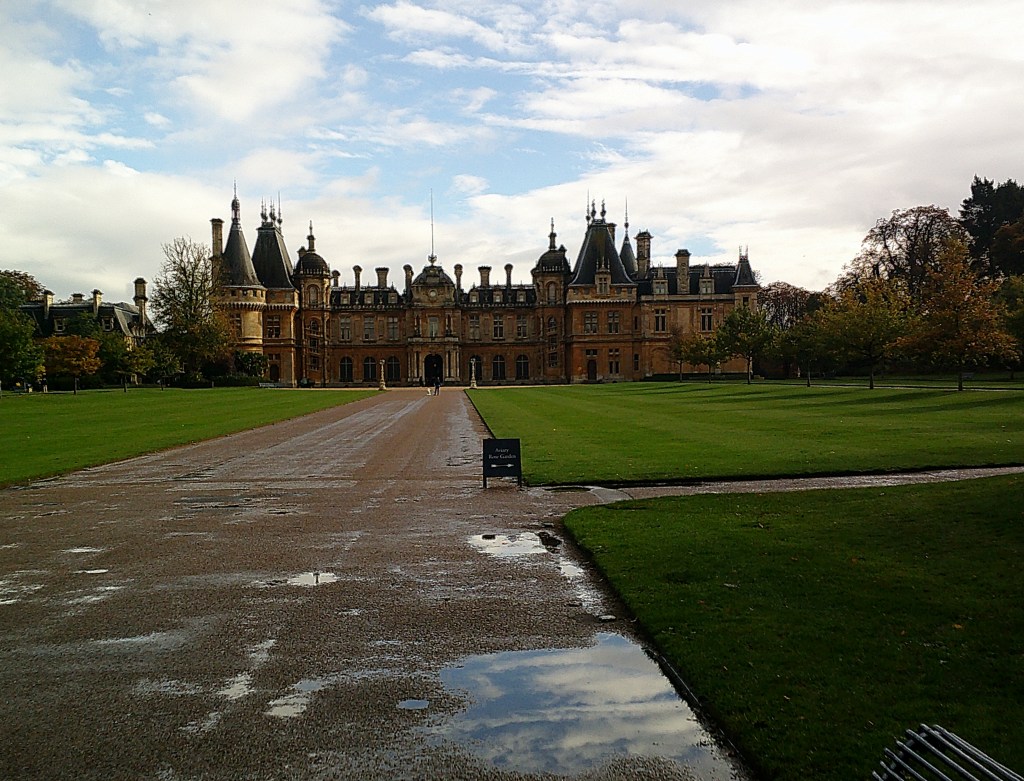
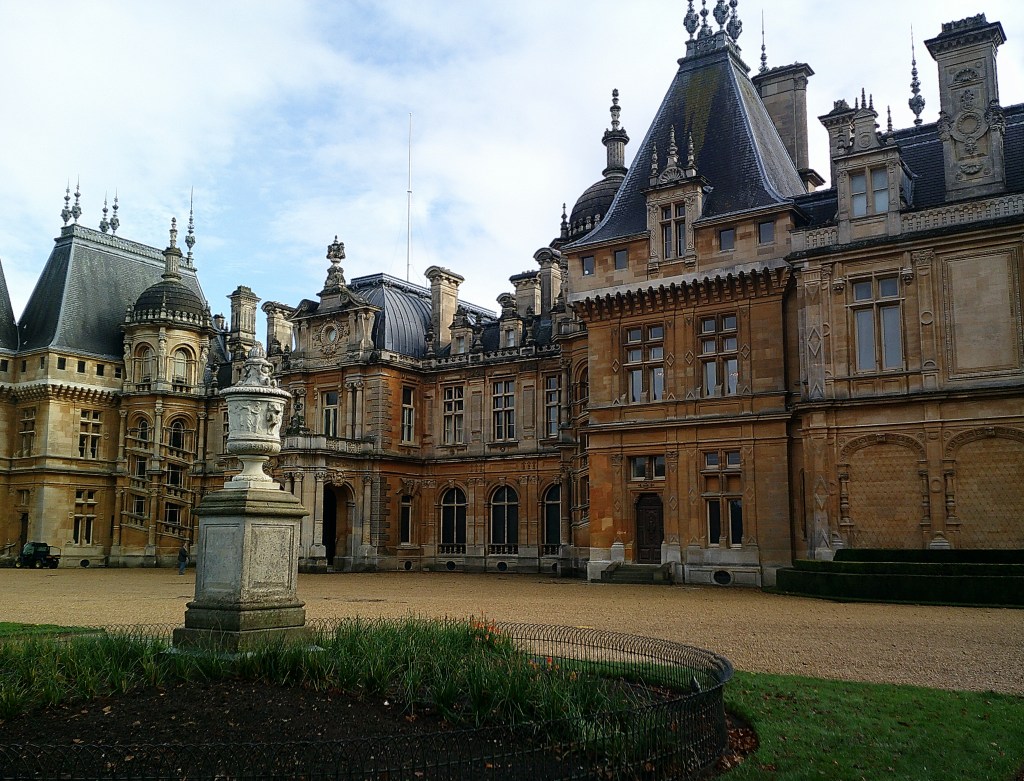
Just before Christmas we visited Waddesdon Manor, near Oxford. It is an amazing place. It is certainly a French Chateau in the English Countryside.
It was pouring with rain when we arrived, and we had a long walk from the carpark up to the house. The path wound its way through silhouettes of soldiers, sailors and airmen to mark remembrance day.
$CoMmEnt
The house belonged to the Rothschild Family and was donated to the National Trust in 1957, and it is run by them and the Rothschild Foundation.
Built between 1874 and 1889 by Baron Ferdinand de Rothschild as a weekend home for entertaining, it contains many treasures. Baron Ferdinand bought the estate from the Duke of Marlborough, but it had no house, park or garden, being an agricultural estate.
Baron Ferdinand wanted to build a house similar to the chateaux in France. I think he succeeded.
$CoMmEnt
On Baron Ferdinand’s death, the estate passed to his sister, Alice, who continued to add to the treasures to be found there.
$CoMmEnt
You can see from these pictures I took, that the rain did stop and the sun came out!
Sadly, the pictures I took inside are not good. Many are blurred for some reason, so I’m not going to post them, but trust me, it’s an amazing place. If you are ever near to it, I suggest you visit.
The Rothschild family was originally from Frankfurt and rose to prominence first in the 18th century. They managed to establish a successful banking business that was continued through Mayer Amschel Rothschild‘s five sons who went on to establish businesses in England, Italy, Germany, Austria and Germany.
On their coat of arms, in two quarters, are fists holding five arrows. This is symbolic of the five sons, we were told at Waddesdon. They, like five arrows fired from a bow, went on to establish their banks in the five different countries, mentioned above.
In the village of Waddesdon is an inn called The Five Arrows. We stayed there and found it excellent, with wonderful food. I would recommend it to anyone.
Do feel free to share this post, or any others. Just refer back to this website if you do.
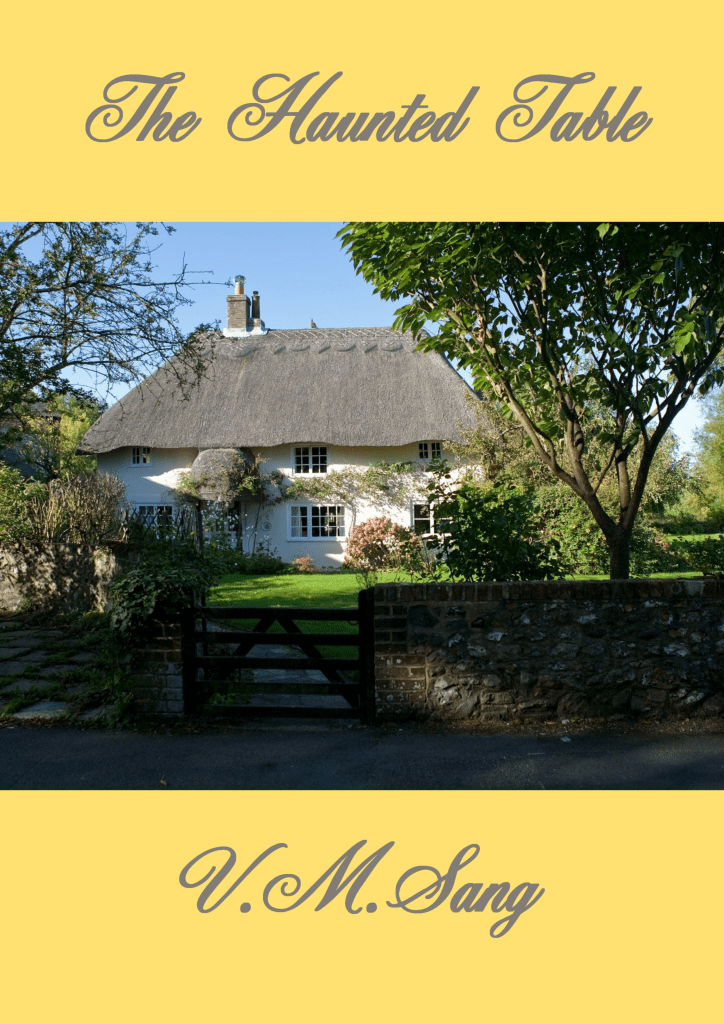
If you would like to receive an exclusive, free short story by me, called The Haunted Table, simply click the link. This will take you to the page where you can download it.
Maria and Tom have bought an antique table for the old cottage they have bought. When they hear strange noises in the night that sound like crying, they worry their house is haunted, but the sounds seem to come from the table.
They set about trying to find what is causing the disturbances. The answer is stranger than either of them had thought.
(Clicking the link will add your email address to my email list, but don’t worry, you can unsubscribe immediately if you wish.Nor will you get any spam. I only send out an email each quarter, or if I have any exciting news–like a new release.)