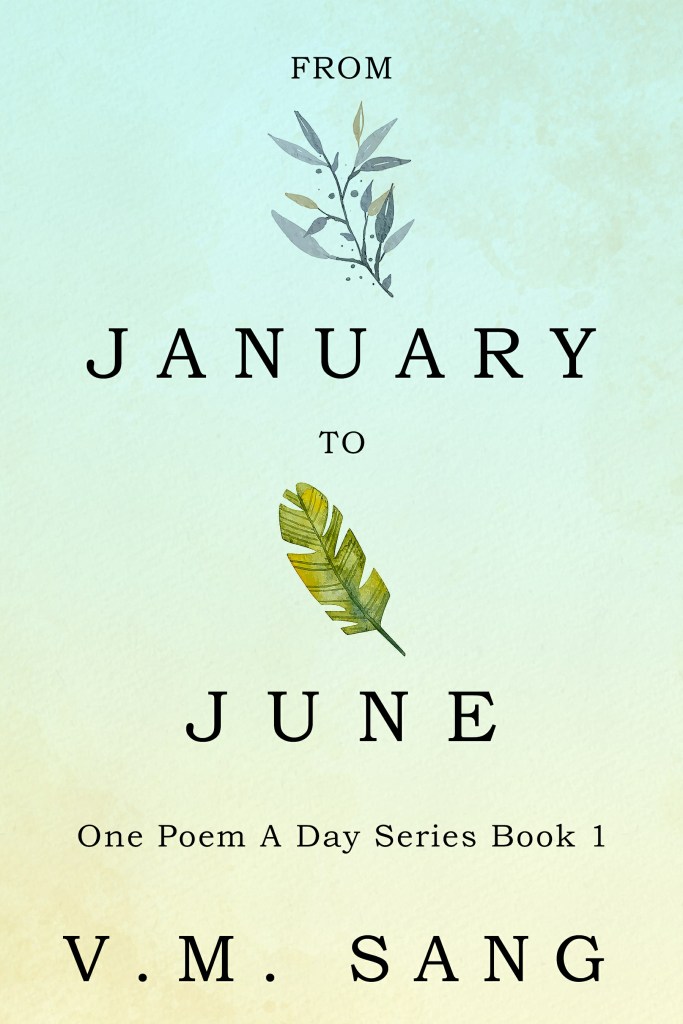
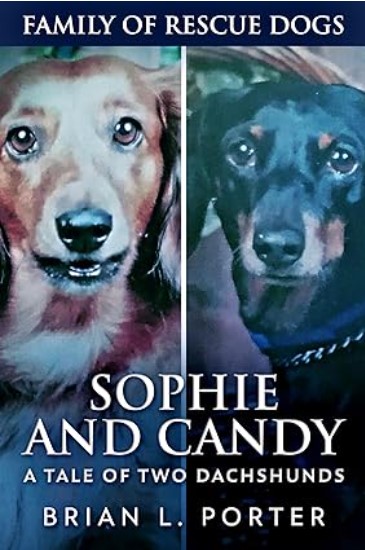
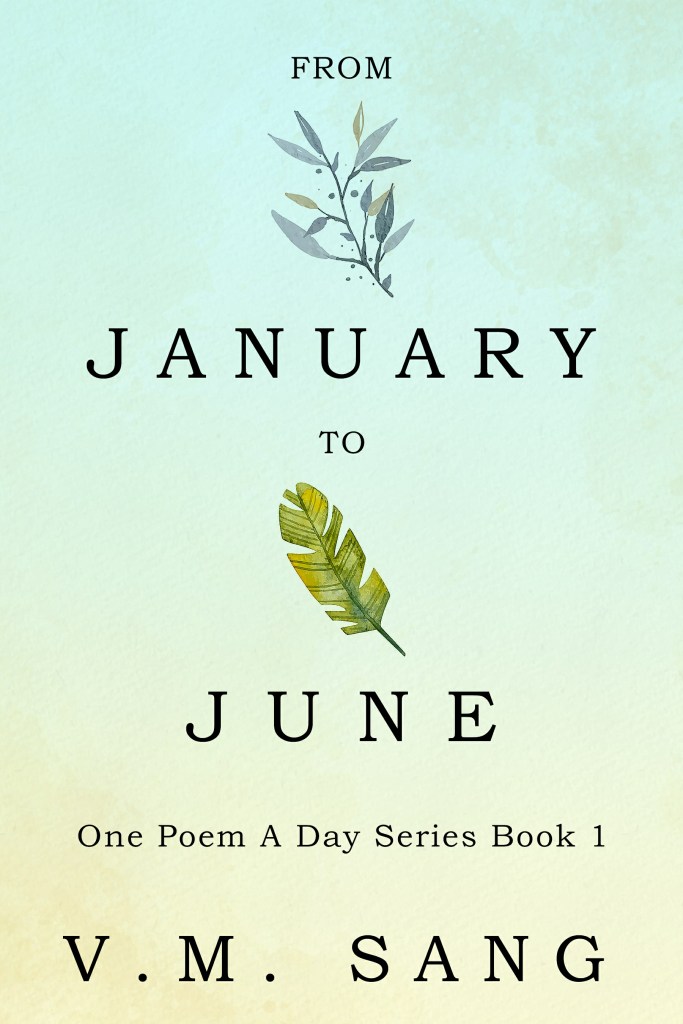
I’ve had the suggested cover back from the publisher and have accepted it. I like it. What do you think?
Should be out in time for Christmas, so if you are stuck for Christmas presents, here’s an idea. Details of where and how to buy coming when I know them.
In the meantime, if you would like a short story to read, completely free and exclusive, click on the button below.
Maria and Tom have bought an antique table for the old cottage they have bought. When they hear strange noises in the night that sound like crying, they worry their house is haunted, but the sounds seem to come from the table.
They set about trying to find what is causing the disturbances. The answer is stranger than either of them had thought.
(Clicking the link will add your email address to my email list, but don’t worry, you can unsubscribe immediately if you wish.Nor will you get any spam. I only send out an email each quarter, or if I have any exciting news–like a new release.)
This book is billed as a YA book. Much of the story is an ideal YA book, but I think that Mr Waybe puts a little too much philosophy in for that age group. I could see many, if not most young people skipping those bits, although I, personally, found them interesting.
Story
A young man, by the name of Jon Dough, who is starting out on his career wonders how his life will turn out. He does not relish the usual 9-5 dreary office job, marriage, kids, divorce etc so he goes to enlist in the army. There he meets a man called Atraya. (If you’ve read Mr Wayne’s Echo books you’ll recognise him.) Atraya gets him to sign a very vague contract.Jon begins to see ‘visions’ of another world in every door and window. This world could easily be straight out of a Dungeons and Dragons scenario. Eventually, Jon, wandering in a forest, sees a door appear in a tree. He enters and finds himself in the world of Evermoor.Knowing nothing about this world he is lucky to meet someone who will help him, and is dragged into the problems facing the land of Evermoor.
This is a fairly standard Fantasy story–young person finds themselves in another world where there is someone who is ruling with cruelty and s/he has to help overcome the situation and defeat the tyrant. However, this is done well, and it does not seem like a cliche.
Characters
The character of Jon is like a typical young man in his late teens. He is well-drawn and likeable. He does not really know who he is, but he does know that he doesn’t want to live the life he foresees.
Mr Wayne does a good job of making him naive and a little clueless, but I did think he learnt to use weapons rather easily.
Erany is a half elf princess. She is Jon’s love interest. He is a little clumsy around her because of his attraction. She is confident and knows her way around this strange new world. I found myself growing to like her more as I continued to read.
The other players all have different characters and skills. I found myself liking them in spite of some negative characteristics. But that is what makes them real. They don’t all get on well.
Writing
The difference between the two worlds is vividly drawn. The action scenes are exciting, and there is one surprise that I enjoyed, but I won’t say what it is except that it is to do with the identity of one character.
Grammar and punctuation are good.
I give it 4*.
My ranking of books.
In order to get a particular number of stars, it is not necessary to meet all the criteria. This is a guide only.
5* Exceptional. Wonderful story. Setting well drawn, and characters believable–not perfect, but with flaws. Will keep you up all night. No typos or grammatical errors.
4* A thoroughly enjoyable read. Great and original story. Believable setting and characters. Very few grammatical errors or typos.
3* I enjoyed it. Good story. Characters need some development. Some typos or grammatical errors.
2* Not for me. Story not very strong. Unbelievable and flat characters. Setting not clearly defined. Many typos or grammatical errors.
1* I hated it. Story almost non-existent. Setting poor. Possibly couldn’t finish it.
I recently read this post from Kristen Lamb about leaving book reviews. Please read it fully. It is very important to authors.
If you are a reader, no matter HOW you read a book, try to leave a review of some sort. It doesn’t matter if you checked it out from a library, borrowed from a friend, or “stole” it from the Urgent Care waiting room while they held you hostage.
Go to Amazon, ideally. Whether anyone likes it or not that is where most REGULAR PEOPLE look for books/book reviews and try to leave a review.
Yes, feel free to leave a book review at Goodreads. But I will say that, as I have mentioned far too many times before, regular people (*code for readers) have no idea what Goodreads even is. AVID readers do. Readers who are also writers or who aspire to be authors do.
I’ve had one of those weeks. As I’ve not had time to write a new post, an as it’s Armistice day on Saturday, I’m reposting one I wrote for the100th anniversary of the end of WW1.
Tonight is Halloween. This is an ancient festival that we have adapted to our own times. This poem harks back to those times when people really believed that the spirits of the dead could return to Earth, including demons and other malevolent creatures.
Hallowe’en
The moon has hidden her face tonight Turned away from the Earth. The clouds are scurrying away in fright From what the night may give birth, For tonight the veil is thin.
The wind is blowing the leaves around. They hide in crannies and nooks. Cowering, shivering, hope not to be found By phantoms, ghosts and spooks, For tonight the veil may tear.
Build a bonfire, create some light. The spirits are afraid. They like the shadows, shun what’s bright And lurk within the shade For tonight they cross the veil.
Ghouls and spectres, wraiths and shades Return to Earth tonight. We’re filled with dread as daylight fades. The smallest sound will give us fright For tonight the veil has gone.
This poem appears in my poetry book, Miscellaneous Thoughts. It is available in your favourite store, as ebook, or ‘real’ book.
There are more Halloween poems there as well as others from the various seasons, the countries of the UK, limericks, Haiku and many other things.
Most of my poetry is rhyming poems, so if you enjoy that kind of poetry, you will probably enjoy my poems.
Get your copy by clicking on the image of the book in the sidebar or the button below.
I ‘ve started writing book 3 in my series, A Family Through the Ages. Book 1 was set in Roman Britain, Book 2 in Viking Britain, and now Book 3 begins with the Battle of Hastings in 1066, probably the most remembered date in British history. Not for nothing, as it changed this country vastly.
Anyway, to whet your appetites, here’s the first chapter. It contains some violence, as it deals with the Battle itself.
Please remember that this is a very early draft, so there might be mistakes.
Anger of an Anglo Saxon
CHAPTER 1
Durston stood with his shield locked with the ones on either side. A helmet covered his ash blond hair, and a breastplate made of hardened leather covered his torso.
He turned to the man on his left. “We’re in a better position. We should win this fight easily.”
Looking down the slope, he could see the Norman army gathering. There were many archers behind their infantry. He swallowed hard. The Anglo Saxon army did not have nearly as many. His legs felt weak and his hands shook. What if he were killed here? His son, just fourteen, would be the new theign. The lad did not have the experience to deal with the work.
Pull yourself together. Leola will help him. She’s competent. He smiled as he thought of his wife.
Taking a deep breath, he focused on the enemy.
His neighbour turned to him and grinned. “They won’t be able to use yonder horses against us. Shouldn’t be hard, this one. We’ve got the high ground. If we can kill that William the Bastard, they’ll run back to Normandy like rabbits before a fox. Should have this done by noon.”
The Anglo Saxon army had hurried south from defeating an attempted invasion by the Norse king and King Harold’s brother, Tostig, at Stamford Bridge. They were celebrating when the news of the invasion from Normandy came.
King Harold immediately demanded a forced march to the south coast to repel this new threat to his kingdom. On the way, they gathered more men, all willing to fight to protect their country from foreigners.
As Durston watched, a single person came out from the enemy lines.
The man sang as he brandished a sword. Durston could not understand the words, as they were French, but he understood the tone. The man sang insults and threats, underpinned by his sword waving.
As soon as his song ended, he ran towards their line. Durston’s eyes opened wide and he shook his head. The shield wall opened, a little to his left, and the singer was quickly cut down.
Then the battle began.
The twang of bowstrings filled the air, followed by the wizz of arrows. The men in the shield wall raised their shields as arrows fell like raindrops. The Anglo Saxon archers replied with volleys of their own, although they were fewer in number than the Norman archers.
Men shouted war cries, those who were hit screamed, arrows clanked on raised shields.
The two shield walls collided with a bang.
Men on both sides pushed as hard as they could, at the same time trying to spear those opposite.
The air was filled with the scentl of blood. Durston gasped as an enemy spear found a way through a small gap and cut his left arm.
He thrust back and was gratified to hear a scream of pain. “That’ll teach you to try to invade my country.”
The October sun rose in the sky as the fighting continued. Durston swallowed. It was thirsty work, this fighting. He glanced at the sky. Nearly noon. As he continued to thrust against the enemy shield wall he felt a tap on his shoulder. He dare not look round.
A voice. “Go get something to drink.”
He slipped his shield from its lock with those on either side and the man relieving him quickly took his place.
Durston staggered to the rear of the shield wall. He spotted a fallen tree trunk and sank onto it, leaned forward and put his head in his hands. He shivered uncontrollably. The hours in the shield wall took their toll.
“Here’s some ale.”
He glanced up to see a young man about thirteen years old, holding a flagon.
Reaching out, he swallowed it in one gulp. “Thank you.”
Someone handed him a chunk of bread and a slice of meat. He stuffed it into his mouth and stood. His legs gave way and he found himself sitting on the floor. Leaning against the log he had been sitting on, Durston closed his eyes. The fear came creeping back. He looked at the cut on his arm.
I hope that doesn’t turn bad.
He felt his eyes closing. In spite of the noise from the battle, he was drifting to sleep. Shaking his head, and ignoring his shaking legs, he pulled himself to his feet and staggered back to the shield wall. He relieved another man and locked his shield in place with the ones on either side.
Once back in the battle, the fear slipped away. Anger swept over him in its place. How dare these foreigners come to take over his country? His legs stopped trembling and his eyes opened wide. Showing his teeth, he grimaced.
The man in the enemy shield wall was also showing his teeth. He shouted a cry, but Durston did not know what it meant.
“For King Harold,” he shouted in reply.
Someone to his left cried out, “They’re running!”
Durston glanced and saw that the Norman shield wall had broken, and men were running down the hill. Someone shouted to keep the formation, but many of the Saxon defenders took off after the fleeing Normans.
Then Durston could see no more as he concentrated on his own battle.
The afternoon slowly passed. Men were relieved on the battlefield on both sides, but after they had shot most of their arrows, the Normans concentrated on the shield wall. They found it impossible to collect their spent arrows from beneath the feet of the two opposing armies.
Again, the Normans retreated. This time Dutston was aware that after running, and being chased, they turned on the Anglo Saxons chasing them and a hand-to-hand battle began. The Normans in front of Durston did the same. As they ran, Durston was unable to prevent his men from chasing.
“The cowards are running,” someone shouted.
“No, it’s a trick.” Durston tried to call his men back.
As he expected, the Normans turned on the chasing men. With the shield wall dismantled, the Norman cavalry charged. Durston threw his spear at one man bearing down on him. The spear hit his horse in the leg. The animal screamed and went down, throwing its rider.
Durston drew his seax. As the man regained his feet, Durston slashed at his face. Blood flowed as a long cut appeared from his ear to his chin. He screamed.
The downed rider staggered, giving Durston the chance to get in another slash. This one, however, only hit the man’s hauberk, but it did damage the chain mail that made it.
The man let out a grunt as the air was forced out of his lungs. He raised his sword, and Durston only just managed to dodge the downward slash as it narrowly missed cleaving his skull.
Another slash from Dursto’s seax caught the attacker’s leg. He went down, blood pouring from the wound. He screamed something Durston did not understand, but thought it was probably a curse. Before the man finished his curse, however, Durston’s seax slashed across his throat. His curse was never finished.
Durston took a breath. For the moment no enemy approached. He glanced to his right. There, a young man, one of his followers, was beset by two Normans.
He raised his seax, and shouted, “For King Harold.” He rushed at one of the men. This distracted him and he turned, allowing Durston to slash at his stomach. It opened, and the enemy soldier clutched his belly and fell, his guts spilling out and tangling around his feet.
Durston saw the young man dispatch his adversary before turning to look for another man to fight. He saw a man with a mace approaching. He raised his seax, but the enemy lifted his shield and blocked the cut.
The two skirted around each other, getting in the occasional hit on a shield, but neither getting the better of the fight. Durston’s legs began to shake, and it was more difficult to raise his shield or slash with his seax.
He looked at his opponent who was breathing heavily.
He’s exhausted, too.
At that moment, the Norman raised his mace and brought it down on Durston’s head.
***
Durston opened his eyes.
It was dark. His head hurt. He raised his hand to his head and felt something sticky.
Blood.
His helmet had gone. When did that happen? He placed his hands on the floor and raised himself to his elbows.
His head pounded.
Rolling onto his front, he struggled to his hands and knees. He closed his eyes briefly. It made no difference to the dark.
He raised himself to his knees and looked around. He could see very little. The darkness was like a blanket wrapping around him, determined he would not see anything.
Durston sat back on his heels, listening. Rustling sounded to his right. Something brushed against him. He swung his hand and made contact with a furry body. It squeaked as he bashed it away.
Rat. Nasty things.
Millions upon millions of stars covered the sky. Durston tried to decide the time by their positions. The sun had been still up when he was fighting. Someone must have hit him on the head. How long had he been unconscious? He estimated it was not yet midnight.
He managed to struggle to his feet. Dizziness threatened to overwhelm him, but he fought against it.
It was then he heard the singing. Must be our men singing their victory songs.
Staggering, he headed in the direction of the sounds. He passed hundreds of bodies, both Norman and Anglo Saxon. Horses, too. He felt sorry for the animals. They had not asked to come to fight. They knew nothing of the politics that caused this battle.
A shadow stood over a body. As Durston approached, it raised its head from its grizzly meal. Teeth bared, the wolf snarled. Blood dripped from its muzzle.
Durston backed away. “I’m not going to take your meal, revolting as I think it is.”
The wolf returned to eating the body of one of the fallen, whether Norman or Anglo Saxon, Durston could not tell.
Wolves, rats and foxes tonight. It’ll be crows, ravens and kites in the morning.
As he neared the camp where he heard the singers, Durston stopped. He crouched. He listened carefully. He recognised neither the songs, nor the words. Someone spoke.
Not Anglo Saxon.
The bastard Guillaume won the battle. How? We had the better position. And they ran away.
It came to him slowly. With his head pounding and his dizziness, his thoughts were sluggish, as though they had to wade through mud to get into his consciousness.
It was a trick. They feigned flight, then turned on us. They couldn’t beat us in the shield wall, so they broke it up by pretending to run.
Durston tried to raise himself from his crouch. He staggered and fell to all fours.
Blast. Did they hear that?
Someone shouted and Durston scrambled away, still on hands and knees. Then the shout stopped. Normal conversation resumed.
Must have decided I was a wolf.
When he was close to some trees, Durston stood. He leaned against a tree to get his bearings. Where was their camp? Had anyone returned to it? Would the Normans have found it and ransacked it?
He lurched in the direction of where the Anglo Saxon camp had been. When he arrived no one was there. Not even a horse. He felt the tears welling in his eyes. Dizziness threatened to overcome him.
No one? Was no one left alive?
A sound came from behind him. He swung round making the world spin. He drew his seax.
“Careful. You are in no condition to wield that safely.” The voice came from a stand of trees. A man stepped out. He smiled at Durston. “It’s good to see you, Lord Durston. I was afraid you had been killed.”
Durston frowned, staring at the man. “Do I know you?”
“No. Probably not, My Lord. I wasn’t one of your followers. I hold a farm not far from Alricking. When news came that Duke William had invaded, and King Harold’s army passed, I decided to join. To defend my country.”
Durston sank to the ground. “We lost.”
The man shook his head. “Yes, My Lord. We lost the battle.” He approached Durston and held out a hand. “The survivors are assembling a little distance away. Let me help you.”
“I suppose King Harold is organising an attack on the Normans’ army.”
The young man’s face fell. “King Harold is dead, My Lord. He fell in the battle.”
Durston groaned. “Who is in charge, now?”
“Lords Edwin and Morcar.”
Durston allowed the young man to help him to his feet and, with Durston leaning heavily on his arm, they proceeded through the trees.
I wish this headache would go. I can’t think clearly.
After what seemed to Dunston to be hours, they broke into a clearing. He glanced around and noticed many men. Some lay on the ground, moaning, some sat on the ground or leaned against tree trunks and others moved around the wounded, administering bandages.
“You found another survivor. Good. Now return and wait to see if any more turn up. When day breaks, come back here.” The man turned to Durston. “I’m Earl Morcar. You are?”
“Theign Durston, My Lord. Of Alricking.” He swayed on his feet.
“You are injured.” Earl Morcar called to a young man who was passing. “Help Theign Durston to the healers.”
The young man took hold of Durston’s arm. He guided him toward where healers worked on those injured. The scent of blood permeated the air along with the groans of men.
A woman covered in blood hurried over to them. “Another injured man?”
Durston glanced around. Cuts, stabs, bruises covered most of the men. One was missing an arm, and he saw two men with missing eyes.
The healer took his arm from the young man who escorted him. “I see you’ve a head injury. We’ll get it cleaned up in no time.” She paused as Durston staggered. “Do you have a headache?”
Durston nodded, then regretted it as his head pounded. “Yes, it’s the worst headache I’ve ever had.”
“Did you get a blow to the head?” The woman lowered Dunston to a seat on a log.
“I don’t know. I can’t remember much. I helped one of my followers who was beset by two men. Then a man with a mace approached me. The next thing I knew, I woke up in the dark. Beasts were devouring the dead. At least, I hope they were dead!”
The healer cleaned the wound on his head, which bled profusely, and told Dunston to lie down anywhere he could find a space. “I’ll bring you some willow bark tea if we’ve any left. Should help with your headache. You must rest,” She scurried away.
We can’t let these Normans win. I need to go back and fight them again. Is Earl Morcar organising a new attack?
He tried to stand, but his legs gave way as the clearing span around him. He decided he should take the healer’s advice and he lay in the space between the log he had been sitting on and an oak tree. Soon he was asleep.
Morgan works for ARCANE, an organisation that is more than it seems. She is sent to the British Museum to investigate the staff of Skara Brae. It is a small staff believed to be able to summon Ragnarok, the Viking Apocalypse.
While in the museum, a group of neo-Vikings arrives with a group being shown the Viking collection. When the staff is not there, their leader, an ancient woman, apparently summons the bones of the dead to rise up. The group then takes the visitors as hostages before escaping via a helicopter.
This leads Morgan, following the neo-Vikings, to the Isle of Iona where she finally finds the answers she seeks.
I don’t want to go into further details as I don’t want to spoil the story for you.
Blurb
She has been called many things: murderer, madwoman, monster. She will become only one thing: a god.
The Crone. A woman of legend, a creature of blood. A Valkyrie. She has tortured, murdered, maimed — performing all the rituals needed to call forth the power of Odin himself and summon Ragnarok. She just needs one more thing: the staff of Skara Brae, and her plans will be fulfilled.
But the staff is already in the hands of Morgan Sierra. An agent of ARKANE, the British agency tasked with protecting the world from supernatural crises, Morgan knows that giving up the staff could spell the end of all things.
Now the Crone has taken dozens of staff members, visitors — even children — hostage at the British Museum, demanding that Morgan turn over the staff. Willing to kill, possessor of powers beyond anything ARKANE has yet encountered, the Crone seems unstoppable.
Morgan’s only advantages are her wit, her skill… and Blake Daniel (of the best-selling Brooke and Daniel crime thriller series). Cursed with clairvoyance, Blake’s powers may be just enough to help Morgan turn back the Crone and stop the end of the world.
But the Crone has her own secrets. Able to weave illusions, to wield fear, even to call forth the dead Vikings of old. She is the most powerful adversary Morgan has ever faced. But will she be the last?
The Crone beckons. Ragnarok looms. And it is up to Morgan and Blake to deny them both.
Day of the Vikings is the fifth thrilling story in the bestselling ARKANE series by New York Times and USA Today bestselling author J.F. Penn, with an epic crossover to the Brooke and Daniel stories. Tap the link, get your copy, and discover why so many readers love the ARKANE.
Characters.
The main character, Morgan, is fully relatable. She is enthusiastic about her work.
I liked the character of Blake, who is clairvoyant, and can ‘read’ objects. He is a great help to Morgan in finding more about the staff. I discovered he appears in another series by Ms Penn, and so I am going to read those books, too.
Writing.
An excellently written book. Although short, I don’t think that was a problem. In fact, it might even be an advantage as you don’t need to put it down, but can finish it on one session.
The story grips you throughout and thanks to the excellent scene setting, you can see the surroundings and action.
There were no typos or other errors that I noticed.
I give this novella 5*.
Have you read this book, or any of J.F Penn’s other work? While I have read much writing help by Ms Penn, this is the first book of her’s I’ve read, but I will certainly be giving others priority to read. Let us know in the comments.
If you would like to receive an exclusive, free short story by me, called The Haunted Table, simply click the link. This will take you to the page where you can download it.
Maria and Tom have bought an antique table for the old cottage they have bought. When they hear strange noises in the night that sound like crying, they worry their house is haunted, but the sounds seem to come from the table.
They set about trying to find what is causing the disturbances. The answer is stranger than either of them had thought.
(Clicking the link will add your email address to my email list, but don’t worry, you can unsubscribe immediately if you wish.Nor will you get any spam. I only send out an email each quarter, or if I have any exciting news–like a new release.)
In July, I went with my husband son and partner to the Lake District for a week. I promised some pictures, so here they are at last.
We were very lucky with the weather. the Lake District is notorious for being wet. Not really surprising. Where else do all those lakes come from?
From the car park near Stickle TarnOn the way up to Stickle Tarn
A tarn is a small lake high in the mountains.
Cockermouth
This little town sprang to fame some years ago when a flood swept away the bridge over the river Derwent.
The statue is of the 6th Earl of Mayo, who was MP for Cockermouth from 1857 to 1867.
Lake Windermere from Fell Foot.
Windermere is the largest lake in the Lake District.
Fell Foot is the grounds of what used to be a Victorian mansion. This is an arch built like a castle which, I think, let to the boat house.
There are facilities for walking, swimming, paddle boarding, kayaking and other water sports.
Windermere from Fell Foot
It was a bit of a grey day, but you can still make out the mountains at the north
The River Leven just after it leaves Windermere. As you can see, it started to rain.
$CoMmEnt
The view over Derwent Water and Keswick from Cat Bells.
$CoMmEnt
This is looking across the river estuary to Millom. As you can see it was a very wet day. We got soaked. It was a Nature Reserve, but even Nature didn’t venture out.
The Lake District is one of England’s most beautiful parts. If you get the chance, you should visit.
Have you been? Let us know in the comments.
If you would like to receive an exclusive, free short story by me, called The Haunted Table, simply click the link. This will take you to the page where you can download it.
Maria and Tom have bought an antique table for the old cottage they have bought. When they hear strange noises in the night that sound like crying, they worry their house is haunted, but the sounds seem to come from the table.
They set about trying to find what is causing the disturbances. The answer is stranger than either of them had thought.
(Clicking the link will add your email address to my email list, but don’t worry, you can unsubscribe immediately if you wish.Nor will you get any spam. I only send out an email each quarter, or if I have any exciting news–like a new release.)
I recently read a post about recycling and it made me think about past years. After WW2, there were shortages of many things, and ‘make do and mend’ became the norm. But even before that, much was reused. I read that Jane Austen bought ribbons and lace to bring her old dresses up to the latest fashion.
But this post is entitled ‘Memories’ and I think I should stick to what I remember.
Recycling, or repurposing, isn’t a new thing. It’s been going on as long as humans have existed. In fact, it’s our own age that has changed. We now live in an era of throw away. In the 40s, 50s and 60s things were not thrown away after a brief use.
Thinking back to the times I remember, my grandmother used to darn socks. If a sock had a hole, she wouldn’t throw it away, but get out her ‘darning mushroom’ and wool, and mend the hole in the sock.
Food wasn’t thrown away unless it was bad. It was either reused for a different meal, maybe along with other leftovers, or, if it were something that had bones, the bones were used to make stock. The stock was then used in soups, casseroles and for gravy. (Incidentally, gravy wasn’t made from a packet, but from the juices of the meat, thickened with some flour. It’s much nicer than packet stuff.)
50 years ago, if you had something that your child had grown out of, you passed it on to a friend or family who had a child a bit younger. It was then often passed on again. Children’s clothes could be made from adults’ clothes that were a bit worn in places.
People took shoes to the cobbler to get them mended when they started to wear out.
Milkmen brought milk to the door in pint bottles. These bottles were made of glass and people washed them and put them out for the milkman to reuse. Similarly, bottles containing pop were made of glass. When you took them back to the shop, you got a small amount of money. I can’t remember how much, but it was probably something in the region of a penny. Children used to go round and collect them in order to get the money. A good way to supplement their pocket money.
Newspapers, I remember, were cut into squares, hung on a string and used as toilet paper. This wasn’t as awful as it sounds, as the toilet paper of the time was hard and very scratchy. The newspaper was probably softer than the toilet paper, which was more like greaseproof paper than our current toilet paper.
Old, worn out knitted garments (probably hand knitted) were often unravelled and knitted into something else. I do remember my grandmother knitting my school cardigans. I was very jealous of those friends and classmates who had shop bought cardigans!
And clothes were mended or patched. Sleeves of men’s jackets often had leather patches on them where the elbows had worn, but the rest of the jacket was in good condition. Trouser knees were often patched, too.
When I was first married, I had some bedroom furniture that an aunt was getting rid of as she had bought a new bedroom suite. In fact, I had the dressing table until this year when I gave it to a charity that sells old furniture. It was from the 1920s and was solid oak, so was an antique. Nowadays, the young newlyweds all want something new.
Do you have any memories of recycling? Let us know in the comments below.
If you would like to receive an exclusive, free short story by me, called The Haunted Table, simply click the link. This will take you to the page where you can download it.
Maria and Tom have bought an antique table for the old cottage they have bought. When they hear strange noises in the night that sound like crying, they worry their house is haunted, but the sounds seem to come from the table.
They set about trying to find what is causing the disturbances. The answer is stranger than either of them had thought.
(Clicking the link will add your email address to my email list, but don’t worry, you can unsubscribe immediately if you wish.Nor will you get any spam. I only send out an email each quarter, or if I have any exciting news–like a new release.)
I received a free copy of this novel in exchange for an honest review.
In all honesty, I wish I’d read Book 1, Constellation, before reading this, as it’s the second book in the trilogy. Having said that, it is possible to read this without reading book 1 because Mr Scanlon skillfully fills in the gaps during the story without making it seem like an infodump.
The story is told in first person present tense. Not my favourite tense to read, but I got used to it as the story progressed. It seems to be the current fashion.
Story.
India Jackson is, for want of a better word, a Space Pirate. She is recruited to find out what Oberon, the leader of a different sector, is planning in order to capture Constellation, a ship that India secured for her sector. (Book 1)
A Space Station is destroyed, and India is accused of the deed. She flees with her crew to unsavoury parts of the galaxy in order to find out more, but with a price on her head, and possible traitors, it’s difficult for her.
I cannot say more without spoilers.
Blurb
Indy Jackson has had enough of war politics. After beating rival space fleets into submission and reclaiming a fabled battlecruiser, she refuses to kowtow to the derisive attacks from the military. But when an anonymous terror attack destroys a key space station command, she’s thrust into a power play that could be terminal.
She brought parts of the galaxy to their knees. Now one mouthy space pirate has become prey…
Forced on the run and accused of the horror assault that claimed thousands of lives, Indy ventures into lawless territory to find answers. But instead of gathering support, her reputation threatens to send her to the grave.
Can this fish-out-of-water and her ragtag crew save the entire sector from annihilation?
Nebula is the intense second book in the Blood Empire space opera series. If you like driven heroines, interstellar standoffs, and underhand political motives, then you’ll love Robert Scanlon’s intergalactic adventure.
Characters.
The book is told from Indy’s POV as it’s in 1st person, so we know her better than anyone else. She is a complex character, and can be unpredictable. Although she doesn’t mind breaking the law, she does have a strong moral sense and guilt feelings for people who die in her service, or because of her plans.
I think many people will know someone like Indy in their complexity. I certainly felt with her, and liked her.
Other characters are less well developed.
Writing
I have no complaints about the writing.
Mr Scanlon does well in making us feel the dangers and excitement of space. Near the beginning, Indy performs a dangerous manoeuvre while escaping that we can almost feel.
His descriptions of the places visited are clear and we can easily visualise them.
Grammar is good. No typos that I spotted.
If you are a fan of Space Opera, then I suggest you read this book.
I give it 5*
My ranking of books.In order to get a particular number of stars, it is not necessary to meet all the criteria. This is a guide only.
5* Exceptional. Wonderful story. Setting well drawn, and characters believable–not perfect, but with flaws. Will keep you up all night. No typos or grammatical errors.
4* A thoroughly enjoyable read. Great and original story. Believable setting and characters. Very few grammatical errors or typos.
3* I enjoyed it. Good story. Characters need some development. Some typos or grammatical errors.
2* Not for me. Story not very strong. Unbelievable and flat characters. Setting not clearly defined. Many typos or grammatical errors.
1* I hated it. Story almost non-existent. Setting poor. Possibly couldn’t finish it.
Do you enjoy Space Opera stories? Have you read Nebula, or its earlier book, Constellation? What did you think of them?Let us know in the comments.