Chris the Story Reading Ape posted this link on his website. I followed it to acflory’s site where she posted this interesting post about Amazon’s latest shenanigans.
I’ve been buying books from Amazon since the days when the company didn’t make a profit, and the pundits thought that Jeff Bezos was mad. That’s a long time and an awful lot of books. Yet suddenly I can’t be trusted to choose books for myself????
For those who do not yet know, Amazon has a new ‘feature’ whereby an algorithm decides which books you should see when you go to an author’s ‘Author Page’. The ‘feature’ is called Top Picks and:
‘…allows Amazon customers to see personalized recommendations from your catalog of books. Customers will see this on your Author Page and it will suggest books based on these traits:
• New releases and pre-order books matching their interest. • Unread books from a series they started. • The customer’s reading and purchase history.
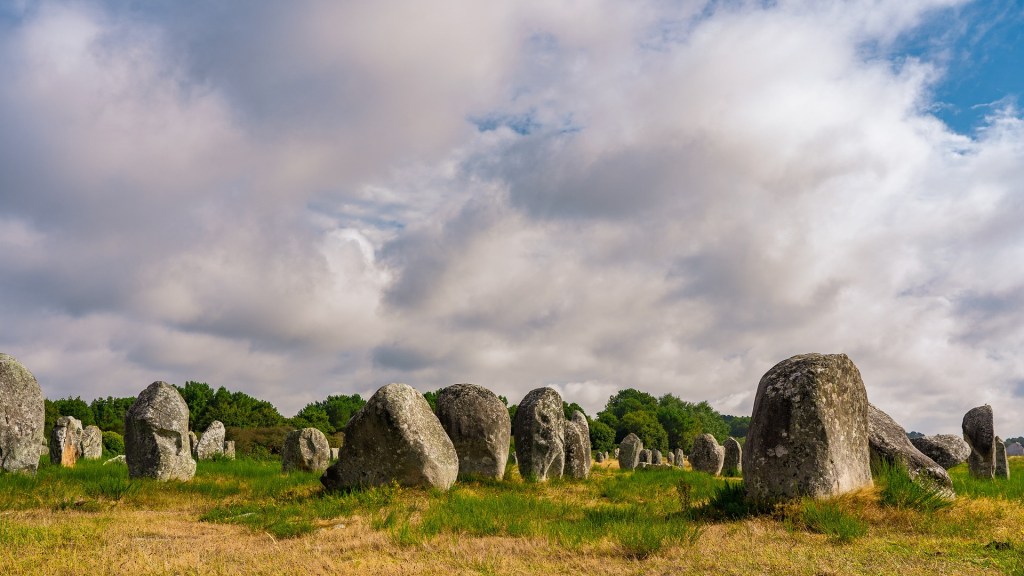
Most people know about Les Alignements near Carnac, in Brittany, France, but how many know about the Site Megalithique near the town of Redon, between Nantes and Vannes?
I don’t know if these are Carnac stones, because the image doesn’t say, but they are very similar.
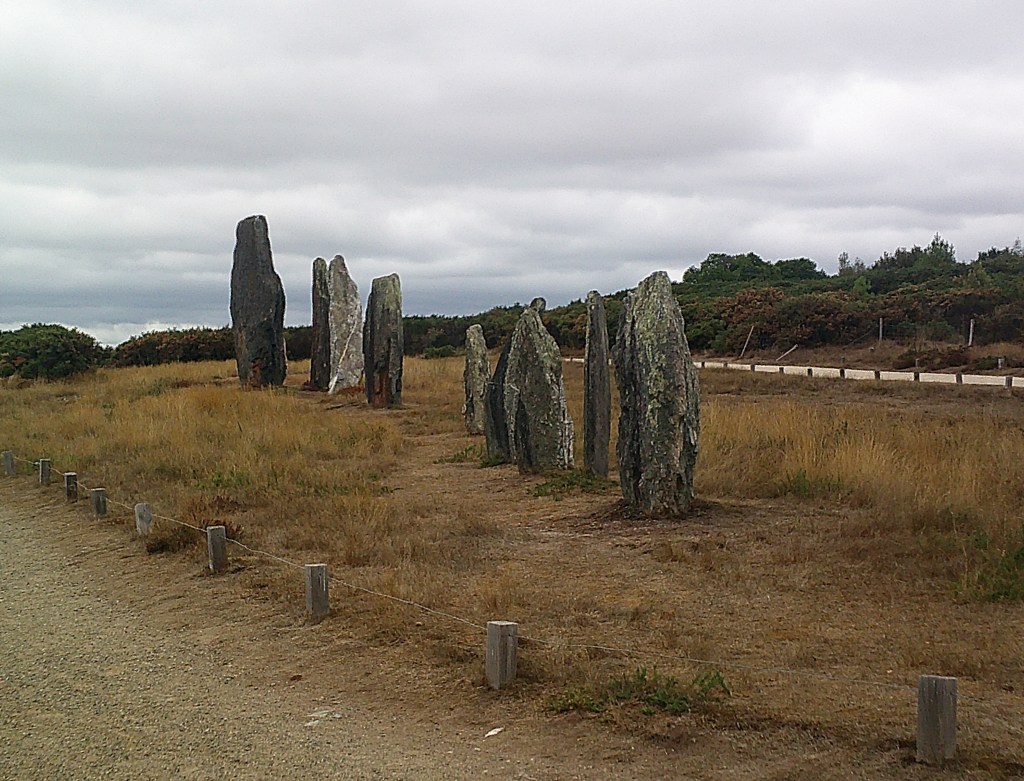
However, near Redon, also in Brittany, there is a large megalithic site that is not anywhere near as well known. Here there are alignments of standing stones, but not in the quantity there are at Carnac.
$CoMmEnt
There are three alignments as I understand. I only took a photo of this one.
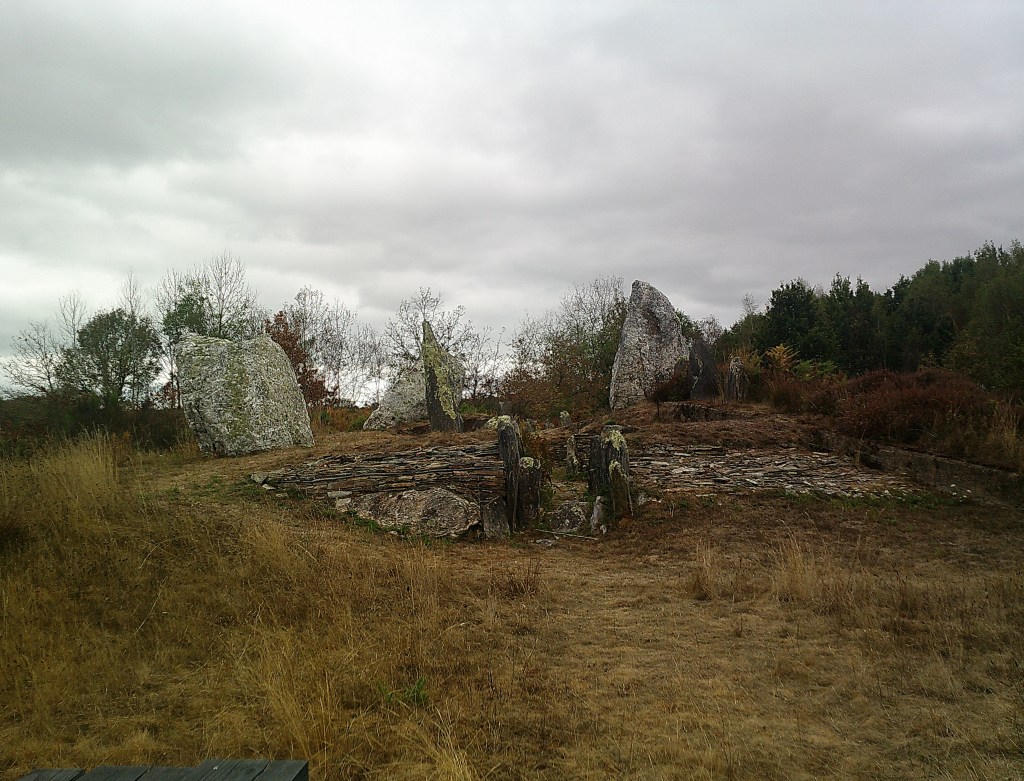
There are not only standing stones here, though. There are megalithic burial sites.
$CoMmEnt
The site is being managed for wildlife as well as the megalithic stones, so there are many bushes around. If you want to find out more about this fascinating site, you can visit http://www.megalithic.co.uk.
I recently read the following post by Charles Yallowitz on his Legends of Windermere website. While I suspect those of you who are not writers probably won’t find it useful, perhaps you will find it interesting. Just one of the many problems we have to sort out.
Very few tropes are as common in fantasy as the destined heroes. This motivation has existed since the days of mythology and continues to be used today. Authors find twists and variations on the concept of destiny and fate, but it tends to boil down to the same thing. The hero is on a path that was chosen for them by a greater power, which brings up the question of if they are in control of any of their actions. Needless to say, readers and authors have railed against the concept. Does that mean it should be shunned and ignored? I’d be a hypocrite if I said yes since the God of Destiny is a major player in my stories. In fact, Legends of Windemere is all about destined heroes . . . Of course, there’s more to it than that, which I will get into after we go over ‘Fate vs Free Will’.
This has been a debate for years if not decades. It shouldn’t be surprising since the concept of destiny has been overused to the point of ultra-cliché. Audiences see the use of destiny or fate or being chosen by a higher power as a cop out by the author. Why does the hero go on this dangerous adventure? Well, they don’t have a choice. More importantly, it goes against our desire for freedom, which is shown through free will. Readers want to connect to the characters and destiny can be a glaring obstacle.
I’m currently away in Southern Spain for a week and so I’m reblogging a poem I wrote some time ago. I hope you enjoy it.
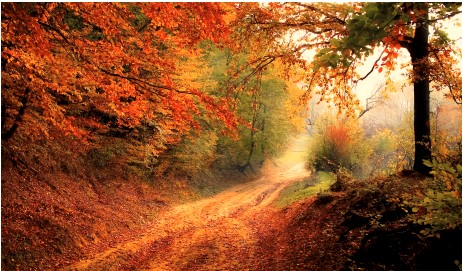
The Downs are wreathed in mist, like smoke From a dying fire. The leaves are turning red and gold Like flames upon a pyre.
Spring’s little lambs are grown to sheep The swallows they have flown. The blossoms that the summer brought Their petals all have thrown.
Now autumn’s bounty fills the woods, The hedgerows are ablaze With hips and haws in colours bright The senses to amaze.
The smoke from wood fires fills the air, The scent of autumn true. The autumn sun is cooler now And mornings filled with dew.
The cobwebs shine with dewdrops bright. The spider in her lair Thinks nothing of the rainbow hue That scatters in the air.
And children kick the fallen leaves As laughingly they run To gather conkers, shiny brown, Gleaming in the sun.
We gather blackberries from the hedge And apples from on high. Up in the tree they ripen now To turn into a pie.
But autumn sometimes has a kick And the rain it lashes down. The wind, it howls within the eaves And through the trees doth moan.
This poem is in the poetry book I submitted to my publisher some time ago. I’m still waiting to hear if and when the book will be published. I’ll let you know when it becomes available.
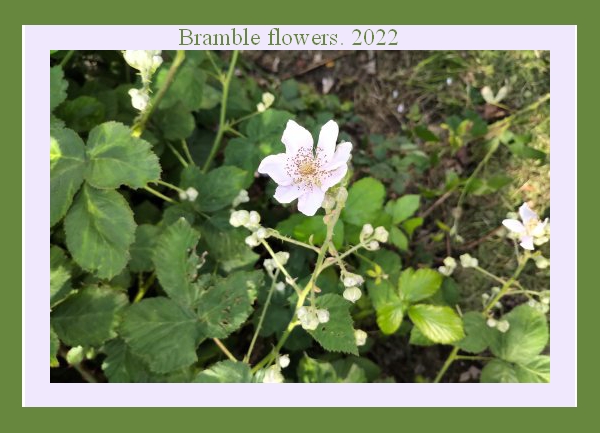
Today I’m going to talk about something that is useful as well as pretty. this flower graces our hedgerows every spring and gives us wonderful free fruit in the summer.
I am, of course, referring to the Bramble.
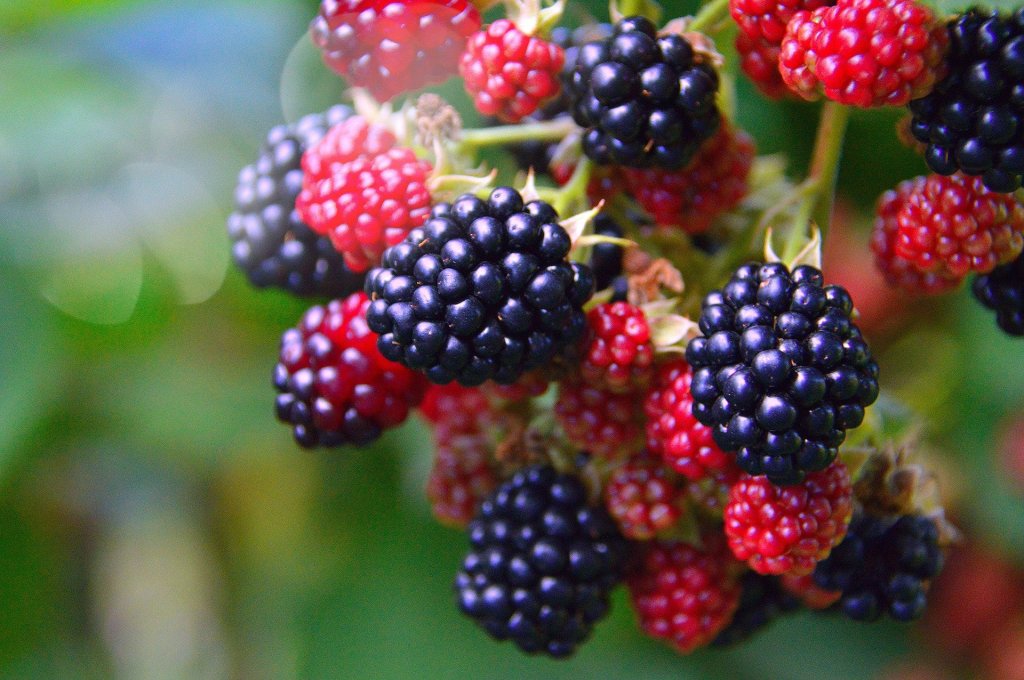
Bramble fruits are known as blackberries because of their black colour. And they are delicious in a pie or crumble, especially when paired with apples.
As you can see, the fruit is red before it turns black, but it is only ripe when black. The red fruits are hard and sour. Each ‘fruit’ is made up of a number of small
Brambles are found in hedgerows and have long, thorny stems. Gathering them can be a somewhat painful experience, but well worth the occasional scratch.
If you wait too long to go out foraging for this delicious fruit, you will find the wildlife has got there before you. Not only humans, but the birds enjoy this fruit as well as a variety of insects.
Brambles belong to the Rosaceae family, which also includes the rose. Five heart-shaped petals and five sepals. The leaves are divided into three or five serrated leaflets. The leaf stalks are also prickly.
They grow almost anywhere, and have long roots which, I can tell you from experience, are almost impossible to get up. In spite of their wonderful fruits, they are a nuisance when they appear in your garden. They can root and produce new plants if the stems touch the ground, thus quickly taking over. This isn’t a problem in the hedges or scrubland, but not welcome in the garden.
Having said that, they are important to wildlife. They are a food source for bees, both honey and bumble. Some caterpillars eat their leaves, and foxes badgers, mice and birds eat the berries. A large clump will also provide a good habitat for wildlife, especially grass snakes (which, incidentally, are harmless).
You can buy cultivated blackberries in the supermarkets, but why would you do that? You can get this fruit absolutely free, and it’s a great afternoon out with the kids.
Just be sure that everyone has long sleeves, and if you have a dog, make sure he doesn’t like them, too. I had a dog that enjoyed them, abd we couldn’t put the bowl of gathered fruit down or he’d eat them.
FUN FACT.
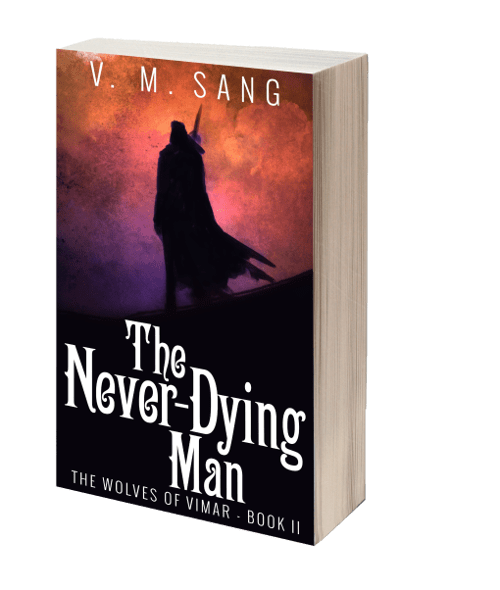
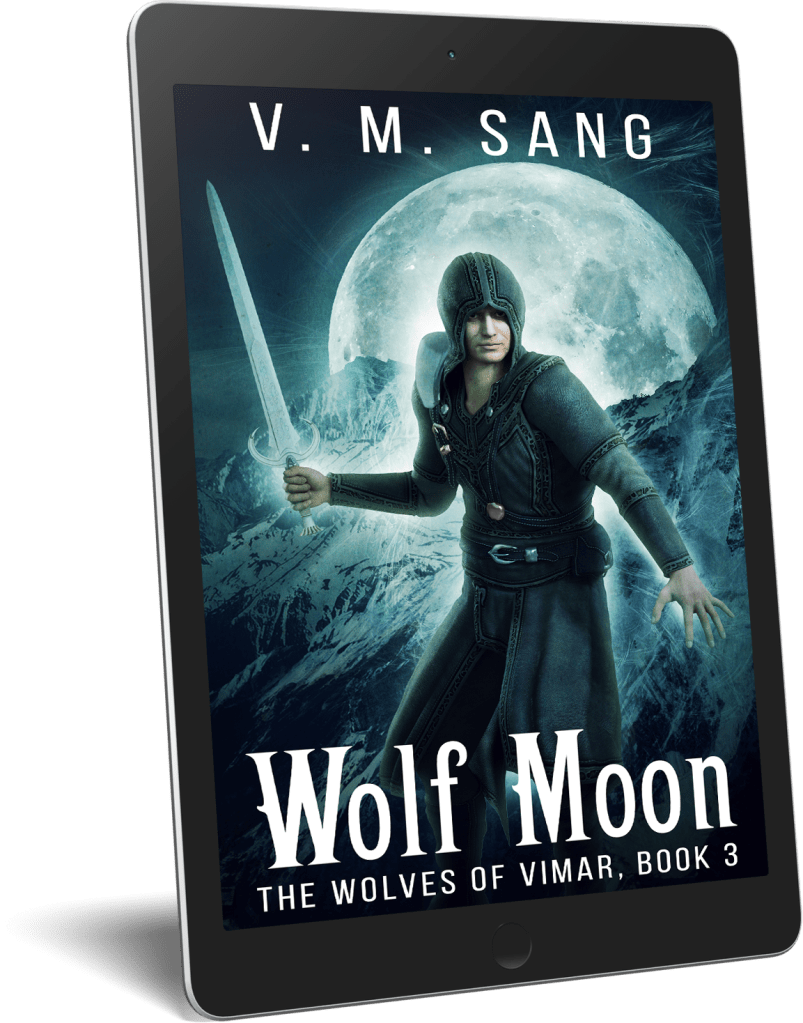
I gave the name of Bramble to a dog that attached itself to Fero in my Wolves of Vimar series, Book 2, The Never Dying Man.
If you want to make a blackberry and apple crumble, it’s the easiest thing in the world.
Peel and slice the apples and mix with the washed blackberries and put into an ovenproof dish, size depending on how much fruit you have.
Add sugar to the blackberries and apples, according to your taste.
In a large bowl, sift 170 grammes (6 oz ) of plain (all purpose) flour.
Add 85 grammes (3oz) softened butter, cut into small pieces. Using your fingers, rub the butter into the flour until resembles fine breadcrumbs.
Add 85 grammes (3oz) of caster sugar and mix well in.
Sprinkle the flour mixture over the fruit and press down slightly.
Sprinkle with sugar (optional) and cook in a pre-heated oven, 180C, until golden brown.
Serve with custard or ice cream.
You can alter the quantities of crumble mix depending on the amount of fruit you have.
I had some of the mix left over last time I made a crumble. I seemed a waste to throw it away, so I pressed some into a couple of biscuit moulds and put them in the oven. I cooked them until they were golden brown. They turned out to be rather sweet, but crunchy biscuits!
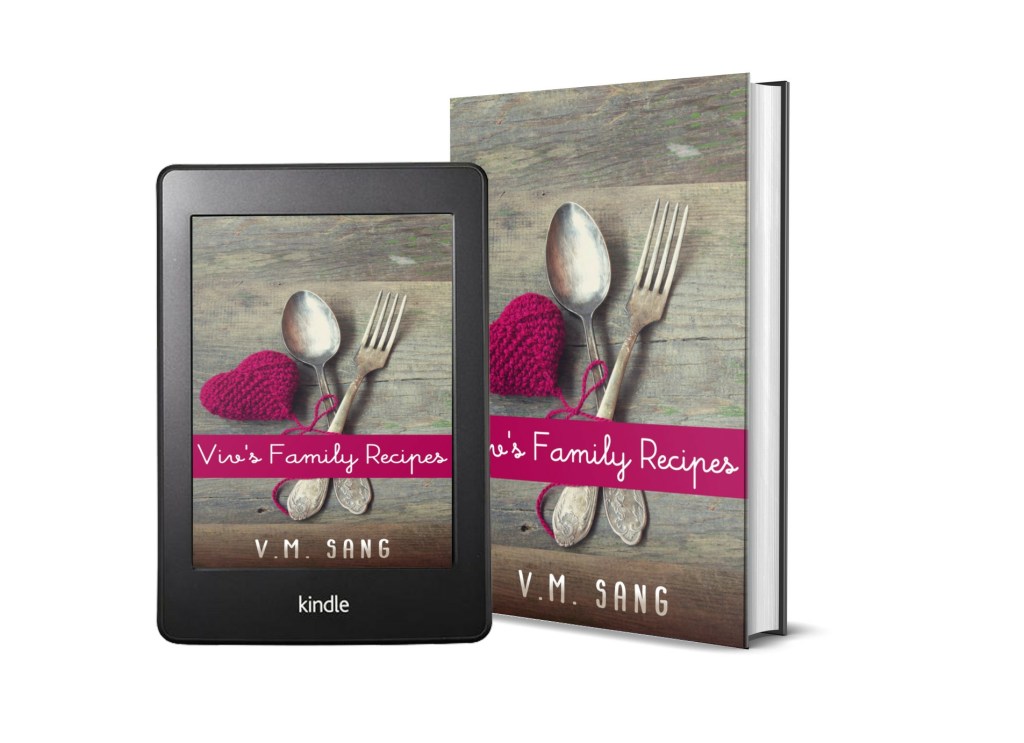
For more recipes, and a few old-fashioned hints, you can buy Viv’s Family Recipes by clicking on the link, or the book cover in the sidebar. You can then choose your favourite book site to buy.
In this recipe book I give some tried and trusted recipes from my family and friends, as well as some from my grandma, dated 1909. (Most of which I’ve not tried! They are very carb and fat-heavy, and many require long cooking. But it’s interesting to see what they used to eat in days gone by.)
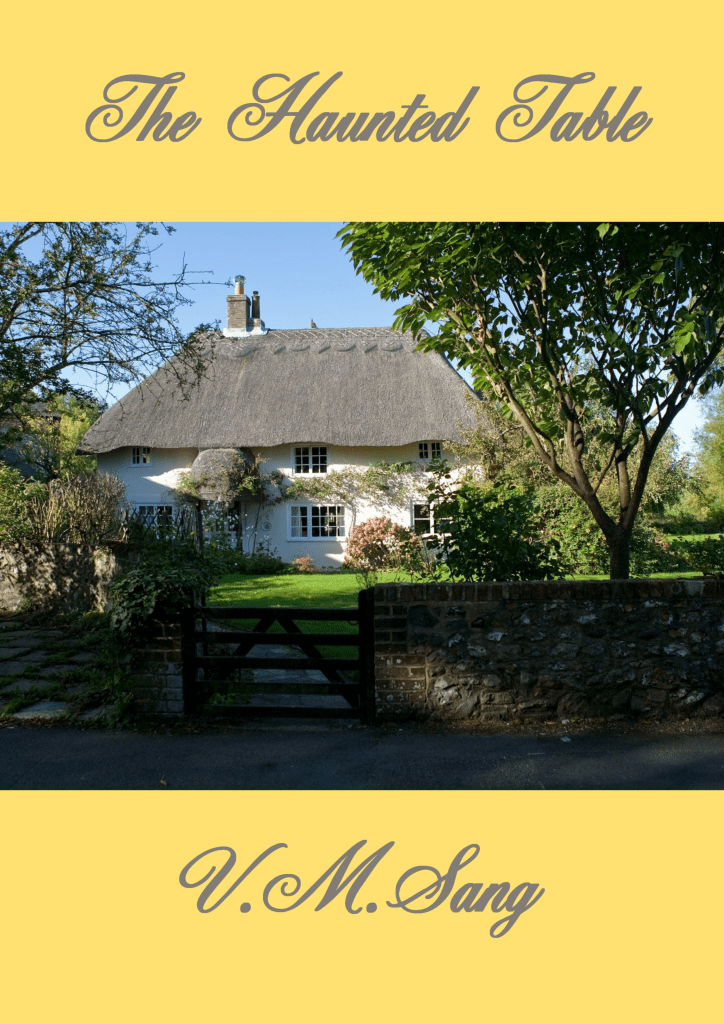
If you would like to receive an exclusive, free short story by me, called The Haunted Table, simply click the link. This will take you to the page where you can download it.
Maria and Tom have bought an antique table for the old cottage they have bought. When they hear strange noises in the night that sound like crying, they worry their house is haunted, but the sounds seem to come from the table.
They set about trying to find what is causing the disturbances. The answer is stranger than either of them had thought.
(Clicking the link will add your email address to my email list, but don’t worry, you can unsubscribe immediately if you wish.Nor will you get any spam. I only send out an email each quarter, or if I have any exciting news–like a new release.)
If you are a member of a reading group, would you like to share with us what your group is reading?
I would be interested in what you have to say about reading groups.
Do you think they are helpful? If so, in what way?
2. How does your group choose the books you are going to read?
3. How long do you have to read it before you meet to discuss it?
4. Do you meet and discuss parts of the book?
5. What kind of things do you talk about when you meet?
6. Are there any groups that specialise in particular genres; for example, historical fiction, women’s literature, science fiction, literary etc.
If you aren’t in a reading group, perhaps you could tell us something about your favourite genre, and what is your favourite book?
I’m not in a reading group. However, I enjoy fantasy, historical fiction and science fiction. Having said that, there are many books not in those sections that I enjoy.
As to my favourite books. Well, that’s a difficult one. It might well be the last book I read, provided it’s not dire!
I really enjoyed reading the latest book by Diana Wallace Peach, The Necromancer’s Daughter. You can read my review of it in last Monday’s post.
Miserichorde by Cynthia A. Morgan is another fantasy I’ve enjoyed recently. You can read my review here.
Of course there is The Wheel of Time by Robert Jordan. A brilliant series. The characters really gripped me. It is currently being filmed by Amazon and screening on Prime. I’ve not reviewed any of these books, but be assured, they are excellent.
I enjoyed Down to the Needle, by Mary Deal, too. Another talented writer. This is a gripping tale of a woman’s search for her daughter, and her fight to save her from execution. My review is here.
Shadow Stalker series by Renee Scattergood is another good fantasy series (my review of book 2 is here.) as is The Secret of Excalibur and the other Excalibur books by Sahara Foley. (My review of Book 2, the Revenge of Excalibur is here.)
Please answer in the comments box.
And while I’m at it, Jealousy of a Viking is now available as an audiobook. Here is something of what the narrator, Ink Arnadine, said about it.
I am absolutely loving the book and have read on to chapter 20 in the guise of ‘prep’ but honestly, it’s because I am loving the story! These are the signs of a really enjoyable, great read and it’s a real pleasure (and honour) to have the opportunity to narrate it.
I like your writing, the flow is elegant and informative and utterly compelling. Absolutely fab. Your amazing narrative flow is the absolute backbone of this story.
You really are a great writer and although this is only the second book of yours I have read, I am keen to add more to my recreational reading list! There is an honesty of emotion and emotional strength in your writing that I absolutely adore.
Today, I am honoured to be a part of Diana Wallace Peach’s blog tour. She is stopping by to tell us about the book she has recently released. It’s called The Necromancer’s Daughter, but I’ll let Diana tell you about it.
Take a seat and help yourself to a biscuit while I pour you some coffee.
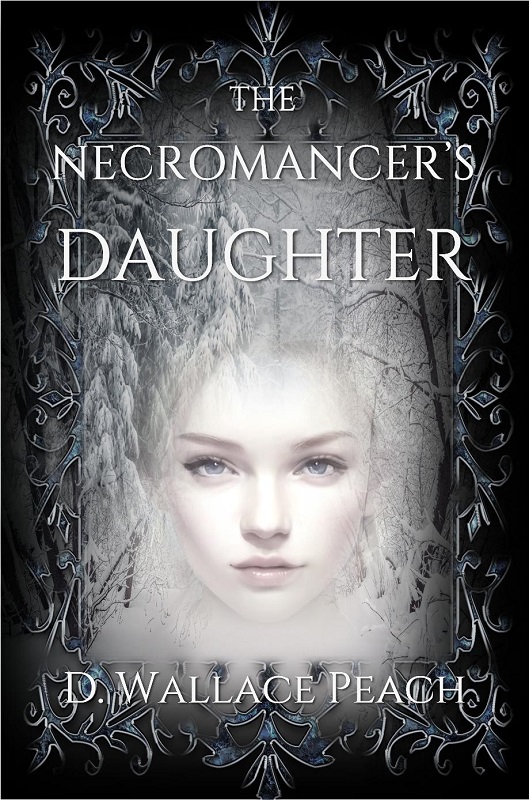
Isn’t this a beautiful cover?
Now you’re comfortable, I’ll hand you over to Diana.
Thanks for having me over to your blog, Viv. I’m delighted to share a thought or two about The Necromancer’s Daughter, and in this case, the challenges of crafting “good” characters.
My latest book has a couple of virtuous characters, different from my usual mixed bag of flawed souls. I think characters with flaws, inner conflicts, and ambivalence are easier to write because they’re inherently more interesting and often more active as they go around messing things up.
So, what did I do for my characters who aren’t emotionally compromised or moral wrecks?
Barus, my necromancer who starts off the book, is one of the sweetest people around. He’s led by his heart, and though that gets him into some dicey situations, his main challenge is simply to stay alive.
Fortunately for this writer, he fades into the background early on when Aster, the necromancer’s daughter, takes the forefront. She’s more of a challenge since she has to carry the story to the end.
She’s also “good,” and in her case, it’s that quality that creates danger for her and ambivalence for other characters. Her sweet nature gets her into trouble more than it saves her.
One way to make life miserable for our nice characters like Aster is to give them lose-lose choices. (Writers are ruthless, aren’t we?) And that’s exactly what I do to my poor heroine. She is constantly having to choose between two bad options, and that creates a lot of inner turmoil while also testing her convictions. By the end, she just might discover that there are worse choices than death.
Something about the story
A healer and dabbler in the dark arts of life and death, Barus is as gnarled as an ancient tree. Forgotten in the chaos of the dying queen’s chamber, he spirits away her stillborn infant, and in a hovel at the meadow’s edge, he breathes life into the wisp of a child. He names her Aster for the lea’s white flowers. Raised as his daughter, she learns to heal death.
Then the day arrives when the widowed king, his own life nearing its end, defies the Red Order’s warning. He summons the necromancer’s daughter, his only heir, and for his boldness, he falls to an assassin’s blade.
While Barus hides from the Order’s soldiers, Aster leads their masters beyond the wall into the Forest of Silvern Cats, a land of dragons and barbarian tribes. She seeks her mother’s people, the powerful rulers of Blackrock, uncertain whether she will find sanctuary or face a gallows’ noose.
Unprepared for a world rife with danger, a world divided by those who practice magic and those who hunt them, she must choose whether to trust the one man offering her aid, the one man most likely to betray her—her enemy’s son.
A healer with the talent to unravel death, a child reborn, a father lusting for vengeance, and a son torn between justice, faith, and love. Caught in a chase spanning kingdoms, each must decide the nature of good and evil, the lengths they will go to survive, and what they are willing to lose.
My Review of The Necromancer’s Daughter.
OVERVIEW:
This book is a definite page turner. I loved it all the way through and although I couldn’t put it down, I definitely didn’t want to get to the end.
The cover is beautiful.
CHARACTERS
Fantastic characters. D. Wallace Peach has brought us amazing people. They seem real as they have failings as well as good points. They struggle with knowing what is right and wrong amid conflicting views.
Aster has the ability to resurrect the dead. Is it evil to do so? She does not think so. Some think the Blessed One alone should have this right of who lives and who dies, and to go against her wishes is evil. But can Aster stand by and allow a death she could prevent? If the Blessed One did not want the dead person to be revived, surely she would not allow it?
Facing danger in the Forest of Silver Cats, Jorah questions his whole life. He has promised to help Aster get to Blackrock, against everything he has been taught to believe—that necromancy is evil and necromancers should be put to death. He is conflicted as to why he agreed to do so. His concerns trouble him throughout the book.
<p>Teko is a simple man. One whom the ‘civilised’ people consider to be a barbarian, but he is a loyal protector of Aster.
Finally, there is Barus. He is a man with a crooked spine. A truly good person. He resurrected Aster after she was stillborn and brought her up as his own daughter. He is a wonderful man whom I find difficult to forget. </p>
WRITING
The writing is amazing. This is one of the few books I’ve read recently that I have not had to get my metaphorical red pen out to correct errors.
D. Wallace Peach has a wonderful way with words. Her descriptions are beautiful, and I love her metaphores and similes. She takes you into the world of magic, dragons and kingdoms at odds with each other and makes you believe in it.
If you are a fantasy fan, I would recommend you go and buy it now.
Here’s a bit about Diana.
A long-time reader, best-selling author D. Wallace Peach started writing later in life when years of working in business surrendered to a full-time indulgence in the imaginative world of books. She was instantly hooked.
In addition to fantasy books, Peach’s publishing career includes participation in various anthologies featuring short stories, flash fiction, and poetry. She’s an avid supporter of the arts in her local community, organizing and publishing annual anthologies of Oregon prose, poetry, and photography.
Peach lives in a log cabin amongst the tall evergreens and emerald moss of Oregon’s rainforest with her husband, two owls, a horde of bats, and the occasional family of coyotes.
You can buy The Necromancer’s Daughter by clicking here or on the cover of the book.
I’ve just finished reading this article on Medium by Umair Haque. I think everyone should read it. It paints a bleak picture of the future unless we do something immediately.
Umair Haque says,
“2022. It was the year that climate change became frighteningly real. Europe burned, Pakistan drowned. A mega-heatwave stretched from China to America, reaching every corner of the globe. Rivers ran dry, and crops failed.
One of the most urgent tasks our civilization faces is educating people about the reality of climate change. After too long, spent in a haze of denial, largely coming from the far right, funded by Big Energy, it’s undeniable now that climate change is real, and it’s here. And yet really understanding it? Most people, even at this juncture, have far too little awareness of what it really means.”
I would like to thank R S Williams for letting me have a free copy for an honest review.
OVERVIEW
A good story, even if it is a fantasy trope. A prince, hidden to save his life from an unknown enemy who has killed the rest of his family. A birthmark that proves he is the missing prince. He has no idea of his true identity.
Having said that, the fact that this idea is not an uncommon one does not mean it cannot be dealt with in a different way, and be an entirely different story which Kingdom of Lies does.
I love the cover. It’s magnificent.
BLURB
Magic is back in Adelith, and with it the return of Cyran.
Elijah spends his days preparing for the annual Hollom horse race and working at his guardian Merrick’s forge. That is, until Merrick is summoned back to Castle Aebarrow in Adelith by the king.
Unable to stay in Rheanydd without a legal guardian, Eli is forced to go with Merrick who takes up the position of captain and trains the new guards. But the more time Eli spends in Adelith, the more his lost memories resurface-and they throw up worrying questions about his past.
As a member of Princess Sienna’s Elite Guard, Eli saves her life when it’s threatened by the presence of a mysterious Missing Prince. Eli’s heroics incur the wrath of a mad sorcerer known only as The Master, hell-bent on ending the courting prince’s life.
Elijah enters a dangerous path of self-discovery where magic and secrets intertwine. The truth about his past is within reach, but can he unlock his memories and solve the riddles in time to save the true heir to the throne? Or will the castle be brought crumbling down once more?
CHARACTERS
Elijah, the prince, is a likeable character, although he does not have much depth.
There was little to distinguish most of the characters from each other, except for Leon.
When we first meet him, he is antagonistic to Elijah. He is mouthy to his superiors, but never gets punished for it. Then, suddenly, at the end, he’s suddenly friendly and joking, and talking as if he’d been best friends with Elijah all along. But Leon is a minor character.
There was little change in most of the other characters throughout the book.
WRITING
The writing was poor. As I read, I thought it was the first book by a novice writer who had got to the end and pressed ‘publish’. There are many mistakes, both typos and grammatical errors. Sometimes this caused confusion.
The author confused me at times by using a pronoun that did not refer to the last person mentioned.
There were several places where the syntax was confusing, and she also had disembodied eyes floating around on more than one occasion. (Elijah’s eyes fell to the floor.)
There were other places where I was confused, and could not understand what was going on, and a few places where she contradicted something she had said previously.
I was surprised to read in her acknowledgements that she thanked her critique partners and her beta readers, as I saw nothing to indicate any input from them.
If I hadn’t promised a review, I don’t think I could have finished this book in spite of the good story, as I kept being annoyed by the poor writing.
I give the book **
Do you think the writing is important if the story is good?
Please tell us in the comments box?
If you would like to receive an exclusive, free short story by me, called The Haunted Table, simply click the link. This will take you to the page where you can download it.
Maria and Tom have bought an antique table for the old cottage they have bought. When they hear strange noises in the night that sound like crying, they worry their house is haunted, but the sounds seem to come from the table.
They set about trying to find what is causing the disturbances. The answer is stranger than either of them had thought.
(Clicking the link will add your email address to my email list, but don’t worry, you can unsubscribe immediately if you wish.Nor will you get any spam. I only send out an email each quarter, or if I have any exciting news–like a new release.)



 Dragons Rule OK. V.M.Sang (author)