A thought provoking post.
via I Saw Jesus
A thought provoking post.
via I Saw Jesus

I’ve often wondered why we start the day in the middle of the night, and the year at a date that seems rather random.
Let’s think about the day first.
To me, it would seem obvious that the day begins when the sun rises. Or, I suppose you could say it ends when the sun sets, which would mean the next day begins at either sunrise or sunset. But why did someone—who?—decide the middle of the hours of darkness was a good idea? Anyway, midnight isn’t the middle of the hours of darkness all the year round, anyway.
Now if we say the day begins at sunrise, I can see that would be a problem, especially for the modern world. That can be solved by saying the day begins at the time of dawn on the equinoxes. That is round about 6am.
When I devised my world of Vimar for my Wolves of Vimar Series, I had to decide on how the people would break up their day. This is a totally different world from Earth, although, for simplicity’s sake, I still use hours and minutes. The people on Vimar hold the number six as sacred and all multiples of six also have power. Thus 60 minutes in an hour, and 24 hours in a day makes sense.
So, on Vimar, the day begins at what we would call 06:00 or 6am. That to them would be 00:00. They begin counting from there. 7am would be 01:00. 10am would be 04:00. What we call midday, to someone on Vimar would be 06:00.
They also use the 24 hour clock.
If a person wanted to have a meeting at, say, 10am, by our standard, they would say, “I’ll meet you at the fourth hour.”
I don’t use the time very much in the book, but I thought it would be essential in my world building to try to think about this.
I will go into the year on the third Tuesday of next month,
If you want to read more, and about Carthinal and his friends and their adventures on the world of Vimar, you can buy the first 3 books by clicking on the covers in the sidebar. I am serialising Carthinal’s early life on the first Tuesday of every month.
Please leave a comment in the comments box. I would love to hear your thoughts on this.
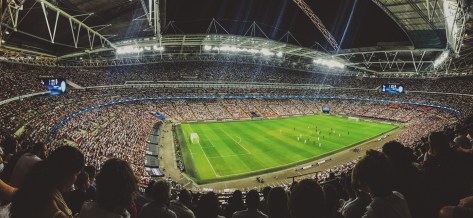
A lot of things have been irritating me in people’s use of the English Language, but recently it seems the fact that a collective noun is singular has disappeared.
One I hear frequently, being a fan of Manchester United, is in one of their songs.
‘U-N-I-T-E-D United are the team for me.’
Now we would not say, ‘some team’, or ‘those team’. We would be aware that ‘team’ is singular in those cases, so why, in this one case, does ‘team’ suddenly become plural?
Is it one team, or several? No, it’s one team, so it’s singular.
Similarly ‘Crowd’. ‘The crowd are…’ is now commonplace. ‘The crowd are cheering.’ Again, we would not say ‘Those crowd’ or ‘Some crowd’ We’re talking about one crowd, so it’s singular.
I can understand it in some instances where there is a plural noun involved, as in ‘A crowd of people’, but it’s still the crowd we’re referring to.
‘The crowd of people was making its way toward the exit.’
We often get ‘The flock of sheep are…’ instead of ‘The flock of sheep is…’.
‘The bunch of flowers John gave Mary is beautiful.’ not ‘The bunch of flowers John gave Mary are beautiful.’
Just remember that if you wouldn’t say ‘some bunch,’ or ‘some crowd,’ you use the singular verb. It’s not the individual flowers we’re referring to here, but the bunch. One bunch, Singular.
Please save my sanity and be careful when you come across a collective noun and decide whether or not you should use the plural. Chances are, you shouldn’t.
I just love a good pun.
via Remembering When it all Began…
I think many of we writers can relate to this.

This story is set in Britain, in what is now Yorkshire at the time of the Danes and tells of the trials and tribulations of Helgha. This is a saga told by a scald (the Danish equivalent of a bard.) It tells of how Erik won Helgha from her father.
“Erik loved the beauteous maiden, Helgha,
The most beautiful maid
Amongst all the Danes.
Her flaxen hair flowed like moonlight on the seas
And her blue eyes glowed like the sky in summer.
But they could not marry.
For Erik was promised to another.
He visited his love often
Until her father challenged him
To a battle.
Sword rang on shield.
Axe split the air with sound like thunder.
Young and strong, was Erik,
Older and wily was Biorn.
Who would win?
Youth and strength or
Guile and Experience?
Biorn struck first with his axe,
But Erik raised his shield.
Biorn’s axe glanced off.
Erik fought bravely
Until Biorn’s shield broke.
Biorn hit Erik with the edge and drew first blood.
Brave Erik did not flinch.
Blood streamed from the gash in his cheek
But he fought on, ignoring pain and blood.
The battle continued for hours.
Erik parried the axe with his shield.
His sword longing for blood.
His eyes burning with the pleasure of the fight.
Then Erik saw Biorn tiring
The man’s steps became slow,
His axe dragged
As if reluctant to hit this brave young warrior.
Erik backed into a barn wall and feigned a slip.
When Biorn came with raised axe
To finish the battle and send Erik to Valhalla,
The young warrior rolled beneath the axe
And as Biorn raised his weapon,
Erik sent his sword upwards.
Into the heart of his foe it went.
Blood flowed over both.
As Biorn crashed down, Erik rolled away.
Helgha screamed.
Her lover and her father both drenched in blood.
Who lived and who died?
Then Erik rose and seized the maiden.
He fled to Stjarna, his horse,
And leaped to her back with Helgha.
They galloped all night
Until at dawn they arrived in Jorvik.
Now Erik has a beautiful bed-slave.
And a scar on his cheek
To remind all of his bravery.”
The book is undergoing the editing process at the moment. I’ll keep you all informed as to how it’s getting on. Nearly through the first rewrite.
When I was at school, many, many moons ago, we learned about homonyms. These are words that sound the same, but have different spellings and meanings. Some of them are very tricky, and often catch people out. Yes, even writers!
A recent spate of these in a variety of places has prompted me to write this little post to try to help. So here we go!

Wet/Whet.

We all know the first of these. It’s what happens in the rain. We get WET.
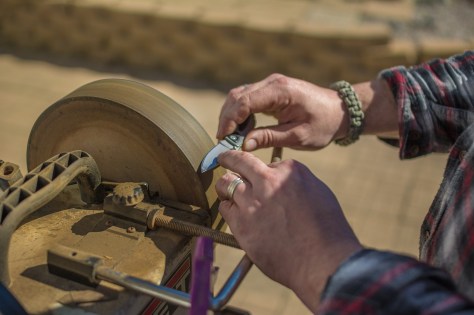
But the second? WHET is to sharpen something. Hence a WHETSTONE, which is something used to sharpen knives, daggers, swords scissors, etc. It does not need to be wetted before use as it’s not a WETSTONE. When I was little, I thought that’s what it was and pictured people sharpening their knives with a bucket of water by their sides to keep the stone wet.
So we WHET our appetite, we don’t WET it.
Examples.
Davrael sat by his horse WHETTING his knife before the battle.
As we sat down to our meal, the waiter brought a small savoury to WHET our appetites.
When the dragonet plunged into the water, they people nearby got WET.
Peek/Peak
This is one I’ve mentioned before, but I make no excuse for doing it again. I see it spelled wrongly far too often.
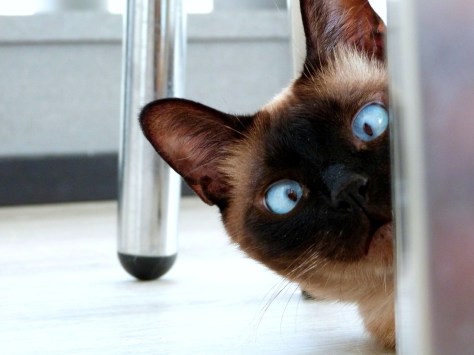
Peek. This is a quick, or sometimes sneaky look at something. Many authors will give a sneak PEEK at a chapter of their new book.

Peak. The top of something, often a mountain.
Examples
Thadora PEEKED around the corner to make sure there were no guards visible before venturing into the alley.
The climbers were exhausted by the time they reached the PEAK of the mountain.
I think that the fact that Peek is often written after Sneak that causes the problem.
Poured/Pored

Pour
To run in a steady stream, or, of rain, to fall heavily.

Pore (verb) Not to be confused with Pore (noun) meaning a small hole.
To be absorbed in reading or studying something.
Examples.
When we went to catch the bus it was POURING with rain.
Or
The barman POURED a measure of whisky into the glass.
In order to pass the test to leave his apprenticeship behind, Carthinal PORED over the magic texts.
I hope this has made it a bit clearer.
Please leave your comments in the comments box. I like to hear what you think.
Since finding this blog, I’ve never failed to be amused. Well worth taking a look.
via Sunday, bloody Sunday #narrowboat #boating #swansareevil

