Here are some thoughts on the semicolon. I found these ideas very interesting, especially to clarify things in lists.
Book offer

Starting on Monday 19th June, Emily Littler is offering Vengeance of a Slave at the special promotion price of $0.99 or £0.99. This is a 59% saving.
The price will increase in steps for the following 7 days, until June 26th, when it will be back at its full price of $2.99 or £2.35, so hurry so you don’t lose out.
Here is a bit about the story.
Adelbhert is only 6 years old when he is forced to watch the crucifixion of his father and other men from his village. They rebelled against the Romans and this was the punishment meted out.
Then he and his young sister are taken as slaves for their pretty looks and ash blonde hair. A rich merchant from Britannia buys them and takes them to give as presents to his wife and daughter. Adelbehrt promises his sister they will escape one day, but cannot promise when.
His experiences make the boy hate the Romans, and he nurtures this hatred throughout his years. as a slave. He is treated more as a pet than a human being, which he hates.
What will become of him and his sister when they are no longer pretty children? Will they be sold and separated? What will their future be?
Adelbehrt’s one ambition is to escape and take his revenge on the Roman Army.
But one young man against the might of Rome is seemingly impossible odds. How can Adelbehrt escape, and how can he fight the Roman Army, and can he overcome his hatred before it eats away at his soul.
Rabbit trails
Some amusing rabbit thoughts.
In Defense of Grammar Schools

There is a debate going on in the UK at the moment about education. As an ex-teacher I am interested in the arguments.
The Conservative Government wants to allow Grammar Schools to be re-established. Before the 1960s there was a system of Grammar Schools and Secondary Modern Schools.
In order to get into a grammar school, all children took an examination at age 11, in the final year of their primary school. It was called the 11+ examination. Those pupils who were in the top percentage got a place in the grammar school. I don’t know what that percentage was, but I have heard it said that the top 25% went to grammar schools.
The grammar schools were academic schools, and they taught academic subjects. secondary moderns tended not to teach much in the way of languages, for example.
It is said that the future of children was settled at 11, and that was not good, because some children developed later. But the 11+ was not the end. There was a 12+ and a 13+ that pupils could take if they seemed to be developing in a more academic way.
At that time, the school leaving age was 15. The pupils who went to grammar school had to stay on until 16 so they could do the GCE ‘O’ level examination. A few pupils stayed on at secondary modern and did ‘O’ levels as well. If they did well in the examinations, they could then go on to the 6th form in the grammar school or at a college. I have several friends who did this.
During the 1960s, came the advent of the comprehensive school. These schools were deemed to be fairer than the old system. Each neighbourhood took in all the pupils from its catchment area. All went to the same school, regardless of their academic ability. This, it was said, was much fairer. It did not create an elite and a lot of ‘failures’ at the age of 11.

On the face of it, this seems to be fine, only I think there are a number of flaws in this argument.
The main one, I think is this. Pupils from a given area all go to the local comprehensive school. There is no examination for entry, so no feelings of failure by those who did not pass the 11+.
That sounds fine, but if the neighbourhood school is not very good, all pupils from that particular neighbourhood are being failed.
Children do not get the chance to meet children from a different background, either. They are living with these people, have been brought up in the area, either rich or poor, and so they do not get a rounded picture of society.
The idea was the opposite of this. Pupils attending comprehensive schools were supposed to see all the different types of people. Yes, they saw all the different academic types, but not people from different social backgrounds.
Comprehensive schools were supposed to prevent the feelings of failure by some pupils failing the 11+. I don’t think you can stop pupils from feeling inferior intellectually by lumping them all together. They can see the brighter pupils doing better than them in their academic work. That will make them feel inferior just as much as ‘failing’ the 11+.
One other thing brought about by the introduction of comprehensive schools, is that the education given is a watered-down academic curriculum, which is not suited to all pupils, and has lowered the academic standards for the very brightest pupils.
Grammar schools, they say, create an elite. This is supposed to be bad. In a perfect world, I suppose everyone would have the same academic capabilities, but everyone does not. There are some people who are much cleverer than others. Some say that it is solely due to their background how some people develop, and a middle class background is advantageous. This I would not dispute, but only to a point. There are middle class children who do not excel, and working class ones who do, in spite of their background.
They say that comprehensive schools help social mobility. How? Pupils live and learn in the same area with the same people and values.
In a grammar school, pupils come from all backgrounds and all areas of a town. They mix with each other and get to know something of the lives of each other. Pupils from working class backgrounds can get an academic education, and get away from the schools in their area where ambition is perhaps not so great.
Bright pupils who live in an area with a poor school can get away from that as well.

It is said that grammar schools have more middle class pupils than working class ones. That is something that can be worked out. ‘They’ say that the exam can be coached and middle class parents are more likely to put up the money for coaching. Well, I went to a grammar school and was coached for the exam, but not by private tutor, which is the perception, but by my primary school. Encourage primary schools in working class areas to coach. Or develop an exam where coaching is no advantage.
There’s always an answer, and in my opinion, the advent of comprehensive schools has lowered standards. When I look at the exams I took at ‘O’ level and the exams pupils take at GCSE, there’s no comparison. We had to write essays. They just have ‘structured questions’, or fill in the blanks.
I see grammar schools as promoting social mobility far more than comprehensive schools in contrast to what the detractors say, that they are elitist and prevent it.
I would love to hear what you think of the grammar school debate.
Again
A very moving piece. Everyone should read this.
Why the terrorists can’t win.
I, along with most of the rest of the world, was appalled by the Manchester terrorist attack. The terrorists can’t possibly win using these methods, and here I will try to explain why.
- If their aim is to promote Islam, they are doing a very poor job. They are achieving the very opposite of that, and are turning people against one of the world’s great religions. Many reasonable, peaceful Muslems are being targetted, as are mosques, and Islamophobia is getting much stronger. Extremism breeds extremism, so Muslims will be targetted more.
- I am old enough to have had Parents, Aunts, Uncles and Grandparents who lived through WW2. They talked of that time, almost with fondness and nostalgia. This was because of the solidarity that encompassed the nation. The bombing of the cities and factories, and especially the bombing of Coventry Cathedral, drew people together. This is what I see happening everywhere atrocities are committed now. The French people, the German people, the American people after 9/11 and the Boston bombings, and we the British are all drawn together by this, far from what I think is intended, to disrupt, fragment and induce fear.
- Then there is determination. Churchill said in his famous speech, when he said, ‘We shall defend our island, whatever the cost may be, we shall fight on the beaches, we shall fight on the landing grounds, we shall fight in the fields and in the streets, we shall fight in the hills; we shall never surrender.’ The terrorists are stirring this determination in us all.
- Britain is used to terrorism. IS seems to forget, or has never known, this. We had a long fight with the IRA when London was struck by bombs as were other cities in the country. The IRA did not succeed in ‘winning’ by making us surrender, and I can’t see IS doing so either. In the end, the IRA negotiated a peace. Will IS? What is it they want exactly, anyway?
- I cannot understand how anyone can think that Allah will be pleased at this slaughter. Surely, He would be better pleased at people being converted to His worship, rather than destroyed. If the aim is to get a Muslim world, then this is not the way to go about it. It brings the religion into disrepute. People will be all the more disinclined to embrace its tenets.
I’m sure there are other reasons why IS cannot succeed using terrorism, but I want to get this post out there. I will amend it if I think of anything else.
Let’s all pray for peace and the cessation of such violent attacks
An Interview with Kimi. The Wolves of Vimar.
Me: As you know, I have interviewed your husband,
Davrael. He told me something of the life on the Plains.
Perhaps you can tell me something about how you two met.
Kimi: Of course. It will be a pleasure. As you know, Davrael
is from a nomadic family. One of the Tribes. They travel the
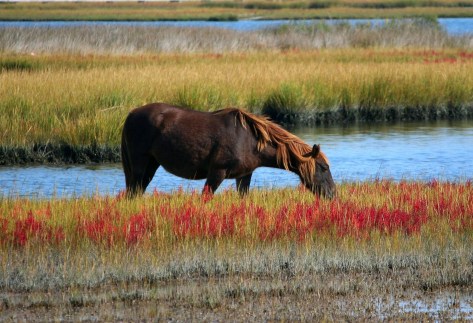
Plains following and herding the horses that roam across
them.
Me: The horses are free then? Don’t they belong to the tribe?
Kimi: Yes, each tribe calls particular herds their own, and
they brand them when young to show their ownership, but
most of them are wild and free. I am from the settlers. We
once roamed the Plains just like the Tribes, but our
ancestors decided to settle in order to have more control
over the breeding of our horses. They thought that they
could breed better animals that way.
Me: And did they?
Kimi (smiling): There are still arguments about that.
Me: How did you and Davrael meet then?
Kimi: One day I was out riding with my brothers when we were attacked by a group of Tribesmen.
Me: Was one of them Davrael?
Kimi: Oh, no. It was an enemy tribe of the Swooping Hawks. They are called the Howling Coyotes. The Tribes have never liked the settled folk. They think we have abandoned tradition and the settled folk think that the nomads are primitive people, so there was no love lost between us. Anyway, my brothers tried to fight them off but there were too many of them and they took me with them. I think they wanted to marry me to one of their men. They did raid sometimes for both horses and women.
Me: Where did they take you?
Kimi: They took me to their camp several days away. It wasn’t their main camp. In fact they had strayed into the territory of the Swooping Hawks. That was why the trouble began.
Me: Trouble?
Kimi: Yes. A band of Swooping Hawks came upon the camp and a battle began. I know little of that battle because I was tied up in a tent, but I could hear the noise–shouting and screaming. Then it suddenly went quiet. I heard a voice commanding the capture of all the horses and a search of the tents. After a while, a man came into my tent. I was petrified. He was an imposing-looking man, although not really handsome, with long hair held back by a braid around his head. What was the most terrifying, though, was the tattoo of a hawk on his face. I tried to hide, hoping he wouldn’t see me and that I could somehow escape, but he was too observant and saw my little wriggles behind a bed. He lifted me out and said, ‘What have we here then? A little mouse trying to escape the hawk?’ He laughed at my frightened expression and continued, ‘Well, it seems the hawk has caught the mouse after all.’
Me: This was Davrael I assume.
Kimi: Yes. He freed me of my bonds and told me that I would be well treated. He asked me where I had come from and what tribe I belonged to. I told him that I was not a tribeswoman and where my family were settled. He agreed to take me back to my family if I could assure him that they would pay in horses for my return. Coin has little meaning for the Tribes. They count their wealth in their horses and trade by barter, you see.
Me: Did you give him this assurance?
Kimi: Yes. I was confident that my father would pay him whatever he wanted.
Me: So he took you back to your family?
Kimi: Not immediately. Davrael and his men were out searching for some horses that they suspected that the Howling Coyotes had stolen. They were some of his best animals. Beautiful golden horses with silvery manes and tails they are. Come to think of it, their manes and tails are almost the colour of Randa’s hair!
Me: Where did he take you?
Kimi: Well, I rode with them for quite a long time actually. Some of the horses had strayed a long way, and some had even been taken to the territory of the Howling Coyotes. There were a few battles, but eventually he got them all back. Every evening he would come into the tent he had said was to be mine and we would talk. Gradually I learned that he was not the fearsome warrior I had thought, but was, in fact, quite a gentle perso, although he could fight well when required. He was kind to me and I gradually began to fall in love with him. I was surprised when he told me that he reciprocated my feelings.
Me: There were problems though I understand.
Kimi: Yes. This is quite painful for me to relate. Davrael took me to his father and told him that he wanted to marry me, but his father flew into a rage and said that no son of his would marry a settler. We the went to my family. They were delighted to see me as they had given me up for dead or worse. When Davrael and I eoldthem of our love, my father said that there was no possible way that he could allow it. He offered Davrael two of his best horses if he would go away and forget about me.
Me: He didn’t, of course.
Kimi: No. We met in secret for a time, but then decided that it was impossible to live like that and so we decided to elope.
Me: You went to Grosmer then.
Kiki: Yes. We went to Grosmer. If all that had not happened, or if either of us had obeyed our fathers, then we would never have met Carthinal and the rest of the Wolves. I wonder what would have happened then?
Me: Thank you very much, Kimi.
Please leave a comment on this post.
Kimi is one of the main characters in The Wolves of Vimar Series. If you would like to find out more about her and the other characters, follow this link to The Wolf Pack, Book 1 of the Woves of Vimar Series.
or click on the book title on the sidebar.
What’s the Rush?
Source: What’s the Rush?
Some tautological sayings

Tautology is using words that mean the same thing in a sentence, that do not add anything further. An example is ‘widow woman’. I am going to talk about some tautological things that people say and write today.
So let’s begin.
I heard someone on the radio talk about a ‘small, little…’ Can you have anything little that’s not small? I have heard this on several occasions. Never, though, a ‘large, big…’ that I can remember.
‘Reverse back’ is another one frequently heard. Have you ever seen anyone reverse forwards? I haven’t.
‘Repeat again.’ Now this one can be used, but only if the thing has been said (or done) at least twice. Repeat means to do it again. The ‘again’ is in the word itself.
One that irritates me, and is very frequently used these days is ‘Various different…’ Have you ever come across things that varied but were the same?
‘Fall down’, although frequently used in everyday life, is none the less tautological. You can’t ‘fall up’, so the ‘down’ is unnecessary. This is one that writers should watch out for.
Close proximity. If it’s in proximity, it’s close!
Necessary requirement. If it’s not necessary, it’s not a requirement.
PIN number. Since PIN stands for Personal Identification Number, saying PIN number is saying ‘personal identification number number.’
We see, in advertising, ‘Your Free Gift’ Well, if it’s not free, it’s not a gift, and if it’s a gift, then obviously it’s free.
Thought to myself. Writers beware. Unless telepathic, you can only think to yourself. Telepaths are a very rare commodity, I think.
Finally, one heard on a snooker programme. The graphic showed a circular spot where the player wanted the cue ball to end up, and the commentator mentioned a ’round circle.’ Anyone know any circles that are not round?
I would love to hear any others you can think of. I know there are so many. Please add comments in the comments box.
Michael
I’ve just read this story. I think it is very moving.
 Dragons Rule OK. V.M.Sang (author)