A Young Adult book from Kent Wayne. Well worth a read whatever your age.
You can read my 5*review of this book here.
A Young Adult book from Kent Wayne. Well worth a read whatever your age.
You can read my 5*review of this book here.
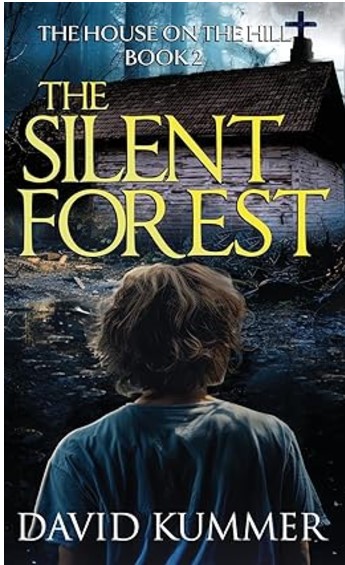
OVERVIEW
I am a fan of this young writer, and this book is as good as the others I’ve read. It is Book 2 in a horror series, and is as scary as Book 1.
BLURB
In New Haven, everything is changing. And there’s no going back now.
It’s been weeks since Allison went missing, and everyone has given up except for Kaia. New Haven mourns their dead as she keeps looking. And now, she’s starting to find answers.
As the unsolved cases pile up, a new discovery in the forest offers hope. But it also threatens to unbury all of New Haven’s darkest secrets.
For the Woods family, it will take everything they have. For Kaia, it’s the last chance.
There are some shadows you can’t keep underground.
STORY
In book 1, Kaia’s best friend, Alison, has disappeared into an abandoned house on the outskirts of the town. This house has been long-feared, and mysterious lights are often seen there.
After searching for Alison, the townsfolk and the sheriff presume her to be dead.
In this book, we learn that Kaia does not believe her friend is dead, and determines to find Alison.
With a mystery boy, who appears not to know things any normal boy would know (even about baseball) and the letters from an unknown source, we are plunged into a world of monstrous happenings.
Is Alison alive? Did her new husband kill her, as he claims? What is lurking in the old house, and will it venture forth to wreak havoc on the town?
I don’t want to give away too much, so I’ll stop there.
CHARACTERS
There are many characters in this book, all of whom relate their bits of the story. This isn’t confusing, as David Kummer devotes a clearly named chapter to each.
Kaia is filled with anxiety for her friend. She has put off going to university for a year after the traumatic events of the previous few weeks. She is clearly suffering from PTSD.
We see Malaki, Alison’s husband, gradually descend into madness after he and Alison visited the house, and their experiences there.
Naomi Woods is Kaia’s mother. She is a strong woman who will give everything to protect her children. This is a strength and a weakness.
Rhys is a mysterious boy. He was found in book 1 walking along the road at night and was taken in by the Woods family. They can find out nothing about him. He also has little, if any, knowledge of 21st century USA. We see him learning about the modern world.
There are many other characters, all complex with their own agendas, but to analyse them all would make this review far too long. You need to read the books yourselves to find out.
WRITING
David Kummer does an excellent job of building tension. The oppressive heat of the summer seems to weigh on the characters, creating the feeling of waiting for something to happen, be it simply rain, or something deadly from the house. This feeling permeates the whole book.
There are a few grammatical errors, but not enough to spoil my pleasure in reading. But I do wish authors would learn how to use ‘lay’ and ‘lie’!
I gave this book 4* and thoroughly recommend it and Book 1.
My ranking of books. In order to get a particular number of stars, it is not necessary to meet all the criteria. This is a guide only.
5* Exceptional. Wonderful story. Setting well drawn, and characters believable–not perfect, but with flaws. Will keep you up all night. No typos or grammatical errors.
4* A thoroughly enjoyable read. Great and original story. Believable setting and characters. Very few grammatical errors or typos.
3* I enjoyed it. Good story. Characters need some development. Some typos or grammatical errors.
2* Not for me. Story not very strong. Unbelievable and flat characters. Setting not clearly defined. Many typos or grammatical errors.
1* I hated it. Story almost non-existent. Setting poor. Possibly couldn’t finish it.
Do you enjoy the horror genre? It’s not something I usually go for, but I an really enjoying this series, Can ‘t wait until book 3 comes out.
Another novella in my Wolves of Vimar prequels. This one is number 4, and is called Horselords. It tells of how Kimi and Davrael met.
It went for editing, but the next thing I knew, I heard that it was being formatted. I can only assume that the edit went well and there was nothing untoward found. That’s amazing, but I must thank the people on Scribophile who helped by critiquing it.
I accepted the formatting, and today received the suggested blurb and cover.
I rejected both!
The blurb mentioned nothing about the romance between Davrael and Kimi and the difficulties they had. This is mainly what the book is about so it should be in the blurb.
The cover showed a girl looking much younger than Kimi, who is 16 at the beginning. Her clothing is wrong, not what she would have worn, and the horse isn’t the piebald Kimi rides. So I can’t actually show you anything.
Apologies for that, but as soon as I get something suitable, you will be the first to see it.
I have a review to post, but I wanted to tell you where we are with the publishing.
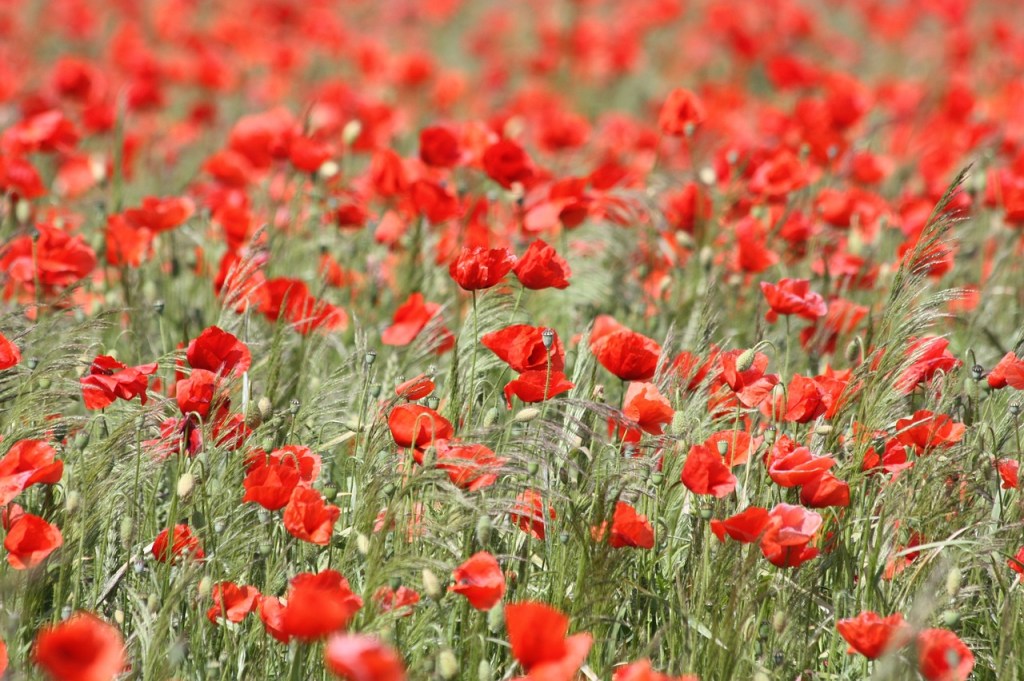
Today is Armistice Day. World War 1 ended at 11th hour of the 11th day of the 11th month.
I wrote a poem to commemorate the 100th anniversary of the end of WW1. I’ve published it before on Dragons Rule OK, and make no apologies for re-publishing it now.
For those of you who haven’t seen it before, I hope you enjoy it and that it makes you think of the futility of war. And to those of you who remember it, similarly.
War is evil and should never happen. It’s always a result of greed and/or hatred; two emotions that should be relegated to the deepest depths of Hell. And as all wars end in talks, why not begin there?
We Will Remember Them.
I’ll never truly understand
How World War I began.
The death of Archduke Ferdinand
Started the deaths of many more,
The young, the old, the rich, the poor.
All died with guns in hand.
My Grandad went with Uncle Jim
And Our Poor Willie, too.
They sent them off, singing a hymn.
Grandad went to Gallipoli,
Uncle Jim left his love, Polly.
Gas in trenches did kill him.
I cannot see, in my mind’s eye
Grandad with gun in hand.
A peaceful man, sent out to die.
He fought for us, for you and me
So we can live and so that we
Safely in our beds may lie.
Granddad came home, and Willie too,
But millions more did not.
Their duty they all had to do.
They died in fear, in noise, in blood.
Everything was caked in mud.
Yet in those fields the poppies grew.
The War to end all wars, they said,
So terrible were the deaths.
The youth of Europe all lay dead.
Yet 21 short years to come
Another war. Once more a gun
In young men’s hands brought death.
One hundred years have passed since then.
What have we learned? Not much!
Too many men are killing men.
Wars still abound around the world.
Bombs and missiles still are hurled
At those who disagree with them.
Uncle Jim was my Grandfather’s brother. I never knew him as I wasn’t born when he died.
‘Our poor Willie’ was what my grandmother said when referring to her brother. No one ever knew why he was ‘Our poor Willie’, except that she didn’t get on with his wife and thought she made his life difficult.
I hope you enjoyed my poem. I wish I thought it might make a difference to the terrible wars going on at the moment, but I’m just a teeny drop in a vast ocean. Sadly, my voice is only heard by a very few people.
Please let me know what you think in the comments box.
You can read more of my poetry by clicking on the cover in the side bar. This one comes from Miscellaneous Thoughts.

Image by FindingSR from Pixabay
In the year 1605, a group of Roman Catholics plotted to overthrow the king.
The king in question was James 1st of England (6th of Scotland) who had come to the throne after the death of the childless Elizabeth 1.
The catholics had hoped that the religious persecution they had suffered under the previous monarch would abate, but that proved to be a false hope. They therefore plotted to kill the king and put his daughter, 9 year old Elizabeth, on the throne.
The plan was to blow up the Houses of Parliament on November 5th during the State Opening, when the king would be present. Then they planned a revolt in the Midlands.
The plan was to plant explosives beneath the House of Lords.
In charge of this was a man called Guy Fawkes. He had been a soldier in the Spanish Netherlands and had 10 years of experience fighting there, so he was deemed a good person to have charge of explosives.
On 26th October, an anonymous letter was sent to William Parker, 4th Baron Monteagle, a Catholic member of Parliament. He reported this to the authorities.
On November 5th, a search was made of the cellars and GuyFawkes was discovered guarding 36 barrels of gunpowder.
On learning that they plot had been discovered, the other 11 conspirators fled London, Some made a last stand, and only 8 were brought to justice. They were hanged, drawn and quartered.
For many years, the thwarting of the plot was celebrated by the ringing of bells, but nowadays in Britain, we hold firework displays and light bonfires on which we burn an effigy of Guy Fawkes.
For many years, I and others thought that Guy Fawkes had been burned at the stake. So we were told, anyway, but that wasn’t the case. He was hanged, drawn and quartered like the other conspirators.

So why the bonfires and burning of an effigy? Well, it’s all become mixed up with the Celtic festival of Samhain (pronounced sowin). In the Celtic pagan times it was believed that the veil between the living and the dead became thin, as I’m sure you all know. It was the end of harvest and the start of the Celtic New Year. This was celebrated on November 1st, but as the Celts began their day at sunrise, in our calendar it is the night of October 31st. They extinguished their home fires, and lit a bonfire to scare away the evil spirits.
The Christian Church, naturally, didn’t like this and designated the 1st of November as All Hallows. However, the habits remained to pass to us as Halloween.
But the bonfires weren’t part of that, so they got moved in the UK to November 5th and linked to the Gunpowder Plot.
Why do we burn an effigy of Guy Fawkes? Well, I’ve not been able to definitely confirm it, but I’ve come across, in the past, the view that the Celts performed Human Sacrifice on this day and burned a person (alive or dead, I don’t know) to ensure the new crops would succeed and they would have a good harvest. This could easily have been transformed into the burning of an effigy of one of the conspirators.
One thing that does seem to have disappeared, though, is the ‘penny for the guy.’ Children, during the runup to Bonfire Night, used to make a ‘guy’ out of old clothes and go and sit on the street with it in order to raise money to buy fireworks. Passers by would drop money into a hat. I remember this happening since we’ve lived in our current house, where we moved in 2002, so it’s only recently stopped.
So, in my opinion, Bonfire Night is a mixture of Samhain and a celebration of the thwarting of a plot to kill the king.
NB: In 1649, James 1 son, Charles 1, was executed at the end of the English Civil War, but it wasn’t the catholics who benefitted, but the puritans. So a king was killed after all.
Please leave any comments in the comments box.
I received the edited copy of Horselords on Sunday. I’ve now sent the final copy back to my publisher. The next step is the formatting and cover.
This is the fourth of the prequels to my Wolves of Vimar series. This novella follows the story of Davrael and Kimi, telling how they met and the problems their love put them through.
So far, I’ve told of how Carthinal’s parents met (Jovinda and Noli), how Carthinal came to become a mage (The Making of a Mage), and the early life of Asphodel (Dreams of an Elf Maid).
Hopefully it won’t be too long now before I can share the cover with you.
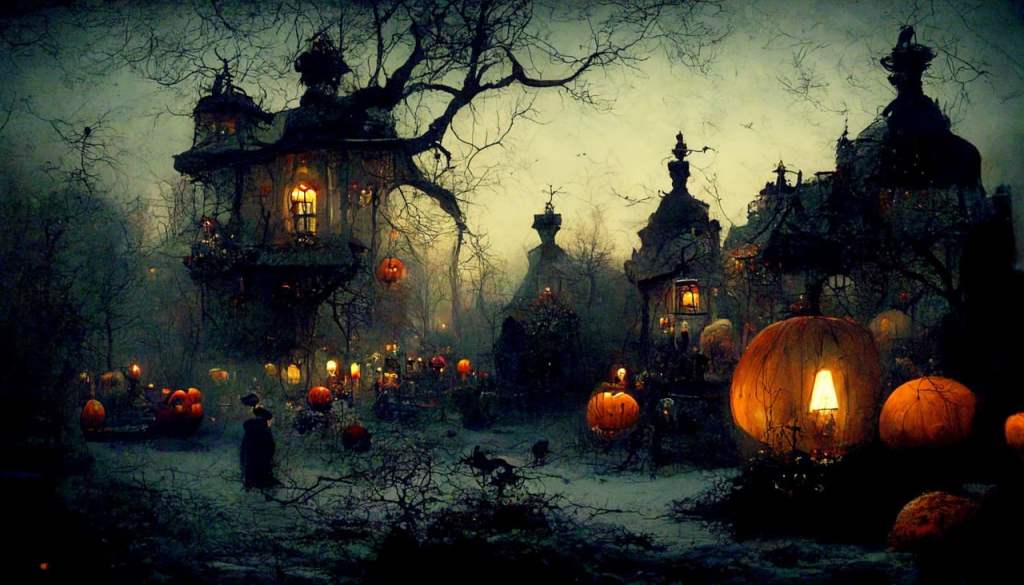
Image by ApplesPC from Pixabay
As it’s Halloween today, I thought I’d write a little poem to celebrate it. We don’t do as much for Halloween in the U.K. as the people of the US do, but it’s beginning to creep in here. This year I’ve noticed a few people have decorated their houses.
Halloween
Witches gather their broomsticks
Putting on pointy hats.
Devils creep out from hell
As spiders build their webs.
Ghosts walk the streets
And skeletons leave their graves
Jack O’Lanterns grin
With fiery eyes that glow
A cold wind blows the leaves
As we shiver in our homes.
The darkness seems to creep
Beneath the gap below the door.
Ghostly sounds are heard.
And the doorbell rings
We huddle together in fear.
What horrors await outside?
We creep towards the door
And open it with care.
The ghosts and skeletons jump
Towards us with a screech.
The witches cackle loudly,
Jack O’Lantern held up high.
Then come the words we know
Image by Nisse Andersson from Pixabay
This is a new poem, but if you enjoyed it and would like to read more. simply click on the image in the side bar.
Currently, Next Chapter, my publisher, has discounts for people who buy 2 or more books in a series from Google Play Store
No coupon code is needed for these discounts: all customers who find Next Chapter books in the Google Play Store are able to use these discounts (as long as they buy 2 or more books in any one series at the same time).
Here’s a link to my One Poem a Day series if you are interested.

October is Black History Month and so I invited Yecheilyah Ysrayl to come on my blog.
I have been following Yecheilyah for a few years. She is a wonderful poet and a champion of Black writers, and Black people in general. She recently wrote a book about Black History and I thought it would be appropriate to have her tell us a bit about herself.
Welcome to my blog, Yecheilyah.
Apart from writing, what is the thing you enjoy doing the most?
Apart from writing, I enjoy traveling! Whether from state to state or country to country, there is something therapeutic about leaving the place of your origin to discover how people live in other parts of the world. Traveling even helps me to write.
Do you prefer the city or the country?
I prefer to live and settle in the countryside. I lived on over 40 acres of my husband’s elderly cousin’s land in Louisiana for five years and loved it. Even now, I live in a country-ish part of Georgia. Not entirely country, but country enough. The peace of birds singing and waking you up in the morning and the quiet of country living is also therapeutic. Nothing compares to the space to grow your garden and have animals roam your land. It reminds me of why my ancestors valued land ownership so much.
I do not prefer to live in the city, but I am a Chicago girl, born and raised, so I won’t act like I don’t still enjoy the hustle and bustle of the city. I still love the energy and how the city comes alive. In Atlanta, there is always something to do.
I agree. I much prefer the countryside.
If you weren’t a writer, what job would you do?
Before I dedicated my life entirely to writing and publishing (no 9-5), I was a certified Medical Assistant specializing in Phlebotomy so I would probably be doing that. I was also a teacher and enjoyed it more than the medical field, so I would definitely be somebody’s teacher somewhere. Even now I visit schools as an author-teacher on occasion.
That’s interesting. Teaching can be a most rewarding profession, whether at school or adult education. It’s great to see people growing as they learn.
I read your poetry book. I Am Soul and was greatly impressed by it. Why do you write poetry?
I write poetry because I think it’s the most honest language there is. (Yes, I said language.) There is something about it that makes people see beyond what they can see. And there is something about writing it that has always been a balm to my soul. I like to say that if you want to know someone’s heart, read their poems.
It’s very strange, but I’ve noticed that whenever I post a poem here it gets lots of views, but books of poetry don’t seem to sell. I suppose that poetry can influence people, just as other books we read, especially as children. The early books we read, I think, have a great influence on our reading later in life,
What is the first book you remember either reading or having read to you?
The first book I remember having read to me was the Bible by my mother. I don’t celebrate holidays today, but as a child, my mother would sit in front of us in a chair (we were in bed) during the Christmas holiday with this giant Bible that must have been passed down from generations because it was huge. My mother was always a small woman, so the book looked heavier than she was. Anyway, she would sit that thing in her lap and read it to us.
Wonderful memories, I’m sure.
If you could meet any 3 people, alive or dead, who would they be? Why?
If I could meet anyone, it would be my grandmother Margurite, Maya Angelou, James Baldwin, and Malcolm X. I know that’s four, but I didn’t want to leave anyone out. I would like to meet my maternal grandmother because she died before I was born, and I carry her name as my middle name. I would like to ask her questions about my history to better understand my mother and myself. When asked questions like this, we often overlook our own family members, whom we might not have had a chance to meet, and the wisdom they could impart to us. As for the other three, I mostly want to meet them because I admire their oratory skills. I love hearing how they spoke and articulated their thoughts, beliefs, and philosophies on life. While I don’t agree with everything they stood for, they each had a powerful passion and never allowed anyone to change their mind. Their rebuttals to questions in interviews were just masterful. You weren’t going to trip them up. I would love to talk to them about how they did it and soak up their wisdom.
You are correct about asking questions about your history. We should all ask those questions and not wait until it’s too late. I would also like to meet the others. All great people.
Why do you write?
As noble as it might sound to start this with how I write for others, the most honest answer is that I first write because it is healing to my individual self. It is a way to organize thoughts and feelings I might not have the words to say out loud. I write as a healing agent for myself first. After that, I write to restore the forgotten heritage to the forgotten people, first to Black people and then to all nations. My passion is to reclaim those lost stories that hold the key to our freedoms and shine the light of truth on them.
That is a wonderful goal, Y
Indeed it is, Yecheilyal. I hope you succeed in your ambitions on this front.
A question I can’t answer, myself. Where do you get your ideas from?
I think people see writers as these magical people who snatch ideas from the sky. And not that we are not magical, but most of our ideas, or at least mine, come from just living life. From seeing the extraordinary in the ordinary, the magic in the mundane. An idea can strike me as I am washing dishes or folding clothes. It can strike as I am traveling from place to place. It can also strike, and often does when I am reading and studying the work of others. I learn a lot from other writers, authors, and activists.
Are you a dog or a cat person?
I am definitely a dog person! Now, I grew up with cats, but after experiencing having a dog as a pet, I prefer dogs. Also, I don’t think my Missy (German Shepherd/Collie Mix) would appreciate me answering this question any other way.
I’m sure she would be annoyed if you did.
What do you think is the biggest problem facing the world today?
The biggest problem facing the world today is a lack of love. The love of the world has grown cold.
It has indeed. So much hatred around.
Thank you for coming and answering my questions, Yecheilyah. I would now like to mention your book on Black History. It is a wonderful book and it can be bought from Amazon. (Click on the link or the book cover below.)
Here’s a bit about it.
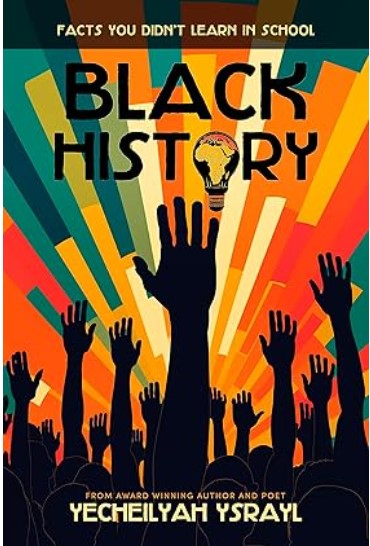
Black History Facts You Didn’t Learn in School is a historical guide on Black Americans’ accomplishments, contributions, and struggles. It includes the experiences of Black individuals who have often been marginalized, overlooked, or omitted from mainstream historical accounts.
From the resilience of women like Anna Douglass, first wife of Frederick Douglass, to the many Black communities that prospered, recognizing and celebrating Black history helps to ensure that these stories are acknowledged and that the achievements and resilience of Black people are valued and appreciated.
And a review.
Jeremy Lamkin
5.0 out of 5 stars
Awakening to the skeletons in America’s closet
Reviewed in the United States on 6 March 2024
This book is full of the kind of history that should be taught in school, but instead is relatively unknown. The author did an outstanding job putting this material together, which took ten years and tons of research. It’s a must-read for anyone who’s into history.
The author focuses on people and groups who have been pivotal in black history. She gives a voice to the marginalized and makes us aware of the contributions of the family of historical figures like Frederick Douglas and Martin Luther King Jr. Each chapter gets the dirt on whitewashed or forgotten pieces of history.
Read this book to learn about the aftermath of the Civil War and how slavery was reconstructed in the form of criminal justice. The book is compelling and hard to put down, as you discover a series of horrific truths about history.
This book contributed significantly to my view of American history, as it has put a lot of things in perspective. I see how slavery was reworked into other forms of slavery and evolved in complexity into the Bernaysian economic system based on Freud’s fear of human nature.
Reading this, a lot of lightbulbs went off for me. It dawned on me that nothing that ever happened is ever really over, like slavery and public relations. I can’t recommend this book enough!
Me again: I thoroughly recommend this book. So many important Black people have been ignored. This book highlights some of them and tells us how important they were.
I would love to hear your thoughts on this. Please add your thoughts in the comments box.
Rebecca Cunningham has challenged us to write a poem about a favourite place with alliteration.
It is to be free verse and no more than 50 words. So here’s my offering.

Woodland ways
Wend past flowers.
Winding paths walked
Without worry.
Wind whispers to willows
Waving branches.
White wood anemones
Water at the heart of the wood
With wavelets kissing the shore.
Woodpecker, willow warbler
Wing through trees.
Wonderful.
And here’s a link to Rebecca’s website so you can view the other poems.

This series is about the Archangels who make up the Council of Heaven. Each book is about how they find their consorts.
A fun read and an interesting concept.
After long years in the line of duty as a ‘Soul Taker’, Kate is worn out.
When she gets a new job offer from the ‘Powers Above’, she accepts her new job as a Guardian gratefully without knowing that her teacher is one of the most powerful beings in existence, the Archangel Raphael.
Along with Raphael, she takes on her new task and the connection between them grows.
Raphael helps, protects and supports Kate, but suddenly, she becomes a target for the Demons of Hell.
This book begins with Katie, an angel who is the Soul Taker of the title. She is tasked with helping souls to Heaven, or in some cases, Hell.
When we meet her, she’s been doing the job for hundreds of years and longs for a change. Then she is approached by two angels, one of whom is Raphael, an archangel.
Raphael realizes that Kate means more to him than he expected, which causes him to fight furiously against danger. If he fails, Kate’s future will contain eternal darkness, evil, and torture.
They ask her if she would like to become a Guardian Angel, and she readily agrees. This will mean training with Raphael.
Her training is not without some dangers, though. She catches the eye of Lucifer.
I won’t say any more except that she and Raphael fall in love. I don’t want to give away spoilers.
The angels are wonderful. They have human feelings and temptations just like the rest of us.
Katie has her doubts about her feelings for Raphael, but even more about his feelings for her. She is a kind and loving angel (I nearly said person) who is ideally suited to being a Guardian.
But she is also incredibly brave and strong under the most difficult circumstances. A truly likeable character who, after her initial awe at being with Archangels, the most powerful beings in the universe, begins to treat them normally.
Raphael is really cool. On their first meeting, he is dressed in cowboy clothes. I really like him. He has a sense of humour, and cares deeply for humanity, especially, of course, Katie, when he eventually recognises their love.
Lucifer is depicted as a smart, fashionable man. He can put on a certain charm when he wants to, but it hides his truly evil nature.
There are many other characters, of course, all of whom have their own characteristics.
I enjoyed Ms Alexander’s writing. She tells the story in a straightforward way that is easy to read, but keeps you wanting to know what happens next.
There were very few typos and the grammar was good.
She described the angels well, and I could see them in my head quite clearly.
All in all, a good, light read.
My ranking of books. In order to get a particular number of stars, it is not necessary to meet all the criteria. This is a guide only.
5* Exceptional. Wonderful story. Setting well drawn, and characters believable–not perfect, but with flaws. Will keep you up all night. No typos or grammatical errors.
4* A thoroughly enjoyable read. Great and original story. Believable setting and characters. Very few grammatical errors or typos.
3* I enjoyed it. Good story. Characters need some development. Some typos or grammatical errors.
2* Not for me. Story not very strong. Unbelievable and flat characters. Setting not clearly defined. Many typos or grammatical errors.
1* I hated it. Story almost non-existent. Setting poor. Possibly couldn’t finish it.
 Dragons Rule OK. V.M.Sang (author)