Oh, so true. Does anyone know on isecticide that works on them?


An Interview with Davrael. The Wolf Pack.

I have managed to get Davrael to agree to do an interview. This was a difficult task as he is a very private person, but eventually my power of persuasion triumphed. I was a bit afraid when Imet him. He is an imposing man, and the hawk tattoo on his face, wings over his eyebrows, head and beak down his nose and talons on his cheeks was very intimidating. Here is what he said:
Me: Good afternoon, Davrael. Thank you for agreeing to this interview. I know you are not very keen on publicity.
Davrael: No. I not speak your language too good. It is difficult for me.
Me: I will try to make it as easy as I can for you. Please tell me something of the life of the Horselords.
Davrael: We, as you know, live for horses. Our horses are best on whole of Vimar. We respect them not just use them.
Me: What do you mean by that?
Davrael: We never put them to do things unnatural. We do not enslave them with saddles or bits to make it easier for us. We never beat them, but talk to them and are gentle.
Me: But don’t you use them for food?
Davrael: Yes, but we apologise to horse. He allow us to eat him. We thank Grillon for horse too and we grieve for him when he die. If we not eat horse sometimes, we not survive. If we lost in dry places, horse allow us to drink his blood so we do not thirst. Mares allow us to drink milk too even though it is for foals.
Me: How many horses do your tribe own?
Davrael: We not own horses. They are own masters. We follow when they move to different grazing grounds.
Me: But the horses that you ride; surely you can’t say they are their own masters?
Davrael: Yes. They allow us to ride and use them, but they not belong to us. To answer your first question, there are 300 horses that allow my tribe to be with them.
Me: That is a lot of horses.
Davrael: Yes. Swooping Hawk tribe very rich. Look after horses well so horses breed well.
Me: Tell me about your family then.
Davrael: I my father’s heir. I second son, but it not auto…automatic…is that the word? for eldest to inherit. My father think that I would be better to see after horses than my brother. I have 2 sisters too. They younger than me. Probably married by now. I not hear since I leave The Plains.
Me: Your father is chief of the Swooping Hawks I understand.
Davrael: Yes. He great chief. We always win fights with other tribes. He good at tactics.
Me: Why do you war with other tribes?
Davrael: Over land–territory, over stealing horses, over stealing women; things like that.
Me: Would you have become chief after your father if you had not left?
Davrael: Perhaps, perhaps not. It depend on other men in tribe. Elders. They vote, but usually it is heir of last chief. Only if they think he not fit will they vote for another. Usually no one challenges. Sometimes, if elders not agree, contestants must fight and winner is chief.
Me: Is it not a hard life, wandering The Plains.
Davrael smiled: Before I came to Grosmer. I not think so. I used to it, and love the horses. Now I get soft with easy living. No need to look for place to camp near water for animals and people, soft beds, not hard mats on floor, stone walls that keep out cold and heat, not hide tents that are cold in winter and hot in summer.
Me: But when you were on your quests with Carthinal and the others. That must have been a bit like your life on The Plains.
Davrael: Yes, but that before we settle to soft life. We only just come over the Barrier–The Western Mountains, you call them.
Me: We?
Davrael: Me and Kimi. We run away because our parents not wish us to marry.
Me: Why was that?
Davrael: I am son of Chief of Swooping Hawks. Kimi is daughter of a nobody. She also is daughter of settlers. Nomads think settlers no good. Settlers think nomads no good. So we run away.
Me: Is that why you ended up in Grosmer?
Davrael: Yes. We first come to big city, Eribore. I not seen anything as big. Walls all round of stone. We think we not stay there. Too near home, so we go to Hambara. It even bigger city. Kimi find inn and there we meet Carthinal, Basalt, Fero and Asphodel. They kind to us and take us on adventure. Other folk kind too. Duke Rollo give us work after we return. We think of Grosmer as our land now.
Me: You would not go back to The Plains?
Davrael: No. We have no home there now. Our families have disowned us. Our home and country is Grosmer.
Me: Thank you very much for your time.
Are You Genre-Phobic?

 Are you genre-phobic, by T.D. Shields.
Are you a genre-phobe? Do you love to read fantasy but avoid romance like the plague?
Sci-fi flips your switch but horror makes you flip out?
I’m right there with you. Through the years I’ve had many genre phobias, but I notice that mine tend to shift over time.
When I was a teenager, I couldn’t get enough of romance novels. I loved to read about people older than me living exciting lives where I could picture myself as part of the adventure. Now that I am the older person, I love to read Young Adult fiction for stories about people younger than me living exciting lives while I imagine being part of the adventure.
I tend to avoid horror and zombie books because of the gore… yet a serial killer thriller is a must-read in spite of the gore. Inconsistent, I know…
View original post 155 more words
Please help me with a title for my book
I am searching for a title for my latest book. I have a working title of ‘The Elements’, but that doesn’t even grab me, let alone potential buyers.
I’m posting a very brief synopsis below, and if you can come up with an idea I would be most grateful. I’ll then put the ideas I recieve to a vote in order to find a title that grabs readers attention.
Here’s the synopsis. You can put your ideas in the comments section below.
Thanks in advance for your help.
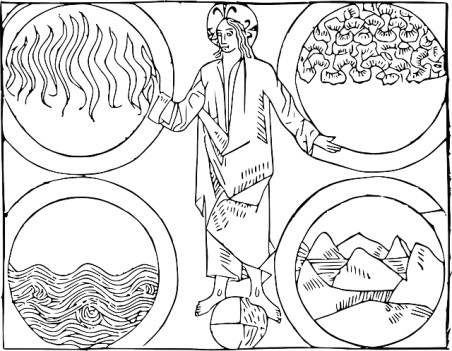
Torren, the Crown Prince of Ponderia has been behaving strangely. His sister and Pettic, his best friend discover that he has been kidnapped and a doppleganger put in his place.
Pettic, has to go to the four elemental worlds, Terra, Aeris, Aqua and Ignis, in order to find enchanted gems to enter the mini-plane where the prince is imprisoned and to defeat his captor. On each world he has a quest to perform to aid the people of that world before he can find the gem.
Pettic and Lucenra, the princess, then have to find the kidnapper and defeat him.


22 reasons to vote Remain

I am concerned at the possibility that the UK will vote to leave the EU on Thursday. While I acknowledge that there are things wrong with it, I really don’t think that in the world today it is sensible to decide to ‘go it alone.’
I believe this for the following reasons.
The EU is the biggest free-trade group in the world. We are a very small country that thinks it’s a big one. Should we turn our backs on this huge market? Yes, we will still be able to trade with them, but it will be on their terms. We won’t have any say in things. We will still have to meet their requirements without any input into what those requirements are. Not a sensible thing, really when we can stay in and argue our case.

There have been luxury houses built in London. They were mainly being bought by the rich Chinese, I understand, but this market has slowed considerably since the referendum has been mooted. The rich foreigners are hanging back to see what happens. They see the UK as a way into the European market, that I have already said is a huge free trade area. If we pull out of the EU, they’ll pull out of the UK. Big international companies already hear will most probably pull out. I heard of one company, I forget which, that is already looking at the possibility of moving to France.
££££$$$$££££$$$$££££$$$$££££$$$$££££$$$$££££$$$$££££$$$$££££$$$$
Investment will go down. People and companies won’t want to invest in the UK without the access to the European market, so jobs will be at risk.
The NHS is a big argument. The ‘leave’ people say we can invest the money we give to the EU into the NHS. Actually, I don’t believe that will happen. Some maybe, but it will be a drop in the ocean.
We don’t have enough nurses, midwives and doctors now. Many come from overseas. People complain about that, but the NHS would collapse without them. It’s all very well saying ‘Train more’, but if people don’t want to go into those professions, then we can’t make them. I personally believe that part of the reason is the litigation culture that is building up in this country.
Mark Carney, the Governor of the Bank of England is someone who should know what he’s talking about. He says that leaving is the biggest domestic risk to financial stability. When someone, even someone of his stature says something like this, the ‘Leave’ people just say. ‘Oh no it won’t,’ but have nothing to say to back up their argument.
The TUC General Secretary says leaving would have ‘massive implications for jobs, rights and the very fabric of the UK. If you take that floor away, workers will be worse off.’ I’m sure she will have done her research before making that statement.
One of the best brains in the country, Stephen Hawking, says that leaving the EU would be a disaster for Science.
In the EU we have co-operation between many police forces and so criminals can be tracked over borders. Do we want to lose our criminals if they cross the channel, or do we want them brought to justice?
If the vote is ‘Leave’, then the Scots will hold another independence referendum. I believe that this time they would vote for independence because the majority of Scots want to remain in the EU. The UK would then be split up. Would this then have a snowball effect and cause Wales and Northern Ireland to break away too? I don’t know, but it’s possible.
The biggest argument of the ‘Leave’ campaigners is immigration. ‘Take back our borders’ they cry. Now, I think that we do have to limit immigration. The number of people in this country is getting too great, but I don’t think that leaving the EU would make much difference.
I was born in England. My ancestors as far as I can trace were all born in England or Wales. Yet when I return from a foreign holiday I have to show my passport to re-enter my own country. This summer I crossed eight borders and the only time I had to show my passport was to return to the UK. We are not part of the Schengen agreement about free movement. Leaving the EU won’t stop people from trying to board lorries and get here illegally, nor will it stop people from trying to come legally. Anyway, we only seem to be concerned about those people from Eastern Europe, yet we employ them to do work in our homes because ‘they are cheaper and work harder.’ How’s that for hypocrisy?
They (the immigrants) only come here for benefits people say. Not true. Most come here to work or study. (Did you know that anyone who stays here for more than a year is counted as an immigrant, even if they are only here for a few years to study?) Most of these people are young and so don’t use much of our NHS provision. A UK national is also more likely to apply for, and get, benefits than those who come in. Immigrants now have to work for 4 years, and pay into the system, tax and National Insurance, before they can claim any benefits, including child benefit. Child benefit for children living abroad has been stopped.
0.1% of the EU migrants are claiming benefits or tax credits, while 22% of the working-age population is claiming, so they are a very small number. (calculated from Nomis, official labour market statistics)
Over 3 million UK jobs are linked to trade with the EU. That’s one in every 10 jobs. (The Treasury)
If we leave the EU, UK households would be £4,300 a year worse off. (The Treasury)
We save over £350 a year on lower prices in UK shops by being in the EU. (Centre for Economic Performance)
Workers’ Rights are protected by EU law, including maximum working hours, parental leave and rights for part-time workers.
This is my personal opinion. I haven’t got any statistics for it. I think, though, that food prices will rise if we leave. This is because the EU gives our farmers a subsidy of £2.4 billion. There is still a commonly held belief that farmers are all wealthy. Now I wouldn’t deny there are wealthy farmers. Of course there are, just as there are wealthy people in other walks of life, but the average farmer is struggling to remain in business even with the subsidy. (Dairy farmers barely get the cost of production, and a few years ago they were making a loss.) If farmers are forced out of business, then more of our food will have to come from abroad, thus putting up prices, and incidentally, due to increased mileage it has to travel, pollution.
What about tourism? If we come out of the EU, there is a high likelihood that holidays abroad will be dearer. This is because of a forecast fall in the pound of 12%. This will increase flight costs as well as the cost of accommodation.
We will lose t he EHIC card. This card ensures that travellers with it can access health care abroad. If it goes, people will have to take out their own insurance and if they are ill, pay up front and then claim the money back.
The British economy stands to lose £4.1billion per year from loss of tourism from the EU. That’s a lot of money.
I advise people to think very carefully before voting. If we vote ‘out’ it will be final. The EU won’t want to have us back. Voting ‘out is a jump in the dark.
Special offer
The relaunched version of The Wolf Pack is on special offer from tomorrow, 10th June until 17th June. Don’t miss this chance to get it at the ridiculous price of $0.99 or £0.99.
Please tell your friends about it too.
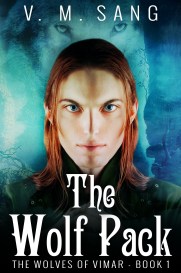
To end his apprenticeship and be admitted to the ranks of the mages is all that Carthinal wants and so he is excited to travel from Bluehaven to Hambara, where the tests will take place. He did not expect to end up travelling far beyond Hambara on a quest to find the long lost sword of the legendary King Sauvern.
Along with three strangers that he met on his journey, the beautiful but headstrong elven cleric, Asphodel, Fero, a dark foreigner from lands far to the south, known as the Black Ranger and a fearless dwarf, Basalt, Carthinal reluctantly sets out on this seemingly impossible quest.
Followed by Randa, the snooty aristocratic daughter of the Duke of Hambara and a very young runaway thief, known as Thad, Carthinal has to decide whether to send them back or allow them to continue on this dangerous quest. There will certainly be fireworks as Randa will try to take over the leadership of the group.
Faced with floods, wolf attacks and near death in the mountains, Carthinal and his friends will have to accept help from the least likely sources and face their innermost fears.
But this is more than a simple adventure. The fate of a nation hangs in the balance.
Get your copy from http://www.amazon.com/ or http://www.amazon.co.uk/
A Dwarf Work Song
Today is the fifth Tuesday in the month, so we have an extra blog. This time I’m posting a poem.The blog is short because I”m on holiday. I hope you enjoy it.
DWARF WORK SONG
Deep, deep below the ground
Wielding spade and pick.
Dwarven miners found
Minerals lying thick.
Tin, iron copper too,
We dig the all day long.
The solid rocks we hew
With sturdy arms and strong.
Precious stones we find.
Opals, rubies, jet.
We leave non behind.
Everyone we get.
But don’t you delve too deep.
We don’t know what lies there.
All kind of dangers sleep
And fearsome things lie there.
Please comment on this poem in the comments section.
Interview with Basalt Strongarm
Me: Thank you for allowing this interview. I know you are a
busy man.
Basalt: Fine, but be quick about it as I have work to do. I
am working on a particularly difficult piece of metalwork for
the Duke and I want to get back to it.
Me: OK, I’ll try to be quick. Tell me how you came to be in
Grosmer please.
Basalt: Hmph! I should be working my own mine now, not
doing wrought ironwork for someone else!
Me: Please explain.
Basalt: My parents owned a fine mine in Ghraali. They had
just one son, called Schist, but always wanted another child,
they said. When I was born many years later, they were
delighted.
Me: Where is Ghraali?
Basalt: It is the dwarven homeland at the southern end of the Western Mountains, just to the west of the Inner Sea. Fine ores and gems can be found there. It was once volcanic, but not any more. Not like the Mountains of Doom!
Here he shuddered as if he was remembering an unpleasant experience.
Me: Did the mine fail then?
Basalt: Not at all! It was all my brother and his wife.
Me: Please explain.
Basalt: Well, my brother was very caring towards me at first. He was nearly fully grown when I was born. He used to make wooden toys for me. He was a very good wood carver and he taught me how to carve too. Then he met HER.
Me: Her?
Basalt: His wife! She was called Opal. He met her one day in the town. She was visiting a relative or something. Oh, she was beautiful, of that there is no doubt, but she was hard and cold inside. She had ambition. Her ambition was to be rich.
Me: So how did that affect you?
Basalt. She poisoned Schist against me. She wanted him to have sole control of the mine, see. My parents were going to leave it to us jointly. After they were married, she came to work with us in our mine, of course. One day, there was an accident in the mine. Mother had taken me with her to the face. This was common practice with youngsters as both men and women work in the mines. I was playing with a small hammer a little distance away, tapping at a little rock when I heard a terrible rumbling and the rock face fell down covering mother.
Here he paused and sniffed. I waited for him to continue.
Basalt: I ran and tried to clear some of the rocks with my little hammer and bare hands. Others came to help, but when we finally pulled her out it was too late.
Me: I’m sorry, Basalt. It must have been dreadful for a small boy.
Basalt: Yes, it was.
Me: But you still had your father.
Basalt: Yes, for a little time. Then a similar thing happened again. This time it was my father who was killed. So here was I with only my brother and his wife to look after me.
Me: Did she show you any animosity at that time?
Basalt. No, not really. she was cold, did all that she had to for me, but no more. Schist tried to do as much as he could at first, but gradually he froze towards me too. I swear she poisoned his mind with false tales. I know she did tell him some things against me.
Me: But you were now part owner of the mine.
Basalt: Yes, but still a minor so had no say. Schist did all the decision making and day to day running.
Me: What happened when you came of age?
Basalt: That was when the worst started. There were a few falls in the mine and Opal accused me of causing them. Firstly she said it was carelessness, then she began to imply that it was sabotage–that I wanted the mine for myself and was trying to kill her and Schist. Eventually a fall, quite natural this one, just missed Schist. She took her opportunity and somehow managed to convince the elders of the town that I had engineered it. She even got some of the workers to testify that they had seen me interfering with the workface. They were believed and I was told that I could face the death penalty or exile. I chose to leave and that is how I came to be in Grosmer.
I am beginning to think that Opal also had something to do with the death of my parents, but I have no proof, and after all these years I cannot possibly prove anything.
Me: Thank you for your time, Basalt.
Basalt: Thank you. Now I must go to finish that job.
4 More Pairs of Commonly Confused Words
Even More Commonly Confused Words
I was reading the BT news the other day. Their journalists ought to read this blog I think because they keep making errors. The first one here I noticed a couple of days ago.
Peek/Peak
The article headline said something like ‘A sneak peak at…’
Peak, of course is the top of a mountain, while Peek is a quick glimpse of something. Perhaps there was a mountain hiding behind another, or a very sly one that was hiding, but I doubt it.
To, Too and Two.
This frequently appears in comments by people, and also in, I’m afraid to say, posts by writers.
To indicates movement towards as in ‘He gave the parcel to me.’
Too is an excess of something. ‘I had eaten too much and so I felt ill.’
I don’t often see Two misused. It is, of course the number. ‘Two buses passed me before the one I wanted arrived.’
Breath/Breathe
This can be a tricky one.
Breath is a noun and is what you take.
‘The doctor told me to take a deep breath.’
Breathe is a verb and is what you do.
‘The room seemed airless and I was finding it hard to breathe.’
Baring (bare)/Bearing(bear)
Another one from BT news.
Baring is the act of making bare, or naked. It is also used when revealing truths.
‘Baring all, the spy held nothing back in his interrogation.’
‘She removed her clothes, baring all.’
Bearing is carrying. (or of course, a large mammal living in the northern regions of the planet.)
‘The messenger arrived bearing the news of the king’s death.’
Then there is the problem of the past tense of these verbs. The past tense of Bear is Bore.
‘She bore the news that she had not got the job with equinamity.’
BUT, the past tense of Bare is Bared.
‘During the investigation, the criminal bared all.’
Re-launch of The Wolf Pack

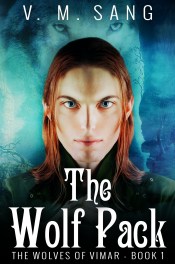
The Wolf Pack has now gone live on Amazon for Kindle, complete with new cover and some alterations to the story. It will be on special offer from June 11th to 17th. £0.99 or $0.99.
This is very exciting. Now for The Never Dying Man and then Part 3, Wolf Moon, which hasn’t been published yet at all.
Here is a bit about the story
The Wolf Pack
To end his apprenticeship and be admitted to the ranks of the mages is all that Carthinal wants and so he is excited to travel from Bluehaven to Hambara, where the tests will take place. He did not expect to end up travelling far beyond Hambara on a quest to find the long lost sword of the legendary King Sauvern.
Along with three strangers that he met on his journey, the beautiful but headstrong elven cleric, Asphodel, Fero, a dark foreigner from lands far to the south, known as the Black Ranger and a fearless dwarf, Basalt, Carthinal reluctantly sets out on this seemingly impossible quest.
Followed by Randa, the snooty aristocratic daughter of the Duke of Hambara and a very young runaway thief, known as Thad, Carthinal has to decide whether to send them back or allow them to continue on this dangerous quest. There will certainly be fireworks as Randa will try to take over the leadership of the group.
Faced with floods, wolf attacks and near death in the mountains, Carthinal and his friends will have to accept help from the least likely sources and face their innermost fears.
But this is more than a simple adventure. The fate of a nation hangs in the balance.
I’d love to hear from you in the comments section.
 Dragons Rule OK. V.M.Sang (author)