Tag Archives: blogging

Strangeness in the English Language

English is a strange language. There are many words spelled the same but pronounced differently, also there are words pronounced the same, but spelled differently. then there are words that are the same in spelling and pronunciation but have different meanings, depending on context.

The strangest, in my opinion, are words ending in -ough.

We have:

 Though, pronounced ‘tho’
 Bough, pronounced ‘bow’. (although that in itself has different pronunciations)
 Enough, pronounced ‘enuf’
 Thought, pronounced ‘thort’
 Through, pronounced ‘threw’

No wonder foreigners have some difficulty with it, although (another one, similar to ‘though’, here) it seems they are able to manage quite well if the number of foreigners who speak the language extremely well is anything to go by.

I was in an Italian restaurant in Germany and was greatly amused to see the German waiter speaking to a French customer in English. This also happened when I was in Croatia. The Croatian receptionist spoke to a visitor, whom I think was Russian, in English. These strange inconsistencies seem not to faze them, even if they confuse some native speakers!

England–A Poem

tree-402953_1280

That misty isle across the sea
Will always be a home to me.
The cliffs of white that guard our shores,
The rolling Downs, the bleak, cold moors,
The skylark with his liquid song
Soaring high above the throng
Of hikers, picnickers and such,
Whose hearts he never fails to touch.

The little streams and brooks do run
Through woodlands, glistening in the sun.
The little fish are swimming here;
A kingfisher is always near.
A flash of blue above the stream,
A dive–then gone, that silver gleam
Of minnows. Gone to feed his brood
In holes, all waiting for their food.

In cities where the pigeons fly
The wind-blown litter flutters by.
The cars and buses, cycles too,
Line up at lights, forming a queue.
The city’s clamorous roar assaults
The ears, but never, ever halts.
The busy folk all rushing past
They never slow, time goes so fast.

The little market towns do snooze.
The slightest little thing is news.
In pretty villages with greens
Are cottages with oaken beams.
The church bells echo o’er the fields
Calling us with merry peals
As they have done for many a year
Bringing hope and lots of cheer.

This land does not a climate boast,
Just weather, blown from coast to coast.
All in one day this land can get
All four seasons, sun and wet.
Though no extremes do us attack
Do not go out without a mac
For rain can come at any time,
Though rarely with a gale force nine.

The English folk are stubborn, too
As we evinced in World War two.
We do not push, but stand in line
Waiting patiently ’til it’s time.
We do not wail and wave our arms,
For such behaviour has no charms.
But when we’re roused, then just watch out!
We’ll demonstrate, wave flags and shout.

And so my country is unique;
Its people are not really meek.
An upper lip that’s stiff conceals
A wicked humour that reveals
Our lack of deference for power,
Our love for bird and bee and flower.
Abroad may have its charms, it’s true
But England’s magic’s ever new.

V.M.Sang
April 2014


How to correct two simple wordprocessing errors.

There are two things that I want to tell you today. they are things that annoy me somewhat when I come across them. the first is how to create superscripts and subscripts.
So often I read 25C or H2O. They are both wrong. The Celcius scale is measured in degrees. and the formula for water needs the dropped 2 or it means, if it means anything, one atom of hydrogen and two of oxygen Which is an impossibility anyway.
This is a very simple thing to rectify. Simply click on ‘format’ on the toolbar and click on Font.
You will get the following window opening.

Capture

Check the superscript or subscript box, whichever you want and click OK. Then type what you want to be super- or subscripted. Go back to Format, Font and uncheck the bod. Click OK and you’re ready to go.

Unfortunately, WordPress does not recognise the superscript nor the subscript, and when I copied this into WordPress, it came out without these corrections. I had to remove the corrected words.


The other thing that irritates me when reading is when there is an apostrophe at the beginning of a word. (such as ’till, an abbreviation of until) So often, this comes out as ‘till, which is. of course a quotation mark and not an apostrophe. (A quotation mark that is not closed, either.)
In order to prevent this, it is very simple. You can fool Word into thinking it’s an apostrophe in the middle of a word by not pressing the space bar until after you’ve typed the two words.
EG. Wait here’till I arrive.

Then you simply go back and put in the space. Word will then keep the apostrophe the right way round.

Wait here ’till I arrive.

Both quite simple really, but are usually done wrongly, either because the writer knows no better, or through ignorance of the means to correct it.

The Legend of Grillon and Parador.


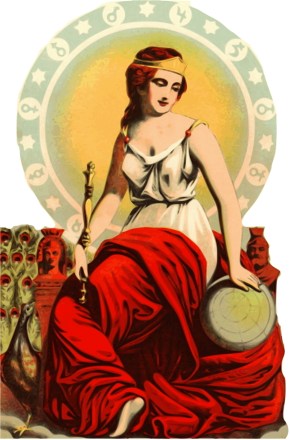
Grillon and Parador are two of the gods of Vimar, the world I created when I started to write The Wolves of Vimar Series.

Grillon is the god of Nature and wild things and Parador is the goddess of Agriculture. The legend is told each year on the first day of spring, which is also the start of the year on Vimar. The first month of the year is called after Grillon, and is known as Grilldar. It falls roughly the same time as mid-March to mid-April on Earth.

I hope you enjoy this poem, which also appears in the first book of The Wolves of Vimar, The Wolf Pack. The friends spend this day in Roffley on their way to find the Sword of the legendary king, Sauvern, who united the land of Grosmer.

On the eve of Grildar, morality is lax, and there are many children conceived at this time. They are considered as blessed, though, and are thought of as the children of the god, and not conceived of human males.

parador

Legend of Grillon and Parador

One day the Lord of Nature was walking all alone
When beside a hidden pool a lovely sight was shown.
For bathing in the moonlight, where no-one should have been
Was a beauteous maiden, the loveliest he’d e’er seen.

Lord Grillon lost his heart to her
This maiden oh so fair.
He vowed that she would be his own
His life with her would share.

He showed himself at once to her
As forward he did tread.
She said “And who are you, good sir?
Should you not be abed?”

Oh lovely maid, my love, my life,
I ne’er will rest again.
Unless you come to be my wife
My heart will feel such pain.”

And so fair Parador was wed
To Grillon. She agreed
To always sleep within his bed
And others ne’er to heed.

But evil now will turn to dust
That love and bliss
For Barnat after her did lust
And swore she’d be his.

He poisoned Grillon’s mind and said
She was untrue
That she had been into his bed
And others too.

Lord Grillon he was truly sad
That she should treat him so.
He thought that he’d go truly mad
So far from her he’d go.

Now Parador had done no wrong
To deserve this fate.
She could not any more be strong
Beneath Lord Grillon’s hate.

So mourn she did and all the world
Did join with her in sorrow.
All green things died and creatures curled
All safely in their burrow.

But in good time, Lord Grillon found
How false the god of war.
He came to her and he reclaimed
The love of his wife once more.

So once again the land grew green
And springtime came again.
And summer’s warmth and life serene
While she forgot her pain.

And so each year the land remembers
The love of Parador
And autumn comes and winter’s embers
Till Spring returns once more.

Looking Closer at the Semi-colon Used in Lists

Here are some thoughts on the semicolon. I found these ideas very interesting, especially to clarify things in lists.

In Defense of Grammar Schools

boy-160168_1280


There is a debate going on in the UK at the moment about education. As an ex-teacher I am interested in the arguments.

The Conservative Government wants to allow Grammar Schools to be re-established. Before the 1960s there was a system of Grammar Schools and Secondary Modern Schools.

In order to get into a grammar school, all children took an examination at age 11, in the final year of their primary school. It was called the 11+ examination. Those pupils who were in the top percentage got a place in the grammar school. I don’t know what that percentage was, but I have heard it said that the top 25% went to grammar schools.

home-1824815_1280

The grammar schools were academic schools, and they taught academic subjects. secondary moderns tended not to teach much in the way of languages, for example.

It is said that the future of children was settled at 11, and that was not good, because some children developed later. But the 11+ was not the end. There was a 12+ and a 13+ that pupils could take if they seemed to be developing in a more academic way.

At that time, the school leaving age was 15. The pupils who went to grammar school had to stay on until 16 so they could do the GCE ‘O’ level examination. A few pupils stayed on at secondary modern and did ‘O’ levels as well. If they did well in the examinations, they could then go on to the 6th form in the grammar school or at a college. I have several friends who did this.

During the 1960s, came the advent of the comprehensive school. These schools were deemed to be fairer than the old system. Each neighbourhood took in all the pupils from its catchment area. All went to the same school, regardless of their academic ability. This, it was said, was much fairer. It did not create an elite and a lot of ‘failures’ at the age of 11.

school-845196_1280

On the face of it, this seems to be fine, only I think there are a number of flaws in this argument.

The main one, I think is this. Pupils from a given area all go to the local comprehensive school. There is no examination for entry, so no feelings of failure by those who did not pass the 11+.
That sounds fine, but if the neighbourhood school is not very good, all pupils from that particular neighbourhood are being failed.

Children do not get the chance to meet children from a different background, either. They are living with these people, have been brought up in the area, either rich or poor, and so they do not get a rounded picture of society.

The idea was the opposite of this. Pupils attending comprehensive schools were supposed to see all the different types of people. Yes, they saw all the different academic types, but not people from different social backgrounds.

Comprehensive schools were supposed to prevent the feelings of failure by some pupils failing the 11+. I don’t think you can stop pupils from feeling inferior intellectually by lumping them all together. They can see the brighter pupils doing better than them in their academic work. That will make them feel inferior just as much as ‘failing’ the 11+.

One other thing brought about by the introduction of comprehensive schools, is that the education given is a watered-down academic curriculum, which is not suited to all pupils, and has lowered the academic standards for the very brightest pupils.

Grammar schools, they say, create an elite. This is supposed to be bad. In a perfect world, I suppose everyone would have the same academic capabilities, but everyone does not. There are some people who are much cleverer than others. Some say that it is solely due to their background how some people develop, and a middle class background is advantageous. This I would not dispute, but only to a point. There are middle class children who do not excel, and working class ones who do, in spite of their background.

They say that comprehensive schools help social mobility. How? Pupils live and learn in the same area with the same people and values.

In a grammar school, pupils come from all backgrounds and all areas of a town. They mix with each other and get to know something of the lives of each other. Pupils from working class backgrounds can get an academic education, and get away from the schools in their area where ambition is perhaps not so great.

Bright pupils who live in an area with a poor school can get away from that as well.

session-1989711_1280

It is said that grammar schools have more middle class pupils than working class ones. That is something that can be worked out. ‘They’ say that the exam can be coached and middle class parents are more likely to put up the money for coaching. Well, I went to a grammar school and was coached for the exam, but not by private tutor, which is the perception, but by my primary school. Encourage primary schools in working class areas to coach. Or develop an exam where coaching is no advantage.

There’s always an answer, and in my opinion, the advent of comprehensive schools has lowered standards. When I look at the exams I took at ‘O’ level and the exams pupils take at GCSE, there’s no comparison. We had to write essays. They just have ‘structured questions’, or fill in the blanks.

I see grammar schools as promoting social mobility far more than comprehensive schools in contrast to what the detractors say, that they are elitist and prevent it.

I would love to hear what you think of the grammar school debate.

An Interview with Kimi. The Wolves of Vimar.

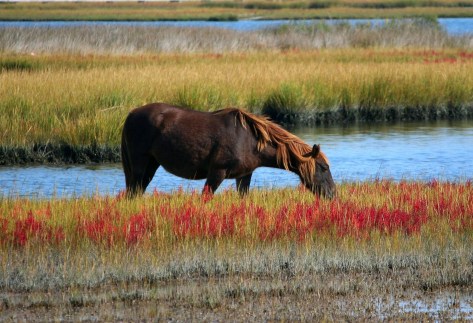
wild_horse_marsh_pony_assateague_island


Me: As you know, I have interviewed your husband,
Davrael. He told me something of the life on the Plains.
Perhaps you can tell me something about how you two met.

Kimi: Of course. It will be a pleasure. As you know, Davrael
is from a nomadic family. One of the Tribes. They travel the
Plains following and herding the horses that roam across
them.

Me: The horses are free then? Don’t they belong to the tribe?

Kimi: Yes, each tribe calls particular herds their own, and
they brand them when young to show their ownership, but
most of them are wild and free. I am from the settlers. We
once roamed the Plains just like the Tribes, but our
ancestors decided to settle in order to have more control
over the breeding of our horses. They thought that they
could breed better animals that way.

Me: And did they?

Kimi (smiling): There are still arguments about that.

Me: How did you and Davrael meet then?

Kimi: One day I was out riding with my brothers when we were attacked by a group of Tribesmen.

Me: Was one of  them Davrael?

Kimi: Oh, no. It was an enemy tribe of the Swooping Hawks. They are called the Howling Coyotes. The Tribes have never liked the settled folk. They think we have abandoned tradition and the settled folk think that the nomads are primitive people, so there was no love lost between us. Anyway, my brothers tried to fight them off but there were too many of them and they took me with them. I think they wanted to marry me to one of their men. They did raid sometimes for both horses and women.

Me: Where did they take you?

Kimi: They took me to their camp several days away. It wasn’t their main camp. In fact they had strayed into the territory of the Swooping Hawks. That was why the trouble began.

Me: Trouble?

Kimi: Yes. A band of Swooping Hawks came upon the camp and a battle began. I know little of that battle because I was tied up in a tent, but I could hear the noise–shouting and screaming. Then it suddenly went quiet. I heard a voice commanding the capture of all the horses and a search of the tents. After a while, a man came into my tent. I was petrified. He was an imposing-looking man, although not really handsome, with long hair held back by a braid around his head. What was the most terrifying, though, was the tattoo of a hawk on his face. I tried to hide, hoping he wouldn’t see me and that I could somehow escape, but he was too observant and saw my little wriggles behind a bed. He lifted me out and said, ‘What have we here then? A little mouse trying to escape the hawk?’ He laughed at my frightened expression and continued, ‘Well, it seems the hawk has caught the mouse after all.’

Me: This was Davrael I assume.

Kimi: Yes. He freed me of my bonds and told me that I would be well treated. He asked me where I had come from and what tribe I belonged to. I told him that I was not a tribeswoman and where my family were settled. He agreed to take me back to my family if I could assure him that they would pay in horses for my return. Coin has little meaning for the Tribes. They count their wealth in their horses and trade by barter, you see.

Me: Did you give him this assurance?

Kimi: Yes. I was confident that my father would pay him whatever he wanted.

Me: So he took you back to your family?

Kimi: Not immediately. Davrael and his men were out searching for some horses that they suspected that the Howling Coyotes had stolen. They were some of his best animals. Beautiful golden horses with silvery manes and tails they are. Come to think of it, their manes and tails are almost the colour of Randa’s hair!

Me: Where did he take you?

Kimi: Well, I rode with them for quite a long time actually. Some of the horses had strayed a long way, and some had even been taken to the territory of the Howling Coyotes. There were a few battles, but eventually he got them all back. Every evening he would come into the tent he had said was to be mine and we would talk. Gradually I learned that he was not the fearsome warrior I had thought, but was, in fact, quite a gentle perso, although he could fight well when required. He was kind to me and I gradually began to fall in love with him. I was surprised when he told me that he reciprocated my feelings.

Me: There were problems though I understand.

Kimi: Yes. This is quite painful for me to relate. Davrael took me to his father and told him that he wanted to marry me, but his father flew into a rage and said that no son of his would marry a settler. We the went to my family. They were delighted to see me as  they had given me up for dead or worse. When Davrael and I eoldthem of our love, my father said that there was no possible way that he could allow it. He offered Davrael two of his best horses if he would go away and forget about me.

Me: He didn’t, of course.

Kimi: No. We met in secret for a time, but then decided that it was impossible to live like that and so we decided to elope.

Me: You went to Grosmer then.

Kiki: Yes. We went to Grosmer. If all that had not happened, or if either of us had obeyed our fathers, then we would never have met Carthinal and the rest of the Wolves. I wonder what would have happened then?

Me: Thank you very much, Kimi.


Please leave a comment on this post.

Kimi is one of the main characters in The Wolves of Vimar Series. If you would like to find out more about her and the other characters, follow this link to The Wolf Pack, Book 1 of the Woves of Vimar Series.

http://mybook.to/thewolfpack

or click on the book title on the sidebar.
 

Some tautological sayings

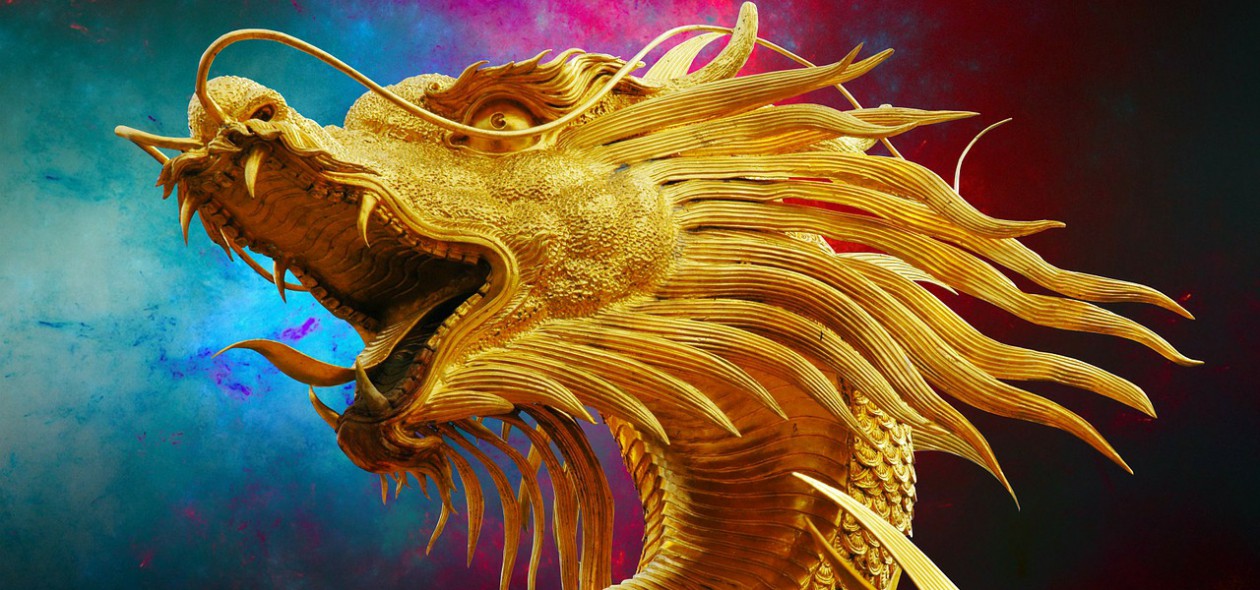
dragon


Tautology is using words that mean the same thing in a sentence, that do not add anything further. An example is ‘widow woman’. I am going to talk about some tautological things that people say and write today.

So let’s begin.

 I heard someone on the radio talk about a ‘small, little…’ Can you have anything little that’s not small? I have heard this on several occasions. Never, though, a ‘large, big…’ that I can remember.
‘Reverse back’ is another one frequently heard. Have you ever seen anyone reverse forwards? I haven’t.
‘Repeat again.’ Now this one can be used, but only if the thing has been said (or done) at least twice. Repeat means to do it again. The ‘again’ is in the word itself.
 One that irritates me, and is very frequently used these days is ‘Various different…’ Have you ever come across things that varied but were the same?
‘Fall down’, although frequently used in everyday life, is none the less tautological. You can’t ‘fall up’, so the ‘down’ is unnecessary. This is one that writers should watch out for.
Close proximity. If it’s in proximity, it’s close!
 Necessary requirement. If it’s not necessary, it’s not a requirement.
PIN number. Since PIN stands for Personal Identification Number, saying PIN number is saying ‘personal identification number number.’
 We see, in advertising, ‘Your Free Gift’ Well, if it’s not free, it’s not a gift, and if it’s a gift, then obviously it’s free.
Thought to myself. Writers beware. Unless telepathic, you can only think to yourself. Telepaths are a very rare commodity, I think.
 Finally, one heard on a snooker programme. The graphic showed a circular spot where the player wanted the cue ball to end up, and the commentator mentioned a ’round circle.’ Anyone know any circles that are not round?

I would love to hear any others you can think of. I know there are so many. Please add comments in the comments box.

A Review of The Key to Erebus

I recently finished reading The Key to Erebus by Emma V.Leech. I really enjoyed the story.

Jehenne is a young girl who leaves Britain to go to live with her French Grandmother. When she arrives, everything seems normal at first, but gradually she is drawn into a world which she did not know existed. A world of elves, ghouls, vampires, fairies and others.

Her Grandmother is heavily involved in this world, and she sets about introducing Jehenne to all the mysterious and sometimes dangerous beings that inhabit it.

Jehenne finds she is in great danger from a renegade vampire who is seeking the mysterious Key to Erebus.

Jehenne finds the truth of the key is more frightening than she thought.

While I enjoyed the story immensely, I did find Emma Leech’s punctuation a bit off-putting. She uses semicolons far too much, and frequently in places that were inappropriate, or where a comma or full stop would be a better choice. She also seems to be unsure of how to punctuate speech.

But apart form this, the book was exciting and moved along at a good pace, keeping you guessing.

A Visit from David Kummar

David Profile Pic

David Kummar is the author of a number of books, including the War of Enden series, which I have read and thoroughly enjoyed.

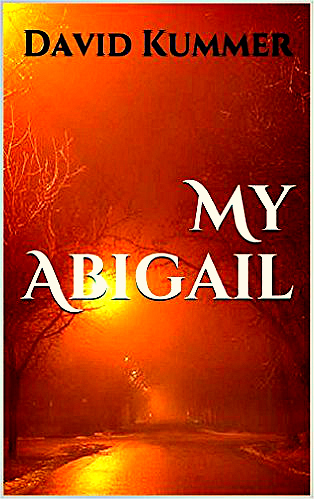
Welcome to my blog, David. I believe you have a new book out, called My Abigail. Please tell us something about it.


my abigail cover

“She would always be my Abigail.”
It was always about Abigail, for me. The book is called My Abigail, the major plot twist has to do
with Abigail, and the character I was reduced to tears over was Abigail. Trust me, I cried
countless times writing this book.
So, why is the main character named Caleb? Let me explain this book.
Caleb is a teenager, who lives in a small rivertown. He isn’t the cool type of teenager. He’s
lonely, angry, moody, unhappy, and doesn’t really have any friends. Not one. So when he meets
Abigail, who is as kind as she is beautiful, the two mesh pretty well. After all, what choice did
Caleb have, unless he wanted his high schools years to -as the kids say- suck?
Around the same time, he meets Xavier, a nerd who he’s heard all about but never met. They
become friends as well. Then there’s Ayva, the little girl his mom babysits. She’s creepy… really
creepy… but nice enough. They get along, and for Caleb it’s like having the responsibility of
being a big brother.
Things turn dark, as things tend to do. Abigail has her secrets. Xavier isn’t who he says. Ayva
continues to act stranger and stranger. And Damian, the shadowy figure on the street who
haunts Caleb’s nights, threatens to reveal everything.
Never before has the saying “ignorance is bliss” been more true. Because when Caleb finds out
exactly what’s going on with Abigail, he wishes he never had. He wishes he had never met the
perfect girl turned monster.
What’s that secret? I can’t tell you that. I can assure you, however, that it’s something you’ve
not seen before and you won’t expect coming. Don’t take my word for it. The reviews on
Amazon say the same thing.
I could talk about lots of things in regard to this book, and I might in the future. I could talk about
the music I listened to, or the time it took me to write it, or the usual day and how typing fit into
my schedule. But I can talk about those later. What I want to let you know is what my purpose
was for this book, and how it became the most important book of mine.
First of all, I wanted to win an award and become a millionaire. Nah, I’m just kidding. That wasn’t
even on the plan, and probably never will be.
For me, this book wasn’t really about making money (haven’t done that) or shocking people out
of their socks (hopefully did that). It was about writing something worth reading, and something
unique.
This book is scary, sure. It’s definitely emotional, what most would call sad. But overall, my hope
is that it’s original. Because just like the title character, this book has its secrets. It has its dark
moments. It had its happy ones. And in the end, it has Abigail.

Thank you David. It certainly sounds a fascinating book.

If you have enjoyed this introduction to David’s book, please leave a comment below.