Tag Archives: v.m.sang

In Defense of Grammar Schools

boy-160168_1280


There is a debate going on in the UK at the moment about education. As an ex-teacher I am interested in the arguments.

The Conservative Government wants to allow Grammar Schools to be re-established. Before the 1960s there was a system of Grammar Schools and Secondary Modern Schools.

In order to get into a grammar school, all children took an examination at age 11, in the final year of their primary school. It was called the 11+ examination. Those pupils who were in the top percentage got a place in the grammar school. I don’t know what that percentage was, but I have heard it said that the top 25% went to grammar schools.

home-1824815_1280

The grammar schools were academic schools, and they taught academic subjects. secondary moderns tended not to teach much in the way of languages, for example.

It is said that the future of children was settled at 11, and that was not good, because some children developed later. But the 11+ was not the end. There was a 12+ and a 13+ that pupils could take if they seemed to be developing in a more academic way.

At that time, the school leaving age was 15. The pupils who went to grammar school had to stay on until 16 so they could do the GCE ‘O’ level examination. A few pupils stayed on at secondary modern and did ‘O’ levels as well. If they did well in the examinations, they could then go on to the 6th form in the grammar school or at a college. I have several friends who did this.

During the 1960s, came the advent of the comprehensive school. These schools were deemed to be fairer than the old system. Each neighbourhood took in all the pupils from its catchment area. All went to the same school, regardless of their academic ability. This, it was said, was much fairer. It did not create an elite and a lot of ‘failures’ at the age of 11.

school-845196_1280

On the face of it, this seems to be fine, only I think there are a number of flaws in this argument.

The main one, I think is this. Pupils from a given area all go to the local comprehensive school. There is no examination for entry, so no feelings of failure by those who did not pass the 11+.
That sounds fine, but if the neighbourhood school is not very good, all pupils from that particular neighbourhood are being failed.

Children do not get the chance to meet children from a different background, either. They are living with these people, have been brought up in the area, either rich or poor, and so they do not get a rounded picture of society.

The idea was the opposite of this. Pupils attending comprehensive schools were supposed to see all the different types of people. Yes, they saw all the different academic types, but not people from different social backgrounds.

Comprehensive schools were supposed to prevent the feelings of failure by some pupils failing the 11+. I don’t think you can stop pupils from feeling inferior intellectually by lumping them all together. They can see the brighter pupils doing better than them in their academic work. That will make them feel inferior just as much as ‘failing’ the 11+.

One other thing brought about by the introduction of comprehensive schools, is that the education given is a watered-down academic curriculum, which is not suited to all pupils, and has lowered the academic standards for the very brightest pupils.

Grammar schools, they say, create an elite. This is supposed to be bad. In a perfect world, I suppose everyone would have the same academic capabilities, but everyone does not. There are some people who are much cleverer than others. Some say that it is solely due to their background how some people develop, and a middle class background is advantageous. This I would not dispute, but only to a point. There are middle class children who do not excel, and working class ones who do, in spite of their background.

They say that comprehensive schools help social mobility. How? Pupils live and learn in the same area with the same people and values.

In a grammar school, pupils come from all backgrounds and all areas of a town. They mix with each other and get to know something of the lives of each other. Pupils from working class backgrounds can get an academic education, and get away from the schools in their area where ambition is perhaps not so great.

Bright pupils who live in an area with a poor school can get away from that as well.

session-1989711_1280

It is said that grammar schools have more middle class pupils than working class ones. That is something that can be worked out. ‘They’ say that the exam can be coached and middle class parents are more likely to put up the money for coaching. Well, I went to a grammar school and was coached for the exam, but not by private tutor, which is the perception, but by my primary school. Encourage primary schools in working class areas to coach. Or develop an exam where coaching is no advantage.

There’s always an answer, and in my opinion, the advent of comprehensive schools has lowered standards. When I look at the exams I took at ‘O’ level and the exams pupils take at GCSE, there’s no comparison. We had to write essays. They just have ‘structured questions’, or fill in the blanks.

I see grammar schools as promoting social mobility far more than comprehensive schools in contrast to what the detractors say, that they are elitist and prevent it.

I would love to hear what you think of the grammar school debate.

Spring. A poem

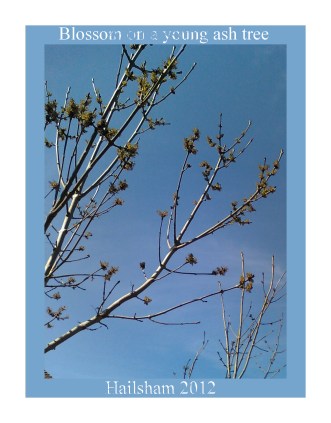
112ashblossom114wallsparthenay

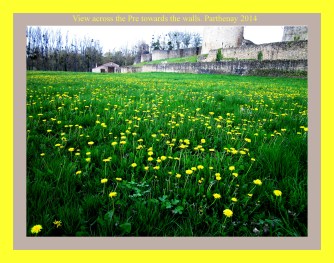
Dandelions, like gold, cover the meadows.
Newborn lambs frolic in fields.
New leaves on the trees are casting their shadows
And winter’s cold grip quickly yields.

At the edges of woodland the primroses glow
And cowslips their scent fills the air.
Anemones dance when the breezes do blow
And birds sing with never a care.

Then bluebells and campions come into bloom
Their colour the blue of the sea.
The cuckoo, that herald of spring, will come soon
His call echoing over the lea.

The song of the blackbird is like molten gold.
His notes are so pure and so clear.
Hearing him seems to banish the cold
And brings joy to all those who hear.

Robin is nesting, and other birds too,
The hedgehog is active once more.
The young of the deer and the badger and shrew
Play their games as in old days of yore.

The sun climbs higher and higher each day
Giving more of his heat and his light.
It sparkles like stars fallen into the bay.
All smile at the beautiful sight.

Hope and excitement come with each spring morn.
What blessings will come with this day?
New starts can begin once again with each dawn
And send us all hopeful away.

Winter Night. (a poem)

This ought to have been published in the winter, but I didn’t get round to it, so I’m publishing it today. Anyway, it’s still technically winter! Hope you enjoy it.

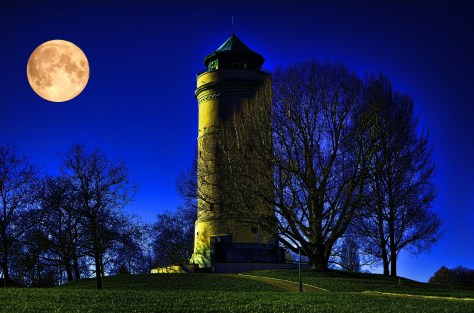
full-moon-1337690_1280

Snow covers the ice-hard ground
And ponds and lakes are frozen.
All is muffled, every sound.
The birds are silent in the trees,
No moths or butterflies or bees
Just snowflakes by the dozen.

The moon is full and her pale light
Shines gently through the flakes.
But creatures shiver through the night.
The icy wind makes branches quiver
And every living thing to shiver
In trees and hills and lakes.

Across the field there trots a fox.
An owl flies by on silent wings.
On the frozen lake, some ducks.
As snow falls gently on them all,
And cattle low within their stall
We are waiting for the spring.

I welcome all your comments, so please add yours.

Umbrae Blog Tour

umbraeblogtourbanner


I am quite excited about this release because I started reading the series recently and am looking forward to reading the rest of it.

Debbie has kindly interviewed Miri for my blog. Here is the interview.

What do you miss most from when you were young?
Oh lots of things: my cats – Kitty and Susie; my best friend – Jenny; New York City and in particular the Lower East Side where I grew up; and most of all my omama. I think about her every day – the things she taught me, the stories she told. And I also wonder about the stories she didn’t tell. About her early life in Vienna and how she escaped from the Nazis. Maybe one day I’ll be able to piece all that together.

What scares you the most?
That I could lose my new friends here at P.A.W.S. I’d like to be able to just enjoy my classes and hang out like a normal teen (or at least as normal as a shapeshifter cat girl can be), but bad stuff seems to follow me around, so I guess I should be prepared.

How did you change as you grew older?
I think I’ve become more confident and a little less likely to trip over my own two feet – I think having four paws helps with that and of course having good teachers – Josh and Danny – also does wonders.

What has been the hardest struggle for you?
Believing that I actually have magic. I know Jessamyn says that my whole family had magic, but it does seem hard to believe.

Who do you hope stays in your life?
Well Danny of course (blushes), but I don’t really see how he likes me. And then I hope I’ll always stay close to my friends at P.A.W.S. – Josh, Sandy, Sean and Joey. Joey’s said that in a few years I should visit him in Australia. That would be a lot of fun.

What do you need to be happy in the future?
Good friends, my books and my writing. I hope someday to write my story and delve into my family’s past so that I can write a history of that too.

What is the most important lesson you have learned?
To trust my friends when they say I’m much stronger and more capable than I think I am.

Miri’s story continues in Umbrae (P.A.W.S. 3)

Pick up your copy today!
And connect with Debbie on her blog – Paws 4 Thought
Facebook or Twitter.

umbraewrapevenbetter

My Visit to Another Blog

Today I’m visiting Auden Johnson’s blog to talk about how I came to write The Wolf Pack. Pay her a visit and read about it. Who knows, you might find something else you enjoy there.

Here’s the link.

http://audenstreasury.blogspot.co.uk/2017/02/guest-post-how-dungeons-dragons.html

Some of my photographs

Today is the 5th Tuesday in the month, so I’m doing something different. I’m posting some photographs I’ve take.

As you can see, they are rather old ones. they are all of places in Brittany.

I hope you enjoy looking at these photographs as much as I enjoyed taking them.


Please leave a comment and I’ll get back to you.


Link to my book

At last, I’ve got a working link to The Never-Dying Man. At least it worked for me. Hope it does for you too. If not, please let me know.

Here it is:

http://mybook.to/TheNeverDyingMan

Hypocricy. A poem.

mask-545971_640

Today is a day when I share some more of my writing. Today it’s another poem.

Hypocrisy

We like our village churches
But we don’t go there.
We love our local pub
But we don’t drink there.
We don’t want them to close
Though no one ever goes.

Our roads, they are congested
With cars for everyone.
The others shouldn’t have them
But we, of course, need one.
It should be other folk
Who give it up and walk.

Aircraft fly above us
Polluting all the air.
We think there should be fewer
But we still fly o’er there.
We need our holiday
No matter come what may

We don’t like highest earners
But want to earn as much.
We eat our meals with wine
But we don’t know too much.
We really like to think
We understand our drink.

We highly praise the classics,
But we don’t read them.
We talk of works of Art
But never see them.
We think we are so highbrow
But brows are really quite low.

We say we all hate rumour
But spread the gossip.
We say we understand things
When we don’t, not one bit.
Hypocrites are we
And we always will be.

10 words I found an author had confused.

I recently read a book in which the author made many mistakes in the word he chose to use. I won’t embarrass him by naming the book or author just in case he ever looks at this post. Suffice it to say that it isn’t the usual genre I read, being horror.

I actually found the storyline quite good and it read with pace, but here are some of the mistakes he made with words.

1. Traverse: Transverse

Traverse is a verb meaning to go across something, like, as in the story, a forest.
Transverse is an adjective meaning something that goes across something else. e.g. a diagonal line crossing a shape, or a piece of wood going across another to form a cross.

The author wrote ‘…the only way to transverse the property…’

2. Disperse: Dispense

Disperse means to scatter. E.g. The crowd dispersed in an orderly manner.
Dispense means to do without. E.g. As the weather was warmer, he dispensed with wearing a coat.

The author wrote  ‘…dispersed with human words…’

3. Soul: Sole
This one amused me greatly.
Soul is the spiritual part of a person that carries on after death.
Sole is the base of a shoe, or the only one.

The author wrote ‘…rubber boots, their souls encased in mud…’

4. Boarded: Bordered

Another amusing one.
Boarded means to get onto a ship, coach, aircraft, bus etc
Bordered means to go round the edge of something.

The author wrote ‘Two candles boarded a statue of the Buddha.’

5.Forth: Fourth

Forth is to set off, go or depart.
Fourth is the one after third and before fifth.

The author wrote ‘He dumped the first three cards and was in the process of leading the forth.’

6. Hold: Holed

Hold is to have something in one’s hands.
Holed is to hide away.

The author wrote, ”We hold up in my grandfather’s hunting cabin.’

7. Site: Sight

Site refers to a place. E.g. This is the site of the battle.
Sight refers to seeing.

The author wrote ‘He brought up the front site of the shotgun.

8. Crucifix: Crucifixion.

Crucifix is is the cross on which people were killed in Roman times.
Crucifixion is what happens on the cross.

The author wrote, ‘The priest stood next to the first crucifixion.’
‘A large semicircle with twelve crucifixions…’
‘Strapped to the crucifixions…’

9. Finally: Finale

Finally is an adverb. It means coming at the end.
Finale is a noun and it refers to the last act.

The author wrote, ‘The grand finally…’

10. Wetting: Whetting

Wetting means to put water on something.
Whetting means to sharpen something. E.g. a stone used to sharpen a knife is called a whetstone.

The author wrote, ‘…wetting their appetite…’

Those were the main ones I noted down, as well as some common ones like were and where, choose and chose and the inevitable loose and lose.

Now I’m prepared to be generous and say some of these might, just might, be typos, but even in that case, it was poor. The manuscript should have been edited better.

It’s things like this that give self-published authors a bad name. It’s easier to get a bad name than a good one, and very difficult to get rid of a bad name once it’s been established. Unfortunately, in many people’s eyes, self-published authors are poor and produce poor books, and it’s things like this that reinforce this opinion.

So please, please, please, if you are a self-publishing author, or are thinking of self-publishing, get your manuscripts edited and all corrections made before going to press with it. At least read through it properly and get someone else (as many someone elses as you can, preferably) to do so as well if you can’t afford a professional editor. I’ve never heard anyone say they couldn’t finish a book because it had no errors, but I’ve heard many say the opposite.

Please tell me what you thought about this blog. I’m always pleased to hear what you think.

7 unanswerable questions

question

There are some questions that require thinking about.

Does God Exist?
Why are we here?
Are we alone in the universe?
Such questions are difficult to answer, but the ones below are some that I would like to know the answers to. To me, they are as difficult to answer as the above.

Why do young people think it’s cool to walk around in torn jeans? It makes them look scruffy and as though they don’t care about their appearance.
Why do people find the use of the apostrophe so hard? Is it because they’ve been taught poorly? It didn’t used to be the case that we found apostrophes lurking before every ‘s’.
Why do some people think it’s acceptable to drop litter? Don’t they have any pride in their town/village/country? Do they drop their litter in the living-room at home?
Why can’t people choose to use inclusive language? There is no need to use the word ‘man.’ (Its capital letter to denote it was being used as the collective has disappeared.) There are plenty alternatives that do not invoke gender. For ‘man-made’, ‘artificial’ or ‘synthetic’ can be used. For the generic, ‘Man’ we can use ‘human’, ‘humanity’ or ‘people.’
When people pick up their doggy poo and put it in a bag, why do some of them then hang the bag on the nearest bush? Do they think it looks pretty.

Why do people walk around in dark clothes at night? Even in areas of street lighting there are many shadows, and it’s often difficult to see them. Especially cyclists. There used to be an advert on TV that said ‘Wear something white at night.’

On the subject of dark clothes, why are winter clothes always dark? Surely we need cheering up in the dark days of winter?