Tag Archives: v.m.sang

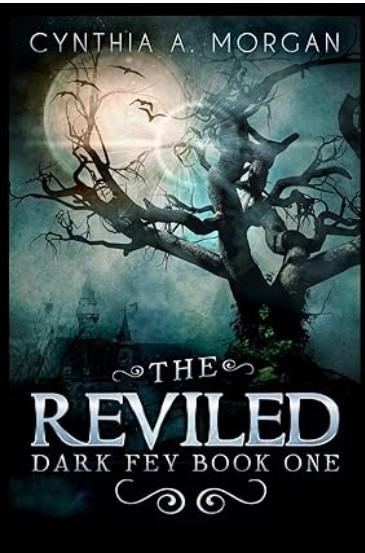
Review of The Reviled. Book 1 of The Dark Fey by Cynthia Morgan

OVERVIEW 

An original and intriguing story.

BLURB

From a young age, Ayla has learned about the mortal enemy of all Fey of the Light: The cruel Reviled Fey.

Gairynzvl is a Fey of the Light who was abducted by the Reviled when he was young. Now, he is one of them.

Lurking in the shadows, he lingers near Ayla and secretly whispers to her. The mystery he presents is irresistible, although she knows the Reviled Fey are menacing and devious.

Learning what he wants is only the beginning.

Should she trust him? Or will he tear her world apart?

STORY

Ayla is a fey of the Light. She has unusual gifts. She can distinguish truth from lies, and her empathy is so great that she can take on the pain of others and relieve their suffering.

She is a retiring person, but when her best friend, Nayina, suggests she go to a festival with a young fey of Nayina’s acquaintance, she is at first reluctant. However, the pair are attracted to each other and soon form a bond.

But Ayla has a secret she’s kept from everyone, including Nayina. She has sensed a male presence that seems to be watching her. He hides in the shadows and doesn’t reveal himself.

Could he be one of the Dark Fey, known as the Reviled? These creatures steal young fey and, by means of torture and harsh treatment, turn them to evil?

Eventually, Ayla tells Nayina who urges her to tell the Elders, but, strangely, Ayla doesn’t want to. At least not until she has more idea who the stranger is.

Is this person one of the Reviled? He seems reluctant to leave the shadows, as a Reviled would be. The Light actually hurts and injures them, eventually leading to their death. And what does he want with her? 

CHARACTERS.

Ayla is a gentle soul who likes her own company. She is employed to look after the children, along with Nayina. 

Her encounter with the mysterious stranger makes her plumb depths she never knew she had.

Nayina is not so developed but she isn’t a major character.

Ayla’s ‘boyfriend’, Mardan, is another character who develops through the story. He is a likeable person, and cares deeply for Ayla. He does change throughout the story.

As does the mysterious figure, when we finally meet him.

I don’t want to say much more as the development of the characters is such that to discuss it more would be a spoiler.

WRITING

Cynthia Morgan gives a good description of the Fey and we can picture these wonderful people quite clearly. Maybe a little more description of the setting might make it easier to visualise it, but I did not find it detracted from my enjoyment of the story.

There are few typos and grammar errors.

One thing that did stand out to me, though, was that occasionally the author swapped the point of view character in the middle of a scene. On one occasion this was in the middle of a paragraph. I didn’t find it much of a problem–more an irritation. I think this is because the pronoun changed, from Ayla to Mardan (I think).

I enjoyed the story very much and am looking forward to reading the next part.

I give it 4*

My ranking of books. In order to get a particular number of stars, it is not necessary to meet all the criteria. This is a guide only.

5* Exceptional. Wonderful story. Setting well drawn, and characters believable–not perfect, but with flaws. Will keep you up all night. No typos or grammatical errors.

4* A thoroughly enjoyable read. Great and original story. Believable setting and characters. Very few grammatical errors or typos.

3* I enjoyed it. Good story. Characters need some development. Some typos or grammatical errors.

2* Not for me. Story not very strong. Unbelievable and flat characters. Setting not clearly defined. Many typos or grammatical errors.

1* I hated it. Story almost non-existent. Setting poor. Possibly couldn’t finish it.

Have you read any of the other Dark Fey books? Let us know what you thought of them in the comments.

Discover the Beauty of Wood Anemones in Spring. British Wild Flowers.

Image by mikezwei from Pixabay

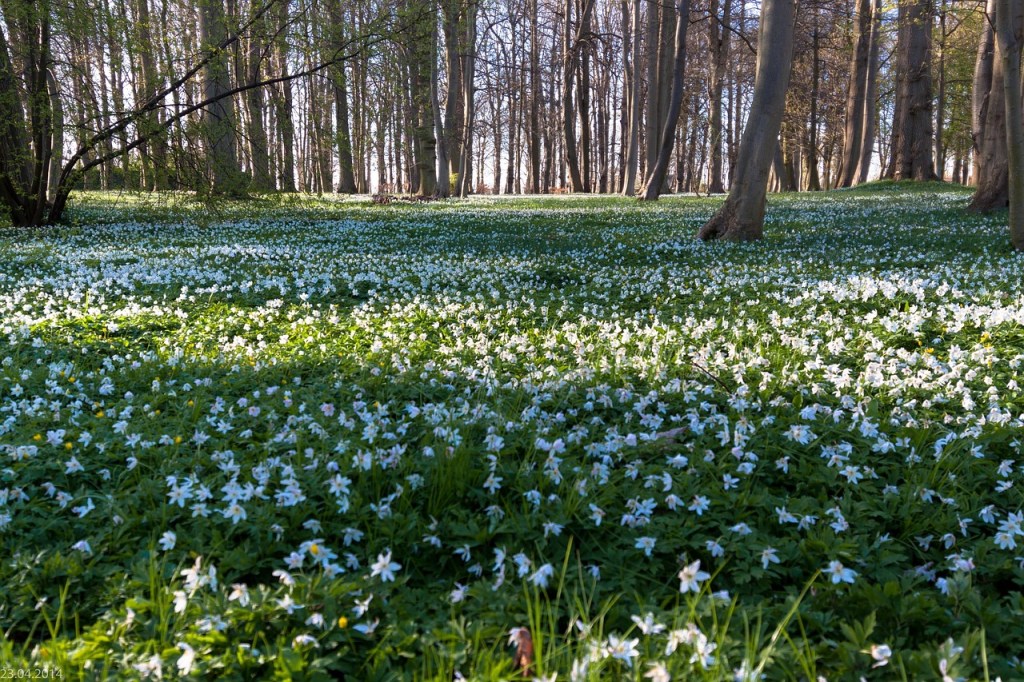
One of the prettiest sights in spring is the carpets of white that cover the ground beneath woodland trees.

This is not a late scattering of snow, but thousands of wood anemones.

The Woodland Trust says:
A sign of ancient woodland.

Wood anemone is an ancient-woodland-indicator plant. If you spot it while you’re out exploring, it could be a sign you’re standing in a rare and special habitat. 

I am lucky enough to have woodlands with these flowers within walking distance of my house. Ancient woodland that has been there since time immemorial.

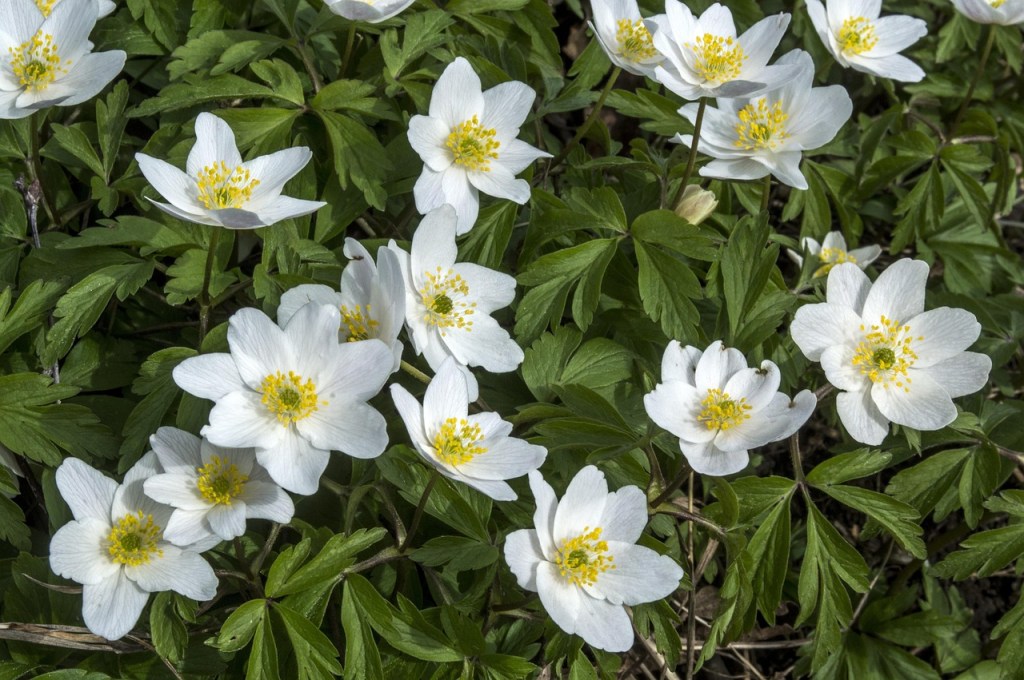
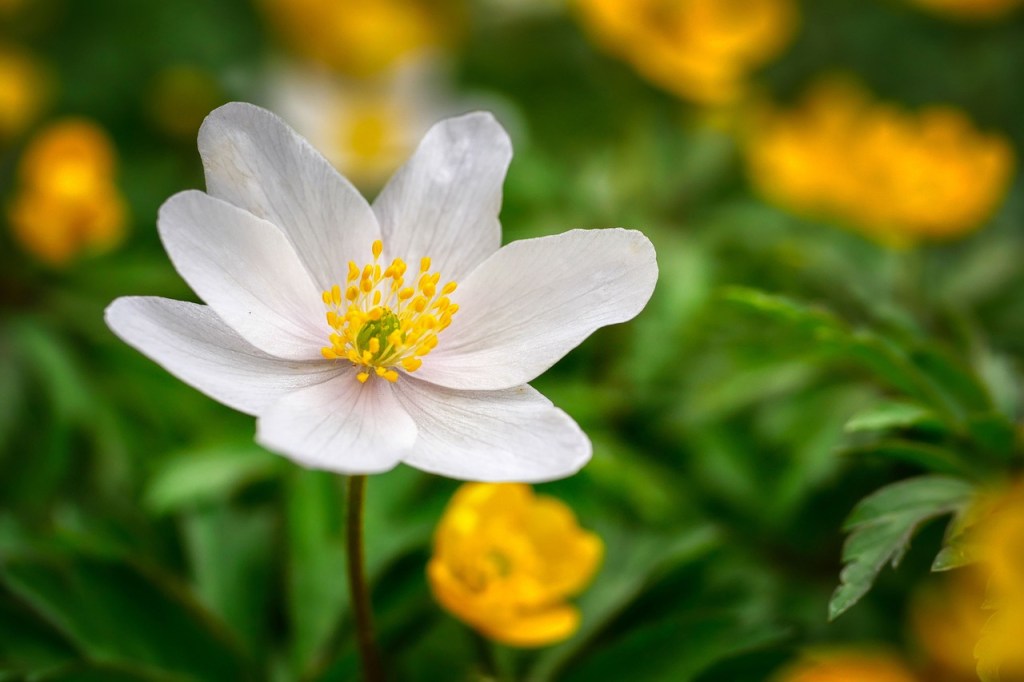
The wood anemone is a delicate-looking plant with white star-shaped flowers.

Image by Pirkko Valtonen from Pixabay

The Wood anemone found in the UK is Anemonoides nemorosa, while in the US there are two species–Anemonoides quinquefolia, which has white stamens as well as white flowers, and the western wood anemone Anemonoides oregana, which is blue.

I am going to talk about ours, though, since this is one my British Wild Flowers posts.

Image by Albrecht Fietz from Pixabay

These plants are very small. Wikipedia says seldom reaching a height of more than 30cm, but I’ve yet to see one anywhere near that height. Most of those I’ve seen are around half that. They have delicate leaf-like bracts beneath the flowers that are divided into three lobes.

We find these little beauties in bloom from May until about April, so they are one of the earliest to appear, flowering before the trees come into leaf and block the sunlight. The flowers are around 2cm across with six or seven petals surrounding a large number of stamens.

It spreads by rhizome, but only extremely slowly. One estimate I read was that it was only 6 feet per 100 years! This is why it can be used as an identifier of ancient woodland. If the ground is covered, then the woodland is several hundred years old.

How useful is it?

Deer and many other herbivores such as rabbits, hares, mice and voles will eat wood anemones. Many insects also feed on it, including small wasps and flies.

The wood anemone is also a host plant for larvae of some butterfly species .

Human uses.

It has been traditionally used to treat some illnesses (although I don’t suggest trying it unless you know exactly what you are doing!)

According to Glenlivet Wildlife “it has been reported to have several medicinal properties, including sedative and cardiovascular benefits, amongst others.

“Wood anemone root extracts have been used to treat a wide range of liver diseases, including chronic hepatitis and liver cirrhosis.”

“In traditional medicine, it is also believed that they can induce menstruation if eaten in large amounts.

“Used by many European countries, they help prevent soil erosion due to their extensive root system, which binds the soil together with their numerous fibrous roots.”

Picking wild flowers wasn’t illegal when I was growing up, and I used to pick many of our wild flowers. The local church had an annual flower show, and one of the classes was for a wild flower arrangement. Wood anemones would not have been good for this as I discovered. They fade and die very quickly when picked.

White heads dancing
In the gentle breeze
Carpet the ground
Beneath the trees

Bees buzz eager
For this new supply
Of nectar from
A flower so shy.

Fill your eyes with
Ethereal sight.
They’ll soon be gone
These flowers so white.

Read My Exclusive Interview on Mary Deal’s Blog

I was recently interviewed by Mary Deal and the interview is now released on her website.

Mary is one of my favourite authors. She writes mystery, suspense and romance. Her writing is excellent and I am honoured that she wanted me to appear on her blog.

Thank you, Mary, for allowing me to visit.

If you would like to pop over and read the interview, click on the button below.

Discover the Beauty of Spring Through Poetry

 I thought I’d write some poems about the seasons. Here is one about spring.

Spring is a lovely month. We’ve lived through the cold of winter and the seeming death of life. Many animals hibernate through the winter and are not seen; the trees are bare; the grass stops growing and many plants die back.

But with the spring, the sun gets warmer and life begins anew. It is an optimistic time of year.

Spring

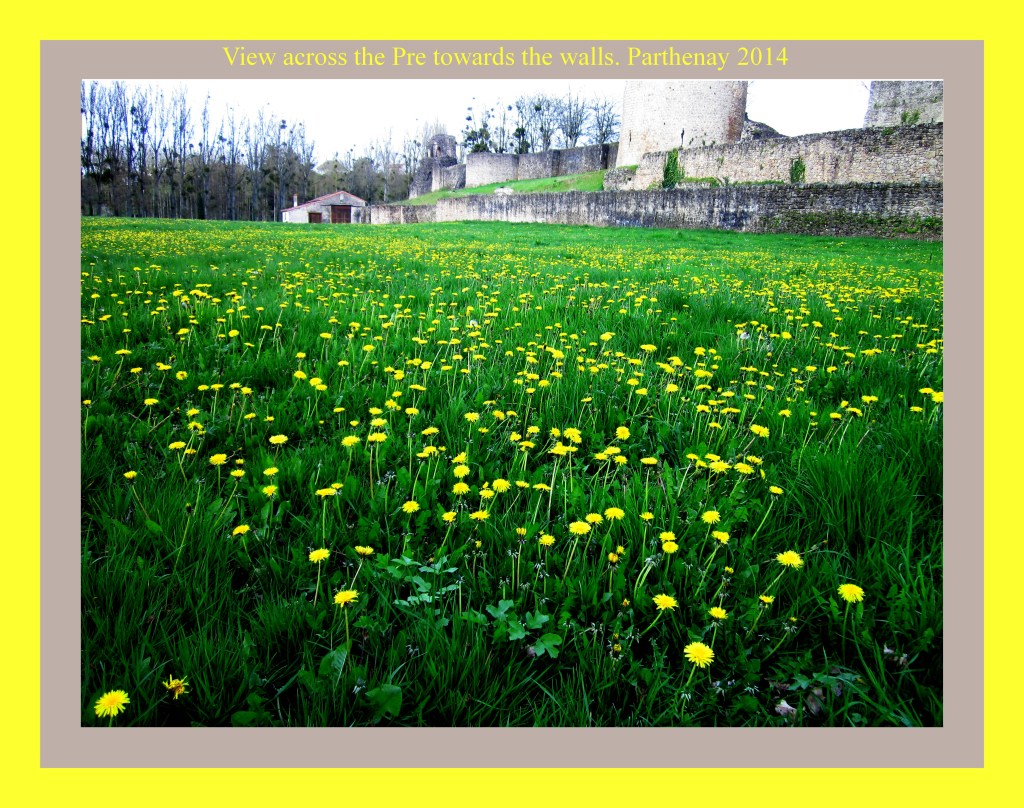
Dandelions, like gold, cover the meadows.
Newborn lambs frolic in fields.
New leaves on the trees are casting their shadows
And winter’s cold grip quickly yields.

At the edges of woodland the primroses glow
And cowslips their scent fills the air.
Anemones dance when the breezes do blow
And birds sing with never a care.

Then bluebells and campions come into bloom
Their colour the blue of the sea.
The cuckoo, that herald of spring, will come soon,
His call echoing over the lea.

The song of the blackbird is like molten gold.
His notes are so pure and so clear.
Hearing him seems to banish the cold
And brings joy to all those who hear.

Robin is nesting, and other birds too,
The hedgehog is active once more.
The young of the deer and the badger and shrew
Play their games as in old days of yore.

The sun climbs higher and higher each day
Giving more of his heat and his light.
It sparkles like stars fallen into the bay.
All smile at the beautiful sight.

Hope and excitement come with each spring morn.
What blessings will come with this day?
New starts can begin once again with each dawn
And send us all hopeful away.

I hope you enjoyed my spring poem. It can be found in my poetry book, Miscellaneous Thoughts along with many more of my poems, both about the seasons and nature and a variety of other subjects.

If you would like to read more of them, you can click on the book cover in the sidebar, or click the button to take you to the online bookstore of your choice. It is available in ebook format as well as a ‘real’ book.

Healing the World: The Power of Individual Actions

I’ve had a lot going on recently, so I’m a little late with this week’s post.

Image by Mohamed Hassan from Pixabay

This post is inspired by Morgan’s post. You can read her post, Healing the World, here.

There are two things I would like to mention in regard to healing the world.

The first, is about a couple whom I knew slightly.

They had a daughter with cerebral palsy. She was grown up, but very severely brain damaged. She had no speech and couldn’t walk, thus was confined to a wheelchair.

They were staunch Christians and, although not Roman Catholic, decided to take her to Lourdes in France to pray at the shrine for healing.

They said, ‘She wasn’t healed, but we were.’

On returning, they fostered many handicapped children, all the while still looking after their own severely handicapped daughter.

They also set up a school in an African country (I forget which) and raised money for it as well as visiting.

While no one but a few people know of them, and they will never be known by the Vatican, nor Canterbury, in my mind they are true saints.

The second occurred during Lent, in 1989. There were Lent groups that year on the theme of persecuted Christians around the world. Prayers were said, especially for those in the Soviet Union.

These groups were held throughout the Anglican Church, once a week for the duration of Lent. I believe they still are.

In November of that year, the Berlin Wall came down.

Thus the power of many people acting together can have a result, and the actions of individuals can be a wonderful way to help others and have wide-ranging effects.

WILL EVERYONE WHO HATES THE WAY THE WORLD IS GOING, PLEASE 🙏 THINK POSITIVE THOUGHTS, OR PRAY, IF YOU ARE A BELIEVER OF ANY RELIGION. 

MAYBE IF ENOUGH OF US DO THIS, LIKE WHAT HAPPENED IN MY STORIES ABOVE, THINGS WILL CHANGE FOR THE BETTER.

Savoury Pancake Recipe for Shrove Tuesday

Image by Kavinda F from Pixabay

Today is Shrove Tuesday, AKA Pancake Day.

Shrove Tuesday is the day before Lent begins, with Ash Wednesday the following day.

Many thanks to Wikipedia for the following information.

The name “Shrove Tuesday” comes from to shrive, meaning absolution following confession. Christians traditionally visit their church on Shrove Tuesday to confess their sins and cleanse their soul before the start of Lent.

Indulging in food that might be given up as a sacrifice for the upcoming forty days of Lent, is associated with Shrove Tuesday.

The Mardi Gras celebrations held, most famously in New Orleans, are a part of this. Mardi Gras is French for Fat Tuesday, so called because of the eating of rich food that will be given up for the duration of Lent.

Many people still observe the day through eating pancakes.

On Shrove Tuesday, churches burn the palms distributed during the previous year’s Palm Sunday liturgies to make the ashes used during the services held on the next day, Ash Wednesday, when a penitential service is held.

The priest puts a cross of ashes (usually from the palm crosses burned the previous day) on the foreheads of the penitents, saying  “From dust you came and to dust you will return.” This is a reminder of mortality and the need to repent of sins.

Lent is a time of remembering Jesus withdrawing to the Wilderness before His arrest and crucifixion. Here He fasted, was tempted by Satan, but held firm.

Christians fast in memory of this event.

But on Shrove Tuesday people eat foods they are going to give up during the 40 days of Lent.

This has come down to us as eating pancakes made from, nowadays, flour, eggs and milk.

Maybe you would like to try something different for your pancakes this year. Often they are served sweet, with sugar and lemon, chocolate spread or other sweet things. My Grandma served a delicious savoury pancake that is also excellent for vegetarians.

Here is the recipe,

Savoury Pancake filling

(Grandma’s recipe)

Pancakes made however you like them, or you can buy unsweetened ones.

Ingredients

125g large open capped mushrooms

2 onions

2 tomatoes

½ x1 teaspoon of sweet herbs (I would guess that this is similar to Herbes de Provence, since you seem to be no longer able to get sweet herbs. I have used Herbes de Provence quite successfully.)

Method

Fry the onion a little and add the mushrooms and tomatoes.

Continue cooking until all vegetables are done, and add salt and pepper to taste.

Serve hot on pancakes, rolled up. 

Are you interested in historical recipes? If so, you might be interested in Viv’s Family Recipes.

This recipe book is the culmination of many years of cooking and baking by the author. She is passionate about food quality and believes that home cooked is best.

She has inherited a recipe book from her mother’s eldest sister and a small one from her grandmother that contains recipes from the turn of the 19th century. She has also included many recipes from other family and friends from many places and times.

It is an interesting look at how our diets have changed over the years as well as our cooking methods. Many of the older recipes are done by long steaming. There are also some interesting ‘Hints and Tips’ from long ago.

The book also has some interesting comments about the people whose recipes appear in the book.

Like to explore more about these recipes? Then click the button below.

Do you have any favourite pancake recipes? Let us know in the comments.

Overpopulation and the effect on wildlife

I just came across this. It’s the elephant in the room, but very important, in my opinion.

Creating Sound: Childhood Instruments and Memories

I was changing the toilet roll in the bathroom the other morning when I inexplicably thought about how toilet rolls were in the 1950s.

Yes, I’m that old.

Anyway, I thought about the old Izal toilet rolls. 

They were a bit like tracing paper. In fact, we sometimes used them as such. They were hard and very scratchy. Horrid.

‘What has this to do with music?’ I hear you ask.

Well, while it was not good for its original purpose, it was brilliant to use with a comb to make a paper and comb musical instrument.

For those who don’t know about this, you wrapped the paper loosely around the teeth of the comb and made a buzzing sound with your lips. This made the paper vibrate and make a sound. By altering the pitch, you could play a tune.

We used to take a piece of broad-leaved grass, hold it vertically between our thumbs. Blowing our thumbs made a sound. 

Admittedly, not a nice one!

Paper straws could also be made into a kind of noise-producing item. Cut the end of the straw so it made an inverted V shape and blow. This didn’t last long, though, as the end got wet and stopped working. Pitch could be varied by the length of the straw. A group could play a simple tune. (Theoretically!)

Blowing across the end of bottles was a good noise-maker, too. If you got different sized bottles, you could make different notes.

We also made noises by cupping our hands together and blowing between our thumbs. But raising the fingers of the top hand, we made different notes. Favourite was a cuckoo’s call.

Tapping a pencil on your teeth and moving your mouth would also change the pitch of the tap, and you could ‘play’ a tune.

The last one I remember took some organising.

You took a wine glass (your mother’s best worked well) and added a little water. You dipped your finger in to make it damp, then ran it gently around the rim. It made a ringing sound. 

If you added different amounts of water to several glasses, you could, with a lot of trial and error, get a scale, thus play a simple tune.

Admittedly, some of these can hardly be described as music, but still…

Did you do any of these things? Do you know of any other things we did in childhood to make sounds? Let us know in the comments.

If you would like to buy any of my books, simply click on the image in the sidebar and you will be taken to a page where you can buy in any format from your favourite online store.

The ebook of each of the series is free.

A Chilling Comparison.

Morgan has compared the rise of Hitler to that of Trump.

A Review of ‘From January to June’: Dive into Poetry

I recently looked at the reviews I received for my poetry book, From January to June ; One Poem a Day, and was delighted to find this.

From January to June (One Poem A Day Series Book 1)

imagemarjorie mallon

A variety of poems to enjoy

December 13, 2024

From January to June. V M Sang

As a poetry enthusiast I was keen to read V M Sang’s poetic observations: From January to June.

It’s a eclectic collection with a variety of topics such as Spring, Family, Communications (how they change through time,) music, travel, (France and UK,) amusing poems, and daily life.

Some of my favourite poems: Grandma’s Hands, Son, Songbirds, Teddy, Dark Creatures, Doorway, Home Sweet Home, New Mown Grass, The Internet, and I Am A Writer.

Something for everyone, some short, like this haiku.

‘The bees are humming.
Gentle breeze quivers the leaves
And a poet dreams.’

Some poems are longer, some telling a tale. A good way to discover more about the author and what makes them tick!

I enjoyed, and can recommend – 4 stars 🌟

And now to whet your appetite, here’s today’s poem from the collection.

February 17th

Another one from a prompt. This time it was to write a poem with the following words. Lavender, horn, gold, hooves, trot.

Unicorn

I heard a sound in the wood.
And thought, “What can it be?”
I kept silent where I stood
Hoping I would see
Something wonderful and rare.
Perhaps a shy and timid deer.
But there is magic in the air
And stranger beasts live near. 

A glimpse of lavender appeared
Between the beech trees tall.
My brow I furrowed. This is weird.
I could not work it out at all.
Then from the trees a unicorn
Trotted out so that I
Could see his unique horn of gold
And cloven hooves and clear, bright eye.

I held my breath to see this beast.
I felt my heart beat fast.
My mind was filled with thoughts of peace
As he trotted past.
He paused and took away my pain.
I knew not what to say,
But he shook his lavender mane
And trotted on his way.

If you would like to read more of my poetry, you can get the ebook for free. by clicking the button below or the cover in the sidebar.

It is available from your favourite bookstore in ebook, paperback or hardcover versions.

I would like to thank Marjorie Mallon for her kind review.

Do you enjoy poetry? What is your favourite kind of poetry?