Tag Archives: v.m.sang

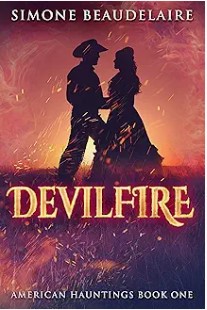
Review of Devilfire Book 1 of American Hauntings by Simone Baudelaire

Overview.

This exciting paranormal romance is set in Texas in 1886. Quite a page turner. There is some explicit sex, but not too much. 

I am pleased to see that it is book 1. That means I can spend more time with these characters, and see how they continue their development, and if Gavin can come to terms with his own unacknowledged talent.

Although I don’t usually enjoy graphic sex scenes, there wasn’t too much in this book and it didn’t bother me. What I can’t stand is what seems to be a story simply to carry the sex scenes.

And I love the cover.

It is an excellent read.

Blurb

Texas, 1885

In the aftermath of a deadly fire, Dr. Gavin Morris, on hand to render aid to the few survivors, runs into someone he does not expect. Medium Annabelle Smith has arrived to help the dead cross over. Despite the grim work, the two find themselves immediately drawn to one another.

But this one chance encounter does not end their unexpected connection. Time and again, fate draws them to scenes of destruction, until they can no longer pretend that the fires are natural…and cannot deny that their connection also transcends the ordinary.

But Annabelle is not all she appears. One of her many secrets may be what saves them… or what ultimately leads to their deaths. Are Gavin and Annabelle doomed to burn with more than passion?

This western historical/paranormal contains strong religious themes and graphic sex scenes.

Story.

A mysterious fire breaks out in the southern states of the US destroying a complete village and killing most of the inhabitants.

Doctor Gavin Morris is trying his best to help the dying and injured when he meets Annabelle Smith. She appears to be speaking to the ghosts of the dead.

Gavin does not believe her, but she explains how she has been called here to help the dead on their way. She is emaciated and obviously poor, so Gavin feels sorry for her and wishes to help.

Not to give too much away, there are more inexplicable fires, and the pair decide to investigate. During their investigations they grow closer. 

They find themselves in a terrifying situation, being stalked by an entity far more frightening and dangerous than the ghosts.

Characters 

I liked the main characters. They had their struggles with both the paranormal and the romantic feelings developing between them. 

They developed nicely throughout the novel, with Gavin reluctantly accepting Annabelle’s work, and the fact of the ghosts.

Secondary characters were also well developed, including the ghosts, some of which had to be told they had died. They also kept their worldly characters, especially one rather unpleasant woman.

Writing

I thought that Ms Beaudelaire gave us a clear feeling of both time and place. I had a clear picture in my head of every setting, and believed in the characters.

No grammatical mistakes, nor typos.

I give this book 5*

  My ranking of books. In order to get a particular number of stars, it is not necessary to meet all the criteria. This is a guide only.

5* Exceptional. Wonderful story. Setting well drawn, and characters believable–not perfect, but with flaws. Will keep you up all night. No typos or grammatical errors.

4* A thoroughly enjoyable read. Great and original story. Believable setting and characters. Very few grammatical errors or typos.

3* I enjoyed it. Good story. Characters need some development. Some typos or grammatical errors.

2* Not for me. Story not very strong. Unbelievable and flat characters. Setting not clearly defined. Many typos or grammatical errors.

1* I hated it. Story almost non-existent. Setting poor. Possibly couldn’t finish it.

Have you read any of Simone Baudelaire’s books? This is the first one I’ve read of hers, but will certainly be looking out for more.

Memories. Washing Day

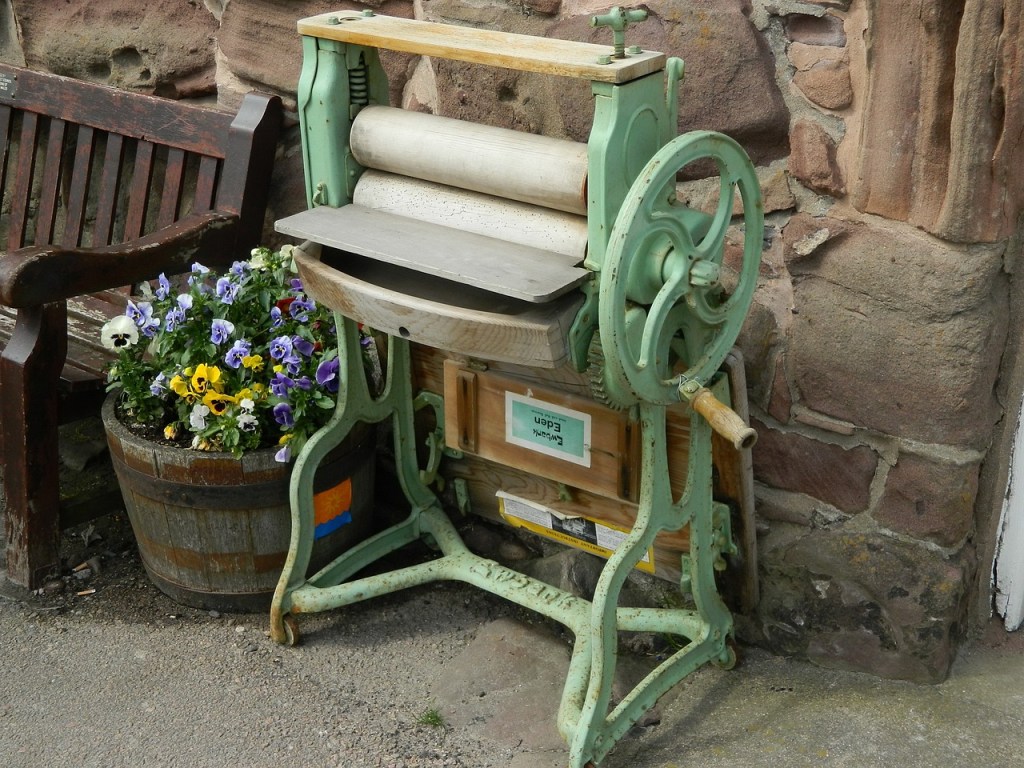
Image by David Grimshaw from Pixabay

I was putting my washing on the other day and suddenly thought about how washing clothes has changed since my grandmother’s day.

This wasn’t in the 1900s, but the 1950s that I remember.

My grandma had what she called a ‘dolly tub’. This was a metal barrel with an open top. I don’t really know what it was made of, but probably galvanised zinc. At least, that’s what it looked like.

First she would boil some water, then pour it into the tub. This would take several pans as she didn’t have a boiler.

Earlier we’d grated soap. There was no such thing as washing powder, which, of course, is a detergent, not a soap. The soap was allowed to dissolve in the hot water before the clothes were added.

She then used a ‘posser’ to pound the clothes. This was hard work. Her posser was copper, but earlier ones were wood. These wooden ones looked a bit like a three-legged stool (but with more legs) on a long handle. Grandma’s was like an upturned bowl with a lid and holes drilled in it to allow water to escape.

If clothes were particularly dirty or stained, she would rub them on a washboard with more soap and perhaps a scrubbing brush.

After the clothes had been pounded clean, they were put through the mangle. This had to be turned by hand, and it squeezed the excess water out.

Then the dolly tub was emptied and clean water added. The clothes were put back and once more possed to rinse the soap out. They had to be rinsed at least twice, preferably more. Once again passed through the mangle. 

When all this was finished, grandma put out the clothes line and hung the washing on it. Pushing it up with a clothes prop, which was a long piece of wood with a v cut out at the top.

Washing day was a strenuous day in those days.

Then she got a washing machine.

Unlike those of today, it loaded at the top and had a paddle to churn the clothes. No more strenuous possing. It still had a mangle on the top, but it was run by electricity and not by hand turning a wheel. Clothes still had to be hung out in the garden to dry though, or hung on a clothes horse around the open fire if the weather was wet..

Washing took a whole day. No wonder women in those days stayed at home and didn’t go out to work. No labour saving devices!

In Defence of the Wasp

wasp-2300988_1920

This morning I was watching a wasp flying around the flowers in my garden. It wasn’t bothering me, just going about its business, gathering nectar.

I remembered that I’d posted about wasps at an earlier date, and so decided it was time to repost it. So here it is!

I’ve decided to do a post about a much maligned insect. The Wasp.

We all know the nuisance black and yellow striped creature that buzzes round us when we want to eat outside, and I’ve heard it said, ‘What is the purpose of wasps?’

Well, here it is. Something that I hope will help to mollify your thoughts on the creatures.

I was brought to thinking of them last September when I got stung. In all fairness, it wasn’t the wasp’s fault. Well, not entirely, anyway. I saw one in my daughter’s bathroom and decided to let it out of the window. I failed to get it out, and it must have ended up on my clothes, just under my arm. When I put my arm down, it stung in self defence. Still, it didn’t half hurt, and continued to do so for days!

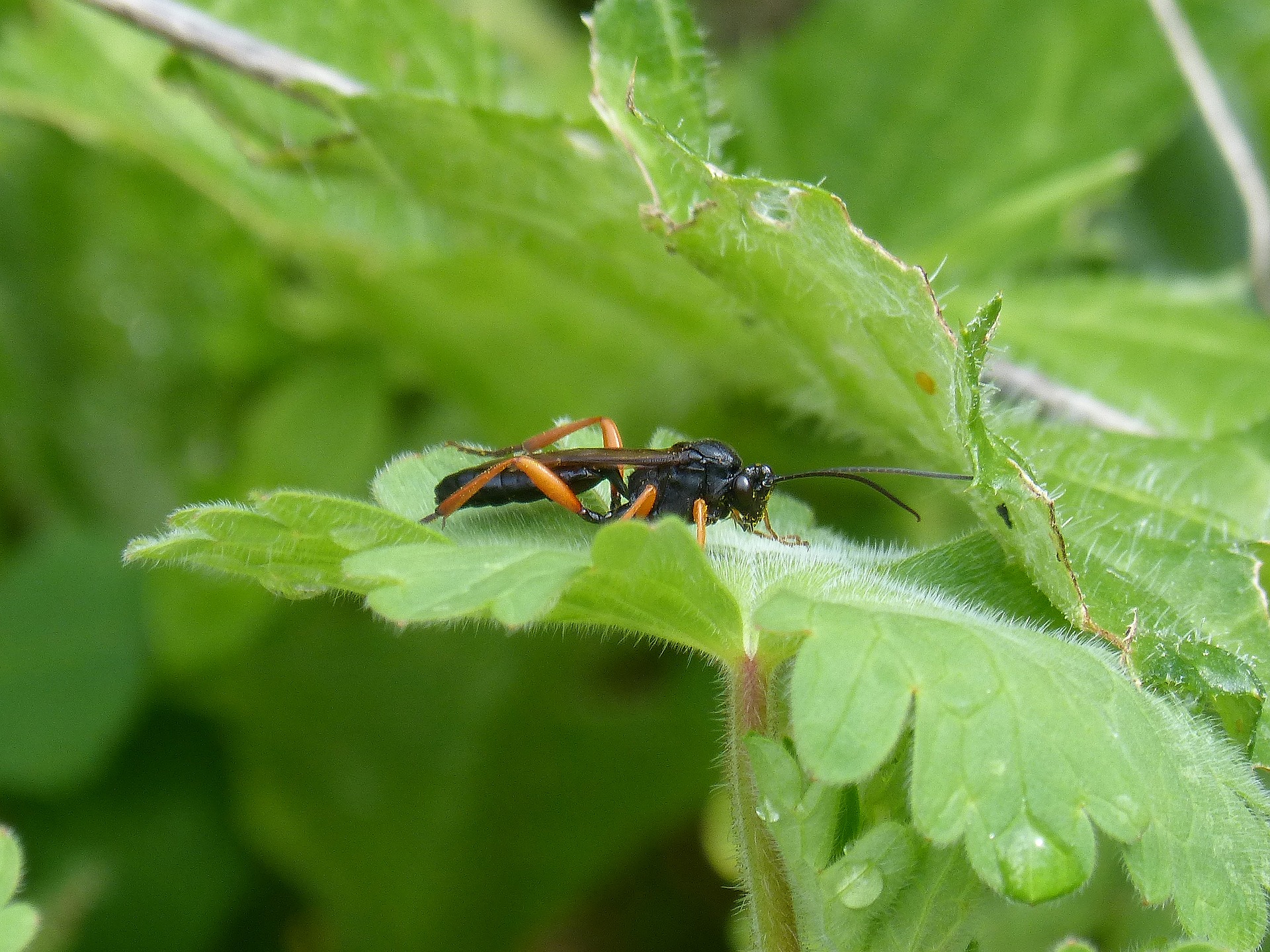
What we think of as wasps (and hornets), those black and yellow terrors of picnics, are not the only insects to be classified as wasps. Wasps belong to the order of insects called Hymenoptera and there are over a hundred thousand species.

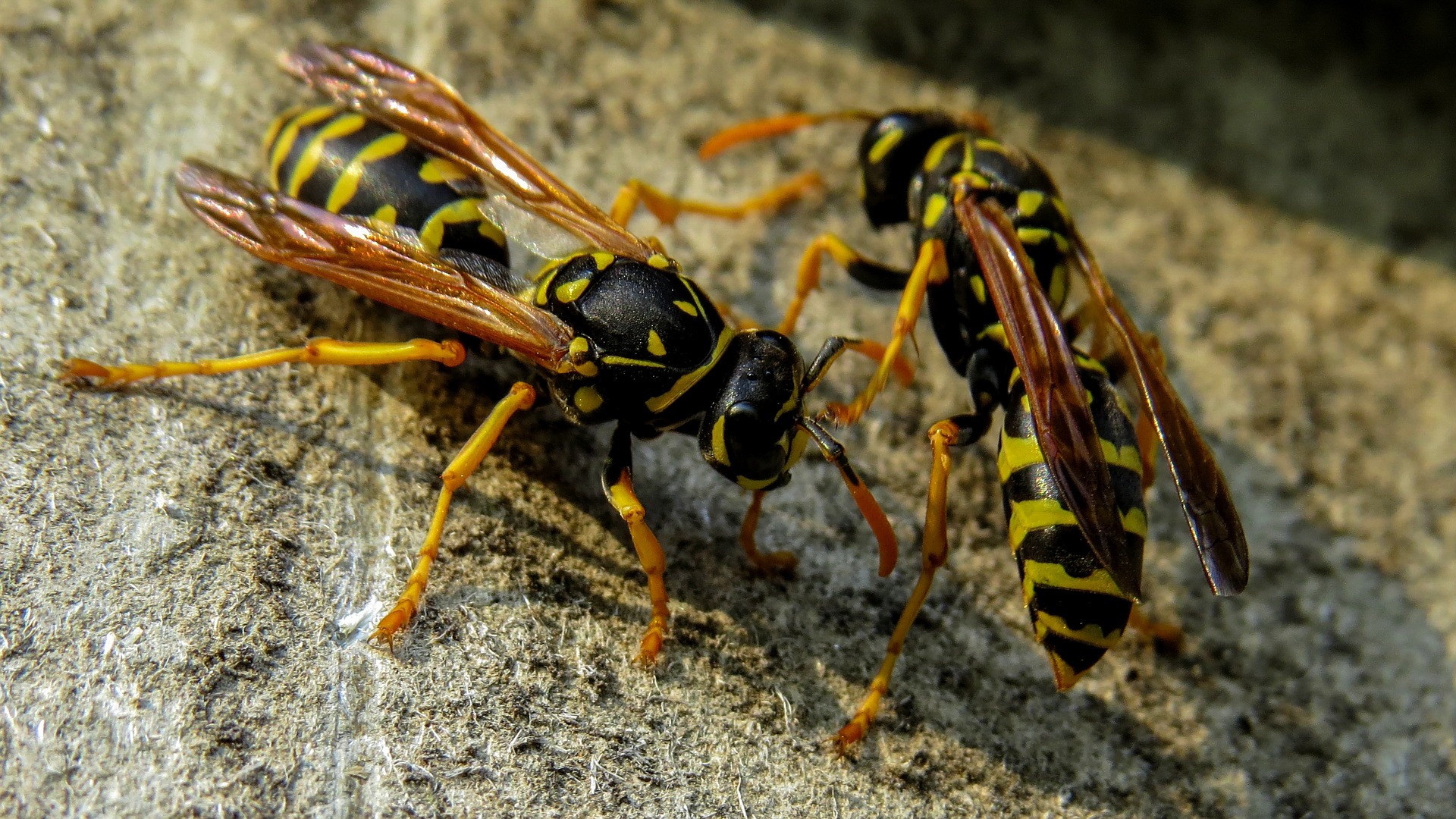
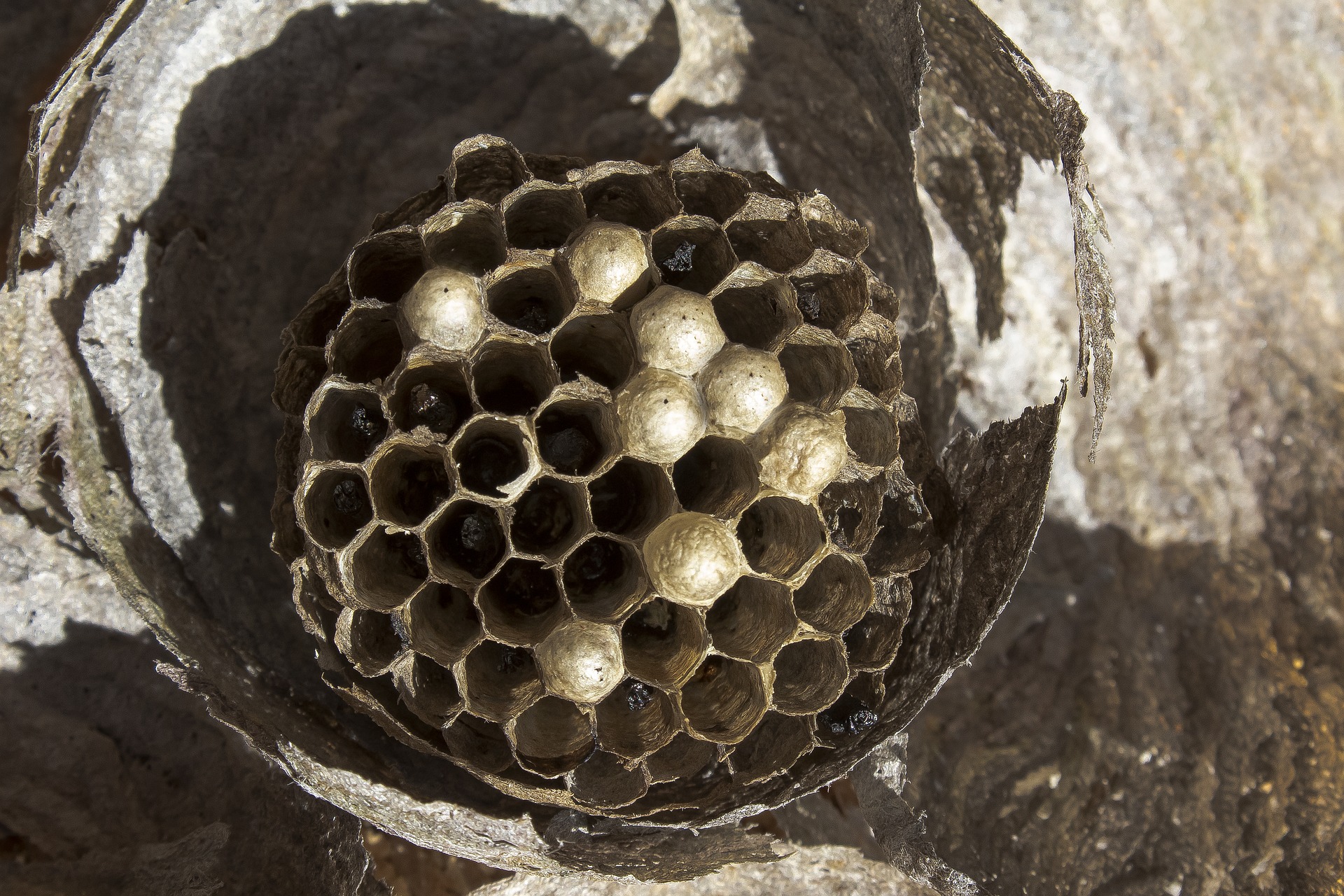
The black and yellow terrors are communal insects. They build nests of a papery substance created from wood. It usually begins in the spring when a queen lays eggs that hatch into workers. The workers are all female, and their ovipositors are what have become their stings.

Each spring, a new queen that has hibernated over winter, begins to build a new nest, built of wood she has chewed and mixed with saliva. Then she lays a few eggs. She has to forage herself for food for the hatched grubs until they become adult worker wasps.

the-hive-3724761_1920

These wasps only become a real nuisance in the late summer when the queen has stopped laying and no more workers are being produced. They search for food—sweet, sugary substances usually—and that is when they come into contact with humans.

And we don’t like it.

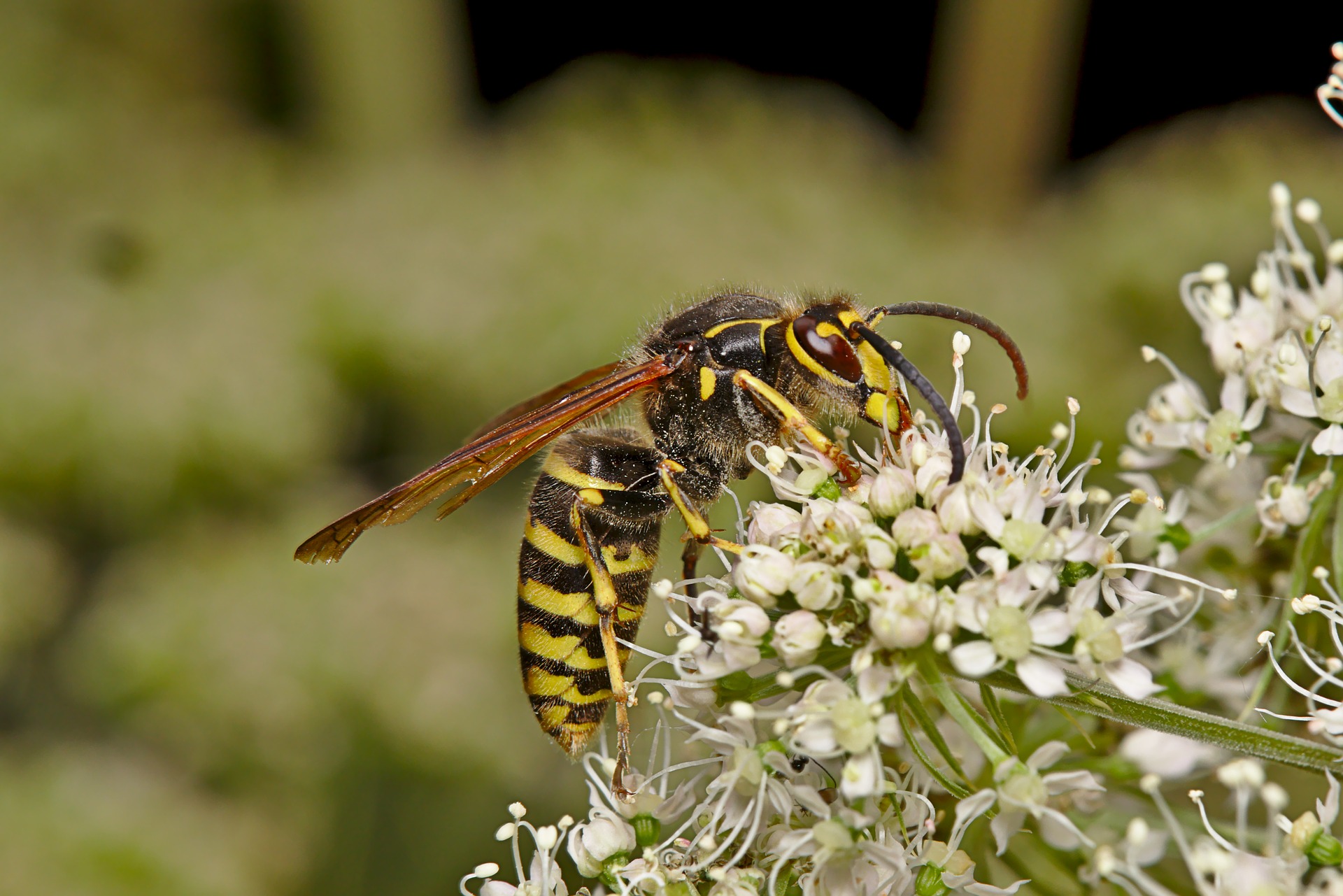
Most of the rest of the year, they are happily capturing insects and feeding on nectar from flowers. In fact, they are important pollinators. Not something most people know, but with the problems with the bee population recently, perhaps we should consider them more kindly.

wasp-3603869_1920

Most wasps are not social, though, and live a solitary life. Some live in communities, with nests close to each other, but do not interact, except to sometimes steal each others’ prey. Some species actually build communal nests, but each adult wasp has her own cell, and there is no division of labour or community work. The females each catch and feed their own grubs.

The prey of these wasps is spiders and insects. They feed them to the grubs, which are carnivorous, but the adults usually feed on nectar. As such, they are useful to help get rid of unwanted insect pests.

Then there are the parasitic wasps. They lay their eggs in the body of the prey animal. The grubs then eat their way through the insides of the poor creature. Others lay their eggs in the tissue of plants. The plant responds by creating a gall around the growing grub.

ichneumonoidea-2181464_1920


I admit I’m not the most generous of people to wasps. It’s now spring, and the queens are coming out to find a place to build their nests. Just this morning, while I was working at my computer, I heard a buzzing by the open window. It disappeared, but returned soon after. This happened several times and so I got up to investigate. A wasp was clearly inspecting the brickwork around my window. It then had the temerity to enter and start to look around my husband’s computer.

I went downstairs and got the Wasp and Fly killer and zapped it as it went back to the window. (I didn’t want to spray the killer onto my husband’s computer, just in case! I’ve no idea what it might do to it.) I might know they are important predators and pollinators, but I don’t want hundreds of them just outside the room where I work.

So please spare a thought for the poor wasp. They aren’t as useless as you thought.

Please leave your thoughts on the wasp in the comments box. Do you think they are useless, or do they have some use after all?

Jovinda’s Court Presentation at Aspirilla: A Noble’s Exciting Experience


I asked Jovinda to tell us about her visit to Aspirilla, the captial of Grosmer, when she went to be presented at court. Here is what she told me.

Me: Hello, Jovinda. I hear you recently went to court and met the king, queen and Crown Prince Gerim.

Jovinda: Oh yes! It was so exciting. I’d recently celebrated my sixteenth birthday and so I was now of age. When girls of the nobility, or from other important families, come of age, they usually get presented at court.

Father received a letter with the Royal Seal on it. He wouldn’t say what it was and took it to his study to read. I was jumping up and down, wanting to know what it said, but he made me and Mother wait until dinner time to tell us.

When he read it out, my stomach turned over. I was included in the guest list! I could hardly eat my dinner for excitement.

The next day, we went to see Madame Frimb, the best dressmaker in Bluehaven. She made a wonderful dress in green velvet. It set off my auburn hair perfectly.

The dress had a high neckline with small pearl buttons sewn around it. The buttons ran down the centre of the bodice and the sleeves stopped at my elbow with pearl buttons around the cuffs. The skirt flared from my waist to give my feet room to move during the dancing. And it had more pearl buttons around the hem.

I was so excited I hardly slept that night. Nor the others before the banquet. I was dreaming of dancing with the prince. I thought I would look so beautiful that he would fall in love with me at first sight.

That didn’t happen, of course, but something even more wonderful did. I met my true love, Nolimissalloran, know as Noli. He was an elf, and so beautiful.

But that’s another story. If you want to learn about what happened, you need to read Jovinda and Noli.

It’s available in all formats by clicking the link on the name, or the book cover in the side-bar.

Here is a short extract from the book:

Jovinda and her parents stood at the top of the stairs leading down to the reception room in the Palace. Jovinda scanned the room looking for Prince Gerim. The prince was not quite sixteen, but would be at such an important banquet as the heir to the throne. She frowned slightly as she noticed a young elf watching her as she descended the stairs.

Ellire had decided the best style for her dress for the banquet would be, not like the elaborate dresses they saw hanging in Madame Frimb’s workroom, but a simple style.

Jovinda saw the green velvet fabric and fell in love with the colour. Ellire agreed it would look good on her, and then went to discuss a style with Madame Frimb. The dress she now wore had a high neckline with small pearl buttons sewn around it. The buttons continued down the centre of the otherwise plain bodice with sleeves that stopped at her elbow. They also had pearl buttons around the cuffs. The skirt flared from her waist giving room for her feet to move when dancing, and more pearl buttons graced the hem. She wore small pearl drops in her ears and a white orchid in her hair.

The family walked down the stairs as a butler announced them. Jovinda stared around. The stairs descended from the balcony where they had entered, and flared out towards the bottom. A red carpet ran down the centre. Large floor to ceiling windows to her right opened onto the palace gardens, and doors carved with vines and fruits stood open on the opposite side. Torches in sconces lit the room, and glinted on the gold-leaf that covered the cornice. More gold covered a few chairs scattered around for those unable to stand for long, and at the opposite end of the room was a dais with two thrones, again, covered in gold leaf.

A waiter brought a tray of drinks.

Jovinda took a glass of Perimo, a sparkling wine from the islands, as she chatted with many of her parents’ friends and acquaintances, feeling very grown up.

Suddenly, a horn sounded. Everyone stopped talking and looked towards the stairs. The Royal Family entered and made their way through the crowd to the dais.

As they passed, people bowed their heads or curtseyed.

Once the king and queen settled onto their thrones, the butler announced the first of the young people to be presented.

As it was her first social occasion, Jovinda was one of those young people. When the butler called her name, she looked at her father who mouthed “Go on, Jo”.

Her mother gave her a little push to start her on her way.

She took a deep breath to try to calm her racing heart, and ascended the dais where she curtseyed to the king and queen.

The king smiled and his eyes twinkled. “We are delighted to meet you, Jovinda. Enjoy the occasion. There’s nothing quite like your first ball.” 

Then she moved on. Prince Gerim smiled at her and shook her hand. “Pleased to meet you, Miss Jovinda.”

Jovinda curtseyed. He’s quite good-looking. I wonder if I can attract his attention? He may even ask me to dance. I wonder what kind of girls he likes?

If you decide to buy and read this book, I would be grateful for an honest review.

Warning: It contains adult themes that some might find upsetting.

My Visit to Cordoba

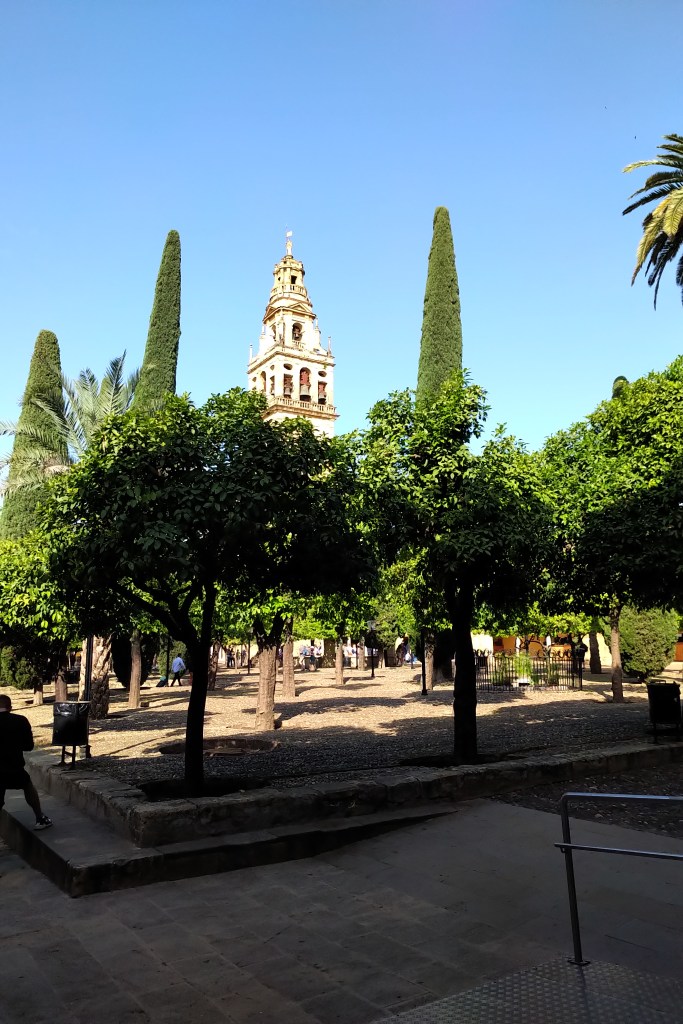
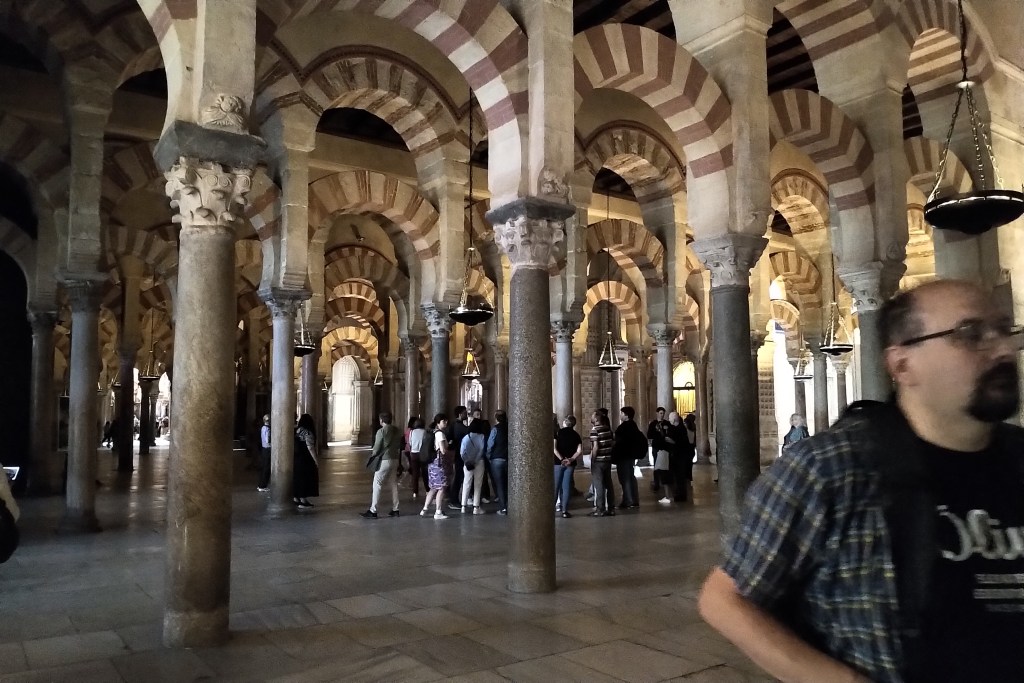
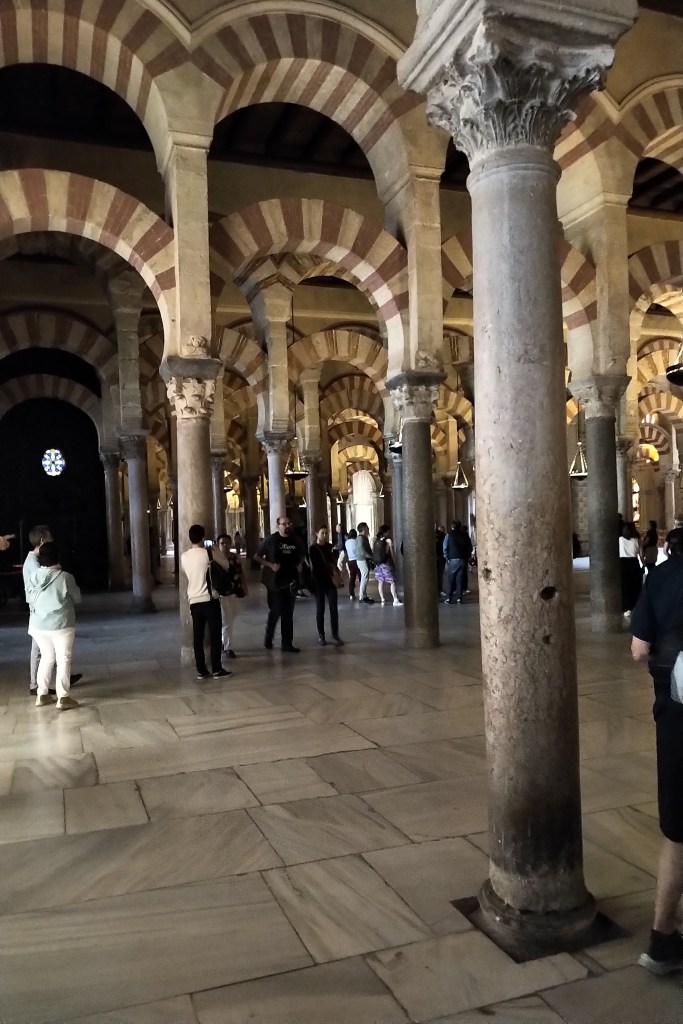
In April, I visited the Spanish city of Cordoba. I thought you might like to see some of the pictures I took.

First, the Mesquita. This was a mosque constructed in 785 when Spain was under Muslim rule. There is some disputed history that there was a mosque earlier than that, which was also used by Christians as a church. this sharing of a building indicates to me that there wasn’t the animosity between the two religions as there is nowadays.

When Ferdinand and Isabella reconquered Spain in the 15th century, the mosque was converted to a cathedral. To find out more, here’s a link to Wikipedia.

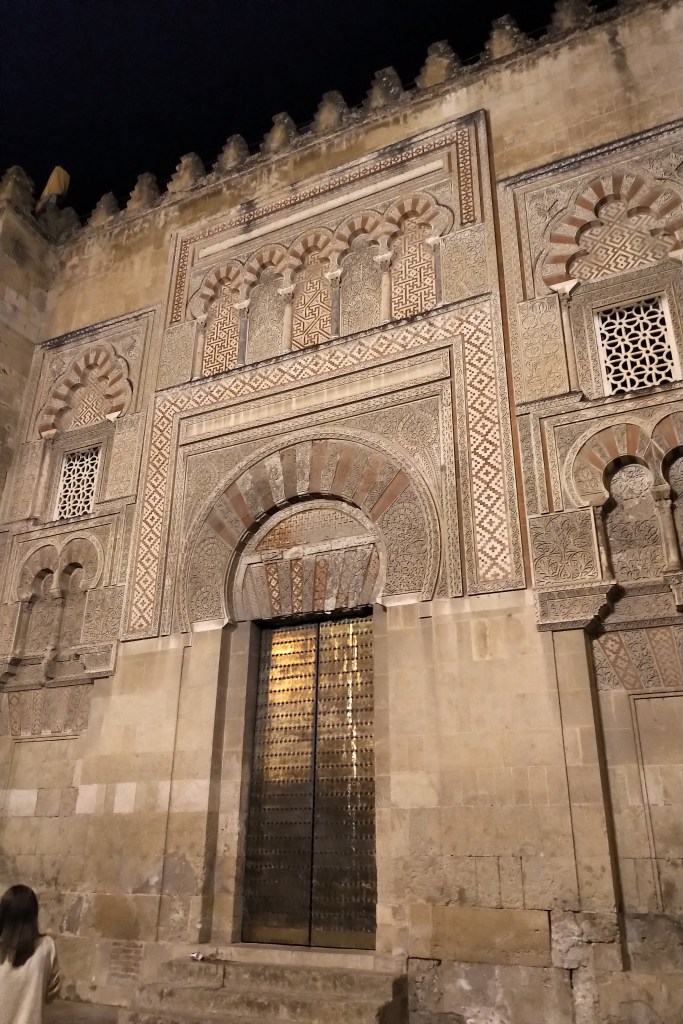
This is the oldest gate, called the Visier’s gate and it’s decoration dates back to 855.

This gate was right opposite our hotel!

Now for some other pictures of the cathedral.

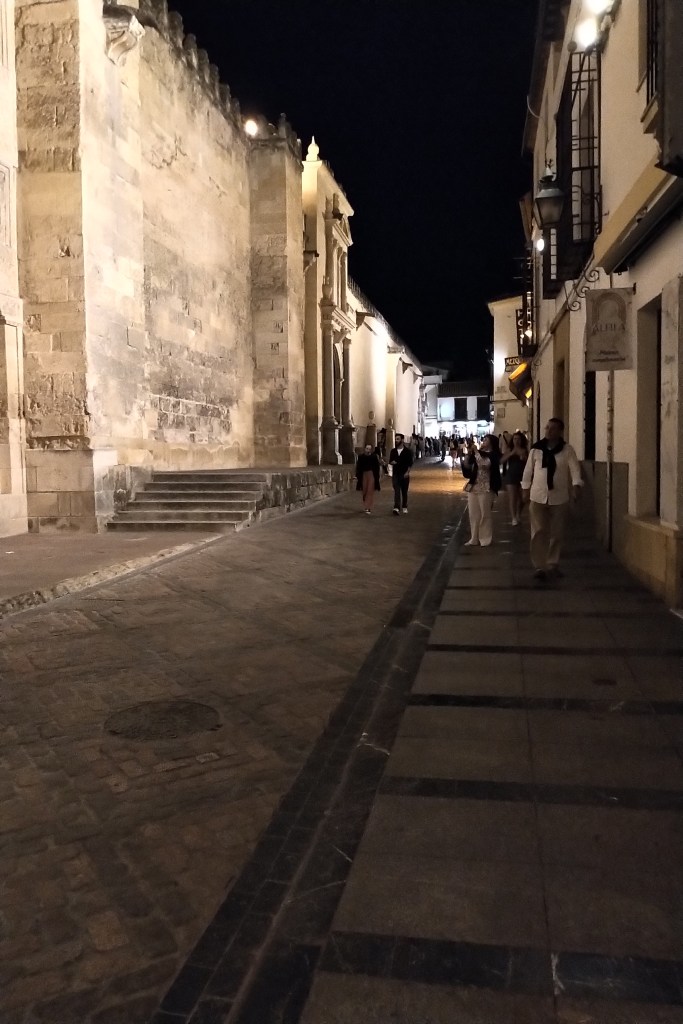
The street outside our hotel, showing the cathedral on the left.

Of course, full of tourists!

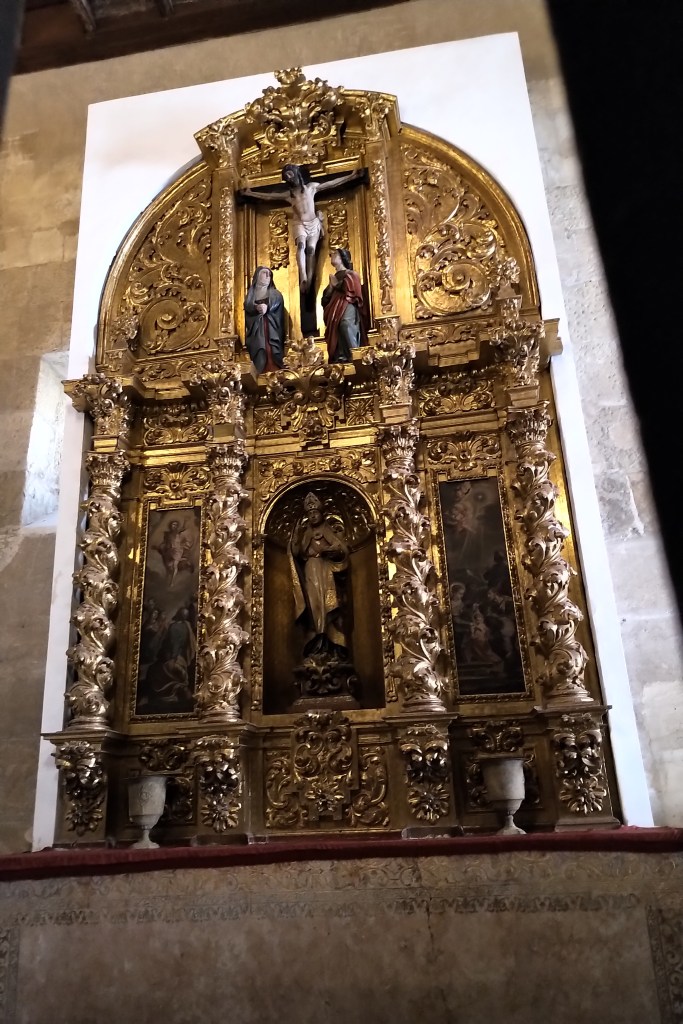
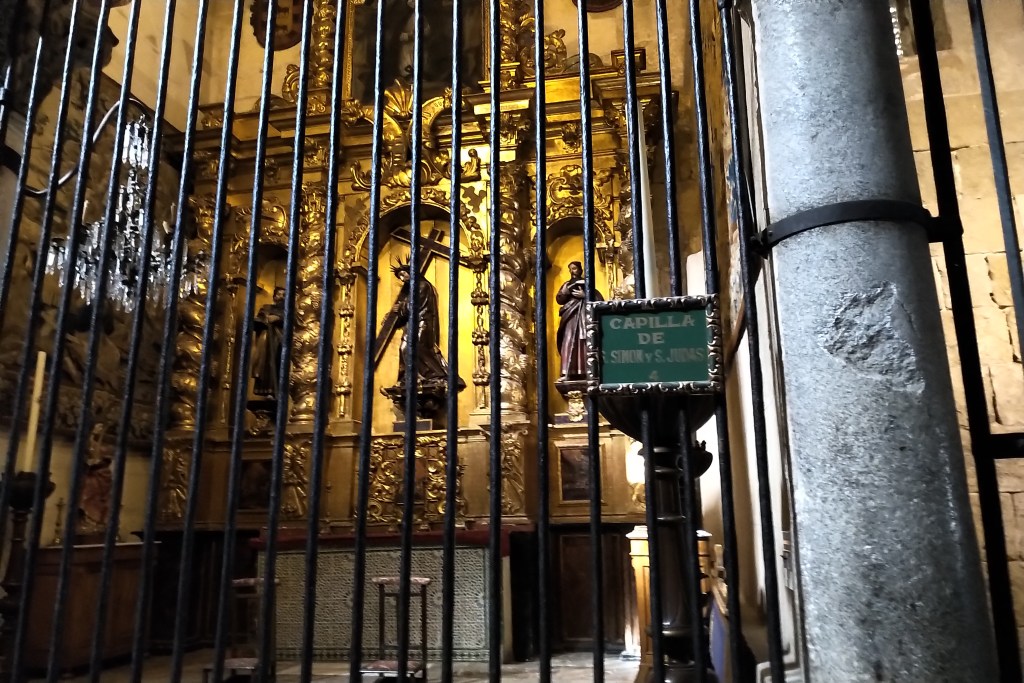
One of the chapels.

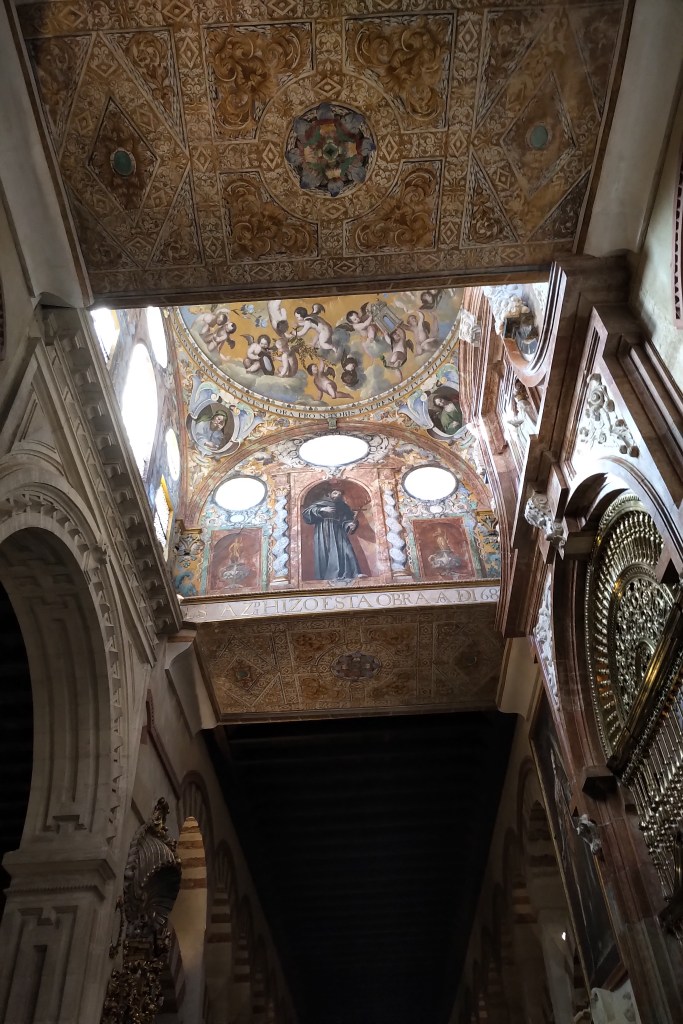
And a part of the ceiling.

Another chapel. the amount of gold was amazing. All stolen, I suppose, from South America.

I’ll post more of my pictures another time. This was the Cathedral. More of the city next time.

If you would like to post a comment, please feel free to do so. Have you been to Cordoba? What did you think of the city?

I would like to remind you of my poetry book, July to December, that came out a couple of weeks ago. It follows on from my January to June book, which is free on all platforms. July to December is only 1.99. Each book gives you one poem to read each day for a year.

Some are humerous, some based on nature, some are short, others longer and narrative.

If you purchase, please leave a review.

Here’s the latest ranking on Amazon.

Best Sellers Rank: #13,136 Free in Kindle Store (See Top 100 in Kindle Store)

1 in Women’s Poetry

3 in Contemporary Poetry

5 in British & Irish Poetry

IT’S HERE!

The second part of my One Poem a Day series is now available. It was actually published a couple of weeks ago, but as I was on holiday I couldn’t announce it!

Here is the blurb.

The second book of poetry in V.M. Sang’s One Poem A Day Series takes us through summer to midwinter.

Each day there is a poem to read. These poems are often related to the season, for example, Harvest, or the first flight by the Montgolfier brothers, and of course, Christmas.

The poems are varied in type and length. There are haiku, haibun and tanka, limericks, sonnets, odes and narrative poems among the collection. Some poems are comments on serious subjects, while others are amusing and entertaining.

Many of the poems in this collection are in the traditional vein, so if you enjoy this type of poetry, this book is for you.

An example of two of the poems.

July 4th

We recently had family to stay. Here’s a poem about families.

Family

Brothers, sisters, cousins too
Some of whom we barely knew
As one by one the family grew.

Family feuds, we all fell out
Little sister, she did pout.
Cousin Johnny started to shout.

Susie said ‘I hate you all.
And I hope that you might fall
And get caught out in a squall.’

Brother Robert raised his fist.
‘Don’t you speak to us like this.’
Narrowed eyes, voice like a hiss.

Sister Jane came rushing in.
‘They have started bullying Jim.’
Quarrel stopped. He’s our kin.

So we went to sort them out.
When they saw us, ’twas a rout.
They will run away, no doubt.

We fall out, of that it’s true.
And we say things that we rue.
But family is strong. We knew.

“All for One and One for All.”
We stand together or we fall.
Petty quarrels, they will pall.

July 5th.

A small bumble bee has been pollinating our raspberry plants all by herself. At least, I didn’t see any other insects around them. Here’s a Haiku.

Little bee.

She sips sweet nectar.
Proboscis deep in the flower.
Raspberries will come.

The book is available from the following retailers, currently priced at 1.99

Kobo, Barnes and Noble, Google, Apple, and Amazon

Book 1, From January to June is available by clicking the book title. It’s free, so you can get both books for 1.99

The blurb

Take a lyrical journey through the first half of the year with V.M. Sang’s FROM JANUARY TO JUNE.

This anthology captures the essence of everyday life, nature, and the world around us through the versatile medium of poetry. From haiku to narrative poems, and the humour found in limericks, From January To June is a diverse collection of poetry.

A calendar in creativity, a diary in verse; this collection is the perfect companion for daily reflection and inspiration, providing a poem for each day that resonates with the diverse experiences of life.

And a review.

Sashadoo

5.0 out of 5 stars Clever and unusual, a unique blend of poetic styles

Reviewed in the United Kingdom on 9 December 2023

Verified Purchase

I thoroughly enjoyed this unique collection of poetry from V M Sang. I say unique because it’s rare to find such an eclective collection of different styles, forms and subjects in one one book, all by the same author. From Haiku to full length poetic pieces, covering a wide range of topics from the weather to personal feelings and the rare beauty found in the morr mundane, everyday events in the poet’s life. Definitely something for everyone and I have no hesitation in recommending the book and giving it a 5 star review.

Current Amazon ranking, June 4th 2024

Cover Reveal

I was going to post some pictures from my recent holiday today, but I received the preview cover from my publisher this morning and so decided to run with that. Hence the delay in posting.

Here it is, alongside the first book.

These books have one poem to be read each day for a year. Here is the blurb about Book 1.

Take a lyrical journey through the first half of the year with V.M. Sang’s FROM JANUARY TO JUNE.

This anthology captures the essence of everyday life, nature, and the world around us through the versatile medium of poetry. From haiku to narrative poems, and the humour found in limericks, From January To June is a diverse collection of poetry.

A calendar in creativity, a diary in verse; this collection is the perfect companion for daily reflection and inspiration, providing a poem for each day that resonates with the diverse experiences of life.

And a review from Amazon.

Sashadoo

5.0 out of 5 stars Clever and unusual, a unique blend of poetic styles.

Reviewed in the United Kingdom on 9 December 2023

Verified Purchase

I thoroughly enjoyed this unique collection of poetry from V M Sang. I say unique because it’s rare to find such an eclective collection of different styles, forms and subjects in one one book, all by the same author. From Haiku to full length poetic pieces, covering a wide range of topics from the weather to personal feelings and the rare beauty found in the more mundane, everyday events in the poet’s life. Definitely something for everyone and I have no hesitation in recommending the book and giving it a 5 star review.

Here is a poem from Book 2 to whet your appetite. It is the first poem in the book, dated July 1st.

It’s deep into peach season, so I wrote this in honour of that delicious fruit.

Peaches

A peach with skin so soft.
Breathe in the sweet scent
As to my nose it wafts.
Made just to tempt.

Bite into the flesh.
That scent did not lie
The flavour is so fresh.
That I cannot deny.

Juice runs down my chin.
The peach is so sweet
It must be a sin
To enjoy such a treat.

The book contains many poems of different types, like the first one. I will keep you informed as to when it will be released. It should be sometime next month.

If you can’t wait, then you can get the first book by clicking on this link, or to get my previous poetry book, Miscellaneous Thoughts, you can click here.

Or click on the book cover in the sidebar.

Do you like the cover? Does it tie in with the first book, to show they are linked?

What we can learn from Goldilocks?

I just read this post. I’d never considered this as the theme of the story.

Review of Ghost of a Chance by Jaye Marie

OVERVIEW.

A gripping story. I read it in one day of continuous reading.

STORY

This is the 4th book in the DI Snow series. I haven’t read the others yet, but it is perfectly readable as a standalone novel.

DI David Snow was seriously injured in a previous encounter and has been officially retired from the police. He is wrestling with the breakdown of his marriage at the same time.

He goes to the police station to try to convince them that he is still able to do his job. While there, he sees a young woman bringing in an elderly woman in great distress. He goes to help. No one knows who the elderly woman is, and she has amnesia. The girl had found her in a state of stress and wants to help.

DI Snow decides to help find out who the woman is, and why she is upset. This leads him into an investigation involving murder and ghostly happenings.

BLURB

A damaged detective, out of a job

A relationship on the rocks
What does the future hold for David Snow?
Just when he thought life couldn’t get any worse
A ghost with a grudge adds to his pain
A ghost hell bent on stopping him from rebuilding his life…

CHARACTERS 

All the characters in this novel are believable. They all have problems and faults as well as their good points..

David Snow is wrestling with depression after losing his wife and his job. He finds some relief in investigating the mystery woman.

David’s wife, Jane, has had a string of affairs after the breakup. Not all were satisfactory, especially one. She regrets this, but cannot find the strength to stop.

Laurie, the girl who brought the old woman to the police station, has her own problems. After a difficult childhood and adolescence, she finds it difficult to settle to anything. She has enrolled at University, and is determined to graduate, but finds the commitment difficult, as well as commitment to another human being.

Alan Turner is a person who was jealous of David Snow’s success. He is a thoroughly nasty person who plots Snow’s downfall, wanting his job. He has few positive traits. I disliked him all the way through. (Which I suspect I was intended to.)

WRITING.

Jaye Marie has created an exciting and enthralling story. The writing is good and there are very few typos.

She manages to build up the tension well, creating an unputdownable book. 

The story is told mainly in third person past tense, but David Snow’s chapters are in first person. This, I think, brings us closer to him and his problems. I like the idea.

I give it 5*

  My ranking of books. In order to get a particular number of stars, it is not necessary to meet all the criteria. This is a guide only.

5* Exceptional. Wonderful story. Setting well drawn, and characters believable–not perfect, but with flaws. Will keep you up all night. No typos or grammatical errors.

4* A thoroughly enjoyable read. Great and original story. Believable setting and characters. Very few grammatical errors or typos.

3* I enjoyed it. Good story. Characters need some development. Some typos or grammatical errors.

2* Not for me. Story not very strong. Unbelievable and flat characters. Setting not clearly defined. Many typos or grammatical errors.

1* I hated it. Story almost non-existent. Setting poor. Possibly couldn’t finish it.

What’s Wrong with Education?

Image by Elisa from Pixabay

Last week there was an item on the radio about education. It stated that in a survey, 20% of teachers had been hit by a pupil. This is shocking.

Many teachers had been sworn at or even spat at by pupils, too, and also threatened by parents. So what is going on.

Firstly, I think that parents don’t take enough responsibility for their children. I see kids running around in supermarkets, chasing each other up and down the aisles while the parents take no notice. I hear parents swearing at their children, too, so it’s no wonder they don’t see it’s wrong to swear at their teachers.

Admittedly, there are some teachers who antagonise the children, deliberately or otherwise, and those who ‘demand’ respect but don’t realise that that is something that has to be earned.

But I think the biggest problem is the way we teach our children.

We assume that a ‘one size fits all’ education is the ideal. This has children sitting at desks (and I’m talking secondary here, as I know that primary doesn’t do this all the time), with the teacher teaching in an academic way.

The subjects, too are mainly academic, and everyone has to take the GCSE exam. Now, the Government, in its wisdom, has decreed that all youngsters have to be in some form of education until the age of 18.

Now this is regardless of aptitude, ability or interest. Everyone has to follow the National Curriculum. Everyone has to study the same things.

The 1944 Education Act stated that all children must attend school until they were 15. There were three kinds of school set up.

1 Grammar Schools. These were for those pupils who could benefit from an academic education. They were formal, and run much like all schools today. In order to get a place at a grammar school, pupils took an examination in 3 subjects that were called, in my day, English, Arithmetic and Non-verbal Reasoning (or intelligence!). Parents had to sign that they would keep the child in school until aged 16, and they did ‘O’ level exams.

    2. Technical Schools. These schools taught in a more hands on way. Subjects such as Woodwork, Metalwork, Bricklaying, Printing, and other engineering courses etc were taught, and typing and shorthand, too. I don’t know what exams the pupils at these schools did, though. But I’m sure they must have done some.

    3. Secondary Modern for the rest. No exams were expected of these pupils, although when I taught in Salford in the late 1960s, the council had produced their own exam for these pupils called the Salford Certificate. But the way of teaching them was the same as in Grammar schools. I taught English and the set books for the course were The Importance of Being Ernest by Oscar Wilde, Shane by Jack Schaefer, or a book about a boy living in an African village. Nothing they could relate to at all.

    I understand why this was done. It was considered unfair to label children at age 11, but we now have so many kids disillusioned, bored and hating their education.

    I really think that the way we teach our children should be seriously looked at. I know from experience of teaching a wide range of ages and abilities that you cannot have the same way of teaching, nor the same curriculum for every pupil.

    Thank you for reading my rant. I have no idea how to cure it, but I think that this is one of the main problems. If pupils were engaged in their education, they wouldn’t be attacking teachers, disrupting lessons and bunking off.