In preparation for the re-release of Vengeance of a Slave by Next Chapter (Date as yet unknown) I have unpublished it on Amazon. I will let you know as soon as I have a release date for the new version, with a brand new cover that I agreed on the other day.
All posts by V.M.Sang
Another Promotion
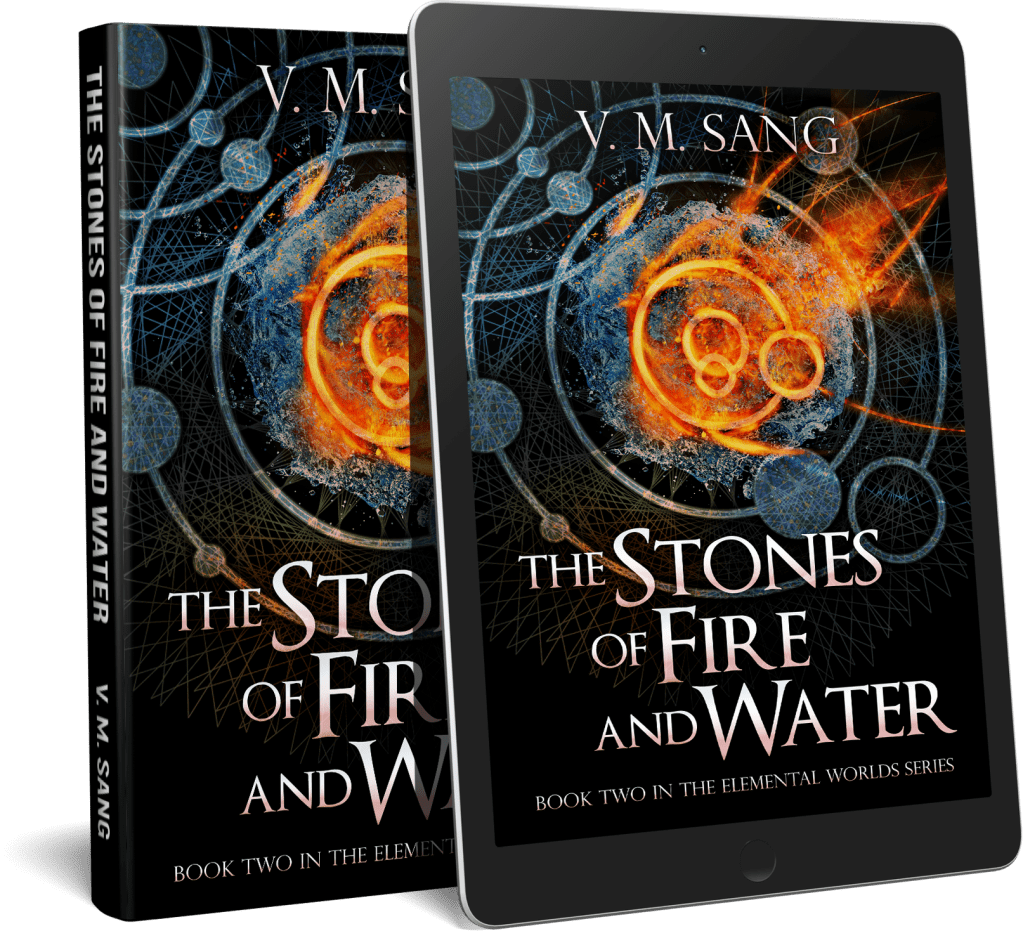
I apologise, but I only just checked schedule dates. The Stones of Fire and Water, Book 2 o Elemental Worlds, is only £0.99 or $0.99 until 27th of this month! If you got Book 1 in the last promo, you might like to get Book 2 now, but HURRY. You’ve only got till Friday!
Pettic has got the gems of Earth and Air, and solved the problems of the people in order to find them. Now he has to enter the worlds of Fire and Water. what will he find? Will the worlds be composed entirely of those elements? If so, how can he manage not to be burned to a crisp or drowned? Dangers abound for the young man, and time is of the essence.
Hee
Someone much cleverer than me worked these out!
via Hee
The Year on Vimar

As I said in my previous post about Time on Vimar, the planet where The Wolves of Vimar series takes place, I have always been curious about how and why our times on Earth are as they are. In the same way I puzzled about why days begin in the middle of the night, I also wondered about the years.
We begin our year on the day we call January 1. Why this particular day? There seems to be no reason I can see. It’s not the winter solstice, or any other obvious astronomical event. Early people would have used nature and the movement of the sun and moon to work out their seasons. It is believed that Stonehenge was a mighty astronomical clock since it lines up with many astronomical events. (I may do a post on it sometime, It’s quite fascinating.)
To me it would seem much more natural to begin the year at one of the equinoxes. They are, after all, a time when the daylight and darkness are equal and the balance between them begins to change.
When I began to plan the year on my imaginary planet, Vimar, before I populated it with the people whom you can read about in the books, I planned how they would decide to organize their years. (I had to do it without them as I’d not created them yet. I apologise if they disagree!) So here is what I did with it.
From early times, it was known that the planet Vimar took almost exactly three hundred and sixty days to travel around its sun, the people divided this into twelve months of thirty days each. This number, and the three hundred and sixty days in the year meant that the number six took on a significance, and so they further divided each month into five ‘weeks’ of six days each. This was called a ‘sixday’.
The months are unrelated to moon phases as the planet has two moons, Lyndor and Ullin, each with a different cycle, but the study of the moon phases has become important as they are believed to indicate something of the future, both for individuals and the world as a whole.
The year is deemed to begin at the Vernal Equinox when life begins to spring anew, and each of the twelve months is named after one of the gods of Vimar. The first month of Grilldar is called after the god Grillon, god of nature.
The months are as follows:
Season Remit of God Ruling God
Spring
Grilldar Nature Grillon
Kassidar All Kassilla
Zoldar Knowledge Zol
Summer

Candar Weather and Sea Candello
Sylissdar Life and Healing Sylissa
Allendrindar Persuasion and deceit Allandrina
Autumn
Pardar Agriculture Parador
Rothdar Mining and metalworking Roth
Bardar War Barnat
Winter

Bramadar Marriage and the family Bramara
Majordar Magic Majora
Khaldar Death and the underworld Khalhera
I would love to hear your comments on both how we on Earth have organized our years and about what you think of the World of Vimar’s organization. Please add your comments to the comments box.
Hurry. Don’t be late.
Starting from tomorrow, September 16th, The Stones of Earth and Air, Book 1 of Elemental Worlds, will be available on Amazon for the amazing price of $0.99, or £0.99.
This offer is only available until 20th, so make sure you don’t miss it.
The Stones of Earth and Air is the first part in a two book series called Elemental Worlds.
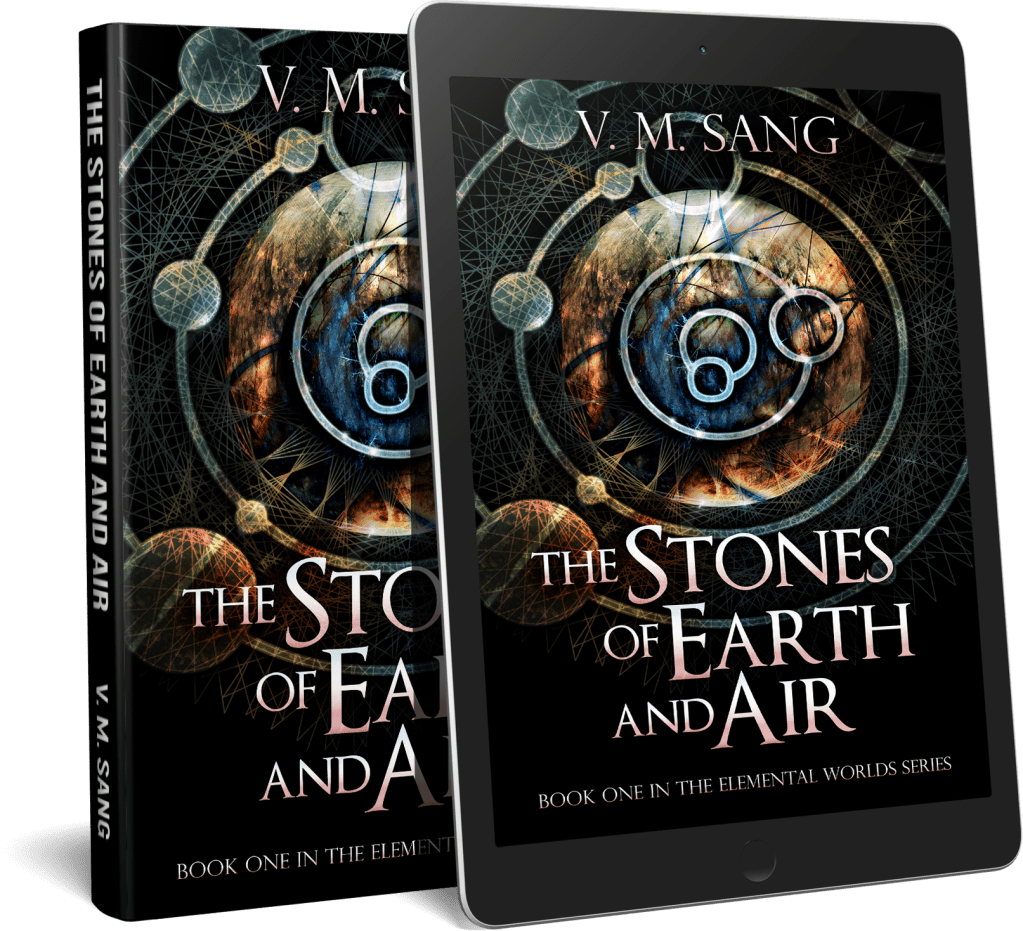
When Pettic notices changes in the behaviour of his best friend, the Crown Prince of Ponderia, he sets out to discover what has happened. He finds that the prince has been kidnapped and replaced by a doppleganger.
In order to free the real prince and prevent the cruel substitute from ascending the throne in due course, he must enter the four elemental worlds of Earth Air, Fire and Water and find four gems that act as the key to the prince’s prison. In each world he finds he must perform a task to help the people of that world, and he cannot escape back to his own world without the gem.
But if he manages to free the prince, how can he distinguish him from the impostor and convince others which one is the true prince?
Get your copy by clicking on the cover of the book in the sidebar.
Some thoughts on Enid Blyton and the 50p coin

Recently, it was proposed to put Enid Blyton, the children’s author, onto the 50p coin. This was rejected on the grounds that she was a racist, homophobic and sexist.
This worries me slightly because we are judging someone from a different era in the light of our own. Admittedly, the three things she has been accused of are deeply unpleasant—at least to our more enlightened eyes. I personally abhor all these things.
She has also been condemned and removed from libraries, not because of this, but because some people thought that she used too simple language and did not stretch children’s vocabulary.
When I was a child, I loved her books. I read them avidly. They were exciting. Her Famous Five books, her Mallory Towers books, the Adventure books, the Faraway tree books, the Secret Seven, and my favourite as a child, Shadow the Sheepdog were all read with great pleasure.
Now let us examine the accusations.
Racism.
She certainly had golliwogs in the Noddy books, and they were the baddies. But golliwogs were common toys in the 40s and 50s and no one thought anything was wrong with them. There was The Black and White Minstrel Show on the TV, and the blacking up of white men as black minstrels was accepted.
Now I’m not saying it was right, Clearly it must have been deeply offensive to black people. What I am saying, is that when she was writing, golliwogs were not considered to be offensive, and so to brand her as racist on the grounds of having gollisogs in the Noddy books, and making them bad, was acceptable at the time.
Sexism.
Was she sexist? At that time, it women usually stopped working when they married. They then devoted their time to looking after the home and raising the children. That was how it was.
Because Anne, in the Famous Five, did the cooking when they were camping does not make Miss Blyton a sexist. She was reflecting the way things were at that time. Boys simply did not cook.
That they do now, shows how far we’ve come. When she was writing, boys didn’t learn cooking and needlework at school, neither did girls do woodwork and metalwork. Now they are all merged together under the title of Technology, or Design and Technology.
Homophobia.
Homosexual acts were illegal in England and Wales until 1967, but only between consenting adults over the age of 21, and even then, not in the armed forces, It was illegal in Scotland until 1980 and Northern Ireland until 1982. Thus, during the time when Enid Nlyton was writing, homosexuality was frowned upon by the state.
Having said that, reading the Famous Five books, Miss Blyton had a transexual (although the term was not used in those days.) Georgina, one of the five, and known as George, always dressed as a boy and had her hair cut short (unlike Anne who had long hair). She also expressed the desire to be a boy and behaved as a boy. That sounds very much like a transexual to me.
To conclude, I think that it is unfair to judge someone from a totally different era, with a totally different mindset by our much more enlightened and liberal standards.

Miss Blyton was very important as an author. She got many children interested in reading. I am one of them. I devoured her books, as I said at the beginning of this post.
Some of her works, I understand, have been reworked. Things that we now consider wrong, why can’t they be altered. Noddy’s golliwogs could easily be changed into something else. Her baddies in the Famous Five, Sevret Seven and Adventure series, if people don’t think having them as foreign is right, could have their nationality changed.
The very first story I wrote was based on Shadow the Sheepdog. I was only about seven at the time. Would I have become a writer if I’d not had that early inspiration?
I think it’s wrong to judge people by today’s standards when the standards they lived in were so different.
I would love to hear what you think of this. Please post your comments in the comments box.
Review of Off Centre in the Attic by Mary Deal
I gave this book 5 stars on Amazon.
This is a book of short stories and flash fiction. The tales vary in length some of which are only a sentence or two,
The common thing about them is that they are all about some quirky character or event. Some of the characters you would love to meet, and others not so much.
A few of the stories I thought could be worked into complete novels. They left the reader thinking about what happened to the people in the tale. Others are complete in themselves.
I particularly liked the characters in the trailer home. That one could be made into a novel. Then there is the one about the goats. What did happen to them?
Some of the stories are sad and some happy, but all are fascinating reading. Mary Deal is an excellent judge of character, and has obviously spent much time watching people and learning from her observations.
The writing is good. Just a couple of places where she uses ‘lay’ instead of ‘lie’, but this is not enough to detract from the rest of the writing. She builds the characters well and the reader empathises with them.
A good read. As a book of short stories, it can be read in bits, or one after the other. I would recommend this book to anyone interested in people, and in quirky tales.
I Saw Jesus
A thought provoking post.
via I Saw Jesus
The Day on Vimar. How the people of that world break up the day.

I’ve often wondered why we start the day in the middle of the night, and the year at a date that seems rather random.
Let’s think about the day first.
To me, it would seem obvious that the day begins when the sun rises. Or, I suppose you could say it ends when the sun sets, which would mean the next day begins at either sunrise or sunset. But why did someone—who?—decide the middle of the hours of darkness was a good idea? Anyway, midnight isn’t the middle of the hours of darkness all the year round, anyway.
Now if we say the day begins at sunrise, I can see that would be a problem, especially for the modern world. That can be solved by saying the day begins at the time of dawn on the equinoxes. That is round about 6am.
When I devised my world of Vimar for my Wolves of Vimar Series, I had to decide on how the people would break up their day. This is a totally different world from Earth, although, for simplicity’s sake, I still use hours and minutes. The people on Vimar hold the number six as sacred and all multiples of six also have power. Thus 60 minutes in an hour, and 24 hours in a day makes sense.
So, on Vimar, the day begins at what we would call 06:00 or 6am. That to them would be 00:00. They begin counting from there. 7am would be 01:00. 10am would be 04:00. What we call midday, to someone on Vimar would be 06:00.
They also use the 24 hour clock.
If a person wanted to have a meeting at, say, 10am, by our standard, they would say, “I’ll meet you at the fourth hour.”
I don’t use the time very much in the book, but I thought it would be essential in my world building to try to think about this.
I will go into the year on the third Tuesday of next month,
If you want to read more, and about Carthinal and his friends and their adventures on the world of Vimar, you can buy the first 3 books by clicking on the covers in the sidebar. I am serialising Carthinal’s early life on the first Tuesday of every month.
Please leave a comment in the comments box. I would love to hear your thoughts on this.
Collective Nouns

A lot of things have been irritating me in people’s use of the English Language, but recently it seems the fact that a collective noun is singular has disappeared.
One I hear frequently, being a fan of Manchester United, is in one of their songs.
‘U-N-I-T-E-D United are the team for me.’
Now we would not say, ‘some team’, or ‘those team’. We would be aware that ‘team’ is singular in those cases, so why, in this one case, does ‘team’ suddenly become plural?
Is it one team, or several? No, it’s one team, so it’s singular.
Similarly ‘Crowd’. ‘The crowd are…’ is now commonplace. ‘The crowd are cheering.’ Again, we would not say ‘Those crowd’ or ‘Some crowd’ We’re talking about one crowd, so it’s singular.
I can understand it in some instances where there is a plural noun involved, as in ‘A crowd of people’, but it’s still the crowd we’re referring to.
‘The crowd of people was making its way toward the exit.’
We often get ‘The flock of sheep are…’ instead of ‘The flock of sheep is…’.
‘The bunch of flowers John gave Mary is beautiful.’ not ‘The bunch of flowers John gave Mary are beautiful.’
Just remember that if you wouldn’t say ‘some bunch,’ or ‘some crowd,’ you use the singular verb. It’s not the individual flowers we’re referring to here, but the bunch. One bunch, Singular.
Please save my sanity and be careful when you come across a collective noun and decide whether or not you should use the plural. Chances are, you shouldn’t.
 Dragons Rule OK. V.M.Sang (author)