Tag Archives: aspholessaria

Spring. A poem

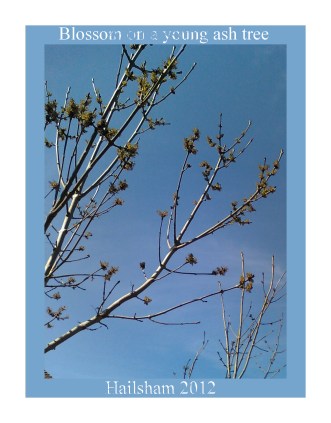
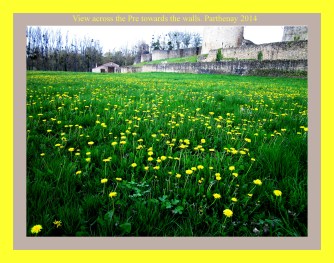
112ashblossom114wallsparthenay

Dandelions, like gold, cover the meadows.
Newborn lambs frolic in fields.
New leaves on the trees are casting their shadows
And winter’s cold grip quickly yields.

At the edges of woodland the primroses glow
And cowslips their scent fills the air.
Anemones dance when the breezes do blow
And birds sing with never a care.

Then bluebells and campions come into bloom
Their colour the blue of the sea.
The cuckoo, that herald of spring, will come soon
His call echoing over the lea.

The song of the blackbird is like molten gold.
His notes are so pure and so clear.
Hearing him seems to banish the cold
And brings joy to all those who hear.

Robin is nesting, and other birds too,
The hedgehog is active once more.
The young of the deer and the badger and shrew
Play their games as in old days of yore.

The sun climbs higher and higher each day
Giving more of his heat and his light.
It sparkles like stars fallen into the bay.
All smile at the beautiful sight.

Hope and excitement come with each spring morn.
What blessings will come with this day?
New starts can begin once again with each dawn
And send us all hopeful away.

A Visit from Auden Johnson.

Auden-Johnson's-profile-image-200px


Welcome to my blog, Auden. This story sounds interesting. I’m looking forward to you finishing it so I can read it.

Auden is the author of The Merging Worlds Series, which comprises The Sciell and Chains of the Sciell, and The Jura Series which comprises Visible through Darkness, Shadows Under the Light and Darkness Ignites the Flame. The books can be bought from Amazon.

Auden does her own cover art, If you want to see how she came up with the cover for The Unburned Island, visit her blog http://audenstreasury.blogspot.com/

She usually writes Dark Fantasy, so this is a new venture for her.


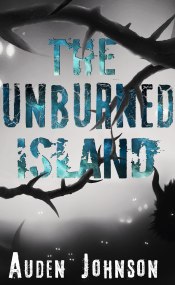
The-Unburned-Island-Promo-image

The-Unburned-Island-by Auden Johnson

The entire island burned. Everyone disappeared. Somehow, one building remained unscathed. This building, a schoolhouse, is haunted. It and the island remained abandoned for years.
One day, Kiran, En and a team of magical investigators travel to the island to banish whatever haunts the schoolhouse. It takes them no time to realize the building isn’t the problem. The island is.
Add to Goodreads- https://www.goodreads.com/book/show/34629301-the-unburned-island


Writing The Unburned Island has been a ride. Not always a fun one. I got stuck so many times. It was beginning to get frustrating. The story started as an entry for a magazine. I was barely halfway through writing it when I realized it was going to be too long to submit.
Then an idea hit me. This could be the start of a new series. Magical characters investigating haunted locations. The series is set in a fantasy world so these aren’t known haunted locations. I prefer it that way. Writing fantasy gives me the freedom to make my own worlds and give my characters cool powers.
Unlike most of my stories, this one isn’t apocalyptic. I know, strange. Don’t know what’s gotten into me. I don’t foresee the world ending anytime soon. The series will focus on relationships and creepy places. Of course, both themes gave me problems.
Kiran and En are partner investigators with an interesting history. At first, I didn’t know if I wanted them to be in a relationship. When I realized I did, I couldn’t figure out what their relationship would be by the end of Book 1. They start the story as good friends. Kiran and En told me what they wanted near the end of the story.
As for creepy locations, I wanted this story to have atmosphere but I struggled with how to do this. I created a Pinterest board for Haunted Buildings/Islands and collected images of abandoned buildings and creepy lands. While writing this story, I was able to visit a catacomb. It was so cool and so scary. The images and the catacomb visit helped me give The Unburned Island a nice chilling atmosphere.
I’m looking forward to seeing where Kira, En and co. will take me. They’re already telling me how they want Book 2 to start.

Thank you for appearing on my blog. Auden. I’m sure my readers will appreciate you sharing your writing process with them. Good luck with the rest of the series.


Winter Night. (a poem)

This ought to have been published in the winter, but I didn’t get round to it, so I’m publishing it today. Anyway, it’s still technically winter! Hope you enjoy it.

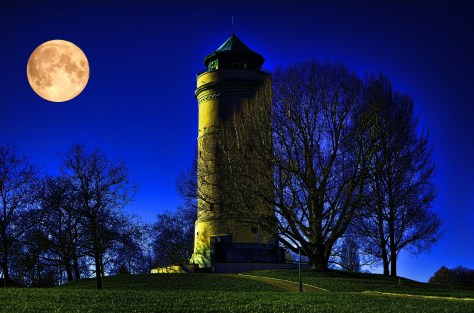
full-moon-1337690_1280

Snow covers the ice-hard ground
And ponds and lakes are frozen.
All is muffled, every sound.
The birds are silent in the trees,
No moths or butterflies or bees
Just snowflakes by the dozen.

The moon is full and her pale light
Shines gently through the flakes.
But creatures shiver through the night.
The icy wind makes branches quiver
And every living thing to shiver
In trees and hills and lakes.

Across the field there trots a fox.
An owl flies by on silent wings.
On the frozen lake, some ducks.
As snow falls gently on them all,
And cattle low within their stall
We are waiting for the spring.

I welcome all your comments, so please add yours.

Words That Don’t Follow Normal Plural Rules

winter-1142029_1280

Today I’m going to discuss a few words that don’t form the plural by adding the letter ‘s’. These words come mainly from foreign ‘imports’, although a lot are very old. Some people are confused by these words and use the plural as a singular.
So here we go.

 Singular: Bacterium        Plural: Bacteria
 Singular: Phenomenon        Plural: Phenomena
 Singular: Medium            Plural: Media
 Singular: Datum            Plural: Data
 Singular: Criterion            Plural: Criteria
 Singular: Cactus            Plural: Cacti
 Singular: Fungus            Plural: Fungi
 Singular: Stadium            Plural: Stadia
 Singular: Nucleus            Plural: Nuclei
 Singular: Syllabus            Plural: Syllabi
 Singular: Focus            Plural: Foci
 Singular: Thesis            Plural: Theses
 Singular: Crisis            Plural: Crises
 Singular: Index            Plural: Indices
 Singular: Appendix        Plural: Appendices

It is becoming more acceptable to hear ‘stadiums’, ‘syllabuses’ and ‘indexes’, although they grate on me, personally, but my least favourites are when I hear ‘criteria’, ‘bacteria’, ‘fungi’ and ‘phenomena’ used as singular nouns. Grrrrr!

Now for some that don’t change for the plural.

 sheep
 deer
 fish (although the word ‘fishes’ can be used if referring to a number of different types of the creatures. e.g. There was a great variety of fishes swimming around on the reef.)
 aircraft
 moose
 offspring
 species
 salmon
 trout

Now what about those that are completely different in the plural? Here we have the following:

 Singular: Child            Plural: Children
 Singular: Man            Plural: Men
 Singular: Woman            Plural: Women
 Singular: Mouse            Plural: Mice
 Singular: Goose            Plural: Geese (N.B. The plural of ‘mongoose’ is not ‘mongeese’, but ‘mongooses’. Wierd, I know, but that’s the English language for you.)
 Singular: Die             Plural: Dice
 Singular: Foot             Plural: Feet
 Singular: Louse             Plural: Lice
 Singular: Ox             Plural: Oxen
 Singular: Person             Plural: People
 Singular: Tooth             Plural: Teeth

I hope this has helped some of you, at least. I would like to know if there are any I’ve forgotten, or about any that personally grate on you when you hear them misused.


Some of my photographs

Today is the 5th Tuesday in the month, so I’m doing something different. I’m posting some photographs I’ve take.

As you can see, they are rather old ones. they are all of places in Brittany.

I hope you enjoy looking at these photographs as much as I enjoyed taking them.


Please leave a comment and I’ll get back to you.


The Revenge of Excalibur by Sahara Foley. My Review.

revengepicture

Today I’m reviewing a book I recently read, It’s the second book in the Excalibur series and it fuly lives up to the first one.

Blurb

After Pamela’s father vanished twenty-seven years ago, her life has been content. That is, until she is visited by disturbing dreams, telling that her father is in danger.

She also receives a mysterious message, telling her that Arthur has been imprisoned on a distant planet, and only she can rescue him. To do so, she must release the evil entity trapped within the famous sword, Excalibur. If she trusts this strange messenger and releases the terrifying Shalit from its confinement, Pamela could be endangering Earth and all the other planets in the universe.

Will she be strong enough to control the Shalit, save her father, and protect everyone she loves? And can she risk destroying all life if she’s not?


My Review
This book is the second in the Excalibur series and I enjoyed it as much as I did the first one. This time, instead of following Arthur and Daisy on their adventures out in the Universe, we concentrate on Arthur’s daughter, Pamela. Arthur does not know of the birth of his daughter, nor that she has inherited his gifts.

Pamela feels something of a misfit on Earth as she has to hide her powers from others. If they know what she is capable of, they would fear her. One day she is whisked off to space by mysterious forces that turn out to be intelligences contained in a living spaceship. These two women, granddaughter and grandmother, tell her that her father is in danger and that he and his wife, the alien Daisy, whom he met in The Secret of Excalibur, are imprisoned.

The rescue of Arthur and Daisy involves the releasing of the Shalit from Excalibur, one of the entities known as Planet Eaters.

Pamela has to use her powers and faces great danger. She finds her true love in a most unusal person, and the twist at the end caught me by surprise.

Ms Foley has built complex worlds with strange alien creatures and a politics we can all recognise. Pamela’s change from a timid, self-conscious girl to a confident woman is believable, after what she goes through.

The writing is excellent and I have no hesitation in giving this book 4 stars.

The book is available as both an ebook and in paperback from Amazon.

If you have any comments on this post, or any others, please add them to the comments box. I’d love to hear from you.


I Am Earth. A Poem

earth-1881932_1280

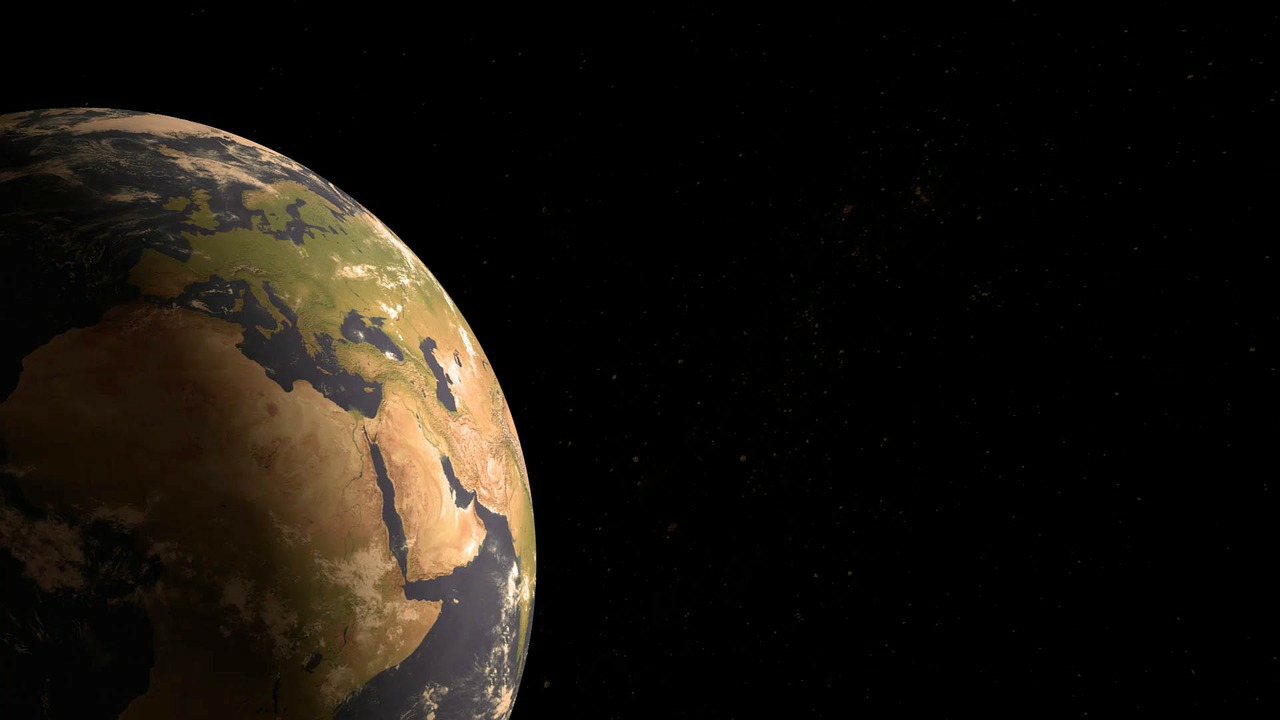
I am Earth.
I am your mother.
I gave you birth.

I gave you a nest.
A wonderful home
On which you can rest.

I gave you food .
Plenty to eat.
You waste all that’s good.

I gave you the seas
And forests and hills,
But you chop down the trees.

You think you’re so cool,
But you pollute the air
By the burning of fuel.

You heat up the air
And care not a jot
For the poor polar bear.

Animals die
Because of your greed.
You hear not their cry.

I teemed with life,
Both great and small.
Yet extinction is rife

Like a cancer you spread
Throughout the whole world.
It won’t end till you’re dead.

But I’ll make you pay
For all you have done.
You’ll be sorry one day.

I’ll shiver my skin.
Your buildings will fall
And bury your kin.

The land I will flood
By raising the seas
And drown all in mud.

My mountains so high
Will belch forth their flames
And you will all die.

I am Earth.
I am your mother.
I gave you birth.

BUT I WILL DESTROY YOU.

Some common Grammar mistakes.

I apologise for being a few hours late with this week’s blog.


Today’s post is from Clancy Tucker’s blog   https://clancytucker.blogspot.co.uk/2016/12/18-december-2016-common-grammar-mistakes.html/

I found I couldn’t reblog it as it stands so I copied and pasted it instead. I hope Clancy doesn’t mind. I asked him about reblogging and he said it was fine, but his reblog only goes to Blogger.

Do visit his blog. It’s very interesting. He posts on a variety of things including some of his photography, which is wonderful, information about famous people, historical events, British slang and of course, grammar mistakes.

COMMON GRAMMAR MISTAKES

G’day folks,

None of us are perfect in the English language. I often see mistakes, especially spelling mistakes on advertisements, and on TV. Here are a few that might help, courtesy of Jon Gingerich.


Who and Whom

This one opens a big can of worms. “Who” is a subjective — or nominative — pronoun, along with “he,” “she,” “it,” “we,” and “they.” It’s used when the pronoun acts as the subject of a clause. “Whom” is an objective pronoun, along with “him,” “her,” “it”, “us,” and “them.” It’s used when the pronoun acts as the object of a clause. Using “who” or “whom” depends on whether you’re referring to the subject or object of a sentence. When in doubt, substitute “who” with the subjective pronouns “he” or “she,” e.g., Who loves you? cf., He loves me. Similarly, you can also substitute “whom” with the objective pronouns “him” or “her.” e.g., I consulted an attorney whom I met in New York. cf., I consulted him.

Which and That 

This is one of the most common mistakes out there, and understandably so. “That” is a restrictive pronoun. It’s vital to the noun to which it’s referring.  e.g., I don’t trust fruits and vegetables that aren’t organic. Here, I’m referring to all non-organic fruits or vegetables. In other words, I only trust fruits and vegetables that are organic. “Which” introduces a relative clause. It allows qualifiers that may not be essential. e.g., I recommend you eat only organic fruits and vegetables, which are available in area grocery stores. In this case, you don’t have to go to a specific grocery store to obtain organic fruits and vegetables. “Which” qualifies, “that” restricts. “Which” is more ambiguous however, and by virtue of its meaning is flexible enough to be used in many restrictive clauses. e.g., The house, which is burning, is mine. e.g., The house that is burning is mine.


 Lay and Lie

This is the crown jewel of all grammatical errors. “Lay” is a transitive verb. It requires a direct subject and one or more objects. Its present tense is “lay” (e.g., I lay the pencil on the table) and its past tense is “laid” (e.g., Yesterday I laid the pencil on the table). “Lie” is an intransitive verb. It needs no object. Its present tense is “lie” (e.g., The Andes mountains lie between Chile and Argentina) and its past tense is “lay” (e.g., The man lay waiting for an ambulance). The most common mistake occurs when the writer uses the past tense of the transitive “lay” (e.g., I laid on the bed) when he/she actually means the intransitive past tense of “lie” (e.g., I lay on the bed).


Clancy’s comment: Hope these help.

Crisalisk, The Red Dragon (a poem)

Today is the third Tuesday in the month, and so it’s poetry day.

dragon-1829827_1280

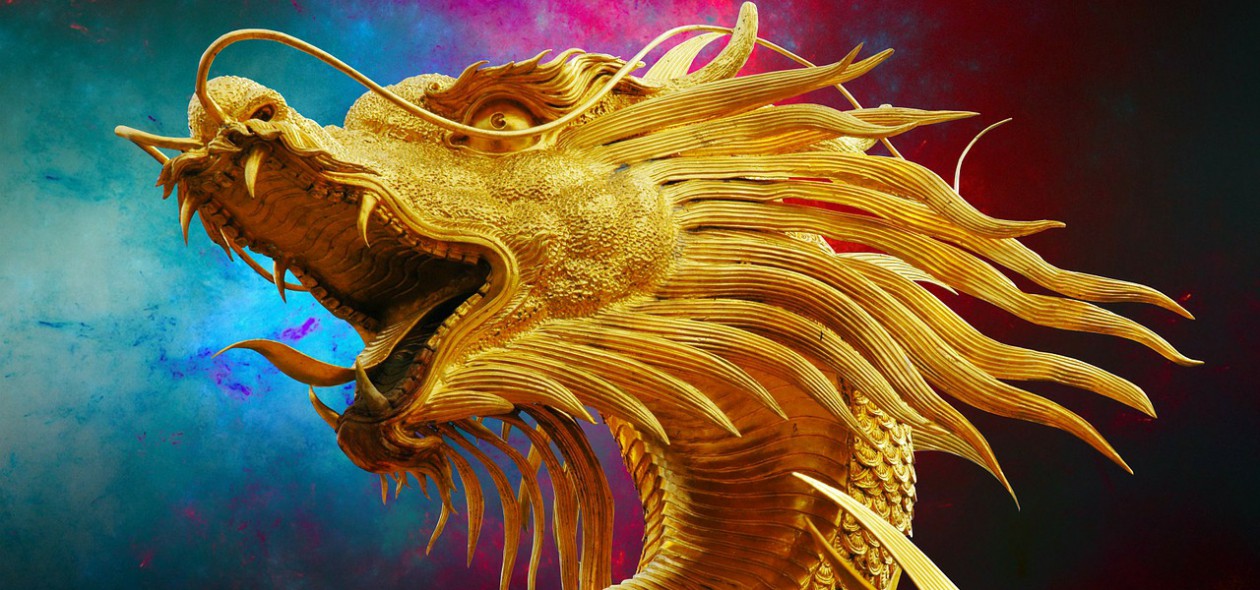
This poem is about a dragon who you can meet in my next book, yet to be published. Crisalisk and her mate Monarlisk are separated by Monarlisk losing a fight to another male dragon for the attentions of Crisalisk, but this poem refers to a time before that.

Her scales are the red
Of sunset in Autumn,
Her eyes are the gold
Of midsummer sun,
Her horns are as white
As snowfall in winter
And she dances on high
Like the birds do in spring.

Her beauty is evident
To all who do see her.
Her grace in the sky
Is a joy to behold.
With pinions spread wide
She dives then she soars
But beware, if she sees you,
Her flames she’ll release.

She thinks she’s the queen
Of all that surround her.
All other things living
Are there just to serve.
If any refuse her
She roars out her challenge
As Death on wide wings
Dives down from the skies.

But who is it comes
On black wings high soaring?
‘Tis Monalisk who
Is her mate and her love.
For him she will bow down
Her arrogance dwindling
For he is her only
True love in the land.

This is a poem that has no rhymes. Poetry does not need to rhyme, but it has to have either rhyme or rhythm or it’s just prose broken into lines.


Poetry nowadays seems to be that way, I’ve read many so-called poems that have neither rhyme nor rhythm. One had short lines, then suddenly a long line that took up 2 lines of text. Some of the poems I’ve read are incomprehesible too. I may be old fashioned in my ideas, but those things aren’t poetry!

If you have any comments on this poem or on poetry in general, please add them to the comments section.

Strange English spellings


question

Today is a day when I address some things about our beautiful, interesting, but strange language.

There are many words in English that are spelled the same but pronounced differently. Also there are words pronounced the same, but spelled differently. Then there are words that are the same in spelling and pronunciation but have different meanings, depending on context.

The strangest, in my opinion, are words ending in -ough.

We have:

 Though, pronounced ‘tho’
 Bough, pronounced ‘bow’. (although that in itself has different pronunciations)
 Enough, pronounced ‘enuf’
 Thought, pronounced ‘thort’
 Through, pronounced ‘threw’

No wonder foreigners have some difficulty with it, although (another one, similar to ‘though’, here) it seems they are able to manage quite well if the number of foreigners who speak the language extremely well is anything to go by.

I was in an Italian restaurant in Germany and was greatly amused to see the German waiter speaking to a French customer in English. This also happened when I was in Croatia. The Croatian receptionist spoke to a visitor I think was Russian in English. These strange inconsistencies seem not to faze them, even if they confuse some native speakers!