Tag Archives: aspholessaria

The Promises of Dragons

dragon

It suddenly appeared one day and took a cow from the field.

A week later, dark wings blotted out the summer sun. The farmer looked up and saw an enormous shape gliding overhead. A dragon! He watched, cowering behind a large tree.
The dragon swooped down and carried off another cow.

As soon as the creature disappeared towards the distant mountains he ran as fast as he could to his home.

‘What? You say a dragon is stealing our cows?’ His wife was incredulous. ‘They are supposed to be extinct, aren’t they?’

‘It was a dragon. A huge beast with horns on its head, leathery wings and reddish-brown scales. It was a dragon for sure.’

‘Then you must go and tell the village council. They must do something about it. We can’t have dragons taking all our cows,’ exclaimed his wife.

‘I’m not sure they’ll believe me. Anyway, what can they do?’

‘Nevertheless you must go. Leave straight after we’ve eaten. I can see to things here until you get back.’

The farmer strode resolutely into the village that afternoon and made for the home of the leader of the council. When he heard the farmer’s tale, he called an emergency council meeting.

Once all the council members were assembled he turned to the farmer.

‘Now tell the council what you told me,’ he said.

The farmer bowed to the council and told of the theft of a cow by a dragon. He told of the disappearance of other cows in the previous weeks as well, but he had thought that it was rustlers. He had not thought of a predator as there had seen no evidence of blood or bones. The cows had just vanished.

‘You are certain you saw a dragon? Most experts say they’re extinct.’ said the leader of the council.

‘It was a dragon. I can’t be mistaken about that!’

Another councilor asked, ‘It was in the sky, against the sun. Could it have been a cloud?’

‘And clouds swoop down and steal cattle?’

There were more questions but eventually the council was convinced–at least enough of them to agree to send a troop of volunteer guardsmen to investigate, and to kill the beast, if it turned out it were truly a dragon.

Two days later the volunteers set off to track down the mythical beast.

They crossed the plain towards the mountains in the direction the farmer had told the council the dragon had gone. It took a full day to get to the base of the mountains and so they made camp there. The men were in good spirits. Searching for an extinct creature was a bit of a lark. They were mostly young men who had volunteered and not one of them believed the story the farmer had told.

‘An old man, going senile and seeing things,’ said one.

‘Or perhaps his eyes are going. It must have been a cloud. I’ve seen clouds in the shape of all sorts of things,’ said another.

‘What about the cows that vanished?’ asked a third.

‘Rustlers, as the old man suggested himself,’ the first volunteer told him.

They all laughed at the foolishness of old men.

The next few days they spent climbing the mountains. The going was not easy and as they got higher and higher some of them began to wonder why they were here on this futile search. Where were they to look? They had no idea, really, but then one of them, older than the others, suggested they look for a cave or caves. He told them he had heard that dragons like to live in caves. One young man then said that he had lived in these mountains when he was a youngster and could remember some caves where the children used to play. He led the troop in the direction of these caves.

Soon they could see dark openings in a cliff ahead of them. They stopped and had a meeting. None of them really believed in the dragon, but the oldest man said that they ought to be careful, ‘just in case’. Later that afternoon, just as they were about to set off up to the mountainside to the caves they heard a strange noise as though a large flock of bats was flying overhead or a tanner was shaking out a piece of leather. A flapping sound like wings, but not feathery wings like a bird. More like what they thought of as …dragon wings. The sunlight disappeared momentarily and as they looked up, they saw what could only be a dragon, flying towards the largest of the cave openings.

‘By all that’s holy,’ breathed the leader of the group. ‘The old man was right. It is a dragon. Where has it come from? It can’t possibly exist. They were extinct hundreds of years ago, yet here it is.’

‘They were evidently not extinct. Some must have survived in the depths of the mountains where no one goes,’ said the oldest man, standing beside him and shielding his eyes as he watched the beast enter the cave.

They waited a full day until the creature left again. That was their opportunity. They had all heard the tales of vast treasures built up by dragons. If it were true, then they would all be rich men.

The stench of dragon hit them as they neared the cave. It was a sickly, sweet smell with hints of sourness in it. They held their noses. Around the mouth of the cave lay many bones from large animals. Many were obviously deer, but there were sheep and cow bones there too.

As they neared the lair the leader asked for a volunteer to go into the cave to look. These otherwise brave young men looked at each other, none of them wanting this task. What happened if the dragon returned while they were in the cave? Then one man stepped forward to volunteer.

He entered slowly and with some trepidation. He lit his torch, for it was dark inside. The smell was even worse here and at first he thought he might be sick, but he wrapped a rag round his nose and mouth. That made it a bit more bearable. In the cave he stumbled over a smooth, rounded object. He lifted his torch and saw an egg! Not just one egg, but ten. He ran out of the cave and reported what he had seen.

They went in and smashed the eggs.

After smashing the eggs and destroying the threat of ten more dragons rampaging through the land they began the decent to the plain.

When Gulineran returned to her cave and found her smashed eggs her roar of anguish made the mountains themselves tremble. She determined to take her revenge. First she looked for the culprits. She saw them like ants, trekking down the mountainside. She flew over them and burned every last one to a crisp with her flaming breath. Then she swept down and breathed flame onto the hapless village. The cottages burned like tinder. Many lost their lives. Those who survived crowded into the village hall and there they decided to send for help to the nearby wizards, thinking perhaps magic would be able to destroy this dragon.

The message seemed to take a long time to get there but eventually a message came back. The wizards were very sorry, but they could not spare any one at the moment. They were just too busy.

One wizard was angry at that response and so he left the college and set off for the village. He was a young man by the name of Oni. Oni talked to the council, and promised to do something about the dragon. The council accepted his offer and promised him great rewards if he could manage to get rid of the great beast that was terrorising them.

Oni walked out of the village and into the mountains. He stood near the cave and called. Within seconds the dragon rushed out ready for battle. She breathed flame. The flames washed over Oni. Gulineran expected to see a dead wizard when her fire died away, but Oni was left standing and very much alive. She looked into his eyes.

‘Ah,’ Oni breathed, ‘I’ve not seen such beauty in two hundred years.’

‘How can a human talk of hundreds of years?’ asked Gulineran. ‘Your lives aren’t that long.’

‘No, but dragons live centuries,’ replied Oni. ‘You are the first female dragon I’ve seen in more than three.’

His skin began to change then, turning a rich, deep red and he grew and rippled, smooth skin turning into scales and horns sprouting from his head. His shoulder blades burst from his skin and he folded a pair of wings along his back. A handsome male red dragon stood before her. ‘Will you accept me as your mate?’ Oni asked.

When Gulineran accepted Oni’s offer he changed back to human form and returned to the village. There he told the villagers of his encounter with the dragon.

‘I used magic to charm her and I have managed to get her to agree not to attack the village nor take any cattle. She will live on the wild creatures of the mountains.’

The council offered him gold, but he refused saying, ‘I have everything I need now. Indeed, everything I ever wanted.’

He then returned to Gulineran. He told her of his promise to the villagers.

‘Oh, Oni.’ answered Gulineran. ‘Don’t they know not to trust the promises of dragons?’

I hope you like my little story. Please add a comment. I am always interested in what people think of my blogs. I’ll get back to you as quickly as I can.

An Exciting Read

I am reviewing Dissolution by C.J.Sansom today. I bought this book because I read the third Shardlake book, having bought it in a Charity Shop, and enjoyed it immensely. I decided I like the character and wanted to know more about him, so  bought  the first two. I’ve yet to read the second one. I’ll review it when I do.

Review of Dissolution by C.J.Sansom

Blurb

It is 1537, a time of revolution that sees the greatest changes in England since 1066. Henry VIII has proclaimed himself Supreme Head of the Church. The country is waking up to savage new laws, rigged trials and the greatest network of informers ever seen. And under the orders of Thomas Cromwell, a team of commissioners is sent throughout the country to investigate the monasteries. There can only be one outcome: dissolution.

But on the Sussex coast, at the monastery of Scarnsea, events have spiralled out of control. Cromwell’s Commissioner, Robin Singleton, has been found dead, his head severed from his body. His horrific murder is accompanied by equally sinister acts of sacrilege.

Matthew Shardlake, lawyer and long-time supporter of Reform, has been sent by Cromwell to uncover the truth behind the dark happenings at Scarnsea. But investigation soon forces Shardlake to question everything that he hears, and everything that he intrinsically believes …

Review

This is the first book in CJ Sansom’s Shardlake series and I gave it five stars.

Shardlake is a lawyer at the time of Henry VIII. He is not what one might call a traditional hero. He is a hunchback whose infirmity often troubles him. He is also regarded with suspicion and superstition by those around him, but he is a clever man.

C,J,Sansom has captured the period very well in this work. There is a very real fear amongst the people that the new Protestant religion is threatening them if they are not seen to fully embrace it. The characters he has created are very believable with all the foibles of humanity throughout the ages.

The book is very well written and moves along at a fast pace, carrying the reader along with it. There are clues as to the murderer if the reader can manage to piece things together. I didn’t, and so was surprised at the ending.

I am looking forward to reading the next book in the series.

If anyone wishes to make a guest appearance on my blog, please message me. I would be only to pleased to welcome you.

Whatever happened to the Bilberry?

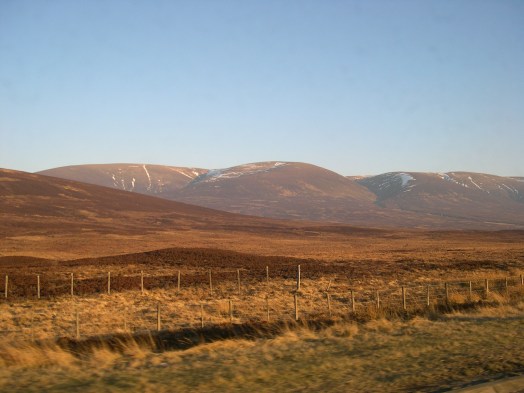
moorland


I was remembering the bilberries I used to buy from the market in Rochdale, England in the early 70s and got a desire for a bilberry pie. Nowhere can I find anyone who sells them, except for Amazon who sell dried ones.

The little purple berries are about half the size of their cousin, the blueberry, but are packed with so much more flavour. There is nothing quite like it. Imagine a blueberry, then concentrate its flavour into a volume about one quarter its size, then double the flavour for good measure. You might then have a slight idea of the pleasure of eating bilberries.

They were made into pies, jams or stewed and served with ice cream or cream Mmmm, delicious. Their sweet tartness bursts on the tongue like nothing else. I’m sorry, my American friends, but the blueberry is NOT a substitute, but is bland, squishy and watery in comparison.

Now don’t get me wrong. I enjoy the occasional drink of blueberry juice or fresh blueberries in a fruit salad, it’s just when I think to compare them with the bilberry I feel disappointed. I’ve been searching websites for pictures of bilberries, but there is confusion here and all the ones I could find were actually of blueberries. Some even said they’re  the same fruit!

Why has this delicious little fruit fallen out of favour? Who knows. I suspect it’s something to do with the low-growing habit of the plant. Gathering bilberries is back-breaking work, and not one that many people would relish except for gathering a few wild ones for their own consumption.

They grow on heath and moorland. wild country where few go these days, when people don’t move more than 50 yards from their cars and think themselves adventurous for driving up into the hills and walking so far. So people don’t see these little beauties. Anyway, we have grown so far from nature that unless something comes in a neat package from a supermarket, many are afraid to gather the wild bounty of our hedgerows. (I don’t see many people gathering blackberries from the hedges or picking mushrooms from the fields these days.)

I’ve picked wild stuff since I was a child. Going mushrooming was a delight. we quickly learned to recognise a delicious field mushroom, and to eat them fresh for breakfast, with egg and bacon, well, it makes my mouth water just to think of them. They, like the bilberries, burst with lovely mushroomy flavour.

To make a pie with blackberries you’ve gathered yourself is a pleasure. To be out in the countryside, listening to the birds singing and watching the butterflies and bees–there’s nothing like it, quite apart from the health benefits of the walk.

I do see people gathering blackberries, but they are picking them from the roadside with lorries, cars and buses hurtling by and throwing up dust to coat them, Not to mention those lower down that I’ve seen people picking, just at dog pee level.

I’ve picked elderberries and made wine and jam from them, and the fluffy white umberellas of blossom also makes a lovely cordial as well as elderflower wine.

I’ve digressed from my original thought about bilberries. I long to eat another bilberry pie before I die, but they seem to be a forgotten fruit. Even Word is putting a red squiggly line underneath it everytime I write ‘bilerry’, but it doesn’t under ‘blueberry’.

Amazon’s dried bilberries, at nearly £11 for 250g seems rather a lot. and one of their products is called ‘blueberry juice (bilberry), which isn’t the same thing at all. The only review of the dried bilberries says they are horrible.

I’ve looked on the websites of all the major British supermarkets and none of them stock even jars of the fruit, even though I’ve come across websites that say they do.

So if anyone out there knows of somewhere I can get them, please let me know. I’ll be forever grateful.

Elven Evening Song from The Wolf Pack by V.M.Sang


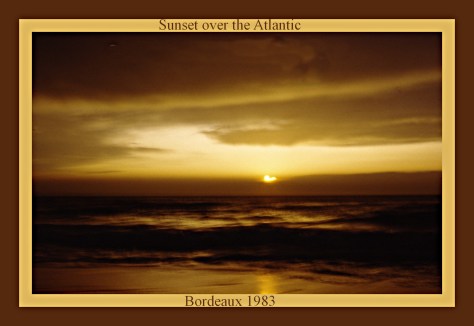
083atlanticsunset1

During their return from finding the Sword of Sauvern, the companions passed through the Elven homeland of Rindisillaran and stayed in the capital, Quatissillaron/ there they heard the beautiful song the elves sing at dusk.


Elven Evening Song

Ah equillin ssishinisi
Qua vinillaquishio quibbrous
Ahoni na shar handollesno
As nas brollenores.

Ah equilin bellamana
Qua ssishinisi llanarones
As wma ronalliores
Shi nos Grillon prones.

Ah equilin dama Grillon
Pro llamella shilonores
As nos rellemorres
Drapo weyishores.

Yam shi Grillon yssilores
Grazlin everr nos pronores
Wama vinsho prolle-emo
Lli sha rallemorres.

Translation

“Oh star of the evening
Shining brightly
You give us hope
In the deepening night.

Oh beauteous star
Who heralds the evening
You tell us all
That Grillon guards us

Oh Grillon’s star
As you sink westwards
Return again
To guard the dawn.

Ensure that Grillon
Through darkness keep us
Safe from all evil
Until the morn.”’

20 commonly mis-spelled words

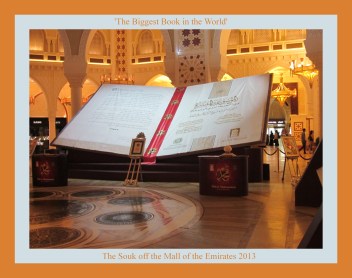
Here are some commonly misspelled words in English. 113biggestbookdubai

 Acceptable, not Acceptible
 Accessible, not Accessable
 Achieved, not Acheived
 Acquire, not aquire
 Analysis, not Analasis
 Business, not Busness
 Ceiling, not Cieling
 Consistent, not Consistant
 Definite, not Definate
 Discipline, not Disipline
 Exhilarate, not Exilarate
 Exceed, not Exeed
 Forfeit, not Forfit (or Forfiet)
 February, not Febuary
 Height, not hight (or hieght)
 Heirarchy, not Hierarchy (or Hirarchy)
 Independent, not Independant
 Inoculate, not Innoculate
 Leisure, not Liesure
 Liaise, not Liase

English is a very odd language as far as spelling is concerned. This is because it has words and roots from many other languages. There are still a few Celtic words, although not very many. Then the Romans came bringing Latin.

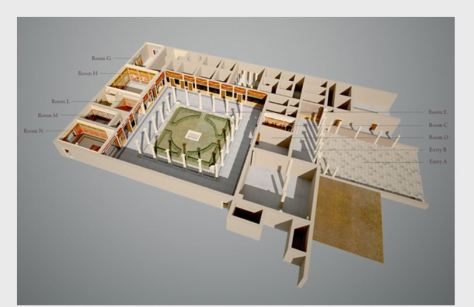
romanvilla

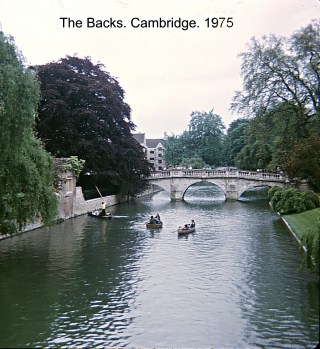
Latin was the language of scholars and it is only within living memory that it was a requirement to gain entry to Oxford and Cambridge Universities in England. The Roman Catholic Church used Latin in its services until comparatively recently, and many mottos are still in Latin.

080backscambridge

After the Romans left these isles, we were invaded by Scandinavian. These brought their own languages with them. Today, in Scotland in particular, there are many words similar, if not the same, as those in the Scandinavian languages. Dialect words often very old and date back to those languages.

There were also the Saxons. they brought Germanic languages to this country and we have many words that are very similar to the German equivalent. An example is Mutter, meaning Mother, and Haus, meaning House.

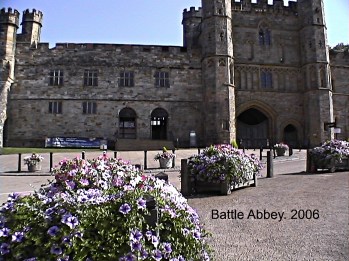
106BATTLEABBEY

After the Saxons came the Normans. They were, incidentally the last people to successfully invade these isles. This was in 1066. They brought French. The Normans became the ruling classes and spoke French. The workers spoke Anglo-Saxon. This explains why we have differences in the names of food we eat and the animals it comes from.

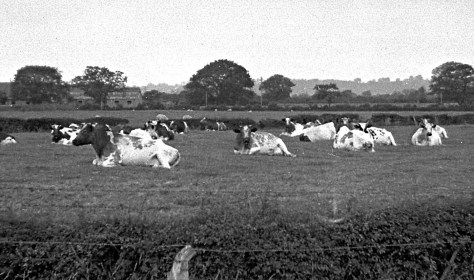
The French for a bull is Boeuf from which comes Beef. But in the field it is called a Bull, cow or in the plural, cattle.

060bluealbioncowscastletowncropped

The French for a sheep is Mouton, from which comes Mutton, but in the field it’s still the old word, sheep.

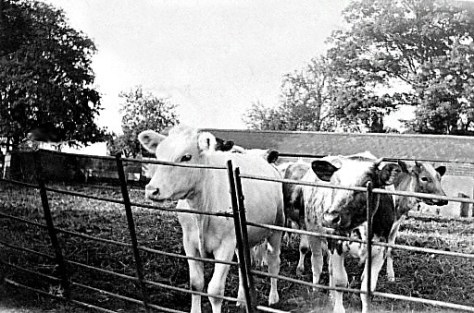
The French for a calf is Veau from whence we get Veal.

060calvescastletown
You get the picture.

Then Dutch engineers were brought in to drain what is now the Fens in East Anglia and they brought words with them. The British Empire was a source of words too, especially India.

So our language is something of a hotch-potch, hence the different spellings and pronunciation.

I will add to these words in a future blog. I hope you find this useful.

A poem to commemorate WW1

I make no apologies for re-posting this poem. I wrote it 2 years ago to commemorate the anniversary of the start of  World War One. As July 1st is the 100th anniversary of the terrible battle of the Somme, I thought I’d post it rather than the next episode of The Wolf Pack. That I’ll post next week instead.

My Great Uncle Jim, whom I mention in the poem. came back too, but he died shortly afterwards from the results of gassing. The lady known as Auntie Polly, who was his fiancee at the time, never married, but the family always treated her as though they had been.

‘Our Poor Willie’ was also my great uncle. He was my maternal grandmother’s brother. She always referred to him as ‘our poor Willie,’ but no one ever knew why.

amapolas-28961290013507Xx9

WE WILL REMEMBER THEM.

I’ll never truly understand
How World War I began.
The death of Archduke Ferdinand
Started the deaths of many more
The young, the old, the rich, the poor.
All died with guns in hand.

015gtunclewilly102grandad


My Grandad went with Uncle Jim
And Our Poor Willie, too.

They sent them off, singing a hymn.
Grandad went to Gallipoli,
Uncle Jim left his love, Polly.
Gas in trenches did kill him.

Britishtrenchww1

I cannot see, in my mind’s eye
Grandad with gun in hand.
A peaceful man, sent out to die.
He fought for us, for you and me
So we can live and so that we
Safely in our beds may lie.

Grandad came home, and Willie too,
But millions more did not.
Their duty they all had to do.
They died in fear, in noise, in blood.
Everything was caked in mud.
Yet in those fields the poppies grew.

The War to end all wars, they said,
So terrible were the deaths.
The youth of Europe all lay dead.
Yet 21 short years to come
Another war. Once more a gun
In young men’s hands brought death.

One hundred years have passed since then.
What have we learned? Not much!
Too many men are killing men.
Wars still abound around the world.
Bombs and missiles still are hurled
At those who disagree with them.

V.M.Sang

July 2014

I make no apologies for this poem not being in the modern idiom of no rhymes and little rhythm. I’m old-fashioned enough to think that poems ought to differ from prose, and many modern ones I’ve read are little different. That doesn’t necessarily mean rhyming though. I’ve written blank verse myself on occasion.

I also think that they ought to be comprehensible!

Please leave a comment in the comments section.

An Interview with Davrael. The Wolf Pack.

newcoverwolfpack

I have managed to get Davrael to agree to do an interview. This was a difficult task as he is a very private person, but eventually my power of persuasion triumphed. I was a bit afraid when Imet him. He is an imposing man, and the hawk tattoo on his face, wings over his eyebrows, head and beak down his nose and talons on his cheeks was very intimidating. Here is what he said:

wild_horse_marsh_pony_assateague_island

Me: Good afternoon, Davrael. Thank you for agreeing to this interview. I know you are not very keen on publicity.

Davrael: No. I not speak your language too good. It is difficult for me.

Me: I will try to make it as easy as I can for you. Please tell me something of the life of the Horselords.

Davrael: We, as you know, live for horses. Our horses are best on whole of Vimar. We respect them not just use them.

Me: What do you mean by that?

Davrael: We never put them to do things unnatural. We do not enslave them with saddles or bits to make it easier for us. We never beat them, but talk to them and are gentle.

Me: But don’t you use them for food?

Davrael: Yes, but we apologise to horse. He allow us to eat him. We thank Grillon for horse too and we grieve for him when he die. If we not eat horse sometimes, we not survive. If we lost in dry places, horse allow us to drink his blood so we do not thirst. Mares allow us to drink milk too even though it is for foals.

Me: How many horses do your tribe own?

Davrael: We not own horses. They are own masters. We follow when they move to different grazing grounds.

Me: But the horses that you ride;  surely you can’t say they are their own masters?

Davrael: Yes. They allow us to ride and use them, but they not belong to us. To answer your first question, there are 300 horses that allow my tribe to be with them.

Me: That is a lot of horses.

Davrael: Yes. Swooping Hawk tribe very rich. Look after horses well so horses breed well.

Me: Tell me about your family then.

Davrael: I my father’s heir. I second son, but it not auto…automatic…is that the word? for eldest to inherit. My father think that I would be better to see after horses than my brother. I have 2 sisters too. They younger than me. Probably married by now. I not hear since I leave The Plains.

Me: Your father is chief of the Swooping Hawks I understand.

Davrael: Yes. He great chief. We always win fights with other tribes. He good at tactics.

Me: Why do you war with other tribes?

Davrael: Over land–territory, over stealing horses, over stealing women; things like that.

Me: Would you have become chief after your father if you had not left?

Davrael: Perhaps, perhaps not. It depend on other men in tribe. Elders. They vote, but usually it is heir of last chief. Only if they think he not fit will they vote for another. Usually no one challenges. Sometimes, if elders not agree, contestants must fight and winner is chief.

Me: Is it not a hard life, wandering The Plains.

Davrael smiled: Before I came to Grosmer. I not think so. I used to it, and love the horses. Now I get soft with easy living. No need to look for place to camp near water for animals and people, soft beds, not hard mats on floor, stone walls that keep out cold and heat, not hide tents that are cold in winter and hot in summer.

Me: But when you were on your quests with Carthinal and the others. That must have been a bit like your life on The Plains.

Davrael: Yes, but that before we settle to soft life. We only just come over the Barrier–The Western Mountains, you call them.

Me: We?

Davrael: Me and Kimi. We run away because our parents not wish us to marry.

Me: Why was  that?

Davrael: I am son of Chief of Swooping Hawks. Kimi is daughter of a nobody. She also is daughter of settlers. Nomads think settlers no good. Settlers think nomads no good. So we run away.

Me: Is that why you ended up in Grosmer?

Davrael: Yes. We first come to big city, Eribore. I not seen anything as big. Walls all round of stone. We think we not stay there. Too near home, so we go to Hambara. It even bigger city. Kimi find inn and there we meet Carthinal, Basalt, Fero and Asphodel. They kind to us and take us on adventure. Other folk kind too. Duke Rollo give us work after we return. We  think of Grosmer as our land now.

Me: You would not go back to The Plains?

Davrael: No. We have no home there now. Our families have disowned us. Our home and country is Grosmer.

Me: Thank you very much for your time.

A Dwarf Work Song

Today is the fifth Tuesday in the month, so we have an extra blog. This time I’m posting a poem.The blog is short because I”m on holiday. I hope you enjoy it.

DWARF WORK SONG

Deep, deep below the ground
Wielding spade and pick.
Dwarven miners found
Minerals lying thick.

Tin, iron copper too,
We dig the all day long.
The solid rocks we hew
With sturdy arms and strong.

Precious stones we find.
Opals, rubies, jet.
We leave non behind.
Everyone we get.

But don’t you delve too deep.
We don’t know what lies there.
All kind of dangers sleep
And fearsome things lie there.

Please comment on this poem in the comments section.

Interview with Basalt Strongarm

newcoverwolfpack


Me: Thank you for allowing this interview. I know you are a
busy man.

Basalt: Fine, but be quick about it as I have work to do. I
am working on a particularly difficult piece of metalwork for
the Duke and I want to get back to it.

Me: OK, I’ll try to be quick. Tell me how you came to be in
Grosmer please.

Basalt: Hmph! I should be working my own mine now, not
doing wrought ironwork for someone else!

Me: Please explain.

Basalt: My parents owned a fine mine in Ghraali. They had
just one son, called Schist, but always wanted another child,
they said. When I was born many years later, they were
delighted.

Me: Where is Ghraali?

Basalt: It is the dwarven homeland at the southern end of the Western Mountains, just to the west of the Inner Sea. Fine ores and gems can be found there. It was once volcanic, but not any more. Not like the Mountains of Doom!

Here he shuddered as if he was remembering an unpleasant experience.

Me: Did the mine fail then?

Basalt: Not at all! It was all my brother and his wife.

Me: Please explain.

Basalt: Well, my brother was very caring towards me at first. He was nearly fully grown when I was born. He used to make wooden toys for me. He was a very good wood carver and he taught me how to carve too. Then he met HER.

Me: Her?

Basalt: His wife! She was called Opal. He met her one day in the town. She was visiting a relative or something. Oh, she was beautiful, of that there is no doubt, but she was hard and cold inside. She had ambition. Her ambition was to be rich.

Me: So how did that affect you?

Basalt. She poisoned Schist against me. She wanted him to have sole control of the mine, see. My parents were going to leave it to us jointly. After they were married, she came to work with us in our mine, of course. One day, there was an accident in the mine. Mother had taken me with her to the face. This was common practice with youngsters as both men and women work in the mines. I was playing with a small hammer a little distance away, tapping at a little rock when I heard a terrible rumbling and the rock face fell down covering mother.

Here he paused and sniffed. I waited for him to continue.

Basalt: I ran and tried to clear some of the rocks with my little hammer and bare hands. Others came to help, but when we finally pulled her out it was too late.

Me: I’m sorry, Basalt. It must have been dreadful for a small boy.

Basalt: Yes, it was.

Me: But you still had your father.

Basalt: Yes, for a little time. Then a similar thing happened again. This time it was my father who was killed. So here was I with only my brother and his wife to look after me.

Me: Did she show you any animosity at that time?

Basalt. No, not really. she was cold, did all that she had to for me, but no more. Schist tried to do as much as he could at first, but gradually he froze towards me too. I swear she poisoned his mind with false tales. I know she did tell him some things against me.

Me: But you were now part owner of the mine.

Basalt: Yes, but still a minor so had no say. Schist did all the decision making and day to day running.

Me: What happened when you came of age?

Basalt: That was when the worst started. There were a few falls in the mine and Opal accused me of causing them. Firstly she said it was carelessness, then she began to imply that it was sabotage–that I wanted the mine for myself and was trying to kill her and Schist. Eventually a fall, quite natural this one, just missed Schist. She took her opportunity and somehow managed to convince the elders of the town that I had engineered it. She even got some of the workers to testify that they had seen me interfering with the workface. They were believed and I was told that I could face the death penalty or exile. I chose to leave and that is how I came to be in Grosmer.
I am beginning to think that Opal also had something to do with the death of my parents, but I have no proof, and after all these years I cannot possibly prove anything.

Me: Thank you for your time, Basalt.

Basalt: Thank you. Now I must go to finish that job.

4 More Pairs of Commonly Confused Words

Even More Commonly Confused Words

I was reading the BT news the other day. Their journalists ought to read this blog I think because they keep making errors. The first one here I noticed a couple of days ago.

Peek/Peak
The article headline said something like ‘A sneak peak at…’
Peak, of course is the top of a mountain, while Peek is a quick glimpse of something. Perhaps there was a mountain hiding behind another, or a very sly one that was hiding, but I doubt it.

To, Too and Two.
This frequently appears in comments by people, and also in, I’m afraid to say, posts by writers.
To indicates movement towards as in ‘He gave the parcel to me.’
Too is an excess of something. ‘I had eaten too much and so I felt ill.’
I don’t often see Two misused. It is, of course the number. ‘Two buses passed me before the one I wanted arrived.’

Breath/Breathe
This can be a tricky one.
Breath is a noun and is what you take.
‘The doctor told me to take a deep breath.’
Breathe is a verb and is what you do.
‘The room seemed airless and I was finding it hard to breathe.’

Baring (bare)/Bearing(bear)
Another one from BT news.
Baring is the act of making bare, or naked. It is also used when revealing truths.
‘Baring all, the spy held nothing back in his interrogation.’
‘She removed her clothes, baring all.’
Bearing is carrying. (or of course, a large mammal living in the northern regions of the planet.)
‘The messenger arrived bearing the news of the king’s death.’

Then there is the problem of the past tense of these verbs. The past tense of Bear is Bore.
‘She bore the news that she had not got the job with equinamity.’
BUT, the past tense of Bare is Bared.
‘During the investigation, the criminal bared all.’